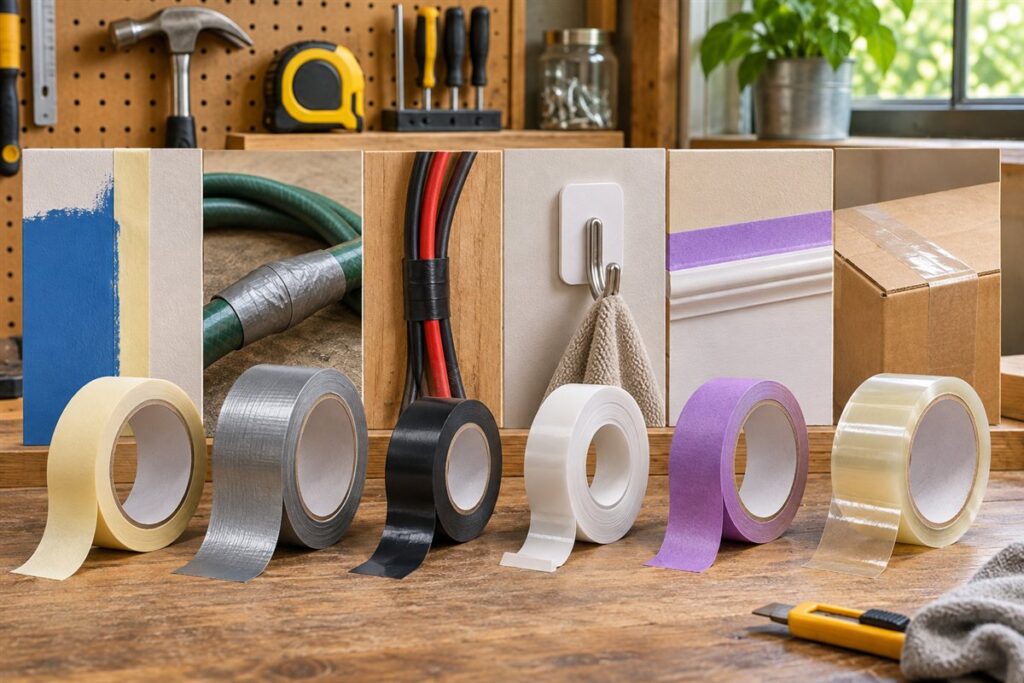
Each tape is built for a particular job, so choose by what you need it to do: mask an edge, hold a bundle, join two surfaces or cover a wire. The label tells you the surfaces and conditions the maker intended.
Tape Types and What They Do
- Masking tape: a light-hold tape for marking and protecting edges, made to come off cleanly within the time the label allows.
- Duct tape: a cloth-backed tape for general repairs and bundling, usually not meant for lasting or load-bearing fixes.
- Electrical tape: a stretchy insulating tape for wire wrapping. It is not a replacement for proper connectors, and wiring work belongs with a qualified electrician.
- Double-sided tape: a tape for mounting light items and holding templates; check the weight guidance on the package.
- Low-tack delicate-surface tape: made for finished walls and trim; follow the label on removal time.
- Packaging tape: for sealing boxes, not for repairs.
Surface and Conditions
Adhesion depends on the surface. Clean, dry, smooth surfaces hold tape best. Dust, oil, damp and rough textures weaken the hold. Heat, cold and sunlight can also change how tape behaves, and many tapes leave residue if left in place too long.
Quick Decision Table
| Factor | Why it matters | What to check |
|---|---|---|
| Job type | Each tape is made for a different task | The use listed on the label |
| Surface | Rough or dirty surfaces reduce grip | Surface types named by the maker |
| Removal | Some tapes leave marks or tear finishes | Stated removal window |
| Environment | Heat and moisture change adhesion | Indoor or outdoor notes |
| Width and strength | Wider tape spreads the load | Width on the roll |
Applying and Removing Tape
- Clean the surface and let it dry fully.
- Press the tape down firmly along its length, working from one end.
- For masking, seal the edge with a fingertip or a flat tool to reduce bleed-through.
- Remove it slowly at a low angle, within the time the label gives.
- Wipe away any residue with a cleaner the surface allows.
Be careful with tape near hot tools, heaters or live wiring, and follow the maker’s directions for any electrical use.
Keep a roll of masking tape and one of general-purpose cloth tape in the shop, and add specialty types as real jobs call for them. Store rolls flat or on a peg in a cool, dry spot, since heat and dust weaken the adhesive and make rolls hard to unwind.
FAQ
Can duct tape fix everything?
It is handy for quick, temporary jobs, but it is not meant for every repair. For plumbing, electrical or structural problems, call a qualified professional.
Why does tape leave residue?
Time, heat and sunlight can soften the adhesive so it stays behind. Using the right tape and removing it within the stated window helps reduce the problem.
The Short Version
Match the tape to the job, prepare the surface and check the label for removal time. Use tape as a helper, not as a stand-in for proper fasteners, connectors or professional repairs.