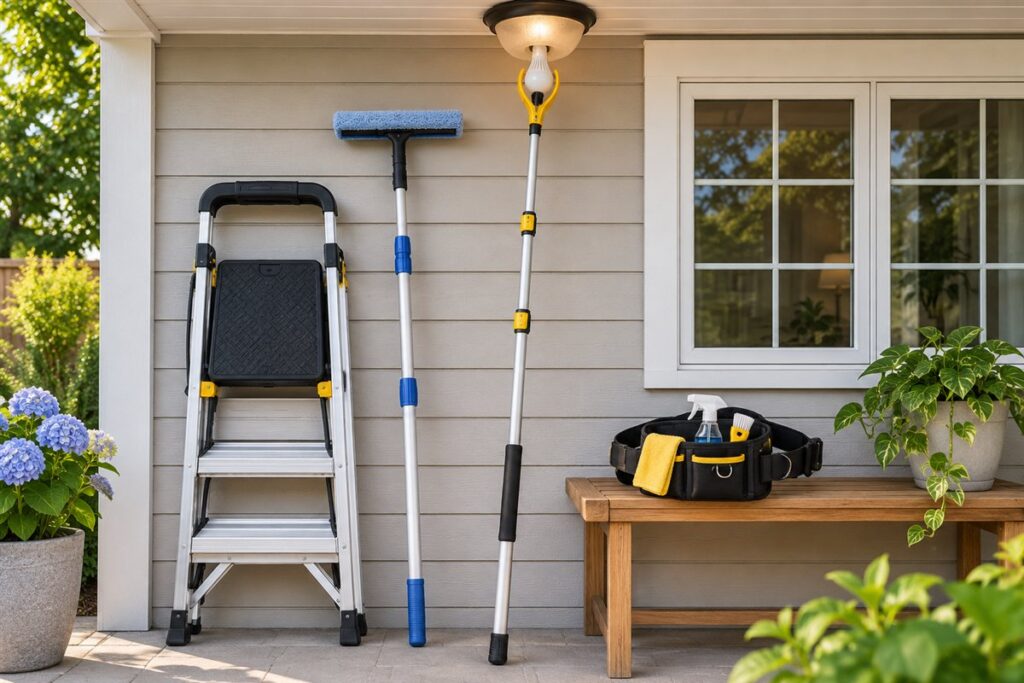
Working at height is one of the riskier activities around the home, and the main rule is to avoid it when you can. This guide introduces common equipment and the general ideas behind it, but it is not a substitute for the maker’s manual, local rules or training from a qualified professional.
First, Ask Whether You Need to Climb
Many jobs can be done from the ground. Extension poles hold light bulbs, cleaning heads and brushes. Telescoping tools reach gutters or high shelves. If the work is on a roof, near power lines, or involves repairs to structure, hire a qualified professional.
Common Equipment Types
- Step ladders for freestanding work at modest heights.
- Extension ladders for reaching exterior walls, used strictly as the maker directs.
- Platform steps and small work platforms with a guard rail.
- Scaffold towers, which usually need training and assembly instructions from the maker.
- Reach poles and long-handled tools to stay on the ground.
Each type has a maximum load, a correct angle or setup, and limits on how it may be used. Read the label and manual before every use.
General Habits People Follow
- Inspect the equipment before use for damage, missing parts or loose feet.
- Set it on firm, level ground, and never on loose items.
- Keep your body centred and avoid overreaching.
- Do not stand on the top step unless the maker explicitly allows it.
- Carry tools in a belt or hoist them, so both hands stay free to climb.
- Keep a second person nearby where practical, and avoid using equipment in wind, rain or ice.
None of this guarantees any result. Conditions and people vary, so judgement and training matter.
Matching Equipment to Situations
| Situation | General direction |
|---|---|
| Changing a ceiling bulb | Reach pole or stable step platform |
| Cleaning windows | Extension pole from the ground |
| Work near overhead cables | Qualified professional only |
| Roof or structural repair | Qualified professional only |
Planning and Preparation
Plan the job before you climb. Decide what you need to carry, check the weather, and make sure the ground is firm and level. Let someone know where you are working, and keep children and pets away from the base of the equipment. Take your time getting on and off, face the steps or rungs, and keep three points of contact with the equipment where the maker advises.
If you feel unwell, tired or distracted, put the job off. Training courses are available from many providers and can teach proper setup and inspection, and they are worth considering if you do this kind of work often.
FAQ
Is any ladder fine for any job?
No. Types differ, and each maker lists intended uses and load limits. Check the label.
Do local rules apply at home?
Workplace rules are stricter, but local guidance and building rules can still apply. Ask your local authority for details.
The Short Version
Stay on the ground when you can, and follow the maker’s manual for any ladder or platform. For roofs, structural jobs or electrical hazards, call a qualified professional.