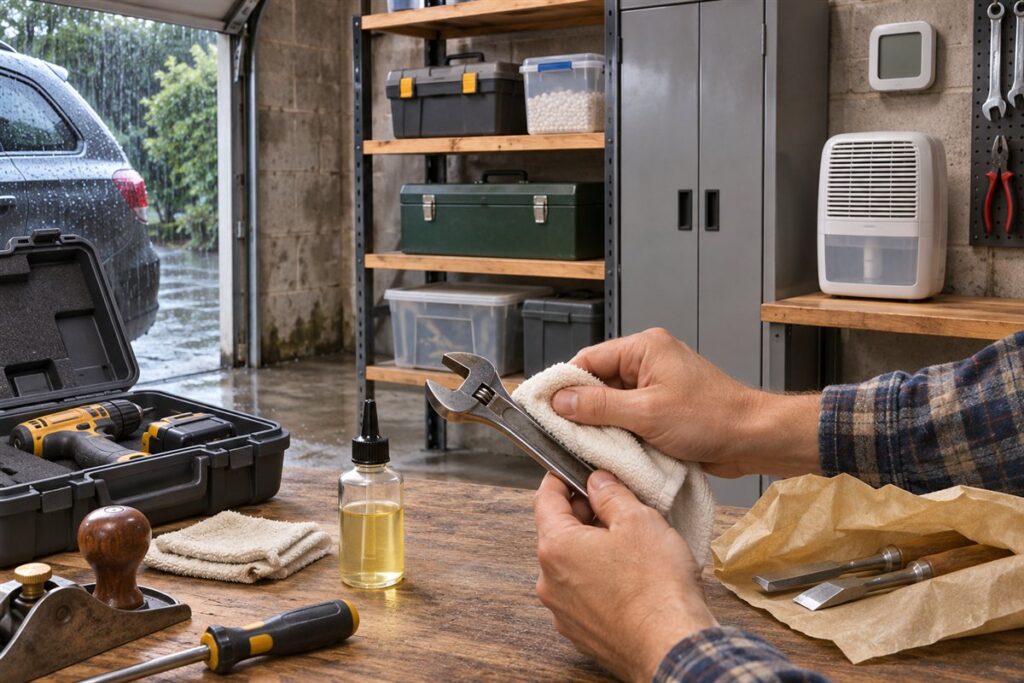
To keep tools dry in a damp garage, reduce moisture where you can, store tools off the floor and away from outside walls, and wipe metal parts after use. No single trick stops rust, so combine several habits.
Understand Where Damp Comes From
Garage moisture usually comes from a few sources: humid outside air, water seeping through a slab or wall, wet vehicles and tools carried in from the rain. Cold metal can also collect condensation when warm, humid air meets it. Find your likely sources before choosing a fix.
Storage Habits
- Keep tools off the floor, on shelves or wall racks away from outside walls.
- Use closed cabinets or lidded boxes for the tools you value most, and add a moisture absorber the product label describes.
- Wrap bare steel items, such as chisels or plane irons, in a lightly oiled cloth or a rust-preventing wrap.
- Store power tools in their cases, with batteries stored as the maker directs.
- Do not store tools wet, and let them dry fully after outdoor use.
A Simple Wipe-Down Routine
- Brush off dirt and dust from the tool.
- Wipe away moisture with a dry cloth, getting into corners and joints.
- Apply a very thin film of light oil to bare steel, using a product suitable for tools.
- Wipe off the excess so it does not collect dust.
- Put the tool in its place and check it again after damp weather.
Moisture Control Options
| Option | What it does | Things to check |
|---|---|---|
| Airflow and vents | Lets damp air move out | Keep vents clear and follow local rules |
| Moisture absorbers | Pull moisture from small enclosed spaces | Replace as the label directs |
| Dehumidifier | Removes moisture from room air | Needs power and a drain or tank |
| Rust-preventing wrap or paper | Protects stored steel | Instructions on the package |
| Sealed cases | Slow air exchange | Make sure items are dry before closing |
Persistent water coming through walls or floors is a building issue, so ask a qualified professional. Keep electrical equipment away from standing water, and use outlets and extension cords as the manuals direct. Follow local rules for disposing of used absorbers and oily rags.
Check your tools again after any long spell of wet weather. Condensation often forms overnight on cold steel, so a quick look and wipe the next morning catches rust before it spreads.
Measuring Humidity and Tracing Moisture Sources
Before you buy any products, find out how damp your garage really is. A small humidity gauge, often called a hygrometer, shows the relative humidity in the air. Place it where your tools are stored and check it at different times of day and in different weather. Humidity that stays high for long stretches will encourage rust on bare steel, while spikes after rain or cold nights suggest condensation or leaks. Note readings over a few weeks to see the pattern.
Look for the sources. Water can enter through the floor slab, through cracks and joints in walls, around door seals, under the garage door, through the roof or around windows. Vehicles bring in snow and rain, and wet clothing, tools and gardening gear add moisture. Appliances such as clothes dryers that vent into the garage, or water heaters and laundry equipment, may increase humidity. Look for signs such as stains, flaking paint, white mineral deposits, a musty smell, mold and pooled water after rain.
A simple plastic sheet test can show floor moisture. Tape a small square of plastic firmly to the concrete, sealing all edges, and leave it for a day or two. Moisture beneath the plastic suggests water is coming up through the slab, while moisture on top of the plastic suggests the air is the source. Fix easy sources first, such as clearing gutters and downspouts, directing water away from the foundation and replacing worn door seals. For structural leaks or drainage problems, consult a qualified professional.
- Record humidity readings for a few weeks.
- Check after storms and in different seasons.
- Look at the places where water meets the building.
Condensation and Temperature Swings
Even a garage with no leaks can have trouble with condensation. When warm, moist air meets a cold surface, water forms on it. Steel tools cool quickly overnight and may be colder than the surrounding air in the morning, so moisture condenses directly on them. This is common when a mild humid day follows a cold night, or when you bring cold tools into a warmer, moist space. The wet film is often invisible at first, then rust spots appear.
Reduce the swings if you can. Insulating walls and doors, where practical, slows temperature change. Keep tools away from outside walls and uninsulated metal doors, which are the coldest surfaces. Store high-value tools in closed cabinets or boxes, where the air is buffered from rapid changes. Avoid opening the garage in the middle of humid weather unless airflow is needed, and ventilate during the drier part of the day.
When bringing cold tools from outdoors into a warm space, let them warm up gradually in a container or wrapped in a cloth, so condensation forms on the cloth instead of the metal. Do not put cold tools straight into a sealed warm box. Wipe any moisture that forms and check the tools again later. Vehicles that arrive wet and warm, such as after a drive in the rain, add a burst of moisture, so consider that when planning where to keep tools.
- Keep valuable steel items away from cold exterior surfaces.
- Allow cold items to warm up before sealing them in cases.
Choosing Containers and Liners
The right container can protect tools from humidity, if used correctly. Rigid plastic cases with gasket seals slow the movement of air, which helps hold a stable environment, but they also trap any moisture already inside, so tools must be dry before closing. Metal toolboxes are sturdy and can resist impact, but bare metal inside a damp box may rust, so line them or add a moisture absorber. Wooden chests breathe, which can moderate humidity swings but also take on damp and may harbor mold if the air stays wet.
Liners add protection. A drawer liner or foam sheet keeps tools from sitting directly on metal, absorbing a little moisture and preventing scratches. Cedar and other woods are sometimes used in drawers, though they do not replace proper drying. Rust-inhibiting paper or bags release a protective vapor in an enclosed space, and they come with instructions on the amount needed for the volume and how long they last. Replace them as the package directs. Moisture absorbers hold water in crystals or beads and need emptying or recharging according to their instructions. Follow the product’s guidance on safe disposal and keep them out of reach of children and pets.
Position containers off the floor on shelves or stands, away from outside walls and not directly under pipes or roof leaks. Do not stack items on the floor in cardboard boxes, which absorb damp. Label containers so you do not open them more than necessary, as each opening lets in humid air. Check the container’s seal regularly for cracks.
- Dry tools before sealing them in a case.
- Do not trap damp cloths or wet gloves in the box.
- Test for moisture inside the case every few weeks.
Protecting Power Tools, Batteries and Electronics
Damp affects more than hand tools. Power tools have steel shafts, bearings, switches and electrical contacts that can corrode, and moisture inside a housing can cause faults and unsafe conditions. Wipe down power tools after use, store them in their cases in a dry spot and keep cords coiled loosely. Do not use electric tools in damp conditions or on wet floors unless the manual explicitly allows it, and follow guidance on ground-fault protection for outdoor or damp locations. Have wiring questions answered by a qualified electrician.
Batteries and chargers deserve attention. Follow the maker’s guidance on storing batteries, including temperature ranges and state of charge. Avoid leaving batteries in a cold, damp garage for long periods if the manual cautions against it, and bring them indoors if recommended. Keep terminals clean and dry, and do not charge batteries that are wet or damaged. Chargers should sit on a stable, dry surface with space for ventilation.
Handle cordless tools and chargers carefully after wet work. Remove the battery, wipe the tool and let it dry in a ventilated place before storing. Compressed air tools should be drained of condensed water from the compressor tank as the manual instructs, since moisture left in the tank causes internal rust and can carry into tools. Air tools may need a few drops of oil as directed by the maker.
- Check cords and plugs for damage from damp.
- Store electronics, meters and chargers in dry, closed containers.
- Follow the maker’s battery storage advice.
Seasonal Checks and Long-Term Habits
Dampness is persistent, and the best defence is a routine. Set aside time at the change of seasons, particularly before the wet or cold months, to inspect your storage. Take out the tools, check for rust spots, wipe them down, refresh protective films and replace moisture absorbers and rust-inhibiting papers. Clean out the garage corners where leaves and debris gather moisture. Check seals, gutters and drainage, and fix small problems before they grow.
Between checks, form daily habits. Wipe tools after use, especially after outdoor or wet jobs. Never put away a wet tool. Keep wet gear, such as boots, hoses and garden items, in a separate area, and hang them up to dry. Open the garage on dry, breezy days to let air through. Use a fan to move air if humidity is high, while ensuring it does not push in more damp air from outside.
Keep a simple record of what you did and when, such as in the notes of your tool log. If a certain tool or area keeps rusting, record that and adjust your approach. Move the tool to a better place, improve its protection or consider whether the space needs bigger changes, such as a dehumidifier, improved ventilation or repairs to the building.
Finally, know the limits. If moisture problems continue despite your efforts, such as standing water, persistent mold or structural dampness, the building may need professional assessment. Ask a qualified person about drainage, waterproofing and ventilation. Spending on the building often protects more than tools, including stored belongings and the structure itself.
FAQ
Is oil on every tool a good idea?
Only on bare metal that is not a gripping, braking or electrical surface, and only a thin film. Check each tool’s manual.
How do I treat a tool that has already rusted?
Light surface rust can often be rubbed off with a fine abrasive pad and a rust remover as the label directs. Heavily pitted tools may need replacement.
Will a dehumidifier help a garage?
It can, particularly in a closed or insulated garage with steady humidity. Check its operating temperature range, since some models work poorly in cold conditions, and plan for draining the water. A drier space also reduces rust on stored items.
Can I use silica gel in my toolbox?
Many people do. It absorbs moisture in small enclosed spaces, but it needs to be dried or replaced as the instructions say. Keep it in a labeled container away from children and pets.
Why do my tools rust even though the garage looks dry?
Condensation from temperature swings, humid air or damp stored items can be hidden. Check with a humidity gauge, wipe tools after use and store steel items in closed containers with protection.
Should I wrap tools in plastic?
Sealed plastic can trap moisture against metal if the tool is not fully dry, or if temperatures change. Breathable wraps or rust-preventing paper are generally better, and the tool must be dry before wrapping.
How can I protect large machines like a table saw?
Wipe bare cast iron tables dry, apply a thin coat of paste wax or a rust-preventing product, and cover the machine with a breathable cover. Avoid damp plastic sheets, and check it regularly.
Is it okay to leave batteries in the garage in winter?
Follow the battery maker's advice. Many specify temperature limits for storage and charging. If the garage gets very cold or damp, bring batteries inside to a suitable spot.
How do I stop rust on a steel workbench top?
Keep it clean and dry, wipe spills promptly and apply a thin protective film or wax as suitable for the surface. Avoid leaving wet items on it. Use a mat or liner for wet tasks.
The Short Version
Cut moisture sources, lift tools off the floor, dry and lightly oil bare steel, and watch for building leaks. Tidy habits do more than gadgets.