To choose a battery platform, decide which tools you expect to own over the next few years, then choose the system whose range covers them and whose batteries suit your workload. One battery family powering many tools saves space and money over time, so this decision shapes every later purchase. Think of it as choosing a small ecosystem and not a single drill.
Why the Platform Matters More Than One Tool
Batteries and chargers are often the largest share of a cordless kit. When all your tools share them, you can swap a pack from a drill to a saw in seconds. When each tool needs its own, you carry more chargers and spare packs and lose that flexibility. Most makers also keep a battery family going for many years, but check the maker’s guide for details on how long and which tools are compatible.
In this guide
Decision Criteria
| Factor | Why it matters | What to check |
|---|---|---|
| Tool range | You may want more than a drill later | Whether the family lists the tools you expect to need |
| Voltage class | Affects power and weight | Which class suits light, medium or heavy jobs |
| Capacity options | Controls runtime and weight | Small and large packs in the same family |
| Charger speed | Decides downtime | Charge times in the maker’s guide |
| Availability | Replacement packs must be easy to find | Local stockists and spare pack supply |
| Cross compatibility | Lets you mix tools | Whether older and newer packs work together |
Reading Battery Labels
Three figures on a pack tell you most of what you need. Voltage describes the pack’s electrical level and, within one family, usually tracks how much power the tools can deliver. Amp-hours describe the capacity, a bit like the size of a fuel tank: a higher number usually means longer run time and more weight. Watt-hours multiply the two and give a single figure for the stored energy, which is handy when comparing packs of different voltage.
Do not compare these numbers across families as if they were identical measures of performance. Maker’s figures describe the pack, and how long it lasts depends on the tool, the material and the way you work. Where a family has two voltage classes, check the maker’s guide for which tools use which and whether the packs and chargers can be shared.
Match the Platform to Your Work
- Occasional home use: a compact family with a drill, driver and a few light tools is usually enough.
- Regular weekend projects: look for a family with saws, sanders and a work light.
- Garden and outdoor jobs: check that trimmers and blowers belong to the same battery family.
- Heavy or daily work: choose a family with higher capacity packs and rugged tools.
Practical Steps Before Committing
- List the tools you own now and the ones you expect to add within a couple of years.
- Check which families make all of them, using the maker’s own range listing.
- Hold the tools in a shop if you can, since weight and grip are personal.
- Look at how many spare packs and chargers you would need for a normal work day.
- Think about whether you already own tools that could stay in use.
A Worked Example With Invented Numbers
The figures below are invented for illustration only. They do not describe any real product.
Suppose Sam wants a drill, a circular saw, a work light and later a garden trimmer. Sam lists the tools in a table with one row for each family being considered. Family A covers the drill, saw and light but has no trimmer. Family B covers all four, but its saw is a heavier model. Family C covers the trimmer and the drill, but the maker lists no circular saw at all.
Sam crosses out Family C because a missing saw would force a second system. Between A and B, Sam asks how likely the trimmer purchase is. If it is likely, Family B avoids a second battery system later. If it is unlikely, Family A may suit better because of its lighter saw. Sam then checks the maker’s pages for the saw weight with a battery on, and the number of spare packs needed for a long day. The decision is not about the brand name on the case. It rests on which family leaves the fewest gaps.
Common Scenarios
You already own a few tools from one family
Keep to that family unless the range is missing something you need. Switching means buying batteries and chargers again, so only switch when the gap is large.
You inherit or are given tools from different families
Treat them as separate systems. Keep each charger with its own packs, and do not force a pack into a tool made for a different one. Label packs with tape so they stay with the right set.
You need a tool the family does not make
Ask whether a corded version or a rental is a better answer than a second battery system. For rare jobs, it often is.

You work in a shared garage or club
Agree on one family so packs and chargers are interchangeable, and label them clearly to avoid mix-ups.
Mistakes to Avoid
| Mistake | Why it matters | Better habit |
|---|---|---|
| Choosing on one tool alone | Later tools may not exist in that family | List all expected tools first |
| Buying the largest pack for every job | Heavy packs tire the arm on light work | Keep a small pack for light tasks |
| Assuming old and new packs always fit | Fit and electronics may differ between generations | Check the compatibility notes |
| Ignoring charger placement | Charging needs a dry, ventilated spot | Choose a bench area and follow the manual |
| Forcing a pack into a tool | It can damage the contacts or the tool | Use only approved combinations |
Care of Packs Over Time
Follow the maker’s guide on charging, storage and temperature. In general, avoid leaving packs in a hot vehicle or in freezing conditions, keep contacts clean and dry, and do not use a pack that is swollen, cracked or leaking. Store spare packs where metal objects cannot touch the terminals. Many guides suggest storing packs partly charged if they will sit unused for a long time. Dispose of worn packs through a local battery recycling point, following local rules, and not in household waste.
If a pack no longer holds enough charge for your work, replace it with one the maker approves. Do not open or repair packs yourself.
Quick Troubleshooting
| Symptom | Likely cause | What to try |
|---|---|---|
| Tool does not run with a charged pack | Dirty contacts or a pack not fully seated | Remove the pack, wipe the contacts with a dry cloth and refit it |
| Charger light shows a fault | Pack too hot or cold, or a damaged pack | Let the pack reach room temperature and check the manual’s light codes |
| Runtime has dropped a lot | Age of the pack or a heavier load than before | Check the load, then consider a replacement pack |
| Tool cuts out under load | Built-in protection is limiting the pack | Rest the tool and pack, reduce the load and read the manual |
Glossary
- Platform: a family of tools that share the same batteries and chargers.
- Amp-hour: a measure of battery capacity.
- Watt-hour: stored energy, found by multiplying volts by amp-hours.
- Bare tool: a tool sold without a battery or charger.
- Brushless motor: a motor design that uses electronics in place of carbon brushes.
- Cell: a single unit inside a battery pack.
Brushed Motors, Brushless Motors and What They Mean for a Platform
When you compare tools inside a battery family, you will meet the terms brushed and brushless. A brushed motor uses small carbon contacts to deliver power to the spinning part. A brushless motor uses electronics instead, which generally means less friction, less heat and often longer run time per charge. Brushless tools usually cost more, and they are not always necessary for light jobs.
This matters when you choose a platform because families often offer both versions of the same tool. A family that sells only top-tier brushless tools may be pricier to enter. A family that sells both lets you start with a basic drill and upgrade the tools you use heavily. Check the maker’s literature for which tools in the family have which motor type, and avoid assuming that every tool in a line uses the same technology.
The same logic applies to the batteries. Some families offer compact packs for light tools and larger packs for demanding ones, all on the same connector. The ability to put a small pack on a light tool and a large pack on a heavy one is one of the real advantages of a platform. It lets one system cover a range of jobs without duplication.
Working Out How Many Batteries You Need
Start with how you work. A single pack and a charger is enough if you do short jobs and can pause for a charge. If you work for longer stretches, a second pack avoids stopping, since one can charge while you use the other.
A rough way to plan is by usage pattern:
- Occasional household use: one pack and one charger often cover a weekend project.
- Regular weekend work: two packs of the same size so you can swap without waiting.
- Large jobs such as deck building or fence work: two or three packs, with at least one in a larger capacity for high-demand tools.
- Shared use in a club or workshop: enough packs to cover the busiest session, plus a charger that handles more than one pack if the maker offers it.
Remember that run time depends on the tool and the task. Driving long screws into hardwood drains a pack faster than light drilling in softwood. The maker’s literature may offer typical run times, but treat them as general indications, since your results will differ.
Also consider weight. A larger pack gives more run time but makes the tool heavier, which adds up over a long day of overhead work. Many people find that a mid-size pack is the best compromise for general use.
Safe Handling, Charging and Storage
Lithium-ion packs store a lot of energy, and good habits reduce risk. Follow the maker’s instructions for charging, storage and disposal, and use only the charger designed for your pack. Do not charge a pack that is visibly damaged, swollen or leaking, and do not use it. Contact the maker or a local battery recycling point for guidance.
General habits that most makers recommend include:
- Charge in a dry, ventilated place away from flammable materials, and do not leave a charger running unattended for long periods.
- Let a hot pack cool before charging it, and let a cold pack warm to room temperature first. The maker’s guide gives temperature ranges.
- Keep the contacts clean and keep loose metal objects, such as keys or screws, away from them.
- Store packs in a cool, dry place and avoid hot vehicles in summer or freezing sheds in winter.
- Do not drop or crush packs, and do not try to open them.
For disposal, never put a worn-out pack in household trash. Many hardware stores and local waste facilities accept batteries for recycling. Check your local rules.
Total Cost of Ownership Over Several Years
The price of a tool is only the start. A platform is a commitment, and a fair comparison looks at the cost of what you will buy over the next several years, not just the first purchase.
| Cost item | What to compare | Why it matters |
|---|---|---|
| Starter kit | Tools, packs and charger included | Kits often cost less than buying parts separately |
| Bare tools | Price without battery | Cheaper once you own packs and chargers |
| Extra packs | Price per pack and capacity | Usually the largest repeat cost |
| Replacement packs | Availability years later | Packs wear out and need replacing |
| Accessories | Chargers, work lights, adapters | May be needed for specific jobs |
A practical exercise is to list the six tools you expect to own within three years and price each in two or three platforms. Include one extra pack in each total. You may find the cheapest first kit is not the cheapest long-term system, or that the family with the widest range costs only a little more. Prices and promotions change, so use current figures from retailers.
Warranty and service also belong in the comparison. Read the maker’s warranty terms, check what counts as use, and see whether authorized repair centers exist nearby. A platform with easy service is worth more than one that is slightly cheaper but hard to support.
Signs It Is Time to Change Platforms
Staying with a platform is usually sensible, but there are signs that a switch might make sense:
- The family no longer offers a tool you need and has no plans to.
- Replacement packs have become hard to find or sharply more expensive.
- Your work has changed, for example from light household jobs to regular heavy use, and the family’s higher tiers do not meet it.
- Many of your tools are old and failing, so the cost of switching is lower than it first appears.
If you switch, do it gradually. Replace tools as they wear out, and sell or give away the old ones and their batteries when you no longer need them. Avoid mixing adapters between families unless the maker explicitly allows it, because unapproved adapters can create safety and warranty problems.
Using Tool Ratings Without Being Misled
Product pages are full of numbers, and not all of them are comparable. Torque, speed, impact rate and runtime figures depend on how the maker tested them, so they are most useful for comparing tools within one family, not across brands.
When you read a rating, ask three questions. What conditions was it measured under? Does it describe the tool or the battery? And does it match the kind of work you actually do? A tool rated for very high torque may be wasted on light jobs, and a tool with a long claimed runtime may have been tested with a large pack that is heavy and costly.
Use ratings to narrow a list, then check the maker guide and user manuals for what they say about intended use. Where figures seem too good to be true, check for footnotes. If a number is vague or missing, ask the maker or retailer. A few minutes of questions before purchase often prevents months of regret.
Ready to Buy? Start Here
If this guide helped you decide what to look for, these products are a place to start.
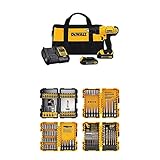
As an Amazon Associate we earn from qualifying purchases. Prices and availability are shown on Amazon.
Audit Your Current Tools Before Choosing a Side
Picking a battery platform is a long-term decision, because every battery and charger you add ties you to a family of tools. A short audit of what you already own makes the choice clearer.
- List every cordless tool you own, with its maker and battery type.
- Mark the tools you use weekly, and those that rarely leave the shelf.
- Check the maker’s range for the tools you expect to need next, such as a saw, a sander or garden tools.
- Note whether the platform offers the same battery in several sizes.
- Look at what comes with a kit: batteries, a charger and a bag.
- Read the warranty terms and the support options.
A platform with a wide range keeps your future options open, even if you need only a drill today.
Staying with One Platform or Mixing Several
Some people stay loyal to a single maker, while others choose the best tool in each category. The table compares both approaches.
| Point | Single platform | Mixed platforms |
|---|---|---|
| Batteries and chargers | Shared across tools | Several types to manage |
| Tool choice | Limited to one maker’s range | Freedom to pick the right tool |
| Storage | One charging spot | More chargers and shelf space |
| Long-term cost approach | Spread over bare tools | More batteries needed |
Some makers cooperate on shared batteries across brands, so check the current details on the maker’s pages before relying on that.
Charge and store batteries according to the manual, and avoid mixing chargers and packs that the maker does not list as compatible.
If you already own a few batteries, record their voltage and capacity in a note on your phone. That quick reference helps when a sale or a bundle tempts you with something that does not fit.
Going Deeper: How a Battery Ecosystem Actually Fits Together
Choosing a platform feels like choosing a drill, but the drill is only the visible tip of a system. Underneath it sit battery packs in several sizes, one or more chargers, a family of compatible tools that grows over time, and a set of habits you build around charging and storage. This section unpacks that system at the concept level, so you can judge any platform on how its parts work together rather than on the appeal of a single tool in a single box.
Voltage classes in plain language
Voltage describes the electrical pressure the pack delivers, and platforms are usually grouped into broad voltage classes. Compact classes suit light, overhead and assembly work where a smaller, lighter pack keeps the tool easy to handle for long stretches. Mid-range classes are the general-purpose heartland for most home and trade work, balancing power and weight across a wide tool range. Higher-voltage and dual-pack arrangements exist for demanding tools that would otherwise need a cord, such as larger saws and heavy outdoor equipment.
Two cautions matter more than the number itself. First, voltage figures are nominal labels for a class, not a promise of performance on their own: two tools in the same class can behave very differently depending on motor design and electronics. Second, voltage classes are not interchangeable between brands, and often not even between ranges from the same maker. A pack physically fitting a tool is not the same as the pack and tool being designed for each other, so treat adaptors and cross-brand workarounds with real scepticism. The platform decision is, in practice, a decision about which voltage class and which pack shape you will live with for years.
Capacity, and the one calculation worth knowing
Capacity is labelled in amp hours, which describe how much charge a pack holds. A useful way to compare packs within the same voltage class is to convert capacity into watt hours by multiplying voltage by amp hours. Watt hours estimate the total energy in the pack. For example, a pack labelled eighteen volts and five amp hours holds about ninety watt hours, because eighteen multiplied by five equals ninety. A pack in the same class labelled at two amp hours holds about thirty-six watt hours by the same arithmetic. The larger pack should run noticeably longer between charges, and it will also be heavier and slower to refill, which is why many users keep a mix: compact packs for light tools and larger packs for hungry ones.
Check the arithmetic with a second example so the idea sticks. Twelve multiplied by three equals thirty-six, so a compact-class pack labelled twelve volts and three amp hours stores roughly the same energy as the smaller eighteen-volt example above. That is why comparing amp hours across different voltage classes misleads: the amp hour figure only means something once the voltage is part of the calculation. Within one platform, though, watt hours give you a fair, quick way to rank packs for runtime, and runtime, not headline voltage, is what you feel at the end of a long job.
Chargers and charging standards at the concept level
Every platform has its own charging arrangement, and the differences are practical rather than glamorous. A basic charger refills one pack at a time at a modest rate. Faster chargers refill the same pack in less time and are worth having when you rotate packs through a demanding tool. Dual-bay chargers keep a small fleet turning over without supervision, and some chargers condition or monitor packs as they charge. What matters for your decision is the pattern of your work. If you drill, pause, measure and fit, a modest charger keeps up easily. If you run a saw or grinder almost continuously, charging speed becomes part of your working rhythm and a slow charger becomes a bottleneck you feel every day.
Packs and chargers from the same platform are designed as a matched set, with the charger reading the pack and managing the charge accordingly. Mixing chargers across platforms is not an option in normal use, which is another reason the ecosystem matters: every additional platform you adopt brings its own charger onto your bench, its own shelf space, and its own set of packs that cannot help out when the other platform runs flat mid-job.
The Real Cost of Switching Platforms
People rarely switch platforms because a tool failed. They switch because their work changed, because a needed tool exists only elsewhere, or because an ageing fleet of packs has reached the end of its life at the same time. Understanding switching costs in qualitative terms helps you decide whether to switch cleanly, switch gradually, or stay and invest where you are.
What you actually leave behind
The obvious loss is the packs themselves, which usually have no use outside their platform. Less obvious losses add up quietly. Chargers become redundant. Accessories shaped around the old system, such as lights, radios, vacuums and fans built to run on the same packs, lose their power source. Cases and storage organised around one pack shape need rethinking. Even muscle memory has a cost: triggers, chucks and controls differ slightly between systems, and a mixed bench slows you down in small ways on every job.
Set against that, switching at the right moment can be nearly painless. The natural moment is when your packs are ageing together and would need replacing anyway, or when you are about to buy into a whole new category of tool, such as outdoor equipment, that you do not yet own in any system. At those moments the cost of staying can exceed the cost of leaving, because staying means buying fresh packs for a platform you no longer believe in. The mistake is switching impulsively in the middle of a fleet’s healthy life for the sake of one appealing tool, and then maintaining two half-sized systems, neither of which has enough packs to go around.
A gradual switch, done sensibly
If you do change sides, a staged approach keeps you working throughout. Begin with the new platform’s most-used tool and enough packs to run it properly, rather than a token single pack that leaves you waiting on the charger. Keep the old platform complete and working for the jobs it already does well, instead of selling pieces of it piecemeal and leaving both systems short. Let the old fleet retire naturally as its packs fade, replacing tools only when they genuinely need replacing. Throughout, resist the urge to duplicate: two platforms each owning a drill, a driver and a saw is money spread thin that could have bought depth in one system.
Planning Pack Numbers Around Your Working Day
How many packs a platform needs depends on the hungriest tool you run and how continuously you run it. A simple planning method is to think in rotations. For light, intermittent tools, one pack in the tool and one resting is comfortable for most people. For a demanding tool used in long bursts, think of one pack working, one cooling and waiting, and one on the charger as a sensible rotation, adjusted to how fast your charger refills a pack. Cooling matters because a pack that has just worked hard should rest briefly before charging, and a pack fresh off the charger benefits from a short rest before heavy work too.
Label your packs with the month and year you put them into service, using a paint pen or a small sticker. That one habit transforms guesswork into knowledge. When runtime shortens, you can see whether the whole fleet is ageing together or whether a single pack is failing early. It also helps you rotate packs evenly instead of always grabbing the same favourite, which spreads wear across the fleet and makes every pack last longer in calendar terms.
Second platforms: when two systems make sense
Deliberately running two platforms is not a failure of discipline. A common, sensible pattern pairs a compact system for light, overhead and delicate work with a full-size system for demanding tools, because no single pack size is ideal at both extremes. Another sensible pattern keeps a separate outdoor-equipment system where the tool range justifies it. What makes two systems work is a clear boundary: each platform owns a defined set of jobs, packs are never expected to cross over, and charging for both is organised in one place. What makes two systems miserable is drift, where overlapping tools multiply, packs are always in the wrong place, and neither system ever quite has enough of anything.
More Questions, Answered
Should I choose a platform based on one tool I really want?
Only if that tool is one you will use constantly, such as a drill or driver you pick up every day. Choosing an entire ecosystem for the sake of an occasional tool inverts the logic of a platform: you will live with the packs, chargers and everyday tools daily, while the special tool comes out a few times a year. If the special tool is truly unique, consider a corded version of it, or accept it as a deliberate one-tool exception with its own pack and charger, kept together in its own case so it never tangles with your main system.
Do larger packs damage smaller tools or wear them out faster?
In normal use within a platform, no. Tools draw the current they need, and the platform’s electronics manage delivery. The practical differences are weight, balance and runtime. A large pack on a compact tool can make it tail-heavy and tiring overhead, which is a handling issue rather than a safety or durability one. Conversely, a small pack on a hungry tool may run down quickly and feel weak late in the charge. Matching pack size to the tool and the task, rather than hunting for a single pack that does everything, is the habit that makes a platform feel well sorted.
How long should packs last, and how will I know they are fading?
Pack life depends on use, heat and storage habits more than on the calendar alone. The signs of fading are consistent: noticeably shorter runtime on familiar jobs, a pack that feels warm sooner than it used to, a charger that takes much longer or stops early, and a tool that feels flat well before the pack shows empty. Any pack that is swollen, cracked, damaged or behaving strangely should be taken out of service and handled through the proper recycling route for battery packs rather than kept in a drawer just in case. A fading but sound pack can retire gracefully to light duties such as lights and radios, where short runtime matters far less.
Is it worth waiting for a platform to update before buying in?
Usually not. Platforms evolve gradually, and packs within a system are generally designed to keep working with newer tools in the same system, which is precisely the stability you are buying into. Waiting for a rumoured change can leave you without tools you need now, and the change, when it comes, rarely invalidates a healthy fleet. Buy for the work in front of you, keep packs labelled and rotated, and let the system’s own continuity carry you through gradual updates. That steadiness, more than any single specification, is the real product a platform sells.
Worked Examples: Energy, Rotation and a Platform Audit
Numbers make platform planning concrete, so work through three short examples with a pencil. First, energy. A compact pack labelled twelve volts and two amp hours stores about twenty-four watt hours, because twelve multiplied by two equals twenty-four. A full-size pack labelled eighteen volts and four amp hours stores about seventy-two watt hours, because eighteen multiplied by four equals seventy-two. The full-size pack therefore holds roughly three times the energy, which matches the lived experience that it runs a demanding tool far longer, while also weighing considerably more in the hand. Neither figure is better in the abstract. The question is always which energy store suits the tool and the task in front of you.
Second, rotation. Imagine a hungry tool that empties a pack in about the time your charger needs to refill one. With two packs, you work in a swap rhythm: one in the tool, one on the charger, and a brief pause each time the rhythms collide. With three packs, the rotation breathes: one working, one resting and cooling, one charging, and the pauses disappear for most practical purposes. You do not need to know your exact runtimes to use this thinking. Simply notice, on your next demanding job, whether you ever stand waiting for a charger. If you do, your fleet is one pack short for that class of work, and that observation is a more reliable buying guide than any general recommendation.
Third, the audit. Before any platform purchase, list what you already own in three columns: tools, packs with their ages, and chargers. Then mark each tool as weekly, monthly or rare in your real life. Most people discover the same pattern: two or three tools carry nearly all the work, packs cluster in one age band, and at least one charger or pack is a duplicate bought in a hurry. That audit tells you where the next sensible investment sits. If the weekly tools are strong but their packs are ageing together, packs are the purchase. If packs are healthy but a monthly tool forces awkward workarounds every time it appears, that tool is the purchase. Buying from an audit rather than from appetite is how a platform stays coherent over a decade instead of sprawling over two.
Household sharing and the second user
Platforms often serve more than one person, and sharing changes the arithmetic. Two users drawing on one fleet need packs counted against simultaneous work, not sequential work, and a charger arrangement that does not become a household negotiation. Agree a simple system: packs live on or beside the charger, a pack is either in a tool, charging, or resting in its marked place, and nobody stores a flat pack in a drawer as a surprise for the next person. Label packs by year as suggested earlier, and add initials or a colour dot if two similar fleets ever share a bench, such as when family members own tools in the same platform. These are small social agreements, but platforms fail socially more often than they fail electrically: the technology is patient, and it is the missing pack, the borrowed charger and the flat battery at the critical moment that sour people on a system that was technically sound all along.
Planning for the tools you do not own yet
A platform decision is also a bet on your future projects. Before committing, scan the platform’s wider range with your next few years in mind: the garden tools you may want when a hedge matures, the cleaning tools that suit a workshop, the lighting that makes evening work pleasant. You are not buying those tools today, and you should not pay much for hypothetical range. But where two platforms tie on your current needs, the one whose wider range matches your plausible future is the better bet, because every future tool bought inside the platform strengthens the fleet you already own, while every tool bought outside it starts a second, thinner fleet competing for the same shelf and the same charging sockets.
Keeping records: the platform diary on one card
Platforms reward the same light record-keeping this site recommends for tools generally. Keep one card or one note per platform with four things: the packs you own with their service dates, the charger types and where they live, the tools in the system grouped by how often they are used, and a line for anything on loan or awaiting attention. Update it when packs arrive or retire, and glance at it before any purchase in the system. That card prevents the classic platform muddles: buying a pack size you already own in depth, forgetting a charger stored with a relative’s borrowed tool, or replacing a tool whose only fault was a retired pack. It also makes the eventual platform decision, stay or switch, an evidence-based one, because the card shows the fleet’s true age profile at a glance. Ten lines of honest record, maintained in seconds at the moments of change, quietly govern hundreds of future decisions, and a platform governed that way stays a pleasure to own long after the excitement of choosing it has faded.
One more habit: the end-of-day charging ritual
Close the platform loop with a daily ritual so small it survives tired evenings. Tools go back to their places, packs go onto chargers or into their resting spot, and anything flat is charging before you leave the workspace rather than discovered flat tomorrow. The ritual takes two minutes and quietly guarantees that the system you chose so carefully is actually available when you reach for it, which is, in the end, the only performance figure that matters: a platform’s real specification is not written on any pack, but in whether a charged tool is in your hand at the moment the work appears.
FAQ
Can I mix batteries between different makers?
Only if the maker states compatibility. Forcing a pack into a tool it was not made for can damage both, so follow the manual and use only approved combinations. Third-party adapters are not covered by this advice, and you should read the maker’s warnings before using one.
Is a higher voltage class always better?
No. Higher classes give more power but add weight and bulk. A light class is often more comfortable for small jobs. Choose the class that matches the heaviest task you will do regularly.
How many batteries do I need?
That depends on how long you work without a break. Many people like to have one pack in use and one on the charger. For long days, plan for a third, and check the charge time in the guide.
Should I buy kits or bare tools?
A kit with a pack and charger is a good way to enter a family. Once you have enough packs, bare tools let you add machines without duplicating chargers.
Do chargers work across the whole family?
Often one charger handles several pack sizes, but not always. Check the maker’s guide to see which packs each charger accepts, and the supply it needs.
Is a brushless cordless tool worth the extra cost?
Often for heavy or frequent use, because brushless motors typically run cooler and make better use of the battery. For occasional light jobs, a brushed tool can be enough. Check the maker’s literature for what the family offers and compare prices before choosing.
How many cordless batteries do I really need?
For short household jobs, one pack and a charger may be enough. If you work for longer stretches, two packs let you swap while one charges. Large projects may call for a third pack, ideally one with higher capacity for demanding tools.
How should I store cordless tool batteries?
Follow the maker’s instructions, but in general keep packs in a cool, dry place away from heat, moisture and loose metal objects. Avoid leaving them in hot vehicles or freezing sheds, and do not store damaged packs. Recycle worn-out ones properly.
Are battery adapters between cordless tool brands safe?
They can create risks and may void warranties, since the tool, pack and charger were designed as a system by the maker. Check what the manufacturer says before using any adapter, and do not use one if the maker advises against it.
When should I replace a cordless tool battery?
Consider replacement when the pack holds noticeably less charge than before, runs hot, or fails to charge properly. If it is swollen, leaking or damaged, stop using it at once and follow the maker’s guidance on safe disposal or recycling.
The Short Version
Choose the family, not the single tool. List your likely tools, compare range, pack options, charger speed and local availability, and select the system that covers your next few years of projects without forcing awkward compromises. Look after the packs as the maker directs.