A gut hook knife has a small notched hook on the spine or belly of the blade. It lets you open a hide and the belly wall with a pull instead of a push, so the point stays away from the organs underneath. Hunters use the hook to field dress deer, hogs and other game with fewer slips.
The six knives below cover folding, fixed and replaceable-blade styles, so you can match the tool to how you hunt. We have not used these knives ourselves, so please confirm the blade shape, steel, size and whether a hook is included on the current listing before buying. Some makers sell similar models with and without a hook.
As an Amazon Associate we earn from qualifying purchases. Links below are affiliate links, and they do not change the product information we give.
What to Look For
| Feature | Why it matters |
|---|---|
| Hook design | A rounded, open hook cuts cleanly and is easier to sharpen than a tight notch |
| Style | Fixed blades are strong; folders are lighter to carry |
| Blade steel | Stainless resists blood and moisture; carbon steel needs oiling |
| Handle | Textured, non-slip grips stay secure when wet |
| Lock or sheath | A solid lock or sheath keeps the knife safe in a pack |
In this guide
Specs at a Glance
| Knife | Style | Hook | Notes |
|---|---|---|---|
| Gerber Moment | Folding sheath knife | Yes, per the maker | Folds into its own handle |
| Outdoor Edge Razor-Lite | Replaceable blade | Check the listing | Spare blades come with it |
| Elk Ridge gut hook folder | Folding | Yes, by name | Budget-friendly; model varies |
| Schrade Old Timer gut hook folder | Folding | Yes, by name | Long-running hunting line |
| Browning gut hook skinner | Fixed or folding | Yes, by name | Check the model |
| Frost Cutlery gut hook skinner | Fixed | Yes, by name | Simple hunting design |
The 6 Best Gut Hook Knives
Top pickBest for carrying light on a hunt
1. Gerber Moment Folding Sheath Knife
A well-known fixed-blade design that folds shut into its own handle, so it travels like a folder but opens into a rigid knife. Gerber describes a gut hook on this model. It is a popular first hunting knife.
Suits: carrying light on a hunt. Strengths: a fixed-blade feel in a compact body. Weaknesses: a folding mechanism has more parts to clean. Skip it if you want a one-piece fixed blade.
View Gerber Moment Folding Sheath Knife on Amazon
Best for hunters who like fresh blades
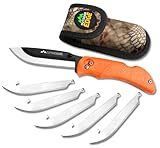
2. Outdoor Edge Razor-Lite
A replaceable-blade hunting knife from a brand known for field dressing tools. Fresh blades are very sharp and swap out in the field, which beats resharpening at camp. Check the listing for whether your version has a hook.
Suits: hunters who like fresh blades. Strengths: no sharpening in the field. Weaknesses: spare blades are a running cost. Skip it if you prefer a traditional edge.
Best for a backup knife
3. Elk Ridge Gut Hook Folding Knife
Elk Ridge sells several budget-friendly folding hunting knives with a built-in gut hook. They are simple, lightweight pocket folders that suit an occasional hunter or a spare in the truck.
Suits: a backup knife. Strengths: low cost of entry. Weaknesses: models and steels vary. Skip it if you want a premium steel.
View Elk Ridge Gut Hook Folding Knife on Amazon
Best for traditional style fans
4. Schrade Old Timer Gut Hook Folding Knife
Old Timer is a long-running brand known for traditional-looking hunting and pocket knives. Its gut hook folders pair a classic handle with a hook for opening game, and the line has a loyal following.
Suits: traditional style fans. Strengths: a familiar, proven brand. Weaknesses: not the lightest option. Skip it if you want modern materials.
View Schrade Old Timer Gut Hook Folding Knife on Amazon
Best for a brand-name skinner
5. Browning Gut Hook Skinning Knife
Browning is a major hunting name and offers skinning knives in several styles, some with a gut hook. Look for the hook version in the listing and confirm whether it is a fixed or folding model.
Suits: a brand-name skinner. Strengths: an established hunting maker. Weaknesses: versions differ. Skip it if you need a single clear spec sheet.
View Browning Gut Hook Skinning Knife on Amazon
Best for camp and truck kits
6. Frost Cutlery Gut Hook Skinner
Frost Cutlery sells simple fixed-blade skinners in a budget-friendly range, several with a hook on the spine. A good choice for a camp knife that will see rough use.
Suits: camp and truck kits. Strengths: a fixed blade with few parts. Weaknesses: basic fit and finish. Skip it if you want fine finishing.
View Frost Cutlery Gut Hook Skinner on Amazon
Care and Setup
- Rinse blood and hair off right after use, then dry the blade.
- Oil carbon steel and the pivot of any folder.
- Sharpen the hook with a small round file or diamond rod.
- Store the knife dry, not sealed in a damp sheath.
Mistakes to Avoid
- Pushing the hook instead of pulling it through.
- Cutting too deep and nicking the organs.
- Buying a hook that is too tight to sharpen.
- Skipping the listing check for blade and lock details.
Using the Hook in the Field
Owning a gut hook knife is not the same as using it well. The hook is a simple device, but a few habits make the difference between a clean opening cut and a messy, risky one.
The idea is to make the first cut without pushing a point into the animal. After making a small starting incision through the hide, you slide the hook under the skin or into the belly opening with the notch facing up, then pull the knife toward you. The hook lifts the layer and the sharpened inner curve cuts as you draw it, so the point stays clear of the organs. Light, steady pressure is enough. If you have to force the knife, the hook is probably dull or the angle is wrong.
A few practical tips:
- Use your free hand to lift the hide or belly wall slightly away from the organs underneath, giving the hook clearance.
- Keep the cutting stroke short and controlled, then reposition and continue.
- Work with the animal positioned so you are pulling along a stable line, not across your own legs.
- Take extra care near the pelvic area and the bottom of the rib cage, where the wall is thin and organs sit close.
Practice the motion on a piece of fabric or a hide scrap at home before the season, so the movement is familiar when your hands are cold and wet. Remember that the hook is meant for opening the belly, not for general cutting. For skinning and quartering, switch to the main edge of the blade, and keep the hook out of the way so it does not catch the hide or snag your glove.
Blade Shape and Length for Game
Because the hook does one job, the rest of the blade determines how comfortable the knife is for skinning and butchering. Shape and length should be matched to the animals you hunt.
A drop point or skinning blade has a rounded belly that sweeps along the hide, slicing smoothly without catching. That curve is why you see it on most hunting knives. A straighter edge gives more control for precise cuts and trimming but is less forgiving on long slices. A very sharp or fine tip gets into joints and tight spots but is more prone to puncturing a stomach or intestine by accident, which is the thing you are trying to avoid.
Blade length is a balance:
- Shorter blades are easier to control close to the body and in tight spaces, and many hunters prefer them for deer-sized game.
- Longer blades reach further across large animals but are harder to steer and heavier on the wrist.
- Thickness affects how the blade moves through meat; a thinner blade slices more easily, while a thick one is stronger for joint work.
Also consider blade steel. Stainless resists moisture and blood but may be harder to sharpen. Carbon steel is easy to sharpen and takes a keen edge, but it rusts quickly if neglected. Pick based on how consistent you are with cleaning. Finally, check where the hook sits. A hook on the spine keeps it away from the cutting edge, while a hook near the belly can share space with the main blade. Read the product listing and photos to see the layout, and confirm the details before buying.
Grip and Handle in Messy Conditions
Field dressing is slippery work, and a handle that feels fine in a shop can become dangerous once it is coated with blood, fat and water. Grip design is a safety feature, not a luxury.
Look for a handle with texture, ridges or finger grooves that give your hand a positive hold. Smooth polished surfaces look good but can slide. A guard or a swell at the front of the handle keeps your fingers from running onto the blade, which matters most when the knife is pushed or pulled forcefully. A slight palm swell fills the hand for control, while a thin handle can tire your grip.
Material has trade-offs. Rubberized and textured polymer handles stay secure when wet and are easy to wipe down. Natural materials such as wood and bone look attractive but can absorb moisture and odors and need more care. Metal handles can be cold and slick without texture. Think about gloves, too. If you wear thin gloves to protect against bacteria and cold, test whether the handle works with them, as a bulky glove can hide the feel of the edge.
- Check the handle width against the size of your hand; a handle that is too small causes cramping.
- For folders, ensure the lock does not sit where your fingers rest during a pull stroke.
- Look for a lanyard hole, which lets you tie the knife to your wrist or pack.
A handle that is easy to clean saves time and reduces contamination. Fewer crevices means less trapped debris. Try holding the knife in a pulling motion and in a reverse grip to see whether it stays comfortable.
Choosing Between Fixed, Folding and Replaceable Styles
The short FAQ says fixed blades are stronger and folders are easier to carry. Here is a fuller comparison, including the replaceable-blade option.
A fixed blade has no moving parts, so there is nothing to clean around, and it is ready the moment you draw it. It needs a sheath and takes more space, but it suits hunters who do a lot of dressing and want the least fuss. A folding knife carries compactly and rides in a pocket or pack with no bulky sheath. The lock needs to be trusted, and the pivot area collects debris and must be rinsed and dried. A replaceable-blade knife uses a handle that accepts disposable or swappable blades. You change the blade when it dulls, so you always start with a fresh edge, and you avoid carrying a sharpener. The cost is a running supply of blades and the need to handle a very sharp blade during changes.
- Frequent hunters who dress several animals each season often favor fixed blades or replaceable-blade knives.
- Occasional hunters or those carrying light often prefer folders.
- Hunters in remote areas may like a replaceable-blade system because a fresh edge cuts hide quickly with little effort.
If you choose a replaceable system, learn the blade change procedure at home, in good light, and keep a spare blade dry and protected. Never change a blade with cold, wet or numb hands if you can avoid it. Whichever style you pick, check that the hook is present on your version, since makers often sell hook and non-hook models under similar names.
Cleaning and Sanitizing After the Hunt
A knife used on game needs cleaning that goes beyond a quick wipe. Blood, fat and tissue left on steel or in a pivot lead to rust, odors and bacteria.
Start in the field. Wipe the blade with a clean cloth or paper towel, then rinse it with clean water when you can. At home, wash the knife with warm soapy water, paying close attention to the hook notch, the area around the guard and the pivot of a folder. A small brush helps reach tight spots. Dry the knife thoroughly, since moisture is the enemy of steel, then apply a thin coat of oil to carbon steel and to the pivot.
For folders, open and close the blade several times while rinsing to flush debris from the pivot, and dry it thoroughly before oiling. For replaceable-blade knives, dispose of used blades safely in a rigid container, and clean the handle in the same way.
- Wear disposable gloves during dressing and cleaning, and follow guidance from your local wildlife agency on handling game and any health advisories in your area.
- Do not leave the knife sealed in a damp sheath, which traps moisture.
- Store the knife in a dry place, with the sheath open to air.
- Check for rust spots, loose screws and chips before each season.
Sanitizing methods vary, and what is appropriate depends on the knife materials and handle. Check the maker’s care instructions rather than soaking a knife with wooden or bone handles. Replace a blade or knife that shows deep pitting, cracked handles or a lock that has become unreliable.
Which gut hook knife should you buy?
The best gut hook knife is the one that suits how often you hunt and how you like to carry and maintain a blade. Use these matches to narrow the six picks.
- If you want a fixed-blade feel in a compact body: the Gerber Moment Folding Sheath Knife folds into its own handle, so it carries light but opens into a rigid knife.
- If you dislike sharpening in the field: the Outdoor Edge Razor-Lite uses replaceable blades. Check the listing to confirm your version has a hook.
- If you want a backup knife for the truck or pack: the Elk Ridge Gut Hook Folding Knife is the budget-friendly folder. Models and steels vary, so read the details.
- If you like a traditional look: the Schrade Old Timer Gut Hook Folding Knife offers a classic handle and a hook in a long-running line.
- If you prefer a hunting brand name: the Browning Gut Hook Skinning Knife is worth a look. Confirm whether your version is fixed or folding.
- If you want a simple fixed skinner for camp: the Frost Cutlery Gut Hook Skinner has few parts and suits rough use.
A useful shortcut: pick fixed if you dress several animals a season, folding if weight and pocket carry come first, and replaceable-blade if you want a fresh edge every time. Then choose a brand and handle you find comfortable.
If you are a beginner, favor a knife with a clear listing, a handle with good texture and a hook that is easy to sharpen. If you already own a skinner, a hook knife can be a small second tool rather than your only one.
What to check before you buy, and who should skip it
Before you buy a gut hook knife, confirm that the exact version includes a hook and check the blade length, lock type and sheath. Similar names often cover models with and without a hook.
- Read the listing and photos to see the hook position and shape.
- Check the blade steel and how it is described, since stainless and carbon steel need different care.
- For folders, look at the lock type and whether your fingers rest near it during a pull stroke.
- Confirm whether a sheath is included and how the knife is retained.
- For replaceable-blade knives, check the cost and availability of spare blades.
- Check local rules on knife length and carry where you hunt.
- Confirm return and warranty terms on the listing.
The trade-offs are real. A hook adds a feature you will use for one job, and it can snag on a hide if you forget it. Folders have a pivot to clean, fixed blades need a sheath, and replaceable blades add a running cost. Budget knives may have basic fit and finish, and the steel can be harder to sharpen than you expect.
You might skip a gut hook knife if you only skin game and never open the belly yourself, or if you prefer a plain drop-point blade and careful technique. A hook is a convenience, not a requirement.
Compare the picks above, check the current listing for size and what is included, then choose the one that fits how you will use it.
Gut Hook Knife FAQ
Do I need a gut hook?
No, but it makes opening the belly faster and safer. A plain skinning blade can do the job with more care.
How do I sharpen a gut hook?
Use a small diamond rod or round file and work along the inside curve with light strokes.
Is a folding or fixed knife better?
Fixed blades are stronger. Folders are easier to carry. Pick the one you will have with you.
How do I use a gut hook safely?
Make a small starting cut, slide the hook under the skin with the notch facing up, lift slightly and pull toward you with light pressure. Keep the point away from the organs underneath.
Does blade length matter for deer-sized game?
Shorter blades give more control in tight spaces and are popular for deer-sized game. Longer blades reach further but are harder to steer. Choose what feels controllable in your hand.
What makes a handle safe when wet?
Texture, ridges and a guard or swell at the front keep your hand from slipping onto the blade. Rubberized or textured polymer handles generally hold up well and wipe clean easily.
Are replaceable-blade knives worth it?
They give a fresh edge each time with no field sharpening, which many hunters like. The cost is buying blades and handling very sharp edges during changes.
How should I clean a folding gut hook knife?
Rinse the pivot area while opening and closing the blade, wash with warm soapy water, dry thoroughly and oil the pivot. Follow the maker's care instructions.
Can I use the hook for skinning?
The hook is made for opening the belly. For skinning and quartering, use the main edge so the hook does not snag the hide.
Why do some listings with similar names lack a hook?
Makers often sell hook and non-hook versions of the same model. Check the photos and description to confirm the hook is included.
What is the best gut hook knife for a beginner?
A knife with a clear listing, a textured handle and an easy-to-sharpen hook is a good start. A folding sheath or fixed design is simple to learn. Practice the pulling motion before the season.
Can a gut hook knife be used for everyday cutting?
It can cut ordinary items, but the hook is made for opening game, so it may snag on some materials. Use the main edge for other tasks. Keep the hook clean and protected.
How often should I sharpen a gut hook?
Sharpen it when it stops cutting cleanly with light pressure. Use a small round file or diamond rod along the inner curve. Check the maker's instructions for the steel.
Is a fixed or folding gut hook knife better for hunting?
Fixed blades have fewer parts and are quick to use, while folders carry more compactly. Frequent hunters often like fixed blades, and light travelers prefer folders. Choose the knife you will actually carry.
Are cheaper gut hook knives safe to use?
Many are fine for occasional use if the lock, handle and edge are sound. Inspect the lock and handle before use and avoid forcing the blade. Replace any knife with a loose pivot or unreliable lock.
How do I store a gut hook knife between seasons?
Clean and dry it, oil carbon steel and the pivot, then store it in a dry place. Keep the sheath open to air rather than sealed. Check for rust and loose screws before the next season.
The Short Version
For a folding sheath design, the Gerber Moment. For fresh blades, the Outdoor Edge Razor-Lite. For a backup, the Elk Ridge. For a classic look, the Schrade Old Timer. For a known brand, the Browning. For a simple fixed skinner, the Frost Cutlery.
Related Guides
- 6 Best Gut Knives for Deer: Fixed, Folding and Replaceable (2026)
- 6 Best Stanley Knives: Retractable, Fixed and Folding
- 6 Best Replaceable Blade Knives for Shop and Site (2026)
- 6 Best Kephart Knives: Classic Bushcraft Fixed Blades (2026)
- 6 Best Hook Knives for Spoon Carving: Single and Double Edge (2026)