A good budget pocket knife proves you do not need to spend much for a dependable folder. The best low-cost models offer a sharp, easily maintained blade, a secure grip and a design that has been refined for years.
The six budget-friendly folders below cover assisted openers, manual flippers, a wood-handled classic and a keychain option. We have not used these products ourselves, so confirm blade size, finish and current availability on the current listing before buying.
As an Amazon Associate we earn from qualifying purchases. Links below are affiliate links, and they do not change the product information we give.
What to Look For
| Feature | Why it matters |
|---|---|
| Steel | Basic stainless is easy to sharpen and resists rust |
| Lock | A liner or lockback lock keeps the blade open safely |
| Handle | Textured handles give grip without sharp edges |
| Carry | A pocket clip or lanyard hole makes daily carry easier |
In this guide
Specs at a Glance
| Knife | Opening | Handle | Notes |
|---|---|---|---|
| Kershaw Cryo | Assisted | Steel | Pocket clip |
| Gerber Paraframe | Manual | Steel frame | Lightweight, skeletal feel |
| CRKT Squid | Manual flipper | Nylon-type | Small, clip-ready |
| Opinel No. 8 | Manual | Beech wood | Twist-ring lock |
| Cold Steel Mini Tuff Lite | Manual | Polymer | Keychain size |
| Kershaw Scallion | Assisted | Steel | Small, slim profile |
The 6 Best Budget Pocket Knives
Top pickBest for daily carry
1. Kershaw Cryo
A popular assisted-opening folder with a steel handle, a flat-ground blade and a pocket clip. It is known as a sturdy budget carry knife that opens quickly and holds up to everyday use.
Suits: daily carry. Strengths: a sturdy, simple build. Weaknesses: a bit heavy. Skip it if you want an ultralight knife.

Best for light everyday carry
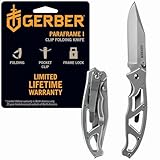
2. Gerber Paraframe
A lightweight frame-lock-style folder with an open skeletal frame. It is quick to dry, easy to clip to a pocket and designed to deliver a reliable lock in a simple package.
Suits: light everyday carry. Strengths: low weight. Weaknesses: a thin handle. Skip it if you want a thick, padded grip.
Best for small hands and light use
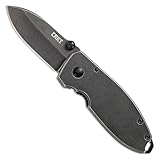
3. CRKT Squid
A small flipper folder with a compact handle and a friendly shape. It is a favorite among people who want a tiny knife for errands, packages and general light duty.
Suits: small hands and light use. Strengths: a compact size. Weaknesses: a short grip. Skip it if you do rough work.
Best for picnics and campsites
4. Opinel No. 8
A French folding knife with a beech handle and a simple ring lock. Its slim blade slices food well, and the design has been in production for a very long time.
Suits: picnics and campsites. Strengths: a slim, sharp blade. Weaknesses: wood handle care. Skip it if you want a clip.
Best for keychain carry
5. Cold Steel Mini Tuff Lite
A small polymer-handled folder designed to ride on a keychain or in a small pocket. The tiny profile suits quick cutting jobs, and its textured handle helps keep a safe grip.
Suits: keychain carry. Strengths: a very small size. Weaknesses: limited blade length. Skip it if you want a larger working blade.

Best for slim pocket carry
6. Kershaw Scallion
A slim assisted-opening folder in a small body. The design is well known for being easy to pocket, and the blade opens quickly for jobs such as opening boxes.
Suits: slim pocket carry. Strengths: a thin, light shape. Weaknesses: not for rough use. Skip it if you want a big blade.

Care and Setup
- Wipe the blade after cutting food or damp material.
- Oil the pivot every few months.
- Sharpen with a simple stone or pocket sharpener.
- Check the pocket clip screws occasionally.
- Store the knife dry, not inside a damp sheath.
Mistakes to Avoid
- Using a folder as a pry bar.
- Ignoring a loose blade or pivot.
- Buying on looks and skipping the lock type.
- Leaving the blade wet in your pocket.
Where Budget Pocket Knives Save Money and Where They Do Not
A low-priced pocket knife keeps costs down in a few predictable places. Handle materials tend to be stamped steel, molded polymer or simple wood rather than machined or exotic materials. Steel choices lean toward basic stainless that is easy to make and easy to sharpen. Fit and finish are plainer, with fewer refinements such as ball-bearing pivots or hand-finished edges. Packaging and accessories are minimal.
What a sensible budget knife should still deliver is the fundamentals: a blade that opens and locks reliably, a handle that is comfortable and safe, an edge that can be brought to a good sharpness, and a pivot that does not wobble. Those basics are within reach of established makers at modest prices, which is why simple designs that have been in production for years remain popular.
Where you should be careful is the lock and the pivot. These are the parts that affect safety. A knife with a loose lock, a blade that rocks sideways when open or a lock that does not engage fully should be returned. Cosmetic flaws such as minor scratches or uneven finishing matter less than function.
- Acceptable trade-offs: basic steel, simple handles, plain finish.
- Not acceptable: a lock that slips, a blade that is off-center or sharp edges on the handle.
- Worth checking: that the listing states blade length, lock type and handle material clearly.
Choosing an Opening Style That Suits You
The six picks use three broad styles, and each has a different feel. Assisted opening uses a spring that finishes the opening motion once you push the blade partway, which makes it quick and easy, but it adds parts and can be a legal issue in some places. Manual flippers use a small tab on the back of the blade that you press with your index finger, and the blade flips out on a pivot; they are fast with practice but depend on good pivot smoothness. Traditional manual openers, such as a nail nick or a twist-ring wood-handled design, are slower but simple and have fewer things that can go wrong.
Think about how you will use the knife. If you want to open boxes quickly with one hand while carrying something, a flipper or assisted design may suit you. If you want a simple tool for fruit, string and occasional chores, a traditional design is perfectly adequate. For keychain carry, size and weight may matter more than the speed of deployment.
Legal context counts too. Some places restrict assisted or spring-driven knives, locking blades or certain blade lengths. Check local rules before choosing an opening style, especially if you will carry the knife to work or travel with it.
- Test one-handed opening and closing in a safe place before regular carry.
- Check that the blade stays closed in the pocket and does not open accidentally.
- Confirm that the closed knife does not feel too bulky for your pocket.
Locks Explained in Plain Terms
The lock is what stops a folding blade from closing on your fingers while you cut, so it deserves a close look even on an inexpensive knife. A liner lock uses a spring metal strip inside the handle that moves behind the blade tang. A frame lock works similarly but uses part of the handle itself. A lockback has a spine on the back of the handle that latches into a notch in the blade. A twist-ring lock, as found on certain traditional designs, uses a rotating collar to hold the blade open. Slip-joint knives have no lock at all, only a spring that resists closing.
No lock is perfect, and all can fail if the knife is abused. Cutting with excessive pressure, prying or tapping the spine can overload them. Before each use, open the blade and give it a gentle push toward the closing direction to make sure it holds. If the lock shows heavy wear or engages only partly, stop using the knife.
When comparing listings, look for these details:
- The name of the lock type, so you can read about how it works.
- Whether the release is easy to reach with your thumb or finger.
- Any reviews mentioning blade play, which is sideways wobble when the knife is open.
- The thickness of the handle, since thin frames may flex.
A slip-joint knife is not necessarily unsafe, but you must handle it with greater care, since it relies on spring tension alone.
Sharpening and Edge Care on a Low-Cost Blade
One advantage of budget knives is that the steel is typically forgiving. Basic stainless steels sharpen quickly on a simple stone or a pull-through device, and they respond well to light honing. The trade-off is that the edge may dull faster than harder steels, so plan to touch it up regularly. A small ceramic rod or a fine stone is a useful companion and costs little.
To sharpen at home, find the angle by laying the blade flat on the stone and lifting the spine slightly, then draw the edge across the stone as if slicing a thin layer off it. Keep the same angle on each stroke, alternate sides evenly and finish with lighter strokes. Test on paper or a tomato skin rather than your thumb. If the knife has a serrated section, a small tapered rod is better.
Routine care to extend life:
- Wipe the blade dry after cutting damp or acidic foods.
- Oil the pivot lightly every few months and wipe away excess.
- Check the clip and pivot screws, and tighten only if the manufacturer allows adjustment.
- Store the knife dry in a pouch or drawer, not in a damp pocket or sheath.
A dull edge slips. If you find yourself pushing harder, stop and sharpen. A well-kept low-cost knife will often cut better than a neglected expensive one.
Matching a Budget Knife to Your Daily Use
Start with what you will actually cut. For packages and cardboard, a sturdy handle and a blade with enough belly help, and an assisted opener with a pocket clip makes access quick. For food and picnics, a thin blade slices cleanly and a wood or smooth handle cleans easily, but it needs drying after use. For errands and keychain carry, a very small polymer-handled folder is easy to forget in the pocket, though its small grip limits heavy work. For general use around the house or yard, a mid-size folder with a clip is a good compromise.
Consider weight and pocket comfort. A lighter frame is easy to carry all day, but a heavier steel handle often feels more secure in the hand. Check the knife’s closed length against your pocket size. A knife that digs into your leg is a knife that stays at home.
Before you buy, ask:
- Does the listing state blade length, steel type, handle material and lock?
- Will the pocket clip fit the way I carry, such as tip up or tip down, and can it be moved?
- Is the knife right- and left-hand friendly?
- What is the return policy if the lock or pivot is poor on arrival?
No inexpensive knife is a pry bar, a chisel or a hammer. Use it for cutting and it will last.
Budget Pocket Knife FAQ
Can a cheap knife be reliable?
Yes. Simple designs from established makers can do daily tasks well.
Which opening style is best?
Assisted and flipper styles are quick, while manual nail-nick styles are simple and traditional.
Is steel quality important at this level?
Basic stainless is fine for most users. It is easy to sharpen and forgiving.
Do I need a pocket clip?
A clip keeps the knife in place and easy to reach, though a pouch works too.
How often should I sharpen a budget knife?
Sharpen when it stops slicing paper cleanly or starts tearing instead of cutting. Light touch-ups on a fine stone or rod keep the edge in shape better than waiting for a very dull blade.
Are assisted-opening knives legal everywhere?
No. Rules differ by place and sometimes cover spring-assisted knives. Check local laws before carrying one.
What should I do if the blade wobbles side to side?
Some blade play is normal on slip-joint knives, but a wobbling lock-equipped knife may have a loose pivot. If it is adjustable, follow the maker's instructions, otherwise return it.
Can I use a pocket knife for food prep?
Yes for light tasks such as fruit and cheese. Clean it afterward and dry it, particularly if it has a wood handle or carbon steel.
Is a pocket clip worth having?
A clip keeps the knife in a consistent spot and easy to grab. A pouch or loose pocket carry also works if you prefer it.
How do I stop a pivot from squeaking?
A drop of light oil on the pivot, worked in by opening and closing, usually helps. Wipe off any excess so it does not collect lint.
How do I know when to replace the knife?
Replace it if the lock fails to hold, the blade is chipped beyond sharpening or the handle cracks. Using a damaged knife is a safety risk.
Carry Laws, Etiquette and Where a Knife Does Not Belong
A pocket knife is a handy tool, but where you can carry one is not the same everywhere. Rules differ by country, state, city and even individual building. Some places limit blade length, some restrict particular mechanisms or locking designs, and many ban knives completely in certain settings. Because of that, check the current laws for your area before you buy and before you travel. A knife that is perfectly legal at home may be a problem a few miles away.
Some places are off limits almost everywhere. Schools, courthouses, government buildings and many workplaces prohibit knives, and the rule often applies to the parking lot as well. Commercial flights are strict. In the United States, the Transportation Security Administration generally does not allow pocket knives in carry-on bags, though checked baggage rules are different, so review the agency’s current guidance before packing. Concert venues, stadiums and some stores also have their own policies.
- Look up blade length limits and any rules about how a blade opens or locks.
- Keep the knife in your pocket or on your belt, not in view, unless local custom says otherwise.
- Do not display or open a knife around people who may feel uneasy.
- When in doubt, leave it at home or in the car.
Good manners matter as much as legality. Use the knife for practical tasks, open it away from people and put it away when you are done.
Handle Materials and Grip at a Low Price
At budget prices, the handle tells you a lot about the compromises a maker has chosen. Common materials include glass-filled nylon or similar polymers, stainless steel and wood. Polymer handles are light, weather resistant and cheap to produce, and they come in many textures. They can feel slick if the surface is smooth, so look for grooves, checkering or finger choils that improve grip. Stainless steel handles feel solid and last, though they add weight and can be slippery when wet.
Wood, as on the Opinel No. 8 in this guide, looks and feels warm in the hand and has a long tradition in knife making. It does need a bit of care. Wood can swell or shrink with moisture, so avoid leaving the knife wet and dry it after use. A thin coat of oil now and then keeps the wood from drying out.
Consider your hands and your tasks. A larger hand may find a very thin handle tiring on a long cutting job, while a small hand may find a bulky one awkward. If possible, hold a knife in a store before you buy. Online, look at the handle length and thickness figures in the listing, and read the way owners describe the grip. Also consider whether the handle has a lanyard hole, which gives you a way to secure the knife or retrieve it from a pocket.
Checking a New Knife Out of the Box
Budget knives vary more from one unit to the next than expensive ones do, so a few minutes of inspection when it arrives can save frustration. Do this soon after delivery, while returns are still easy.
Start with the blade alignment. When the knife is closed, the blade should sit centered in the handle without rubbing on either side. Open it and look down the spine to confirm the blade is straight. Check that the pivot is snug without grinding. A side-to-side wobble, known as blade play, is a sign of a loose or poorly made pivot.
Test the lock carefully. With the blade open, apply gentle pressure to the spine and check that the lock holds firmly, without any rock or give. Never press on the edge, and keep your fingers clear of the blade path. Next, run through the opening and closing motion several times to see that it is smooth and consistent.
- Look at the edge under bright light for nicks, uneven grinds or a rolled tip.
- Try slicing paper or a piece of cardboard to see how the factory edge performs.
- Check that the clip, if any, is firmly attached and does not catch the blade.
- Confirm the screws are snug, and tighten them gently if needed with the correct driver.
If anything is clearly wrong, such as a lock that fails or a blade that is far off center, return or exchange the knife, since these are not things to live with.
Cleaning, Storing and Making a Budget Knife Last
A little routine care stretches a low-cost knife a long way. After use, wipe the blade and the pivot area with a clean cloth, and rinse off sticky residue with warm water and mild soap when needed. Dry it fully before closing, because moisture trapped inside a handle encourages rust. Open and close the knife occasionally to work out any grit.
Lubricate the pivot lightly with a drop of oil designed for tools or a food-safe oil if you use the knife for food. Too much oil attracts dust and lint, so use a little and wipe away the excess. For storage, choose a dry place away from damp or salty air. A drawer or a small pouch works well, and avoid leaving the knife in a hot vehicle or a humid garage.
Keep the pocket clean too. Lint and sand collect in the handle over time. A quick blast of compressed air or a soak in warm soapy water, followed by thorough drying and a drop of oil, brings a gritty knife back to life. With such steps, even an inexpensive knife can serve for years.
Frequently Asked Questions
What blade length is legal to carry as a pocket knife?
It varies by country, state and city, and some places also restrict how a blade opens or locks. Check your local and state rules before buying or traveling. Schools, courthouses and many workplaces ban knives regardless of the general law.
Can I take a pocket knife on a plane?
In the US, pocket knives are generally not allowed in carry-on bags, though rules for checked bags differ. Policies change and vary by country, so check the airline and the current security agency guidance before packing. Leaving the knife at home is the simplest option.
Are wooden knife handles a bad idea in wet weather?
Wood can swell and shrink with moisture, so it needs a little more care than plastic or steel. Dry the handle after use and apply a thin coat of oil occasionally. Many people use wooden-handled knives for years with these simple habits.
What should I check on a budget knife as soon as it arrives?
Check that the blade is centered, the pivot has no side-to-side wobble, the lock holds firmly and the edge has no nicks. Open and close it several times to feel for roughness. Return or exchange it quickly if the lock or alignment is clearly faulty.
The Short Version
For all-around carry, the Kershaw Cryo. For light weight, the Gerber Paraframe. For tiny size, the CRKT Squid. For a classic, the Opinel No. 8. For keychains, the Cold Steel Mini Tuff Lite. For slim carry, the Kershaw Scallion.
A budget-friendly knife rewards a little maintenance. Keep the pivot clean, sharpen before the edge gets truly dull and replace worn clip screws. Before you buy, check the current listing for blade length, handle material and lock type, because makers sometimes change finishes and details between production runs. If you plan to carry the knife to work or on a trip, read the local rules on blade length and folding knives first, and choose a model whose size feels natural in your hand rather than the one with the most dramatic styling. A simple, proven folder from an established maker almost always beats an unknown lookalike, and it is easier to find spare parts, sheaths and guidance for it later.