Where to buy
Check the latest price, availability and delivery on Amazon. Orders are placed on Amazon. We may earn a commission from qualifying purchases. For beginners at $30, the powered tier opens with three verified 5-inch random orbital sanders linked below. The SKIL leads for new users on dust control and gentle variable speed; the bundle picks compete on included discs. Prose-only picks mark the step-ups, with reasons stated.
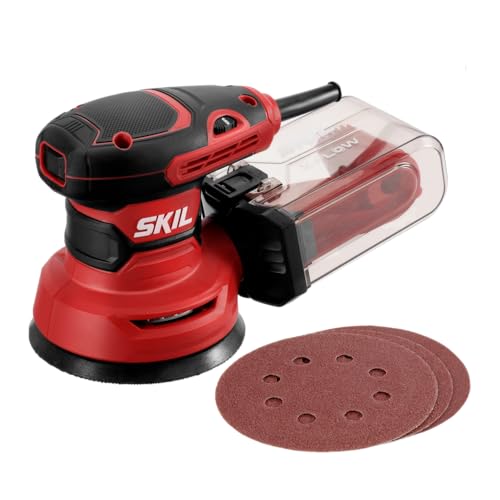
- Best orbital sander for beginners under $30: SKIL 5″ Random Orbital Sander (SR211601) — Check on Amazon
- Best starter bundle: HYCHIKA 300W Random Orbital Sander (OS300W) — Check on Amazon
- Best value starter: DEKOPRO 2.5A Random Orbital Sander — Check on Amazon
- BLACK+DECKER 5″ Random Orbit Sander (BDERO100) — the simple brand step-up just above this tier; prose-only below
- The hand-sanding system — your permanent partner for shapes and finishes; prose-only below
- Pro-grade 3-amp random orbital sanders — the far graduation class; prose-only below
Read the full guide ↓
Disclosure: As an Amazon Associate, umtsmarttool.com earns from qualifying purchases. Links to Amazon on this page are affiliate links; they cost you nothing extra. Listing details such as price and availability change often, so check the current Amazon listing before you buy.
The best orbital sander for beginners under $30 is the SKIL SR211601, and the reason is forgiveness. A beginner’s first powered sanding goes wrong in predictable ways — pressing too hard, parking the machine, tilting on an edge — and the right first machine blunts each one: a variable-speed dial that lets you start slow while your hands learn, a counterbalanced body that does not punish a new grip with vibration, and a cyclonic dust box that keeps the surface visible so you can actually see the scratch pattern you are supposed to be learning to read. The best orbital sander for beginners under $30 is not the most powerful or the cheapest; it is the one whose mistakes arrive slowest. Around the SKIL, the HYCHIKA and DEKOPRO compete as starter bundles — discs included, ladders ready — and this guide verifies all three, then teaches the first sessions: the practice board, the three disciplines, and the starter projects that build skill in the right order.
One honest preface: if you have never sanded at all, the hand system in the tier below is the gentlest possible first teacher, and many beginners in this guide’s audience own both — the hand drawer for shapes, edges and finishing, the machine for flat area. Its story is at Best Orbital Sander For Beginners Under $15. But a beginner who starts powered, on the right machine, with the practice discipline this guide lays out, will sand well quickly — the random orbital is a forgiving teacher when its speed is dialed to the student’s pace. Check live prices before buying; this tier’s listings move with promotions, and in-budget status is a day-of-purchase fact.
In this guide
Quick Picks
Each row matches a beginner situation to the pick that fits it. The three linked picks are verified within this budget; prose-only picks carry their reasons in their reviews.
| Beginner situation | Pick | Why it stands out | Link |
|---|---|---|---|
| Best first machine | SKIL 5″ Random Orbital Sander (SR211601) | Variable speed to start slow, cyclonic dust box, low vibration | Check on Amazon |
| Best all-in-one start | HYCHIKA 300W Orbital Sander (OS300W) | 12 discs included, six speeds, dust bag | Check on Amazon |
| Best budget start | DEKOPRO 2.5A Orbital Sander | 16 discs, dust box, six speeds at a value price | Check on Amazon |
| Simplest operation | BLACK+DECKER Random Orbit Sander (BDERO100) | One speed, no dial — the staple step-up | Prose-only — just above this tier |
| Best partner tools | Hand-sanding system (block, grips, sponges) | Shapes, edges and finishes the machine cannot do | Prose-only — see the $15 guide |
| Best far goal | Pro-grade 3-amp random orbital class | What daily users graduate to, years later | Prose-only — well above this tier |
How These Picks Were Chosen
The budget was applied to complete starter purchases: a 5-inch random orbital sander with dust collection and starter discs, sold as a real Amazon listing positioned within $30 in the United States. Random orbit was required — plain sheet sanders leave swirl patterns that punish beginners under finish. Beyond the base guide’s criteria, beginner weighting governed the ranking: speed control range at the slow end (where learning happens), dust visibility (beginners must see the pattern they are making), vibration (new grips tire fast), and bundle completeness (a beginner cannot improvise a missing grit).
We did not use these tools ourselves. We verified each linked pick’s ASIN and specifications — amps, speed range, pad, dust system, weight, included discs — from maker listings, and ranked by beginner forgiveness: how slowly and visibly each machine lets a new user make and correct the classic mistakes. Prose-only picks are excluded for stated reasons: the BDERO100 sits just above the ceiling; the hand system and pro class are context picks. No specification is invented; anything unverifiable from a maker listing was omitted. The base view of this tier, without the beginner framing, is at Best Orbital Sander Under $30.
The 6 Best Orbital Sanders for Beginners Under $30
SKIL 5″ Random Orbital Sander (SR211601)
Who it suits: The beginner who wants one machine to learn on and keep — the default recommendation of this guide.
Every feature that matters for learning is present. The variable-speed dial spans roughly 7,000 to 13,000 orbits per minute, and its slow end is the classroom: at low speed the machine removes material gently, gives your eyes time to read the surface, and turns the classic beginner errors — a moment’s tilt, a paused pass — into shallow marks the next grit erases instead of scars the project keeps. The 2.8-amp motor has enough reserve that it does not bog and grab when a new user’s pressure varies. The X-Flow cyclonic dust box keeps the surface visible, which for a beginner is a teaching feature as much as a cleanliness one: you cannot learn to erase scratch patterns you cannot see. Counterbalancing keeps vibration low, so a first afternoon ends with tired arms rather than buzzing hands. Starter discs across grits are in the box. Check the current price on Amazon — sighted right at this tier’s ceiling, and the most complete beginner machine the budget verifies.
The learning plan for it is in the curriculum section below: practice board first, three disciplines, forgiving projects in order. Its honest limits are the tier’s: the dust box is not a vacuum, the cord is a cord, and no machine sands profiles — the hand partner pick covers those. For the beginner’s actual workload — learning, then furniture and projects at home pace — the SKIL is the machine this guide would hand a friend, with the dial set low and the practice board already clamped to the bench. One underappreciated beginner virtue deserves naming: its controls are where your thumb expects them and its speed dial reads at a glance, so the mid-pass adjustments the curriculum teaches — slowing near an edge, rising on a flat — become reflexes rather than fumbles. Machines that hide their controls teach beginners to set speed once and suffer; this one teaches the dial as an instrument, played continuously.
- Variable speed with a genuinely gentle low end — learn slow, work fast later.
- Cyclonic dust box keeps the scratch pattern visible while you learn it.
- Counterbalanced and light (about 3.4 lb) for new grips.
- 2.8A reserve — no bogging when beginner pressure varies.
Honest limitation: Entry-tier dust and duty cycle; profiles and finishes still belong to hand tools — a limitation this guide treats as a syllabus rather than a defect, since the hand half is where finishing is learned.
Choose it if you are buying one sander to learn on. Skip it if a bundle pick’s live price undercuts it decisively and your budget is strict — a beginner’s budget spent on discs and a practice project’s materials teaches more than any badge.
HYCHIKA 300W Random Orbital Sander (OS300W)
Who it suits: Beginners who want everything in one box — machine, a dozen discs, dust collection — and no second purchase before the first project.
The HYCHIKA’s beginner case is completeness plus the widest slow range here: six speeds from roughly 6,000 orbits per minute — the gentlest start of the three linked picks — to 13,000, on a 300-watt (2.5-amp class) motor, with twelve discs across grits and a dust bag included. For a new user, the included ladder matters pedagogically: the first sessions climb grits constantly, and a bundle that stocks them prevents the skipped-rung improvisation that ruins first surfaces. The dust bag is the class baseline — less elegant than the SKIL’s cyclone — but serviceable, and the machine’s manners are friendly: standard pad, standard discs, no surprises.
Two honest notes. Its price history straddles this tier’s ceiling — averages slightly above $30 with dips below — so its beginner value is promotion-dependent: on a dip day, it may be the tier’s best starter buy; above the ceiling, the SKIL is the better assignment. And value-brand support trails the legacy names over years, a footnote for learners, a consideration for the tool’s second decade. Within those notes it is a co-finalist this guide recommends without hesitation to the beginner whose live price cooperates.
- Six speeds from about 6,000 OPM — the gentlest learning range here.
- 12 discs included: the ladder is stocked from day one.
- Complete starter bundle with dust bag.
Honest limitation: Price straddles the ceiling — check the live listing; dust bag is baseline.
Choose it if its dip-day price beats the SKIL’s. Skip it if it sits above the ceiling on your day.
DEKOPRO 2.5A Random Orbital Sander
Who it suits: Budget-strict beginners who want variable speed, a dust box and the fullest disc kit at the friendliest typical price.
DEKOPRO equips the beginner completely for the least money here: a 2.5-amp motor, six speeds reaching roughly 13,000 orbits per minute per its US listing, a 5-inch hook-and-loop pad, a dust collection box rather than a bag, and sixteen discs — the largest starter supply of the three. The pedagogical value mirrors the HYCHIKA’s: a stocked ladder from the first session, so learning is never interrupted by a missing grit. The dust box empties without consumable bags, a small ownership kindness that compounds. For the beginner allocating a strict budget across machine, discs and a first project’s materials, this allocation is the rational one — abrasives and finish decide results more than motor badges do.
The cautions are the ones research surfaced: regional listings for this model family include other-market variants, so confirm the US configuration on the Amazon listing before ordering — the ASIN here is the verified US listing. Support and longevity trail legacy brands, as with all value picks. Neither caution touches its classroom performance: dial low, ladder stocked, dust boxed — a beginner can learn everything on this machine that the tier teaches.
- 16 discs included — the fullest starter ladder here.
- Six speeds and a dust box at the tier’s friendliest price.
- 2.5A motor — the standard entry class, adequate for learning and projects.
Honest limitation: Verify the US configuration on the listing; value-brand support.
Choose it if budget strictness rules. Skip it if you prefer the SKIL’s dust system and reserve power and can fund the difference — many beginners can, by trimming the first project’s materials rather than the machine they will learn on for years.
BLACK+DECKER 5″ Random Orbit Sander (BDERO100)
Who it suits: Beginners who fear dials and settings and want the simplest possible machine from a known name — at a small step above this tier.
The BDERO100’s beginner argument is the absence of decisions: a 2.0-amp motor, one speed around 12,000 orbits per minute, a dust bag, on. For a certain new user, that simplicity is confidence — nothing to set wrongly. But honesty requires the counterweight in a beginner’s guide: its single speed is a fast speed, and fast is where beginner mistakes happen quickly; the linked picks’ slow settings are, paradoxically, the more beginner-friendly design. It is prose-only because its typical US price sits just above this tier’s ceiling, just above this tier’s ceiling. Buyers who value the staple brand, its support network and its known quantity will step up happily; beginners on the strict budget get more learning per dollar from the linked three.
- One speed, zero settings — simplicity as confidence.
- The category staple’s support and parts network.
- Priced just above this tier — the defined step-up.
Honest limitation: Above budget, and its single fast speed is less forgiving for learners than a dial’s slow end.
Choose it if brand and simplicity outrank budget and speed control. Skip it if you are learning — the dial is your friend.
The Hand-Sanding System: Your Permanent Partner
Who it suits: Every beginner in this guide — because the machine’s jurisdiction ends where furniture gets interesting.
No orbital sander at any price sands a profile, a spindle, an inside corner or a coat’s edge, and beginner projects are full of all four. The hand system — block, contour grips, sponges and a grit ladder, assembled for the price of the tier below — is therefore not the machine’s rival but its permanent partner, and for pure beginners it doubles as the gentlest first teacher: hand pace makes every mistake slowly and visibly before the motor makes any of them quickly. The full build-out lives in the $15 beginner’s guide linked in this article’s opening; the short version is that a beginner who owns both systems owns complete sanding capability, and the combined cost still rounds to a modest workshop line item.
Sequence the partnership by surface: machine for flats, hand for everything else, fine finishing by hand always. Beginners who internalize that border early stop fighting their tools — no more trying to rock a flat pad into a cove, no more hand-sanding a door slab out of purity — and their projects improve at the speed of the insight. Prose-only here because the system’s guide carries its own detail; buy it alongside whichever linked machine you choose, ideally in the same week.
- Covers profiles, spindles, corners and finishes — the machine’s blind spots.
- The gentlest first teacher for true beginners.
- Combined with any linked pick: complete sanding capability.
Honest limitation: Hand pace on flats — which is exactly the half the machine exists to take.
Choose it if you sand furniture, which has shapes. Skip it if your work is exclusively flat panels — a short list of beginners.
Pro-Grade 3-Amp Random Orbital Sanders (Class Pick)
Who it suits: Beginners only as a map of the far shore — the class daily professionals use, included so the journey’s end is visible.
The pro class — roughly 3-amp motors, sealed switches, vacuum-grade dust ports, refined balance — costs several times this tier and is the wrong first purchase for every beginner: its virtues (longevity under daily load, extraction, endurance ergonomics) are invisible at learning pace, and its price would consume the budget that should stock discs, hand tools and project materials. It appears here so beginners can place the linked picks correctly: they are not toys beneath the “real” tools; they are the same tool type at a home duty cycle, producing identical surfaces at every grit. Graduate when the entry machine’s limits are personally known — duty cycle, dust, refinement — and not one project before. No link, no model: the pro decision belongs to a later, evidence-rich version of you.
- The far shore: durability, extraction and endurance at several times the price.
- Identical surfaces at a given grit — the difference is years and air.
- Graduate on evidence, never on aspiration.
Honest limitation: Far above this budget and wasted on learning pace.
Choose it if you are reading this guide years late with a worn entry machine. Skip it if you are a beginner — everyone is, in this guide, by definition.
Comparison Table
| Product | Type | Key verified spec | Best use | Link |
|---|---|---|---|---|
| SKIL Random Orbital Sander (SR211601) | Corded random orbital | 2.8A, variable ~7,000–13,000 OPM, X-Flow dust box, ~3.4 lb | Best first machine | Check on Amazon |
| HYCHIKA Orbital Sander (OS300W) | Corded random orbital | 300W, 6 speeds ~6,000–13,000 OPM, 12 discs, dust bag | All-in-one starter bundle | Check on Amazon |
| DEKOPRO Orbital Sander | Corded random orbital | 2.5A, 6 speeds to ~13,000 OPM, 16 discs, dust box | Budget starter | Check on Amazon |
| BLACK+DECKER Orbit Sander (BDERO100) | Corded random orbital | 2.0A, single speed ~12,000 OPM, dust bag | Simple brand step-up | Prose-only — above tier |
| Hand-sanding system | Hand tools | Block, grips, sponges, ladder ~80–2000 | Shapes and finishes partner | Prose-only |
| Pro-grade 3-amp class | Corded pro class | ~3A class, vacuum ports, sealed switches | Far graduation | Prose-only — above tier |
How to Choose Your First Orbital Sander Under $30
- Prioritize the slow end of the speed dial. Learning happens at low speed; a machine that starts gently is a machine that forgives.
- Dust visibility is a teaching feature. Box over bag where prices allow — you learn by watching the pattern you are erasing.
- Count the discs in the box. A stocked ladder prevents the skipped-rung mistakes that ruin first projects.
- Weight near 3.5 lb, counterbalanced if possible. New grips fatigue fast; comfort is a learning feature too, because a tired beginner’s technique collapses an hour before their enthusiasm does.
- Check live prices against the ceiling. Promotions move this tier’s picks across $30 weekly; in-budget is a day-of fact.
- Budget the hand partner. Shapes and finishes are hand work; the $15 system completes your capability — and it is the half of sanding you will still be using on the day the machine is a decade old.
- Skip the pro class entirely for now. Its virtues are invisible at learning pace and its price starves your disc and material budget.
- Plan the practice board before the first project. Ten minutes of structured practice is the highest-value step in this entire guide — it converts the machine’s first errors into free lessons on scrap instead of tuition paid on furniture.
The Beginner’s Curriculum: Practice Board to First Project
Session one is not a project; it is a practice board — a clamped plank of pine or a plywood offcut — and thirty honest minutes on it will teach more than any article. Load a coarse disc, set the dial low, and learn the machine’s voice: start it on the surface (never spinning in the air and landing), keep it moving in slow overlapping passes, and feel how its own weight is the correct pressure by adding none of yours. Watch the scratch pattern form, then climb one grit and erase it completely, checking wiped-clean in raking light — the same discipline the hand tier teaches, now at motor pace. Deliberately commit the classic errors once, on the board, where they are free: park the machine and watch the dish form; tilt and watch the crescent appear; press and feel the pad slow. A beginner who has seen each error’s signature owns the diagnosis forever, and will catch the real ones on real furniture in their first second rather than their final coat.
Session two is a forgiving real surface — a garage-sale table top, a door, a shelf board — taken through the full ladder with the dial rising as your confidence does. Session three adds an edge that matters: a dresser top whose crisp lines must survive, teaching passes that stop at edges and slow speeds near them. Session four is a shaped piece, where the machine takes the flats and the hand system takes everything else, and the partnership border stops being theory. After four sessions the beginner’s questions change character — from “how do I not ruin this” to “how do I make this better” — which is the graduation this curriculum exists to produce. Keep the practice board; it remains the place to test a new disc, a new finish’s sanding schedule, or a bad day’s shaky hands, for as long as you sand. And photograph the sessions if you are the documenting kind: the progression from session one’s timid passes to session four’s confident ladder is visible evidence, on the hard days of later projects, that skill compounds — a portfolio every beginner deserves to have made once.
The Three Disciplines: Pressure, Motion, Patience
Everything a beginner needs fits in three disciplines. Pressure: the machine’s weight, plus nothing. Added force slows the pad’s free rotation, degrading the random pattern into swirls, heating the disc, tiring the arm and cutting less — the rare technique error that punishes every dimension at once. If cutting is slow, the disc is worn or the grit is wrong; change one of those, never your downward force. Motion: start on the surface, travel slowly and constantly, stop off it. A random orbital should never be stationary while running on wood — the dish forms in seconds — and its passes should overlap like mowing rows, at a pace that feels almost too slow for the first hour and exactly right ever after. Patience: the ladder climbed completely, each pattern erased before the next begins, verified by wiping and raking light rather than by hope. Skipped rungs are the beginner’s false economy; the machine makes each rung fast, so the total cost of honesty is minutes.
Notice that all three disciplines are identical to the hand tier’s — pressure in the holder, motion without dwelling, patterns erased completely — because sanding is one craft with two paces. Beginners who learn the disciplines on either tool own them on both, which is why this guide is serenely indifferent to where you start and utterly strict about how. The machine will not supply the disciplines; it will only amplify whatever you bring to it. Bring these three, and it amplifies competence.
Safety for New Sanders: The Short, Complete List
Powered sanding is among the safest power-tool work, and its list is short enough to memorize. Eye protection against the dust the collection misses. A mask or respirator at coarse stages — and always on old finishes of unknown composition, with possible lead paint tested rather than sanded, full stop. Hearing protection is optional at this tier’s volume for short sessions and sensible for long ones. The cord routed behind you or over a shoulder, never across the work where the pad can meet it. The machine unplugged for disc changes — a ten-second habit that makes a whole category of accident impossible. Workpieces clamped or weighted so both hands belong to the tool and neither chases a sliding board. And the beginner’s master rule: if something feels wrong — a grab, a chatter, a sudden change of note — stop the machine on the surface, lift it after it halts, and look. Diagnosis is a beginner skill too, and it starts with the confidence to pause.
Comfort belongs on the safety list at this scale: work at bench height, break at each grit change to empty dust and inspect, and stop for the day when your grip starts tightening with fatigue — tired hands press, tilt and park, and the last hour of a beginner’s long day writes most of its errors. Sessions sized to your freshness teach faster than marathons; the curriculum above is four sessions, not one heroic Saturday, for exactly that reason.
Your First Month: A Beginner’s Practice Calendar
Week one belongs to the practice board and one forgiving surface. Run the board session twice — the second time feels different, because your hands now know what the first was teaching — then take the thrift-store top or door through the full ladder and live with the result for a few days, watching how it reads in different light. Living with a first surface is a lesson in itself: the flaws that shouted during sanding fade into the room, and the ones that remain are the true curriculum — usually a skipped rung’s valleys near an edge, which is every beginner’s signature and now yours to retire. Week two adds the edge project, the dresser top or shelf whose lines must stay crisp, at slow speeds, with the hand block finishing the final edge passes if confidence wavers — there is no rule that a project must be machine-only, and mixing tools mid-piece is what experienced finishers do without thinking about it.
Week three is the shaped piece: a chair, a small table with turned legs, anything where the machine’s flats end and the hand system’s jurisdiction begins. This is the week the partnership stops being advice and becomes reflex, and the week to buy any hand pieces still missing — the sponge set, the grips — because the project will name them precisely. Week four is a choice: repeat the project type that felt weakest, because beginners improve fastest by revisiting their worst category while its lessons are fresh, or attempt the first piece with a finish schedule — between-coat scuffing at 320, a cured coat leveled by hand — which graduates the learner from sanding to finishing. By the month’s end, the discs you have consumed and the surfaces you have produced constitute a portfolio; read it honestly and the next month’s plan writes itself. No stage of this calendar requires talent. It requires sequence, which is the beginner’s substitute for talent and, over time, its replacement.
Troubleshooting the Beginner’s First Surfaces
Keep this diagnostic table in your head; every beginner symptom has a short list of causes and all of them are procedural. Swirl marks visible under finish: pressing down, a worn disc, or dust trapped under the pad — lighten pressure, change the disc, brush between grits. Valleys that appear only after staining: a skipped rung, almost always the jump from coarse to fine — return to the missing grit on the affected area and re-climb. Rounded edges: passes carried over the edge or a pad tilted at the border — stop strokes at the edge and treat edges as separate, deliberate operations. A dished hollow in one spot: the machine parked or lingered — blend the area at the current grit with wide, moving passes, and accept a slight fairness loss rather than chasing perfection into a deeper dish. Burning or glazing on the disc: pressure again, or a disc loaded with finish dust — clean or replace it, and slow the speed on finished surfaces. Chatter and grabbing: pressure varying, a warped disc, or the work moving — clamp the piece, flatten the disc supply, and let the motor’s reserve do its job.
The meta-lesson is that the machine is almost never the problem. Beginners suspect their tool because the tool is new; the evidence of the symptom map says the operator’s habits are the variable, and habits are improvable on the very next pass. That is the most encouraging fact in this guide: the distance between a beginner’s first surface and a finisher’s surface is not money, machinery or talent — it is a short list of disciplines, each learnable in a session, all of them free.
Discs for Beginners: Stocking the Ladder Without Waste
Beginners overbuy the wrong discs and underbuy the right ones, so here is the stocking logic. The ladder for furniture and project work is 80, 120, 150, 180, 220 — five rungs — and consumption is lopsided: coarse discs die young on stripping and on beginner pressure habits, middle discs do the bulk of honest work, and fine discs last longest because fine work is light work. Stock accordingly: a healthy handful at 80 and 120, a solid supply at 150 and 180, a modest stack at 220. Buy quality over quantity at every rung — a disc that sheds its grit writes pigtail scratches and teaches the beginner to blame themselves for the abrasive’s failure, which is the worst lesson in the curriculum. Store discs flat, dry and separated by grit with the same labeling discipline as the hand ladder; a 5-inch disc drawer is small, and its order is the project’s insurance.
Learn the change signals early. A disc is done when cutting slows noticeably at constant technique, when its face looks glazed or loaded, or when it starts leaving the pigtails that fresh abrasives do not. Changing on evidence rather than on a count keeps both quality and economy honest — beginners who change too late learn to press (the original sin), and beginners who change too early merely spend slightly more for consistently good surfaces, which at this stage of learning is the better error. The starter bundles’ included discs will carry the first sessions; the first restock, bought by the logic above, is a small rite of passage — the moment the beginner stops consuming a kit and starts running a system.
Common Buying Mistakes
- Buying a single-speed machine to “keep it simple” and learning at full speed whether you wanted to or not — simplicity that removes the slow gear removes the classroom with it.
- Skipping the practice board and holding the first lesson on the good furniture.
- Pressing for pace — the universal beginner error, punished in swirls, heat and fatigue simultaneously.
- Parking or tilting the running machine; dishes and crescents are signatures, and finish reads signatures aloud.
- Skipping grits because the machine “feels powerful enough” to jump — power erases nothing but time, and the valleys remain.
- Buying the machine without discs beyond the starter few, and improvising the ladder mid-project.
- Skipping the hand partner and trying to rock a flat pad into coves and corners.
- Spending on the pro class first and starving the disc, material and hand-tool budgets that actually teach.
- Judging the first project by its worst square inch instead of its whole surface — beginners quit over flaws their visitors will never find, while the fixable, learnable lesson goes unlearned.
Final Recommendation
- Most beginners: SKIL 5″ Random Orbital Sander (SR211601) — dial low, practice board first.
- All-in-one starters: HYCHIKA OS300W when its price dips; DEKOPRO for the strictest budgets.
- Simplicity seekers: the BDERO100 step-up — knowing its single speed is fast.
- Every beginner: the hand system alongside, for shapes, edges and finishes.
The best orbital sander for beginners under $30 is the SKIL SR211601: a gentle low end on the dial, dust you can see through, balance that forgives a new grip, and reserve power that does not grab when your pressure wanders. The HYCHIKA and DEKOPRO are honest co-finalists whose bundles win on the right day’s pricing — check all three live before you buy, because at this tier the promotion is part of the product. Then learn like a finisher: practice board, three disciplines, forgiving projects in order, and the hand partner for everything shaped. A beginner who takes that path will, within four sessions, be producing surfaces that give nothing away — and will own the skill permanently, because it was learned at a pace where understanding could keep up with the machine. Keep the practice board clamped in a corner of the shop afterward; it becomes the place every new disc, finish and technique gets its first honest test, and a reminder that the expert you are becoming was built one erased scratch pattern at a time.
Frequently Asked Questions
Should a beginner start with a powered sander or by hand?
Either works if the disciplines are learned — pressure restraint, constant motion, complete pattern erasure. Hand sanding teaches them at the most forgiving pace and costs less; the powered machine teaches them faster with a practice board and a low speed setting. Many beginners own both from early on: hand for shapes and finishing, machine for flats. What matters is not the starting tool but the practice-board habit and the ladder’s honesty. If forced to sequence a strict budget: hand system first if your projects are small and shaped, machine first if your first project is a large flat — a door, a table top — where hand pace might discourage you out of the craft entirely.
What speed should a beginner use?
Start at the machine’s slowest settings for the first sessions and for any veneer, curved or delicate work; rise toward full speed on flat, coarse-stage work as control becomes habit. The dial exists so the machine can match your current skill and the surface’s tolerance — using only full speed is owning a dial and declining its benefit. A practical rule for the first month: if you cannot watch the scratch pattern form, you are going too fast for your current eyes; slow down until the pattern is legible, and let speed follow reading rather than ambition.
What is the best first project on a powered sander?
A flat, solid, low-stakes surface: a thrift-store table top, a door slab, a shelf board. It teaches the full ladder and the three disciplines with edges that forgive. Move next to a piece with edges that matter, then to a shaped piece where the hand tools take their share. Avoid heirlooms and kitchens until the practice board and two forgiving pieces are behind you.
Why do my first surfaces show swirls under finish?
Almost always one of three causes: pressing down (which slows the pad’s rotation and degrades the random pattern), skipping a grit (leaving coarse valleys the fine discs polish but do not remove), or dust trapped under the pad writing pigtail scratches (brush the surface between grits and change worn discs). All three are curriculum items in this guide — the fix is procedural, not a new machine.
How many discs will a beginner use?
More than an expert, and that is fine: a first project may consume two or three discs at the coarse rungs while technique settles, fewer as grits fine. Quality discs cut longer and swirl less, so buy decent ones across the ladder — 80, 120, 150, 180, 220 — and treat the starter bundles’ included discs as the first sessions’ supply rather than the year’s. Budget a restock after the first two projects; by then your consumption pattern — which rungs your furniture actually eats — will be visible, and the stocking section above turns it into an order.
When will I stop being a beginner?
When the disciplines stop requiring attention: pressure stays off without reminding, the machine never parks, patterns get verified by habit, and your questions shift from avoiding errors to pursuing effects. For most users that is four to six real projects — sooner with the practice-board curriculum, later without it. The machine does not change at graduation; the operator does.
Is the dust box really better than a bag for learning?
Yes, in a specific way: learning to sand is learning to read scratch patterns, and reading requires seeing the surface while you work. A cyclonic box like the SKIL’s keeps the surface clearer for longer between emptyings than a bag does, so the beginner’s feedback loop — pass, look, adjust — stays tight. Bags work; they simply fill and fog faster, which loosens the loop at exactly the stage where tight feedback teaches fastest.
Can I sand a whole chair with the machine?
The seat and any flat rails, yes; the rungs, spindles, legs’ turnings and joints, no — those are hand work with sponges and grips, in this guide’s partnership model. A chair is actually the perfect teaching piece precisely because it forces the border: machine where the surface is flat, hands where it is not, and the judgment to switch without being told. Beginners who start on chairs learn the complete craft in one project.