A shucking knife is a short, sturdy blade made to pry open oysters and cut the muscle inside. Blade shape matters: a New Haven style has a longer, narrower blade for the hinge, while a Boston style has a wider, more rounded one. The handle should keep your hand safe and secure if the knife slips.
The six knives below range from professional stand-bys to home-friendly designs with hand guards. We have not used these products ourselves, so confirm blade style, handle material and guard details on the current listing before buying. Always shuck with a thick towel or glove.
As an Amazon Associate we earn from qualifying purchases. Links below are affiliate links, and they do not change the product information we give.
What to Look For
| Feature | Why it matters |
|---|---|
| Blade style | New Haven is narrow for hinge work; Boston is broad for leverage |
| Handle | A non-slip handle is essential with wet hands |
| Hand guard | A guard stops your hand from sliding onto the blade |
| Blade steel | Stainless resists seawater and cleans easily |
| Tip | A sturdy, blunt tip resists snapping |
In this guide
Specs at a Glance
| Knife | Style | Handle | Notes |
|---|---|---|---|
| Dexter-Russell New Haven Oyster Knife | New Haven | Polypropylene | Foodservice standard |
| Victorinox Boston Style Oyster Knife | Boston | Fibrox | Wide blade |
| OXO Good Grips Oyster Knife | Hybrid | Soft rubbery grip | Home-friendly design |
| Toadfish Oyster Knife | Hybrid | Plastic | Marketed for home use |
| R. Murphy Ripper Oyster Knife | Ripper | Wood | Traditional American maker |
| HiCoup Oyster Knife | New Haven-style | Wood | Sold with accessories |
The 6 Best Oyster Shucking Knives
Top pickBest for hinge-first shuckers
1. Dexter-Russell New Haven Oyster Knife
A foodservice workhorse with a narrow, tapered blade and a non-slip handle, used widely in shucking bars. It is simple and easy to replace. Many seafood shacks rely on this pattern, and the plain handle is easy to rinse clean.
Suits: hinge-first shuckers. Strengths: a professional pedigree. Weaknesses: no frills. Skip it if you want a fancy handle.
Best for tough shells
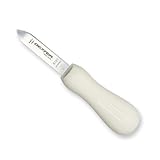
2. Victorinox Boston Style Oyster Knife
A wider-blade oyster knife with a textured handle and a small guard-like profile. It gives good leverage on stubborn shells. The broad blade also helps when cutting the adductor muscle free of the shell.
Suits: tough shells. Strengths: leverage and a grippy handle. Weaknesses: it is less nimble at the hinge. Skip it if you prefer a pointy blade.

Best for home cooks
3. OXO Good Grips Oyster Knife
A home-oriented knife with a cushioned handle and a built-in hand guard. It suits occasional shuckers who want comfort. The guard adds a little protection when the blade slips, though a glove is still wise.
Suits: home cooks. Strengths: a comfortable handle with a guard. Weaknesses: less traditional shape. Skip it if you want a pro-style blade.

Best for entertaining at home
4. Toadfish Oyster Knife
A knife marketed to home entertainers, with a stainless blade and a handle designed for a firm hold. It gives you a friendly look and a few safety touches. Check the listing for what is included, as some sets add extras.
Suits: entertaining at home. Strengths: easy handling for beginners. Weaknesses: brand-driven styling. Skip it if you want the cheapest option.
Best for traditionalists
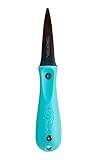
5. R. Murphy Ripper Oyster Knife
A traditional design from an old New England knife maker, with a wooden handle and a wide, sturdy blade. It rewards a little practice. The shape is traditional, so expect a short learning curve if you are used to a short pointed blade.
Suits: traditionalists. Strengths: a classic feel. Weaknesses: wood needs careful drying. Skip it if you want a dishwasher-safe knife.
View R. Murphy Ripper Oyster Knife on Amazon
Best for gift giving
6. HiCoup Oyster Knife
A New Haven-style knife with a wooden handle, often sold in a set with a glove or pouch. It appeals to gift buyers. The listing may bundle a glove or a pouch, so read the contents carefully.
Suits: gift giving. Strengths: an included set of extras. Weaknesses: contents vary by listing. Skip it if you want a bare knife.

Care and Setup
- Rinse the blade right after use to remove salt and grit.
- Dry wooden handles promptly.
- Store the knife in a sheath or block to protect the tip.
- Do not use it as a general-purpose pry bar.
Mistakes to Avoid
- Shucking without a towel or glove.
- Forcing the tip when the hinge will not give.
- Buying a blade style that does not suit your shells.
- Leaving the knife in salt water.
Shucking an Oyster Step by Step
Good technique makes the knife work safely. Start by scrubbing the oysters under cold water to remove grit. Fold a thick towel in your non-dominant hand and set the oyster on it with the cupped shell down and the hinge pointing toward you. The flat shell is on top.
Find the hinge, the narrow back where the two shells meet. Put the tip of the knife into the gap and wiggle it side to side with firm, steady pressure until you feel the hinge pop or give way. Do not stab downward or push hard in a straight line; slips happen when force is applied suddenly.
Slide the blade along the inside of the top shell to cut the muscle that holds the shell closed. Lift the top shell off, taking care not to spill the liquid. Then run the blade under the oyster to release the second muscle from the bottom shell. Check for bits of shell and remove them.
Serve right away on crushed ice or a bed of salt to keep the oysters level. Keep the knife blade clean by wiping it between oysters. Work slowly at first, since speed comes with practice. If an oyster resists, try a different entry point or set it aside and use a different shape of knife, not more force.
Hand Protection and Safe Habits
Shucking is a common cause of hand injuries because the holding hand sits close to the blade and the shell is slippery. Protection is not optional. Use a cut-resistant glove made for the job, or a thick folded towel that gives a firm grip and a barrier. Thin kitchen towels and bare hands are not enough.
A hand guard on the knife adds a barrier, but a guard does not replace the glove. Look at the handle too: a non-slip, easy-to-grip shape reduces the chance of the knife sliding when your hands are wet. Keep the work area stable on a firm board with a damp towel beneath so nothing shifts.
- Keep your holding hand behind the line of the blade.
- Never point the knife toward your palm.
- Work at a comfortable height with good lighting.
- Do not shuck while distracted, rushed or in a crowded kitchen.
If you are left-handed, check that the grip and any guard are comfortable in your hand. Keep a first aid kit within reach. Seek medical attention for any deep cut, because shellfish injuries can become infected.
Choosing a Blade Shape by Oyster Type
Different oysters and different habits call for different knives. Shells vary in thickness, shape and how tightly the hinge sits. A slim, tapered New Haven style blade slides into tight hinges and suits oysters with cleaner, tidier shells. A wider Boston style blade offers leverage, which helps with thick, crusty or irregular shells. Hybrids and ripper styles aim to combine features, so check the listing for how the blade is shaped.
The tip matters. It should be sturdy and blunt enough that it will not snap when twisted, but narrow enough to enter the gap. Blade thickness affects strength: a thin blade is easy to insert but may bend, while a thick one resists bending but is harder to place.
If you shuck a mix of oysters, a versatile knife is more practical than a specialist. If you shuck a lot of one kind, find the shape that works best with it and consider owning two knives. Pay attention to length too: a long blade reaches the muscle, but a short, stout one gives you more control at the hinge.
When you are unsure, begin with a mid-range style and adjust. Many people end up with a preferred shape after a few dozen oysters.
Oyster Handling and Food Safety
Raw shellfish needs careful handling. Buy from a trusted source that can tell you where the oysters came from, and keep them cold on ice or in the refrigerator, covered with a damp cloth rather than sealed in a bag or submerged in fresh water. Live oysters should have tightly closed shells or close when tapped. Discard any that stay open, feel unusually light or smell off.
Shuck close to serving time, and keep opened oysters cold. Check the oyster’s liquid and meat: it should look clear and smell of the sea. If in doubt, throw it out.
Raw shellfish can pose a risk for some people, including pregnant women, older adults, young children and those with weakened immune systems or certain liver conditions. Health agencies publish guidance on raw shellfish, so check official sources if this applies to you or your guests. Cooking oysters thoroughly reduces risk.
Keep your tools clean: wash the knife and the board with hot soapy water between sessions, and avoid mixing raw shellfish with other foods or surfaces. Wash your hands after handling.
Cleaning, Drying and Long-Term Care
Salt, moisture and shell grit are hard on tools. Rinse the knife in fresh water right after use, wash it with warm soapy water and dry it completely. Pay attention to the junction between blade and handle, where salt water can sit.
Stainless blades resist rust but are not immune, especially if left wet. Wooden handles, as on some traditional knives, should be dried by hand and not soaked or put in the dishwasher. Plastic or composite handles are easier to clean and often dishwasher tolerant, but check the maker’s advice, as heat and strong detergents can dull or damage some knives.
Oyster knives do not need a razor edge, so frequent sharpening is not usually necessary. The sharp edge is more useful for cutting the muscle, and a sturdy tip matters more than keenness. If the edge becomes rough or nicked, a light touch-up on a stone is enough. Do not grind the tip into a fine point, which makes it weaker.
Store the knife in a sheath, a drawer divider or a block, away from other blades. Replace it if the handle cracks, the tip bends or snaps, or the blade becomes loose in the handle.
Shucking Knife FAQ
New Haven or Boston?
New Haven blades are slimmer for hinges. Boston blades have more leverage for stubborn shells.
Do I need a glove?
Yes, a cut-resistant glove or thick towel protects your holding hand.
Can I use a regular knife?
It is not safe. A dedicated oyster knife has a blunt, sturdy tip made to pry.
Do these knives open clams?
Many people use them for clams too, but clam knives are better suited to that task.
How do I find the hinge of an oyster?
It is the narrow, pointed end where the two shells join. Hold the oyster with the cupped side down and the hinge facing you, then work the tip into the gap.
Should oysters be washed before shucking?
Yes. Scrub them under cold running water to remove mud and grit. Do this before opening so debris does not fall into the meat.
How long can live oysters stay in the refrigerator?
It depends on freshness and storage, so follow the seller's advice. Keep them cold and covered with a damp cloth, and discard any that are open or smell off.
Why does my knife keep slipping?
Often the shell is wet, the angle is too steep or you are using too much force. Dry the shell on a towel, find the hinge and use a twisting motion instead of pushing.
What do I do if the tip breaks?
Stop using the knife. A broken tip can cause injury and cannot be reliably repaired. Replace it with a sturdy oyster knife.
Can I shuck oysters without a special knife?
It is not safe to use regular kitchen knives, which can snap or slip. Use a tool designed for the job and protect your hand.
How can I keep oysters level when serving?
Serve them on crushed ice, rock salt or a crumpled towel so the shell stays flat and the liquid stays inside.
The Short Version
For a pro standard, the Dexter-Russell New Haven. For leverage, the Victorinox Boston. For comfort, the OXO. For home entertaining, the Toadfish. For tradition, the R. Murphy Ripper. For gifts, the HiCoup.
Related Guides
- The Basic Tool Kit Every New Homeowner Should Have on Hand
- Tool Gift Ideas for New Homeowners: A Practical Guide
- Power Tool Terms Glossary: Plain Words for New DIY Users
- How to Replace a Door Handle and Make the New Set Fit Right
- How to Replace Cabinet Hardware Without Drilling New Holes
Handles, Grip and Hand Fit
On an oyster knife the handle does more work than the blade. You push, twist and lever with a hand that is often wet, and an unexpected slip sends the tip toward your palm. Handle materials fall into a few groups. Polypropylene and similar plastics, as on the Dexter-Russell, are inexpensive, easy to rinse and tolerate repeated washing. Textured composite grips such as the Fibrox handle on the Victorinox and the soft rubbery grip on the OXO stay secure when wet. Wooden handles, as on the R. Murphy Ripper and the HiCoup, feel traditional and warm but need to be dried by hand.
Shape counts as much as material. A handle that fills your palm and has a slight swell or flare near the blade resists sliding forward. One that is too thin concentrates pressure and tires your hand during a long session. Try to picture how you hold the knife: many people grip it like a handshake and twist at the wrist, so a handle with a rounded profile and no sharp edges is more comfortable.
- Left-handed shuckers should check whether a guard or grip texture is symmetrical.
- Large hands do better with a longer handle, and small hands with a slimmer one.
- If you wear a cut-resistant glove, a bulky handle may feel different from how it does with a bare hand.
Setting Up a Shucking Station for Guests
Shucking for a group goes more smoothly when the space is arranged ahead of time. Choose a stable table at a comfortable height and put a damp towel or a non-slip mat underneath the board. Keep a tub of ice for the unopened oysters, a tray of crushed ice or rock salt for serving, a bowl or bucket for empty shells and a small dish of clean water to rinse the blade. Put the hand towels, gloves and spare knife within reach, and keep serving plates on the other side so wet hands and clean plates do not cross.
Plan your quantities before you buy. Appetizer portions are commonly planned at around half a dozen oysters per person, with more for enthusiasts or when oysters are the main course, but appetites and oyster sizes differ. Ask the seller for a count and remember to allow for a few that turn out to be dead or broken. Shuck in batches rather than all at once, and keep the rest in the cold so the platter does not warm while the early oysters wait.
Share the work if you can. A helper who handles the ice, shells and plates leaves the shucker free to focus, and a second knife lets someone rest their hand. Keep children and curious guests out of the cutting area, and do not shuck after drinking.
When an Oyster Will Not Open
Not every oyster gives in on the first try. If the hinge does not yield, change your entry point instead of adding force. Some people find that working the tip into the side seam, just beside the hinge, gives them a path in. Others prefer to rotate the oyster and approach from the front or bill end and slide the blade along the seam. Whichever you try, keep the hand that holds the oyster behind the line of the blade, and use short twisting movements rather than a long push.
Shells that are crumbly or flaky at the hinge are common with some oysters. Brush away loose bits and be gentle, because fragments end up in the meat. If the tip slips off a smooth hinge, dry the shell and wipe the blade before you try again. A dense, deep-cupped oyster may need the leverage of a broader blade, which is where a Boston style or a ripper shape can help.
Set aside any oyster that feels light, rattles or smells off, and do not try to rescue it. An oyster that stays stubbornly shut but is otherwise fine can be tried again later, or it can be steamed or grilled until it opens, which also suits people who prefer cooked oysters.
Looking After Your Tools and Gloves
A shucking kit is small but benefits from habits. Keep the knife with its glove and a clean towel in a pouch or box so you do not hunt for them. Wash and dry cut-resistant gloves after use following the maker’s instructions, since shellfish residue and salt can damage fibers and cause smells. Replace a glove that shows nicks, thin spots or loose stitching, because it no longer gives the protection you rely on.
Check the knife each time you clean it. Wiggle the handle to see if it is loose, look at the tip for bends, and run a finger lightly along the side of the blade to feel for burrs that might catch your skin. Store it where the tip is covered, in a sleeve or a block, and keep it away from children. If you carry it to a beach, a lease or a party, pack it in a hard case or a wrapped pouch.
Frequently Asked Questions
How many oysters should I plan per person?
A common planning figure is around half a dozen per person as an appetizer, and more if oysters are the main event. Appetites, oyster size and the rest of the menu change this. Ask the seller for a count and buy a few extra to allow for any that are unusable.
How far ahead can I shuck oysters before serving?
As close to serving as you can. Opened oysters should be kept cold on ice and eaten soon after, because they are perishable. Shuck in batches so the platter stays fresh, and follow food safety guidance from your local health agency for raw shellfish.
Is a left-handed oyster knife necessary?
Most oyster knives are used the same way in either hand, since the blade is symmetrical. What matters is whether the handle and any guard feel comfortable and secure in your hand. Try to check that the guard does not push into your grip when you twist.
What is the liquid inside an oyster?
It is the natural liquid held in the shell, often called liquor. It tastes of the water the oyster grew in and is part of the experience, so try to keep it in the shell when you remove the top. A clear liquid with a fresh sea smell is a good sign.