Disclosure: As an Amazon Associate, UMT Smart Tool earns from qualifying purchases. This guide is built from product listings and maker specifications, not from our own hands-on testing. Prices are approximate and can change, so check the current price before you buy. Last updated: November 10, 2026.
“100% cotton” sounds like a single, simple promise, but it covers very different blankets. A waffle weave traps pockets of air and feels textured and light. A thermal weave is an open, breathable grid made for layering. Muslin stacks gauzy layers that breathe in summer, herringbone gives you a denser, classic bed blanket, and a cotton knit stretches and drapes like a sweater. Every pick below is verified as 100% cotton from its listing — no polyester or microfiber blends slipped in — and the guide is organized by weave and use case, so you can start with how you sleep and how warm your room runs.
In this guide
Quick Picks
The short version: six all-cotton blankets we would look at first, one per weave and job.
| Pick | Type | Best for |
|---|---|---|
| Bedsure 100% Cotton Waffle Weave Blanket | Waffle weave bed blanket | Best overall for year-round use |
| Glamburg 100% Cotton Thermal Blanket | Thermal waffle blanket | Best budget layering blanket |
| Kozyhvn 100% Cotton Muslin Blanket, 6-Layer | Muslin gauze blanket | Best for hot sleepers and summer |
| Threadmill 100% Cotton Herringbone Blanket | Herringbone bed blanket | Best classic woven bed blanket |
| Vellux 100% Cotton Blanket | Cotton knit blanket | Best knit with a hotel feel |
| LANE LINEN 100% Cotton Blanket, 3-Layer | Layered cotton blanket | Best organic cotton option |
Our Picks

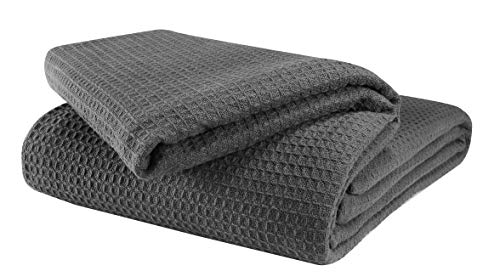
1. Bedsure 100% Cotton Waffle Weave Blanket, Queen (90″ x 90″), Grey — Best Overall
The Bedsure is the easiest all-cotton blanket to recommend because the waffle weave does so much work. The raised grid traps small pockets of air, so the blanket adds real warmth in a cool room yet still breathes when the room warms up — the reason waffle cotton is the classic all-season choice. Bedsure makes it from long-staple cotton, which uses longer fibers for a smoother, stronger yarn, and the blanket is OEKO-TEX Standard 100 certified. The Queen measures 90 by 90 inches, enough to drape properly over a queen mattress, and the line runs from throw sizes up to an oversized king.
The trade-offs are texture and care. A waffle surface feels nubby rather than silky, and cotton this open can snag on jewelry or pet claws if you are rough with it. Like all cotton, it will shrink a little if you dry it hot, so a cool wash and low dry keep the size honest. It is machine washable and, per the maker, softens with washing. At a mid-range tier for a certified, bed-sized cotton blanket, it is the safest first look for most bedrooms.

2. Glamburg 100% Cotton Thermal Blanket, Queen (90″ x 90″), Navy Blue — Best Budget
Glamburg’s thermal blanket is the straightforward, inexpensive way into all-cotton bedding. It is woven from 100% combed cotton — combed fibers have the short strands removed, leaving a cleaner, smoother yarn — in a thermal waffle weave designed for layering. The Queen/Full size is 90 by 90 inches (model 27087 in this Navy Blue variant), with twin and king sizes in the same line. Used under a duvet it adds a breathable warmth layer; used alone on a summer night it is a light cover that does not trap heat the way fleece does.
Expect budget-tier finishing. The weave is more open and less plush than the Bedsure above, the edges are simply finished, and the blanket feels thin on its own — that is the nature of a thermal layer, not a flaw, but buyers wanting a standalone winter blanket should look at the herringbone pick instead. It is machine washable and easy to care for, which suits guest rooms, dorms and rental properties where bedding gets laundered hard and often. For the price tier, nothing else here gives you verified 100% cotton in a full bed size for less fuss.
3. Kozyhvn 100% Cotton Muslin Blanket, 6-Layer, Queen (90″ x 90″), Beige — Best for Hot Sleepers
Muslin is the weave hot sleepers reach for, and this Kozyhvn stacks six layers of 100% cotton muslin gauze into a full Queen blanket at 90 by 90 inches. Each layer is a loose, open gauze; stacked together they hold a whisper of warmth while letting air move straight through, so the blanket covers you without the sealed-in feeling of a tight weave. Muslin also has a naturally crinkled texture that looks relaxed rather than sloppy, and cotton gauze is known for softening noticeably with every wash. The Beige variant keeps the undyed, natural look that suits the fabric.
The limits are durability and warmth. Six gauze layers are still a summer-weight blanket — in a cold room you will layer it over something warmer — and open gauze snags more easily than a tight weave, so keep it away from Velcro, rough jewelry and pet claws. It is a gentle-wash item rather than a throw-it-in-with-the-jeans one. If you run hot, sleep in a warm climate, or want a breathable layer for a nursery-adjacent guest bed, this is the most purpose-built pick here.

4. Threadmill 100% Cotton Herringbone Blanket, Full/Queen (90″ x 92″), Natural — Best Classic Woven
Threadmill weaves this blanket from 100% combed, long-staple cotton in a herringbone pattern — the broken zigzag twill you see on classic bed blankets. Herringbone packs the yarn tighter than a waffle or thermal weave, so this is the densest, most substantial blanket in the guide: the maker lists the weave at 350 GSM, and the Full/Queen size is a generous 90 by 92 inches in an undyed-looking Natural shade. Threadmill makes its bedding in an OEKO-TEX Standard 100 factory, and long-staple yarns mean fewer loose fibers, which is why this style pills less and holds up through repeated washing.
The weight cuts both ways. On a winter bed, layered over a sheet, it is exactly right; on a July night it will be too much for most sleepers, so think of it as a three-season blanket rather than a summer one. The traditional styling also leans classic rather than modern-minimal. It sits in the mid-to-premium tier, but for buyers who want one well-made cotton blanket that behaves like the ones hotels and hospitals have used for decades — only softer — this is the pick.


5. Vellux 100% Cotton Blanket, Full/Queen, Pink — Best Knit
Vellux is the blanket name behind decades of hotel beds, and this version is a knitted — not woven — blanket in 100% cotton (model 1B07753, made by WestPoint Home). Knitting changes the feel completely: instead of a flat woven sheet, you get a fabric with natural stretch and drape that settles over you and moves when you do. Vellux markets it as an all-season knit with a hotel-luxury hand, and it is OEKO-TEX certified. The Full/Queen size in this soft Pink variant covers a full or queen bed, and the knit construction resists the stiffness some woven cotton blankets have straight out of the wash.
Knit is the least rugged construction here. Loops can pull if they catch on something sharp, and a knit will not block a draft the way the dense herringbone does — it is a comfort layer, best over a sheet and under or over a duvet depending on the season. Care is easy, with machine washing the norm. Choose it if you dislike the flat, crisp feel of woven cotton and want the one blanket here that behaves like a favorite sweater.


6. LANE LINEN 100% Cotton Blanket, Queen (88″ x 90″), French Blue — Best Organic Cotton
LANE LINEN builds this blanket differently: three layers of brushed cotton quilted into a single blanket, which gives it a smoother face and a little more body than a single-weave cotton blanket. The listing specifies 100% cotton — stated as 100% organic cotton in the fabric details — in a Queen at 88 by 90 inches and about 3.9 pounds, in this French Blue variant (UPC 840399724978). The brand positions it as a cooling, lightweight blanket for hot sleepers, and the layered construction makes sense for that job: brushed cotton feels soft immediately, and the layers trap just enough air without a lofty fill.
It is the newest listing in this guide (first available in 2025), so it has a shorter track record than the Bedsure or Threadmill, and the quilted three-layer build is warmer than the muslin if your room truly runs hot year-round. It is machine washable and, at roughly four pounds, easy to launder at home. For buyers who specifically want an organic-cotton bed blanket rather than a throw, and prefer a smooth modern finish to a textured weave, it earns its place.

Best Picks by Category
- Best overall: Bedsure 100% Cotton Waffle Weave Blanket, Queen, Grey — the most versatile weave, certified cotton, in full bed sizes.
- Best budget: Glamburg 100% Cotton Thermal Blanket, Queen, Navy Blue — verified 100% combed cotton at a budget-friendly tier.
- Best for hot sleepers: Kozyhvn 100% Cotton Muslin Blanket, 6-Layer, Queen, Beige — six gauze layers that breathe in summer.
- Best classic woven: Threadmill 100% Cotton Herringbone Blanket, Full/Queen, Natural — the densest, most durable weave here.
- Best knit: Vellux 100% Cotton Blanket, Full/Queen, Pink — stretchy hotel-style knit from an established maker.
- Best organic cotton: LANE LINEN 100% Cotton Blanket, Queen, French Blue — a smooth three-layer build in organic cotton.
Notice the pattern: the fiber is the same in all six, so the weave is the real decision. Pick the weave for your season and sleeping temperature first, then worry about color.
How to Choose
Start with the weave, not the label
All six picks are 100% cotton, so warmth and feel come from construction. Waffle and thermal weaves are open and breathable, made for layering and warm rooms. Muslin is the lightest and airiest. Herringbone is dense and three-season. Knits stretch and drape. Layered or quilted cotton sits in the middle, smoother and slightly warmer than a single weave. Match the weave to the coldest or hottest night the blanket has to handle, not the average one.
Verify the fiber claim properly
“Cotton blanket” on a title does not guarantee 100% cotton — many listings blend in polyester for softness or price. Check the fabric-type field in the product details and look for an explicit “100% Cotton” statement, ideally backed by an OEKO-TEX or GOTS certification number you can see on the listing. Long-staple and combed cotton are worth preferring within the 100% cotton field: both remove short fibers, so the yarn pills less and lasts longer.
Get the size right
Bed blankets should overhang the mattress. As a rule, a queen blanket around 90 by 90 inches drapes a standard queen (60 by 80 inches) with roughly 15 inches of drop on each side — less if your mattress is deep. Twin blankets are usually 60–68 inches wide, kings 102–108. Throws (50 by 60 inches) are couch products, not bed blankets. If you share the bed with a blanket stealer, size up.
Weight and warmth, honestly judged
Cotton blankets are light-to-middleweight layers, roughly two to five pounds in bed sizes. None of them replaces a duvet in a cold room; their strength is breathable layering — one over a sheet in summer, one between sheet and duvet in winter. GSM figures, where a maker publishes them, help compare density within a weave type, but a 350 GSM herringbone and a waffle of the same weight will not feel equally warm.
Care: washing, drying and shrinkage
Cotton is the easiest blanket fiber to launder — machine wash, no special detergent — but it shrinks with heat, typically a few percent on the first hot wash and dry. Wash cool or warm, dry low, and take gauze and knit blankets out promptly. Avoid fabric softener build-up, which coats cotton fibers and slowly reduces the absorbency and breathability you bought the blanket for. A mesh laundry bag protects knits and muslin from snags.
Edges, finishing and durability
The edges fail first on any blanket. Look for hemmed or bound edges rather than raw fringe on a bed blanket, and double stitching on layered builds. Open weaves and knits snag, so their durability depends on how you treat them more than on the fiber itself. A maker’s warranty on a simple cotton blanket is rare; a long review history of the exact model and a recognized textile certification tell you more.
Which 100 percent cotton blanket should you buy?
The right 100 percent cotton blanket depends mostly on how warm you sleep and how much you want to spend. Match the weave to your room first, then pick the named product that fits.
- You want one blanket for the whole year: the Bedsure waffle weave is the safest first look, because the open grid breathes in warm weather and still adds warmth under a duvet.
- You are furnishing a guest room, dorm or rental: the Glamburg thermal blanket is the simple, easy-care layer, and it is meant to be washed often.
- You sleep hot or live somewhere warm: the Kozyhvn six-layer muslin is the lightest and airiest of the six.
- You want a dense blanket for cooler months: the Threadmill herringbone is the most substantial option and works best as a three-season cover.
- You dislike the crisp feel of woven cotton: the Vellux knit drapes and stretches more like a sweater.
- You want organic cotton and a smooth, brushed face: the LANE LINEN three-layer blanket is the one described as organic.
If two picks seem equally good, choose the weave you would rather touch every night. Color matters far less than construction, and texture is the thing most buyers notice first.
What to check before you buy, and who should skip it
Before you order any 100 percent cotton blanket, confirm the size, the fabric field and the care terms on the current listing. A few minutes of checking prevents most returns.
- Compare the stated dimensions with your mattress, and size up if you share the bed or use a deep mattress.
- Read the fabric-type field for an explicit 100 percent cotton statement, not just “cotton” in the title.
- Look for any certification the listing names, and check that it covers the exact item.
- Confirm the color or variant shown matches the one in your cart.
- Read the care label details: wash temperature, dryer guidance and whether a gentle cycle is advised.
- Check the return window and what condition the blanket must be in to qualify.
Now the honest objections. Cotton does not insulate like wool or a down duvet, so it is a poor stand-alone cover in a cold bedroom. Open weaves such as muslin, waffle and knit can snag on jewelry, pet claws and zippers. All cotton can shrink a little with heat, and pure cotton wrinkles and holds moisture longer than synthetics.
Who should skip it? Anyone who wants a heavy, lofty, cocoon-like feel should look at a quilt or duvet instead. Anyone who needs a blanket that tolerates hard use by pets and children without any snagging may prefer the tighter herringbone weave over gauze or knit. Is paying more worth it? Often the extra cost buys a denser weave, longer fibers or a certification, which can matter if you plan to keep the blanket for years.
One more practical point: wash the blanket once before first use, and read the care guidance before you remove any packaging you may need for a return. Cotton also takes longer to dry than synthetic fleece, so allow time for a full dry cycle on a low setting or a day on a line. If you keep a blanket folded at the foot of the bed, a breathable cotton bag or shelf is better than sealed plastic, which can trap moisture over time.
Compare the picks above, check the current listing for size and what is included, then choose the one that fits how you will use it.
A Closer Look at Each Pick Across the Seasons
A cotton blanket earns its place across a year, not a night: it is the layer you pull up in October, wash constantly in a house with kids or pets, and reach for again in April when the duvet becomes too much. The notes below judge each pick by weave and by season — how it layers, how it launders, and which sleeper in the house will claim it.
Bedsure Waffle Weave Blanket in year-round use
The Bedsure leads this guide because waffle weave is the most versatile architecture cotton offers: the pockets trap warmth when the room is cool, yet the structure stays breathable enough to remain on the bed through spring. In the hand it feels textured and substantial without being heavy, and it drapes over a duvet or works alone over a sheet with equal sense. It suits the majority of sleepers who want one blanket to do most of the year. The honest limitations are that waffle texture can snag on rough handling and that in the coldest weeks it is a layer, not a solo act. Choose it as the default all-cotton blanket; skip it only if you know you run very hot at night, where the muslin pick below breathes even freer.
Glamburg Thermal Blanket in year-round use
The Glamburg is the sensible classic: an open thermal weave designed for layering, at the friendliest tier in this guide. As a middle layer between sheet and duvet it adds exactly the adjustable warmth thermal weaves exist for, and as a summer cover it lets air move on warm nights. It suits budget-conscious households, spare beds, and anyone layering under a duvet they already own. The limitations are the honest ones of its class — an open weave is not a plush experience, and it will not impress as a standalone statement on the bed. Choose it for function-first layering value; skip it if the blanket will be your bed’s top and most visible layer.
Kozyhvn Muslin Blanket in year-round use
The Kozyhvn’s six gauzy layers make it the hot sleeper’s answer in this guide: muslin breathes like nothing else here, feels cooler as the night warms, and somehow still takes the edge off air conditioning. It also softens noticeably with washing, so the blanket improves across its first season. It suits warm sleepers, warm climates and anyone who kicks off every other blanket by midnight. The honest limitation is winter: muslin is a warm-weather specialist, and in a cold room it will feel like a gesture rather than a blanket. Choose it if overheating is your nightly problem; skip it as your only blanket in a cold house.
Threadmill Herringbone Blanket in year-round use
The Threadmill is the traditionalist: a dense herringbone weave that looks like the bed blankets in well-kept houses for generations, with a weight and drape that feel reassuring rather than airy. It suits classic bedrooms, cooler sleepers and anyone who equates a proper blanket with a bit of heft. The limitations are that its density makes it the slowest here to dry after washing, and warm sleepers will find it too much blanket for summer. Choose it for classic looks and genuine cool-weather substance; skip it if you sleep hot or need a blanket that launders and dries in an afternoon.
Vellux Cotton Blanket in year-round use
The Vellux knit brings a different hand-feel: cotton knitted rather than woven, so it stretches slightly, drapes softly and feels more like a favorite sweater than a sheet-blanket. That makes it the blanket people pull onto the couch as readily as the bed, and the pink colorway gives it a cheerful, personal character. It suits anyone who values softness and drape and likes a blanket that moves between rooms. The honest limitations are knit limitations — it can stretch out of square if it is hung or dragged carelessly, and its warmth sits in the middle of this group rather than at either useful extreme. Choose it for soft, flexible comfort; skip it if you want either maximum breathability or maximum heft.
LANE LINEN Cotton Blanket in year-round use
The LANE LINEN entry is the pick for buyers who read fiber labels closely: organic cotton positioning, a clean classic weave and a French blue that dresses a bed without effort. In use it behaves as a well-made midweight cotton blanket should — breathable, washable, quietly durable. It suits label-conscious households and anyone furnishing a guest bed they want to feel good about. The honest limitation is that its virtues are quiet ones; it does not out-breathe the muslin, out-layer the thermal or out-drape the knit, so buyers chasing one extreme should chase it elsewhere. Choose it for balanced quality with organic credentials; skip it if a single standout property matters more than all-round competence.
Head-to-Head: The Comparisons Shoppers Actually Make
The year-round question: Bedsure waffle against Threadmill herringbone
Both can anchor a bed for most of the year, but they manage temperature differently. The waffle’s pockets adjust — trapping warmth when you are still, venting when you move — while the herringbone’s density simply provides more blanket. Changeable sleepers and changeable weather favor the waffle; consistently cool rooms and cool sleepers favor the herringbone. Your thermostat setting is the tiebreaker.
Summer specialists: Kozyhvn muslin against Glamburg thermal
Both breathe, but muslin breathes more and costs more, while the thermal layers better when the night turns. If summer is your problem season and you want one blanket to solve it, the muslin is the specialist worth it. If you want one inexpensive layer that helps in summer and still earns its keep under a winter duvet, the thermal is the pragmatist’s pick.
Softness seekers: Vellux knit against LANE LINEN woven
The knit wins the first touch — softer, stretchier, more yielding. The woven wins the fifth year — it holds its shape and edges with less fuss. Buy the knit for how the blanket feels tonight; buy the woven for how the bed looks and behaves across years of washing. Households that launder blankets weekly will feel that difference most.
Washing, Shrinking and Keeping Cotton Soft
Cotton rewards a calm laundry routine. Wash in cool to warm water on a gentle cycle, separately the first time, and expect a small amount of initial shrinkage — the reason thoughtful buyers check the listed dimensions and size up when they are between sizes. Tumble dry low or line dry; high heat is what turns a soft cotton blanket stiff and shortens its life, while a low, patient dry keeps the hand-feel that made you choose cotton over synthetics in the first place. Skip heavy fabric softener habits, which coat cotton fibers and reduce the breathability you bought the blanket for; a well-rinsed blanket dries soft on its own, and muslin and waffle weaves in particular grow softer across their first several washes. Shake the blanket out before folding it back onto the bed — it restores the waffle’s pockets and the thermal weave’s loft — and store off-season blankets clean and loosely folded, since cotton stored dirty or compressed in plastic can hold odors. Treated this way, the blankets in this guide are multi-year purchases, not seasonal consumables.
Common Mistakes When Buying a Cotton Blanket
The most common mistake is trusting the words cotton blanket without checking the fiber content is fully cotton — blends behave differently in heat, washing and breathability, and this guide’s picks were verified precisely because the label is often loose. The second is buying the bed’s nominal size without checking actual dimensions, which vary by maker enough to leave a queen bed short on one side. The third is judging warmth by thickness in the package; weave architecture — waffle pockets, thermal openness, muslin layers — decides warmth more honestly than bulk. Choose by weave first, size second and color last, and the blanket will still be right in three years.
Choosing by Sleeper: Matching Weave to the Person
The hot sleeper
Your blanket decision is already made by your thermostat problem: breathability first, everything else second. The Kozyhvn muslin is the specialist answer, with the Glamburg thermal as the budget route to a similar effect. What hot sleepers should avoid is judging by softness in the hand — the Vellux knit feels wonderful in a shop and sleeps warmer than its drape suggests, and the Threadmill’s handsome density is precisely what you are trying to escape. Buy for the third hour of the night, not the first touch.
The cold sleeper
Cold sleepers should think in layers rather than in a single heroic blanket. The Bedsure waffle as the main layer plus the Glamburg thermal beneath the duvet gives adjustable warmth you can tune by adding or shedding one layer as the season turns — a more useful system than one very heavy blanket that is perfect for three weeks of the year. The Threadmill alone suits the consistently cold room where the heating is modest and the sleeper likes a blanket with presence.
The sensitive, label-reading household
If fiber purity is the point — for skin feel, for washing simplicity, for principle — the LANE LINEN’s organic positioning leads, and the discipline is to protect that purity in the laundry: wash cotton with cotton, skip the coating softeners, and let the fiber’s natural hand develop. Every pick in this guide is verified fully cotton, so the sensitive household can choose by weave with confidence; the label-reader’s remaining job is care, not suspicion.
The guest bed and the spare room
Guest bedding should be the blanket that suits the widest range of strangers: midweight, breathable, unfussy to wash between visits. The Bedsure waffle is the consensus choice — warm enough for most, breathable enough for the rest — with the Glamburg as the value alternative for a room used twice a year. Keep the specialists, muslin and herringbone, on the beds of the people whose preferences you actually know.
Layering Cotton With the Rest of the Bed
A cotton blanket rarely works alone across a whole year, and understanding its place in the stack makes every pick here more useful. Against the skin, cotton’s breathability and washability are why it traditionally sits as the first layer over the sheet. Over it, a duvet or comforter supplies the insulation cotton does not pretend to offer in deep winter; under it, nothing is needed. In summer the stack inverts: the cotton blanket becomes the top and only layer, and its weave — muslin’s openness, waffle’s pockets — decides whether the night feels aired or swaddled. The practical skill is seasonal editing: add the thermal layer when nights turn, remove the duvet when they warm, and let the cotton blanket be the constant that stays on the bed in every configuration. Bought with that role in mind, one good cotton blanket serves more nights of the year than any other single piece of bedding you own — which is the honest argument for choosing its weave carefully and its size generously.
A Note on Color, Fading and the Long View
Cotton takes dye kindly and surrenders it slowly, so choose color with a five-year eye. Deep tones like the Glamburg’s navy hide the gradual softening of shade that years of washing bring, while pale naturals like the Threadmill’s show almost no change at all because there is little dye to lose. Bright colors are the honest risk — enjoyable now, gentler later — and rotating two blankets between the bed and the cupboard halves each one’s wash count and visibly extends the life of both. Wash new colored blankets separately for the first few cycles, keep the water temperature moderate, and the color story you bought is the one you keep.
Cotton Blankets Beyond the Bed
A good cotton blanket’s second career is worth planning for, because cotton’s washability makes it the textile households reach for everywhere. The same waffle or thermal blanket that layers a bed becomes the couch’s summer throw, the layer under a picnic, the wrap for an evening on the porch and the spare cover that makes a guest couch into a bed. Knit and muslin blankets travel particularly well — they pack without creasing anxiety and wash clean after the trip. This versatility is part of the honest value case for buying a quality weave rather than the cheapest cotton on offer: a blanket that serves the bed for years and then serves the house for years more costs less per use than almost anything else in the linen cupboard. Choose the weave your nights need, in a color your whole house can live with, and the blanket will keep finding work long after lesser textiles have been retired.
One Last Check Before You Order
Lay your current blanket across the bed and measure how much overhang it gives on each side, then compare that lived experience with the dimensions in the listing you are considering. If your current overhang feels skimpy, size up without hesitation; if it pools, hold your size. Your own bed has already run the experiment — its measurements are the most honest sizing guide in this entire article, and they take two minutes to read.
Frequently Asked Questions
Is a 100% cotton blanket warm enough for winter?
On its own, usually not in a cold room — cotton blankets are breathable layers, not insulation. The dense herringbone pick here works as a three-season blanket, and any of the six will add real warmth layered between a sheet and a duvet. If your bedroom stays genuinely cold, treat cotton as the layer, not the whole system.
Why choose 100% cotton instead of a cotton blend?
Blends add polyester or microfiber, which can feel softer at first and cost less, but they breathe less, build static, and pill as the synthetic fibers break. Pure cotton breathes, absorbs moisture, softens with washing and carries no plastic shedding in the laundry. If temperature regulation is why you are shopping, the pure fiber is the point.
Which cotton weave is coolest for summer?
Muslin, then thermal and waffle weaves. Muslin’s stacked gauze layers let the most air through, which is why the Kozyhvn is our hot-sleeper pick. Waffle sits close behind and doubles as a three-season blanket. Avoid dense herringbone and layered quilts as your only summer cover.
Will a cotton blanket shrink?
A little, mostly on the first wash if you use hot water or a hot dryer. Washing cool and drying low keeps shrinkage minimal. If you are between sizes and know you launder hot, choose the larger size — the blanket sizes in this guide are the maker’s stated pre-purchase dimensions.
How do I keep a cotton blanket soft?
Wash it regularly — cotton genuinely softens over its first several washes — skip heavy fabric softener, and dry on low rather than baking it. Residue from detergents and softeners is the usual reason an older cotton blanket feels stiff; a rinse with a cup of white vinegar in the wash can strip that build-up.
Are any of these blankets suitable for sensitive skin?
Cotton is naturally low-irritation, and several picks carry OEKO-TEX Standard 100 certification, which tests the finished textile for harmful substances — the Bedsure, Threadmill and Vellux among them. If certified-organic fiber matters more, the LANE LINEN pick is the one listed as 100% organic cotton. Always wash a new blanket before first use.
How often should you wash a cotton blanket?
Wash a bed blanket every few weeks if it sits directly on top of you, and less often if it is layered over a sheet and duvet. Wash sooner after illness, pets on the bed or spills. Follow the care label on the listing for water temperature.
Can you put a 100 percent cotton blanket in the dryer?
Usually yes, on a low setting. High heat is what causes most cotton shrinkage, so low heat and prompt removal protect the size. Knit and gauze blankets are best removed while slightly damp and finished flat or on a line.
Is a waffle weave blanket warmer than muslin?
Generally yes. Waffle weave traps small pockets of air in its raised grid, while muslin is loose gauze that lets air pass through. Muslin suits hot nights, and waffle suits three-season layering.
What is the difference between a cotton blanket and a cotton quilt?
A blanket is usually a single woven or knit layer, while a quilt has stitched layers with a filling between them. Quilts are loftier and warmer. Blankets are lighter, easier to wash and better for layering.
Do cotton blankets get softer over time?
Most do, especially open weaves and gauze, which relax with repeated washing. Avoid heavy fabric softener, because buildup can make cotton feel stiff. The first few washes make the biggest difference.
Which size cotton blanket do you need for a queen bed?
Choose a blanket labeled queen or full/queen, and compare its listed dimensions with your mattress depth. Extra width gives more drop on each side and helps if you share the bed. Check the exact measurements on the listing, since sizing varies by maker.
Bottom Line
Buy the weave, not just the fiber claim. For most people, the Bedsure waffle in Queen Grey is the right first buy: certified 100% cotton, a genuinely all-season weave, and a fair mid-range tier. On a budget, take the Glamburg thermal; if you sleep hot, take the Kozyhvn muslin; for a classic blanket that will outlast trends, take the Threadmill herringbone. Check the size against your mattress and the current price before you order.