Disclosure: As an Amazon Associate, UMT Smart Tool earns from qualifying purchases. This guide is built from product listings and maker specifications, not from our own hands-on testing. Prices are approximate and can change, so check the current price before you buy. Last updated: November 10, 2026.
“Cotton” on a sheet listing can mean almost anything. Some sets are genuinely 100% cotton, some are cotton-rich blends with a polyester core, and some are microfiber with the word cotton in the title because they have a “cotton feel.” This guide only includes sets whose Amazon listing states 100% cotton in the Fabric Type field — we checked that field for every pick. The six sets below cover the three weaves that matter (smooth sateen, crisp percale, brushed flannel) plus deep-pocket and premium long-staple options, so you can match the fabric to how you actually sleep.
In this guide
Quick Picks
The short version: six verified 100% cotton sets, one per job.
| Pick | Type | Best for |
|---|---|---|
| California Design Den 400 Thread Count Sateen | Sateen sheet set | Best overall balance of softness, fit and value |
| RUVANTI 100% Cotton Percale | Percale sheet set | Hot sleepers who want a crisp, cool finish |
| Feather & Stitch 500 TC Damask Stripe | Damask stripe sateen | Thick mattresses that need 18-inch pockets |
| Mellanni Cotton Flannel | Cotton flannel set | Cold bedrooms and winter warmth |
| CGK Unlimited 400 Thread Count Cotton | Sateen sheet set | A genuine cotton set on a budget |
| ELINEN 100% Supima Cotton 600 TC | Supima sateen set | Premium long-staple cotton with a silky finish |
Our Picks
1. California Design Den 400 Thread Count Sateen Sheet Set (Queen, White) — Best Overall
This is the set we would point most people to first. The listing’s Fabric Type field reads “100% Long Staple Cotton, Sateen Weave,” and the brand backs its 400 thread count claim with independent lab verification (within a stated ±5% variance) — a level of honesty that is rare in this category. The yarns are single-ply long-staple cotton, so the count is not inflated by twisted multi-ply threads. The queen set includes a flat sheet with a 4-inch hem, a fitted sheet with all-around elastic fitting mattresses from 8 to 16 inches deep, and two open-end pillowcases. The fabric is OEKO-TEX Standard 100 certified, and the set carries a Good Housekeeping Best Bedding Award, per the listing.
The trade-offs are the usual sateen ones. Sateen’s tighter, smoother weave sleeps a little warmer than percale, so committed hot sleepers should look at pick 2 instead. White is the classic hotel choice but shows every coffee splash, and like all real cotton this set will wrinkle out of the dryer — pull it out promptly and smooth it by hand. Within the mid-range tier, though, nothing else here matches its combination of verified fiber, verified thread count and a pocket depth that suits most modern mattresses.

2. RUVANTI 100% Cotton Percale Sheet Set (Queen, Aroma Floral) — Best Percale for Hot Sleepers
If you sleep hot, percale is the weave to look for: a plain one-over, one-under weave that feels crisp, light and matte rather than silky, and lets air move through the fabric. RUVANTI’s set is a clean example. The listing confirms Fabric Type “100% Cotton Percale” with 100% cotton content, a 200 thread count, and a pre-shrunk finish. The queen set includes a 90 x 102 inch flat sheet, a 60 x 80 inch fitted sheet with a 16-inch pocket and all-around elastic rated for mattresses 10 to 16 inches deep, and two 20 x 30 inch pillowcases with envelope closures, which keep pillow corners from escaping overnight.
Do not let the 200 thread count put you off — percale is not a high-count weave, and a lower count is exactly what keeps it airy; the brand leans into that crisp, hotel-style hand feel, and percale typically softens wash by wash while keeping its structure. The honest downsides: percale wrinkles more visibly than sateen and can feel almost papery for the first few washes if you prefer a buttery finish. The linked variant is the Aroma floral print; check the size and color options on the listing carefully before ordering, because each variant is a separate listing configuration.


3. Feather & Stitch 500 TC Damask Stripe Sheet Set (Queen, Stripe White) — Best Deep Pocket
Thick mattresses with toppers are where most sheet sets fail, and this is the set built for them: the fitted sheet has 18-inch deep pockets, the deepest in this guide, on a fully elasticized 60 x 80 inch queen fitted sheet. The fabric is 100% long-staple cotton sateen with a woven damask stripe — the stripe is part of the weave itself, not a print — and the maker states a 500 thread count. The set is OEKO-TEX Standard 100 certified and includes four pieces: flat sheet, fitted sheet and two pillowcases with the hem detailing the brand uses across its hotel-style line.
Two cautions. First, read the 500 count the way you should read every high count: it is the maker’s stated figure, and the long-staple fiber and sateen weave matter more to the hand feel than the number. Second, an 18-inch pocket on a standard 10-inch mattress means a lot of loose fabric to tuck, so this set makes the most sense on genuinely tall beds — pillow-tops, foam mattresses on adjustable bases, or any setup with a thick topper. On those beds, the extra depth stops the corners popping off at 3 a.m., which is the entire point.

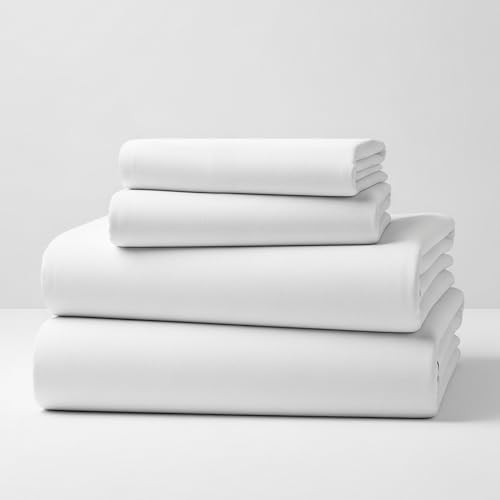
4. Mellanni Cotton Flannel Sheet Set (Queen, White) — Best Flannel for Cold Nights
Flannel is cotton finished differently: the woven fabric is brushed — Mellanni brushes both sides — to raise a soft nap that traps warmth. The brand describes this as its lightweight 100% cotton flannel set, and that lighter weight is a deliberate choice: it gives you the cozy, fuzzy surface of flannel without the heavy, almost blanket-like feel of heavyweight winter flannels, so it works from autumn through spring in most climates. The queen set includes a 90 x 102 inch flat sheet, a 60 x 80 inch fitted sheet that fits mattresses up to 16 inches deep, and two 20 x 30 inch pillowcases.
Flannel asks for compromises in return. Any brushed cotton pills gradually over seasons of washing, lighter flannel faster than heavyweight, and this set will be far too warm for summer or hot sleepers — that is what the percale pick above is for. Mellanni is best known for a microfiber line, so confirm you are on the cotton flannel listing, not the Iconic Collection microfiber set, before you buy; this listing’s title and description state 100% cotton flannel explicitly. For a cold bedroom or anyone who gets into bed with cold feet from October to March, it is the warmest genuine-cotton option here.

5. CGK Unlimited 400 Thread Count Cotton Sheet Set (Queen, Light Grey) — Best Budget
Most cheap sheet sets are cheap because they are polyester. This one is not: CGK Unlimited’s listing (model 4PC400TCQueenLightGrey) states 100% cotton at a stated 400 thread count in a sateen weave, and it sits firmly in the budget tier. The queen set is four pieces — a 90 x 102 inch flat sheet, a 60 x 80 inch fitted sheet with 16-inch pockets that the maker rates for mattresses from 8 to 16 inches, and two pillowcases. Light Grey is a practical pick for a budget set, too: it hides the minor lint and fading that show up fastest on white, and it works with almost any duvet cover.
Set expectations the way the price suggests. The fabric is thinner and less refined than the long-staple sets above it, the listing offers fewer third-party certifications to lean on, and budget cotton lines vary a little more from batch to batch in stitching and finish. None of that changes the core fact: if your budget rules out the mid-range picks and the alternative is a microfiber set, this is the way to stay with real cotton — breathable, free of synthetic static cling, and comfortable in warm rooms where polyester feels clammy.
6. ELINEN 100% Supima Cotton Sheet Set, 600 Thread Count (Queen, Grey) — Best Premium
Supima is not a marketing adjective — it is a trademarked grade of American-grown, extra-long-staple cotton, and longer staples spin into smoother, stronger yarns with fewer loose ends to pill. ELINEN builds this set from 100% Supima long-staple combed cotton (the listing’s Fabric Type field reads “100% Long Staple Combed Cotton”) in a sateen weave at a stated 600 thread count. The four-piece queen set fits mattresses up to 18 inches deep, and the maker rates the fabric as fade resistant — useful in a mid-tone Grey that would show uneven fading quickly if the dye work were poor.
This is the premium tier of the guide, and the honest question is what the extra money buys: a denser, silkier sateen hand feel, longer fibers that should hold up better over years of washing, and deep pockets. It does not buy a different category of sleep — the California Design Den set above covers the same use case for less, and sateen at this weight sleeps warm, so hot sleepers should still choose percale. Buy this set if you keep sheets for years, wash them weekly, and want the smoothest cotton finish on this list.
Best Picks by Category
- Best Overall: California Design Den 400 Thread Count Sateen (Queen, White) — lab-verified count, long-staple cotton, fits most mattresses.
- Best Percale for Hot Sleepers: RUVANTI 100% Cotton Percale (Queen, Aroma Floral) — crisp, airy weave with a 16-inch pocket and envelope-closure cases.
- Best Deep Pocket: Feather & Stitch 500 TC Damask Stripe (Queen, Stripe White) — 18-inch pockets for pillow-tops and thick toppers.
- Best Flannel: Mellanni Cotton Flannel (Queen, White) — double-brushed, lightweight warmth for cold rooms.
- Best Budget: CGK Unlimited 400 Thread Count Cotton (Queen, Light Grey) — real 100% cotton at a budget-tier price.
- Best Premium: ELINEN 100% Supima Cotton 600 TC (Queen, Grey) — extra-long-staple Supima cotton with the silkiest finish here.
Every set on this list is a four-piece queen set, so the real differences are weave, fiber grade and pocket depth. Choose the weave first — it decides how the sheet feels against your skin — then confirm the pocket depth against your mattress, then let budget settle the tier.
How to Choose
Verify the fiber before anything else
Open the listing’s product information and read the Fabric Type and material percentage fields, not the headline. “100% cotton” in those fields is a claim the seller can be held to; “cotton feel,” “cotton rich” and “cotton blend” in a title usually mean polyester is doing most of the work. A blend is not automatically bad — blends wrinkle less and cost less — but you should know that is what you are buying. Every pick in this guide states 100% cotton in its listing data.
Weave decides the feel: percale, sateen or flannel
Percale is a plain weave: crisp, matte, breathable, and the coolest of the three — the classic hotel sheet. Sateen weaves more threads over the surface, giving a smoother, slightly lustrous finish that feels silkier but sleeps warmer. Flannel is a plain weave that has been brushed to raise a nap, trading breathability for warmth. Neither is “better” in the abstract; pick percale if you run hot, sateen if you like a smooth glide, flannel if your bedroom is cold.
Thread count: useful, within limits
Thread count counts threads per square inch, and it is easy to game: multi-ply yarns can double or triple the number without adding fabric. For single-ply cotton, roughly 200–400 is the honest working range for percale and sateen; counts far above that deserve skepticism unless staple length and ply are stated. Long-staple or extra-long-staple (Supima, Egyptian) fiber improves smoothness and durability more reliably than a bigger number on the box.
Pocket depth and sizing
Measure your mattress, including any topper, before you order. Standard pockets run about 14–16 inches and fit most modern mattresses; tall pillow-tops and foam-plus-topper stacks need 18 inches or more, like the Feather & Stitch and ELINEN sets here. A pocket that is too deep is almost as annoying as one that is too shallow — excess fabric bunches under you — so match the pocket to your actual bed rather than buying the deepest available. Queen fitted sheets should measure 60 x 80 inches; check flat sheet and case dimensions too if you use oversized pillows.
Certifications worth looking for
OEKO-TEX Standard 100 means the finished textile has been tested for harmful substances — several picks here carry it, with certificate numbers printed on their listings. GOTS is the stricter organic standard covering the whole supply chain. Supima is a licensed trademark, so a set using the name is claiming verifiable, US-grown extra-long-staple cotton. None of these guarantee comfort, but they are checkable facts in a category full of uncheckable adjectives.
Care and shrinkage
Real cotton shrinks a little, especially in the first hot wash; good makers cut sets slightly large or pre-shrink them, like the RUVANTI percale above. Wash cotton sheets in warm (not hot) water, tumble dry low, and remove them promptly to limit wrinkles — cotton will never come out as smooth as microfiber, and that is the honest trade for natural fiber. Skip fabric softener, which coats fibers and reduces breathability over time; the sheets soften on their own across the first dozen washes.
Which cotton sheet set should you buy?
The right cotton sheet set depends mostly on how warm you sleep and how tall your mattress is. Match those two facts to the picks above and the choice gets simple.
- You want one safe, all-round set: go for the California Design Den 400 Thread Count Sateen. It covers softness, fit and verified fiber without a specialty trade-off.
- You sleep hot: choose the RUVANTI 100% Cotton Percale. Its crisp, open weave is the coolest option in this guide.
- Your bed is tall or has a topper: choose the Feather & Stitch 500 TC Damask Stripe, which has the deepest pockets here.
- Your bedroom is cold: the Mellanni Cotton Flannel is the warm pick for autumn through spring.
- You want real cotton on a tight budget: the CGK Unlimited 400 Thread Count Cotton keeps you out of microfiber.
- You keep sheets for years and want the silkiest finish: the ELINEN 100% Supima Cotton 600 TC is the premium route.
If two picks seem to fit, let the weave break the tie, because it changes how the bed feels every night. Sateen suits people who like a smooth, slightly heavier drape. Percale suits people who like a dry, crisp surface. Flannel is a seasonal choice, so many people keep it as a second set for winter and use a lighter set the rest of the year.
Couples with different temperatures sometimes split the difference with sateen and a lighter blanket layer, rather than forcing one person into flannel. Whatever you pick, buy the size that matches your mattress, since each variant is its own listing.
What to check before you buy, and who should skip it
Before you order cotton sheets, confirm the fiber, the weave, the pocket depth and what is in the box on the current listing. A few minutes here prevents most returns.
- Fabric Type and material fields say 100% cotton, not a blend.
- Your mattress plus topper fits within the stated pocket depth.
- The size and color variant you selected matches the one you want.
- The set includes the pieces you need, such as the right number of pillowcases.
- Care instructions suit your laundry routine, including dryer temperature.
- Return terms and warranty details are stated on the listing.
Now the honest objections. Cotton wrinkles, and no weave fully avoids it. Percale can feel papery at first, flannel pills over time, and sateen sleeps warmer. Premium long-staple sets cost more, and the difference is mainly in feel and long-term wear rather than a different kind of sleep.
Who should skip cotton? Anyone who wants a perfectly smooth, no-iron bed with zero effort may be happier with a blend or microfiber, and that is a fair choice. If cotton still sounds right, compare the picks above, check the current listing for size and what is included, then choose the one that fits how you will sleep and wash.
Living With Cotton Sheets Week After Week
The first night on a new cotton set tells you very little. Cotton changes with washing, and the set that feels crisp in the packet often feels quite different after a month of real use. That is why the strongest way to judge the six sets in this guide is not by their finish on night one, but by how each weave settles into a routine. Percale tends to soften gradually while keeping its dry, matte hand. Sateen often feels smoothest early on, then relaxes into a softer drape. Flannel is the most seasonal of the three: wonderful when the room is cold, and the set most households rotate away from once nights warm up. Thinking in seasons, rather than in single purchases, helps you get more value from whichever set you choose.
Rotation matters more than most buyers expect. A single set washed and put straight back on the bed wears faster at the fitted corners and along the fold lines, simply because it never gets a rest and is laundered more often. Two sets in rotation, even if the second is a simpler one, usually outlast one premium set used alone. If you like the California Design Den sateen as your main set, pairing it with the RUVANTI percale for warmer weeks gives you two distinct feels and spreads the wear. If you prefer one feel year-round, buying the same weave twice is perfectly sensible and makes laundry day far less pressured.
How each pick behaves after repeated washing
The California Design Den set is the most forgiving all-rounder here. Its sateen surface stays smooth if you wash it cool and avoid over-drying, and it resists the papery thinness that cheaper sateen can develop. The honest limitation is wrinkle visibility: sateen shows creases more than percale, especially in lighter colours, so it suits people who either smooth the bed each morning or simply do not mind a lived-in look. The RUVANTI percale takes the opposite path. It can feel almost too crisp at first, then improves steadily, and it handles warm washing routines well. Choose it if you sleep warm and like a cool, dry surface; skip it if you want an immediately silky feel on the first night.
The Feather and Stitch damask stripe set earns its place mainly through fit. Deep pockets and a more structured hand make it the calm choice for taller mattresses with toppers, where shallower sets pop off at the corners. Its limitation is that the stripe texture and heavier feel are less appealing in very warm rooms. The Mellanni flannel is a specialist, not a compromise: it traps warmth beautifully on cold nights, but it will feel heavy and overly warm for anyone who already runs hot. The CGK Unlimited set is the practical budget route — perfectly comfortable cotton at an accessible tier — with the trade-off that the fabric and elastic generally feel less refined than the premium options. The ELINEN Supima set sits at the other end: the longest-staple feel, the most polished drape, and the set to choose if you buy sheets rarely and want the upgrade to be obvious every night. Its limitation is simply that it rewards careful washing; treat it roughly and you waste what you paid for.
Matching the Set to Your Mattress, Room and Routine
Start with the mattress you actually own, not the one in the product photo. Measure the mattress depth including any topper, then compare it honestly with the pocket depth. A set that is technically deep enough but has weak elastic will still walk off a restless sleeper’s bed, while a slightly shallower set with strong, well-distributed elastic can stay put. If corner pop-off has been your main frustration, prioritise the Feather and Stitch fit story over weave preference. If your main frustration is sleeping hot, prioritise weave — percale first, sateen second — and only then worry about thread count.
Room temperature deserves equal weight. A bedroom that stays cool thanks to air conditioning can make sateen feel luxurious all summer, while the same set in a warm, uncooled room can feel clingy. Flannel should be bought with a storage plan: washed, fully dried and stored loosely in a breathable bag, it comes back soft the next cold season; stored damp or compressed hard, it loses its loft. For guest rooms, the calculus changes again. Guests notice smoothness and cleanliness more than technical details, so the California Design Den or ELINEN sets make the strongest impression, while the CGK set is the sensible choice for a spare bed that is used only occasionally and washed often.
Common mistakes that shorten a set’s life
The most common mistake is washing cotton sheets with heavy items such as towels and jeans in the same load. Zips, hooks and rough terry loops abrade the sheet surface and are a frequent reason a set pills early. Wash sheets as their own load where you can, use a moderate amount of detergent — excess detergent that does not rinse out is another common cause of a rough hand — and skip fabric softener if you want the cotton to keep breathing well, since coatings can build up over time. Tumble dry on a moderate setting and remove the set while it is still very slightly relaxed rather than bone dry and overheated; over-drying is hard on elastic and on the fibres at the hems.
A second mistake is judging colour and feel under bathroom lighting at night and then being disappointed in daylight. White and light grey sets, which dominate this guide, show body oils and cosmetic residue more readily than mid-tones, so a regular wash routine matters. A third mistake is buying purely on the highest thread count number on the packet. Within this shortlist, weave, staple length and fit separate the sets far more clearly than the count alone. Buy the set whose strengths match your most frequent annoyance — heat, pop-off corners, winter cold, or a tight budget — and you will be happier than if you simply buy the largest number.
Extra Questions Buyers Ask Before Ordering
Should I buy the same set twice or try two different weaves?
If you already know you love one feel, buying the same set twice is the lower-risk route and simplifies laundry. If you are still learning what you like, pairing one percale and one sateen set is genuinely educational: within a few weeks you will know which surface you reach for, and that knowledge will guide every future purchase. Households with two sleepers who disagree often settle this way too, rotating weaves by week rather than arguing over a single set.
What should I check in the first week?
Check the fitted corners after several nights, not just on day one, check whether the flat sheet is generous enough to tuck or drape the way you prefer, and wash the set once before deciding it feels too crisp or too smooth. Cotton needs that first wash to lose its packing finish. If the set still disappoints after a proper wash and a fair trial on your own mattress, that is useful information — it usually means the weave, not the quality, was the wrong match for you.
A Seasonal Plan for Cotton Sheets
One practical way to get the best from this shortlist is to stop expecting a single set to be perfect in every month. Households that sleep well year-round usually own a small wardrobe of bedding and change it with the weather, the way they change clothing. In the coldest weeks the Mellanni flannel earns its drawer space completely. Through the long middle of the year the California Design Den sateen or the ELINEN Supima set carries the bed, depending on budget and how much ceremony you like in a bedtime routine. In the hottest stretch the RUVANTI percale is the set people describe with genuine relief. Framed this way, the question is rarely which set is best in the abstract; it is which gap in your current rotation causes the most uncomfortable nights, and that gap is where your money should go first.
That framing also prevents a common waste: replacing a perfectly good set because it underperforms in the wrong season. Sateen that feels heavy in August may feel ideal in October, and percale that felt stark in January may be perfect in June. Before replacing anything, note when the dissatisfaction happens. If it clusters in one season, you need an addition, not a replacement, and additions can be bought at the accessible end — the CGK set as a summer rotation partner, for instance — while replacements for your main set deserve the premium end. This is also how hotels think, in rotations and seasons rather than in single heroic purchases, and home bedrooms benefit from exactly the same logic at a smaller scale.
Colour, pattern and the look of the bed
Most of this shortlist is white, light grey or gently patterned, and that restraint is practical rather than timid. Pale cotton shows you honestly when it needs washing, coordinates with any duvet or throw you already own, and does not date the way a bold print can. The RUVANTI floral is the exception that proves the value of the rule: a soft pattern hides minor creasing and the faint marks of daily life better than a plain white, and it lets a simple bedroom feel dressed without any extra objects. If your bed is also your sofa, office backdrop and general living surface, as it is in many studios, pattern is worth real money in daily forgiveness. If your bedroom is a calm, minimal room used only for sleep, plain white or grey will keep it that way and the premium drape of the ELINEN will show at its best.
Whatever you choose, buy pillowcases with the same care as the set itself if you ever mix ranges, because the pillowcase is the surface your face judges all night. A superb set paired with a tired, rough pillowcase feels like a mediocre set. The reverse trick also works when budget is tight: upgrading only the pillowcases on a serviceable older set can refresh the feel of the whole bed for a fraction of a full replacement, buying you time to save for the set you actually want rather than settling for the set you can afford today.
How to run a fair home trial of a new sheet set
If you are torn between two sets in this guide, a disciplined home trial settles the question better than any further reading. Wash the set before the first night, because the packing finish disguises the true hand of every weave here. Sleep on it for at least several nights in ordinary conditions — your usual pillows, your usual partner or lack of one, your usual room temperature — rather than staging a special test night. Pay attention to three specific moments: the first minute, when the surface meets skin; the middle of the night, when temperature complaints actually happen; and the morning, when you can see honestly whether the fitted sheet stayed put and how the surface looks. A set that wins two of those three moments consistently is your set, even if the other set won the showroom squeeze test that made you buy it.
Keep notes if your memory for bedding is as unreliable as most people’s. A single line per morning — slept cool, corners held, felt smooth — turns a vague impression into a decision within a week, and it protects you from the commonest trial error of all, which is judging a set by its best or worst single night. Weather swings, a heavy meal, a late film: all of these change a night’s sleep more than a weave does. The pattern across nights is the truth, and cotton, more than most fabrics, rewards the patient judge, because it is still improving as trial week ends while synthetic finishes are often already past their best.
Frequently Asked Questions
Are 100% cotton sheets better than microfiber?
They are different rather than strictly better. Cotton breathes, absorbs moisture and stays comfortable in warm rooms, and it softens with age; microfiber (polyester) is cheaper, resists wrinkles and dries fast, but traps heat and can feel clammy in summer. If you sleep hot or dislike a synthetic feel, cotton is worth its modest premium — the CGK Unlimited set above shows it need not be expensive.
What thread count should I look for in cotton sheets?
For single-ply cotton, 200–400 thread count covers most good percale and sateen. Beyond that, fiber length matters more than the number: a 300-count long-staple sateen usually feels smoother and lasts longer than a 800-count set built from short fibers and multi-ply yarn. Treat very high counts as marketing unless the listing also states ply and staple length.
Which is cooler, percale or sateen?
Percale. Its plain weave is lighter and more open, so air moves through it and the surface feels crisp and cool against the skin. Sateen is denser and drapes closer, which feels luxurious but holds more warmth. Hot sleepers and summer bedrooms point to percale; people who like a silky, slightly warmer sheet point to sateen.
Do 100% cotton sheets wrinkle?
Yes — some wrinkling is normal and unavoidable with pure cotton, and percale shows it more than sateen. You can minimize it by washing warm rather than hot, drying on low, and taking the sheets out of the dryer as soon as the cycle ends. If a completely smooth bed matters more to you than natural fiber, that is the one honest reason to choose a blend or microfiber instead.
How deep should the fitted sheet pocket be?
Measure your mattress plus topper, then add roughly an inch or two for tuck-under. Most mattresses sold today land between 10 and 16 inches total, which the 16-inch pockets on most picks here cover. Stacks over 16 inches — thick pillow-tops, adjustable-base foam with a topper — need the 18-inch pockets offered by the Feather & Stitch and ELINEN sets.
How long do cotton sheet sets last?
With weekly washing, a decent cotton set typically serves two to four years before the fitted sheet thins at the corners and elastic tires; long-staple sets sit at the top of that range. Rotating two sets per bed roughly doubles calendar life. Replace a set when the fitted sheet fabric feels thin or the elastic no longer grips, rather than waiting for a tear mid-night.
Is sateen or percale better for sensitive skin?
Neither is automatically better, because skin comfort depends on finish and fit. Sateen feels smoother and silkier, while percale feels drier and crisper. Look for a certification such as OEKO-TEX Standard 100 on the listing if chemical treatments concern you, and wash new sheets before first use.
Should I wash cotton sheets before using them?
Yes, wash them once before the first night. A first wash removes manufacturing residue and starts the softening process. Use warm water and a gentle detergent, and expect a small amount of shrinkage even from sets that are pre-shrunk.
Can I mix and match sheets from different sets?
Yes, as long as the sizes and pocket depth match your mattress. Many people pair a fitted sheet from one set with a flat sheet or cases from another. Mixing weaves can feel inconsistent, so keep the same weave on the surfaces that touch your skin.
Why do my cotton sheets feel rough after washing?
Rough feel usually comes from hot washing, over-drying, or detergent build-up. Wash warm, dry on low, use less detergent and run an extra rinse. Percale also feels crisper by design, so some firmness is normal and eases with repeated washing.
Is flannel too warm to use all year?
For most people, yes, flannel is a cold-season sheet. Brushed cotton traps warmth, which feels good in winter but can feel stuffy in summer. A lighter flannel is more flexible, but many sleepers still rotate to percale or sateen when the weather warms.
How many sheet sets do I need?
Two sets per bed is the practical minimum. One set is on the bed while the other is clean and ready, and rotating them spreads wear. A third set, such as flannel, is optional for people who want a seasonal change.
Bottom Line
Start with the California Design Den 400 Thread Count Sateen set if you want one safe, verified recommendation: genuine long-staple cotton, a lab-checked count and pockets that fit most beds. Sleep hot and the RUVANTI percale is the smarter buy; have a tall mattress and the Feather & Stitch’s 18-inch pockets solve a problem the others cannot. Whichever you choose, confirm the size and pocket depth against your own mattress, and check the current price on the listing before you order.