Disclosure: As an Amazon Associate, UMT Smart Tool earns from qualifying purchases. This guide is built from product listings and maker specifications, not from our own hands-on testing. Prices are approximate and can change, so check the current price before you buy. Last updated: November 10, 2026.
An affordable wardrobe has to do two jobs at once: hold a real person’s clothes — long dresses, folded sweaters, shoes and all — and fit the wall space, ceiling height and budget you actually have. The six picks below are the main ways to do that without drifting into custom-closet money. Three are enclosed wooden armoires that look like furniture and close their doors on clutter; three are portable closets built from steel tube and fabric that cost less and suit renters. For each one we flag the layout, the dimensions that decide whether it fits, and the trade-offs the listing photos do not show.
In this guide
Quick Picks
Short on time? These are the six wardrobes we would shortlist first. The right choice mostly comes down to three questions: do you want doors, how much wall width can you give up, and how long is the longest thing you hang?
| Pick | Type | Best for |
|---|---|---|
| Sauder Select Armoire | Wooden armoire with drawers | Best overall enclosed wardrobe on a budget |
| LIKIMIO Armoire Wardrobe Closet | Four-door wooden wardrobe | Best large wardrobe for the money |
| Sauder HomePlus Wardrobe | Narrow wooden wardrobe | Best for small spaces and tight corners |
| VIPEK V5 | Open steel-tube wardrobe rack | Best heavy-duty open wardrobe |
| SONGMICS Portable Closet | Covered fabric portable closet | Best budget pick |
| LOKEME Portable Closet | Extra-wide portable closet | Best wide portable for shared rooms |
Our Picks
1. Sauder Select Armoire, Cinnamon Cherry (420055) — Best Overall
The Sauder Select is the closest thing on this list to a traditional armoire: a 40-inch-wide, 71.1-inch-tall engineered-wood cabinet in a warm Cinnamon Cherry finish with Shaker-style panel doors. Inside, the layout is the sensible one most people sketch on paper — a garment rod for hanging, a fixed shelf and an adjustable shelf for folded stacks, and two drawers underneath for underwear, tees and accessories. Sauder lists the depth at 19.45 inches, which takes standard hangers without shirt shoulders pushing against the doors, and backs the unit with a one-year limited warranty.
The trade-offs are weight and build time. At about 136 pounds in the box, this is a two-person assembly and a two-person move. The hanging section also shares its width with the shelving column, so a wardrobe heavy on long dresses gives up some hanging length. Pick it if you want one enclosed, furniture-looking unit that mixes hanging, shelves and drawers, and you plan to leave it where you build it.
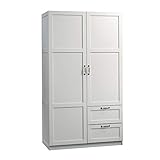
2. LIKIMIO Armoire Wardrobe Closet, White (HK-YG-18) — Best Large Wardrobe for the Money
The LIKIMIO is the big-box answer: 38 inches wide and 71 inches tall, with four flat-panel doors, two drawers, a hanging rod, shelves and a row of hooks, all in a clean white farmhouse finish. Few wardrobes at this tier give you four separate door compartments, which makes it easy to split the cabinet into his-and-hers zones or keep work clothes apart from casual wear. LIKIMIO builds it from medium-density fiberboard and includes anti-tip hardware, and at 19.9 inches deep it fits standard hangers with room to spare.
Know what you are signing up for: at roughly 135 pounds, assembly is a half-day, two-person project, and large MDF panels can pick up a chipped corner in shipping — check every panel before you start building. The built-in shelf count is modest for a cabinet this size, so heavy folded-clothes households may want to add storage boxes. Choose it if two people are sharing one wardrobe, or you simply want the most enclosed storage your budget allows.

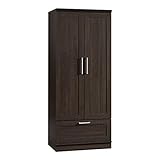
3. Sauder HomePlus Wardrobe, Soft White (423144) — Best for Small Spaces
Where the Select goes wide, the HomePlus goes narrow: just 29.06 inches across, yet still 71.18 inches tall and 20.95 inches deep — nearly the full depth of its bigger sibling, which matters more than width for hanging. Behind the single full-length Soft White door is concealed hanging and shelf storage, so a guest room, nursery or hallway corner gains a real wardrobe without surrendering three feet of wall. It also pairs visually with other cabinets from Sauder’s HomePlus line if you expand later.
The compromise is obvious: under 29 inches of width means roughly two feet of hanging rod, so this is a capsule-wardrobe or second-wardrobe solution, not a couple’s main closet. The single tall door also needs clear swing space in front of it. Pick the HomePlus if your only free wall is a narrow one and you refuse to give up hanging depth to get a wardrobe onto it.
4. VIPEK V5 Portable Closet Wardrobe, Black — Best Heavy-Duty Open Wardrobe
The VIPEK V5 is not furniture — it is infrastructure. This open wardrobe rack runs 68.9 inches long and 76.4 inches tall, built from carbon-steel tubing with four hanging rods and eight adjustable shelves, and VIPEK rates the whole frame at 890 pounds of total capacity. Because the rods and shelves reposition, the same frame can hold long coats at one end and folded stacks at the other, and at about 33 pounds the rack itself is easy to shift when you rearrange the room or move house.
Open storage is the deal you make: everything stays visible, dust settles on shoulders, and the black industrial look will not fool anyone into thinking it is an armoire. There is no enclosure and no drawer storage unless you add your own bins. Choose the V5 if capacity and flexibility beat looks — for a walk-in closet, a laundry room, or a rental where you want a whole closet system that packs down at the end of the lease.
5. SONGMICS Portable Closet, Ink Black (URYG094B02) — Best Budget
The SONGMICS is the classic covered portable closet, and it is the cheapest route here to clothes that stay hidden and dust-free. It measures 66.9 inches long, 17.7 inches deep and 65.7 inches tall, with a steel-tube frame, non-woven fabric shelves and a full fabric cover. Inside are four hanging rods plus shelf columns for folded clothes, and four side pockets on the outside catch the belts, scarves and small items that usually end up on the floor.
Fabric shelves are the weak point of every closet in this class: they handle folded clothes and shoe boxes well, but they sag under concentrated weight, and the plastic connectors — not the tubes — are what eventually crack if you overload the unit or drag it across the floor. Keep heavy items low and spread out. Pick the SONGMICS if the budget is firm, the clothes are mostly everyday weight, and you want a cover between your wardrobe and the dust.

6. LOKEME Portable Closet, Grey (PWC0004-gray) — Best Extra-Wide Portable
The LOKEME stretches the portable format to 82 inches wide — wider than most two-door armoires — while keeping the same 17.7-inch depth as the SONGMICS. LOKEME uses thicker 25 mm steel tubes than the budget norm and lays the interior out as five hanging areas and ten storage shelves, so two people can split it down the middle or separate hanging, folded and shoe storage into clear zones.
Width is the price: you need almost seven feet of uninterrupted wall, and a frame this size takes longer to build and level than the smaller portables. Like all tube-and-connector closets, it is happiest left in one spot rather than moved around loaded. Choose the LOKEME if you have the wall, share a room, and want maximum portable storage in a single unit instead of two smaller ones.

Best Picks by Category
- Best Overall: Sauder Select Armoire — doors, drawers, shelves and a hanging rail in one furniture-style cabinet.
- Best Large Wardrobe: LIKIMIO Armoire Wardrobe Closet — four doors and two drawers give you the most enclosed storage here.
- Best for Small Spaces: Sauder HomePlus Wardrobe — a 29-inch footprint that keeps nearly full hanging depth.
- Best Heavy-Duty: VIPEK V5 — an 890-pound-rated steel frame with four rods and eight adjustable shelves.
- Best Budget: SONGMICS Portable Closet — a covered, dust-shielded closet for the least money on this list.
- Best Extra-Wide Portable: LOKEME Portable Closet — 82 inches of hanging and shelf space in a single frame.
If you only remember one thing, make it this: enclosed armoires cost more and look better, portables cost less and flex more. Decide which of those matters more in your room, and the shortlist above makes itself.
How to Choose
Measure the wall, the ceiling and the doorway
Start with three numbers: the width of the wall the wardrobe will sit on, your ceiling height, and the width of every doorway the box has to pass through. Tall armoires around 71 inches suit standard ceilings, but wide flat-pack panels still need room to be lifted upright during assembly — a good rule is to have several inches of clearance above the finished height. Portables are more forgiving because the frame goes together piece by piece in place.
Count your hanging clothes against your folded clothes
Open your current closet and estimate the split. Dresses, suits and coats need long, unobstructed hanging length; tees, sweaters and jeans are happier folded on shelves or in drawers. A hanging-heavy wardrobe points you toward rod space and depth, a folding-heavy one toward shelves and drawers. Most people overestimate how much they hang and underestimate shelf space — the mixed layouts on the Sauder Select and LIKIMIO exist for exactly that reason.
Decide between an enclosed cabinet and a portable frame
Enclosed wooden armoires hide clutter behind doors, shrug off dust and read as furniture, but they are heavy, slow to assemble and miserable to move. Portable closets cost a fraction as much, go together and come apart quickly, and suit renters who cannot rely on having a closet in the next home — but the open ones collect dust and the fabric ones look temporary. Neither is better in the abstract; it depends on how long you will stay and how much the room is on show.
Check depth before width
Depth is the dimension buyers get wrong. A standard hanger is about 17 to 18 inches wide, so a wardrobe needs roughly 19 to 21 inches of depth for jackets to hang straight without the doors pressing on them. The enclosed picks here sit around 19.5 to 21 inches deep, while the portables run about 17.7 inches — fine for shirts, tighter for bulky coats. If your clothes are mostly heavy outerwear, favor the deeper cabinets.
Read materials and load ratings honestly
Budget wardrobes are built from engineered wood, MDF, steel tube or fabric, and each fails differently. Engineered wood and MDF dislike standing water and overtightened fittings; steel tube is only as strong as its connectors; fabric shelves have low per-shelf limits even when the whole unit’s rating sounds huge. Treat headline capacities as totals spread across the frame, keep the heaviest items low, and take a brand’s stated warranty — like Sauder’s one-year coverage — as part of what you are paying for.
Plan for assembly, anchoring and the next move
Every pick here needs assembly, and the big enclosed units are genuinely two-person jobs at 135 pounds or more. Budget a free afternoon, build the cabinet in the room it will live in, and use the anti-tip straps: a tall, loaded wardrobe is a real tipping hazard, especially with children around. If you know you will move within a year or two, the portables earn their keep — they break down into a bundle of tubes and fabric instead of a 40-inch cabinet that needs a van.
Quick Checklist for Wardrobes on a Budget
Low-cost furniture can serve well when it matches your space and your load. Look at these points before ordering.
- Overall height, width and depth, checked against your ceiling, doorway and room layout.
- Hanging rail length and the clearance below it for long garments.
- Weight limit for the rail and shelves.
- Door type, such as hinged, sliding or open front.
- Material and finish, whether engineered board, metal or fabric.
- Anchor points for securing the unit to the wall.
Check whether the wardrobe ships flat and how many people are needed to assemble it. Some models are heavy once built.
Comparing Wardrobe Types in a Table
| Type | Good for | Keep in mind |
|---|---|---|
| Hinged door | Easy access to everything | Needs floor space for doors to swing |
| Sliding door | Tight rooms | Only part of the interior is visible at once |
| Open rail | Small bedrooms and renters | Clothes stay visible and exposed to dust |
| Fabric canvas | Temporary or guest rooms | Lighter frames hold less weight |
Think about how you store clothes. Folded stacks suit shelves and drawers, while shirts and dresses need rail space.
Assembly and Safety Notes
Read the manual before opening hardware bags, and lay out every panel on a soft surface. Tall furniture should be fixed to the wall using the straps or brackets the maker supplies, and the fittings must suit your wall type. If you are unsure, ask a qualified person for help. Do not load shelves beyond the stated capacity, and spread weight evenly.
After a few weeks, tighten any loose fasteners, since engineered board can settle slightly. Keep the wardrobe away from damp walls, and wipe the surfaces with a lightly damp cloth.
Mistakes to Avoid When Buying on a Tight Budget
- Forgetting to measure stairwells and doors the boxes must pass through.
- Choosing a style that does not fit your clothing mix.
- Ignoring the weight limit listed on the page.
- Skipping the wall anchoring step.
Sizing and Placement Questions
Before you pick a model, sketch the room and mark where the wardrobe will stand. Leave enough space in front for doors to open fully, or choose sliding doors if that room is missing. Measure the ceiling height as well, because tall units sometimes need to be tilted during assembly and can scrape the ceiling.
Inside, think about the length of your longest garments. A rail that is too short makes coats drag on the base, while a rail that is too long wastes space you could use for shelves. If you share the wardrobe with another person, divide the interior into two zones and check that each has what it needs.
- Measure the available wall width and note any skirting boards or sockets.
- Check the height from floor to ceiling, including any slopes.
- List what must hang and what can be folded.
- Compare those needs with the interior layout in the product details.
Think about moving, too. A modest unit that breaks down into panels is much easier to take to the next home than a massive fixed piece.
Frequently Asked Questions
How much clothing does an affordable wardrobe actually hold?
It depends on the layout more than the price. A 38- to 40-inch armoire with a rod, shelves and drawers comfortably covers one adult’s everyday rotation if coats live elsewhere. Open racks like the VIPEK V5 hold far more per dollar because there are no doors or panels eating space, but everything in them stays on display.
Are portable closets sturdy enough for everyday use?
Yes, within their limits. Steel-tube frames with metal or well-fitted connectors handle daily hanging and folded clothes reliably, and heavy-duty models are rated for hundreds of pounds across the frame. Where portables fail is abuse: overloading one fabric shelf, dragging a loaded unit, or leaning on the rods. Load them evenly and move them empty.
Do I need to anchor a wardrobe to the wall?
For tall enclosed armoires, yes — use the anti-tip hardware in the box. A 71-inch cabinet full of clothes is top-heavy the moment a drawer opens or a child pulls on a door, and both wooden picks here ship with anti-tip features for that reason. Lightweight portables are less of a hazard but should still sit level and out of toddler climbing range.
Can a portable closet replace a built-in closet?
For renters and spare rooms, largely yes. A wide portable gives you hanging rods, shelves and — in the SONGMICS’s case — a dust cover, which covers most of what a reach-in closet does. What you give up is the finished look, the doors that close, and some long-term rigidity. Many people use a portable as the main closet for years without missing the built-in.
Which is better for a small bedroom: a narrow armoire or a portable?
If the floor space exists but the wall is short, a narrow armoire like the 29-inch Sauder HomePlus wins — it keeps full hanging depth and closes a door on the clutter. If the constraint is money or a short lease rather than space, a portable gives you more storage per dollar and leaves with you. Measure first; in genuinely tiny rooms the narrow cabinet is usually the smarter buy.
How long does assembly usually take?
Plan on roughly 30 to 60 minutes for a tube-and-connector portable, and two to four hours for a large flat-pack armoire with drawers, with a second person for lifting panels. Checking every panel for shipping damage before you start is time well spent — a damaged part is much easier to resolve before the cabinet is half built.
Bottom Line
For most buyers, the Sauder Select Armoire is the affordable wardrobe to beat: it looks like furniture, mixes hanging, shelves and drawers in one 40-inch cabinet, and comes from a maker with a real warranty behind it. Short on wall width, the Sauder HomePlus squeezes a genuine wardrobe into 29 inches, while the LIKIMIO goes the other way for couples who need four doors of space. Renting or counting every dollar, the SONGMICS and LOKEME portables hold a surprising amount of clothing for very little money, and the VIPEK V5 is the pick when pure capacity matters most. Whichever you choose, measure your wall and your longest garments, and check the current price and dimensions on the product page before ordering.