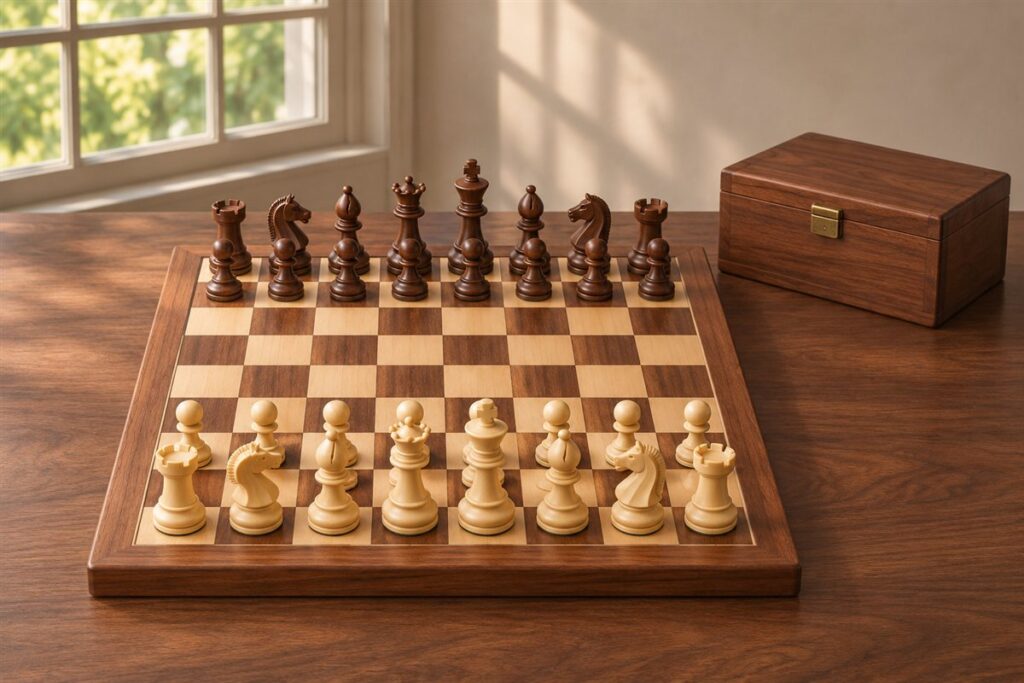
An alabaster chess set is made from a soft, translucent stone, which gives the pieces a distinctive glow and a heavier feel than wood or plastic. We have not used these products ourselves, so this guide offers no claims of personal use. It covers carving detail, base finish, board pairing, weight and care.
Alabaster is softer than many stones, so handling matters. Read the sections below to decide whether you want a set for display or regular play, how much weight you prefer, and how the board should pair with the pieces. Then compare the maker descriptions closely. Because each stone piece is a natural material, small differences in color and veining are normal, so decide ahead of time whether you enjoy that individual character or prefer a perfectly uniform look. Ask yourself, too, whether the set will live on a shelf or a table, since that decides how much weight and surface space you need.
As an Amazon Associate we earn from qualifying purchases. Links on this site are affiliate links, and they do not change the information we give.
What to Look For
| Factor | Why it matters | What to check |
|---|---|---|
| Carving detail | Fine detail can look striking but may be delicate | Check close up photos of the knight and bishop shapes |
| Stone color | Natural stone varies from piece to piece | Look at how the maker describes the colors and whether variation is mentioned |
| Base finish | Felted bases protect the board and the pieces | Look for felt or cork underneath each piece |
| Piece weight | Weight affects how steady they feel on the board | Compare the stated total weight of the pieces |
| Board type | The board must suit the pieces and the table | Check whether the board is wood, stone, leather or folding |
| Piece size | Base and height must match the squares | Compare king height and square width |
| Packaging | Stone pieces chip if packed poorly | Look for a fitted case, foam or a padded box |
Setup and Care Tips
- Handle pieces by the base and avoid dropping them on hard surfaces.
- Dust with a soft dry brush or cloth and avoid soaking the stone.
- Keep the set away from damp rooms, which may affect the surface.
- Use a board with a soft surface to cushion the bases.
- Store pieces in a fitted case when not in use.
Mistakes to Avoid
- Treating the pieces like plastic and handling them roughly.
- Using water or strong cleaners on the stone.
- Ignoring the board size and finding the squares too small.
- Expecting every piece to match in color exactly.
- Skipping the packaging details, which can matter for fragile items.
FAQ
Is alabaster fragile?
It is softer than many other stones, so it can chip or scratch more easily. Handle the pieces gently and store them with padding when you are not using them.
Can I play regularly with an alabaster set?
Some people do, but many treat these as display pieces. Weigh the heavier, more delicate feel against how often you plan to play.
Matching a Set to How You Will Use It
Alabaster is a soft, translucent stone, and sets made from it are often chosen for their glow and smooth feel. Decide first whether your set will be a centerpiece on a shelf, a gift or a board you play on now and then. That choice shapes which style and piece size make sense.
Questions to Ask Before You Buy
- Will the pieces sit on display, or will they be handled often?
- Is the board included, and is it made from a compatible material?
- Are the king and pawn sizes balanced for the squares on the board?
- Do the pieces have felt bases, and are they firmly attached?
- Is the carved detail clear enough to tell the pieces apart at a glance?
- What packaging protects the set in transit, and is it suitable for storage?
Compatibility Checks
If you plan to pair pieces with a separate board, measure the square size and compare it with the base of the king. A common rule of thumb is a base that fills roughly half to three quarters of a square, but follow the guidance that comes with your set. Check also that the weight of the pieces suits the surface you will play on.
Storage Notes
Keep the set in a dry, stable spot away from direct sun and sudden temperature changes. Wrap pieces individually in soft cloth and avoid stacking them loosely, as stone can chip when pieces knock together. Avoid soaking or using strong cleaners, and follow the maker’s manual, local rules and a qualified professional where needed.
Who Should Skip It
If the set will be used by young children or in a busy, rough setting, a tougher material may be a better fit.
Choosing a Style
Alabaster sets come in classic Staunton shapes, hand-carved figures and themed designs. A traditional Staunton form is easiest to read in play, while figurative sets are often more of an ornament than a playing tool. Natural stone varies in tone, so two sets of the same design may look slightly different, which many collectors enjoy. Look closely at product photos for veining, thin points and carved details that might be fragile. If the set is a gift, check how it will arrive and whether a fitted box is included.
Ask the seller about the weight of each piece and whether the felt bases are glued on. These small details affect how the set feels during a game.
The Short Version
Compare carving detail, base finish, board pairing and packaging. Choose an alabaster set that matches how gently you plan to handle it, whether for display or occasional play.