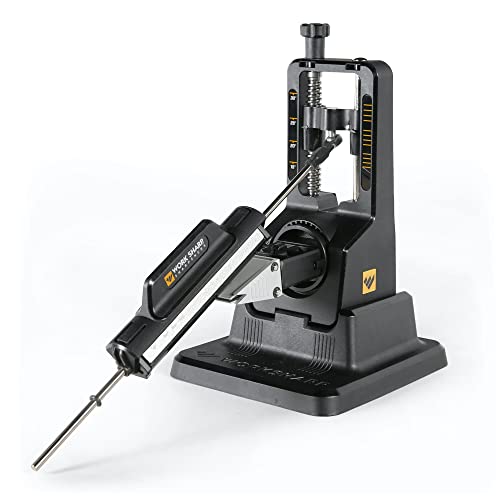
Diamond sharpening stones are metal plates coated with diamond particles. They stay flat, cut fast and need no soaking, which makes them a practical choice for anyone who sharpens often or works with hard steels.
The six stones below range from classic bench stones to a plate famous for flattening other stones. Grit, size and base design vary, so check each listing for the exact configuration. Diamond stones suit both repairs and finishing, but a single grit rarely does everything. A coarse plate restores a damaged edge, while a fine one polishes it. If you only buy one, choose a medium grit and add a fine plate later, since that pairing covers nearly every kitchen and pocket knife. Keep your strokes light and let the diamond do the work. A damp cloth under the stone keeps it from sliding on the counter, and a final stropping pass on leather or cardboard can remove the wire edge left behind by sharpening. We have not used these products ourselves, so confirm sizes, materials and details on the current listing before buying.
As an Amazon Associate we earn from qualifying purchases. Links below are affiliate links, and they do not change the product information we give.
What to Look For
| Feature | Why it matters |
|---|---|
| Grit | Coarse repairs edges; fine polishes them |
| Size | Longer stones are easier for kitchen knives |
| Base | A solid base or plate holds flat under pressure |
| Dual-sided | Two grits on one stone offer value |
| Flatness | A flat stone gives a more even bevel |
In this guide
Specs at a Glance
| Stone | Format | Grit style | Notes |
|---|---|---|---|
| DMT Dia-Sharp Bench Stone | Bench stone | Choice of grits | Perforated surface |
| Atoma 400 Diamond Plate | Plate | Single grit | Also used to flatten stones |
| EZE-LAP Diamond Bench Stone | Bench stone | Multiple grit options | Plated diamond surface |
| Smith’s Diamond Sharpening Stone | Bench stone | Dual grit | Sold in several sizes |
| Sharpal Dual-Grit Diamond Stone | Bench stone | Dual grit | Often sold with a case |
| Lansky Diamond Sharpening Stone | Bench stone | Choice of grits | Good for pocket knives |
The 6 Best Diamond Knife Sharpening Stones
Top pickBest for kitchen and utility knives
1. DMT Dia-Sharp Bench Stone
A classic diamond bench stone with a perforated surface. Many cooks and woodworkers use it for fast sharpening and for restoring worn edges.
Suits: kitchen and utility knives. Strengths: reliable cutting and a trusted brand. Weaknesses: single grit per stone. Skip it if you want dual-grit value.

Best for stone flattening and fast cuts
2. Atoma 400 Diamond Plate
A diamond plate known for flattening other sharpening stones. It also sharpens quickly, though the pattern leaves a coarse edge.
Suits: stone flattening and fast cuts. Strengths: long life and fast removal. Weaknesses: aggressive pattern for fine work. Skip it if you want a polishing stone.

Best for regular sharpeners
3. EZE-LAP Diamond Bench Stone
A diamond-plated bench stone available in different grits. It offers consistent cutting, and the plating is made to hold up with regular use.
Suits: regular sharpeners. Strengths: consistent performance and a range of grits. Weaknesses: some sizes cost more than basic stones. Skip it if you want a lower-cost stone.
View EZE-LAP Diamond Bench Stone on Amazon
Best for casual sharpeners
4. Smith’s Diamond Sharpening Stone
A dual-grit diamond stone sold in several lengths. It suits people who want to sharpen and refine on a single plate.
Suits: casual sharpeners. Strengths: two grits and an easy price. Weaknesses: coating can wear if pressed hard. Skip it if you need a pro bench stone.
View Smith’s Diamond Sharpening Stone on Amazon
Best for small knives and travel
5. Sharpal Dual-Grit Diamond Stone
A dual-grit diamond stone that often comes in a handy case. It is a common choice for pocket knives and small tools.
Suits: small knives and travel. Strengths: compact size and good value. Weaknesses: limited length for long blades. Skip it if you sharpen big kitchen knives.

Best for pocket knives
6. Lansky Diamond Sharpening Stone
A diamond stone from a long-known sharpening brand, handy for folders and field tools. Check the listing for the grit and size.
Suits: pocket knives. Strengths: easy use and brand support. Weaknesses: small sizes can be limiting. Skip it if you want a large kitchen stone.

Care and Setup
- Rinse with water after sharpening.
- Wipe the plate with a soft brush to lift swarf.
- Avoid heavy pressure on a new stone.
- Store stones in a dry place with a cover.
- Pair coarse and fine grits for the best finish.
Mistakes to Avoid
- Using too much pressure.
- Starting with a grit that is too fine for a dull edge.
- Letting the stone dry out with metal swarf on it.
- Dropping the stone on a hard surface.
- Skipping a flat, stable work base.
Planning a Grit Ladder for Your Knives
Grit describes the size of the diamond particles, and it decides how quickly the stone removes metal and how smooth the edge feels afterward. Coarse grits cut fast and are for repairing chips, reshaping an edge and restoring a badly dull knife. Medium grits suit regular sharpening and are the workhorse for most people. Fine and extra-fine grits refine the edge and give a smoother, more polished cut. Because grit labels differ between makers, treat the numbers as a rough guide and check how each maker describes its stone.
Many sharpeners work in stages. Start with a coarse stone only if the edge is damaged. Move to a medium stone to build a fresh edge, then use a fine stone to refine it. If your knives are only slightly dull, a medium or fine stone alone may do the job. Skipping coarse stones saves metal and time. Using a stone that is too fine on a very dull blade wastes effort, and using one too coarse on a good edge removes more steel than needed.
Dual-grit stones put two grits on one plate, one on each side, which is convenient and compact. They are a good way to cover two stages without buying multiple stones. If you sharpen different types of knives, such as kitchen knives, hunting knives and tools, think about which grits you need for each. Check the listing for the exact grit values and the finish each side produces.
Plate Construction, Surface Patterns and Base
A diamond stone is built from a base plate with a layer of diamond particles bonded to the surface. The quality of the bonding, the evenness of the diamond distribution and the flatness of the base all influence how well the stone performs. Some stones have a continuous surface, while others have perforations or interrupted patterns that collect metal filings and reduce clogging. Continuous surfaces tend to give a smoother, more even cut. Perforated ones can cut faster and stay cleaner, but may feel more aggressive on the edge.
Diamond particles come in different types. Some use many tiny crystals bonded together, while others use larger single crystals. The specific details are not always stated on listings, so rely on the maker’s description and on buyer feedback about wear and feel. A new stone may feel aggressive for the first few uses as the loose, high particles wear in. This is normal, and it will settle with use.
The base matters for stability. A stone mounted on a plastic or resin base is light and often comes with non-slip feet. A stone on a metal base is sturdy, but can be heavy. Check whether the stone has a handle or a case, and consider where you will use it. A stone that rocks or slips on the bench is unsafe, so use a non-slip mat or a holder to keep it steady.
Size, Length and Matching the Stone to the Knife
The size of the stone affects ease of use. A longer, wider stone lets you sharpen the full length of a long knife in one stroke, which helps you maintain an even angle. For kitchen knives, a stone that is longer than the blade is ideal. A short stone works for small knives, but you will need to sharpen the blade in sections, which can lead to an uneven edge. Check the listing for the exact length and width, and compare it with your longest knife.
Thickness and weight affect stability. A thick stone is sturdy and less likely to flex, and a thin one can be portable but may need a flat surface under it. Think about whether you will keep the stone on a bench or carry it in a pack. If you sharpen at home, a bench stone with a non-slip base makes the work easier. If you carry it to a campsite or a job, a smaller stone in a case is more practical.
Different knives call for different approaches. Kitchen knives need long, even strokes. Hunting and outdoor knives often have thicker blades and may need a coarser stone for edge repair. Pocket knives and small tools are fine on a small stone. Serrated knives need a different tool, since flat stones cannot reach the grooves. Check that the stone suits your knife steel, too. Diamond cuts very hard steels that some other stones struggle with, which is one reason it is popular for modern knives.
Technique, Pressure and Lubrication
Good sharpening depends on a steady angle more than on force. Find the bevel on your knife and hold it at a consistent angle against the stone. A common method is to lay the blade flat, then raise the spine slightly until the edge makes contact. Many people use an angle guide at first. Make smooth strokes from the heel to the tip, as if you were slicing a thin layer off the stone, and work one side until you feel a burr, a tiny curl of metal, along the opposite edge.
Use light pressure. Diamond cuts fast, and heavy pressure wears the stone and can damage the edge. Let the stone do the work, and use more strokes rather than more force. Switch to the other side, and finish with lighter strokes on each side to remove the burr. A strop or a fine stone can polish the edge further. Test sharpness carefully, such as by slicing a piece of paper.
Many diamond stones are used with a little water, which helps carry away the metal particles, called swarf, and keeps the surface clean. Some are used dry. Follow the maker’s guidance, as some stones should not be used with certain oils. After sharpening, rinse the stone and wipe it clean with a soft brush or cloth. Keep a clean towel nearby, and always wipe the knife after sharpening before using it on food.
Wear, Flatness and Knowing When to Replace It
Diamond stones last a long time, but the diamond layer does wear. A new stone cuts aggressively, and with use it gradually becomes smoother. If the stone seems to cut more slowly, check whether the surface is clogged with swarf. Clean it with water and a soft brush, and try again. A stone that is truly worn will feel smooth and polished in patches, and will leave an uneven finish.
Flatness matters. A bench stone that has developed a dip or a hollow in the middle will not sharpen the edge evenly. Diamond plates generally stay flat longer than many other types, since the base is metal and the diamond layer is thin, though they can still be damaged by drops or misuse. Never drop a diamond stone onto a hard surface, which can chip the plate or bend it. Store it flat in a case or sleeve, away from other tools that can scratch the surface.
Consider whether a stone is worth replacing or whether you can switch to a finer grit for finishing. A stone that is worn out in one area can sometimes be used for light touch-ups. When buying, check the warranty policy, and read buyer feedback about how the diamond layer holds up. Look for signs that the stone has bare patches, peeling or scratches that make the surface uneven. Replace it if the plate is bent, if diamond is flaking off or if it no longer produces a consistent edge.
Diamond Knife Sharpening Stones FAQ
Do diamond stones need oil?
Most are used with water or dry. Follow the maker’s care notes.
Are diamond stones good for kitchen knives?
Yes, especially longer stones that cover the whole edge.
What grit should I start with?
A medium grit covers most touch-ups.
Will a diamond stone wear out?
Yes, slowly. Light pressure extends its life.
What grit should I buy first?
A medium grit covers most routine sharpening. Add a coarse stone for repairs and a fine one for finishing as your needs grow.
Is a dual-grit stone a good choice?
Yes, it offers two stages on one plate. Check the listing for the exact grits and the size.
Can I use diamond stones on ceramic knives?
Diamond is often used for ceramic blades, since it is harder than most other abrasives. Check the knife maker's guidance first.
Do I need to soak a diamond stone?
No, diamond stones do not need soaking. Some are used wet and some dry, so follow the maker's instructions.
Why does my new stone feel rough?
A new diamond surface often feels aggressive at first as high particles wear in. It smooths out with use.
How do I clean a diamond stone?
Rinse with water and scrub gently with a soft brush. Avoid harsh chemicals unless the maker says they are safe.
Can I sharpen serrated knives on a flat stone?
Not effectively. Serrations need a tapered rod or a tool made for them, so check what your knife needs.
How can I keep the stone from sliding?
Use a non-slip mat, a holder or a stone with rubber feet, and make sure the work surface is flat and stable.
How Diamond Abrasive Compares With Water Stones, Oil Stones and Ceramic
Choosing diamond is partly a choice against other abrasives, so it helps to know what each one offers. Diamond plates use industrial diamond particles bonded to a metal surface, and they cut very hard steels without much fuss. Water stones are softer and wear as they cut, giving a refined edge but needing regular flattening and soaking. Oil stones are traditional and durable, though slower on hard modern steels. Ceramic stones sit between them, with a hard, fine surface that does not need soaking.
The practical difference is upkeep. A diamond surface stays flat for a long time, cuts quickly and does not need soaking, which suits people who want a simple routine. The trade-off is feel. Some sharpeners find diamond harsher and less forgiving than water stones, and the coarse side can leave deeper scratches than expected for its grit number. Fine diamond grits can still produce a very sharp edge, but they tend to feel different from softer stones.
If you already own another stone type, a diamond plate is a handy addition for repairing chips, thinning an edge and flattening other stones, not necessarily a replacement.
Sharpening Specific Knife Types: Kitchen, Pocket, Hunting and Hard Steel
Different blades make different demands on a stone. Thin kitchen knives need a light touch and a stone long enough to cover the whole edge, which is where a longer bench stone has an advantage. Small pocket knives and hunting knives are easier to work on a compact stone, so check each listing for length before ordering.
- Soft kitchen steels: they respond quickly, so a medium grit may be enough for most touch-ups and light pressure avoids removing more metal than needed.
- Hard and wear-resistant steels: these are where diamond is especially useful, since softer stones can struggle against them.
- Very hard or brittle edges: use light pressure, because heavy force can chip a fine edge.
- Serrated knives: a flat plate sharpens the flat side but not each scallop. Use a tapered rod for the serrations.
When in doubt, check what the knife maker says about steel and edge angle, and match your approach to the knife.
Setting Up a Safe, Stable Sharpening Station
Good results depend as much on the setup as the stone. Put the stone on a non-slip mat, a damp towel or a holder that stops it from moving, and make sure the working height is comfortable so you can keep a steady angle. A bench stone should sit at the edge of your work surface so that your wrist is not bent awkwardly.
Keep a towel or cloth at hand to wipe the blade and the stone. Metal particles build up quickly on a diamond plate, and wiping them away shows you how the edge is progressing. Work in good light so you can see the burr and the scratch pattern. Wear cut-resistant gloves if you are new and keep your free hand behind the edge, never in the path of the blade.
Finally, store the stone where the surface cannot be scratched or knocked against other tools. A case or a slot in a drawer protects the diamond layer and keeps debris off the surface.
Reading the Edge: Burrs, Testing and Finishing
Knowing when you are done matters as much as knowing how to start. On a coarse grit, you are working toward a burr, a thin curl of metal that forms along the opposite side of the edge. Feel for it lightly with a fingertip drawn away from the edge, not along it. When the burr runs the full length, flip the blade and repeat on the other side, then move to a finer grit.
After the fine stone, test sharpness by checking how the edge slices through a sheet of paper or a ripe tomato, not by testing against your thumb. A well-sharpened edge cuts with little pressure and does not slip. If it feels rough or catches, return to the previous grit and clean up the edge before finishing. A leather strop or a fine finishing surface can remove the last of the burr and polish the edge.
Keep a simple routine. Touch up an edge as soon as it begins to dull, since a few light passes on a fine grit take far less metal than rebuilding a neglected edge from coarse. Over a year, that habit keeps both your knives and your diamond plate in better shape, and it makes each sharpening session shorter and less frustrating. If you sharpen several knives, work through them in the same order each time so that you build a consistent feel for pressure and angle.
Finally, rinse the plate after each session and let it dry before storing it. Dried-on metal swarf can cloud the surface and make a good stone feel dull, and a quick scrub with a soft brush and water is usually enough to keep it clean.
Frequently Asked Questions
Is a diamond stone better than a whetstone for beginners?
Not necessarily better, but it is simpler. Diamond plates need no soaking, stay flat and cut quickly, which lowers upkeep. Whetstones can give a refined feel but need soaking and flattening. Beginners often find the simplicity of diamond helpful, as long as they use light pressure and learn to hold a steady angle.
Can a diamond stone flatten my water stones?
Yes, a coarse diamond plate is widely used for this. Rub the water stone across the plate in a circular or figure-eight pattern until the surface is level. Keep both surfaces wet to carry away slurry, and rinse the plate afterward so slurry does not dry and clog the diamond surface.
How do I know if I have raised a burr?
Gently drag a fingertip from the spine toward the edge on the side opposite the stone. A burr feels like a slight roughness or catch along the whole length of the edge. If you feel it in only some places, keep working until it appears evenly from heel to tip.
Should I strop after using a diamond stone?
Many sharpeners do. A leather or similar strop removes the fine burr and wire edge left behind, which can make the edge feel cleaner and more durable. It is optional, and a good fine stone alone may be enough, but it is a low-cost step that adds polish.
The Short Version
For a trusted bench stone, the DMT Dia-Sharp. For flattening and fast cuts, the Atoma 400. For dependable plating, the EZE-LAP. For dual grit, the Smith’s. For pocket knives, the Sharpal. For a small brand classic, the Lansky.