A pocket knife dulls with use, and a small diamond stone is often the quickest way to bring it back. These compact sharpeners fit in a pocket or pack and work well on the harder steels found in many modern folders.
The six options below range from folding diamond hones to a field sharpener with a built-in guide. Each is small enough to carry, though sizes differ, so check the listing for the exact dimensions. Pocket knives usually have short edges, so a pocket-sized stone is enough. Hold the knife at a consistent angle and work from the heel to the tip, then flip and repeat. A fold-out design is handy for campers, while a flat bench stone suits a workbench. Keep a small cloth with the kit to wipe swarf away. Check the blade often against a light, because a dull spot shows as a thin line of reflection along the edge, and stop once that line disappears from the whole length. We have not used these products ourselves, so confirm sizes, materials and details on the current listing before buying.
As an Amazon Associate we earn from qualifying purchases. Links below are affiliate links, and they do not change the product information we give.
What to Look For
| Feature | Why it matters |
|---|---|
| Size | Compact stones travel well and fit short edges |
| Fold design | A folding hone protects the diamond surface in a pocket |
| Grit | Fine grit touches up; coarse restores a neglected blade |
| Guide | An angle guide helps new users stay consistent |
| Handle | A handle or case gives control when sharpening |
In this guide
Specs at a Glance
| Sharpener | Format | Grit style | Notes |
|---|---|---|---|
| DMT Dia-Fold | Folding hone | Fine and extra-fine options | Fits a pocket |
| DMT Diamond Mini-Sharp | Mini stone | Choice of grits | Includes a handle |
| Fallkniven DC4 | Dual hone | Diamond and ceramic | Popular with field users |
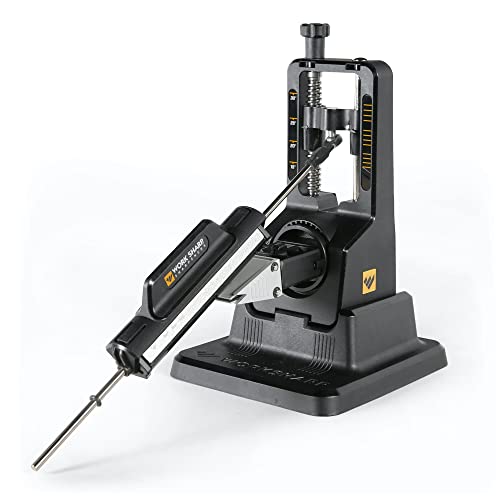
| Work Sharp Guided Field Sharpener | Field kit | Diamond plus ceramic | Built-in angle guides |
| Lansky Blademedic | Multi-tool sharpener | Carbide, ceramic and diamond | Compact; multiple functions |
| EZE-LAP Model M | Pocket stone | Fine grit options | Very small |
The 6 Best Diamond Sharpening Stones for Pocket Knives
Top pickBest for carry and touch-ups
1. DMT Dia-Fold Diamond Sharpener
A pocket-sized folding sharpener with a diamond surface and a protective fold design. It is a handy way to keep a folder sharp on the go.
Suits: carry and touch-ups. Strengths: compact fold design and trusted diamond. Weaknesses: small surface for large blades. Skip it if you want a larger bench stone.
View DMT Dia-Fold Diamond Sharpener on Amazon
Best for pocket-knife maintenance
2. DMT Diamond Mini-Sharp
A small diamond sharpener on a plastic handle with a thumb guard. It works well for quick hits on small blades.
Suits: pocket-knife maintenance. Strengths: small size and easy grip. Weaknesses: handle design varies by version. Skip it if you need to sharpen big knives.

Best for outdoor use
3. Fallkniven DC4 Diamond Ceramic Sharpener
A small two-sided stone with a diamond surface on one side and ceramic on the other. It is a classic for field kits.
Suits: outdoor use. Strengths: two-in-one stone and durability. Weaknesses: a higher cost than basic hones. Skip it if you only need one grit.

Best for novice sharpeners
4. Work Sharp Guided Field Sharpener
A compact sharpening kit with a diamond plate, ceramic rod and angle guides. It handles pocket knives, hooks and more.
Suits: novice sharpeners. Strengths: guided angles and a multi-surface design. Weaknesses: mid-range cost. Skip it if you prefer a single stone.

Best for emergency touch-ups
5. Lansky Blademedic Pocket Sharpener
A compact multi-function tool with carbide, ceramic and diamond sharpening surfaces. It suits quick fixes in a tool kit.
Suits: emergency touch-ups. Strengths: very compact and versatile. Weaknesses: less control than a stone. Skip it if you want a polished edge.

Best for fine maintenance
6. EZE-LAP Model M Diamond Sharpener
A small, rectangular diamond hone that slips into a pocket or tool roll. Different grit versions are sold, so check which one you get.
Suits: fine maintenance. Strengths: slim size and consistent diamond. Weaknesses: very small surface. Skip it if you want a large bench stone.
View EZE-LAP Model M Diamond Sharpener on Amazon
Care and Setup
- Wipe off swarf after each session.
- Keep the folding hone closed in your pocket.
- Use light, even strokes on the bevel.
- Store the sharpener away from sand and grit.
- Check the edge on paper or a tomato skin.
Mistakes to Avoid
- Using too coarse a grit for routine maintenance.
- Changing the angle mid-stroke.
- Pressing hard on a small stone.
- Carrying the sharpener loose with keys.
- Sharpening a dirty blade without wiping it.
Folding Hones, Handled Stones, Combination Tools and Guided Kits
Pocket-sized sharpeners come in a few formats, and each suits a different routine. A folding diamond hone tucks the surface away when closed, which protects the pocket and the plate, and it opens to give you a flat sharpening surface. A handled stone gives you something to hold, often with a guard for your fingers, which makes it comfortable and safe for quick work. A small rectangular hone is slim and light, and easy to slip into a tool roll, but it has no guard, so you need more care.
Combination tools put several surfaces into one body, such as diamond, ceramic and a tapered rod, and they cover more kinds of blades. A tapered rod is useful for serrations and gut hooks, which flat stones cannot reach. Guided kits include a clamp or an angle holder that fixes the angle for you. They are slower to set up but make it easier for beginners to get a consistent edge, and they work well at a campsite where the angle is hard to hold by hand.
Choose according to how you sharpen. If you want a quick touch-up in the field, a folding hone or small handled stone is quick. If you want better results with less practice, a guided kit is easier to learn. Think about the knives you carry, including any serrated blades or small tools, and whether you want one tool or several.
Choosing a Grit for Folding Knives
Pocket knives come with a range of steels, from soft and easy to sharpen to very hard modern alloys. Diamond works well on the hard ones, which is why many pocket sharpeners use it. For routine maintenance, a fine or medium grit usually restores a slightly dull edge without removing much steel. A coarse grit is for edges that are chipped, rolled or badly dull, and it can leave a rougher finish that needs a finer stone to refine.
Because pocket stones are small, the grit and the plate quality affect how well they work. Check how the maker describes the grit, and if the product has more than one surface, confirm what each side is. Some listings give grit names such as fine and extra fine rather than numbers, and that is fine for a general guide. Do not worry about chasing a mirror polish, since a pocket knife is a working tool, and a clean, sharp edge is the main goal.
If you are unsure, start with a fine grit and work up or down as needed. If the knife has a thin edge, go easy, as aggressive grits remove material quickly. If it is a thick, tough-use blade, a coarser grit helps restore the shape. As with any sharpening, patience gives better results than pressure, and a few light strokes often do more than a long hard session.
Angle Control and Technique on a Small Stone
Consistency matters more than any other factor. Find the edge angle of your knife by looking at the bevel. Many pocket knives use a similar angle on both sides, and the factory angle is a good place to start. Hold the knife so the edge meets the stone at that angle and keep it steady through each stroke. A guide, a marker on the edge or a simple trick of coloring the bevel with a marker can help you see where the stone is making contact.
On a small stone, work in sections. Start at the heel, draw the blade across the stone as if slicing a thin layer, and move toward the tip. For a short stone, break the blade into zones and overlap each one. Keep your fingers away from the edge, and use the guard if there is one. Take the same number of strokes on each side. When you feel a burr on the opposite edge, switch sides.
Finish by removing the burr. Use a few light strokes on each side or a strop, such as a piece of leather or a cardboard sheet, to align the edge. Test the result on paper or on food, but never on your skin. Wipe the blade clean after sharpening to remove steel particles. If you struggle to hold the angle, switch to a guided kit for a while to train your hand.
Carrying, Protecting and Cleaning a Small Sharpener
A pocket sharpener lives a rough life, so protect it. A diamond surface can scratch other items, and sand and grit can damage the plate. Keep it in a case or a sleeve, away from loose keys and coins. If it folds, keep it closed. Avoid dropping it on hard surfaces, which can chip the plate or damage the handle. If you carry it on a lanyard or in a bag, check that the hinge or clip is secure.
Cleaning is simple. After each session, rinse the surface with water and brush it with a soft brush or cloth to remove swarf. Let it dry fully before closing or packing. Do not use harsh chemicals, and avoid using oil unless the maker says it is safe. If the surface is clogged, a gentle scrub with a damp cloth usually helps. Keep it away from sand, which can embed in the surface and wear it down.
Consider the field setting. Wind, rain and dirt are all hazards. A small cloth in your kit lets you wipe the knife and the stone, and a spare piece of cardboard or leather provides a quick stropping surface. Keep the sharpener dry in storage, and avoid leaving it in a hot vehicle. A sharpener in good condition will serve for years of casual use.
Limits, Safety and When to Replace It
A pocket stone is a maintenance tool. It is not ideal for rebuilding a badly damaged edge, reprofiling a very thick blade or sharpening a long kitchen knife. For those jobs, a larger stone or a professional service is better. If you have a very dull knife, a small stone will take a long time, and you may become frustrated. Know when to move to a larger tool.
Safety matters when sharpening. Always keep your fingers behind the edge, use a stable surface, and take care when drawing the blade toward you. Work slowly, particularly with a stone that has no guard. Keep sharpening tools away from children. Wear eye protection if you are working with a power tool or around metal filings, and avoid breathing swarf. After sharpening, handle the knife with care, since a fresh edge is sharper than it looks.
Signs it is time to replace the sharpener include a diamond layer that is flaking or worn smooth, a bent or cracked plate, a folding hinge that no longer locks, a loose handle or a surface that no longer cuts after cleaning. Check the warranty and return policy when you buy. Read buyer feedback for notes on how the diamond layer wears and whether the product matches its description. If the listing does not say what grit you are getting, confirm it with the seller before buying.
Diamond Sharpening Stones for Pocket Knives FAQ
What size diamond stone is best for pocket knives?
Pocket knives have short edges, so a small stone is enough.
Do I need a guide?
Not required, though guides help beginners.
What grit should I use?
A fine grit works for touch-ups; a coarse one restores dull edges.
Can I use the same stone on kitchen knives?
A larger stone is easier for long kitchen blades.
Is a folding diamond hone better than a handled stone?
Neither is always better. A folding hone is compact and protects its surface, while a handled stone is easier to grip and often includes a guard.
How do I sharpen a serrated pocket knife?
Use a tapered rod or a tool designed for serrations, since flat stones cannot reach the grooves. Sharpen each scallop on its beveled side.
How many strokes should I take?
It depends on how dull the edge is. Work until you raise a burr, then take lighter strokes to remove it, and test the edge carefully.
Can I use the stone dry?
Many diamond stones can be used dry or with water, but follow the maker's instructions. Water helps clear swarf.
What is a burr?
It is a tiny curl of metal that forms on the opposite side of the edge when you have sharpened far enough. You remove it with lighter strokes or a strop.
Should I sharpen a new knife?
Factory edges vary. If it is not sharp enough, a gentle touch-up on a fine stone can help, matching the factory angle.
Is a guided kit worth it for a beginner?
A guided kit can help you learn the right angle. It is slower than freehand work, but it gives more consistent results while you practice.
How do I keep the stone from scratching my pocket?
Carry it in a case or sleeve, keep folding models closed, and store it apart from keys and other metal items.
How a Diamond Plate Differs From a Traditional Stone
Most pocket diamond hones are not solid stones at all. They are a thin layer of industrial diamond particles bonded to a metal or plastic backing, usually with a nickel layer holding the grit in place. This construction explains several behaviors that surprise people used to oil stones or water stones. A diamond plate stays flat for a very long time, because the backing does not wear away the way a soft abrasive does. It cuts quickly, even on hard steels, because diamond is harder than anything in the blade. And it does not need soaking or flattening before use.
The trade-off is that the working layer is thin. When the particles wear or pull out, the plate is finished, and you cannot resurface it the way you can a stone. That is one reason light pressure matters on a small hone. Heavy pressing does not speed up the work much, but it can embed steel into the surface and shorten its life. Some plates are made with a pattern of holes or dimples that give the swarf somewhere to go, and many makers describe this in the listing. It helps keep the surface cutting, though the pattern itself does not change how the edge turns out.
New plates often feel aggressive for the first several uses. Loose particles at the surface wear off, and the cut settles into a steadier, slightly finer feel. This is normal, and it is a reason not to judge a hone on its first session. If a plate keeps shedding particles after many uses, or shows bare patches, check the maker’s return terms.
Sharpening Common Pocket Knife Blade Shapes
A small stone works well when you understand how the blade shape changes your stroke. The shapes below cover most folders.
- Drop point and clip point: the edge has a long straight section and a curved belly near the tip. Sharpen the straight part with a steady drawing stroke, then lift the spine slightly as you follow the curve so the angle stays the same around the belly.
- Tanto: the edge is two straight sections joined at a corner. Treat each section as its own small blade and sharpen them separately, taking care at the corner so you do not round it off.
- Sheepsfoot and straight-edge utility blades: the edge is nearly flat, which makes these among the easiest shapes to sharpen on a small hone.
- Wharncliffe and hawkbill shapes: the curve is more pronounced, so shorter strokes with more attention to the angle give better results than long sweeping passes.
- Serrated sections: flat stones only touch the tips of the scallops. A tapered rod or the edge of a narrow hone is the right tool, as noted in the FAQ.
Whatever the shape, the goal is to touch the full length of the edge evenly. A small plate forces you to work in sections, so count your strokes and keep them consistent from the heel to the tip. If one area of the blade stays dull while the rest is sharp, you probably skipped it or held a different angle there.
Pairing Diamond With Ceramic, Leather or a Strop
Diamond cuts fast, and that is its strength, but it can leave a slightly toothy edge. For a pocket knife used on cardboard, rope or packaging, that bite is often an advantage. For slicing food, cutting fruit or whittling, many people like a smoother finish. A common approach is to do the main work on diamond and then refine the edge on a finer surface.
That finer surface can be a ceramic hone, which is why several kits combine diamond and ceramic in one body. The Fallkniven DC4 and Work Sharp kit in this guide follow that pattern, according to the descriptions above. A strop, which is a piece of leather or a smooth card with a little compound, takes off the last of the burr and polishes the very edge. You do not need to buy one. A strip of cardboard or the back of a leather belt will do a modest version of the same job.
Keep the sequence simple. Raise the burr on the diamond, flip and work the other side lightly, then use a few trailing strokes on the finer surface. If the knife is already reasonably sharp and just needs a boost, you may only need the finishing step. Do not expect a finer surface to fix a poorly shaped edge. It refines, it does not reshape.
Realistic Expectations for a Pocket-Sized Sharpener
It helps to decide up front what job the hone is for. Used regularly, a small diamond hone keeps an edge in working shape and delays the point at which you need a large stone. Used once a year on a neglected knife, it will feel slow. The difference is frequency: a few light passes after a week of use take seconds, while rebuilding a dull edge takes much longer.
Think about the knives you carry. A thin-bladed folder with hard steel is a good match for diamond. A thick-bladed fixed knife with a long edge may be better served by a larger plate. If you carry several knives of different sizes, a mid-sized hone may be a better compromise than the smallest option. Also consider the places you will use it. A sheltered workbench allows a flat, stable setup, while a tailgate or camp table means working on an uneven surface, where a handled stone or a guided kit is easier to control.
- Check the listing for the grit and the surface size before you order.
- Decide whether you need serration support and, if so, look for a tapered rod.
- Confirm what the hone is made of, since some use plastic backing and some use metal.
- Read buyer feedback for notes on how the diamond layer holds up with regular use.
Frequently Asked Questions
Why does my diamond sharpener feel rough at first?
New diamond plates often have loose or sharp particles at the surface that wear off in the first several uses. The cut then settles into a steadier feel. If the plate keeps shedding particles or shows bare patches after regular use, check the seller’s return terms.
Can I use a diamond stone on ceramic knives?
Diamond is hard enough to abrade ceramic, which ordinary stones cannot do. Ceramic blades are brittle, though, and can chip under pressure. Check the knife maker’s guidance first, use very light strokes and consider a sharpener made specifically for ceramic if the knife is valuable.
Do I need to use water or oil with a diamond hone?
Many diamond hones work dry or with a little water, and water helps carry swarf away. Oil can clog some surfaces and is not recommended unless the maker says so. Check the instructions that come with your hone, and wipe the plate clean after each session.
How often should a pocket knife be sharpened?
It depends on use and steel. A knife used daily may benefit from a few light passes every week or two, while one used occasionally may need attention only when it stops cutting cleanly. Touching up early takes seconds and avoids long repair sessions later.
The Short Version
For a fold-out hone, the DMT Dia-Fold. For a small handle stone, the DMT Mini-Sharp. For field use, the Fallkniven DC4. For guided kits, the Work Sharp Field Sharpener. For a multi-tool, the Lansky Blademedic. For slim carry, the EZE-LAP Model M.