An everyday carry knife should be small enough to forget and sharp enough to matter. It opens boxes, cuts rope, slices fruit and handles dozens of small chores, so comfort and reliability count for more than raw size.
The six knives below include folders and a simple fixed blade, from classic styles to modern designs. Sizes and steels vary by edition, so confirm them on the listing. Check your local knife laws before you carry. Most places regulate blade length or locking designs. For a first knife, a folder with a clip and a mid-size blade is a good starting point. Fixed blades are strong and easy to clean, but they need a sheath and are less discreet. Think about where you will use the knife most, whether at a desk, on a trail or in a workshop, and choose the blade shape and handle texture that match that setting. A knife you are comfortable carrying every day will always be more useful than a bigger one that stays at home. Practice opening and closing the knife safely, keep your fingers clear of the edge, and store it out of reach of children. Regular wiping and a bit of oil keep a folder smooth, and a quick sharpening session every few weeks keeps it ready for the small jobs it was bought to do. We have not used these products ourselves, so confirm sizes, materials and details on the current listing before buying.
As an Amazon Associate we earn from qualifying purchases. Links below are affiliate links, and they do not change the product information we give.
What to Look For
| Feature | Why it matters |
|---|---|
| Blade length | A mid-size blade handles most chores without being awkward |
| Lock | Strong locks improve safety during use |
| Carry method | Pocket clips keep a knife from sinking into a pocket |
| Handle | Textured handles stay secure when wet |
| Upkeep | Stainless and coated blades need less attention |
In this guide
Specs at a Glance
| Knife | Type | Handle | Notes |
|---|---|---|---|
| Ontario RAT 1 | Folding knife | Nylon or G-10 | Strong lock; simple design |
| Morakniv Companion | Fixed blade | Rubberized | Sold with a sheath |
| Opinel No. 8 | Traditional folder | Wood | Twist-ring lock |
| Case Slimline Trapper | Traditional folder | Synthetic or bone | Two blades |
| Buck 110 Folding Hunter | Traditional folder | Wood or synthetic | Lockback design |
| Kershaw Link | Folding knife | Aluminum or glass-filled nylon | Good value |
The 6 Best EDC Knives

Top pickBest for hard use
1. Ontario RAT 1
A sturdy, no-frills folder with a strong lock and a straightforward shape. It is known for toughness at a fair cost.
Suits: hard use. Strengths: strong build and easy care. Weaknesses: a plain look. Skip it if you want a slim blade.


Best for camp and workshop tasks
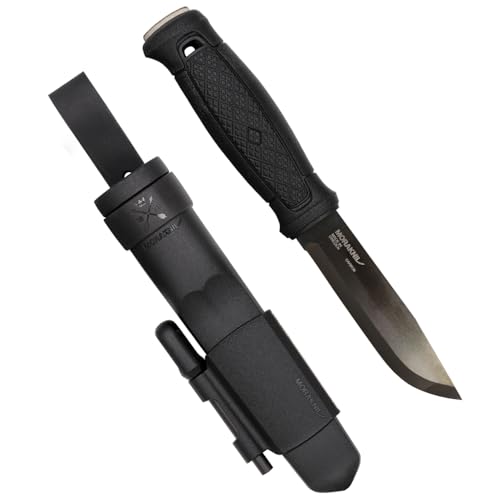
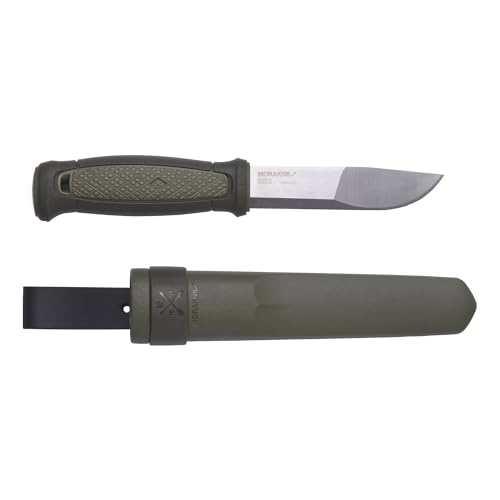
2. Morakniv Companion
A simple Swedish fixed-blade knife with a rubberized handle and a plastic sheath. It is a favorite for outdoor chores and bushcraft basics.
Suits: camp and workshop tasks. Strengths: excellent value and an easy grip. Weaknesses: not a pocket knife. Skip it if you need discreet carry.

Best for picnics and light chores
3. Opinel No. 8
A classic French folder with a wooden handle and a twist-ring lock. It is lightweight and slices cleanly.
Suits: picnics and light chores. Strengths: light and traditional. Weaknesses: the lock can be tricky when wet. Skip it if you want a pocket clip.

Best for gentlemen carry
4. Case Slimline Trapper
A traditional slip-joint folder with two blades in a slim shape. It carries comfortably in dress pants.
Suits: gentlemen carry. Strengths: slim pocket fit and heritage. Weaknesses: no locking blade. Skip it if you need a locking design.


Best for outdoor and utility use
5. Buck 110 Folding Hunter
A famous lockback folder with a wood handle and a long blade. It has been a classic for decades, but it is on the hefty side.
Suits: outdoor and utility use. Strengths: tradition and a solid lock. Weaknesses: weight and bulk. Skip it if you want a thin pocket knife.
Best for budget-minded users
6. Kershaw Link
A budget-friendly folder with a handy handle and a smooth opener. It is easy to use and easy to like.
Suits: budget-minded users. Strengths: comfortable grip and value. Weaknesses: basic steel. Skip it if you want a premium blade.
Care and Setup
- Wipe off moisture after use.
- Keep the pivot lightly oiled.
- Check the lock before cutting.
- Sharpen at a steady angle.
- Clean pocket lint from the handle.
Mistakes to Avoid
- Ignoring local knife laws.
- Using a pocket knife to pry.
- Carrying a fixed blade without a proper sheath.
- Dulling the edge on glass or metal.
- Overpaying for features you do not use.
Thinking Through Your Actual Daily Tasks
The best way to choose an everyday carry knife is to list what you really cut in a normal week. For many people that is opening packages, trimming loose threads, cutting twine, peeling fruit, slicing cord and cleaning up cardboard. These jobs favor a modest blade, a comfortable handle and a knife that opens easily. They do not require a big, heavy tool.
If your week includes outdoor chores, such as cutting rope, preparing kindling or opening food packaging on a trail, a sturdier knife with a robust lock or a fixed blade starts to make sense. If you work in an office or a shop with frequent visitors, a slim, low-profile folder may be more appropriate than something that looks tactical.
Consider who else will handle the knife. A knife shared with family should be simple, easy to close and not alarming in appearance. Also consider your hands. Large hands may find tiny knives fiddly, and small hands may struggle to open a big, stiff blade. If possible, hold a few shapes in a shop before buying, or choose a seller with an easy return policy.
Finally, set a ceiling on how much you want to carry. The best knife is the one that does not make you leave it at home. A slim folder you actually carry beats a heavy knife that stays in a drawer. Once you decide on tasks, size and carry style, the shortlist becomes far shorter and shopping becomes a matter of comparing details.
Blade Shape, Grind and Steel Without the Jargon
Blade shape affects how a knife behaves more than most buyers expect. A drop-point shape has a strong, controllable tip and a broad belly that handles slicing, which is why it is common on general-purpose knives. A clip point has a finer tip for detail work but can be less robust. A straight-back or modified shape can be good for push cuts and box opening. Wharncliffe and sheepsfoot styles have a flat edge and a low-risk tip that many people like for package work.
Grind describes how the blade tapers. Thin, flat grinds slice well and are easy to sharpen, while thicker or hollow grinds can trade slicing ease for strength or a very fine edge. A very thick blade can feel clumsy for peeling and food, and a very thin one is not suited to prying.
Steel is a balance. Harder steels hold an edge longer but can be harder to sharpen and may chip if misused. Softer steels are easier to touch up but dull sooner. For most people, a mid-range stainless is a practical choice, since it resists rust, sharpens at home and tolerates daily wear. Exotic steels add cost and are best for those who enjoy sharpening or want long intervals between touch-ups.
Remember that manufacturers describe their steels in their own terms, and exact grades change between editions. Look at the listing or the maker’s page for the specific steel name, and avoid paying extra for a name you will never notice in use.
Folder, Fixed Blade or Traditional Patterns
EDC knives come in three broad families. Modern locking folders are the most common choice. They close to a compact size, ride in a pocket on a clip and offer a positive lock for safe cutting. They need occasional pivot cleaning and oiling but are otherwise simple.
Fixed blades have no moving parts, so they are very strong and easy to clean. They suit outdoor chores, workshops and food prep in camp. The downsides are size and legal context: a fixed blade needs a sheath and is more conspicuous, and rules on carrying one in public can be stricter than for folders. Pair it with a good sheath and be sure it will not dig into you when sitting.
Traditional patterns, including slip-joint and twist-lock designs, are slim and attractive. Slip-joints rely on a spring rather than a lock, so they can close on fingers if you press the wrong way, and they are better for light cutting than heavy work. Many people enjoy their thin profiles and carry them in dress clothes. A few traditional designs have their own simple locks, which are handy but can be awkward when wet.
If you are undecided, a mid-size locking folder with a clip is a reasonable starting point. If you find you want more reach or strength, add a fixed blade for outdoor use. If you want something almost invisible, add a slim traditional knife for dress occasions.
Legal and Workplace Checks Before You Carry
Knife laws vary widely by country, region and even city, and they change. Common variables include maximum blade length, whether assisted or automatic openers are restricted, rules on concealed carry, and special restrictions in schools, government buildings, airports and public transport. It is your responsibility to check current local rules from an official source before carrying, and to re-check when you travel.
Workplaces often have their own policies. Some restrict blade length or prohibit certain opening mechanisms, and others require tools to be stored in a particular way. If you work in a sensitive environment, ask your employer or read the policy first. A small modest-looking folder is less likely to cause concern than a larger knife, but policy is policy.
When traveling, never assume a knife is allowed on a flight or in checked luggage without checking the carrier and airport rules. Pack knives in checked baggage if permitted, and keep the receipt or box handy in case you need to explain the item.
Carry responsibly. Keep the blade closed or sheathed when not in use, never brandish it, and use it only for appropriate tasks. If someone expresses concern, calmly explain or put it away. A knife is a tool, and treating it as one helps avoid problems and keeps the public perception of everyday carry positive.
Sharpening Schedule and Signs to Replace It
A sharp knife is safer than a dull one because it requires less force and slips less. A simple routine works well. Check the edge by slicing paper or a tomato skin. If it catches or tears, touch it up. For light touch-ups, a fine stone, ceramic rod or compact guided sharpener will do. For a very dull edge, start with a medium abrasive and finish fine.
Consistency matters more than gear. Keep a steady angle, make slow even strokes, and stop when you raise a small burr along the edge. Remove the burr with a few light passes on the finer abrasive. If you are nervous, practice on an inexpensive knife first.
Maintenance beyond sharpening is simple. Wipe the blade after use, remove pocket lint from the handle and pivot, and apply a drop of lubricant to the pivot every so often. Check the clip screws and handle fasteners and tighten them if they loosen. Store the knife dry, because trapped moisture causes rust and pitting.
Consider replacement when the lock no longer holds firmly, when the blade wobbles side to side beyond what pivot adjustment can fix, when rust pits reach the edge, or when handle scales crack and expose sharp edges. A knife you cannot trust is a hazard, so retire it or return it for repair if the maker offers service. Otherwise a well-kept knife can last for many years.
EDC Knives FAQ
What size EDC knife is best?
A blade around the length of your palm is a common choice, but check legal limits.
Fixed blade or folder?
Folders are easier to carry. Fixed blades are stronger and simpler.
What steel is good for EDC?
A mid-range stainless is easy to sharpen and keep.
Do I need a clip?
A clip helps keep the knife in a consistent spot.
What is a good first EDC knife?
A mid-size locking folder with a pocket clip, a simple blade shape and a mid-range stainless steel is a safe start. It covers most tasks and is easy to maintain. Check local blade-length rules before buying.
Is a drop-point blade a good all-rounder?
Yes, for most people. It has a strong tip and a useful belly for slicing. It handles general tasks well, though specialized shapes may suit certain jobs better.
How often should I sharpen my EDC knife?
Sharpen when it starts to tear or catch rather than on a fixed schedule. Light touch-ups on a fine stone are better than waiting until it is very dull. Frequency depends on what you cut.
Can I take an EDC knife on a plane?
Rules vary by airline, country and airport, and they change. Check the official guidance in advance and pack the knife in checked luggage if allowed. When in doubt, leave it at home.
Are slip-joint knives safe?
They are fine for light tasks when used carefully, but the blade is held open by a spring rather than a lock. Avoid heavy pressure on the spine and keep fingers clear.
Should I get a serrated blade?
A plain edge is easier to sharpen and better for general use. Serrations help with rope and tough material but are harder to maintain. Most people choose a plain edge for daily carry.
What handle material is best?
Textured synthetic materials grip well and tolerate wet hands and weather. Natural materials look attractive but may need more care. Choose by comfort and grip rather than appearance alone.
Pocket Comfort: Size, Weight and Carry Position
The best everyday knife is the one that stays with you, and that depends on how it rides in a pocket or on a belt. A knife that is too bulky ends up on the dresser, while one that disappears in the pocket gets carried every day. Think about the clothes you wear most. Slim dress trousers and shorts tolerate a thin folder far better than a thick one with a large handle.
Weight is a quiet factor. A few ounces seems minor until you carry it for twelve hours, and heavy knives can drag a pocket down or sag a waistband. Lighter handle materials such as nylon-based plastics and aluminum reduce the load, while heavier steel liners add durability and rigidity. Neither is wrong; it comes down to what you notice more.
Clip design affects comfort and discretion. A deep-carry clip hides the knife and keeps it from printing through fabric, while a standard clip leaves more of the handle visible. Tip-up and tip-down carry change how the blade deploys, and some clips are reversible for left-handed carry. Traditional knives without clips ride loose in a pocket, which many people prefer for the clean look, though a loose knife can shift and tangle with keys or coins.
- Test the knife in your usual pants before deciding on size.
- Keep the knife in its own pocket to avoid scratches and dulling from keys.
- If you sit often, check that the handle does not dig into your thigh.
Locks, Opening Methods and One-Handed Use
Folders differ in how they stay open, and this is a safety feature worth understanding. A liner lock uses a spring metal piece that slides behind the blade tang, and a frame lock does the same using part of the handle. A back lock, found on classic designs, uses a spine-mounted lever, and a slip joint relies on spring tension without a locking mechanism. Each has a different feel and a different failure mode, but any well-made lock should hold up to normal cutting.
Opening methods are mostly about speed and preference. A thumb stud or hole is a straightforward manual option, a nail nick is common on traditional knives, and a flipper uses a tab on the spine that you push with your index finger. Assisted-opening designs use a spring after you start the motion, and automatic knives fire with a button, which carries stricter legal rules in many places. Many everyday users value a smooth, predictable manual opening more than speed.
One-handed use is helpful when your other hand is holding something. If you often cut while holding boxes or cords, a knife you can open and close with one hand is a real convenience. Traditional two-handed designs are fine if you rarely need that, and their simplicity is part of the appeal.
Handle Shape, Materials and Grip in Wet or Cold Conditions
Handle design influences control more than most people expect. A handle with some palm swell and finger contour sits securely, while a flat slab can feel slick during hard cuts. Texture adds grip, but aggressive texture can chew up pockets and irritate the hand over time.
Material choice affects feel and durability. Wood is warm and attractive but can swell or crack if left wet for long periods. Synthetic materials such as glass-filled nylon and G10 resist moisture and wear, and metal handles are strong but can feel cold and slippery. Rubberized coatings improve grip but can attract lint.
Think about working conditions. If you often handle damp materials, wear gloves, or work outside in winter, prioritize a handle that remains secure with wet or cold hands. A finger guard or choil gives your hand a stopping point and reduces the chance of sliding onto the blade. In an office, the same features matter less, and a slim, quiet design might suit you better.
Building a Small Carry Kit Around One Knife
A knife works best as part of a compact system. Many people pair it with a small flashlight, a multi-tool, and a pen, and the goal is to cover common tasks without carrying redundant tools. If a multi-tool already handles screws and pliers work, your knife can focus on cutting.
A pocket sharpener or small stone helps keep the edge in shape between deeper sharpening sessions. A microfiber cloth wipes the blade after cutting food or damp material, and a drop of lubricant keeps a pivot moving smoothly. These few items fit easily in a pouch or desk drawer.
- One knife as your main cutter, sized to your usual tasks.
- A multi-tool or small pliers for jobs a knife does poorly.
- A light for dark spaces, so you are not cutting by guess.
- A small sharpening aid and oil for maintenance.
Keep the kit modest and revisit it every few months. If you never use an item, drop it, and if you often reach for a tool you do not have, add it. A good everyday setup grows out of real use, not a checklist.
Frequently Asked Questions
What is the safest lock type for an EDC folding knife?
No single lock is universally best, since design and build quality matter as much as type. Liner locks, frame locks, and back locks all work well when well made. Check that the lock engages fully, shows no blade play, and releases smoothly, and avoid pushing on the spine when cutting.
Is an assisted-opening knife better than a manual one?
Not necessarily. Assisted knives open faster after you start the motion, but they add springs and legal considerations in some places. Manual knives are simpler and often more reliable, so many daily carriers choose them for their predictable action.
How do I oil the pivot on my folding knife?
Open the knife, place a small drop of knife-safe lubricant at the pivot, and work the blade open and closed several times. Wipe off the excess so it does not collect lint. Avoid heavy oils on food-use blades, and follow the maker’s care instructions.
How should I carry a knife in business clothes?
A slim folder with a deep-carry clip or a traditional slip joint knife is easiest to keep discreet. Choose a smaller blade and thin handle so it does not print through trousers, and check your workplace policy before carrying at the office.
How the Six Picks Compare Across a Normal Week
Everyday carry knives earn their reputation between Monday and Sunday, not in a single test cut. A week of packages, food prep, garden twine, workshop cardboard and the odd stubborn zip tie rewards different virtues than any one task. Comparing the six picks above across that ordinary week shows why this list deliberately mixes folders, a fixed blade and traditional patterns instead of crowning one format.
The modern folders: convenience first
The Ontario RAT 1 and the Kershaw Link are the convenience picks: one-handed opening, a pocket clip, and enough blade for the full range of daily cutting. Between them, the choice is mostly about hand fit and opening style. The RAT pattern suits people who like a substantial, grippy handle and do not mind a knife with presence in the pocket; the Link suits people who prefer assisted opening and a slimmer ride. Both ask the same compromise of their owners: moving parts need occasional cleaning, and a clip advertises that you are carrying a knife, which matters in some workplaces. For most people starting out, one of these two formats is the easiest daily habit to build, because the knife is simply there, one-handed, whenever a task appears.
The traditional and fixed-blade counterpoints
The Morakniv Companion, the Opinel No. 8, the Case Slimline Trapper and the Buck 110 Folding Hunter each reject part of the modern formula on purpose. The Morakniv trades pocket carry for the simplicity and strength of a fixed blade with a sheath — unbeatable around a workshop, garden or campsite, and the easiest knife here to clean after messy work. The Opinel trades one-handed speed for extreme lightness, a superb slicing geometry and a price that makes it nearly disposable, while asking you to open it with two hands and keep its wooden handle reasonably dry. The Case and the Buck trade modern locks and clips for traditional patterns that carry discreetly, open politely in any company, and reward owners who enjoy maintaining a classic. None of these is a compromise choice; each is the best answer here for a particular kind of week.
Who Each Pick Suits — and Who Should Skip It
Choose the Ontario RAT 1 if you want one affordable folder for mixed daily work and a handle that fills the hand. Skip it if you carry in formal trousers or a strict workplace, where its size and clip draw attention.
Choose the Morakniv Companion if your everyday includes outdoor, garden or workshop tasks and you can carry in a sheath on a belt or in a bag. Skip it if your carry must be in a pocket or your local rules make fixed blades impractical for daily use.
Choose the Opinel No. 8 if food, picnics and light tasks dominate and you value slicing ease and featherweight carry. Skip it if you need one-handed opening or regularly work in wet conditions without drying the handle afterwards.
Choose the Case Slimline Trapper if you prefer a traditional two-blade pattern that disappears in a pocket and suits polite settings. Skip it if you rely on a locking blade for heavier work or want a clip and one-handed access.
Choose the Buck 110 Folding Hunter if you like a classic lockback with real heft and a design that has served for generations. Skip it if pocket weight bothers you; this is a belt-sheath knife for most people, and pretending otherwise leads to it being left at home.
Choose the Kershaw Link if assisted opening and a slim pocket profile are your priorities at a modest price. Skip it if your area restricts assisted-opening knives or you prefer the control of a fully manual action.
Carry Habits That Keep a Good Knife Good
Clip, pocket and sheath discipline
Decide on one carry position and keep it. Muscle memory is a safety feature: you should be able to draw, open, use, close and stow the knife without looking and without your fingers crossing the blade path. Keep the knife pocket free of keys and coins, which scratch finishes and dull edges surprisingly fast, and never carry a folder loose at the bottom of a bag where it can open or be grabbed blindly. Fixed blades travel in their sheaths, always, including inside toolboxes and glove compartments. When you hand any knife to another person, close it or sheath it first and pass it handle-first.
A tiny maintenance rhythm
Everyday knives die of neglect in small doses: pocket lint in the pivot, moisture left in a joint, an edge allowed to go fully dull until sharpening becomes a project. Blow or brush out the pivot weekly, wipe the blade after food or garden use, dry traditional joints before storage, and touch up the edge while it still mostly works. Five light strokes today are worth fifty next month, and they preserve the blade profile that made the knife cut well when it was new. Once or twice a year, check screws and clips, look for developing blade play, and deal with small issues before they become the reason a knife gets retired.
More Questions, Answered
Is a heavier knife more durable for everyday use?
Not in any way that matters for daily tasks. Weight usually reflects handle material and design tradition rather than strength at the edge. A light knife that is carried daily will out-work a heavy knife left at home, and modern folders from this list are all strong enough for legitimate everyday cutting when used as knives rather than pry bars.
What should I do if my folder develops side-to-side blade play?
First clean the pivot thoroughly, since packed lint mimics wear. If your knife has an adjustable pivot and the maker allows adjustment, tighten it a fraction at a time until play disappears without binding the action. If play persists, or the lock itself feels uncertain, stop using the knife and contact the maker.
Can I use my everyday knife for food?
Occasionally, yes, if it is clean. Wash the blade before and after food use, be extra careful with folders because food residue hides in the pivot and joint, and dry everything fully. Many people keep a simple fixed blade or an Opinel-style knife for food tasks precisely because it washes clean in seconds.
How do I carry legally when travelling within my own country?
Rules change across state, city and venue lines, and they can differ for blade length, opening mechanism and fixed versus folding designs. Check the rules for your destination before you travel, pack knives in checked luggage when flying, and when in doubt choose the most discreet, traditional option you own or leave the knife at home.
Why does my new knife feel stiff to open?
Most folders bed in over the first weeks of use. Cycle the action safely, keep the pivot clean, and give it time before adjusting anything. Stiffness combined with grit usually means lint or packing residue rather than a defect. If the action stays rough or the lock misbehaves, that is a warranty conversation, not a break-in problem.
Should an everyday knife have a partially serrated edge?
Only if your routine genuinely includes a lot of rope, webbing or fibrous material. Serrations cut those materials eagerly but complicate sharpening and perform worse on the smooth, controlled cuts that dominate most days. A sharp plain edge handles the widest range of everyday work, which is why most picks in this list favour it.
Matching the Knife to the Life Around It
Office and urban carry
In offices and cities, the constraints are discretion, rules and the opinions of colleagues. Slim folders and traditional patterns from this list — the Case, the Opinel, a clipped folder riding deep — do the daily jobs of packages, fruit and loose threads without becoming a topic of conversation. Check your workplace policy as carefully as your local law; many offices restrict blades regardless of what the law allows, and a knife that lives in a desk drawer by policy should be chosen for that life rather than for a pocket it will never see.
Workshop, garden and weekend carry
Where work is physical, priorities invert. Grip security, easy cleaning and an edge you can restore quickly matter more than discretion. The Morakniv Companion is the natural citizen of this world, with the RAT 1 as its pocket-carried counterpart. Both tolerate being wiped down and put back to work, both sharpen without ceremony, and both are priced so that honest wear feels like use rather than damage. If your week mixes both worlds, this pair — one for the desk days, one for the dirt days — is the two-knife answer most owners eventually arrive at.
Travel carry
Travel punishes attachment. Knives are confiscated, lost and left in hotel rooms, and checked-luggage rules vary by route. Experienced travellers carry the knife they can afford to lose, packed sheathed in checked bags, and leave the treasured piece at home. An Opinel or a value folder from this list is the classic travel answer: fully capable for a week of picnics, packages and campsite tasks, and replaceable without grief at the other end.
What Good Everyday Performance Actually Looks Like
Forget test videos. A good everyday knife opens the thing in front of you without drama, does not hurt your hand across a dozen cuts, closes without a fight, and is back in your pocket before the task is finished in your mind. It does this on wet cardboard and dry, with cold hands and warm, in good light and in a dim garage. Every pick in this list can do that on its best day; the differences are in how many of your days match its best day. That is why this guide keeps returning to routine over specification. Choose the knife whose strengths overlap your ordinary week, maintain it in small regular doses, carry it in one consistent place with safe habits, and it will feel less like a purchase and more like a habit you would not want to lose.
A Word on Handing Down and Gifting
Everyday knives make unusually good gifts and hand-me-downs because they carry their history honestly. If you gift one from this list, gift the whole system: the knife, its sheath or slip, a small sharpening stone if you can, and five minutes of instruction in safe opening, closing and carrying. A traditional pattern or a classic lockback suits a first knife particularly well because the handling is deliberate and two-handed. The recipient who is taught to maintain the edge owns the knife in a way the recipient of a fancier object never does.
The Everyday Knife Across the Seasons
Winter: gloves, cold hands and stiff actions
Cold changes knife handling more than most owners expect. Gloves thicken every grip, numb fingers lose the fine feedback that opening a small folder needs, and pivots stiffen. Winter rewards the larger handles and simpler actions in this list, and it punishes fiddly mechanisms. Practise your draw and close with the gloves you actually wear, keep the knife in a coat pocket you can reach without removing a glove, and be extra deliberate about closing: more everyday cuts happen during a hurried, cold-handed close than during any cut itself.
Summer: moisture, shorts and lighter carry
Heat brings sweat, humidity and lighter clothing with weaker pockets. Wipe blades more often, because moisture left on an edge in summer works fast; check traditional joints and wooden handles for swelling or drying; and favour the lighter, slimmer picks when trousers become shorts. A knife that rides comfortably in August is a different object from the one that suited January, which is the practical reason so many owners end up with a heavy-weather knife and a light-weather knife rather than one compromise carried resentfully all year.
The working week versus the weekend
Many carriers quietly run two rotations: a discreet knife for the working week and a fuller tool for weekends outdoors. This list supports that pattern deliberately, and there is no inconsistency in it. What matters is that each knife is maintained, legal in its setting, and carried in a consistent place on the days it is carried. Rotation done thoughtfully is not indecision; it is the same matching of tool to task that this entire guide recommends, applied to the calendar.
Troubleshooting Small Annoyances
A clip that keeps loosening wants its screws checked and, if the maker allows, a drop of thread-locking compound suited to small fasteners. A blade that stains after food use wants faster washing and drying, not a different knife. An action that feels gritty after a beach or garden day wants a rinse, a thorough dry and patience rather than oil poured into grit. A traditional knife whose joint has loosened wants a maker’s attention rather than home surgery. Nearly every everyday annoyance is small, early and cheap; the expensive failures are the small annoyances ignored for a year. Build the weekly wipe-and-check habit and you will meet almost none of them.
The Knife You Lend, and the Knife You Do Not
Experienced carriers quietly divide their knives into the one they lend and the one they do not, and there is wisdom in it. The lendable knife is affordable, simple and safe in unfamiliar hands — an Opinel or a value folder from this list is the classic choice — and lending it generously, closed and handle-first, builds goodwill without risking the tool your own routine depends on. The personal knife, the one fitted to your hand and habits, stays yours without apology. Nobody is owed your tools; but a carrier who can say yes safely, with the right knife, is a carrier whose hobby makes friends instead of frictions.
What to Do When a Knife Is Lost
Everyday knives get lost: left at campsites, borrowed into other people’s kitchens, dropped through decking into the dark. The experienced response is procedural rather than emotional. Retrace once, calmly. Then replace from the same shortlist logic that chose the original, because your routine has not changed even if your knife has. Many owners deliberately choose from the affordable end of this list for exactly this reason — a RAT, an Opinel or a Morakniv can be replaced the same week without a budget meeting, and a knife you can afford to lose is a knife you will actually carry into the places where knives get lost, which are usually the places you most want one. Keep a note of what you carried and how it was set up, and the replacement slots into the habit within a day.
The One-Paragraph Verdict
If you remember nothing else from this guide, remember that everyday carry is a matching exercise, not a contest. Match the format to your carry method, the size to your clothing, the opening and lock to your rules and your confidence, and the maintenance to the time you will honestly give it. The six picks above cover the realistic combinations so completely that most readers are choosing between two finalists by temperament rather than by merit. Choose the one you will carry tomorrow morning, and every morning after, and you have understood everything this category has to teach.
And if the choice still feels difficult, that is usually because both finalists are right. In that happy case, buy the one that costs less, carry it for a season, and let real use — not another evening of comparison — tell you whether a second knife has a job waiting for it. Experience is the only reviewer who knows your week, and it publishes its verdict one ordinary day at a time.
The Short Version
For hard use, the Ontario RAT 1. For a fixed blade, the Morakniv Companion. For a classic French folder, the Opinel No. 8. For a slim traditional, the Case Slimline Trapper. For a lockback classic, the Buck 110. For value, the Kershaw Link.