Disclosure: As an Amazon Associate, umtsmarttool.com earns from qualifying purchases. Links to Amazon on this page are affiliate links; they cost you nothing extra. Prices and availability change often, so check the current Amazon listing before you buy.
Where to buy
The shortlist for the best fireproof safe for renters under $30, in the order the reviews below take them. Linked picks say check price on Amazon, because printed prices go stale; prose-only picks are included on merit and flagged honestly.
- ROLOWAY Fireproof Document Bag (15 x 11 inch) — check price on Amazon. Check on Amazon
- ENGPOW Fireproof Document Bag (13.4 x 9.8 inch) — check price on Amazon. Check on Amazon
- ENGPOW Fireproof File Organizer Bag with 13 Pockets — check price on Amazon. Check on Amazon
- SentrySafe 1210 Fire Chest — check price on Amazon. Check on Amazon
- SentrySafe 1160 Fire Chest — check price on Amazon. Check on Amazon
- Large fireproof document bag (17-inch class, prose-only) — described in the review section below; no purchase link is given where a verified listing or an in-budget price could not be confirmed.
Read the full guide ↓
Finding the best fireproof safe for renters under $30 starts with a truth this category prefers to bury: the budget in the title buys very different kinds of protection depending on how honestly you read the labels. Some of the products below carry classifications from independent testing bodies that state a duration, a temperature and an interior limit. Others are soft bags whose makers quote dramatic material temperatures that no testing body has certified with documents inside. Both kinds can be worth buying. They are not the same purchase, and this guide never pretends otherwise.
Renting sharpens every choice in this category. You probably cannot bolt anything to the floor, you will certainly move again, and everything you own has to be carryable by you and maybe one friend. The ordering therefore rewards portability, lidded chests you can grab, and bags that travel, and it treats fixed heavy safes as the wrong tool however good their ratings are.
The honest tier reality for renters under $30 deserves stating in the first screen: no independently classified steel fire safe sells at this level. What the budget genuinely buys is a rigid entry chest when a small SentrySafe model lands in range, and otherwise the soft-bag layer — water resistance, portability and brief-incident protection. This list ranks the real options without inflating any of them, and flags the one prose-only class where a verified in-budget listing could not be pinned down.
Read alongside this list, the wider cluster covers the thinking behind it: start with Fireproof Safe Review, Fireproof Safe Reviews and Fireproof Safe Review 2026.
In this guide
Quick Picks
| Pick | Badge | Key spec |
|---|---|---|
| ROLOWAY Fireproof Document Bag (15 x 11 inch) | Best Overall | Size: 15 x 11 inches, sized for legal documents stored flat |
| ENGPOW Fireproof Document Bag (13.4 x 9.8 inch) | Best Budget | Size: 13.4 x 9.8 x 1.4 inches, sized for A4 and letter files |
| ENGPOW Fireproof File Organizer Bag with 13 Pockets | Best for Organisation | Accordion file organiser with 13 colour-coded pockets |
| SentrySafe 1210 Fire Chest | Best Rigid Chest | Capacity: 0.18 cubic feet |
| SentrySafe 1160 Fire Chest | Best Portable Chest | Capacity: 0.25 cubic feet |
| Large fireproof document bag (17-inch class, prose-only) | Best Capacity per Dollar | Flat envelope format sized for legal documents and a small laptop sleeve |
How These Picks Were Chosen
This guide is research-led, and it says so plainly: the picks were built from manufacturer specification sheets, the published classifications of the testing bodies named on each product, and reputable roundups and manuals that describe the exact models, rather than from invented hands-on testing. Every product named with a purchase link had its model number tied to its Amazon listing during research for this cluster, and every specification printed below comes from the maker’s own documentation or the testing body’s description of the classification. Where a figure could not be verified for the exact model, it was left out rather than filled in from a sibling product.
The first filter was the fire claim itself. Products were sorted into three honesty tiers. At the top sit safes and chests with a classification from UL or a verification from ETL or Intertek that states a time and a temperature: one hour at up to 1,700°F is the strong tier, and half an hour at up to 1,550°F is the entry tier. Below those sit soft document bags, whose makers quote material temperatures that no independent body has certified with documents inside. Bags appear in these lists because they are useful and cheap, but they are always labelled as what they are, and they never outrank a classified chest on protection.
The second filter was fit for the reader named in the title. A renter cannot bolt a safe to a floor they do not own and may need to carry everything out in one trip, so portable chests and bags rise in the renter lists. A beginner needs a lock they cannot misconfigure, so key and dial models are explained carefully rather than dismissed. A home-use list can assume a permanent corner exists, so the bigger fixed safes earn their places there. Same products, different order, different reasoning — that is what the lens means in practice, and it is why the lists in this cluster are not interchangeable.
The third filter was the interior, because fire ratings are useless if your documents do not fit. Interior dimensions and capacity were checked against the real shapes of household archives: letter and legal paper stored flat, hanging folders, passports and drives, and the small rigid valuables people actually add. Several well-known models were demoted or dropped from individual lists because their interiors force paper to fold or curl, which damages documents slowly even when no fire ever comes.
Finally, water was treated as a first-class criterion rather than a footnote. Fire services use a great deal of water, and the commonest disaster for stored paper in ordinary years is plumbing, not flame. Picks with a verified water figure — a depth, a duration, a named verification — were preferred over picks with a vague splash-resistant claim, and the difference is flagged in each review so you can weigh it for your own home’s history.
The 6 Best Options: Best fireproof safe for renters under $30
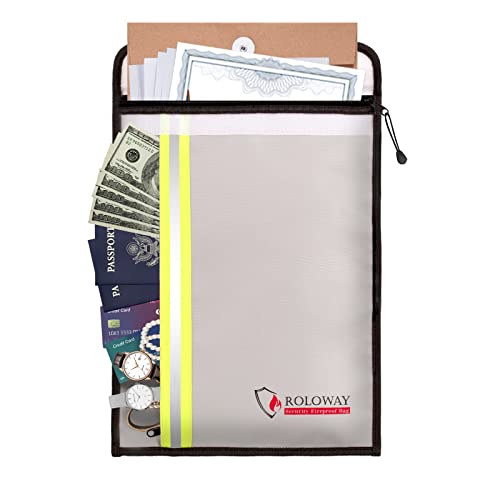
ROLOWAY Fireproof Document Bag (15 x 11 inch) — Best Overall
A document bag like this ROLOWAY is the honest entry point to fire protection, and it helps to be clear about what it is. The shell is silicone-coated fiberglass, a material that does not burn and shrugs off water, formed into a flat envelope that swallows legal-size pages without folding them. Inside a rated chest, a bag like this adds a second layer against the steam and soot that follow a fire. Used on its own, it buys time and water resistance rather than a certified endurance rating, and that distinction runs through this whole guide. Treat the bag as protection against a small, brief incident and against the far more common enemy of stored paper, which is water from a burst pipe or a leaking roof, and it earns its place easily.
Who it suits: renters and travellers who need cheap, portable fire and water resistance for flat papers. In daily life that means a lock routine you will actually keep, a size that fits the spot you have genuinely available, and an interior that takes your archive without folding it. Judge it against the spot it will live in: the shelf, the wardrobe floor, the under-bed gap. A pick that fits its home gets used; a pick that does not becomes furniture.
- Size: 15 x 11 inches, sized for legal documents stored flat
- Two pockets for separating papers from cash and cards
- Weight: 9.2 ounces, light enough for a grab-and-go bag
- Model RW-BAG-VS with a zip closure and silicone-coated fiberglass shell
Strengths
- Costs very little per document protected compared with any rigid chest
- Folds flat in a drawer, suitcase or evacuation tote when empty
- The two-pocket layout keeps a passport and cash from rubbing against paper files
Trade-offs
- A bag is not a safe: it offers no meaningful theft resistance
- Manufacturer heat figures for bags are material claims, not a UL or ETL classification for the contents
- The zip is the weak point in any real fire, so placement away from likely ignition sources matters
One honest limitation: a bag is not a safe: it offers no meaningful theft resistance That single fact shapes who should buy it more than any feature list, and it is the line to test your own situation against before ordering.
Best for: renters and travellers who need cheap, portable fire and water resistance for flat papers / Not suited for: anyone who needs certified fire endurance, theft resistance or room for bulky items
ENGPOW Fireproof Document Bag (13.4 x 9.8 inch) — Best Budget
The ENGPOW bag follows the same flat-envelope idea as the ROLOWAY, sized a touch smaller for A4 and letter paper. That smaller footprint is its charm: it fits the drawers and backpack pockets where passports and emergency cash actually live, instead of demanding closet space the way a chest does. The water-resistant surface is the feature most owners will actually use, because the realistic threats to stored documents are plumbing failures, roof leaks and spilled drinks far more often than flames. As fire protection it is a delaying layer, not a certified container, and the review sections below keep returning to that line because confusing the two is the most expensive mistake in this category.
Who it suits: students, renters and travellers who want a cheap first layer for a passport, cash and a few key papers. In daily life that means a lock routine you will actually keep, a size that fits the spot you have genuinely available, and an interior that takes your archive without folding it. Think about the second year, not the first week: the archive grows, the desiccant needs refreshing, and the lock routine has to survive your busiest season, not your most careful one.
- Size: 13.4 x 9.8 x 1.4 inches, sized for A4 and letter files
- Zip closure with a water-resistant outer surface
- Model RB100140, a flat envelope format for documents, cash and a passport
- Slim profile that slides inside a drawer, backpack or larger chest
Strengths
- The slim envelope shape disappears into luggage and desk drawers
- Water resistance handles the everyday leaks that ruin more paper than fire does
- Works well as an inner liner inside a rigid chest for a second layer of protection
Trade-offs
- No independent fire classification for the contents, unlike a UL Classified chest
- The single compartment offers no organisation beyond what you add yourself
- Thin padding, so rigid items like drives need their own cases inside
One honest limitation: no independent fire classification for the contents, unlike a UL Classified chest That single fact shapes who should buy it more than any feature list, and it is the line to test your own situation against before ordering.
Best for: students, renters and travellers who want a cheap first layer for a passport, cash and a few key papers / Not suited for: storing a full household file archive or anything that needs certified heat endurance
Check on Amazon

ENGPOW Fireproof File Organizer Bag with 13 Pockets — Best for Organisation
Most document storage fails at the finding stage, not the surviving stage, and this ENGPOW organiser attacks that problem directly. Thirteen pockets with labels let a household split birth certificates from insurance papers from school records, so the folder you grab in an evacuation is the right one. The fire-resistant multi-layer shell and the small privacy lock round out a package aimed at renters, students and young families building their first paper archive. It should not be mistaken for a certified fire container, and this guide never treats it as one, but as the organising layer inside a wider plan — ideally later nested inside a rated chest — it is genuinely useful.
Who it suits: families and beginners organising a first document archive on a tight budget. In daily life that means a lock routine you will actually keep, a size that fits the spot you have genuinely available, and an interior that takes your archive without folding it. Picture the bad day honestly. If the plan is to carry it out, weigh it loaded. If the plan is to leave it, its classification is the whole product, so read that line twice.
- Accordion file organiser with 13 colour-coded pockets
- Supplied with labels for sorting documents by category
- Fitted with a lock for basic privacy at home or in shared housing
- Multi-layer construction in a portable, handled format
Strengths
- The pocket system turns a pile of loose papers into a findable archive
- Labels and colour coding suit tax records, certificates and school documents
- The lock adds privacy against curious housemates, which flat bags cannot offer
Trade-offs
- Organisation is its strength; certified fire endurance is not part of the package
- The accordion gussets bulk up quickly when every pocket is filled
- A small lock deters browsing, not a determined thief
One honest limitation: organisation is its strength; certified fire endurance is not part of the package That single fact shapes who should buy it more than any feature list, and it is the line to test your own situation against before ordering.
Best for: families and beginners organising a first document archive on a tight budget / Not suited for: anyone whose main risk is a serious house fire rather than clutter and water
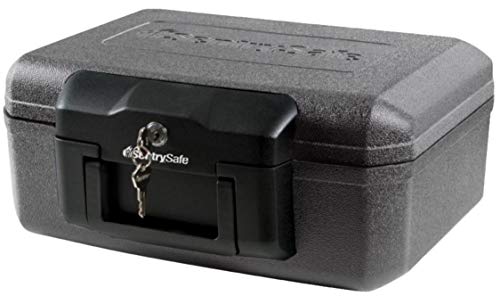
SentrySafe 1210 Fire Chest — Best Rigid Chest
The SentrySafe 1210 is where rigid fire protection starts. It is a small key-locked chest whose thick insulated walls are the real product: in a fire test the insulation slows heat transfer so the interior stays far cooler than the room around it. The trade is size. At 0.18 cubic feet it is a home for the essentials — passport, property deeds, insurance summary, a little cash, a backup drive in a case — and nothing more. For a first purchase that limitation is arguably a feature, because it forces the useful discipline of deciding what is genuinely irreplaceable before you shop for volume.
Who it suits: first-time buyers who want a real chest for a passport, deeds and a small amount of cash. In daily life that means a lock routine you will actually keep, a size that fits the spot you have genuinely available, and an interior that takes your archive without folding it. Consider who else needs access. A partner, an adult child, a house-sitter feeding the cat: the lock you choose decides whether sharing access is a code, a key copy or a problem.
- Capacity: 0.18 cubic feet
- Exterior: 6.1 x 14.3 x 11.2 inches
- Key lock with a flat key, no batteries or codes to manage
- Fire protection: half an hour at up to 1,550°F for this chest line
Strengths
- The cheapest route into a rigid, lidded fire chest from a major maker
- The key lock cannot run out of battery or forget a code
- Small enough for a wardrobe shelf, a car boot or under a bed
Trade-offs
- The interior takes flat papers and small items only; bulky valuables will not fit
- A key lock is privacy-grade security, not burglary resistance
- No verified water rating, so sit it somewhere dry
One honest limitation: the interior takes flat papers and small items only; bulky valuables will not fit That single fact shapes who should buy it more than any feature list, and it is the line to test your own situation against before ordering.
Best for: first-time buyers who want a real chest for a passport, deeds and a small amount of cash / Not suited for: storing hanging files, large jewellery boxes or anything that must survive a long fire

SentrySafe 1160 Fire Chest — Best Portable Chest
The 1160 is the 1210 idea with breathing room. The extra capacity takes letter-size documents flat without curling the edges, and the carrying handle matters more than it sounds: a chest you can lift with one hand is a chest that actually leaves the house with you when minutes matter. Its half-hour fire figure at up to 1,550°F matches the entry tier of the SentrySafe chest range, which is honest protection against the short, fierce fires that start in one room and are knocked down quickly. It is not the answer to a fully involved house fire, and the sections below are frank about where that line sits.
Who it suits: households that want a portable chest for the core document set. In daily life that means a lock routine you will actually keep, a size that fits the spot you have genuinely available, and an interior that takes your archive without folding it. Match the water story to your building. Upper floors fear the flat above; ground floors fear the ground itself. The verified water figures in the spec box are there to be matched, not skimmed.
- Capacity: 0.25 cubic feet
- Exterior: 6.3 x 15.3 x 12.1 inches
- Key lock with a carrying handle for grab-and-go use
- Fire protection: half an hour at up to 1,550°F
Strengths
- A step more room than the smallest chests, enough for letter papers laid flat
- The handle makes it realistic to carry out during an evacuation drill
- Simple key operation suits occasional access and older users
Trade-offs
- Still a privacy lock, so do not rely on it against theft
- Half-hour fire endurance is the entry tier, not the one-hour class
- No verified water submersion rating at this level
One honest limitation: still a privacy lock, so do not rely on it against theft That single fact shapes who should buy it more than any feature list, and it is the line to test your own situation against before ordering.
Best for: households that want a portable chest for the core document set / Not suited for: media archives, large valuables or long-duration fire protection
Large fireproof document bag (17-inch class, prose-only) — Best Capacity per Dollar
The largest soft bags are the value play of this category: a big silicone-coated fiberglass envelope that takes legal files flat, rides inside a suitcase and later becomes the inner liner of a proper chest. What it cannot be is certified. Bag makers print dramatic material temperatures, but no independent body has heated the bag with your documents inside and certified the result, so this guide lists the class prose-only and urges you to buy it for water resistance, organisation and portability — the jobs it genuinely does — rather than for a number on a listing.
Who it suits: buyers who need maximum flat capacity for the least money and understand the limits. In daily life that means a lock routine you will actually keep, a size that fits the spot you have genuinely available, and an interior that takes your archive without folding it. Let the archive vote. Lay the actual documents out, measure the stack, and let that stack — not a product photograph — decide whether this interior is big enough.
- Flat envelope format sized for legal documents and a small laptop sleeve
- Silicone-coated fiberglass shell, water resistant
- Zip closure with a shoulder strap on most models in this class
Strengths
- The most capacity per dollar of anything in this guide
- Doubles as the inner liner of a rigid chest later
- Easy to store flat when the archive is small
Trade-offs
- No independent certification for the contents, whatever the marketing temperature claims
- A determined thief ignores it completely
- Zip and seam quality vary wildly between no-name listings
One honest limitation: no independent certification for the contents, whatever the marketing temperature claims That single fact shapes who should buy it more than any feature list, and it is the line to test your own situation against before ordering.
Best for: buyers who need maximum flat capacity for the least money and understand the limits / Not suited for: anyone expecting certified fire endurance from a soft bag
Prose-only pick: no verified in-budget listing link is provided for this option.
Comparison Table
| Product | Badge | Capacity / Size | Key specification | Protection note |
|---|---|---|---|---|
| ROLOWAY Fireproof Document Bag (15 x 11 inch) | Best Overall | 15 x 11 inches, sized for legal documents stored flat | Two pockets for separating papers from cash and cards | Weight: 9.2 ounces, light enough for a grab-and-go bag |
| ENGPOW Fireproof Document Bag (13.4 x 9.8 inch) | Best Budget | 13.4 x 9.8 x 1.4 inches, sized for A4 and letter files | Zip closure with a water-resistant outer surface | Model RB100140, a flat envelope format for documents, cash and a passport |
| ENGPOW Fireproof File Organizer Bag with 13 Pockets | Best for Organisation | Accordion file organiser with 13 colour-coded pockets | Supplied with labels for sorting documents by category | Fitted with a lock for basic privacy at home or in shared housing |
| SentrySafe 1210 Fire Chest | Best Rigid Chest | 0.18 cubic feet | Exterior: 6.1 x 14.3 x 11.2 inches | Key lock with a flat key, no batteries or codes to manage |
| SentrySafe 1160 Fire Chest | Best Portable Chest | 0.25 cubic feet | Exterior: 6.3 x 15.3 x 12.1 inches | Key lock with a carrying handle for grab-and-go use |
| Large fireproof document bag (17-inch class, prose-only) | Best Capacity per Dollar | Flat envelope format sized for legal documents and a small laptop sleeve | Silicone-coated fiberglass shell, water resistant | Zip closure with a shoulder strap on most models in this class |
Specifications are the verified figures from each maker’s documentation gathered for this cluster. Prices are deliberately not printed: they move too often to be honest in a guide, so every linked pick says check price on Amazon instead.
How to Choose: Best fireproof safe for renters under $30
The criteria below are the ones that separated the picks above, written out in full so you can apply them to any model you find elsewhere — including the ones that did not make this list. They are ordered the way experienced buyers actually decide: protection first, fit second, daily life third.
Weight and placement: protection lives somewhere specific
A safe protects what is inside it, where it sits. Heavy safes resist being carried away and should be planned like furniture: measure the route in, check the floor, and bolt down where the maker provides hardware and your tenure allows it. Portable chests trade that rootedness for evacuation value, and they belong somewhere you can reach in the dark, in smoke, in a hurry — not at the back of a loft. Keep any safe away from the likeliest ignition sources, off a damp floor on a shelf or pallet where water pools, and out of the obvious first room a burglar searches. The best-rated safe in the worst place loses to a modest chest in the right place surprisingly often.
Interior fit: measure your archive, not the brochure
Safes are sold by exterior drama and used by interior millimetres. Before choosing, stack the documents you actually own: the deed packet, certificates, insurance files, passports, the backup drive, the small valuables. Note whether the paper must lie flat, whether it already lives in hanging folders, and whether anything rigid sets a minimum height. Then compare that stack with interior dimensions, not capacity in cubic feet alone, because two safes with the same capacity can have completely different shapes. A wide flat chest suits documents; a tall narrow safe suits mixed valuables; a file safe suits folders. Buying the wrong shape is the commonest reason safes get returned or, worse, left empty in a corner.
Lock type: the daily decision hiding inside the purchase
A key lock is simple, battery-free and slow to defeat casually, but the key itself becomes the secret you must protect, and privacy key locks on chests are not built to resist tools. A dial combination lock is equally battery-free and survives decades, at the cost of slow, careful entry. A digital keypad is the fastest and easiest to share selectively with a partner, and it depends on batteries and on your discipline about codes. None of these is a burglary rating. If theft is a serious part of your risk, the answers are weight, bolt-down mounting and placement, layered on top of whichever lock you prefer for daily use.
Water protection: the disaster that actually visits
Ask any insurer what ruins household documents and the answer is water, arriving through burst pipes, failed washing-machine hoses, roof leaks and the fire hoses that follow a blaze. Good water protection is stated as a depth and a duration under a named verification: a chest verified for a day under a stated depth of water, or a file safe verified for days of flood exposure, gives you something to plan around. A seal described with adjectives gives you nothing. Match the rating to your home: a ground-floor flat, a basement office or a house in a flood-prone street should weight water as heavily as fire, while an upper-floor flat mainly needs protection from the plumbing above and below.
Media and valuables: paper rules do not cover everything
Paper tolerates heat that destroys other things. Photographs curl and stick, USB drives and external hard drives fail at temperatures well below paper’s char point, and jewellery suffers from both heat and the steam that fire insulation can release as it works. If your archive includes drives, look for a stated digital-media protection figure for the exact model rather than assuming the paper rating covers it, and consider keeping the truly irreplaceable drive copy off-site or in cloud storage as a second layer. A fire safe is one layer of a document plan, not the whole plan, and the households that come through disasters best are the ones who treated it that way.
How to Set Up Your Fireproof Safe or Chest
Key Takeaways
- Choose the spot before the safe arrives: dry, low, reachable and boring to a burglar’s eye.
- Register the model and serial numbers and store the combination or key details outside the safe.
- Load documents flat, in labelled folders or a document bag, with a desiccant pack inside.
- Test opening the lock in the dark and under time pressure before you ever need to.
- Pick the location. Walk the home with the disaster in mind: a ground-floor interior closet away from the kitchen and garage, off the floor on a shelf or pallet where a leak pools, and reachable from the bedrooms without passing the likeliest fire rooms.
- Prepare the surface. Level, dry and strong enough for the loaded weight. For a bolt-down safe, confirm the floor construction suits the hardware supplied and that your tenure — especially a tenancy — permits it.
- Record the identity of the safe. Photograph the model plate and serial number, note the factory combination or key number, and store that record in your phone and with a trusted person. Makers can help locked-out owners who can prove model and serial; they cannot help much without them.
- Set or confirm the lock. For a keypad, change any factory code immediately and practise the new one until it is muscle memory. For a dial, practise the sequence slowly. For keys, decide where the spare lives — never inside the safe, never on a labelled hook by the door.
- Load in layers. Documents flat in folders, a document bag as an inner liner if you use one, drives in their own cases, and a rechargeable desiccant pack on top to manage the humidity that sealed boxes trap.
- Close, test, and test again. Shut the door or lid, confirm the bolts or latch engage fully, reopen, and repeat in low light. A safe you fumble with on a calm evening will not improve at 3 a.m. in smoke.
- Schedule the boring maintenance. A twice-yearly reminder to check keypad batteries, refresh the desiccant, confirm the water seal is clean and flexible, and review whether the contents list still matches what is inside.
Problem: the keypad accepts the code but the handle will not turn. Fix: replace the batteries first, even if the pad lights up, because a weakening battery often powers the lights but not the bolt motor; then check the manual for the model’s override key procedure rather than forcing the handle.
Problem: the interior smells musty when opened. Fix: the seal that keeps fire and water out also keeps humidity in. Air the safe open for a few hours on a dry day, replace the desiccant, and never store anything inside that went in damp.
Problem: a key chest will not latch fully. Fix: check the lid seal and the document stack height. Overfilling a chest so the lid rides high silently destroys both its fire and water performance, so move the overflow to a document bag stored alongside rather than forcing the lid.
Layered protection: scans, copies and the off-site rule
A fire safe is one layer, and the mature document plan has three. Layer one is the original in the safe. Layer two is a good scan of everything in the safe, stored in cloud storage or on a drive kept somewhere else, so that even a total loss leaves you with legible copies for insurers, registries and replacement applications. Layer three is the small set of things held entirely off-site: the backup drive at a relative’s house, the copy of the will with the solicitor, the safe-deposit arrangement for the truly exceptional items. Each layer covers the failure of the others. The safe’s job inside that system is specific and achievable — protect originals through a plausible fire and flood — and judging it by that job, rather than by the fantasy of surviving anything, leads to better purchases.
Common Buying Mistakes
Believing the biggest temperature on the listing. A bag that quotes a four-digit material temperature with no duration and no testing body is not outperforming a chest classified for one hour at up to 1,700°F. The classified figure describes what the contents experienced in a witnessed test; the bag figure describes what a fabric sample survived. Comparing them directly is the category’s most reliable way to waste money and feel safe doing it.
Buying capacity by cubic feet alone. Shape decides usefulness. A tall safe wastes its volume on a flat document archive, and a flat chest cannot take the rigid valuables people add later. Measure the stack you own, compare interior dimensions, and let the archive choose the shape.
Forgetting the water half of the disaster. Fires are fought with water, and pipes burst in homes that never burn. A safe with no stated water protection, stored on a floor that floods, can deliver perfectly unburned, completely ruined documents. Match the water figure to your floor, your plumbing and your postcode’s history.
Treating a privacy lock like a security lock. The key locks on chests are there to keep curious hands and honest people out, and makers say so. If theft is your fear, spend on weight, bolting and placement, and be honest that a portable chest is a fire product, not a burglary product.
Hiding the safe in the obvious place, or the unreachable one. The primary bedroom wardrobe is the first place a burglar looks and, in a fire, possibly the last place you can reach. Choose a spot that is boring, dry, low and reachable, and tell exactly the people who need to know — no more, no fewer.
Storing the only copy of anything. A fire safe raises the odds for the items inside it; it does not make them immortal. Scan the irreplaceable documents, keep a copy of the scans somewhere that is not your house, and let the safe protect originals rather than carry the whole weight of your family’s memory alone.
Final Recommendation
Buy the ROLOWAY Fireproof Document Bag (15 x 11 inch) if you want the strongest answer this budget gives to the question in the title: it leads the list because its verified protection, interior fit and lock routine match the reader this list was written for. Choose the ENGPOW Fireproof Document Bag (13.4 x 9.8 inch) as the runner-up when its particular strength — the quality that earned its badge — matches your archive or your building better than the leader’s balance does.
Whichever you choose, complete the plan the product starts: audit the documents, scan them, place the safe properly, and practise the lock. Readers working through the wider cluster will also find the companion guides Fireproof Safe Buying Guide, Is A Fireproof Safe Worth It and Fireproof Safe Pros And Cons.
Frequently Asked Questions
Can a fireproof safe be bolted down, and should it be?
Many full-size fire safes ship with bolt-down hardware, and bolting is the single most effective anti-theft step available, because a safe that cannot be carried away must be attacked in place, noisily and slowly. Portable chests generally cannot and should not be bolted, since their value is evacuation. Renters should check their tenancy before drilling, and everyone should weigh the fire reality that a bolted safe stays in the building: its classification, not your arms, does the protecting. That is an argument for buying the one-hour tier when you bolt down, and the portable tier when you plan to carry.
What should I store in a fireproof safe?
The originals that are slow, expensive or impossible to replace: property deeds, birth and marriage certificates, passports, insurance policies and the summary page of everything else, vehicle titles, a small amount of emergency cash, backup drives in cases, and the negatives or originals of photographs that exist nowhere else. Scan everything as a second layer. Keep out the things you need daily, the things that are insured and easily replaced, and anything damp, leaking or battery-powered that could damage the archive from inside.
What is the difference between a fire chest and a fire safe?
Size, weight, lock and intent. A fire chest is a portable, key-locked box sized for documents, designed to be carried out or to protect a small archive in place, with fire classifications from half an hour upward. A fire safe is a heavier, fixed piece of security furniture with a combination or keypad lock, live bolts, often bolt-down hardware, and room for valuables as well as paper. Neither is a burglary safe unless it also carries a security rating, and confusing fire protection with theft protection is the category’s most persistent misunderstanding.
Do fireproof safes need maintenance?
Light but real maintenance. Keypad models need battery changes on the maker’s schedule and a code you have practised. All models need their door or lid seals kept clean and undamaged, because the seal does the water work and helps the fire work. Desiccant needs refreshing. Dial locks benefit from being opened periodically so the mechanism is exercised and your hand remembers the sequence. Five minutes twice a year is the whole cost, and it is cheapest insurance the safe will ever ask for.
Where should I keep a fireproof safe at home?
Low, dry, reachable and unremarkable. Low because heat rises and floors in a fire are cooler than ceilings, and because a falling safe survives better from a low shelf. Dry because water pools in the same low places, so raise the safe on a shelf or pallet rather than sitting it in the flood line. Reachable because an evacuation grab only works if the route avoids the kitchen and garage, where fires start most often. Unremarkable because the first places a burglar searches are the primary bedroom and home office, and a boring interior closet beats both.
How do I stop a fireproof safe smelling musty or growing mould inside?
The seal is the cause and the cure is routine. A sealed box traps the humidity of whatever went in and of the air on the day it was closed. Keep a rechargeable desiccant pack inside and refresh it on a schedule, open the safe for a few hours on dry days a few times a year, and never store documents that are even slightly damp. If mould appears on papers, remove and air them away from the safe, wipe the interior with a dry cloth, and replace the desiccant before reloading.
Renters, landlords and the rules of other people’s floors
Renting changes the safe equation in three practical ways. First, bolting down usually needs written permission, and many tenancies forbid the drilling outright, which pushes the choice toward portable chests and heavier-is-better placement instead. Second, moves are frequent, so a safe that needs two people and a trolley costs money at every change of address, while a chest moves in a car boot. Third, the deposit matters: a heavy safe dragged across a floor can do more certain damage than the fire it guards against. None of this makes renters’ documents less worth protecting — a passport and a tenancy file are exactly as flammable in a flat as in a house — it just means the right products are the portable, lidded, carry-handled ones, bought without apology.