Where to buy
Check the latest price, availability and delivery on Amazon. Orders are placed on Amazon. We may earn a commission from qualifying purchases.
- Best true-budget starter kit: CARTMAN 39-Piece Tool Kit — Check on Amazon
- Apollo Tools 39-Piece Tool Kit (DT9706) — described in the guide below (no Amazon listing at this budget; see the review)
- CARTMAN 148-Piece Tool Kit (Blue) — described in the guide below (no Amazon listing at this budget; see the review)
- WORKPRO 103-Piece Tool Kit (Pink) — described in the guide below (no Amazon listing at this budget; see the review)
See 2 more options in the full guide
- WORKPRO 100-Piece Tool Kit (Pink, W009166AE) — described in the guide below (no Amazon listing at this budget; see the review)
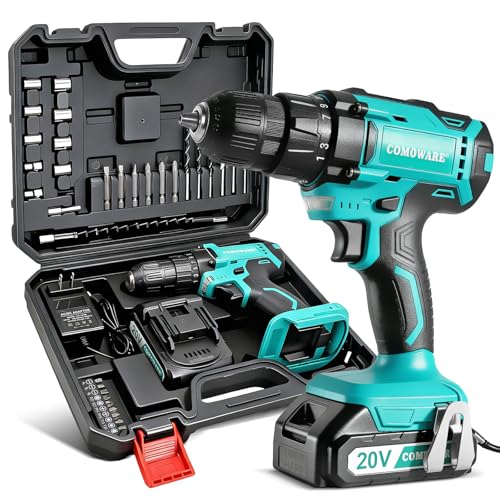
- COMOWARE 168-Piece Tool Kit — described in the guide below (no Amazon listing at this budget; see the review)
Read the full guide ↓
Disclosure: As an Amazon Associate, umtsmarttool.com earns from qualifying purchases. Links to Amazon on this page are affiliate links; they cost you nothing extra. Listing details such as price and availability change often, so check the current Amazon listing before you buy.
Your first tool kit decides whether home repairs feel like competence or like chaos. The good news: the beginner’s kit is a solved problem — a known list of basics, in a case, at a fair price — as long as you buy contents instead of counts. If you searched the best hand tool set for beginners under $15, this guide ranks the verified options for a first-time buyer and explains what each piece is for.
The honest headline at $15: one kit is linked — the CARTMAN 39-piece, whose street price lives in the teens and drifts around the tier line, flagged in its review. The rest of the category’s ladder (the documented Apollo, the deep CARTMAN 148, the full-size WORKPRO kits, the big-count COMOWARE) sells above $15 and is covered in full prose with verified contents and no link. A $15 headline deserves one true kit and an honest ladder, not six padded names. Read the ladder as a map of what each additional dollar actually buys in this category — documentation, depth, full-size tools — because at this end of the market the differences between rungs are unusually concrete, and a reader who understands them can shop the whole category confidently with or without this page.
Everything below is written for a first toolkit: the anchor tools explained, the classic first-buyer mistakes listed before you make them, and honest ceilings on every kit. When you are ready for powered help, the companion is Best Electric Screwdriver For Beginners Under $15; this guide is the hand-tool foundation.
In this guide
Quick Picks
Short on time, or comparing several options at once? Each row below names a buyer type and the product that suits it, with a link to the listing where one exists at this budget.
| Buyer type | Pick | Why it stands out | Link |
|---|---|---|---|
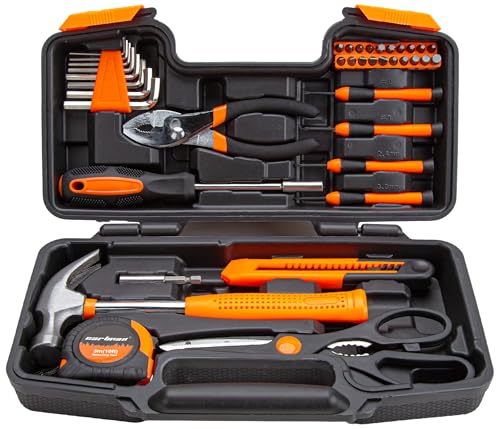
| Best budget kit | CARTMAN 39-Piece Tool Kit | 39-piece general household assortment in a carry case | Check on Amazon |
| Best documented | Apollo Tools 39-Piece Tool Kit (DT9706) | 39 pc: 8oz claw hammer, slip-joint pliers, 12 ft tape, utility knife, precision screwdrivers, bits, hex keys, scissors | See review below |
| Best depth | CARTMAN 148-Piece Tool Kit (Blue) | 148 pc: drivers + bits, precision screwdriver, long-nose pliers, claw hammer, bit holder, hex keys, combination wrench, utility knife, sockets, tape, fastener kit | See review below |
| Best full-size | WORKPRO 103-Piece Tool Kit (Pink) | 103 pc: 16oz hammer, 16 ft tape, slip-joint + long-nose pliers, adjustable wrench, 5 precision screwdrivers, bit holder + 40 bits, torpedo level, utility knife + blades, cable ties | See review below |
| Best alternative | WORKPRO 100-Piece Tool Kit (Pink, W009166AE) | 100-piece household tool set in a roll pouch (W009166AE) | See review below |
| Big-count pick | COMOWARE 168-Piece Tool Kit | 168-piece household and maintenance assortment (count includes fasteners and bits) | See review below |
How These Picks Were Chosen
Every pick below was checked against its maker’s documentation or the most consistent retailer evidence available: piece counts, named contents, case type and the specific tools that decide a kit’s usefulness (hammer weight, tape length, socket presence). Where a kit’s documentation was thinner, the review says so and the ranking reflects it — in this category, the quality of the evidence about a kit is itself evidence about the kit.
One rule shapes this guide: we link a pick under a budget headline only when it genuinely belongs to that budget class and its exact model can be pinned. At $15 that produces the linked set ranked in the Quick Picks; the step-ups are covered in full prose with their verified contents and no link. Counts are reported as the makers state them, with the counting caveat — fasteners and consumables included — flagged wherever it applies, because comparing a 39-piece tool count against a 168-piece tool-plus-fastener count without that caveat would be this guide lying by arithmetic.
A note on what ‘pieces’ mean, since it decides this category: a piece is whatever the maker counts — a hammer, a bit, a screw, a cable tie. Two kits with the same count can differ by dozens of actual tools. Our reviews therefore always translate the count into the tool list that matters (hammer size, tape length, pliers types, driver range, sockets or their absence), and the comparison table’s contents column is the count with its clothes on. Shop by that column.
Finally, a word on kit steel and finishes, because buyers ask: homeowner kits in this class use chrome-vanadium or carbon steel with polished or coated finishes, adequate for household torque and honest about their limits. None of the picks here is a tradesman’s daily set, and none pretends to be; the step from these kits to professional tools is real, costs multiples, and matters only when the work becomes daily or mechanical-serious. For the household and light-maintenance territory this guide covers, the steel question is settled by a simpler test — does the maker document the kit, stand behind it, and sell enough of them that the listing history itself is a review? The linked picks pass that test; that is why they are linked. One more selection note, on what was excluded and why: the marketplace’s bottom shelf is full of kits assembled to a count rather than a purpose — recognizable by fastener-heavy contents, unnamed tools (‘multi-function device’ in place of a specification) and brands that exist for a single season. None appears here, even as a cautionary entry, because a pick slot in a buying guide is an endorsement of attention. The six kits ranked above are the ones a buyer can research further with confidence: documented, listed for years, and sold by makers who answer for them. If a kit you are considering cannot produce a component list, that absence is the review. The same standard explains the ranking’s treatment of color and branding: finishes differ across these kits (including the pink WORKPRO configurations) without any difference in the tools underneath, and this guide ranks configurations and documentation, never colors. It also explains why two kits from one maker can rank apart — the better-documented configuration is, for a buyer who cannot open the box first, genuinely the better product, because what you can verify is what you are actually buying. Keep that principle and you can extend this guide’s ranking to any kit released next year: document, decompose, handle, decide.
For beginners we weighted learnability and completeness: kits whose contents map one-to-one onto the first year’s jobs, whose cases teach inventory by showing every tool’s place, and whose makers document contents fully — a beginner cannot miss a tool they never knew existed, and documentation is how they find out.
The 6 Best Hand Tool Sets Under $15 for Beginners
Top pick
1. CARTMAN 39-Piece Tool Kit
The CARTMAN 39-piece is the kit that defines the honest bottom of this category: a general household assortment — the hammer, pliers, tape, drivers, bits and hex keys that cover the standard home repair list — in a molded carry case, at a street price that lives in the teens. It has been a category fixture for years, which matters more than it sounds: its contents and quality are a known quantity, documented across countless listings and comparisons, rather than a new label’s promises.
Judge it by the jobs it exists for and it is correctly specified: picture hanging, furniture assembly support, minor plumbing and appliance nudges, bikes, toys, and the hundred small grips, turns and taps of household life. The tools are homeowner-grade — chrome-vanadium-class steel in the drivers and wrenches, a hammer sized for pins and light nails rather than framing — and the case keeps the set a set, which is half the battle in real households.
The limits are the class’s limits: this is not a mechanic’s kit (socket depth is starter-grade), not a tradesman’s daily driver (handles and finishes are homeowner weight), and not the last kit you will buy if your projects grow. It is, however, the kit that makes ‘I don’t own a tool for that’ stop being true, at the lowest price at which that sentence can be said honestly — which is exactly the job of a $15-tier pick. One flag: its street price moves around the tier line, so check the listing on the day, as its review in the $15 guide states plainly.
Ownership is undemanding: wipe the tools before casing them after any wet or outdoor job, keep the case’s latches working by not overstuffing it, and replace the kit’s inevitable first loss (it will be the tape or the smallest driver) singly rather than re-buying a set. A starter kit maintained this way serves for years as the household’s first resort, even after bigger kits arrive for bigger work.
What we like:
- Complete household basics in one case
- Known-quantity kit with years of listing history
- Covers the standard home repair list
- Priced at the honest bottom of the category
Honest limitation: Homeowner-grade throughout — socket depth and tool finishes are starter class, and the street price drifts around the $15 line.
Choose it if you own almost no tools and want the standard household list covered in one honest purchase. Skip it if you already own the basics and need depth (sockets, wrenches) — the bigger kits below are your step-ups.
2. Apollo Tools 39-Piece Tool Kit (DT9706)
Apollo’s DT9706 is the connoisseur’s answer to kit-buying anxiety: every one of its 39 pieces is named in the maker’s documentation — an 8-ounce claw hammer, slip-joint pliers, a 12-foot tape measure, a utility knife, precision screwdrivers, driver bits, hex keys and scissors — so you know precisely what you own before the case opens. In a category where ’39 pieces’ can mean 30 fasteners and 9 tools, that documentation discipline is a genuine product feature, and Apollo has sold this kit on it for years.
The contents map exactly onto the household list: the hammer and tape for hanging and assembly, pliers and knife for the gripping and cutting, precision drivers for battery covers and electronics-adjacent jobs, hex keys for the furniture. The 8-ounce hammer deserves its note — lighter than a framing hammer by design, it is the right weight for pins, tacks and assembly taps, and the size most household users actually control well.
At $15 it is prose-only (its street price lives in the $20s); at $30 it is linked and takes the top spot on documentation and balance. Its ceiling is the 39-piece ceiling — no socket depth, no wrench set — and households whose work leans mechanical should read the 148-piece pick below as their true top option.
Apollo sells the DT9706 in several colorways, including a pink version tied to breast-cancer research donations — the tools are identical, so choose by preference. Spare a thought for the scissors: the piece every kit-buyer mocks is, in household practice, among the most-used in the case. Documentation, balance and one quietly essential pair of scissors — that is the DT9706’s whole, honest argument.
What we like:
- Every piece named in maker’s documentation
- Balanced household contents incl. precision drivers
- 8oz hammer sized for household control
- Long-selling kit from an established brand
Honest limitation: 39 pieces means no real socket or wrench depth — mechanical work outgrows it quickly.
Choose it if you want to know exactly what you are buying, piece by piece, and your work is the household list. Skip it if you need sockets and wrenches for bikes, cars or machinery — go straight to the 148-piece pick.
No Amazon link for this pick: it sits above this guide’s budget, so it is covered in prose only — check price on Amazon by searching the model name if you decide to stretch.
3. CARTMAN 148-Piece Tool Kit (Blue)
The 148-piece CARTMAN is where this category stops being a starter kit and becomes a working set: beyond the household basics it adds the mechanical layer — a socket assortment, a combination wrench, long-nose pliers — plus a fastener kit of screws and anchors that acknowledges a truth the smaller kits ignore, namely that tools without fasteners are half a system. The component list was verified piece-group by piece-group during this guide’s research; the count includes the fastener assortment, and the review says so because counts in this category deserve footnotes.
In practice this is the kit for the household that also maintains things: bikes adjusted, furniture repaired, appliances opened, minor car and garden-machine work attempted. The sockets and wrench are homeowner-grade — fine for assembly, adjustment and light mechanical work, not a substitute for a mechanic’s ratchet set — and the driver and bit depth covers the fastener variety that real maintenance meets.
It is linked at $30 with a flag: its street price straddles the tier line (sightings ran either side of $30 during research), so check the listing on the day; at $15 it is prose-only, presented as the ladder’s clear second rung. If your jobs include anything with a bolt, this is the kit the smaller ones will make you wish you had bought.
A word on the fastener kit, the component most buyers undervalue: having the right screw or anchor in the case converts ‘trip to the hardware store’ into ‘done’. Replenish it as you use it — a fastener assortment is a pantry, not a decoration — and the 148-piece kit keeps paying its depth dividend long after the purchase.
What we like:
- Sockets and combination wrench — real mechanical depth
- Fastener kit included: screws and anchors on hand
- Full driver, bit and plier range
- Verified component list, honestly counted
Honest limitation: Street price straddles the $30 line (flagged), and the sockets are homeowner-grade, not a mechanic’s ratchet set.
Choose it if your household maintains bikes, machines and furniture as well as hanging pictures — you need the mechanical layer. Skip it if your work is purely household basics — the 39-piece kits are cheaper and less to store.
No Amazon link for this pick: it sits above this guide’s budget, so it is covered in prose only — check price on Amazon by searching the model name if you decide to stretch.
4. WORKPRO 103-Piece Tool Kit (Pink)
WORKPRO’s 103-piece kit is the step-up for buyers who found the 39-piece kits’ tools undersized: a full 16-ounce claw hammer instead of an 8-ounce, a 16-foot tape instead of 12, an adjustable wrench and a torpedo level the smaller kits omit entirely, five precision screwdrivers, a bit holder with 40 bits, and utility-knife blades and cable ties that treat consumables as part of the system. It stores in a round roll-up pouch rather than a molded case — softer, quieter, and easier to stash in a drawer or car.
The pink finish is a legitimate choice, not a specification change: WORKPRO’s tools underneath are its standard homeowner line, and the kit’s substance — full-size hammer, the level, the bit depth — is why it is ranked here. Households equipping a first real kit above starter class, and buyers who want their tools findable at a glance in a shared garage, both have rational reasons to land here.
Prose-only on price: the kit sells in the $40s class, above both of this guide’s ceilings. It is the step-up to buy when the 39-piece ceiling (small hammer, no level, no wrench) is the thing you are actually shopping against.
The roll-up pouch deserves a balanced word: it protects and organizes well and fits drawers a molded case will not, but it shows you fewer tools at a glance than a blow-molded layout. Owners who value the inventory-at-a-glance property should weigh the cased kits; owners who value storage flexibility will prefer the pouch within a week.
What we like:
- Full-size 16oz hammer and 16 ft tape
- Adjustable wrench and torpedo level included
- 40 bits + consumables (blades, ties) in the count
- Roll-up pouch stores anywhere
Honest limitation: Priced in the $40s class — above both ceilings — and the pouch shows contents less clearly than a molded case.
Choose it if you want one kit with full-size tools and the level/wrench the starters omit, and can buy above the tier. Skip it if your budget is firm at the tier — the linked kits cover the basics honestly for less.
No Amazon link for this pick: it sits above this guide’s budget, so it is covered in prose only — check price on Amazon by searching the model name if you decide to stretch.
5. WORKPRO 100-Piece Tool Kit (Pink, W009166AE)
The W009166AE is WORKPRO’s other pink household set: a 100-piece assortment in the same roll-pouch format, positioned as the alternative configuration to the 103-piece kit above. Its contents follow the same household logic — hammer, tape, pliers, drivers, bits and the small essentials — arranged for buyers comparing the two WORKPRO configurations piece by piece at purchase time.
It is ranked fifth here for an honest reason: during this guide’s research, its full component list could not be documented to the same standard as the 103-piece kit’s (the verified detail came via retailer mirror listings rather than the maker’s own documentation), and this guide ranks documentation quality as a product virtue in a category built on counts. The kit itself is a legitimate WORKPRO household set; the ranking reflects evidence, not suspicion.
Prose-only on price (the $40s class, above both ceilings) and on documentation. Buyers choosing between the two WORKPRO kits should compare the live component lists directly — and prefer whichever configuration documents its contents more completely on the day, which is this guide’s standing advice for the whole category.
This entry is the guide’s methodology made visible: two near-identical kits from one maker, ranked apart because one could be verified more completely than the other. In a category where the count is the marketing, the verifiability of the count is the closest thing to a quality guarantee a buyer can get without opening the box.
What we like:
- WORKPRO homeowner line quality
- Roll pouch storage flexibility
- Full household assortment
- A configuration alternative to the 103-pc
Honest limitation: Priced above both ceilings, and its component documentation is thinner than its sibling’s — ranked accordingly.
Choose it if you prefer its configuration or pouch layout after comparing live component lists. Skip it if documentation matters to you — the 103-piece kit above is the better-evidenced WORKPRO.
No Amazon link for this pick: it sits above this guide’s budget, so it is covered in prose only — check price on Amazon by searching the model name if you decide to stretch.
6. COMOWARE 168-Piece Tool Kit
COMOWARE’s 168-piece kit represents the category’s maximalist wing: the largest count in this guide, spanning the household basics, driver and bit depth, and the fastener-and-fixing tail that inflates every big kit’s number. It is presented as a class pick with a counting caveat stated up front — at this end of the market, piece counts blend tools, bits and fasteners in proportions the buyer must inspect, and this guide did not capture a verified Amazon ASIN or a full component audit for this model during research.
What can be said fairly: COMOWARE is an established budget tool brand (its drill appears in this bundle’s drill-driver guide), the kit targets the same household-plus-maintenance territory as the CARTMAN 148, and buyers drawn to maximum count per dollar will find this configuration on every marketplace under its model name. Compare its live component list against the CARTMAN 148’s verified one before buying; if the tool (not fastener) count is genuinely deeper, it earns the comparison.
Prose-only, unlinked and deliberately number-light: this is the guide’s honesty rule applied to the category’s most marketing-driven shelf. The pick is included because readers will meet it in every search — and deserve a framework for judging it, which the How to Choose section provides.
Use this entry as the worked example when you shop beyond this guide: demand the component list, subtract fasteners and consumables, count the actual tools, and compare tool-counts rather than headline counts across kits. Five minutes of that arithmetic is worth more than any single recommendation in the big-count segment, including this one.
What we like:
- Largest assortment in the guide
- Established budget brand
- Covers household + maintenance territory
- Widely listed by model name
Honest limitation: No verified ASIN or full component audit captured — count composition (tools vs fasteners) must be checked on the live listing.
Choose it if you shop maximum count per dollar and will audit the component list before buying. Skip it if you want verified contents — the CARTMAN 148 documents its depth to this guide’s standard.
No Amazon link for this pick: it sits above this guide’s budget, so it is covered in prose only — check price on Amazon by searching the model name if you decide to stretch.
Comparison Table
The six picks side by side on the specifications that decide this purchase. Prices are deliberately not printed — they change too often to stay honest — so use the links to check the current Amazon listing.
| Pick | Key specification | Kit contents | Case & carry |
|---|---|---|---|
| CARTMAN 39-Piece Tool Kit | 39-piece general household assortment in a carry case | 39 pc household basics | Molded carry case |
| Apollo Tools 39-Piece Tool Kit (DT9706) | 39 pc: 8oz claw hammer, slip-joint pliers, 12 ft tape, utility knife, precision screwdrivers, bits, hex keys, scissors | 39 pc, contents fully listed | Molded carry case |
| CARTMAN 148-Piece Tool Kit (Blue) | 148 pc: drivers + bits, precision screwdriver, long-nose pliers, claw hammer, bit holder, hex keys, combination wrench, utility knife, sockets, tape, fastener kit | 148 pc incl. sockets & wrench | Molded carry case |
| WORKPRO 103-Piece Tool Kit (Pink) | 103 pc: 16oz hammer, 16 ft tape, slip-joint + long-nose pliers, adjustable wrench, 5 precision screwdrivers, bit holder + 40 bits, torpedo level, utility knife + blades, cable ties | 103 pc incl. level & wrench | Round roll-up pouch |
| WORKPRO 100-Piece Tool Kit (Pink, W009166AE) | 100-piece household tool set in a roll pouch (W009166AE) | 100 pc household set | Roll pouch |
| COMOWARE 168-Piece Tool Kit | 168-piece household and maintenance assortment (count includes fasteners and bits) | 168 pc max-count set | Carry case |
How to Choose a Hand Tool Set
Start from the first-year job list, because it is remarkably universal: hanging pictures and curtains (hammer, tape), assembling furniture (hex keys, drivers), opening battery covers and toys (precision drivers), gripping and cutting (pliers, knife), tightening the loose things (drivers, small wrench work). Every 39-piece pick here covers that list completely; buy bigger only if your list already includes bikes or machines with bolts.
Documentation is a beginner feature. The Apollo’s fully named contents let you learn what each tool is called and what it does — vocabulary that makes every future tutorial and hardware-store visit easier. In a first kit, a maker who names all 39 pieces is teaching you the category while selling it to you.
Hammer weight is the beginner’s sizing question: 8 ounces is controllable for almost everyone and right for pins and tacks; 16 ounces (the WORKPRO step-up) suits bigger hands and real nails. There is no wrong answer — there is only the answer matched to your hands and your walls, and the reviews print the weights so you can choose deliberately.
Keep the kit in its case from day one and the case will teach you the professional habit for free: a place for everything, and an empty slot announcing a missing tool while you can still find it. The rest of the starter bench — measuring, finding studs — is covered in Best Stud Finder Under $15 when the first hanging project arrives.
Meet Your Tools: The Beginner’s Guided Tour
The claw hammer: drives with the face, removes with the claw — and the claw also pries paint lids and pulls staples, which is why it is in every kit ever made. The tape measure: hook it, read it, and note the hook’s deliberate slight looseness is a feature (it compensates for inside and outside measurements). Slip-joint pliers: two jaw positions for two grip sizes; long-nose pliers (in the deeper kits) reach where fingers cannot.
Drivers: flat and Phillips in the sizes on the handles, hex keys for the furniture bolts that now run the world, precision drivers for the small screws in everything electronic. The utility knife: cut away from yourself, retract always, and treat its spare blades as the consumables they are. Five minutes of introductions now prevents the beginner’s classic injury — using the wrong tool as a pry bar, chisel or hammer — later.
Your First Five Jobs With the Kit
One: hang a picture — tape, hammer, and the satisfaction of level. Two: assemble one flat-pack item using only the kit’s hex keys and drivers. Three: tighten every loose handle and hinge in the home in one walking pass. Four: open and service something battery-powered with the precision drivers. Five: fix one thing you would previously have called someone for — a running toilet’s handle, a wobbly chair, a stuck window. That fifth job is the kit paying for itself and the hobby starting.
Each job teaches one tool family and one habit (measure twice, finish by feel, put it back in the case). Run them in order across your first month and the kit stops being a purchase and becomes a capability.
Steel, Handles and Wear: What Kit Quality Actually Looks Like
Kit quality hides in three places marketing rarely photographs. First, the driver tips: a well-made Phillips tip is crisp, symmetrical and fits a screw head with no rock; a soft one is visibly rounded within a year of household use. Second, the pliers’ joint: quality slip-joint and long-nose pliers open and close with even resistance and jaws that meet along their whole length; cheap joints wobble sideways from new and worsen. Third, the tape: a blade with real standout (it extends several feet before collapsing) and a lock that holds are the difference between a one-person tool and a two-person argument.
Handles decide the second year. Molded plastic handles on drivers are adequate; the failure mode to inspect is the shaft-to-handle joint, which loosens on the cheapest kits and announces itself as a wobble mid-turn. Hammer handles — fiberglass or steel in this class — should ring solid when the head is tapped, with no movement at the eye. None of this requires expertise to check: thirty seconds of handling at unboxing, while returns are free, is the quality inspection this category actually offers, and the documented brands ranked here survive it consistently enough to have sold for years.
Wear patterns tell the long story. In honest household service, a kit’s first casualties are consumables (bits, blades, tape) and its first permanent losses are the smallest drivers — both budgeted realities, addressed by the refill habit. What should not happen in this class: pliers joints failing, hammer heads loosening, case latches snapping in year one. Those are the defects that separate the documented kits above from the anonymous shelf, and they are exactly what listing history — years of the same model selling — quietly certifies.
The synthesis for buyers: in this category, longevity is a documentation story before it is a metallurgy story. A maker who lists contents, sells the same kit for years and stocks refills has engineered the whole ownership experience, steel included. That is why this guide’s verification leaned so hard on documentation quality — it is the observable surface of every unobservable virtue a kit has.
One last ownership practice separates kits that age gracefully from kits that quietly empty: the annual five-minute audit. Once a year, open the case, check every slot, test the tape’s lock, feel the pliers’ joints, and write the refill list — a bit here, blades there, the fastener compartments topped up. Five minutes a year is the entire maintenance budget of a household kit, and it is the reason the documented sets above are still complete in homes that bought them a decade ago while anonymous kits from the same years are ziplock bags of leftovers. The audit is also when households discover their census has changed — a new bike, a new hobby — and the next purchase gets chosen by evidence again.
Kit Literacy: Reading Any Tool Set Like an Inspector
Skill one: decompose the count. Take any kit’s headline number and sort its contents into tools (keep forever), bits and consumables (replace as used) and fasteners (a pantry). A 148-piece kit might be 60 tools, 50 bits and 38 fasteners; a 39-piece kit might be 35 tools and 4 bits. Neither is automatically better — but they are different purchases wearing the same arithmetic, and the decomposition takes three minutes with the component list every legitimate maker publishes.
Skill two: check the anchor tools. Every kit stands or falls on five pieces: the hammer (weight and claw), the tape (length and standout), the pliers (which types — slip-joint alone is a gap), the main drivers (sizes you actually meet) and the knife (blade changes and lock). If those five are right-sized and honestly made, the kit is right; if the marketing leads with anything else, it is compensating.
Skill three: interrogate the case. A molded case that shows every tool’s silhouette is an inventory system — the empty slot announces the missing tool before the next job does. A pouch is storage, not inventory. Neither is wrong, but they serve different owners, and the case question decides daily satisfaction more than any single tool in the box.
Skill four: price the refill. Bits wear, blades dull, tapes snap, fasteners deplete. A kit whose consumables are standard (1/4-inch bits, standard utility blades, a replaceable tape) costs little to keep whole; a kit built on proprietary sizes taxes you forever. Every pick in this guide uses standard consumables — one of the quieter reasons they are the picks.
Common Buying Mistakes
Buying the biggest count on the shelf. Beginners need the right 39 tools, not 168 pieces of arithmetic. Depth is for year two, bought by demand.
Using the screwdriver as a chisel or pry. The classic first-kit injury and tool-killer in one. Pry with the claw, cut with the knife, turn with the driver.
No case discipline. A scattered kit is a lost kit by month three. The molded case’s slots are the system; use them from the first job.
Skipping the precision drivers’ jobs to the big driver. Battery-cover screws strip under full-size drivers. Small screws have their own tools — they are in the kit for a reason.
Loaning the tape and forgetting. Everyone does it once. The case’s empty slot is your reminder; check it when the kit comes home.
Judging a kit by its box photograph. Photographs show counts and colors; quality lives in driver tips, pliers joints and tape standout. Handle the kit at unboxing with the checks in this guide, while the return window makes the inspection free. The same inspection habit applies when you graduate to powered tools — Best Power Tool Set Under $30 is the neighboring category where documentation matters just as much.
Counting pieces instead of tools. A 168-piece kit with 90 fasteners is a smaller tool set than a 103-piece kit with 20. Decompose the count before comparing kits — the How to Choose section shows the three-minute method. The mistake persists because counts are the one number every listing prints in the largest type; treat that typographic emphasis as a confession about what the kit’s marketing thinks its strongest argument is, and ask what the argument would be if the tools had to speak for themselves.
Final Recommendation
Start with the CARTMAN 39-Piece Tool Kit. For a beginner it earns the top spot on documented completeness: every piece named, every first-year job covered, nothing to learn the hard way.
The runner-up is the Apollo Tools 39-Piece Tool Kit (DT9706). It suits the beginner whose maintenance list already leans its way, as its review describes.
Run the five first jobs, keep the case honest, and add tools only as your jobs demand them — a stud finder when the walls call, a powered driver when the fasteners multiply. A beginner’s bench grows by evidence, and this kit is the evidence base.
Frequently Asked Questions
I own no tools at all. Which kit do I buy?
At $15, the CARTMAN 39-piece; at $30, the Apollo for its fully documented contents. Both cover the first-year list completely — the reviews explain the difference in one paragraph each.
What does ‘homeowner grade’ actually mean?
Steel and finishes built for household frequency and forces — years of occasional use — rather than daily trade punishment. It is the right grade for learning and for homes; you will know if you ever outgrow it, and it will not be soon.
Do I need the 148-piece kit as a beginner?
Only if your life already includes bolted things — bikes, machines, vehicles. Otherwise its depth is storage. The beginner’s correct upgrade order is by demand: stud finder, level, powered driver, then depth.
Can a kit like this handle furniture assembly?
Completely — hex keys and drivers are the flat-pack toolkit, and the hammer handles the dowel taps. Add Best Electric Screwdriver For Beginners Under $30 when the volume makes your wrist vote for power.
How do I keep from losing pieces?
Case discipline: the kit opens for a job and closes after it, slots checked at closing. It sounds fussy for exactly one week, then it is just how your tools stay a kit for a decade.
How long should a kit like this last a household?
A decade is a fair expectation for the tools themselves with the refill habit for consumables — bits, blades and tapes are the wear items, and all are standard sizes here. The case usually ages first (latches and hinges), which is cosmetic until it stops keeping the kit together; at that point a tool roll or box continues the system. Buyers who keep the kit whole routinely hand these sets down rather than wear them out. When a kit does finally thin out, its replacement decision starts from the same census method — and by then most owners add the powered layer from Best Electric Screwdriver Under $15 rather than buying a larger hand kit.
What is the difference between a tool kit and a tool set?
None that any maker observes — the terms are interchangeable in this category, and the same product is sold under both names. The distinctions that matter are contents, case and documentation, all of which this guide compares directly. A related starting point for powered work is Best Drill Driver Combo Under $30, which covers the tool most kit owners add next. The hand kit remains the foundation either way: powered tools come and go with batteries and platforms, while a documented hand kit in its case is the one part of a bench that is still complete, current and ready a decade after purchase — which is the deepest reason this category rewards buying documented quality over headline quantity.