Disclosure: As an Amazon Associate, umtsmarttool.com earns from qualifying purchases. Links to Amazon on this page are affiliate links; they cost you nothing extra. Prices and availability change often, so check the current Amazon listing before you buy.
Where to buy
Shop the best kephart style knives in one place — the KA-BAR Becker BK62 Kephart leads the list. Linked picks go straight to their Amazon listing; unlinked picks are listed by name so you can search the exact model.
- KA-BAR Becker BK62 Kephart — Check on Amazon
- ESEE Camp-Lore PR4 — Check on Amazon
- Condor Kephart Knife 4.5 Inch (search the exact model name on Amazon)
- Condor Compact Kephart — Check on Amazon
- ML Knives Kephart (search the exact model name on Amazon)
- Bark River Kephart (search the exact model name on Amazon)
Read the full guide ↓
The best kephart style knives all descend from one man’s refusal to carry anything unnecessary. Horace Kephart, the librarian-turned-woodsman whose Camping and Woodcraft shaped American outdoor practice, described his ideal knife in the early twentieth century: a blade of about four to five inches with a spear point, a simple oval-section handle with no finger grooves or guards to dictate the grip, thin enough stock to slice and carve all day, and nothing — nothing — that did not earn its place. A century later the pattern is a genre of its own, and choosing within it is less about features than about fidelity: how closely does a given knife follow the original idea, and where it departs, does the departure serve the user or the marketing?
This guide compares six production Kephart-style knives, from the faithful American reproduction built around the only known surviving original, through a modern survival-school interpretation in Micarta, to the value-priced South American versions that put the pattern within any budget, plus two smaller-production options for traditionalists. We compared published specifications — steel, blade length and thickness, grind, handle material and sheath — from manufacturers and established retailers, and we flag honestly where sources disagree, because Kephart specifications are reported inconsistently across the internet. We did not handle these knives ourselves. Three picks here are listed prose-only: our research tied specifications to real sources for all six, but for those three we could not tie a verified Amazon ASIN to the exact models from the sources opened, so no purchase links are printed for them rather than risk a wrong one — check the model numbers in the sources file against the listing you buy from.
A Kephart is a woodcraft knife, and it pairs naturally with the broader skills in best bushcraft knives and the carry traditions in best leather knife sheaths. It is also a pattern with homework attached: most versions are carbon steel, most sheaths are leather, and both materials reward owners who maintain them. Buy a Kephart because the philosophy appeals — one simple knife, mastered deeply — and the pattern will reward you for decades.
In this guide
Quick Picks
| Knife | Badge | Key spec |
|---|---|---|
| KA-BAR Becker BK62 Kephart | Best Overall / Most Faithful | Blade length: 5.125 inches; Blade steel: 1095 Cro-Van carbon steel |
| ESEE Camp-Lore PR4 | Best Modern Interpretation | Blade length: 4.19 inches; Blade steel: 1095 carbon steel |
| Condor Kephart Knife 4.5 Inch | Best Traditional Value | Blade length: 4.5 inches; Blade steel: 1075 high-carbon steel |
| Condor Compact Kephart | Best Compact | Blade steel: carbon steel (1095 reported by retailer roundups); Construction: full tang |
| ML Knives Kephart | Best Small-Batch Traditional | Blade length: 4 inches; Blade steel: 1095 carbon steel |
| Bark River Kephart | Best Premium Steel Option | Blade length: 4.25 inches (per sheath-maker fit data); Overall length: 8.75 inches |
How These Picks Were Chosen
Kephart candidates were judged first on fidelity to the pattern Kephart described: a spear-point blade of roughly four to five inches, thin stock by modern survival standards (around an eighth of an inch on faithful reproductions), a simple oval or gently shaped handle without aggressive finger grooves, full-tang construction in most production versions, and a leather belt sheath. We then weighed the honest modern departures: grinds vary from the original’s flat grind to Scandi, convex and saber interpretations, handles from walnut and maple to sculpted Micarta, and steels beyond the original’s carbon steel are noted where they occur. Specifications were taken from manufacturer pages and established knife retailers, cross-checked across at least two sources per model where the model is widely documented, and disagreements between sources are recorded in the sources file rather than silently resolved. No ASIN is printed for any pick in this guide, for the reason stated in the introduction.
Two rules governed every judgement below. First, specifications beat stories: where a marketing claim and a published spec disagreed, the spec won. Second, honesty about limits: every pick in this guide has a stated trade-off section, because a knife with no downside is a knife whose reviewer was not paying attention. If a pick is listed without an Amazon link, that means our research verified the product and its specifications from manufacturer or retailer sources but did not tie a verified listing identifier to the exact model — we would rather send you to search the exact model name than print a link we could not verify.
The 6 Best Kephart Style Knives
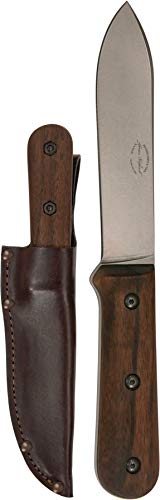
KA-BAR Becker BK62 Kephart — Best Overall / Most Faithful
Who it suits: Buyers who want the closest production reproduction of Kephart’s own knife, with modern manufacturing consistency.
- Blade length: 5.125 inches
- Blade steel: 1095 Cro-Van carbon steel
- Blade thickness: 0.158 inch
- Grind: flat
- Handle: walnut; sheath: leather
Strengths
- Built around the surviving original Kephart knife owned by its designer
- Flat grind and spear point follow the historical pattern closely
- Walnut handle and leather sheath keep the traditional formula intact
Trade-offs
- Longest blade here — at the top of Kephart’s own size range
- Carbon steel and leather both require maintenance habits
- Slightly thicker stock than the original’s eighth-inch ideal
The BK62 has the strongest provenance claim in production knives: its designer owns the only known surviving original five-inch Kephart, and the reproduction was measured from it. The result is a knife that feels like a historical document you can split kindling with — flat-ground spear point, plain walnut scales, leather sheath, no ornament. If the appeal of the Kephart pattern is the connection to its source, this is the one to buy, and its modern 1095 Cro-Van steel and consistent heat treatment are quiet upgrades Kephart himself would probably have approved.
Consider how the KA-BAR Becker BK62 Kephart behaves across a full day of the work it was chosen for. Its defining specification — blade length: 5.125 inches — sets the rhythm: it determines how the knife carries between tasks, how it feels on the tenth repetition of a cut rather than the first, and how much attention it asks for in return. The headline strength, built around the surviving original kephart knife owned by its designer, is not a laboratory virtue; it is the thing owners notice when conditions are poor and time is short, which is exactly when a knife earns or loses its place in a kit.
It also helps to place this pick against the rest of the table before deciding. Every guide like this one contains a knife that is cheaper, one that is lighter or stronger, and one that is more specialised; the KA-BAR Becker BK62 Kephart survives that comparison when its particular balance — summarised in the verdict line below — matches the way you actually spend your time outdoors. If it does not, the honest move is to choose the pick whose badge names your real priority, not the pick with the most impressive single specification.
Best for: Buyers who want the closest production reproduction of Kephart’s own knife, with modern manufacturing consistency. / Not suited for: buyers whose main work contradicts the trade-offs above.
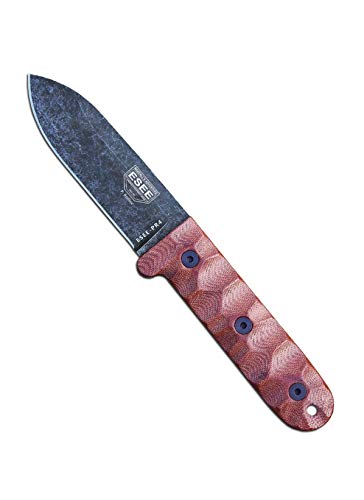
ESEE Camp-Lore PR4 — Best Modern Interpretation
Who it suits: Working users who love the Kephart silhouette but want modern handle ergonomics and a survival-school warranty culture.
- Blade length: 4.19 inches
- Blade steel: 1095 carbon steel
- Blade thickness: 0.125 inch
- Handle: sculpted Micarta
- Sheath: leather
Strengths
- Sculpted Micarta handle is the most secure and weatherproof here
- True eighth-inch stock keeps the slicing, carving character of the pattern
- Leather sheath and tumbled finish suit hard, traditional use
Trade-offs
- Sculpted handle departs from Kephart’s plain oval ideal — purists take note
- 1095 needs the standard carbon-steel care routine
- Sources differ on the grind description; verify the current production spec
The PR4, designed by a survival instructor and named for him, asks what a Kephart becomes when a working school rather than a historian specifies it. The blade keeps the pattern’s spear point and thin stock, but the handle is sculpted Micarta that locks into a wet hand, and the whole knife is built to be used hard and cleaned easily. It is the least traditional knife in this guide and arguably the most practical — the right choice when the Kephart is a tool first and a tribute second.
What separates the ESEE Camp-Lore PR4 from near-neighbours in this guide is the combination, not any single line of its specification box. Blade steel: 1095 carbon steel works together with blade length: 4.19 inches to produce a tool with a clear personality: it rewards the user it was designed for and quietly penalises everyone else. That is why the badge matters — Best Modern Interpretation is a statement about fit, not a rank — and why reading the trade-off list matters more than reading the strength list twice.
It also helps to place this pick against the rest of the table before deciding. Every guide like this one contains a knife that is cheaper, one that is lighter or stronger, and one that is more specialised; the ESEE Camp-Lore PR4 survives that comparison when its particular balance — summarised in the verdict line below — matches the way you actually spend your time outdoors. If it does not, the honest move is to choose the pick whose badge names your real priority, not the pick with the most impressive single specification.
Best for: Working users who love the Kephart silhouette but want modern handle ergonomics and a survival-school warranty culture. / Not suited for: buyers whose main work contradicts the trade-offs above.
Condor Kephart Knife 4.5 Inch — Best Traditional Value
Who it suits: Traditionalists on a budget who want walnut, leather and carbon steel in the classic formula.
- Blade length: 4.5 inches
- Blade steel: 1075 high-carbon steel
- Construction: full tang
- Handle: walnut
- Sheath: leather
Strengths
- Classic materials — walnut, leather, carbon steel — at an entry tier
- 1075 is exceptionally easy to sharpen and very tough
- Blade length sits in the middle of Kephart’s described range
Trade-offs
- Fit and finish can need a owner’s first-evening tidy-up
- 1075 rusts readily without the oil habit
- Quality varies more between examples than the premium picks
Condor’s Kephart is the pattern as a working person’s tool, made in El Salvador with the traditional material set intact: a full-tang 1075 blade, walnut handle and a leather sheath. It asks a little of its owner — expect to refine the edge and perhaps smooth the handle on arrival — and returns a knife whose character is remarkably close to what a nineteenth-century woodsman would recognise. For the price of a modern budget folder, it is the most historically complete package in this guide.
Ownership of the Condor Kephart Knife 4.5 Inch is mostly a story about its first-listed trade-off: fit and finish can need a owner’s first-evening tidy-up. Buyers who accept that cost up front tend to keep this knife for years, because nothing about it surprises them later. Buyers who discover it in the field tend to blame the knife for a mismatch that was printed in its specifications all along. Read the box above as a contract: the knife promises classic materials — walnut, leather, carbon steel — at an entry tier, and in exchange asks you to live with the compromises listed honestly beside it.
It also helps to place this pick against the rest of the table before deciding. Every guide like this one contains a knife that is cheaper, one that is lighter or stronger, and one that is more specialised; the Condor Kephart Knife 4.5 Inch survives that comparison when its particular balance — summarised in the verdict line below — matches the way you actually spend your time outdoors. If it does not, the honest move is to choose the pick whose badge names your real priority, not the pick with the most impressive single specification.
Best for: Traditionalists on a budget who want walnut, leather and carbon steel in the classic formula. / Not suited for: buyers whose main work contradicts the trade-offs above.
Check price on Amazon

Condor Compact Kephart — Best Compact
Who it suits: Hikers and smaller-handed users who want the Kephart shape in a shorter, lighter carry.
- Blade steel: carbon steel (1095 reported by retailer roundups)
- Construction: full tang
- Handle: walnut
- Sheath: leather
- Format: compact version of the Condor Kephart pattern
Strengths
- Compact size carries easier on long walks
- Full tang keeps the pattern’s working strength
- Leather sheath and walnut keep the traditional feel
Trade-offs
- Shorter blade gives up some batoning and food-prep leverage
- Published specifications for this variant are inconsistent across sources — verify before buying
- Same carbon-steel and leather care as its bigger sibling
The Compact Kephart trims the pattern for carry: the same spear-point idea and traditional materials in a smaller package that suits day hikes, smaller hands and users who found the full-size versions more knife than their woodcraft needs. We flag it honestly as the least consistently documented pick in this guide — retailer sources disagree on details — so treat the model number and the maker’s current listing as the authority, and consider it the pick for buyers who value the format and will verify the fine print.
Consider how the Condor Compact Kephart behaves across a full day of the work it was chosen for. Its defining specification — blade steel: carbon steel (1095 reported by retailer roundups) — sets the rhythm: it determines how the knife carries between tasks, how it feels on the tenth repetition of a cut rather than the first, and how much attention it asks for in return. The headline strength, compact size carries easier on long walks, is not a laboratory virtue; it is the thing owners notice when conditions are poor and time is short, which is exactly when a knife earns or loses its place in a kit.
It also helps to place this pick against the rest of the table before deciding. Every guide like this one contains a knife that is cheaper, one that is lighter or stronger, and one that is more specialised; the Condor Compact Kephart survives that comparison when its particular balance — summarised in the verdict line below — matches the way you actually spend your time outdoors. If it does not, the honest move is to choose the pick whose badge names your real priority, not the pick with the most impressive single specification.
Best for: Hikers and smaller-handed users who want the Kephart shape in a shorter, lighter carry. / Not suited for: buyers whose main work contradicts the trade-offs above.

ML Knives Kephart — Best Small-Batch Traditional
Who it suits: Traditionalists who want a forged, small-batch American interpretation with figured wood and a convex edge.
- Blade length: 4 inches
- Blade steel: 1095 carbon steel
- Grind: convex
- Blade thickness: 0.125 inch
- Handle: tiger maple; sheath: leather
Strengths
- Forged finish and tiger maple give each knife individual character
- Convex grind is durable and excellent for wood and game alike
- Four-inch blade is closest to the smaller end of Kephart’s described range
Trade-offs
- Small-batch pricing and availability vary — expect waits
- Convex edges need a different sharpening technique (stropping on a soft backing)
- A knife this handsome tempts owners to baby it; it is built to work
ML Knives represents the living craft tradition the Kephart pattern came from: a one-maker American shop forging 1095 blades with convex edges and fitting them with tiger maple handles that no production line would attempt. The four-inch blade and convex grind make it a superb carver and a genuinely different sharpening experience — maintenance is stropping on leather or a mouse pad with compound, not flat stones. Buy it when you want the pattern as craft, and accept small-batch realities of price and patience.
What separates the ML Knives Kephart from near-neighbours in this guide is the combination, not any single line of its specification box. Blade steel: 1095 carbon steel works together with blade length: 4 inches to produce a tool with a clear personality: it rewards the user it was designed for and quietly penalises everyone else. That is why the badge matters — Best Small-Batch Traditional is a statement about fit, not a rank — and why reading the trade-off list matters more than reading the strength list twice.
It also helps to place this pick against the rest of the table before deciding. Every guide like this one contains a knife that is cheaper, one that is lighter or stronger, and one that is more specialised; the ML Knives Kephart survives that comparison when its particular balance — summarised in the verdict line below — matches the way you actually spend your time outdoors. If it does not, the honest move is to choose the pick whose badge names your real priority, not the pick with the most impressive single specification.
Best for: Traditionalists who want a forged, small-batch American interpretation with figured wood and a convex edge. / Not suited for: buyers whose main work contradicts the trade-offs above.
Check price on Amazon
Bark River Kephart — Best Premium Steel Option
Who it suits: Enthusiasts who want the Kephart pattern with a modern high-toughness powder steel and premium handle materials.
- Blade length: 4.25 inches (per sheath-maker fit data)
- Overall length: 8.75 inches
- Blade steel: CPM-3V reported by retailer sources
- Handle: curly maple reported on common configurations
- Format: small-batch production, multiple handle options
Strengths
- CPM-3V offers toughness far beyond the pattern’s original carbon steel
- Premium handle materials and finish work
- Blade size sits squarely in the classic range
Trade-offs
- Configurations vary widely — steel and handle differ by production run
- Premium, small-batch pricing and intermittent availability
- Verify the exact run’s specifications; no single spec sheet covers all Bark River Kepharts
Bark River’s Kephart is the pattern through a premium small-batch lens: modern powder steel, figured handle materials and hand-finished edges, produced in runs that vary in detail. That variability is why we report its specifications cautiously — the 4.25-inch blade length comes from sheath-fit data and the CPM-3V steel from retailer descriptions of common runs, and the exact knife you buy should be verified against its own listing. For the enthusiast who wants a Kephart that is also a collector-grade object, it is the natural top of the range.
Ownership of the Bark River Kephart is mostly a story about its first-listed trade-off: configurations vary widely — steel and handle differ by production run. Buyers who accept that cost up front tend to keep this knife for years, because nothing about it surprises them later. Buyers who discover it in the field tend to blame the knife for a mismatch that was printed in its specifications all along. Read the box above as a contract: the knife promises cpm-3v offers toughness far beyond the pattern’s original carbon steel, and in exchange asks you to live with the compromises listed honestly beside it.
It also helps to place this pick against the rest of the table before deciding. Every guide like this one contains a knife that is cheaper, one that is lighter or stronger, and one that is more specialised; the Bark River Kephart survives that comparison when its particular balance — summarised in the verdict line below — matches the way you actually spend your time outdoors. If it does not, the honest move is to choose the pick whose badge names your real priority, not the pick with the most impressive single specification.
Best for: Enthusiasts who want the Kephart pattern with a modern high-toughness powder steel and premium handle materials. / Not suited for: buyers whose main work contradicts the trade-offs above.
Check price on Amazon
Comparison Table
| Knife | Blade | Steel | Badge |
|---|---|---|---|
| KA-BAR Becker BK62 Kephart | 5.125 inches | 1095 Cro-Van carbon steel | Best Overall / Most Faithful |
| ESEE Camp-Lore PR4 | 4.19 inches | 1095 carbon steel | Best Modern Interpretation |
| Condor Kephart Knife 4.5 Inch | 4.5 inches | 1075 high-carbon steel | Best Traditional Value |
| Condor Compact Kephart | Blade steel: carbon steel (1095 reported by retailer roundups) | Construction: full tang | Best Compact |
| ML Knives Kephart | 4 inches | 1095 carbon steel | Best Small-Batch Traditional |
| Bark River Kephart | 4.25 inches (per sheath-maker fit data) | Overall length: 8.75 inches | Best Premium Steel Option |
Read the table as a map, not a ranking: the rows differ because the jobs differ. The badge column tells you the job each knife won; the blade and steel columns tell you the physical reason it won it. If your main task is not represented by any badge, the buying guide below will help you judge which compromise is cheapest for the work you actually do — and whether a neighbouring category, linked throughout this guide, fits you better than any pick here.
How to Choose Kephart Style Knives
What makes a knife a Kephart? The pattern, element by element
Start with the blade: a spear point, where spine and edge curve symmetrically to meet at a centred point, in the four-to-five-inch range Kephart described. The point position matters — centred, it drills, carves and pierces with control, and the straight edge section near the handle does the fine work. Stock is thin by modern standards, around an eighth of an inch, because Kephart’s knife was a cutting tool, not a pry bar. The handle is the philosophy made visible: a simple oval cross-section, no finger grooves, no guard dictating one grip — the user chooses the grip, including the chest-lever and reverse grips woodcraft uses constantly. A leather belt sheath completes the pattern. Departures are not sins — the PR4’s sculpted Micarta is a considered one — but a knife that keeps the spear point, the plain handle and the thin stock is a Kephart; one that keeps only the name is a tribute act.
Grinds in the Kephart world: flat, convex, saber and Scandi
The historical pattern is generally described with a flat or slightly convex grind, and the faithful reproductions follow it: the BK62 is flat-ground, the ML Knives version convex. Flat and convex grinds slice food and dress game better than Scandi grinds, carve very well with practice, and suit the Kephart’s role as an all-round camp knife rather than a pure woodcarver. Saber and Scandi interpretations trade some of that versatility for wood-biting guidance. When sources disagree about a model’s grind — as they do for the PR4 — the disagreement itself is information: check the maker’s current specification, because production grinds do change between runs.
Carbon steel and leather: the maintenance covenant
Nearly every knife in this guide is carbon steel in a leather sheath, which is to say the pattern comes with a covenant: keep the blade dry and lightly oiled, keep the leather clean and conditioned, and never store the knife long-term inside the sheath, where trapped moisture works on the edge. In return you get steels that resharpen on any stone, edges that strop back in seconds, and materials that age into something more beautiful than they started. Hunters and hikers in persistently wet climates should weigh that covenant honestly against the stainless options in best fixed blade knives for hiking before committing to tradition.
Finally, buy from a listing that states the exact model, steel and configuration in writing, from a seller who accepts returns. Knife categories are full of variants that share a name and differ in the one specification that made you choose the knife. The few minutes spent confirming the listing are the cheapest insurance in this entire guide, and they are the difference between the knife reviewed here and a near-namesake that merely looks like it in photographs.
Key Takeaways
- Match the knife to your dominant task first; every pick here is the best answer to a different question.
- Specifications — steel, blade length, thickness, tang or lock — predict field behaviour better than brand or price.
- Maintenance is part of the purchase: choose the steel and materials whose care routine you will actually keep.
- Safety is technique, not equipment: follow manufacturer-style guidance on grips, carry and storage every time.
- Verify the exact variant on the listing before buying; model names cover more configurations than ever.
How to Use a Kephart Knife for Classic Woodcraft
- Learn the grips first: the standard hammer grip for power cuts, the chest-lever grip for controlled carving, and the reverse grip for draw cuts — the plain oval handle exists to allow all of them.
- For feather sticks, brace the stick on a stump, keep the knife steady at a shallow angle and push the wood into the edge with the supporting hand kept behind the blade path.
- Use the spear point for starter holes and awl work: brace the work, rotate the point with controlled pressure, and never twist the blade under load like a pry bar.
- For food prep, the flat or convex grinds slice cleanly on a board or flat log; wash and dry the carbon blade immediately after acidic foods.
- Baton only within the pattern’s intent: small, straight-grained kindling, a wooden baton on the spine, and never rounds wider than the exposed blade — Kephart’s knife was a cutter, not a splitting wedge.
- Strop the edge at day’s end — a dozen light strokes per side on leather restores most working edges and suits flat and convex grinds alike.
- Wipe the blade dry, apply a whisper of food-safe oil, and sheath the knife only for transport or carry.
- Store the knife out of its leather sheath, dry, and out of reach of children.
Sharpening Flat and Convex Kephart Edges
Problem: a convex edge (ML Knives style) dulls and a flat stone feels wrong. Fix: strop on a soft backing — leather over a mouse pad or similar — with compound; the soft backing follows the convex curve instead of flattening it.
Problem: a flat-ground edge needs more than stropping. Fix: use a stone at a shallow, consistent angle with light strokes, or a guided system from best sharpening guides for knives to keep the angle honest.
Problem: rust freckles on carbon steel. Fix: scour gently with a pad and oil, dry fully, and review storage — a knife stored in its sheath in a damp room is the usual story.
Problem: leather sheath darkens and stiffens. Fix: clean with a damp cloth, dry away from heat, and condition sparingly with a leather product the sheath maker recommends; over-oiling softens leather until retention suffers.
Keep the traditional kit together: stone or strop, oil, and the knife. The sharpening accessories in best knife sharpeners for pocket knives cover pocket-sized options, and a spare or replacement sheath can be found through best leather knife sheaths when the original finally wears out — which, cared for, takes a very long time.
Kephart in Context: The Nessmuk Trio and the Woodcraft Canon
Kephart’s knife is usually discussed alone, but its author thought in systems. The classic woodcraft kit of his era — later popularised as the Nessmuk trio after George Washington Sears, who wrote as Nessmuk — combined a light double-bit hatchet for wood processing, a slim skinning-oriented knife for game and food, and a small folding knife for fine work. Kephart’s own camp knife sat at the centre of a similar logic: one fixed blade sized for the everyday work of a camp, neither a chopper nor a scalpel. Understanding that context explains the pattern’s famous restraint. The Kephart was never meant to split rounds like a modern survival knife or slice like a kitchen blade, because its owner carried companions for the extremes. Modern buyers who ask a Kephart to be their only tool should do so knowingly — it will handle the middle ninety percent of camp work beautifully and the extremes adequately — rather than discovering at a cold campsite that a century-old system assumed a hatchet was nearby.
Reading Kephart Specifications Critically
Few knife categories are documented as inconsistently as this one, and this guide’s research process is worth describing because it doubles as buying advice. The same model’s grind is described as saber by a leading magazine and flat by a retailer; blade lengths for the same Condor variant appear at two different figures; Bark River’s Kephart exists in multiple steels across production runs, so a specification that was true for one run is repeated as gospel for all of them. The defence is triangulation: prefer the manufacturer’s current listing, treat retailer roundups as secondary, and treat any specification repeated identically across many sites as possibly copied rather than confirmed. Our sources file records exactly which claims rest on a single source, and the article text avoids the specifications we could not settle. Apply the same standard when you buy — the model number and the maker’s own page outrank every roundup, including this one.
Modern Alternatives, and Why the Old Pattern Endures
A fair question hangs over this whole guide: why choose a century-old pattern when modern bushcraft knives offer powder steels, ergonomic handles and polymer sheaths? Part of the answer is that the modern options are genuinely good — our best bushcraft knives guide recommends several — and a buyer who wants maximum capability per trip should choose them without nostalgia. The Kephart endures for the buyers who want something else as well: a knife whose design is finished, in the sense that a folk song is finished, refined by generations rather than revised by marketing cycles. Its plain handle teaches grips that grooved handles prevent; its thin blade teaches cutting rather than splitting; its carbon steel teaches maintenance as a ritual rather than a chore. Those lessons transfer to every knife you will ever own. The pattern is not better than its modern descendants. It is older, simpler and, for the right owner, more instructive — which is a different and entirely respectable kind of better.
Which Pick Fits Which Buyer?
If this sounds like you — Buyers who want the closest production reproduction of Kephart’s own knife, with modern manufacturing consistency. — then the KA-BAR Becker BK62 Kephart is your pick. Its badge, Best Overall / Most Faithful, was assigned for exactly that profile, and its trade-offs were written with your use in mind. If the description nearly fits but one trade-off touches the work you do most, move one row up or down the comparison table rather than abandoning the category: the neighbouring picks in this guide were chosen to cover the adjacent profiles, and the distance between a good knife and the right knife is usually a single honest sentence about your own habits.
If this sounds like you — Working users who love the Kephart silhouette but want modern handle ergonomics and a survival-school warranty culture. — then the ESEE Camp-Lore PR4 is your pick. Its badge, Best Modern Interpretation, was assigned for exactly that profile, and its trade-offs were written with your use in mind. If the description nearly fits but one trade-off touches the work you do most, move one row up or down the comparison table rather than abandoning the category: the neighbouring picks in this guide were chosen to cover the adjacent profiles, and the distance between a good knife and the right knife is usually a single honest sentence about your own habits.
If this sounds like you — Traditionalists on a budget who want walnut, leather and carbon steel in the classic formula. — then the Condor Kephart Knife 4.5 Inch is your pick. Its badge, Best Traditional Value, was assigned for exactly that profile, and its trade-offs were written with your use in mind. If the description nearly fits but one trade-off touches the work you do most, move one row up or down the comparison table rather than abandoning the category: the neighbouring picks in this guide were chosen to cover the adjacent profiles, and the distance between a good knife and the right knife is usually a single honest sentence about your own habits.
If this sounds like you — Hikers and smaller-handed users who want the Kephart shape in a shorter, lighter carry. — then the Condor Compact Kephart is your pick. Its badge, Best Compact, was assigned for exactly that profile, and its trade-offs were written with your use in mind. If the description nearly fits but one trade-off touches the work you do most, move one row up or down the comparison table rather than abandoning the category: the neighbouring picks in this guide were chosen to cover the adjacent profiles, and the distance between a good knife and the right knife is usually a single honest sentence about your own habits.
If this sounds like you — Traditionalists who want a forged, small-batch American interpretation with figured wood and a convex edge. — then the ML Knives Kephart is your pick. Its badge, Best Small-Batch Traditional, was assigned for exactly that profile, and its trade-offs were written with your use in mind. If the description nearly fits but one trade-off touches the work you do most, move one row up or down the comparison table rather than abandoning the category: the neighbouring picks in this guide were chosen to cover the adjacent profiles, and the distance between a good knife and the right knife is usually a single honest sentence about your own habits.
If this sounds like you — Enthusiasts who want the Kephart pattern with a modern high-toughness powder steel and premium handle materials. — then the Bark River Kephart is your pick. Its badge, Best Premium Steel Option, was assigned for exactly that profile, and its trade-offs were written with your use in mind. If the description nearly fits but one trade-off touches the work you do most, move one row up or down the comparison table rather than abandoning the category: the neighbouring picks in this guide were chosen to cover the adjacent profiles, and the distance between a good knife and the right knife is usually a single honest sentence about your own habits.
Common Buying Mistakes
Buying a ‘Kephart’ that is only a name
Thick stock, finger grooves, a tanto-adjacent point and a tactical sheath make a fine knife that is not a Kephart. Check the pattern elements before the label.
Batoning like it is a survival knife
An eighth-inch blade is a deliberate design choice for cutting. Splitting heavy rounds with it misunderstands — and can break — the tool.
Storing the knife in its leather sheath
The classic carbon-steel mistake. Leather holds moisture against the blade; store the knife out of the sheath, dry and oiled.
Flattening a convex edge on a hard stone
Convex edges are maintained on soft-backed strops. Grinding one flat on a stone destroys the geometry that makes it work.
Trusting a single source for specifications
Kephart models are documented inconsistently across the internet — grinds, lengths and steels conflict between retailers. Verify against the maker’s current listing, as this guide’s sources file records.
Babying a working pattern
Kephart’s knife was a tool he used daily and described without sentimentality. A Kephart kept pristine in a drawer honours the collection, not the pattern — compare the working alternatives in best bushcraft knives if you want a knife to admire and one to use.
Final Recommendation
Start with the KA-BAR Becker BK62 Kephart (Best Overall / Most Faithful). It earned the lead because its specification set answers the most common version of the question this guide’s title asks, with the fewest compromises a buyer has to manage. Its strengths are the ones most users feel every time they use it, and its trade-offs are the kind that good technique and honest expectations fully cover.
The runner-up is the ESEE Camp-Lore PR4 (Best Modern Interpretation) — the better answer when your priorities tilt toward its speciality, and close enough overall that choosing it instead is a preference, not a mistake. Whichever you choose, confirm the exact variant on the listing, keep the maintenance routine your steel asks for, and let the knife’s stated limits, not enthusiasm, set the work you ask of it. A well-matched knife in this category is a decade-long tool, not a season’s experiment.
Frequently Asked Questions
Who was Horace Kephart and why does his knife matter?
Kephart (1862–1931) was a librarian who moved to the Smoky Mountains and wrote Camping and Woodcraft, one of the foundational American outdoor manuals. His knife — a simple spear-point camp blade he described and used — became a pattern because it embodied his philosophy: few tools, deeply mastered, nothing carried without purpose.
What blade length is a true Kephart?
Kephart’s own description centres on roughly four to five inches; surviving and reproduction examples cluster there, from the ML Knives four-inch blade to the BK62’s 5.125 inches. Outside that range a knife may be excellent, but it is stretching the pattern.
Is a Kephart knife good for bushcraft?
Yes — it is one of the original bushcraft patterns, designed for carving, fire prep, food and camp work. It is a cutter rather than a splitter, so pair heavy batoning expectations with the heavier options in best bushcraft knives.
Why are most Kephart knives carbon steel?
Fidelity and function: the original predates practical stainless knife steels, and carbon steels suit the pattern’s field-sharpening philosophy. The cost is rust discipline — dry, oil, and store out of the sheath.
What is the difference between a Kephart and a Nessmuk knife?
Both are classic American woodcraft patterns from the same era. The Nessmuk has a distinctive swept, hump-backed blade profile optimised for skinning and slicing; the Kephart is a straighter spear point optimised as the all-round camp knife. They were traditionally carried together, with a double-bit hatchet, as a trio.
Are Kephart knives good for hunting?
Competently, yes — the spear point and flat grinds dress and process game well, and Kephart himself hunted with his. Dedicated hunters may still prefer the drop-point specialists in best hunting knives for repeated field dressing.