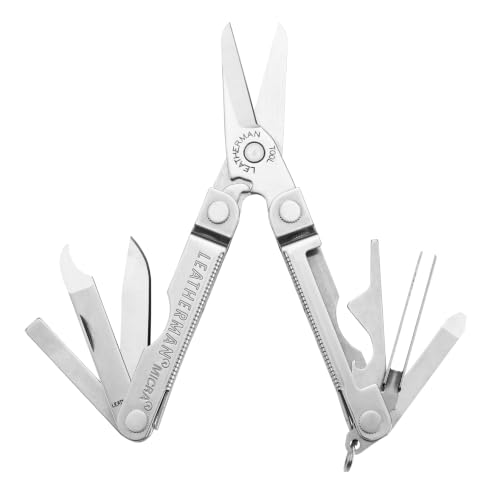
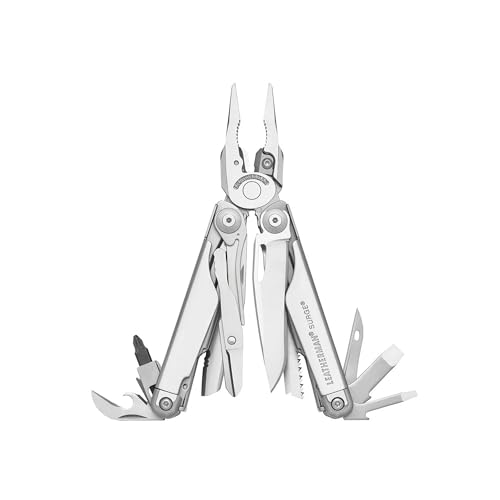
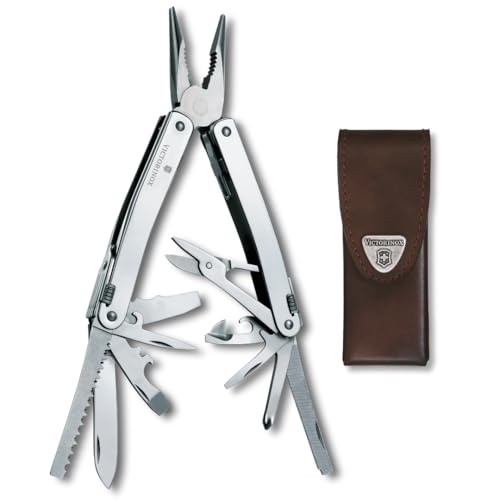
Pocket knife multitools combine a folding blade with pliers, screwdrivers, a can opener and other fold-out helpers. They replace a small toolbox in a pocket or on a belt, and they are especially useful for repairs, camping and everyday fixes.
The six tools below include pliers-based multitools from leading makers and a Swiss Army style option. We have not used these products ourselves, so confirm the tool list, blade type and sheath details on the current listing before buying.
As an Amazon Associate we earn from qualifying purchases. Links below are affiliate links, and they do not change the product information we give.
What to Look For
| Feature | Why it matters |
|---|---|
| Pliers | Full-size pliers do more work than tiny tweezers or mini pliers |
| Outside access | Blades that open without unfolding the tool save time |
| Locks | Locking tools stay put under pressure |
| Weight | Heavier tools are stronger but harder to carry daily |
In this guide
Specs at a Glance
| Tool | Type | Pliers | Notes |
|---|---|---|---|
| Leatherman Wave Plus | Full-size multitool | Needlenose | Outside-opening blades |
| Leatherman Skeletool | Lightweight multitool | Needlenose | Slim, pocket clip |
| Leatherman Wingman | Mid-size multitool | Needlenose | Spring-action pliers |
| Gerber Suspension-NXT | Compact multitool | Needlenose | Spring-loaded |
| SOG PowerAccess Deluxe | Full-size multitool | Compound-leverage | Strong leverage design |
| Victorinox SwissTool Spirit | Full-size multitool | Needlenose | Swiss Army build |
The 6 Best Pocket Knives Multitools
Top pickBest for serious repairs
1. Leatherman Wave Plus
A full-size multitool with pliers, wire cutters, a knife and several other tools. The knife blades open from the outside, which makes it a popular pick for those who need a capable all-rounder.
Suits: serious repairs. Strengths: a broad toolset. Weaknesses: bulky for pockets. Skip it if you want an ultralight tool.

Best for everyday carry
2. Leatherman Skeletool
A lightweight multitool with a slim, open-frame design, pliers, a knife and a pocket clip. It suits people who want pliers and a blade without carrying a bulky tool.
Suits: everyday carry. Strengths: light weight. Weaknesses: fewer tools. Skip it if you want a full toolbox.

Best for home use
3. Leatherman Wingman
A mid-size multitool with spring-action pliers that open on their own, plus scissors, a knife and other tools. It balances size and capability, and it is a good home and garage companion.
Suits: home use. Strengths: a well-rounded set. Weaknesses: not the most compact. Skip it if you need maximum strength.

Best for compact carry
4. Gerber Suspension-NXT
A compact multitool with spring-loaded pliers and a good range of fold-out tools. It aims to give a lot of functions in a small body and can ride on a belt or in a pocket.
Suits: compact carry. Strengths: a handy small size. Weaknesses: lighter-duty pliers. Skip it if you do heavy work.

Best for heavy tasks
5. SOG PowerAccess Deluxe
A full-size multitool with a compound-leverage design that multiplies the force at the pliers jaws. It suits tough cutting and gripping jobs where raw strength matters.
Suits: heavy tasks. Strengths: strong leverage. Weaknesses: heavier to carry. Skip it if you prefer a slim tool.

Best for precise, tidy work
6. Victorinox SwissTool Spirit
A refined Swiss Army multitool with pliers, a knife and a thoughtful range of tools. It is built with a precise feel and appeals to those who like the Swiss Army style in a pliers-based format.
Suits: precise, tidy work. Strengths: a refined build. Weaknesses: a different feel from other makers. Skip it if you want a lighter tool.
View Victorinox SwissTool Spirit on Amazon
Care and Setup
- Rinse off dirt and dry the tool after use.
- Oil the joints lightly every few months.
- Check that each lock engages firmly.
- Sharpen the blade as you would a folding knife.
- Store the tool in its sheath or pouch.
Mistakes to Avoid
- Using the tool as a hammer.
- Overloading small screwdriver bits.
- Forgetting to close tools before storing.
- Carrying one where blade rules apply.
Size Classes and How You Plan to Carry
Multitools fall into rough size classes, and picking the right class matters more than any single feature. Full-size tools offer the largest pliers, the most leverage and the longest handles, which makes them better for heavy gripping, wire work and repairs. They are also heavier and bulkier, usually carried in a belt sheath or kept in a vehicle, toolbox or pack. Mid-size tools trade some strength for comfort and are easier to keep on a belt or in a bag. Compact and lightweight tools fit in a pocket and are easier to carry every day, but the smaller handles and shorter jaws limit how hard you can squeeze or twist.
The best way to choose is to be honest about how you will carry it. A tool that is too big to carry will stay in a drawer, and then it fails its purpose of being there when needed. If you want it on you throughout the day, a slimmer design with a clip may be the right choice. If it lives in a truck, backpack or home tool kit, a larger model makes more sense.
Think about the following:
- Belt sheath: good for larger tools, and keeps them accessible.
- Pocket clip: good for lighter tools, but check how deep the tool sits and whether the clip is reversible.
- Bag or toolbox: allows larger tools, with weight less of a concern.
Check the listing for weight and closed length, and compare them against tools you already carry.
Pliers, Leverage and Handle Comfort
The pliers are the heart of a multitool, so look closely at them. Needlenose jaws reach into tight spaces and grip small items. Many tools combine them with a section of regular flat jaws and wire cutters. Some tools include replaceable cutters, while others do not, so check whether the cutters can be replaced if they wear down.
Leverage depends on the pivot and handle design. Compound-leverage designs use a linkage to multiply force at the jaws, which helps when cutting or gripping stubborn material. Spring-action pliers open on their own after each squeeze, which reduces hand fatigue during repetitive work. Standard designs are simpler, with fewer moving parts to wear.
Handle shape determines comfort. Many multitools have handles that are channel-shaped, so that when you squeeze the pliers, the edges of the handles press into your palm. Some tools have rounded edges or a design that spreads pressure more evenly, which becomes noticeable during long tasks. If you plan to do real work with the pliers, such as bending wire or twisting fasteners, handle comfort is an important factor, and reading reviews from users who describe long jobs is useful.
- Check that the jaws line up cleanly when closed.
- Check how the pliers feel under hand pressure, not just in photos.
- Look for notes on whether the wire cutters and pliers are replaceable.
Remember that no multitool replaces a full-size set of pliers and wrenches for heavy repairs.
Blades, Screwdrivers and the Other Tools Inside
The extra tools inside a multitool deserve a checklist, because a longer list is not always better. Consider which ones you will use. Common inclusions are a main knife blade, a serrated blade, scissors, a file, a bottle opener, a can opener, an awl, flat and Phillips screwdrivers and sometimes a saw. A tool with outside-access blades lets you open the knife without unfolding the pliers, which is faster for quick cutting. A tool where the blades are accessed only by opening the handles is more compact, but slower to use.
Screwdriver design is a common limitation. Built-in screwdrivers are convenient, but their short length and small size limit torque. Tools with interchangeable bit systems let you use standard bits, which may offer more options but add something to carry or lose. Read the listing to see whether the tool accepts bits and whether a bit set is included.
Locking matters for safety. Check whether the main blade and the larger tools lock open. A lock keeps the blade from folding on your fingers while you cut or apply pressure. Some tools lock only certain implements, so read the details.
- Pick the tools you will use rather than the longest list.
- Confirm that the blade you use most is easy to open and locks.
- Check scissors and files for size and usability, since small ones can feel awkward.
Blade steel and edge quality differ, but multitool blades are generally for light cutting, not heavy slicing.
Legal and Travel Considerations
A multitool that includes a blade is a knife in the eyes of many laws and policies. Rules vary by location, venue and context. Some workplaces, schools, government buildings and event venues prohibit them regardless of local law. When flying, multitools with blades are generally not allowed in carry-on luggage, so pack them in checked baggage if permitted or leave them at home, and check airline and airport rules before you travel.
If you often travel or work in environments where blades are not allowed, a scissors-only or blade-free multitool may be a better fit. Some makers offer models without knives, and you can look for them if the rules are a problem for you. Do not rely on assumptions, and check with the venue if you are not sure.
Carry sensibly:
- Know the rules where you will be, including locking-blade or blade-length restrictions.
- Keep the tool in a sheath or closed pocket so the tools do not open unexpectedly.
- Do not hand a tool across with open blades, and close tools before passing it to someone.
- Keep it out of reach of young children.
These steps protect you from fines, lost property at security checkpoints and accidents.
Warranty, Maintenance and Long-Term Use
A multitool is a long-term purchase, so durability and support deserve a look. Some makers offer a warranty or repair service, and the terms differ. Read the listing and the maker’s website to see what is covered, how to make a claim and whether wear parts such as pliers cutters and blades can be replaced. A tool you can service is more valuable than one you must discard when a part wears out.
Maintenance is simple. Rinse off dirt and grit with warm water, brush out debris with a soft brush, dry the tool thoroughly and add a drop of light oil to the pivots and joints. Open and close each implement a few times to work in the oil, then wipe off the excess. If the tool is used around salt water or sweat, clean it more often, because corrosion can attack hinges. Check the screws if the tool uses them, and adjust only according to the instructions.
Signs that it is time to repair or replace:
- The pliers jaws no longer align or the pivot is loose.
- A lock fails to hold under normal pressure.
- Springs are weak or broken.
- Blades are chipped and cannot be sharpened.
A tool that is used within its limits will serve for years. Avoid prying, hammering and using bits beyond their capacity, since breakage usually results from misuse rather than normal wear.
Pocket Knives Multitools FAQ
Is a multitool better than a knife?
It does more jobs, though a dedicated knife cuts better and is lighter.
What size should I choose?
Full-size tools are stronger, while compact ones are easier to carry every day.
Are the blades lockable?
Many modern multitools have locking blades. Check the listing for the lock type.
Do multitools need maintenance?
A bit of cleaning and a drop of oil on the joints keeps them operating smoothly.
Can I take a multitool on a plane?
Multitools with blades are generally not allowed in carry-on bags. Check airline and airport rules, and consider checked luggage or a blade-free model.
What is the difference between a multitool and a Swiss Army knife?
A pliers-based multitool folds out tools from the handles around a set of pliers, while a classic Swiss Army knife is built around blades and small implements without pliers. Some tools blend both ideas.
How do I clean a multitool?
Rinse with warm water, scrub out debris with a soft brush, dry completely and oil the joints lightly. Wipe away excess oil.
Do multitool blades hold an edge well?
They are fine for light cutting, but are generally not meant for heavy slicing. Sharpen them like a folding knife when needed.
Are replacement parts available?
It depends on the maker and model. Check the listing and the maker's support page for replaceable wire cutters, blades and bits.
Is a heavier tool always stronger?
Not always, but larger tools with longer handles and better leverage usually handle heavier work. Weight is the cost of that strength.
Can I use a multitool as a hammer?
No. Striking with it can damage the tool and cause injury. Use it for gripping, cutting, turning and light work.
Matching a Multitool to Your Trade or Hobby
The right tool for a camper is not the right tool for an electrician, and a lot of disappointment comes from buying a general-purpose model for a specific job. Thinking about what you actually do in a typical week narrows the choice quickly.
- Home repair and DIY: you will use pliers, screwdriver bits and a knife blade constantly. Look for a model with replaceable or standard-size bits and pliers with a comfortable grip, since you will be gripping them for long stretches.
- Camping and hiking: a blade, scissors, a can opener and a file cover most of what comes up. Weight matters here, so a lighter frame earns its place.
- Fishing and boating: corrosion resistance comes first, because salt air and water are hard on steel. Rinse the tool in fresh water after use.
- Office and everyday carry: a small knife, scissors, and a few small drivers are plenty. Many people choose a compact tool that lives on a keychain or in a pocket and rarely leaves it.
- Vehicle and roadside kit: pliers with a wire cutter and a couple of driver sizes let you handle a loose terminal or a stuck clamp, and the tool can sit in a glove box for years.
Notice that almost none of these jobs call for a large number of tools. A short list used often beats a long list used once, which is why feature counts on packaging can be misleading.
Steel, Finishes and Corrosion
Multitools are mostly stainless steel, but stainless is a broad family, and the exact alloy affects how a tool behaves. Harder steels hold an edge longer but can be tougher to sharpen and slightly more brittle. Softer steels sharpen easily but need touching up more often. For a tool whose main job is pliers and drivers, steel choice for the frame matters less than the design. For the knife blade, it matters more.
Finishes range from plain polished steel to coated black surfaces, and each has trade-offs. A coating can reduce glare and slightly increase corrosion resistance, but it can wear away at points of contact over time. That is cosmetic and not a defect. Handle materials also differ, and anodized aluminum is lighter than steel handles while texture patterns improve grip with wet or gloved hands.
Even so-called stainless steel can rust if it is left damp or exposed to salt, so a simple habit helps: wipe the tool dry, open every tool once to let moisture escape, and add a drop of light oil to the pivots now and then. Doing that regularly does more for longevity than any choice of finish.
Sheaths, Clips and Carry Hardware
How a multitool is carried often decides whether it gets used. A tool that is uncomfortable or awkward ends up in a drawer. Most models come with a nylon or leather sheath that attaches to a belt, and some offer a pocket clip as an alternative. A belt sheath keeps weight off your pants pocket and keeps the tool in an easy, predictable position. A pocket clip keeps it accessible and low profile but adds bulk against your leg.
If you work around machinery or climb, think about how the tool could snag, and consider a tether or lanyard hole so you can secure it when working above ground. A tool that falls from a ladder is a hazard, and a tool that disappears into a lake is a lost one. Check also that a sheath closes firmly, because a loose flap lets the tool slip out when you bend over.
Finally, look at how the tool opens. Outside-accessible blades and one-hand opening designs let you use the knife without unfolding the whole tool, which is a convenience for light daily cutting. It is worth testing the mechanism for smoothness and thinking about whether the lock is something you can operate comfortably.
Using a Multitool Safely
A multitool is a compromise, and treating it like a purpose-built tool leads to injuries and damage. Always cut away from your body, and make sure a locking blade is fully locked before applying pressure. Close folded tools before putting them down so they cannot pinch a finger. Avoid prying with the knife blade, since blades are thin and can snap, and never use pliers as a hammer or as a substitute for a wrench on a stubborn bolt. For heavy or repeated work, the full-size tool is always the better and safer option.
If you are unsure which direction to go, borrow a friend’s tool for a week or handle several in a store before choosing. How the pliers feel under pressure, how stiff the tool opening is and whether the edges are comfortable against your palm are personal matters that no description can settle. Pay attention to hot spots where the handle digs into your hand, because a tool that hurts after a minute of squeezing will not be used for real work. Comfort and confidence in handling often matter more than the length of the feature list.
Frequently Asked Questions
Can I sharpen the blade on a multitool?
Yes. Use a fine sharpening stone, a ceramic rod or a small guided sharpener, and keep the angle consistent with the factory bevel. Go slowly, because the blade is small and the steel can be thin. Many tools also include a file, but a stone gives a cleaner edge on the knife.
Will a stainless multitool rust?
It can, although it resists rust better than plain steel. Salt, moisture and neglect are the usual causes. Wipe it dry after wet use, rinse off salt water with fresh water, and apply a drop of light oil to the joints. Light surface spots usually come off with a cloth and a little oil.
Is a multitool with a pocket clip better than one with a sheath?
It depends on how you carry it. A clip is quick and slim but adds pocket bulk and can rub against fabric. A belt sheath spreads weight and keeps the tool in one place but is less discreet. Many people try one and switch if it proves uncomfortable.
How many tools do I actually need on a multitool?
Fewer than most packaging suggests. Pliers, a knife blade, scissors and a couple of screwdriver sizes cover most everyday tasks. Extra tools like saws and files help for camping or yard work. A tool with a long list of features can be heavier and harder to carry.
The Short Version
For an all-rounder, the Leatherman Wave Plus. For light carry, the Skeletool. For home use, the Wingman. For compact size, the Gerber Suspension-NXT. For leverage, the SOG PowerAccess. For Swiss precision, the Victorinox SwissTool Spirit.
A good multitool pays off when you use it often, so choose the size you will actually carry. Confirm the tool list and blade type on the current listing, keep the joints clean and lightly oiled, and match the toolset to the jobs you really do, whether that is camping, car repairs or household fixes.
Think about where the tool will live. A belt sheath suits a full-size model, a pocket clip suits a slim one, and a bag works for anything heavier. Practice opening the pliers and blade with one hand in a safe spot, learn which bit does which job, and avoid pushing small tools past their limits. Knife rules differ by place, so check local laws and travel policies before you carry a multitool away from home.