Disclosure: As an Amazon Associate, umtsmarttool.com earns from qualifying purchases. Links to Amazon on this page are affiliate links; they cost you nothing extra. Prices and availability change often, so check the current Amazon listing before you buy.
Where to buy
Short on time? These are the six Leatherman tools this guide recommends, led by our top pick, the Leatherman Wave Plus. Every linked pick below says check price on Amazon, because Leatherman pricing and bundle configurations change often.
- Leatherman Wave Plus, Stainless Steel — Check on Amazon
- Leatherman Surge, Stainless Steel with Nylon Sheath — Check on Amazon
- Leatherman Signal, Stainless Steel — Check on Amazon
- Leatherman FREE P4 — Check on Amazon
- Leatherman Skeletool CX — Check on Amazon
- Leatherman Rebar, Stainless Steel — Check on Amazon
Read the full guide ↓
Searching for the best Leatherman multitools means searching inside one brand’s lineup, and that changes the question. You are not asking which company makes a good multitool — Leatherman invented the category in 1983 and every tool here is made under the same Portland, Oregon roof with the same 25-year warranty behind it. You are asking which Leatherman fits your hand, your work, and your carry: the all-rounder, the heavy-duty flagship, the outdoor specialist, the one-handed innovator, the minimalist, or the classic. Those are genuinely different tools wearing the same logo, and picking by logo alone is how buyers end up with a Surge in a suit pocket or a Skeletool on a construction site, each privately annoyed at a good tool doing the wrong job.
This guide compares six current and recent Leatherman models head-to-head on the things that separate them: tool count and tool selection, size and weight, how the tools deploy, blade steels, and carry style. Two honesty notes belong up front. First, one pick — the FREE P4 — is a retired model: Leatherman’s own site lists it as no longer in production, though it remains widely available from retailers as of this writing and stays covered by Leatherman’s warranty service; we include it because its magnetic one-handed design is still the benchmark for that experience, and we flag its status in its review rather than letting you discover it later. Second, every Leatherman here is a pliers-based, full-size-or-smaller tool from the same family tree; readers cross-shopping other brands should use our broader guide to best multitools for edc, while readers who have already decided on Leatherman — a defensible decision on warranty and parts support alone — are in exactly the right place.
A word on carry, because it decides more Leatherman purchases than any spec: these tools divide into belt tools (Wave Plus, Surge, Signal, FREE P4, Rebar) and a true pocket tool (Skeletool CX), with the keychain-sized end of the brand covered separately in best keychain multitools. A belt tool you forget you are wearing beats a pocket tool you left at home, and vice versa — the sections below keep returning to that trade because it is the one that determines whether your Leatherman is a daily companion or a drawer monument.
In this guide
Quick Picks
| Pick | Badge | Key spec |
|---|---|---|
| Leatherman Wave Plus | Best Overall | 18 tools, 8.5 oz, 4 in closed, replaceable wire cutters |
| Leatherman Surge | Best Heavy-Duty | 21 tools, largest pliers and blades in the line, blade exchanger |
| Leatherman Signal | Best for Outdoors | 19 tools, 7.5 oz, ferro rod, emergency whistle, hammer |
| Leatherman FREE P4 | Best One-Handed (Retired Model) | 21 tools, 8.6 oz, magnetic locking, all tools outside-accessible |
| Leatherman Skeletool CX | Best Lightweight | 7 tools, 154CM blade, about 5 oz, pocket clip and carabiner |
| Leatherman Rebar | Best Classic Value | 17 tools, 4 in closed, all-locking, replaceable wire cutters |
How These Picks Were Chosen
With the brand fixed, selection turned on coverage: the six models had to span the lineup’s real decision points rather than cluster at its center. Size classes run from the Skeletool CX’s minimalism to the Surge’s maximum; deployment philosophies run from the Rebar’s traditional inside-opening tools to the FREE P4’s magnetic, all-outside, one-handed system; specialties run from the Signal’s outdoor survival kit to the Wave Plus’s general-purpose balance. If two models answered the same need the same way, only the better answer stayed — which is why respected names like the Wingman and Bond are discussed in the buying-guide section as alternatives rather than padded into the six.
Specifications were taken from Leatherman’s own product pages wherever possible — tool counts, weights, closed lengths, and blade details for the Signal and FREE P4 come directly from leatherman.com, as does the Wave Plus data in Leatherman’s comparison tables — and cross-checked against retailer listings for the exact configurations linked. Warranty framing is uniform across the brand: Leatherman’s 25-year warranty is a genuine differentiator, and owner experience reported on the manufacturer’s own review pages consistently praises the service behind it, including rebuilds of decade-old tools.
One more criterion deserves naming: longevity of the design. Multitools are bought for decades, and models with long production runs accumulate parts, accessories, sheaths, and community knowledge. Five of these six designs have years of that ecosystem behind them; the retired FREE P4 is the exception, and its review weighs that honestly against its unmatched deployment system.
The 6 Best Leatherman Multitools
Leatherman Wave Plus — Best Overall
The Wave Plus suits more people, more of the time, than any other tool Leatherman makes, which is why it is the best-selling multitool in the world and the top pick here. It packs 18 tools into a 4-inch, 8.5-ounce stainless frame: needle-nose and regular pliers with premium replaceable wire cutters, two outside-opening 420HC blades (plain and serrated, 2.92-inch primary), spring-action scissors, a saw, files, a bit driver with included bits, and the small tools that handle daily life. Every blade and most tools open from outside the handles and lock, so the tool you need is available one-handed without unfolding the whole butterfly — the design decision that separates modern Leathermans from their ancestors.
- 18 tools, stainless steel construction
- 8.5 oz, 4 in closed length, 2.92 in primary blade
- Premium replaceable wire and hard-wire cutters
- Outside-accessible, locking blades and tools
- Large bit driver; eyeglass screwdriver bit included
Strengths
- The balanced toolset: nothing essential missing, nothing gimmicky added
- Replaceable cutters turn a wear item into a maintenance item
- One-hand outside access to both blades and scissors
Trade-offs
- Sheath is sold separately on current versions — budget for one
- Heavier than minimalist carriers will accept in a pocket; it is a belt tool
- 420HC blades are tough and easy to sharpen, not premium edge-holders
The Wave Plus is the multitool equivalent of a well-designed kitchen: everything within reach, nothing in the way. The tool selection reads like a census of actual multitool use — blades and scissors for cutting, pliers and cutters for gripping and wire, bit driver for the screws that hold the built world together, file and saw for the rest. The replaceable cutter inserts deserve emphasis, because wire cutters are the highest-wear part of any multitool; on the Wave Plus, a nicked cutter is a spare-part swap, not a warranty claim or a ruined tool. Owners stepping up from the budget end of best edc multitools feel the difference in pivot smoothness and lock solidity within the first week.
The honest limitations are carry and blade steel. At 8.5 ounces the Wave Plus is a belt-sheath tool — the leather and nylon options in best leather knife sheaths exist largely because of tools like this — and pocket carriers will migrate to the Skeletool below. Its 420HC blades sharpen easily on anything, including the field sharpeners in our sharpening guide, but they need that sharpening more often than a premium steel would. Neither point dents the verdict: as the one Leatherman to buy if you are buying one Leatherman, the Wave Plus has earned its crown over two decades of the Wave family’s production.
Best for: The one-tool buyer — home, jobsite, vehicle, and camp in a single belt tool / Not suited for: Pocket-only carriers or buyers wanting premium blade steel
Check on Amazon

Leatherman Surge — Best Heavy-Duty
The Surge suits the user whose multitool is a working tool in the trades sense: the biggest, strongest model in the line, with the largest pliers Leatherman makes, long blades, 21 tools, and a blade exchanger that accepts standard t-shank jigsaw blades alongside its own saw and diamond file. At 4.5 inches closed and built substantially throughout, it is the Leatherman for electricians, farmers, mechanics, and maintenance crews — people who would rather carry one heavy tool than walk back to the truck. Four outside-opening tools deploy without unfolding the handles, and everything locks.
- 21 tools — the fullest loadout in this guide
- Largest pliers and longest blades in the Leatherman line
- Blade exchanger fits t-shank jigsaw blades; saw and file swap
- Premium replaceable wire cutters, spring-action scissors
- 4.5 in closed (11.5 cm), stainless steel
Strengths
- Pliers and blades sized for real work, not scaled-down gestures
- Blade exchanger turns the saw into a system — wood, metal, drywall blades on one tool
- Outside-opening primary tools despite the full-size frame
Trade-offs
- The heaviest carry here — a belt tool in the non-negotiable sense
- Too much tool for office, travel, or light everyday carry
- Large frame is a handful for small hands in pliers mode
The Surge’s argument is substitution: it replaces trips. Its pliers close on fittings that laugh at standard multitool jaws, its blades are long enough to be genuinely useful rather than symbolic, and the blade exchanger is the feature owners cite years later — a broken saw blade, a metal-cutting blade, a drywall blade all ride the same tool, because t-shank blades are sold in every hardware store on earth. Leatherman’s own review pages are full of farmers, diesel mechanics, and welders describing the Surge as their first line of defense, and the pattern in those accounts is consistent: the weight stops being mentioned after the first month, because the tool keeps ending arguments.
The honest limitation is that the Surge is a commitment. It is the largest and heaviest pick here by a wide margin, and it will not ride in a pocket, a pair of dress pants, or a light pack’s hip belt without protest. Buyers whose heavy work is occasional will be better served by the Wave Plus and a dedicated tool for the big days. But for the user whose every day is a big day, the Surge is not the biggest Leatherman — it is the right-sized one, and the rest of the line feels like a compromise afterward.
Best for: Trades, farm, and maintenance work where the multitool is a primary tool / Not suited for: Pocket carry, travel kits, or light-duty users

Leatherman Signal — Best for Outdoors
The Signal suits the camper, hiker, and hunter who want one tool that acknowledges where they are. Leatherman built it for the backcountry: 19 tools in a 4.5-inch, 7.5-ounce frame — the lightest full-size tool here — including a ferrocerium fire-starting rod, an emergency whistle, a hammer surface for tent stakes, a diamond-coated sharpener for field touch-ups, and a combo blade, alongside the pliers, saw, awl, and openers a camp tool needs. It is the only Leatherman that treats fire and signaling as first-class functions, and it carries with a pocket clip and carabiner loop instead of demanding a sheath.
- 19 tools, 7.5 oz, 4.5 in closed — specs from leatherman.com
- Ferro rod fire starter and emergency whistle
- Hammer surface and diamond-coated blade sharpener
- Combo blade, saw, awl, can and bottle openers
- Pocket clip and carabiner carry options
Strengths
- Outdoor-specific tools no other Leatherman packs: fire, whistle, hammer, sharpener
- Lightest full-size pick — genuinely packable
- Clip and carabiner carry skip the sheath entirely
Trade-offs
- No scissors — the notable gap in its toolset
- Ferro rod and whistle are small emergency implements, not replacements for dedicated gear
- Colored finishes show trail wear proudly — or loudly, depending on taste
The Signal’s design intelligence is subtraction as much as addition. By dropping scissors and the bit-driver ecosystem, it keeps a full-size pliers tool at 7.5 ounces — a weight a backpacker will actually carry — and spends the savings on the tools that matter at a campsite. The hammer face genuinely drives tent stakes; the ferro rod genuinely throws sparks for a prepared tinder bundle; the little diamond sharpener genuinely rescues an edge dulled on a trip, which pairs well with the field-sharpening philosophy in best knife sharpeners for pocket knives. Around camp, the saw, awl, and can opener do the quiet daily work that decides whether a tool earns its ounces.
The honest limitations are the missing scissors — a real gap for first aid, gear repair, and fishing line — and the scale of the survival implements. The ferro rod is a backup to your fire kit, not the kit; the whistle is a backup to the one on your pack sternum strap. Buy the Signal as a superb camp multitool with emergency depth, not as a survival system in a handle, and it delivers exactly that, at a weight its rivals cannot match.
Best for: Campers, hikers, and hunters wanting a light full-size tool with outdoor depth / Not suited for: Scissors-dependent users or jobsite bit-driver work

Leatherman FREE P4 — Best One-Handed (Retired Model)
The FREE P4 suits the user who opens their multitool fifty times a day and wants every opening to be effortless. Its magnetic architecture is genuinely different from everything else in this guide: the handles open with a flick, every one of its 21 tools sits on the outside of the frame, and every implement deploys one-handed and locks — pliers, 420HC plain and serrated blades, saw, scissors, file, drivers, and openers, in a 4.25-inch, 8.6-ounce package made in Portland. No nail nicks, no digging, no two-handed unfolding ceremony. It is the smoothest-operating multitool Leatherman has ever made.
- 21 tools, all outside-accessible and locking
- 8.6 oz, 4.25 in closed, 2.76 in primary blade — specs from leatherman.com
- Magnetic opening and closing system
- 420HC plain and serrated blades, saw, spring-action scissors
- Removable pocket clip; made in the USA
Strengths
- True one-handed access to every single tool — unique in this guide
- Magnetic action stays smooth and fidget-friendly for years
- Full 21-tool loadout with no capability sacrificed for the mechanism
Trade-offs
- Retired: Leatherman lists the FREE P4 as no longer in production
- Retail availability will shrink over time; warranty service substitutes if unrepairable
- No bit driver — fixed drivers only, unlike the Wave Plus
We include a retired tool only with its status printed in the headline, so here it is plainly: leatherman.com marks the FREE P4 as a retired product. What that means practically is that new stock comes from retailer inventory rather than current production, availability and configuration will narrow with time, and if a warranty repair ever proves impossible, Leatherman substitutes a comparable current model rather than an exact P4. None of that changes what the tool is in the hand today: the deployment system that every competitor has spent years trying to match, attached to a complete and capable 21-tool loadout.
The honest buying advice follows from the status. If one-handed access is your priority, buy the P4 while established retailers still stock it, from a listing that clearly states the model — and keep the receipt for warranty purposes. If you want the closest current-production Leatherman experience, the Wave Plus gives up the magnetic magic and gains a bit driver and indefinite availability. The P4 remains the connoisseur’s pick, and its presence here is a deliberate, disclosed exception to this guide’s current-production bias.
Best for: High-frequency users who value one-handed deployment above all / Not suited for: Buyers who want a guaranteed current-production model for decades of parts support

Leatherman Skeletool CX — Best Lightweight
The Skeletool CX suits the carrier who wants a Leatherman that behaves like a pocket knife: clipped in a pocket, forgotten until needed, and built around the few tools that matter daily. It strips the formula to seven functions — needle-nose and regular pliers, wire cutters, a bit driver with onboard bit storage, a bottle opener built into its carabiner end, and a one-hand-opening blade in premium 154CM stainless steel, a genuine upgrade over the 420HC used across most of this guide. At about five ounces with a pocket clip, it is the only pick here that truly competes with a folding knife for the same pocket.
- 7 tools — the minimalist loadout
- 154CM stainless steel blade, straight edge
- About 5 oz, with removable pocket clip
- Bit driver with bit storage in the handle
- Carabiner end doubles as a bottle opener
Strengths
- Pocket-clip carry at knife weight — the Leatherman you will actually have on you
- 154CM blade holds an edge far longer than 420HC
- Every included tool is a daily-use tool; nothing is filler
Trade-offs
- No scissors, saw, file, or openers beyond the bottle opener
- Pliers are light-duty compared with the full-size models
- Minimalist frame is less comfortable under heavy pliers loads
The Skeletool CX is an argument about honesty in tool selection: most multitool implements, for most owners, are carried a thousand hours for every hour of use. The CX bets that blade, pliers, and driver cover the overwhelming majority of real calls, and it spends its weight budget on making those three excellent — the 154CM blade especially, which keeps a working edge through weeks of cardboard and cord that would have a 420HC blade visiting the sharpener. As a companion to a dedicated knife from best pocket knives under $50 or as the only tool in a light EDC, it is the Leatherman that disappears best.
The honest limitation is ceiling. When the job needs a saw, a file, scissors, or a second blade, the CX simply abstains, and its slim pliers flex where a Surge’s would not notice the load. It is a light-duty tool by design, and owners who regularly work their multitools hard should read that as a boundary, not a challenge. Within its lane — the everyday, the urban, the unexpected small fix — it is the most carryable full-function Leatherman ever made, and the one most likely to be in your pocket when the moment comes.
Best for: Pocket-clip EDC and knife people who want pliers and a driver without the belt tool / Not suited for: Jobs needing a saw, file, scissors, or heavy pliers


Leatherman Rebar — Best Classic Value
The Rebar suits the traditionalist and the value hunter in the same person. It revives the box-like profile of Tim Leatherman’s original PST in a modern 4-inch, 17-tool package: all-locking tools, 100 percent stainless construction, pliers optimized for strength with replaceable wire and hard-wire cutters — a first for a 4-inch Leatherman when it launched — plus two 420HC blades, a saw, a file, an awl, drivers, and openers. There is no pocket clip and the tools open from inside the handles in the classic manner, which is either nostalgia or honesty depending on your generation. What there is, is the most capability per dollar in this guide.
- 17 tools, all locking, stainless steel
- 4 in closed length
- Replaceable wire and hard-wire cutters in a 4-inch tool
- 420HC plain and serrated blades, saw, file, awl
- Classic PST-style box profile
Strengths
- Super Tool-grade pliers strength in a compact, lighter package
- All-locking tools — a safety feature premium for the tier
- The value pick: near-flagship capability without flagship pricing tier
Trade-offs
- Tools open from inside — slower access than the Wave Plus or FREE P4
- No scissors and no pocket clip
- No outside-opening blades; a two-step draw every time
The Rebar’s charm is that it spends money only where tools earn it. The pliers head is the story — derived from the Super Tool 300, with replaceable cutters that used to be a flagship-only feature — and the all-locking toolset means every driver and the saw can be pushed on without the folding anxiety of classic multitools. Maintenance workers and mechanics are overrepresented in Leatherman’s own Rebar reviews, which tracks: this is a tool bought to be used hard and priced so that using it hard feels permitted. In glove boxes, site bags, and apprentice kits across the country, this is the Leatherman doing quiet duty.
The honest limitations are access and extras. Inside-opening tools with nail nicks are a generation behind the Wave’s outside access, and gloved or hurried hands notice. There are no scissors — a genuine daily gap — and no clip, so carry means a sheath or a bag. Buyers who feel those gaps should step up to the Wave Plus and pay the difference gladly. Buyers who do not will find the Rebar the smartest money in this entire guide, and the closest living relative of the tool that started the category.
Best for: Value buyers, glove-box and jobsite kits, and classic-design fans / Not suited for: Anyone wanting one-hand blade access, scissors, or pocket-clip carry
Comparison Table
| Model | Tools | Weight | Closed length | Defining feature |
|---|---|---|---|---|
| Wave Plus | 18 | 8.5 oz | 4 in | Balance; bit driver; replaceable cutters |
| Surge | 21 | Heaviest in line | 4.5 in | Blade exchanger; largest pliers |
| Signal | 19 | 7.5 oz | 4.5 in | Ferro rod, whistle, hammer |
| FREE P4 | 21 | 8.6 oz | 4.25 in | Magnetic one-hand access (retired) |
| Skeletool CX | 7 | About 5 oz | Pocket format | 154CM blade; pocket clip |
| Rebar | 17 | Compact 4 in class | 4 in | All-locking classic; value |
Four Decades of Leatherman Design, in Short
Understanding why these six tools differ is easier with the family story. The original Pocket Survival Tool of 1983 — the PST — established the template every pliers multitool still follows: butterfly handles, tools folded inside, pliers at the pivot. The Rebar in this guide is that template’s direct descendant, refined with locking tools and replaceable cutters but philosophically unchanged: simple, strong, and opened with two hands and a fingernail. For buyers who value proven simplicity over speed, that lineage is not a compromise; it is the point.
The Wave, launched in 1998 and refined into today’s Wave Plus, was the revolution: blades moved to the outside of the handles, opening one-handed like a pocket knife’s, because Leatherman’s research showed the knife was the most-used tool and the most annoying to reach. That single insight — access speed matters as much as tool count — reorganized the entire industry, and the Surge scaled the same philosophy up for professional work. The Signal represents a third branch: specialization, trading general-purpose depth for a defined environment, the outdoors, and accepting the trade openly.
The FREE generation, including the P4, was the second revolution attempt: magnets replacing springs and nail nicks, every tool outside, everything one-handed. That the P4 is now retired while the older Wave Plus sails on is a useful lesson in how this market actually works — durability of the ecosystem beats novelty of the mechanism, and Leatherman’s current premium direction folds the magnetic ideas into newer flagships rather than the FREE line itself. The Skeletool, finally, is the minimalist branch: Leatherman’s answer to the knife-carrier who wanted pliers without the belt pouch, and its decade-plus run shows minimalism was a philosophy, not a phase. Whichever branch you buy into, you are buying into forty years of iteration — and the warranty and parts culture that iteration built.
How to Choose a Leatherman Multitool
Choose by carry first. Every Leatherman decision collapses if the tool is not on you. Belt-and-sheath carriers can take any pick here and should choose by work. Pocket carriers have one real pick — the Skeletool CX — plus the keychain Micra covered in the keychain guide. Pack carriers should weigh the Signal’s 7.5 ounces against the Surge’s capability and be honest about which their trips actually demand. Decide the carry, and the shortlist usually shrinks to two.
Choose by your recurring tools, not the tool count. Twenty-one tools sounds better than seventeen until you notice which four you gained. Drivers of the built world should insist on a bit driver — Wave Plus or Skeletool CX. Outdoor users should price the Signal’s fire-and-hammer kit against the Wave’s scissors and decide which absence they can live with; there is no Leatherman with both philosophies in one frame at this size. Wire workers should note that replaceable cutters appear on the Wave Plus, Surge, FREE P4, and Rebar — and treat that feature as the long-term value it is.
Understand the blade steel ladder. Most Leathermans use 420HC: tough, corrosion-resistant, easy to sharpen anywhere, and modest in edge retention — a sensible steel for a tool whose blade is one of eighteen implements. The Skeletool CX’s 154CM is the exception in this guide, holding an edge markedly longer at the cost of harder sharpening. Dedicated knife performance still belongs to dedicated knives; a Leatherman blade is a convenience blade, and judging it by knife standards misses the product’s point.
Consider the models not in the six. The Wingman is the traditional budget alternative to the Rebar, with spring-action pliers and a clip but non-locking compromises. The Bond is a slim, non-locking classic revival aimed at regions with locking-blade restrictions. The Charge Plus upgrades the Wave platform with premium handle materials and blade steel for buyers who want the flagship feel. The ARC is Leatherman’s current premium flagship with a MagnaCut blade and FREE-style magnetic deployment — the natural successor conversation to the retired P4 — at the top of the brand’s pricing. None displaces the six for their assigned roles, but each is the right answer to a specific variation of the question.
Buy the sheath and accessories with the tool. Current Leatherman packaging increasingly sells the sheath separately, and a belt tool without a sheath is a tool in a drawer. Budget for the sheath, a bit kit if your pick has a bit driver, and replacement cutter inserts eventually if you cut wire weekly. The total cost of ownership is still modest spread over the decades these tools last, especially under a 25-year warranty — but it is not the sticker alone, and planning for it beats resenting it.
A closing word on buying Leatherman specifically: buy from the authorized channel, keep the receipt with the tool’s paperwork, and register nothing you do not need to — the warranty follows the tool, but proof of purchase smooths every interaction. Counterfeit and gray-market Leatherman-pattern tools exist at suspicious prices, and the tell is always the same trio: vague model naming, finishes that photograph better than they feel, and a price that undercuts every legitimate retailer by a margin no promotion explains. The six models in this guide are among the most imitated tools in the world precisely because they are worth imitating; the genuine articles, bought once, are the cheapest Leathermans you will ever own.
Key Takeaways
- Wave Plus is the default: buy it unless a specific need points elsewhere.
- Surge for primary-tool work; Signal for the outdoors; Skeletool CX for the pocket.
- FREE P4 is the one-hand king but is retired — buy knowingly, while stock lasts.
- Rebar is the value and the classic; replaceable cutters are the feature to prize.
- Carry method decides more than tool count: choose where it rides first.
How to Maintain a Leatherman Multitool
- Rinse and dry after dirty work. Grit in the pivots is the main cause of stiff, grinding tools. Rinse under a tap, work the tools open and closed under the water, then dry thoroughly — compressed air helps.
- Oil the pivots lightly. A drop of light machine or mineral oil at each pivot, worked in and wiped off, a few times a year keeps deployment smooth. Excess oil only collects pocket lint.
- Sharpen the blades like knife blades. The plain blades respond to the same guided systems and field sharpeners used for pocket knives; keep to the factory bevel and finish by removing the burr.
- Replace the cutter inserts when nicked. On Wave Plus, Surge, FREE P4, and Rebar, cutter inserts are user-replaceable wear parts — a torx driver and five minutes restores wire-cutting performance completely.
- Clean the bit driver and bits. Bits rust in damp sheaths; dry them, and store the bit kit out of a wet sheath pocket.
- Use the warranty without guilt. Leatherman’s 25-year warranty is part of what you bought. A tool that fails in honest use should go back to Portland, not into a drawer.
Troubleshooting, in the usual pattern: Problem: tools deploy stiffly after a beach or site day → grit in the pivots; rinse, dry, oil, and cycle each tool twenty times. Problem: wire cutters crush instead of cut → the inserts are nicked or dull; replace them rather than forcing cuts, which bends jaws. Problem: the blade has side-to-side play → the pivot has loosened; on many models the pivot can be snugged with the correct torx bit, and persistent play is a warranty conversation. Problem: surface rust freckles → dry storage and a light oil film prevent it; existing freckles usually lift with an oily cloth and patience. Problem: a colored finish is wearing at the edges → that is honest cosmetic wear on coated models, not a functional fault; stainless finishes hide it best.
Accessories That Complete a Leatherman
A Leatherman purchase is the center of a small system, and three accessories genuinely complete it. The first is the sheath: leather for quiet, durable belt carry — Leatherman’s own leather box sheaths size Small through Large across this lineup, with the Wave Plus in Medium and the Surge and Signal in Large — or nylon and MOLLE formats for pack and vest mounting. The second is the bit kit for bit-driver models: the Wave Plus’s driver accepts Leatherman’s flat bit system, doubling its fastener range in a sleeve that rides in the sheath’s side pocket. The third, for wire workers, is a spare set of cutter inserts bought before you need them, so a nicked cutter is a five-minute fix rather than a week of crushed wire.
Two cautions belong with the enthusiasm. Pocket clips and lanyard options differ by model — the Skeletool CX and Signal are clip-ready, the Rebar traditionally is not — so confirm your carry hardware before assuming a clip exists. And engraving, which Leatherman offers on its own site, is a genuinely good idea for tools that live on shared jobsites: multitools wander, and a name on the handle is the cheapest recovery system ever sold. None of these accessories rescue the wrong base tool, which is why they are discussed after the six picks rather than before them — but with the right tool chosen, they turn a purchase into a kit.
Buying used. A healthy secondhand market exists for every model in this guide, and a used Leatherman with honest wear is often the smartest money in the category — the warranty and the steel do not care about the first owner’s name. Inspect pivots for play, cutters for chips, and blades for pry damage, and price accordingly.
Common Buying Mistakes
Buying the Surge for everyday carry. It is the most capable tool here and the one most often returned to a drawer by office-bound buyers. Match the tool to your actual Tuesdays.
Buying by tool count. The Rebar’s 17 well-chosen, all-locking tools serve many owners better than a longer list padded with implements they will never open. Count your tools, not the tools.
Forgetting the sheath. Several current Leatherman configurations ship without one. Discovering that at the mailbox means a week of drawer carry; order the sheath in the same basket.
Ignoring the FREE P4’s retired status. It is a superb tool and a finite one. Buy it deliberately, from a clear listing, with the receipt kept — not accidentally, assuming a current-production support horizon.
Judging the blade like a knife. A Leatherman’s 420HC blade is a convenience cutter. Buyers who want a primary blade should pair any of these with a real folding knife rather than declaring the multitool’s blade a failure.
Final Recommendation
The Leatherman Wave Plus remains the Leatherman to buy for most people: the complete toolset, outside access, replaceable cutters, and two decades of refinement in one belt tool. The runner-up is the Leatherman Skeletool CX, chosen from the opposite direction — it is the Leatherman for people who will not carry a belt tool, and its 154CM blade and pocket clip make it the one most likely to be present when life asks. Between those two poles, the Surge, Signal, FREE P4, and Rebar each own their specialty honestly; pick the pole or the specialty that matches your days.
Frequently Asked Questions
Which Leatherman is best for everyday carry?
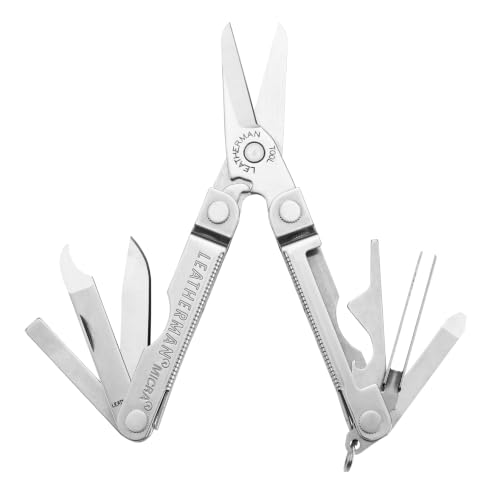
It depends on the carry. For belt carry, the Wave Plus is the best all-round EDC Leatherman ever made. For pocket carry, the Skeletool CX is the only full-function Leatherman that rides like a knife, and for keychain carry the Micra covers the micro-tasks. Most long-term owners eventually run a Wave-class tool for work and a Skeletool or Micra for everything else.
What does Leatherman’s 25-year warranty actually cover?
Leatherman warrants its tools against defects in materials and workmanship for 25 years and, in practice, its service department is known for repairing or rebuilding tools that fail in honest use — owner accounts on Leatherman’s own site describe decade-old tools returned fully rebuilt. Abuse, loss, and cosmetic wear are not defects; retired models like the FREE P4 remain serviceable, with substitution by a comparable model if an exact repair is impossible.
Is the Leatherman FREE P4 discontinued?
Yes. Leatherman’s official site lists the FREE P4 as a retired product that is no longer in production. Retailers still stock it as of this writing, and it remains warranty-eligible, but availability will narrow over time. Buyers who want the magnetic one-handed experience should buy while established stock lasts; buyers who prioritize long-term parts availability should choose a current model such as the Wave Plus.
Wave Plus or Surge — which should I buy?
Buy the Wave Plus unless your work regularly defeats standard-size pliers or you want the blade exchanger’s t-shank versatility. The Surge is bigger in every dimension — pliers, blades, weight — and earns its carry only when its extra capability is used weekly. Occasional heavy work is better handled by the Wave Plus plus a dedicated tool for the big days.
Are Leatherman tools made in the USA?
Leatherman manufactures its multitools in Portland, Oregon, describing them as made in the USA with US and global parts — the FREE P4’s product page states this explicitly, and it is the brand’s long-standing position for its multitool line. Some accessories and sheaths are imported, which Leatherman notes on the relevant product pages.
Can I take a Leatherman on a plane?
Not in carry-on luggage in most jurisdictions — bladed multitools belong in checked baggage. Even bladeless travel is subject to local security decisions. If you fly for work, the practical pattern is a checked-bag Leatherman and a small bladeless keychain tool for the cabin days, accepting that any tool can be questioned at a checkpoint.
Which Leatherman is best for fishing and wet work?
For anglers, the Signal’s light weight, clip carry, and built-in sharpener suit bank and boat days, while the Wave Plus is the better pick if you also want scissors for line and braid — the Signal’s notable gap. All Leathermans here are stainless, but stainless means stain-resistant, not rust-proof: rinse after saltwater, dry before sheathing, and keep a film of oil on the pivots during a coastal season. Salt is the one environment that punishes even this brand’s build, and the rinse habit is the whole defense.
How do I sharpen a Leatherman blade?
Exactly like a small pocket knife blade: match the factory bevel with a guided system or field sharpener, work to a burr, refine, and remove the burr — the step-by-step method in our pocket knife sharpening guide applies directly. Serrated sections need a rod that fits the scallops. The 420HC steel on most models sharpens easily on almost any abrasive, which is one of its underappreciated virtues in the field.