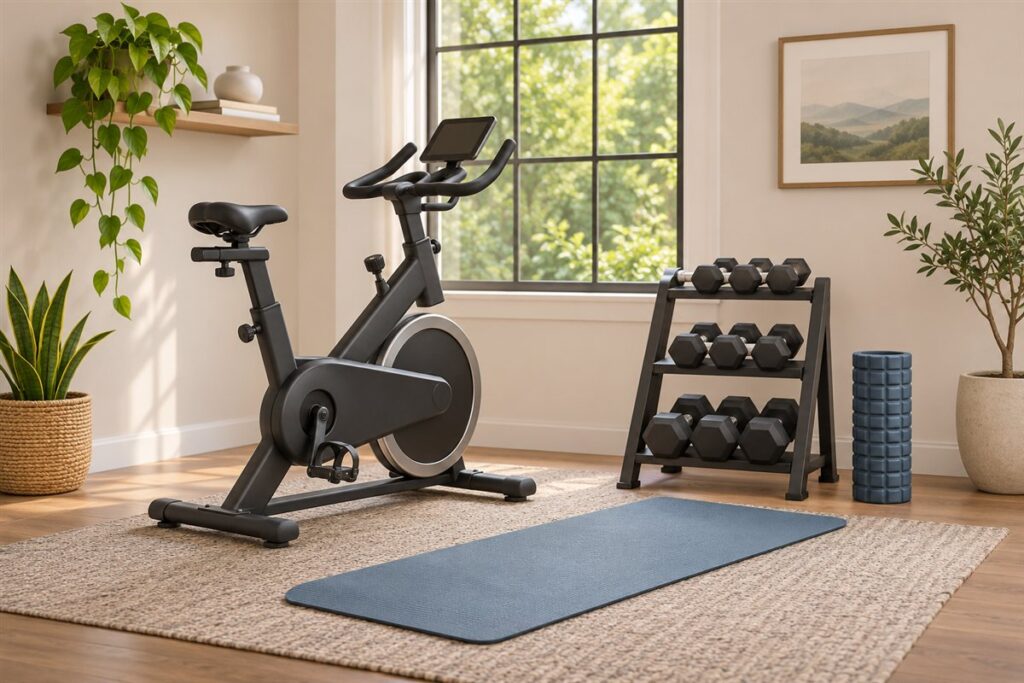
A recumbent exercise bike places the rider in a reclined seat with the pedals out in front. The seat usually has a backrest and a wider base than an upright bike saddle, and many frames have a low step-through opening. We have not used these products ourselves, so this guide focuses on how to choose rather than on claims about any single bike.
Below we go through seat design, resistance, frame shape, console features and the space a bike needs at home. Comfort is personal, so treat every point as something to compare against the maker’s own measurements and your own body size, your room and the way you plan to ride each week.
As an Amazon Associate we earn from qualifying purchases. Links on this site are affiliate links, and they do not change the information we give.
What to Look For
| Factor | Why it matters | What to check |
|---|---|---|
| Seat and backrest | The seat is where you spend the whole session | Look at cushion width, backrest height and whether the seat slides on a rail or adjusts by lever |
| Resistance type | It sets how the pedaling feels and how loud the bike is | Compare magnetic and friction systems and count the listed resistance levels |
| Step-through frame | A low entry makes getting on and off easier | Check the frame height at the lowest point and the pedal distance range |
| Console and programs | Feedback keeps sessions varied | See which readouts and preset programs are included and whether the screen is easy to read |
| Weight capacity | It reflects how the frame is built | Read the maker’s stated user limit and the bike’s own weight |
| Footprint and transport | Recumbent bikes are longer than upright ones | Measure your space and look for transport wheels |
Setup and Care Tips
- Assemble the bike on a flat floor and follow the manual order so every bolt gets tightened at the right stage.
- Set the seat so your knee keeps a slight bend at the far end of the pedal stroke, then re-check after the first few rides.
- Put a mat under the frame to protect the floor and reduce movement.
- Wipe down the seat and handles after each session, since sweat can wear on fabric and plastic over time.
- Check pedal straps, seat rail bolts and the console batteries every few weeks.
Mistakes to Avoid
- Skipping the dimensions. Measure the room, the door and the stairs the bike must pass through.
- Choosing by console size alone while ignoring seat comfort and frame build.
- Ignoring the pedal distance range, which matters if riders of different heights will share the bike.
- Overlooking power needs. Some consoles use batteries, while others need a wall outlet.
- Forgetting the manual, assembly time and the warranty terms the maker lists.
FAQ
How is a recumbent bike different from an upright bike?
A recumbent has a reclined seat with a backrest and forward pedals, while an upright bike has a saddle above the pedals. Many people simply prefer the seating position, and the choice often comes down to comfort and space.
Do I need a magnetic resistance system?
Magnetic systems are commonly described as smooth and quiet because nothing rubs against the flywheel. Friction types can work too, but they may need more upkeep, so read what the maker says about wear parts.
The Short Version
Pick a bike that suits your height, fits your room and feels comfortable on the seat. Compare resistance type, frame shape and console features against how you plan to ride, and read the maker’s measurements and warranty before you decide.