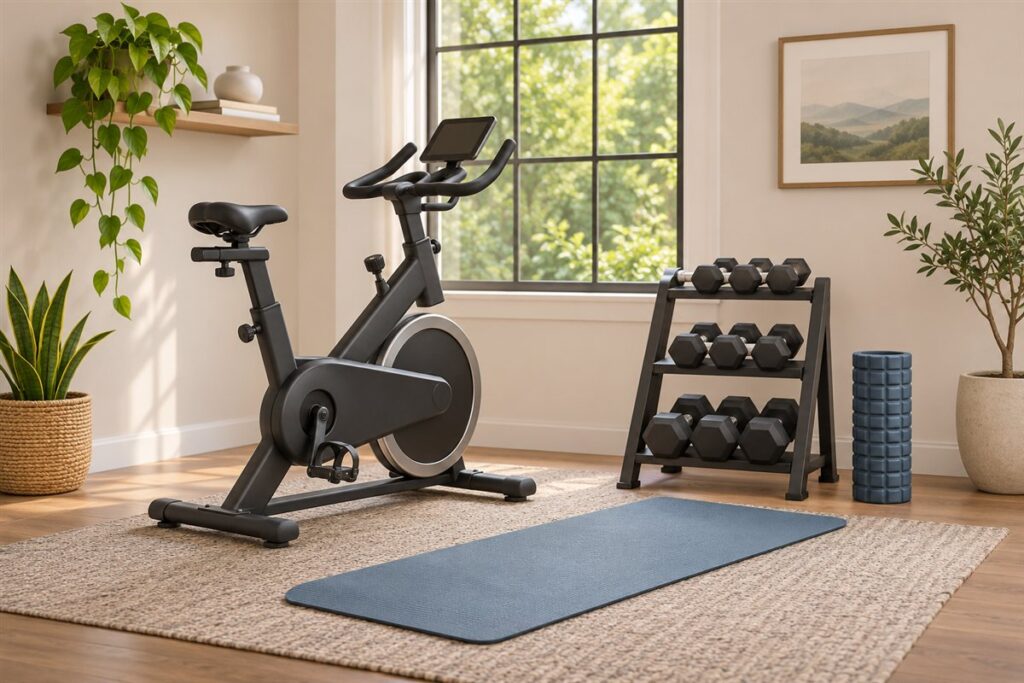
A vertical climber is a compact cardio machine that mimics climbing a ladder, and its design varies a lot between models. We have not used these products ourselves, so this guide offers no claims of personal use. It focuses on construction and features: frame build, step range, resistance method, handle layout and how the unit folds away.
Before comparing listings, check the room you plan to use. Ceiling height matters because the machine adds your reach to its own height, and floor space matters for storage. Read the sections below, note which features matter most to you, and then compare the maker details carefully. It also helps to picture where the machine will live between sessions, since a model that folds flat can be tucked behind a door, while a fixed frame needs a permanent corner.
As an Amazon Associate we earn from qualifying purchases. Links on this site are affiliate links, and they do not change the information we give.
What to Look For
| Factor | Why it matters | What to check |
|---|---|---|
| Frame build | The frame carries every movement you make | Look for steel tubing, welded joints and the maker stated weight limit |
| Step range | Longer steps feel different from short ones | Compare the stated stroke length and handle reach in the listing |
| Resistance method | Magnetic, hydraulic and friction systems differ in noise and feel | Read how the maker describes adjustment and whether it is stepped or continuous |
| Console display | A readout helps you follow time and effort | Check which figures show and whether it runs on batteries |
| Footprint and height | The unit must fit your room and ceiling | Compare assembled dimensions with your space, including overhead clearance |
| Folding design | Storage matters in small homes | Check for a fold hinge, transport wheels and the folded size |
| Foot and hand grips | Contact points affect how steady the machine feels | Look at pedal size, strap or non slip surface and handle texture |
Setup and Care Tips
- Measure ceiling height with your arms raised before choosing a model.
- Place the machine on a flat mat so it does not slide or mark the floor.
- Check every bolt after assembly and again every few weeks.
- Wipe the handles and pedals after use and keep moving parts clear of dust.
- Fold and store it according to the manual so hinges are not strained.
Mistakes to Avoid
- Ignoring ceiling clearance until the box is already opened.
- Buying a lightweight frame for a heavier user without checking the weight limit.
- Skipping the floor mat and letting the base slide.
- Overlooking the noise level described by the maker, which matters in shared homes.
- Assuming all models fold equally small.
FAQ
How much room does a vertical climber need?
Plan for the footprint plus your overhead reach. Makers usually list assembled height and base size, so compare those numbers with your ceiling and the clear floor space around the machine.
Are folding models worth it?
If you share a living space, a fold hinge and transport wheels make storage far easier. If you have a permanent corner, a fixed frame may feel more solid, so weigh convenience against construction.
The Short Version
Check your ceiling and floor space first, then compare frame build, step range and resistance style. Pick a model whose folding design and display suit how you plan to use it at home.