A telescoping magnet is a small magnet on the end of a shaft that slides out like an antenna. It helps you fish a dropped screw, nut or washer out of an engine bay, a gap behind a bench or the bottom of a drain pan. The main choices are the reach, the pull the maker lists, the size of the head and how the handle feels in the hand.
The six tools below run from a pocket sized 25 inch pen to a 39 inch wand. Lengths, pull figures and materials come from each listing page and are the makers’ own claims. We have not used these tools ourselves. Where a listing is vague or uses a different product name, we say so.
As an Amazon Associate we earn from qualifying purchases. Links below are affiliate links, and they do not change the product information we give.
What to Look For
| Feature | Why it matters |
|---|---|
| Reach | Compare the collapsed length with the extended length |
| Listed pull | A higher figure suits heavier parts, and it is the maker’s claim |
| Head | A small head fits narrow gaps, an angled head reaches around corners |
| Grip | A cushioned handle helps with a long extended shaft |
In this guide
Specs at a Glance
| Tool | Reach | Listed pull | Notes |
|---|---|---|---|
| NoCry | 7 in to 30 in | 25 lb | Stainless steel; 0.87 in head; pocket clip |
| CRAFTSMAN CMMT98316 | 5 in to 25 in | 2 lb | Metal build; 1.76 oz; lifetime warranty |
| General Tools 394 | 13 in to 27 in | 5 lb | Neodymium magnet; ball-and-socket joint with lock |
| SE 30 in | Up to 30 in | 15 lb | Stainless steel; cushion grip; 2.4 oz |
| Performance Tool W9115 | 7 in to 30 in | 16 lb | Cushion grip; limited warranty |
| Magnet Pal 39 in | Up to 39 in | 12 lb | Neodymium magnet; rubber handle; named GrabbitSTICK in a bullet |
The 6 Best Telescoping Magnets
Top pickBest for a toolbox that needs a strong, compact magnet
1. NoCry Telescoping Magnetic Pickup Tool, 25 lb, 30 in
A stainless steel pickup tool that is 7 inches long when closed and extends to 30 inches. The maker lists a 25 pound pull force, a 0.87 inch head for narrow gaps, a non-slip cushioned handle and a pen style pocket clip. A surface coating is described as rust resistant, with a note to avoid long exposure to water.
Suits: a toolbox that needs a strong, compact magnet. Strengths: the highest listed pull in this group and a short closed length. Weaknesses: a fixed straight head. Skip it if you need to reach around a bend.

Best for screws, nuts and other light hardware
2. CRAFTSMAN Telescoping Magnetic Pickup Tool (CMMT98316)
A compact pen sized tool whose shaft runs from 5 inches to 25 inches. The listing gives a magnetic tip that lifts up to 2 pounds, a metal build and a weight of 1.76 ounces. A full lifetime warranty is listed.
Suits: screws, nuts and other light hardware. Strengths: a very short closed length and a lifetime warranty. Weaknesses: the lowest listed lift here. Skip it if you want to pull heavier parts.

View CRAFTSMAN Telescoping Magnetic Pickup Tool (CMMT98316) on Amazon

Best for tight engine bays and corners
3. General Tools 394 Magnetic Pick Up Tool, 27 in
A chrome-plated steel arm that extends from 13 inches to 27 inches, with a neodymium magnet and a listed 5 pound pull. A dual ball-and-socket joint with a lock lets the head sit at many angles, and the grip is cushioned vinyl. The listed weight is 6.24 ounces.
Suits: tight engine bays and corners. Strengths: an adjustable head angle. Weaknesses: longer when closed than the pen styles. Skip it if you want the lightest pocket tool.


Best for general shop and household retrieval
4. SE 30-inch Telescoping Magnetic Pick-Up Tool
A stainless steel wand with a black cushion grip handle that extends to 30 inches. The maker says the magnet has a 15 pound pull capacity. The listing weight is 2.4 ounces.
Suits: general shop and household retrieval. Strengths: a long reach and a mid-range pull in a light body. Weaknesses: the listing does not give a closed length. Skip it if you need the closed size before buying.


Best for heavier dropped tools and parts
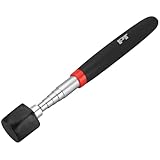
5. Performance Tool W9115 16 lb. Telescoping Magnetic Pickup Tool
A metal tool whose heavy duty magnetic tip is listed to retrieve up to 16 pounds. The shaft extends from 7 inches to 30 inches and the handle has a cushion grip. A limited warranty is listed. The listing does not name the magnet material.
Suits: heavier dropped tools and parts. Strengths: a high listed lift and a short closed length. Weaknesses: sparse detail on materials. Skip it if you want the magnet type spelled out.
View Performance Tool W9115 16 lb. Telescoping Magnetic Pickup Tool on Amazon

Best for long reaches under cabinets or machines
6. Magnet Pal MagnetStick 39 in Telescoping Magnetic Pickup Tool
The longest tool here, with a neodymium magnet and an anti-rust finish, a rubber handle and a listed reach of 39 inches. The maker’s bullets say it holds up to 12 pounds, and they refer to the tool as GrabbitSTICK rather than MagnetStick, so the product name is not consistent on the page.
Suits: long reaches under cabinets or machines. Strengths: the longest listed extension. Weaknesses: a mixed product name in the text. Skip it if you work in short spaces.

Care and Setup
- Pull the shaft out one section at a time and keep the sections straight.
- Stay within the weight the maker lists, as a long shaft can bend.
- Wipe oil and metal dust from the tip after use.
- Keep the magnet away from watches, cards and phones.
Mistakes to Avoid
- Expecting the magnet to lift aluminum, brass or most stainless parts.
- Counting on the listed pull when the shaft is fully extended.
- Picking a long wand for a tight space where a pen style fits.
- Leaving the tip covered in metal chips.
What a Magnet Can and Cannot Retrieve
A telescoping magnet only works on materials that magnets attract, and that is the first thing to settle before buying. Iron and most steels are strongly attracted, which covers the screws, nuts, washers, bolts, drill bits and small tools that most people drop. Many other metals are not. Aluminum, brass, copper, zinc and most plastics ignore a magnet entirely, so a dropped brass fitting or an aluminum bracket will not come up on the tip.
Stainless steel needs extra care. Some stainless grades are attracted weakly, and others barely at all, depending on their composition and how the part was formed. If your project uses stainless fasteners, test one with a fridge magnet or another magnet before relying on the tool to find a lost one. The same caution applies to plated screws and to hardware whose coating hides the base metal.
Shape and surface also affect results. A flat piece that sits flush against the tip holds better than a round or irregular one, and an oily or dirty part holds less well. Parts that are partly hidden under debris may need a wiggle to attach. A magnet can also pull up loose metal swarf along with the part you want, so check the tip after every retrieval.
It is worth treating this tool as a way to retrieve, not to hold. Once the part is out of the awkward spot, take it by hand or drop it into a tray. If you plan to recover small non-magnetic parts, a flexible claw or a grabber is a better companion tool.
Understanding Pull Ratings in Real Use
Listings quote a pull rating in pounds, such as the 2, 5, 12, 15, 16 and 25 pound figures above. These are the maker’s claims, and it helps to understand how they are likely measured. A pull rating usually describes the force needed to separate the magnet from a flat, clean piece of steel when pulled straight away under ideal conditions. Real retrievals are rarely ideal.
Several things reduce the effective grip. A small air gap from paint, rust or oil weakens the magnetic hold. A rounded or thin part touches less of the tip. Pulling at an angle makes it easier to peel the part off. A fully extended shaft can flex and wobble, which adds sideways force and may shake the part loose. In practice you can treat the listed figure as a ceiling and expect less in the field.
For everyday jobs, a high rating is not always necessary. Small screws and nuts weigh a tiny fraction of even the lowest figure above. A higher rating helps with heavier dropped items such as sockets, wrenches or larger bolts, or with reaching through a gap where the part will hang from the tip. If you need to lift something heavy, choose a stronger tool and keep your hand clear in case it falls.
Do not exceed the weight the maker lists. A thin telescoping shaft is not a lever, and prying with it can bend or break the sections. Use it to pick up objects, not to move or pry them.
Reach, Closed Length and Shaft Design
Two lengths matter: how far the tool extends and how short it collapses. A long reach helps with deep engine bays, gaps behind appliances and the bottom of drain pans. A short closed length lets you keep the tool in a shirt pocket, a tool bag or a glove box. The listings above range from compact pen-style designs to long wands, and the trade-off is real: longer tools generally collapse to longer lengths and have more flex when extended.
The shaft is made of nested tubes that slide out and lock by friction or by a twist. Check how many sections it has, since more sections mean a longer reach but also more joints that can wobble. When extended, the tool should hold its length without sliding back as you reach. Pull each section out gently and square, because forcing it can bend the thin tubes.
Some tools include a pivoting head, such as the ball-and-socket joint one listing mentions. A joint helps you angle the magnet around obstacles, but it can also loosen with use. A fixed head is simpler and stiffer. Think about where you will use the tool most. Tight engine compartments and spaces behind drawers favor an adjustable head, while straight shafts suit deep, open holes. A cushioned or rubber handle makes a long tool easier to hold steadily. Choose a reach that suits your longest realistic need rather than the longest on offer.
Safe Use Around Electronics, Machinery and Hot Parts
Magnets are simple but deserve respect in a few situations. Keep strong magnets away from items that can be damaged or disturbed by them, such as watches, credit cards, hard drives and other magnetic storage. The lists above include a reminder about phones and cards for this reason. People with certain implanted medical devices are often told to keep magnets at a distance, so check with your medical provider if that applies.
In the workshop, never use a metal telescoping shaft near exposed live electrical parts. Metal conducts electricity, and a long probe can bridge terminals or touch a live component. Turn off power and disconnect the battery or supply before reaching into electrical compartments, and follow the equipment’s manual. Likewise, keep the tool clear of moving machinery. Do not reach into running engines, belts or fans with an extended wand.
Hot parts are another hazard. A magnet picked part from an engine bay may be hot, and the tip can carry it out in a hurry. Let the engine cool before you retrieve parts, and be ready for the part to drop. The tool is also not insulated, so heat can travel up the shaft toward your hand.
When you pull something out of a tight space, do so slowly. A sudden jerk can shake the part off and send it somewhere worse. Wipe any metal filings off the tip after use, and watch for sharp edges on retrieved parts.
Choosing by Task and Knowing When to Replace
The best tool depends on the jobs you do most often. For general mechanical work, a mid-length wand with a reasonable pull and a closed length that fits your toolbox is usually enough. For quick fixes around the home, such as retrieving a screw from a floor vent or a drain, a pen-style tool in a drawer is handy. For deep or awkward spaces, a longer or jointed tool is worth the extra bulk. If you work with heavier steel parts, favor a higher listed pull and a sturdier shaft.
Compare listings for details that affect daily use: the closed length, the extended length, the weight, the grip, whether there is a clip to carry it and what the warranty says. Pay attention to material descriptions, and be careful with listings where the product name or figures contradict each other, as some do. Keep in mind that a stronger magnet does not make a poor-quality shaft any stiffer.
After use, wipe the tip, collapse the shaft gently and store the tool dry. Replace it if the sections will not stay extended, the shaft is bent, the grip is loose or the magnet is chipped or cracked, since a damaged magnet loses strength and can throw fragments. If the tip no longer holds a part that it used to lift easily, clean it first, then consider replacing it. Since the tools are inexpensive and simple, keeping a spare in each toolbox or vehicle is a practical habit.
Which telescoping magnet should you buy?
Buy the telescoping magnet whose reach, closed length and listed pull fit the place where you usually drop things. Here is how the six tools above map to common needs.
- A strong listed pull in a small body: the NoCry lists the highest pull in this group and closes to a short length with a pocket clip.
- The shortest pocket size and light hardware: the CRAFTSMAN CMMT98316 is the pen-sized choice, with a lifetime warranty listed. Its listed lift is the lowest here, so it suits screws and nuts.
- Tight engine bays and corners: the General Tools 394 has an adjustable ball-and-socket head with a lock.
- General shop and household retrieval: the SE 30 in is a light wand with a cushion grip. The listing gives no closed length, so confirm that before you buy.
- Heavier dropped tools and parts: the Performance Tool W9115 lists a high lift and a short closed length, though the listing does not name the magnet material.
- Long reaches under cabinets or machines: the Magnet Pal 39 in lists the longest extension. Its text mixes two product names, so check that you are buying the item you expect.
If you only pick up small fasteners, a pen-style tool in a drawer is usually enough. If you work in deep bays, favor the longer wands and an angled head. A telescoping magnet tool is cheap enough that many people keep one at home and one in the vehicle.
Remember that listed pull is a best-case claim and drops as the shaft extends, so choose a figure well above the weight of what you drop.
What to check before you buy a telescoping magnet, and who should skip it
Before you buy a telescoping magnet, check the closed length, the extended reach, the listed pull and what the parts you drop are made of. Then be honest about whether a magnet can do the job at all.
- The collapsed length, so it fits your pocket, toolbox or glove box.
- The extended reach compared with the deepest gap you work in.
- The listed pull, remembering it is the maker’s claim.
- Head size and whether the head angles.
- Grip type, since a long shaft is easier to control with a cushioned handle.
- Warranty wording and return terms on the listing.
- Whether the product name and the bullets agree with each other.
Trade-offs: a longer wand flexes more, a fixed head cannot go around corners and a joint can loosen with use. A higher listed pull does not make a thin shaft stiffer.
Who should skip it: anyone who mostly loses aluminum, brass, copper or plastic parts, because a magnet will not hold them. Some stainless fasteners are only weakly magnetic as well. In those cases a flexible grabber or claw is the better tool.
When you are ready, compare the picks above, check the current listing for size and what is included, then choose the one that fits how you will use it.
How Each Pick Behaves on Real Retrievals
A telescoping magnet earns its keep in the worst moments: a nut dropped into an engine bay, a screw rolled under a cabinet, a socket vanished into a wall cavity. The six picks here differ in pull strength, reach and build, and the right choice depends on which of those failure moments you meet most often.
NoCry Telescoping Magnetic Pickup Tool: the strong, long generalist
The NoCry pick pairs a high stated pull with a long extension, which makes it the default choice for engine bays and workshop floors where the dropped part is a real fastener, not a paper clip. Its strength is headroom: it lifts heavier parts with margin to spare, so a part that would barely cling to a weaker magnet rides securely. If you buy one magnet for a mixed garage, this is the pattern to start from.
CRAFTSMAN Telescoping Magnetic Pickup Tool: the trusted toolbox name
The Craftsman pick suits buyers who want a straightforward, well-finished tool from an established tool line for a home garage or a professional box. It covers the everyday retrieval range: dropped sockets, bolts and hardware in and around vehicles and appliances. Choose it when you value consistent build quality and easy replacement within a familiar brand ecosystem over the longest reach or the highest pull figure.
General Tools 394 Magnetic Pick Up Tool: the classic shop pattern
The General Tools 394 follows the long-standing pen-and-wand pattern that mechanics have carried for decades. It is a sensible pick for a shirt pocket or a top tray, always at hand for the small retrievals that happen many times a day. Tools in this pattern live or die by their shaft smoothness and tip condition, so treat it as a precision accessory: keep the tip clean and the sections sliding freely and it will serve for years.
SE 30-Inch Telescoping Magnetic Pick-Up Tool: reach on a budget-minded pattern
The SE pick emphasizes extended reach in a simple, affordable format, which suits homeowners who need a magnet a few times a year for gutters, behind appliances and under furniture. Occasional users get more value from reach than from premium hardware, because the tool’s job is to save a rare but miserable half hour of dismantling. Store it somewhere you will remember during that half hour; a magnet you cannot find retrieves nothing.
Performance Tool W9115: the mid-strength workhorse
The Performance Tool pick sits in the productive middle: enough pull for genuine hardware, a practical extension, and a format aimed at working garages rather than display. It suits DIY mechanics who drop fasteners often enough to want a dedicated tool in the box rather than a novelty in a drawer. As with all mid-range magnets, its real-world limit will be set by contact: a flat, clean seating on the part lifts far more than an edge contact on a greasy bolt.
Magnet Pal MagnetStick: the longest reach in the group
The MagnetStick extends the farthest of these picks, and that extra length is its whole argument. It is the one to consider for deep engine bays, tall machinery, ductwork and yard cleanup where the part is simply beyond the reach of a standard wand. The trade-off of any very long tool is control: at full extension the tip moves more with every hand movement, so retrieve slowly and let the magnet find the part rather than sweeping quickly past it.
Head-to-Head: Pull, Reach and Control
Why the strongest magnet is not always the best magnet
A very strong magnet is harder to steer in a crowded engine bay, because it grabs every ferrous surface it passes: brackets, bolt heads and the block itself. Retrieval becomes a fight to slide the tip free without knocking the target part deeper. A moderate magnet, by contrast, can be guided along surfaces and will preferentially hold the loose part you are hunting. Match strength to the part: heavy sockets and tools justify a strong pick, while small screws and clips in tight quarters are often retrieved more easily with a gentler one. Many experienced mechanics own both, which is cheaper than it sounds because these are simple tools.
Reach versus stiffness at full extension
Every telescoping shaft flexes more as it extends, and a part hanging from the tip adds leverage that magnifies the flex. A tool that feels rigid at half extension can feel like a fishing rod at full stretch. When you compare picks, judge reach together with how you will use it: vertical lifts from above forgive flex, because the load hangs straight, while horizontal reaches into machinery punish it, because the shaft must cantilever the part’s weight. If your typical retrieval is horizontal, a slightly shorter, stiffer tool will outperform a longer, whippier one.
Pocket wand versus long wand
The pen-style tools in this guide disappear into a pocket and get used constantly for small parts; the long wands live in the garage and come out for the deep drops. They are complements, not rivals. If you can only own one, choose by your most common drop: bench and assembly work favors the pocket wand, vehicle and appliance work favors the long wand.
Retrieval Technique: Getting the Part Out, Not Just Touching It
Before you extend the magnet
Stop and look first. Use a flashlight to locate the part and plan the path out before the magnet goes in, because blind sweeping pushes parts deeper as often as it finds them. Note what the part must pass on the way out: hoses, brackets and wiring all snag a part riding on a magnet tip. Decide whether the part should be lifted vertically, slid along a surface, or drawn to a wider opening where your fingers can take over. Ten seconds of planning routinely saves ten minutes of fishing.
The lift itself
Extend only as much shaft as you need; a shorter shaft is a stiffer, more controllable shaft. Approach the part slowly and let the magnet seat fully on a flat face of the part before lifting. Lift vertically and steadily, without swinging, and keep the part against a guiding surface where possible so a small knock does not strip it off. If the part must travel far, pause at a stable midpoint, shorten the shaft, and continue. When the part reaches the opening, take it with your fingers rather than shaking it off the tip over the same hole it fell into.
When the part will not stay on
Work through the causes in order. Contact: reposition so the tip meets a flat, clean area of the part rather than an oily edge. Load: if the part is at the magnet’s limit, lighten the lift by sliding it along a surface instead of suspending it. Interference: if the part keeps catching on the same obstruction, change the exit path rather than pulling harder. Magnet condition: wipe the tip, because a tip coated in metal filings presents a fuzzy, weakened face to the part. Only after those four checks should you conclude the magnet is too weak for the job and reach for a stronger pick or a grabber tool.
Troubleshooting and Limits
The magnet picks up everything except the target
In a crowded bay, shield your approach: come at the target from the direction with the fewest ferrous neighbors, and move slowly so incidental contact does not snap the tip sideways. If the target sits against a steel surface, slide the tip along that surface into the part rather than descending onto it, so the part transfers to the tip without the tip gluing itself to the surroundings.
The shaft sections slip or will not stay extended
Slipping sections are usually dirty or slightly bent sections. Clean the shaft, extend it fully, and inspect for a bend by rolling it on a flat surface. A minor bend can sometimes be eased straight by hand; a kinked section is a replacement decision, because it will keep collapsing under load. Keep sections clean and dry in storage so grit does not score the sliding surfaces.
The part is non-magnetic
Aluminum, brass, copper, plastic and most stainless hardware will not respond to any magnet in this guide, and no upgrade in pull strength changes that. Confirm what the dropped part is made of before you spend twenty minutes fishing. For non-magnetic parts, the right tools are a flexible grabber, a mirror and light to see the part, and patience. This is also why a magnet and an inspection mirror are natural partners in a kit: one finds, the other retrieves, and each covers the other’s blind spot.
Choosing by Situation
Home garage and DIY mechanic
Buy one strong, long generalist and keep it with the socket set it most often rescues. Your drops are sockets, ratchets and fasteners around vehicles, and a single capable wand covers nearly all of them. Add a pocket wand later if you find yourself doing bench work with small hardware.
Professional technician
Your time makes retrieval speed a real cost, so own the pair: a pocket wand for constant small work and a long, strong wand for deep drops. Replace a magnet when its shaft gets sloppy rather than fighting it daily; a worn tool that adds a minute to every retrieval is the most expensive tool in the box.
Homeowner and occasional user
Reach matters more than refinement for behind-appliance and under-furniture rescues, so the longer, simpler picks fit. Store the magnet on the side of the refrigerator or inside the toolbox lid, somewhere it can be found in the moment, and it will repay its modest cost the first time it saves a dismantled appliance.
Workshop, makerspace and yard
For benches and floors littered with dropped screws and offcuts, the longest-reach pick doubles as a sweep tool for cleanup around machinery, keeping hands away from sharp swarf. Pair it with a magnetic tray at the bench so retrieved hardware has a home and stops migrating back onto the floor.
Care and Storage
Wipe the tip after every use in a dirty environment; accumulated filings weaken the working face and can scratch finished surfaces. Collapse the shaft before storing, store the tool dry, and keep it away from sensitive electronics, magnetic media and precision measuring tools that should not sit against a strong magnet. Periodically extend the shaft fully and check that each section locks and slides as it should. Treated this way, a telescoping magnet is close to a lifetime tool: it has no blade to dull and no battery to die, only a shaft to keep straight and a tip to keep clean.
Safety and Good Practice Around Machinery
A telescoping magnet is a simple tool, but the places it works are not always simple. Keep it out of running machinery entirely: never reach into an engine, fan or drive that is operating or could be started, and disconnect power where a machine could cycle on its own. Around a vehicle battery, work deliberately and keep the metal shaft from bridging terminals or contacting exposed connections; a slim metal wand is an excellent conductor in exactly the places you least want one. Near hot components, remember the shaft conducts heat back to your hand, so let an engine cool before a long fishing session, or accept a shorter attempt and return when things have cooled. Keep strong magnets away from pacemakers and similar medical devices, following the guidance that applies to the device, and keep them off phones, cards and precision instruments in storage. None of this is complicated, but all of it is easier to remember as a habit formed before the first dropped bolt than as a lesson learned during one.
Five Retrievals, Walked Through
Socket dropped into an engine bay
Spot it with a light first; sockets usually lodge on the undertray or a crossmember rather than falling through. Enter from above with the shaft only as extended as needed, seat the tip on the socket’s flat top, and lift straight up, shortening the shaft as the socket rises so a sway cannot knock it off. Take it by hand at the top. If it sits on a tray you cannot reach past, draw it along the tray to the edge opening instead of lifting through the crowded middle.
Screw rolled under a heavy appliance
Work from the front gap with the magnet nearly horizontal and the shaft fully extended, sweeping slowly in overlapping passes. Small hardware gives a faint but distinct tug when the tip passes over it; move at a pace that lets you feel it. Once attached, drag the screw along the floor to the front rather than lifting, because floor contact keeps it seated.
Fastener dropped inside a wall or cabinet void
Feed the magnet through the opening the fastener fell through, keeping the shaft as straight as the path allows, since every bend costs control. Retrieve to the opening, then finish with fingers or a grabber. If the part is brass or aluminum, skip the magnet entirely and go straight to light, mirror and grabber.
Hardware scattered after a bench accident
For a spill of mixed screws and small parts on the floor, a long magnet used as a slow sweep collects the ferrous majority quickly and keeps your knees and hands out of the spill. Sort over a tray, wipe the tip clean between passes, and finish with a visual check for the non-magnetic remainder.
Key or tool dropped outdoors
Grass and gravel hide metal and defeat eyesight, but a magnet swept low and slow finds ferrous items by feel. Work in a grid over the likely area, extending the search outward from the last known spot. Clean the tip often, because soil and grit coat it quickly outdoors, and a coated tip loses the sensitivity the search depends on.
Pairing Tools: Magnet, Mirror, Light and Grabber
The magnet is one member of a retrieval kit, and it works best with its partners. A bright light finds the part and stays useful at every step. An inspection mirror sees around the corners a light cannot reach and confirms whether a part is magnetic-era steel or a lookalike alloy before you fish. A flexible grabber handles the non-magnetic parts and the parts too large or awkward for a magnet face. Owners who assemble this small kit once stop improvising with wire, tape and hope, and the first full rescue with the right four tools usually converts them permanently. Every pick in this guide fits that kit as its magnetic member; choose the one whose reach and strength match your machinery, and the rest of the kit is the same either way.
What Wear Looks Like and When to Replace
A telescoping magnet rarely fails suddenly; it declines. The signs arrive in a predictable order. First the tip needs wiping more often to hold parts it once grabbed easily, which usually means the face is scratched or the magnet has been weakened by a hard impact or high heat. Next the shaft develops play, so the tip wanders when you aim it, and precision retrievals in crowded bays get slower. Then a section begins to slip under load, collapsing at the moment of the lift. Any one of these is manageable; together they mean the tool is costing you time on every job. Because these are simple, inexpensive tools, replacement at that point is the economical choice, and the retired magnet still serves for undemanding duty like sweeping a garage floor. Judged that way, the real buying question is not which magnet lasts forever, but which one fits your work well enough that its years of service feel effortless, and that is decided by reach, strength and control in your hands, not by any single figure in a listing.
A Quick Pre-Purchase Bench Test
If you are choosing between two picks in a store or comparing a new arrival with the magnet you already own, three quick tests tell you most of what a season of use will. First, extend the shaft fully and hold it horizontal with a typical socket on the tip: the droop and wobble you feel is the control you will have at full reach. Second, work every section in and out several times; gritty, catching sections on a new tool will not improve with use. Third, test the tip on the actual hardware you drop most, lifting it from a flat surface at an angle rather than straight up, because real retrievals are rarely vertical. A magnet that passes all three with your own parts has effectively been interviewed for your exact job. One that fails should not be talked into the role by a higher pull figure in its listing, because the figure was measured in perfect contact conditions that a greasy engine bay will never offer you.
Keep the magnet you choose in the place the drops happen, not in the place that looks tidy. A magnet stored with the socket set, in the vehicle kit or on the bench it serves will be in your hand within seconds of a drop, and seconds matter because a part’s location is clearest in memory the moment it falls. That placement habit, more than any specification, is what turns a telescoping magnet from an occasional gadget into a tool you would replace the same week you lost it.
Telescoping Magnet FAQ
What will a telescoping magnet pick up?
Iron and many steel parts such as screws, nuts and washers. Makers note that non-magnetic metals will not stick.
Which tool reaches the farthest?
The Magnet Pal lists 39 inches. The NoCry, SE and Performance Tool lists 30 inches.
Will a telescoping magnet pick up stainless steel?
It depends on the grade. Some stainless steels are weakly magnetic and others are not at all, so test a sample piece with a magnet first.
Why does my magnet drop parts at full extension?
The extended shaft flexes, the contact may be uneven and the listed pull is measured under ideal conditions. Move slowly and use a stronger tool for heavier parts.
How strong a magnet do I need?
Small screws and nuts need very little. Choose a higher rating for sockets, bolts and heavier dropped tools, and remember the listed figure is a best case.
Can I use it near a car battery or live wiring?
Avoid it. The metal shaft can bridge terminals or touch live parts. Disconnect power first and follow the equipment manual.
Is a magnet safe for my phone and cards?
Keep magnets away from phones, credit cards, watches and magnetic storage, which can be disturbed by strong magnets.
Can it pick up aluminum or brass parts?
No. Those metals are not attracted to magnets. Use a grabber or a claw tool for them.
How do I clean the tip?
Wipe off oil and metal chips with a dry cloth. A thin piece of tape pressed on and pulled off can lift fine filings.
What is a telescoping magnet used for?
It retrieves dropped steel hardware such as screws, nuts, washers and small tools from tight or deep spaces. Mechanics use it in engine bays, and households use it for drains, vents and gaps behind furniture.
What is the difference between a pen-style and a long wand magnet?
A pen-style tool closes to a very short length and fits a pocket, while a long wand reaches deeper but is bulkier and flexes more. Pick based on how deep your usual gaps are.
Can a telescoping magnet damage a phone or watch?
Strong magnets can disturb watches, cards, hard drives and some electronics, so keep the tool away from them. Store it in a separate part of the toolbox.
Why does my magnet pick up metal chips along with the part?
Magnets attract any ferrous debris near the tip. Check the tip after each retrieval and wipe it clean, or press tape on the tip and pull it off to lift fine filings.
Do I need a magnet with a lifetime warranty?
Not necessarily. A warranty is a useful extra on a tool that can bend, but read what it covers on the listing, since terms vary.
Can I use it to pull a part out of a hot engine?
Let the engine cool first. A hot part can drop quickly, and heat can travel up a metal shaft toward your hand.
The Short Version
For a strong pull in a small body, the NoCry. For the shortest pocket size, the CRAFTSMAN. For an adjustable head, the General Tools 394. For a light 30 inch wand, the SE. For a higher listed lift, the Performance Tool. For the longest reach, the Magnet Pal.