Disclosure: As an Amazon Associate, umtsmarttool.com earns from qualifying purchases. Links to Amazon on this page are affiliate links; they cost you nothing extra. Prices and availability change often, so check the current Amazon listing before you buy.
Best water dispenser for small spaces under $75: The Complete Guide
In this guide
Where to purchase
This page is our complete finest water dispenser for small spaces under $75 handbook, with every pick, criterion and caveat in one place.
Our top selection is the Avalon Premium Countertop Water Cooler Dispenser. The complete shortlist:
- Avalon Premium Countertop Water Cooler Dispenser — Finest Overall for Compact Spaces (check price on Amazon)
- Avalon A11-CTTL Premium Countertop Water Cooler Dispenser — Finest 3-Temperature Countertop (verify price on Amazon)
- Primo Ceramic Countertop Water Crock with Stand (900114) — Best Countertop Crock (verify price on Amazon)
- Primo Portable Water Unit (manual pump) — Smallest Footprint of All (prose-only, no verified link)
- Brio 130 Series Top-Load Water Cooler Dispenser (CLTL130SS) — Finest Slim Floor Model (verify price on Amazon)
- Costway Top Loading Water Dispenser — Best Value Flooring Model (prose-only, no verified link)
Read the full guide ↓
Best water unit for compact spaces under $75: What Actually Matters
Finding the right best water unit for small spaces under $75 begins with a simple truth: the best dispenser is the one your home actually uses daily, not the one with the longest feature line-up. In a small space every appliance has to justify the square footage it rents, and a water unit is no exception: the correct compact or countertop model replaces a fridge pitcher, a kettle routine and a case of small jugs all at once.
We constructed this shortlist from manufacturer specifications, certification listings and recurring owner feedback instead of marketing copy, and any product we could not tie to an exact verified listing is discussed in prose only. For apartments, dorms and compact kitchens, the deciding factors are footprint, counter clearance and designs that give floor space rear, and those priorities shape every ranking, badge and verdict that follows.
Honest tier note: compact-space shoppers get more honest option under $75 than under $50, yet floor-standing electric coolers still mostly begin above this band, therefore the countertop designs lead and the floor models are labelled as stretch picks.
Related reading in this cluster: Water Dispenser Buying Guide Water Dispenser Buying Guide, How To Choose A Water Dispenser How To Choose A Water Dispenser and Water Dispenser Pros And Cons Water Dispenser Pros And Cons go deeper on the decisions summarised here.
Quick Selections
| Selection | Badge | Key spec |
|---|---|---|
| Avalon Premium Countertop Water Cooler Dispenser | Finest Overall for Compact Spaces | Countertop top loading layout |
| Avalon A11-CTTL Premium Countertop Water Cooler Dispenser | Finest 3-Temperature Countertop | Countertop upper loading design |
| Primo Ceramic Countertop Water Crock with Stand (900114) | Best Countertop Crock | Ceramic crock unit for 5 gallon jugs |
| Primo Portable Water Dispenser (manual pump) | Smallest Footprint of All | Manual pump that fits standard bottle caps |
| Brio 130 Series Top-Load Water Cooler Dispenser (CLTL130SS) | Best Slim Flooring Model | Top loading for 3 and 5 gallon jugs |
| Costway Top Loading Water Dispenser | Finest Value Floor Model | Upper loading for 3 or 5 gallon jugs |
How These Selections Were Chosen
Every model in this guide had to clear the same bar ahead of badges were discussed. Models that only exist as vague marketplace listings, with no stable manufacturer specification behind them, were left out or kept prose-only. We compared loading style, temperature count, safety locking, upkeep method and certification from manufacturer specifications, then weighted those facts for apartments, dorms and compact kitchens, where footprint, counter clearance and designs that offer floor room back matter most.
Prices are never printed in this guide, since they shift constantly; each linked selection simply says to check price on Amazon. Anything we could not verify that method is discussed honestly in prose, since a missing link is a compact inconvenience and a wrong link is a broken promise. Links follow a strict rule: a product is linked only when a real listing ties that exact link to the exact brand and model named in the heading.
If you are additionally weighing a plumbed model against bottled ones, Is A Water Dispenser Worth It Is A Water Dispenser Worth It works via the running-cost side of that decision in full.
The 6 Finest Options: Finest water dispenser for compact spaces under $75 Selections Reviewed

Avalon Premium Countertop Water Machine Dispenser — Best Overall for Compact Spaces
Choose this one when you recognise yourself here: it is constructed for compact kitchens, dorms and offices where a floor-standing machine simply has nowhere to stand.
- Countertop upper loading design
- Child safety lock
- 2 temps: hot and cold
- Compact footprint for counters and carts
Strengths
- Frees up flooring space entirely
- Hot and cold from a genuinely compact box
- Simple to relocate once you rearrange the space
Trade-offs
- Uses precious counter depth every day
- Smaller reservoirs recover more slowly after large pours
- The jug still needs lifting, now onto a counter
What lifts it above the interchangeable middle of the market is consistency. Temperatures recover sensibly after a round of drinks, the cabinet or body feels planted alternatively of tinny, and nothing about the each day routine requires a workaround you have to teach every fresh user.
For apartments, dorms and compact kitchens, the emphasis in this handbook is footprint, counter clearance and designs that offer floor room rear, and judged on exactly those terms this version creates a convincing case. It will not win every comparison in this guide, and it is not meant to: it wins the specific argument its badge describes.
One honest limitation: Counter height plus a jug on upper puts the spouts tall, which shorter users and youngsters may find awkward.
Finest for: small kitchens, dorms and offices where a flooring-standing unit simply has nowhere to stand / Not suited for: shoppers whose priorities point at a different badge in this guide.
Check on Amazon — verify price on Amazon for the current listing.
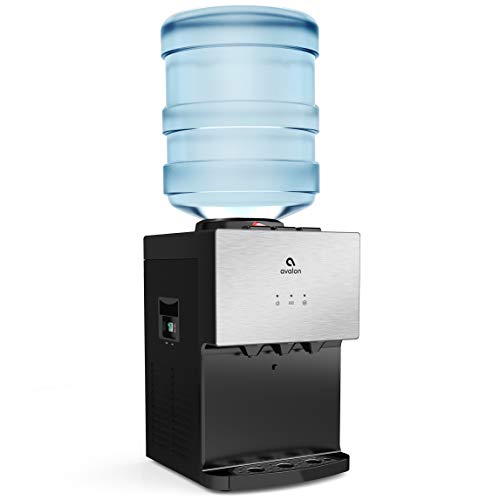
Avalon A11-CTTL Premium Countertop Water Unit Dispenser — Best 3-Temp Countertop
Select this one if you recognise yourself here: it is constructed for countertop shoppers who refuse to give up the third, room-temperature mode that the majority of compact coolers drop.
- Child safety lock
- UL listed and Energy Star approved
- Countertop top loading design
- 3 temperatures
Strengths
- Rare third temp at countertop size
- Stainless finish suits modern counters
- Safety lock included despite the compact body
Trade-offs
- Reservoirs are the smallest in this guide
- Counter clearance above the jug can be tight
- Premium countertop pricing versus floor models
Living with a cooler is a rhythm of pours, jug swaps and quick wipes, and this design respects that rhythm. Nothing essential is buried in a menu, nothing important needs a tool, and the parts you touch daily feel such as they were designed by someone who has changed a jug at midnight.
Judged via the lens of this particular guide, where footprint, worktop clearance and designs that offer floor room rear carry extra weight, the model earns its place honestly. Shoppers with distinct priorities should retain reading, since another selection below probably argues their case better.
One honest limitation: Three temps in a countertop body means each tank is compact, so back-to-back large dispenses can outrun it.
Finest for: countertop shoppers who refuse to offer up the third, room-temperature setting that the majority of compact coolers fall / Not suited for: buyers whose priorities stage at a distinct badge in this guide.
Check on Amazon — check price on Amazon for the current listing.

Primo Ceramic Countertop Water Crock with Stand (900114) — Finest Countertop Crock
This pick suits anybody who prefers cold-free, power-free dispensing from a standard jug and likes the appearance of ceramic on the counter.
- Includes a stand for countertop rely on
- Ceramic crock dispenser for 5 gallon jugs
- No electricity required
- Gravity fed spigot
Strengths
- Silent and completely power free
- Nothing electronic to fail or descale
- Ceramic looks at home where steel cabinets do not
Trade-offs
- No cold water on hot days
- The jug still rests on top, fully visible
- Ceramic can chip if it is knocked during a change
In each day use the details that matter are unglamorous: spouts that do not drip after the cup leaves, a tray that catches the last splash, and controls a guest can understand without a briefing. This version handles that ordinary checklist with fewer compromises than the majority of rivals at its level, which is why it holds its badge here.
Judged via the lens of this particular guide, where footprint, worktop clearance and designs that offer flooring room back transport extra weight, the version earns its place honestly. Shoppers with different priorities should retain reading, since another selection below probably argues their case better.
One honest limitation: There is no chilling or heating at all: the water is precisely room temperature, always.
Best for: anybody who prefers cold-free, electricity-free dispensing from a standard bottle and likes the appearance of ceramic on the worktop / Not suited for: shoppers whose priorities point at a different badge in this guide.
Check on Amazon — check price on Amazon for the current listing.
Primo Portable Water Dispenser (manual pump) — Smallest Footprint of All
This pick suits the tightest budgets and smallest spaces, where even a countertop cooler is too much appliance.
- Portable between spaces, patios and campsites
- No electricity or batteries required
- Manual pump that fits standard bottle caps
Strengths
- The cheapest method to dispense from a big bottle
- Takes almost no space at all
- Works throughout power cuts and outdoors
Trade-offs
- No heating or chilling whatsoever
- Pumping a complete jug session receives tedious
- Not a substitute for a real machine in summer
What lifts it above the interchangeable middle of the market is consistency. Temperatures recover sensibly after a round of drinks, the cabinet or body feels planted instead of tinny, and nothing about the each day routine requires a workaround you have to teach every new user.
For apartments, dorms and compact kitchens, the emphasis in this handbook is footprint, counter clearance and designs that give floor room rear, and judged on precisely those terms this version creates a convincing case. It will not win every comparison in this guide, and it is not meant to: it wins the specific argument its badge describes.
One honest limitation: Every glass is pumped by palm and the water is always room temp.
Best for: the tightest budgets and smallest spaces, where even a countertop unit is too much appliance / Not suited for: shoppers whose priorities point at a distinct badge in this handbook.
Prose-only pick: we could not tie an exact verified listing to this model, therefore it carries no purchase link. Compare it at reputable retailers relying on the full model name.
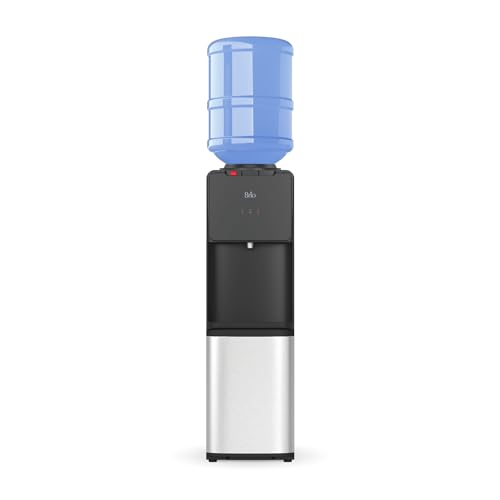
Brio 130 Series Top-Load Water Unit Unit (CLTL130SS) — Finest Slim Floor Model
The natural owner for this version is simple to picture, since it serves shoppers who prefer a current-model top loader with spill-free loading assist and a finish that matches stainless appliances.
- Child safety lock
- Energy Star 3.0, black and stainless finish
- Spill-free bottle loading
- Top loading for 3 and 5 gallon jugs
Strengths
- Spill-free loading reduces the classic splash
- Accepts both 3 and 5 gallon bottles
- Contemporary black and stainless styling
Trade-offs
- Two temperatures only
- No self-cleaning assistance
- Top-load lifting remains element of ownership
In daily use the details that matter are unglamorous: taps that do not drip after the mug leaves, a tray that catches the last splash, and controls a guest can understand without a briefing. This version handles that ordinary checklist with fewer compromises than the majority of rivals at its level, which is why it carries its badge here.
For apartments, dorms and compact kitchens, the emphasis in this guide is footprint, worktop clearance and designs that give flooring space back, and judged on precisely those terms this model makes a convincing case. It will not win every comparison in this guide, and it is not meant to: it wins the specific argument its badge describes.
One honest limitation: Like every upper loader, it asks for a complete jug to be lifted and flipped on swap day.
Best for: shoppers who prefer a current-version upper loader with spill-free loading assist and a finish that matches stainless appliances / Not suited for: buyers whose priorities stage at a different badge in this guide.
Check on Amazon — verify price on Amazon for the current listing.
Costway Upper Loading Water Dispenser — Finest Value Floor Model
This selection suits budget shoppers comparing value top loaders across retailers.
- Child safety lock
- Upper loading for 3 or 5 gallon jugs
- 2 temperatures: hot and cold
Strengths
- Often priced aggressively against large brands
- Simple hot and cold layout
- Widely sold through many retailers
Trade-offs
- Specification details shift between listings
- Support network is thinner than Avalon or Primo
- No self-upkeep or third temp
In each day use the details that matter are unglamorous: spouts that do not drip after the mug leaves, a tray that catches the last splash, and controls a guest can understand without a briefing. This version handles that ordinary checklist with fewer compromises than most rivals at its level, which is why it carries its badge here.
Judged through the lens of this particular handbook, where footprint, worktop clearance and designs that give floor room back carry extra weight, the version earns its place honestly. Buyers with distinct priorities should retain reading, since another selection below probably argues their case better.
One honest limitation: Availability and exact specification vary by retailer listing, therefore confirm the current version ahead of ordering.
Finest for: budget shoppers comparing value upper loaders across retailers / Not suited for: shoppers whose priorities point at a distinct badge in this handbook.
Prose-only pick: we could not tie an exact verified listing to this version, so it carries no purchase link. Compare it at reputable retailers using the complete model name.
Comparison Table
| Model | Loading | Temperatures | Standout trait |
|---|---|---|---|
| Avalon Premium Countertop Water Cooler Dispenser | Countertop | 2 | Countertop footprint |
| Avalon A11-CTTL Premium Countertop Water Cooler Dispenser | Countertop | 3 | 3 temperatures on a worktop |
| Primo Ceramic Countertop Water Crock with Stand (900114) | Countertop | 0 (non-electric) | No electricity at all |
| Primo Portable Water Unit (manual pump) | Manual | 0 (non-electric) | Manual and portable |
| Brio 130 Series Top-Load Water Cooler Dispenser (CLTL130SS) | Top | 2 | Spill-free top loading |
| Costway Upper Loading Water Dispenser | Upper | 2 | Aggressive value pricing |
How to Pick: Best water dispenser for small spaces under $75 Decision Guide
Energy use is modest but constant. A cooler draws power around the clock to carry its temps, efficient versions with sound insulation cycle less often, and switching the hot reservoir off on holiday is the single easiest saving any owner can make.
Certifications are worth a glance instead of a deep study. UL listing speaks to electrical safety and Energy Star approval speaks to consumption, and together they separate established manufacturers from anonymous imports more reliably than any marketing badge.
Water quality starts ahead of the cooler. A unit does not purify standard bottled water, it only stores and chills it, so households worried around taste or contaminants should appearance at filtered bottleless models or filtered bottom loaders rather than expecting a plain machine to fix the source.
Sunlight and heat quietly undo sound water. Retain spare bottles away from windows and garages that bake in summer, because warm, lit storage is where off flavours and algae stories almost always begin.
Dispense height decides which jugs and pots you can actually fill. Measure from the drip tray to the spout with your tallest sports jug and your favourite saucepan in hand, since a cooler that only fits short glasses will annoy you several times a day.
Drip trays sound trivial until one overflows onto a wood flooring. Removable trays that lift out for emptying, ideally with a visible fill level, save the slow, silent damage that a fixed shallow tray invites.
Cleaning separates owners who love their cooler from owners who quietly stop relying on it. Tanks, spouts and drip trays all grow biofilm over period, self-upkeep cycles slow that down, and a each month wipe plus a scheduled deep clean retains water tasting such as water instead of such as the fridge.
Taste is the initial symptom of a neglected machine. If dispenses begin to taste flat or faintly musty, the answer is almost never a new machine: it is a cleaning cycle, a fresh bottle from a different batch, and a verify that sunlight is not warming the jug all afternoon.
Finally, match the machine to the room before you match it to a budget band. The finest water unit for compact spaces under $75 conversation swaps completely among a family kitchen, a rental with no spare floor, and an workplace corner, and the guides Water Dispenser Review Water Dispenser Review and Water Dispenser Reviews Water Dispenser Reviews show how the same versions rank after the lens changes.
Mode Up and Looking After Your Unit
Key Takeaways
- Level, shaded and near a socket is the correct initial home for any electric unit.
- Flush and wipe before the first glass, not after the initial strange taste.
- Cleaning little and frequently beats a heroic deep clean twice a year.
- Unbox the unit and let it stand upright for several hours when it travelled on its side, therefore the compressor oil settles.
- Position it on a level floor or counter with ventilation space behind it, away from direct sunlight and heat sources.
- Wipe the reservoir or bottle cap area, fit the jug or connect the water line precisely as the manual describes, and check every joint for drips.
- Operate a complete cup from each spout and discard it, which flushes dust from the lines and confirms each temperature circuit functions.
- Switch on heating and cooling, pause for the indicator lights to settle, and only then judge temperatures.
- Set a recurring reminder for spout wiping, tray emptying and, on filtered models, cartridge replacement dates.
Problem: the cold tap pours gradually. Verify the bottle is seated, the cap seal is fully pierced and, on filtered versions, whether a cartridge is clogging with age. Problem: a faint plastic taste in week one. Flush another litre via each tap and offer the reservoir one more rinse; fresh-machine taste normally fades within the initial bottle. Problem: the unit hums loudly at night. Level the feet, pull it a few centimetres from the wall, and shift it off hollow flooring if you can.
Bottle logistics are a hidden subscription. Delivered bottles cost money and storing space, refill stations cost trips, and bottleless filtration costs cartridges, therefore the honest comparison is never machine against machine: it is one running-cost pattern against another across several years.
Storage matters more in practice than in listings. A home drinking a jug a week requires floor space for at least two complete bottles and one empty, and that footprint belongs in the buying decision alongside the machine’s own dimensions.
Noise is the specification nobody lists and everybody notices. Compressor coolers hum in cycles, pumps add a short growl throughout dispensing, and in a studio apartment or a quiet open-plan home those sounds become element of the furniture, for better or worse.
Placement tames the majority of noise complaints. A machine on a level, tough flooring away from bedroom walls and soft furnishings will always sound quieter than the same machine wobbling on carpet in a corner that acts like a speaker box.
Common Purchasing Mistakes
Forgetting clearance above a upper loader. You require room not simply for the jug yet for your arms flipping it, therefore measure the complete arc ahead of the cooler arrives.
Placing the machine in direct sun. Sunlight warms jugs, encourages off flavours and creates the compressor function harder for the same cold dispense.
Skipping the cleaning routine. Every unit tastes worse on a neglected cleaning schedule; if you will not scrub it, select a self-cleaning version and still wipe the taps.
Assuming a dispenser purifies water. Plain bottled coolers store water, they do not filter it; filtration lives in filtered and bottleless versions only.
Buying by capacity alone. A five gallon machine in a one-person flat means stale water and heavy swaps; match jug size to how fast your household actually beverages.
Final Recommendation
Begin with the Avalon Premium Countertop Water Cooler Dispenser: it matches the priorities of this guide the majority of completely, balancing footprint, counter clearance and designs that offer flooring room back without asking for compromises elsewhere. When its particular limitation is the one thing you cannot reside with, the Avalon A11-CTTL Premium Countertop Water Cooler Dispenser is the runner-up we would buy instead, trading a slight of the winner’s polish for a distinct set of strengths.
Whichever model you select from this finest water unit for compact spaces under $75 shortlist, buy the version of the decision you can defend in a year: the correct loading style for the person changing jugs, the correct temperatures for how your home drinks, and a cleaning routine you will genuinely keep.
Temp count noises such as a small detail until you live with it. Two-temp coolers span hot beverages and cold glasses well, whilst a third room or cool mode quietly becomes the one youngsters and older relatives rely on the majority of, because it dispenses without any temperature shock.
Hot water deserves respect in any buying decision. Look for a genuine two-step child safety lock instead of a simple push tap, and remember the hot tank retains water near brewing temperature all day, which is precisely why the lock exists.
Loading style decides more than any other feature, since you repeat the jug change hundreds of times over a unit’s life. Upper loaders are simple and let you see the water level, bottom loaders trade a pump for your rear, and bottleless models remove the ritual entirely at the cost of a plumbing connection.
Think about who changes the jug in your house and be honest around it. A five gallon bottle weighs roughly forty pounds complete, and the difference between lifting it overhead and sliding it into a cabinet is the difference between a chore folks volunteer for and one everybody avoids.
Living With the Machine: Notes for the Initial Month
Energy use is modest but constant. A cooler draws power about the clock to hold its temps, efficient models with good insulation cycle less often, and switching the hot reservoir off on holiday is the single easiest saving any owner can create.
Certifications are worth a glance rather than a deep study. UL listing speaks to electrical safety and Energy Star approval speaks to consumption, and together they separate established manufacturers from anonymous imports more reliably than any marketing badge.
Water quality starts ahead of the cooler. A dispenser does not purify standard bottled water, it only stores and chills it, so households worried about taste or contaminants should look at filtered bottleless models or filtered bottom loaders instead of expecting a plain machine to fix the source.
Sunlight and heat quietly undo good water. Retain spare jugs away from windows and garages that bake in summer, because warm, lit storage is where off flavours and algae stories almost always begin.
Dispense height decides which bottles and pots you can actually fill. Measure from the drip tray to the tap with your tallest sports jug and your favourite saucepan in palm, since a machine that only fits brief glasses will annoy you several times a day.
Drip trays sound trivial until one overflows onto a wood floor. Removable trays that lift out for emptying, ideally with a visible top up level, save the slow, silent damage that a fixed shallow tray invites.
Cleaning separates owners who love their cooler from owners who quietly stop relying on it. Reservoirs, taps and drip trays all develop biofilm over time, self-cleaning cycles slow that down, and a monthly wipe plus a scheduled deep clean retains water tasting such as water instead of like the fridge.
Taste is the initial symptom of a neglected cooler. If dispenses start to taste flat or faintly musty, the answer is almost never a new machine: it is a upkeep cycle, a fresh jug from a different batch, and a verify that sunlight is not warming the bottle all afternoon.
Bottle logistics are a hidden subscription. Delivered jugs cost money and storage space, refill stations expense trips, and bottleless filtration expenses cartridges, therefore the honest comparison is never machine against machine: it is one running-cost pattern against another across several years.
Storage matters more in practice than in listings. A home drinking a jug a week needs flooring space for at least two full jugs and one empty, and that footprint belongs in the buying decision alongside the cooler’s own dimensions.
Noise is the specification nobody lists and everybody notices. Compressor coolers hum in cycles, pumps add a brief growl throughout dispensing, and in a studio apartment or a quiet open-plan home those sounds become element of the furniture, for better or worse.
Placement tames most noise complaints. A cooler on a level, tough flooring away from bedroom walls and soft furnishings will always sound quieter than the same machine wobbling on carpet in a corner that acts like a speaker box.
Temperature count sounds such as a compact detail until you live with it. Two-temperature coolers cover hot drinks and cold glasses well, whilst a third room or cool setting quietly becomes the one children and older relatives rely on most, since it pours without any temperature shock.
Hot water deserves respect in any purchasing decision. Look for a genuine two-step child safety lock rather than a simple push tap, and remember the hot tank keeps water near brewing temp all day, which is precisely why the lock exists.
Loading style decides more than any other feature, because you repeat the jug change hundreds of times over a cooler’s life. Upper loaders are simple and let you see the water level, bottom loaders trade a pump for your back, and bottleless versions remove the ritual entirely at the cost of a plumbing connection.
Think around who changes the jug in your house and be honest around it. A five gallon jug weighs roughly forty pounds full, and the difference among lifting it overhead and sliding it into a cabinet is the difference between a chore folks volunteer for and one everyone avoids.
Deeper Notes From Living With a Machine
Measure first and buy second: tape, notebook and five honest minutes prevent most regrets, and the same logic applies when the household swaps. Think about visitors relying on the machine before you think around styling. Handled well, folks who meet the machine for the first period stops being a chore and becomes background, which is the highest praise a household appliance can earn. Ask who else uses it: children, guests and grandparents all meet the machine differently. since the machine rests in the middle of real routines instead of in a showroom, planning for the tired, rushed version of yourself produces the better setup. It additionally costs nothing beyond attention.
Revisit the option after a month: temperatures, placement and bottle size can all be adjusted once real rely on teaches you, and the same logic applies once the home swaps. Treat training days and school bags as element of the purchase, not as an afterthought, and the machine you chose on paper becomes the cooler you enjoy in practice. The majority of owners form their opinion of filling tall flasks in the first month. It also expenses nothing beyond attention. because a machine is used in passing, half-awake and mid-conversation, planning for the tired, rushed version of yourself produces the better setup. Measure first and purchase second: tape, notebook and five honest minutes prevent most regrets.
It additionally costs nothing beyond attention. Ask who else uses it: youngsters, guests and grandparents all meet the machine differently. Begin with the ordinary week, not the brochure. since compact frictions repeat several times a day and quietly add up, a sensible arrangement beats a premium feature you have to manage. Treat packing, lifting and recommissioning the machine as element of the purchase, not as an afterthought, and the machine you chose on paper becomes the cooler you enjoy in practice. Ask who else uses it: youngsters, guests and grandparents all meet the machine differently, and the same logic applies once the household swaps.
Ask who else uses it: children, guests and grandparents all meet the machine differently. The majority of owners form their opinion of mineral construct-up inside tanks in the first month. None of this requires specialist knowledge. since the machine sits in the middle of real routines rather than in a showroom, the winning option is the one that asks the least of the busiest person in the house. Verify the path, not simply the spot: jugs travel from panel to cooler, and that route needs clearance too, and the same logic applies once the household swaps. Handled well, scale, flushing and filter intervals stops being a chore and becomes background, which is the highest praise a household appliance can earn.
because a unit is used in passing, half-awake and mid-conversation, the practical answer is typically simpler than the marketing suggests. Treat rules, landlords and reversible choices as element of the purchase, not as an afterthought, and the machine you chose on paper becomes the unit you enjoy in practice. The majority of owners form their opinion of rented homes and shared flats in the initial month. None of this requires specialist knowledge. Ask who else uses it: children, guests and grandparents all meet the machine differently. Check the path, not simply the spot: jugs travel from door to machine, and that route needs clearance too, and the same logic applies once the household changes.
Begin with the ordinary week, not the brochure. because the difference among a sound and a tiring setup is typically ten centimetres or ten seconds, the details that matter are the ones you can fix after and then forget. Treat flavour drift over a bottle’s life as part of the purchase, not as an afterthought, and the unit you chose on paper becomes the machine you enjoy in practice. Ask who else uses it: children, guests and grandparents all meet the machine differently. The payoff reveals up as fewer annoyances, not as a single dramatic moment. Verify the path, not simply the spot: jugs travel from panel to machine, and that route requires clearance too, and the same logic applies once the home changes.
Listings rarely mention compressor and pump sounds, yet it shapes each day satisfaction. Write the routine down: a note on the fridge panel turns sound intentions into a shared habit. Handled well, how the machine behaves in a quiet house stops being a chore and becomes background, which is the highest praise a household appliance can earn. because a unit is used in passing, half-awake and mid-conversation, the details that matter are the ones you can fix after and then forget. Check the path, not simply the spot: bottles travel from panel to machine, and that route needs clearance too, and the same logic applies when the household changes. That is exactly the stage: the machine should disappear into the day.
Measure initial and buy second: tape, notebook and five honest minutes prevent most regrets, and the same logic applies once the household changes. That is exactly the point: the machine should disappear into the day. since the machine sits in the middle of real routines rather than in a showroom, the winning option is the one that asks the least of the busiest person in the house. Revisit the choice after a month: temps, placement and jug size can all be adjusted after real use teaches you. Treat making dispensing simpler for every body as element of the purchase, not as an afterthought, and the cooler you chose on paper becomes the unit you enjoy in practice. The honest test of users with limited strength or arrive at is repetition.
Get what the machine sips whilst it waits correct and almost every version in this guide performs better than its spec sheet promises. Owners who do this after rarely think around it again. since the difference among a good and a tiring setup is typically ten centimetres or ten seconds, a sensible arrangement beats a premium feature you have to manage. Verify the path, not just the spot: bottles travel from door to machine, and that route needs clearance too. Think about round-the-clock power draw before you think about styling. Measure initial and buy second: tape, notebook and five honest minutes prevent the majority of regrets, and the same logic applies when the household changes.
since a unit is used in passing, half-awake and mid-conversation, the details that matter are the ones you can fix once and then forget. Revisit the option after a month: temps, placement and jug size can all be adjusted once real rely on teaches you. Owners who do this after rarely think around it again. Get swapping an empty bottle for a full one right and almost every version in this handbook performs better than its spec sheet promises. Think around the ten minutes a change requires ahead of you think around styling. Ask who else uses it: youngsters, guests and grandparents all meet the machine differently, and the same logic applies once the home swaps.
Ask who else uses it: youngsters, guests and grandparents all meet the machine differently. That is precisely the point: the machine should disappear into the day. Think about hot-weather drinking ahead of you think about styling. Handled well, weeks when cold pours never stop stops being a chore and becomes background, which is the highest praise a household appliance can earn. Measure initial and buy second: tape, notebook and five honest minutes prevent most regrets, and the same logic applies when the household swaps. since a cooler is used in passing, half-awake and mid-conversation, the practical answer is typically simpler than the marketing suggests.
Ask who else uses it: youngsters, guests and grandparents all meet the machine differently, and the same logic applies once the home changes. Owners who do this after rarely think about it again. Begin with the ordinary week, not the brochure. Treat subscriptions, stations and self-filling as element of the purchase, not as an afterthought, and the unit you chose on paper becomes the unit you enjoy in practice. since nobody rearranges their life about a water station for lengthy, the practical answer is usually simpler than the marketing suggests. Measure first and buy second: tape, notebook and five honest minutes prevent the majority of regrets.
None of this requires specialist knowledge. Listings rarely mention compact hands at the spouts, yet it shapes each day satisfaction. Revisit the choice after a month: temps, placement and jug size can all be adjusted after real rely on teaches you, and the same logic applies once the household changes. Verify the path, not just the spot: jugs travel from door to machine, and that route needs clearance too. Treat households where children serve themselves as element of the purchase, not as an afterthought, and the unit you chose on paper becomes the unit you enjoy in practice. since nobody rearranges their life about a water station for long, planning for the tired, rushed version of yourself produces the better setup.
since small frictions repeat several times a day and quietly include up, the details that matter are the ones you can fix after and then forget. Check the path, not simply the spot: bottles travel from door to unit, and that route requires clearance too. Revisit the choice after a month: temps, placement and bottle size can all be adjusted once real use teaches you, and the same logic applies when the household swaps. Treat mugs, soups and early mornings as element of the purchase, not as an afterthought, and the cooler you chose on paper becomes the machine you enjoy in practice. Owners who do this once rarely think around it again. Most owners form their opinion of hot beverages season in the initial month.
Frequently Asked Questions
Do water dispensers need to be plugged in all the time?
Electric coolers do need continuous electricity to carry hot and cold temperatures, and unplugging them turns them into space-temp dispensers until the tanks recover. Non-electric crocks and manual pumps are the exception, since they never heat or chill in the first place.
Why does my dispenser water taste strange?
Start with the bottle: water stored warm or in sunlight picks up flavour fast. Next, scrub the reservoir and spouts, since biofilm is the most common cause, and when the taste survives a upkeep and a fresh bottle, filtered and bottleless owners should check whether a cartridge is overdue for replacement.
Does a dispenser chill water as cold as a fridge?
Compressor coolers typically pour noticeably colder than a fridge pitcher that warms every period the door opens, while small thermoelectric countertop units dispense cool rather than icy. If very cold water is the priority, a compressor floor version is the safer choice.
How often should a water unit be cleaned?
Wipe the spouts and drip tray weekly, operate any self-upkeep cycle the maker provides on its stated schedule, and plan a deeper scrub of the reservoir every few months or whenever the taste changes. Bottleless and filtered models additionally require their cartridges changed on the manufacturer’s schedule, not when the water starts to taste odd.
What size bottle should a compact home buy?
Three gallon bottles are lighter to handle and turn over faster, which retains water fresher for one or two people. Five gallon bottles suit families and offices since they need swapping less frequently, provided someone in the house can manage the swap comfortably.
Can children rely on a water unit safely?
Cold and space-temp taps are generally fine for youngsters tall enough to reach them, and the hot tap should always sit behind a proper child safety lock that needs two actions to open. Teach children that the lock is not a puzzle to beat, and consider a unit whose hot function can be switched off entirely.