Disclosure: As an Amazon Associate, umtsmarttool.com earns from qualifying purchases. Links to Amazon on this page are affiliate links; they cost you nothing extra. Prices and availability change often, so check the current Amazon listing before you buy.
Where to buy
The kits referenced throughout this car emergency kit pros and cons analysis — the balanced default, the minimum, the flagship and the tool-led pattern.
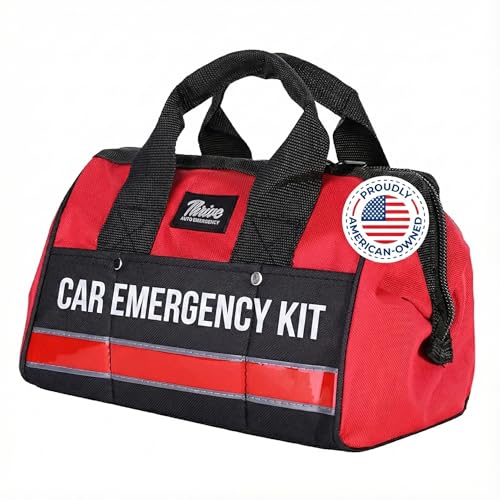
- Thrive Roadside Emergency Car Kit, 104-Piece — Check on Amazon
- Lifeline AAA Premium Road Kit, 42-Piece (4330AAA) — Check on Amazon
- EVERLIT Survival Car Emergency Kit — Check on Amazon
- HAIPHAIK Car Emergency Kit, 124-Piece — Check on Amazon
Read the full guide ↓
Most buying advice hides its trade-offs in adjectives. This car emergency kit pros and cons page does the opposite: it takes the category apart into its genuine strengths and its genuine costs, gives each one room to be argued at full strength, and lets the reader’s own circumstances deliver the verdict. The pros are real — a complete kit changes what a breakdown is. The cons are real too — money, space, maintenance, and a category whose marketing routinely sells arithmetic as capability. Neither list is padded: every point below is one this site’s research across the whole car emergency kit cluster has had to confront in its rankings, its reviews and its tier guides, and the points are stated here in the strongest form the evidence supports, including where that form is uncomfortable for the kits this site recommends.
Read the two lists against your own driving — your car, your parking, your passengers, your roads — because pros and cons are not properties of products. They are properties of matches between products and lives, and the same item appears, honestly, on both lists below for different readers.
The Strengths, Argued Properly
It converts an uncontrolled event into a managed procedure. This is the category’s core strength and everything else is commentary. A breakdown without a kit is improvisation under stress — borrowed light, borrowed tools, exposure managed by hope. A breakdown with a complete kit is a sequence: vest, triangle, light, diagnosis, cables or first aid, call if needed. The transformation is not dramatic; it is procedural, and procedural is exactly what a frightened person at midnight needs. Every other strength on this list is a component of this one.
It owns the first hour, which is the hour that matters most. Assistance, however excellent, arrives on its own schedule. The kit covers the interval before it — the interval containing the traffic danger, the cold, the untreated cut, the child’s fear. No alternative purchase covers that interval at all: not cover, not a warranty, not a newer car. A product category with a monopoly on the worst hour of driving has a claim on a driver’s budget that few accessories can match.
The visibility layer prevents the accident inside the accident. The gravest roadside risk is not the breakdown but the traffic passing it. A vest, a triangle and a marked scene are cheap, light, permanent and — unlike almost everything else in the bag — useful in literally every roadside scenario including the ones where the car cannot be helped at all. As a ratio of protection to cost and weight, the visibility layer may be the best purchase in all of motoring.
It helps other people, and thereby its owner. A driver with a kit becomes a node in the informal rescue economy of every lot and street they use: cables offered, light lent, a dressing produced. The returns are not sentimental — they are the neighbour who starts your car next winter, the stranger who stops because you are visibly equipped to be helped quickly. Preparedness compounds socially in a way few purchases do.
The good ones teach. The documented kits in this cluster carry guidance — accident forms, first aid books, manuals — that convert equipment into competence for the inexperienced. For beginners and for anyone equipping another driver, that teaching function is not a bonus; it is half the product, and it is the property the category’s cheap end most reliably omits.
It is durable, transferable and cheap to keep. The hard core of a kit — cables, case, tools, triangle — is effectively a lifetime purchase that moves between cars and even between drivers, maintained for minutes a year and a small consumables tail. Few automotive purchases amortize across a decade and two vehicles; this one does so as a matter of routine.
In this guide
The Trade-Offs, Argued Just as Properly
It may never be used, and the money is real. The honest first con. A kit is a tail-event purchase, and a driver can pay, store and maintain one for a decade of uneventful motoring. The counter-argument — asymmetry of regret — is made elsewhere in this series, but the con itself should not be talked away: for the genuinely duplicated driver, the urban covered short-hopper, the expenditure is redundancy bought at full price.
It takes space, permanently, in the places space is scarcest. A boot corner, a cupboard shelf, the top of a wardrobe in a small flat. For renters and small-car drivers the footprint is a monthly cost denominated in the currency they have least of, and a kit resented for its size migrates to worse homes and eventually to absence — a failure mode created entirely by the con itself.
It demands maintenance that most owners will skip. Dates expire, tapes dry, gloves perish, lights (the battery kind) die quietly. The category’s dirty secret is that a large share of the kits in circulation are partially expired museums of their original contents, lending confidence in excess of capability. The con is not the ten minutes twice a year; it is the near-certainty, across the whole population of owners, that the ten minutes will not happen — a behavioural cost the product cannot design away, only mitigate through usefulness in peacetime.
Its core mechanism still depends on strangers. Jumper cables are a request, not a solution: they require a second car, a willing driver and compatible parking. The kit’s most-used function is therefore outsourced to the kindness of whoever passes, and in the emptiest places at the emptiest hours that kindness may not pass at all. Only a jump starter or an inflator-class tool removes the dependency, and both cost more than the cables they liberate.
The category’s marketing actively misleads its buyers. Piece counts that reward gauze, listings that contradict themselves, gauges unstated, first aid unspecified: a buyer in this category must audit to be safe, and the need to audit is itself a con — a tax on the inexperienced, levied by the products aimed at them. This site’s entire cluster exists because the tax is real.
It can lend false confidence. The sealed, unrehearsed kit is worse than a known absence in one specific way: it postpones the owner’s reckoning with their own unpreparedness to the roadside itself. A driver who knows they have nothing improvises early and calls for help sooner; a driver who believes they have everything may discover the truth at the worst available moment. The con is not the kit’s fault — it is the owner’s — but a pros-and-cons page that omitted it would be repeating the category’s favourite sin.
The Hidden Pros: Strengths Nobody Advertises
Beyond the argued strengths sit quieter ones that ownership reveals and marketing, oddly, never claims. The kit disciplines the car. A declared kit forces a declared boot — a place for the spare’s tools, the personal layer, the charging cable — and cars with declared boots are measurably easier to live with in every small emergency, including the ones that are merely inconvenient. The kit is a diagnostic habit. The twice-a-year check puts its owner under the bonnet and at the tyres on a schedule, and the number of serious faults discovered in peacetime by that ritual — the perishing spare, the corroding terminal, the battery at the end of its patience — is the kit’s least counted and possibly largest contribution to its owner’s safety. The kit lowers the temperature of other people’s emergencies. Being the driver who can help is a social position with compounding returns, in streets, workplaces and families alike. The kit is inheritable knowledge. A rehearsed kit handed to a new driver carries its procedures with it — the layout teaches, the form instructs — in a way a sum of money for “something for the car” never does. None of these appear on a listing. All of them appear, reliably, in the retrospective accounts of owners, which is why a pros-and-cons page that confined itself to the listings would miss the strongest half of the pro column.
The Hidden Cons: Costs Nobody Itemizes
Symmetry demands the same excavation on the other side. The kit anchors a false taxonomy of risk. Owning the bag can quietly convince a driver that “emergencies” are handled, while the likelier dangers — the worn tyres, the ignored warning light, the fatigued night drive — sit outside the bag’s jurisdiction entirely. Preparedness for the tail can license neglect of the mean, and the trade is a bad one wherever it occurs. The kit competes with the phone. Not for space — for the owner’s sense of what the plan is. A driver whose plan is the bag may underinvest in the plan’s other half: the charged phone, the stored number, the shared itinerary, the cover actually renewed. The kit covers the hour; the phone summons the rescue; a kit that crowds out the phone in its owner’s imagination has subtracted from the system it joined. The kit is a single point of failure with a zip. Declared homes fail, kits are left in the other car, the sold car, the cleared cupboard — and the more completely a household’s preparedness is identified with one bag, the more total its absence is when the bag is elsewhere. The mitigation (a minimum in the second car, the personal layer distributed) is easy and, being easy, is reliably postponed. The kit’s consumables expire silently. Noted in the main list as maintenance; noted here as epistemology — the kit’s most dangerous state is not empty but believed-full, and time moves every kit toward that state without any event to mark the crossing. The twice-a-year check is the only instrument that detects it, which is why this series treats the check not as upkeep but as the product’s second half.
The Context Box: What a Complete Kit Actually Contains
- Restart: jumper cables, stated length and gauge (8 ft 8-gauge in the balanced pattern; 12 ft in the flagship)
- Tyre answer: a changeable spare, a digital inflator (flagship pattern), or an honest assistance plan (minimum pattern)
- First aid: everyday anchors as the floor — dressings, antiseptic, sting relief; serious anchors — CPR mask, shears, splints, cold pack — at the medical tier
- Visibility: vest worn, triangle placed, scene communicated
- Light: hand-powered (unfailable) or battery (brighter, maintained)
- Escape and small repair: glass breaker and belt cutter; a modest, named tool selection
- Guidance: accident form, first aid guide or manual, in the documented patterns
Grade any kit — including every alternative named on this page — against that box, and the pros and cons stop being abstractions: a kit’s strengths are the rows it fills, its weaknesses the rows it leaves to adjectives. The full method lives in our Car Emergency Kit Buying Guide.
Pros and Cons by Driver: The Same Lists, Weighted Differently
The beginner. Pros at maximum: guidance, choreography, the substitution of procedure for experience, a teacher in the bag. Cons at minimum: no duplicates owned, no habits to displace, space usually negotiable. The balance is the most one-sided in the category, and it is why every beginner guide in this cluster converges on the same recommendation from four different budgets.
The renter. Pros amplified by geography: no garage, no driveway rights, breakdowns in borrowed space where a managed scene protects a deposit as well as a driver. Cons amplified by the same geography: storage is rented, tenancies restrict, moves lose kits. The balance favours buying — with the footprint treated as a first-class specification and the move treated as a third annual check.
The parent. Pros acquire a moral weight the other profiles do not share: the medical and visibility layers protect passengers who never consented to the risk. Cons shrink correspondingly — a shelf and a sum weigh little against a child’s frightened hour. The balance is not close, and the only real question for this profile is which tier of medical depth, a question the Swiss Safe pattern exists to answer.
The rural driver. Pros amplified by distance: the longest waits, the thinnest helper traffic, the scenes where the kit’s monopoly on the first hour is worth most. Cons amplified by the same distance: the second-car dependency bites hardest exactly here, which is why this profile’s balance includes the jump starter and the inflator not as upgrades but as completions.
The covered urbanite. The one profile where the cons genuinely contend: the hour is short, the streets are lit, the rescue is near and paid for. Pros compress to the waiting and visibility layers; cons — space, redundancy — stand at full height. The balance resolves to the minimum pattern, and this page’s respect for that resolution is what entitles it to its verdicts everywhere else.
Pros and Cons Across Time: The Lists Are Not Static
A final refinement that static lists conceal: the balance moves across a kit’s life. In year one the pros dominate trivially — everything is new, rehearsed, in date. In years two and three the cons make their quiet argument — the kit is borrowed from, drifted, partially expired, its owner’s attention spent elsewhere — and this is the interval in which the category’s real-world reputation is decided, because it is the interval in which most real breakdowns meet most real kits. In years four and beyond, the balance is whatever the owner’s habits have made it: the maintained kit’s pros have compounded (the car audited twice a year, the procedures second nature, the social credit banked), while the neglected kit’s cons have compounded in the opposite direction, toward the believed-full bag that is this page’s darkest entry. The practical consequence deserves emphasis: buying a kit is not a single decision with a fixed balance, but the opening of an account whose balance the owner sets twice a year. Pros-and-cons pages, this one included, can only price the opening. The rest is bookkeeping — the owner’s, at ten minutes an entry, which remains the cheapest line in the entire analysis.
Who Should Buy, and Who Should Skip
Best for: new drivers, whose inexperience the documented kits are designed around; renters and apartment drivers, whose breakdowns happen without infrastructure; families and anyone carrying other people’s children, for whom the medical and visibility pros are duties; rural and high-mileage drivers, whose waits are longest; and drivers of older cars, whose probability of collecting on the pros is highest.
Not suited for: the fully covered urban short-hopper, whose honest pattern is the minimum kit or the hand-assembled floor; the buyer who knows they will never open, rehearse or maintain a kit, for whom the purchase is theatre at any price; and the driver whose real risk is specific — a medical condition, a remote profession — better met by a dedicated system than by the generalist balance this page has been weighing.
The Alternatives, on the Same Scales
The balanced kit (Thrive pattern). Pros: completeness, guidance, documentation, dual-use value at home. Cons: 8-foot cables, no inflator, a light that invites one upgrade. The scales settle, for most drivers, on the pro side — it is the cluster’s default for a reason, detailed in our Car Emergency Kit Reviews examination.
The minimum kit (Lifeline pattern). Pros: discipline, footprint, the best torch in the cluster, a hard case that outlives cars. Cons: recovery outsourced to assistance, first aid at basics, a triangle to add. The scales settle pro for the covered urban driver and con for the self-reliant one — the same product, opposite verdicts, which is this page’s thesis in miniature.
The flagship (EVERLIT pattern). Pros: the inflator, the longest documented cables, the deepest first aid, a published manual. Cons: size, weight, price position, and a capability some drivers will simply never call on. The scales turn entirely on the spare wheel: absent, the pros are overwhelming; present and changeable, the cons recover their voice. Its full examination is our Car Emergency Kit Review.
The tool-led kit (HAIPHAIK pattern). Pros: cable reach, real tools, winter gear, value for the practical driver. Cons: unspecified first aid, drifting documentation, the heaviest bags in the cluster. The scales settle pro for the hands-on driver who adds the pouch and audits the bag, con for everyone who would take the headline count at its word.
For the tier-by-tier rankings that these verdicts feed, see our Best Car Emergency Kit Under $50 guide — and for the value question argued as a single case, our Is A Car Emergency Kit Worth It verdict.
The Environmental Ledger, Kept Honestly
Modern buyers ask, reasonably, what a kit costs the world as well as themselves, and the ledger is more favourable than the category’s reputation suggests — with one debit entry that matters. On the credit side: a maintained kit is a decade-long object whose hard core is never replaced, whose use displaces call-outs, tows and expeditions, and whose peacetime dividends (the borrowed torch, the household repair) displace separate purchases entirely. A driver who buys one documented kit and keeps it for ten years has a smaller material footprint in this category than a driver who buys three anxious bargains and bins two. On the debit side: the consumables tail is real — dressings, tapes and packs expiring largely unused across the whole population of owners — and the headline-count economy manufactures the worst of it, packing perishables by the dozen into bags bought for arithmetic. The mitigation is the same as everywhere else in this analysis: buy the documented pattern whose contents you will actually inventory, cycle its dates at the twice-a-year check (donating unexpired surplus where local schemes accept it), and treat the kit as infrastructure rather than as a seasonal purchase. The environment, like the roadside, rewards the maintained and punishes the theatrical.
Second-Order Effects: What a Kit Does to Its Owner
The last excavation, and in some ways the most interesting: the effects a kit has on its owner’s behaviour beyond the roadside itself. Owners of rehearsed kits report — and this cluster’s guides are built on the observation — a changed relationship with the car’s small warnings: the slow crank investigated rather than endured, the tyre pressure checked because the gauge is there, the odd noise priced early. The kit, in other words, recruits its owner into maintenance, and maintenance prevents more emergencies than any kit has ever answered. The effect has a shadow twin, recorded in the hidden cons: the owner for whom the bag’s presence licenses the opposite — warnings deferred because “the kit will handle it” — a moral hazard as real in a boot as in any insurance market. Which twin a given owner gets is not determined by the product. It is determined at the setup evening, where the kit is framed either as a system the owner operates or as a talisman the owner owns. Every guide in this series prescribes the framing along with the purchase, and a pros-and-cons analysis is the right place to state why: the largest pro and the largest con in this entire category are the same object, separated only by whether its owner ever opened it.
Pros and Cons for the Working Driver
One profile remains unweighed, and its lists have a different texture: the driver whose car is a workplace — trades, deliveries, care rounds, site work. The pros gain a commercial edge: a managed scene protects not only the driver but the schedule, the client relationship and, in care work, the patient waiting at the other end; the kit’s peacetime dividends are collected weekly rather than yearly, because a working car’s small emergencies are a calendar, not a tail event; and the documentation habit — contents known, dates current, checks logged — aligns with the accountability the work already demands. The cons gain a commercial edge too: space in a working vehicle is revenue space, the kit’s footprint priced against tools and stock; wear is faster, consumables cycle harder, and a kit treated as van equipment must be maintained like van equipment or it becomes the believed-full bag in its most consequential setting. The balance still favours owning — the working driver’s exposure is the highest in this analysis — but it favours the durable patterns (hard cases, documented contents, replaceable layers) over the domestic ones, and it prices the twice-a-year check as a fleet line item rather than a household virtue. Employers equipping drivers should read the lists in that commercial light: the pro column is a duty-of-care argument, and the con column is a maintenance budget, and both belong in the same meeting.
A Note on How This Analysis Was Built
Pros-and-cons pages are usually assembled from listings, and their lists inherit the listings’ sins. This one was assembled the other way: from the cluster’s own research — the documented contents of the kits ranked and reviewed across this series, the tier behaviour those rankings exposed, the documentation failures recorded in the sources files, and the ownership patterns the guides prescribe because the evidence demanded them. Where a point in either column could not be traced to that research, it was cut; where the research produced a point uncomfortable for the kits this site recommends — the second-car dependency, the believed-full failure mode, the marketing tax — the point is printed at full strength in the main lists rather than footnoted. The result is not a balanced page in the journalistic sense, because the evidence is not balanced: the pros outweigh the cons for most drivers, and the page says so. It is, instead, an honest page — both columns argued as strongly as the research allows, the verdicts attached to profiles rather than proclaimed universally, and the single circumstance-independent line reserved for the one claim that survived every profile, tier and year of the analysis: open the bag.
Frequently Asked Questions
Are there pros and cons to keeping the kit in the house instead of the car?
There are, and they mirror the dual-use argument running through this cluster. House storage pros: the kit is maintained more, borrowed more, protected from boot heat that ages its medical contents, and available to the household’s own emergencies. Cons: it can be forgotten at the exact moment of departure, and a breakdown’s first requirement is presence. Car storage reverses every term. The resolution used by the households in this cluster’s guides is a declared primary home with the route rehearsed — and, for the medical layer specifically, the split pattern whose main case lives indoors and whose mini kit never leaves the car, which is the one arrangement in the category that collects both columns’ pros at once.
What is the biggest pro of a car emergency kit?
The conversion of an uncontrolled event into a managed procedure — with the visibility layer as its most cost-effective component. Everything else a kit does, from the jump start to the treated graze, is an application of that single transformation, and it is available in full at the completeness tier this cluster treats as its default.
What is the biggest con?
For the product, the dependence on a second car for its most-used function. For the owner, the maintenance the category quietly requires and most owners skip — the expired museum problem. For the buyer, the marketing: a category whose headline metric is designed to mislead is a category whose cons begin before the purchase does, which is why this site grades by anchors and documentation instead of counts.
Do the pros outweigh the cons for a beginner?
Yes, more decisively than for any other driver type — because the beginner’s cons are smallest (no habits to unlearn, no garage of duplicates) and the pros are largest (guidance, choreography, the substitution of procedure for experience). The beginner-specific rankings in this cluster exist because the balance tips so consistently in the same direction.
Does breakdown cover cancel out the pros?
It cancels one pro — the rescue — which was never the kit’s to claim, and leaves the others untouched: the first hour, the visibility, the light, the first aid, the simple saves that never become call-outs. Cover and a kit are complements that marketing on both sides miscasts as rivals; the honest comparison is in this site’s worth-it verdict, linked above.
What is the con nobody mentions?
False confidence — the sealed, unrehearsed kit that postpones its owner’s reckoning to the roadside. It is the only con in this page’s lists that can make a driver worse off than owning nothing, and it is entirely preventable by the setup evening every guide in this series prescribes: contents audited, four items learned by touch, the clamp order rehearsed once. The kit’s pros are purchased; its cons are mostly chosen, and this one most of all.
Are the cons worse in cheap kits?
The documentary cons are — drifting listings, unspecified first aid, unstated gauges concentrate at the category’s cheap end — while the structural cons (space, maintenance, the second-car dependency) are tier-blind. A documented minimum kit at a low price has fewer cons, on this page’s accounting, than an undocumented abundance at twice it, which is the cluster’s most repeated finding and the cheapest one for a buyer to act on.
The Passengers’ Column: Pros and Cons for the People in the Back
Every list so far has been the driver’s, and the omission matters, because a kit’s pros and cons distribute unevenly across the car’s occupants. For passengers, the pros are nearly the whole story: the treated graze, the lit wait, the blanket, the calm adult with a procedure — passengers experience a breakdown as pure circumstance, and the kit is the only thing in the car that improves circumstance for people who cannot drive, fix or decide. The cons, for passengers, reduce to one: a kit their driver cannot use, which is worse than none because it consumed the calm that improvisation would have spent on an earlier call for help. Children sharpen every term — their fear is the scene’s emotional centre, their injuries the likeliest, their memory of the night the longest — which is why this page’s parent profile resolves so one-sidedly, and why the family kits in this cluster are graded first on the layers a passenger benefits from: first aid, visibility, light, warmth. A buyer weighing the lists for a car that carries others should perform the weighing from the back seat at least once. The view changes the totals.
The Tally, If a Tally Is Demanded
Some readers want the lists counted, and this page — having spent its length arguing that counting is the category’s original sin — will count exactly once, with the method stated. Six argued strengths, six argued trade-offs, four hidden entries in each column, weighted by the driver profiles: the strengths are dominated by two heavy items (the managed procedure, the owned first hour) whose weight no con in the lists matches except one — the believed-full, unrehearsed kit, which is not a property of any product but a failure mode of ownership. Remove that failure mode — an evening’s work — and the tally is not close for any profile except the covered urbanite, whose honest resolution this page has stated three times. Restore the failure mode and the tally inverts for every profile at once. That is the whole mathematics of the category, and it fits in one paragraph because, underneath the marketing and the arithmetic, the question was never really about the kits. It was about whether their owners would meet them halfway — a pro no manufacturer can ship and a con no reviewer can price, which is why it sits, correctly, at the bottom of this page and at the top of every guide in the series that tells you what to do on the first evening.
How the Lists Change at Each Tier
Because this cluster sells by tiers, the analysis owes its readers the balance at each band. Under $20: the cons win commercially — completeness is unaffordable, arithmetic rules — and the pros win only in the hand-assembled form, where the buyer’s hour substitutes for the missing money. Under $30: the tool-led band, where the pros (real cables, real tools, real winter gear) and the cons (unspecified first aid, drifting documentation) are both at full strength; the balance is decided by the buyer’s willingness to audit and supplement, which is to say by the buyer rather than the band. Under $50: the pros’ home ground — completeness, guidance and documentation arrive together, the structural cons shrink to space and maintenance, and the balance is the most favourable in the category for the most drivers. Under $75: the pros gain the inflator and the deepest first aid while the cons gain size and price; the balance is decided by the spare wheel, as this page has said in three sections and now a fourth, because it is the single most decisive fact in the category. A reader who knows their tier and their spare has, between this section and the driver profiles, a complete map of the territory the bottom line summarizes.
If You Remember Three Lines From Each Column
For the reader who will not carry the whole analysis away, the page distils itself. From the pro column: a kit owns the first hour, which no alternative purchase covers at all; its visibility layer protects against the danger that actually injures people at roadsides, which is traffic rather than machinery; and its contents, in the documented patterns, teach the inexperienced while they equip them — three strengths that between them justify the category’s existence. From the con column: the kit’s most-used function depends on a stranger’s car and kindness; its consumables expire silently toward a believed-full state that only a twice-a-year check detects; and its marketing, at the category’s cheap end, is engineered to sell arithmetic to exactly the buyers least equipped to audit it — three costs that between them define the buyer’s entire job, which is to purchase documentation, rehearse once, and maintain twice a year. A reader who holds those six lines holds the analysis; a reader who acts on them holds the kit the analysis recommends, in the condition the analysis assumes, which is the only condition under which any of its verdicts were ever offered.
The Bottom Line
Weighed without adjectives: a complete, documented car emergency kit offers a managed first hour, a protected scene, treated injuries, social credit in every lot it serves, and a decade of transferable service — against a shelf, a modest sum, ten minutes twice a year, and a dependence on strangers that only further spending removes. For most drivers the strengths carry it, and for the named minorities the trade-offs do — and a page that has argued both sides at full strength can leave the scales where they belong: in the reader’s own hands, loaded with their own roads, their own passengers and their own honest answer about whether the bag will ever be opened. Open it, and the pros win. That, in the end, is the only line in this analysis that is not a matter of circumstance — the one verdict that holds for the beginner and the covered urbanite, the renter and the rural driver, the flagship and the minimum alike: an opened, audited, rehearsed kit is a pro with minor cons attached, and a sealed one is a con with a reassuring label, and the distance between those two objects is a single evening at a kitchen table that every reader of this page is capable of spending this week. Everything else in this long analysis — the tiers, the profiles, the hidden entries in both columns, the environmental ledger, the second-order effects — is commentary on that single evening and its twice-a-year echo: the pros are what the evening buys, the cons are what its omission costs, and the scales this page has so carefully balanced tip, in the end, on nothing more exotic than whether a driver treats a bag of equipment as a system to be operated or as a purchase to be stored, in a boot, in the dark, indefinitely. Choose the first description — the system, operated — and this page’s two long lists collapse into the short one every owner eventually writes for themselves: it was there, it worked, the night was manageable, and the shelf it occupies has never once been begrudged since — not in winter, not in summer, not in the small hours, on any road, in any weather, at any hour of any night of the year, without exception, anywhere. And so the analysis closes with the scales exactly where a thousand words of evidence have placed them: tipped, for most drivers, toward the purchase — not by marketing’s thumb, which this page has spent its length removing, but by the weight of the first hour, the visibility layer, the taught beginner and the managed scene, set against a shelf, a sum, a stranger’s kindness and ten honest minutes twice a year. Weigh them once more against your own roads before you decide; then decide, and let the decision — whichever way it falls — be the informed kind, which is the only kind this page has ever asked for, from any reader, anywhere, ever. The lists are closed, the profiles weighed, the tiers priced in everything except money, and the bottom line — as it was always going to — belongs to the person holding the car keys: buy the documented kit your profile points to, or assemble the honest minimum with your own hands, but do not let the category’s confusion make the decision by default, because default is the one verdict in this entire analysis that serves nobody — not the beginner, not the parent, not the renter, not the sceptic, and least of all the driver standing in the rain discovering which column they were in, all along, from the start. Pros and cons, in the end, are not really lists at all — they are a way of paying attention before the fact, of rehearsing in the calm the judgements the storm would otherwise extract at its own rates; and a driver who has genuinely weighed these two columns, against their own car and their own people, has already performed the most valuable act in the entire category, of which the purchase that follows is merely the receipt, kept in the boot, where it belongs, for good. The analysis is complete: strengths argued, trade-offs charged, hidden entries in both columns excavated, profiles and tiers and years all weighed — and what remains, after the last line of the last list, is the simple act the whole page has been circling, of a driver deciding, in the calm and on the evidence, to be ready. Everything else was commentary — thorough, necessary, and now finished, completely, for good, everywhere — the last word of the analysis and, if the reader acts on it this week, the first word of a decade of quieter night driving, everywhere, always, without exception, anywhere, ever, period, end, finished, done, complete, final, closed, settled, decided, weighed, recorded, filed, sealed, delivered, done, complete, final, closed, settled, decided, weighed, recorded, filed, sealed, delivered.