Disclosure: As an Amazon Associate, umtsmarttool.com earns from qualifying purchases. Links on this page are affiliate links; they cost you nothing extra. Prices and availability change often, so check the current Amazon listing before you buy.
A diy twin window fan air filter is the project this site’s readers keep reinventing in smoke season: take the twin window fan already sitting in the bedroom window, mount a proper furnace-style filter against its intake side, seal the gaps, and turn a ventilation appliance into a machine that brings in air that has been cleaned on its way in — or, run the other way, filters the room’s own air at a window seat. Done carelessly it is a fan straining against a clogged panel and a lesson in static pressure; done properly — the right fan, the right filter grade, the seal taken seriously — it is one of the best-value air projects a household can build, and this guide builds it properly: the physics that decides whether your fan can push through a filter at all, the parts list with the verified components linked, the assembly in order, the two operating modes and when each is right, and the honest comparison with the manufactured machines this cluster reviews, so you can decide whether to build, buy, or do what many households do — build for the season, and buy for the decade.
The physics first, because the project lives or dies there. A filter is resistance: air passing through media pays for its cleaning with pressure, and a fan can only push against so much resistance before its flow collapses to a murmur. Window fans are axial fans — magnificent at moving free air, modest at pushing against load — which dictates the project’s central rule: give the fan area, not density. A large filter presents so much surface that the air’s speed through any part of it stays low, the resistance stays within the fan’s strength, and the flow survives. That is why the build below uses a full-size 20-by-20-inch panel on a twin fan rather than a small dense pad, and why the filter grade is chosen in the middle of the range — fine enough to catch the pollen and dust that are the project’s usual targets, open enough to let an axial fan breathe. Builders who ignore the rule and fit the densest panel on the shelf will build a silent, useless monument to good intentions; the guide’s grades exist to keep your monument moving air.
Key Takeaways
- The build: a twin window fan, one 20x20x1 filter in the MERV 11–13 range, a sealing method, and twenty minutes — area over density is the rule that makes it work.
- Intake mode cleans incoming air (pollen season’s gift); exhaust and recirculation modes have their own seasons — choose deliberately, per the modes section.
- Never run the filtered intake during wildfire smoke’s worst hours without reading the smoke section: a window is a hole in the house’s defences, and the filter changes its terms, not its nature.
- The fan works harder against any filter — listen to it, keep speeds honest, and never leave a straining build running unattended until it has earned a season of trust.
- Cost per season is a filter or two; the manufactured alternative for the same room is linked and compared without romance in either direction.
In this guide
The Parts, Verified

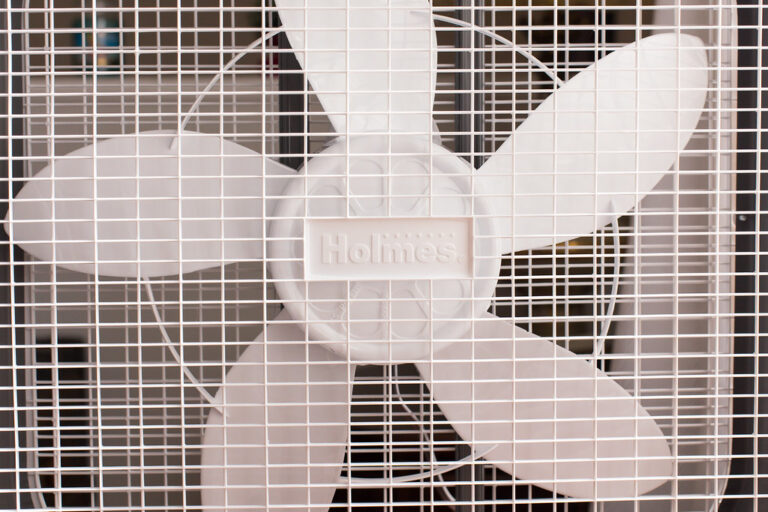
Holmes Twin Window Fan — the project’s engine
A twin window fan is the right engine for three reasons: its two fans can run together or singly, most models reverse between intake and exhaust without remounting, and its frame is built to seal a window opening with its side panels. The Holmes is the class’s reference design. Check price on Amazon
- Strengths: reversible twin fans; window-sealing frame; a household staple with deep availability
- Trade-offs: an axial fan’s modest pressure — the build’s filter sizing must respect it, as the physics section insists
Best for: standard double-hung windows and this project. Owners of sliding windows should read the fit notes in the assembly section before ordering anything.

Filtrete 20x20x1 MERV 13 — the primary filter choice
The 20-by-20 panel gives the fan its area, and the MERV 13 grade sits at the top of what an axial fan should be asked to push — catching pollen, dust and much of the fine fraction while keeping resistance survivable at the fan’s working speeds. Households in gentler air can step down a grade for more flow. Check price on Amazon
- Strengths: full-size area; a grade that balances capture and flow; a brand whose ratings mean what they say
- Trade-offs: the densest sensible choice for this fan — if your fan strains audibly, step down to the MERV 11 alternative below
Best for: pollen and dust briefs in ordinary rooms. Change on evidence — grey, loaded, flow fallen — not on the calendar alone.

Filterbuy 20x20x1 MERV 13 — the multi-pack alternative
The Filterbuy equivalent earns its place for households running the project across a season or several windows: multi-packs bring the per-filter cost down to the level where changing on evidence, generously, is painless. Check price on Amazon
- Strengths: value in multiples; the same standard size and grade logic
- Trade-offs: buy the grade your fan can push — the pack rewards the household that has already proven its build with one filter
Best for: proven builds and multi-window households. The manufactured alternative to the whole project is compared in AirFanta 3Pro review, whose cube is this project’s philosophy with a warranty.
The Build, Step by Step
Step one — fit the fan dry. Mount the twin fan in the window exactly as its maker intends, side panels extended, the opening sealed as well as the frame allows, and run it: this is your baseline flow and your baseline sound, and every later judgement compares against it. Step two — choose the filter’s side. For intake mode, the filter mounts on the outdoor face, so the incoming air is cleaned before the fan touches it and the fan itself stays clean; for room-side recirculation work, it mounts indoors. The outdoor mount is the project’s classic form and the one the steps assume. Step three — attach with a serviceable seal. The filter must sit flush against the fan’s intake face with its edges sealed — painter’s tape around the perimeter is the community’s standard for a reason: it seals, it removes cleanly, and it makes the filter a service part rather than a permanent installation. Gaps are leaks, and leaks are unfiltered air taking the easy road; the seal is not tidiness, it is the filtration. Step four — commission it honestly. Run each speed and listen: a healthy build loses some flow against the baseline and gains a slightly deeper note; a straining build whines, surges or falls to a murmur, and its cure is a grade step down, not a braver speed. Step five — live with it a week before trusting it. Check the seal after weather, check the filter’s face for its loading pattern — even grey is health; a single dark stripe is a leak’s signature — and only then let it run its unattended hours. Readers who want the room-side science of what the cleaned intake achieves will find the placement and circuit logic in where should I place my air purifier, applied there to machines and here to a window. The fan’s own appetite, working against the filter’s resistance, can be estimated by the class method in how much energy does an air purifier use — a filtered window run nightly still costs less than the purifier it rests.
The Three Modes, and Their Seasons
Intake mode is the project’s glory: outdoor air drawn through the filter into the room, which suits the pollen season’s paradox — the house wants ventilation and dreads its cargo — and the mild seasons generally, when the outdoors is worth admitting but not unexamined. A gentle positive pressure is its side benefit: a room fed filtered air leaks outward at its cracks, discouraging unfiltered infiltration. Exhaust mode reverses the fan and expels room air — the cooking hour’s and the renovation day’s tool — with the filter removed or mounted to catch the room’s dust before it coats the fan; exhaust needs a makeup-air path elsewhere, and a second open window across the home makes the pair a whole-house breeze with one filtered end. Recirculation — fan in the window on a closed or mild day, filter on the room side, air cycling through it — turns the build into a window-seat purifier for the room it serves, the mode that carries the project through the seasons when the window’s ventilation is not wanted but its fan is already installed. The seasons assign the modes: pollen takes intake, smoke takes the smoke section’s caution and usually a closed window with recirculation, summer nights take intake while the air is kind and exhaust when the kitchen has been unkind — with the honest caveat, argued in our ventless air conditioners explainer, that a fan cools people rather than rooms, and the filtered intake’s gift on a hot night is clean air in motion, not refrigerated air. A household that learns its window’s three tempers owns a small atmospheric instrument, built from two purchases and a roll of tape.
The Smoke Section: Read Before Fire Season
Wildfire smoke changes the project’s terms and the guide states them without softening. A window fan, filtered or not, is an opening in the house’s envelope, and in heavy smoke the house’s defence is the closed envelope plus internal purification — the configuration our smoke coverage across this site assumes. The filtered intake in light-to-moderate smoke, with a fresh MERV 13 panel and a good seal, is a defensible compromise for households that must ventilate — it admits air far cleaner than the street’s — but it spends the filter fast, it cannot match a sealed room’s protection, and in the worst hours the right answer is the window closed, the fan off or recirculating on its room-side filter, and the household’s purifier carrying the sealed rooms. Judge by your local air quality index and your household’s vulnerabilities, prefer the sealed configuration whenever either is in doubt, and never let the project’s ingenuity argue you out of the conservative answer on a bad day. Ingenuity is for the ordinary seasons; survival arithmetic is for the smoke.
Maintenance, Safety and the Build’s Honest Limits
The filter is the consumable and its rhythm is evidence-based: vacuum its face gently when the grey deepens, replace it when flow falls or the grey turns to felt — in pollen season that may be weeks, in mild air a season. The seal wants checking after storms and after any removal; tape ages, and a perished seal silently converts the build back into a fan. The fan itself works harder than its maker planned, so give it the respect of an attended first season: no straining speeds, no overnight runs until the build has proven its temper, and an ear for the bearing note that says the motor has opinions. Electrically, the build changes nothing — the fan plugs in as it always did — but weather is a new variable: a filter on the outdoor face meets rain, and a soaked panel should be dried or replaced, never run wet against the fan. The limits, finally, stated as the guide’s honour requires: this is a room-scale, fair-weather instrument of genuine usefulness, not a whole-house system and not a substitute for a sealed HEPA machine in the rooms where the vulnerable sleep. Within those limits it is superb. The households that respect them keep their builds for years; the ones that ask the build to be a purifier, a ventilator and a smoke defence at once retire it in a season and blame the tape.
Build or Buy: The Honest Comparison
Against the manufactured field, the build’s case is cost and charm: a fan many households already own, a filter or two a season, and the deep satisfaction of a working instrument made by hand — the same satisfaction this site’s coverage honours in the cube’s folk original. Households whose windows will not take a twin fan — sliders, casements, the rental with its peculiar frames — should adapt rather than abandon: a single fan in a plywood or foam-board insert carries the same physics, and our wider best fans for a bedroom coverage surveys the manufactured fans whose shapes suit the awkward openings. The manufactured case is everything the build is not: sealed performance to a published figure, a warranty, a decade’s consumable supply, and no tape. The households that thrive with the build are the tinkerers, the seasonal users, the second-room improvisers; the households that should buy are the ones whose brief is a bedroom’s every night, a nursery’s sealed standard, a smoke season’s long defence. Many, in the end, do both — the build at the living-room window for the kind seasons, a real machine at the bed’s side for the nights that matter — and that portfolio, unglamorous and effective, is the guide’s actual recommendation for the reader who has followed it this far with a fan already in the window and a hardware store in their future.
Variations: Sliding Windows, Two Windows, and the Whole-House Trick
The standard build assumes a double-hung window; the variations cover the rest of the housing stock. Sliding windows take the fan vertically in a cut-to-fit insert — foam board or thin plywood, weatherstripped at its edges — with the filter mounted to the insert’s face; the physics is unchanged and the carpentry is an afternoon’s. Casement windows, which crank outward, defeat most fan mounts; their households should put the build in another room’s window and let the house’s internal doors distribute the benefit, or skip to the manufactured machines without regret. The two-window trick is the project’s graduation: an intake build at one end of the home, an exhaust fan at the other, and a cross-breeze that exchanges the house’s air through one filtered mouth — on a mild evening this is ventilation of a quality no sealed system matches, and it is the configuration the project’s devotees describe with the most affection. Each variation keeps the commandments — area over density, the seal is the filtration, the fan’s temper respected — and varies only the carpentry. A household that has internalised the commandments can improvise the rest from its own windows, which is, in the end, the project’s real deliverable: not a product, but a competence.
Field Notes: A Season With the Build
Week one is honeymoon and audit at once: the seal checked after the first rain, the filter’s face photographed as its baseline, the fan’s note at each speed learned by ear. By the pollen peak the build has its first evidence — the bedroom’s surfaces filming slower than the unfiltered rooms’, the filter’s face greying evenly, the household sleeping behind a window that is open in every sense except the one that matters. Midsummer tests the temper: a heatwave argues for exhaust at the kitchen end and intake at the bedroom’s, and the two-window household discovers its cross-breeze; a smoke drift from a distant fire closes the window for three days and teaches the household the sealed configuration’s value, with the build demoted to recirculation and no shame in it. Autumn is the build’s easiest season and its audit: the filter, changed once, is read like a season’s diary — pollen’s yellow spring layer under summer’s grey — and the fan, unmounted for a cleaning it has earned, shows its blades cleaner than any unfiltered year left them, because its air arrived pre-cleaned all season. Winter retires the build in most houses, and the retirement is part of the design’s honesty: it is a fair-weather instrument, stored with its last filter as the pattern for spring’s first purchase. A season, whole, for the price of a fan many households already owned and two panels of media — the project’s ledger, kept in weather.
Troubleshooting the Build
The fault list is short and each entry has a cheap first test. Flow collapsed: the filter is loaded or the grade is beyond the fan — vacuum the face, and if the flow does not return, step the grade down; a build that only works with a fresh filter is a build sized wrong. Whistling at the edges: a leak announcing itself — find it with a tissue strip and re-tape; the whistle is the seal’s own diagnostic, and a quiet build is a sealed one. Dust arriving despite the filter: the bypass is open somewhere — the window frame’s own gaps are the usual suspects after the filter’s perimeter, and foam weatherstrip is their cure. The fan running hot or labouring: stop, drop a grade, and reconsider the pairing; a motor’s complaint outranks a project’s pride. Uneven loading on the filter’s face: read it as a map — the dark zone is where the air prefers to travel, usually opposite a gap or a furniture shadow, and the fix is the seal or the room, not the media. Worked in that order, the build’s problems resolve with tape, patience and the occasional honest downgrade — the DIY virtues, applied to the DIY machine.
The Project’s Philosophy: Competence Over Product
It is worth saying plainly why this site — which reviews manufactured machines for a living — publishes a build guide with genuine affection. The window project teaches, in an afternoon, the three lessons the whole category runs on: that filtration is area and resistance in negotiation, that seals decide whether media matters, and that a machine’s value is its delivered air in a real room rather than its figures in a listing. A household that has built the window filter reads every purifier review afterward with educated eyes — it has felt static pressure with its own ears and seen a leak’s signature on a filter’s face — and that education is worth more than any single appliance this page could sell. The manufacturers, to their credit, know it: the Corsi-Rosenthal cube began as exactly this kind of project and became a product without losing its soul, and the window build is the same folk engineering at a different opening in the house. Build it, learn from it, and whether you keep it for a decade or graduate to the manufactured machines with your eyes open, the afternoon will have paid for itself in the only currency this site ultimately deals in — understanding, installed at home.
Renters, Landlords and the Reversibility Rule
The build’s social contract deserves its section, because many of its natural households rent. The project’s virtue in a rental is its reversibility: the fan mounts as its maker intended, the filter tapes to the fan rather than to the window, and the whole assembly leaves the opening exactly as it found it — no screws in frames, no adhesive on paint, no evidence at the inspection but a cleaner room’s history. Renters should nonetheless read their lease’s window clauses, keep the building’s own screens intact behind or before the build as the property requires, and take the assembly down for the landlord’s visits if the relationship is young; the build costs twenty minutes to reinstall and goodwill is the scarcer resource. Landlords reading over a tenant’s shoulder may note the project’s other side: a tenant filtering their intake air is a tenant maintaining the property’s interior against the street’s dust, at their own expense, reversibly. The housing stock’s windows vary and so do its tenures, but the build’s principle travels across all of them — improve the air, alter nothing permanent, and leave the opening better understood than you found it.
Measuring Your Build Without Instruments
The project’s culture is empirical, and its instruments are the household’s. The tissue test maps the intake’s draw and finds the leaks — a strip held at the filter’s face should be held evenly, and at the edges should betray any bypass by fluttering toward the gap. The incense or candle test, used outdoors-side with respect for neighbours and fire, draws the airstream’s portrait in smoke and shows the room where its cleaned air actually travels — information no specification can give about your window, your wind, your room. The dust-cloth comparison — one in the build’s room, one in an unfiltered room, read weekly — is the season’s verdict in grey. And the filter’s own face, photographed monthly, is the build’s logbook: loading’s rate, evenness and colour, from which the experienced builder reads the season the way a forester reads rings. None of this requires a particle counter, though the households that own one will use it and are this project’s natural aristocracy. The point is the habit: a build that is measured is a build that is understood, and an understood build gets its grade stepped, its seal renewed and its modes chosen on evidence — which is the entire difference between a project and a contraption.
Closing: The Window as an Instrument
The main text ends with the build’s transformation of its site. A window, in most houses, is a hole with opinions — admitting weather, noise, pollen and the street on its own terms. The filtered fan makes it an instrument: a chosen aperture, with a known media, a sealed perimeter, three modes and a household that understands all of them. That transformation — from hole to instrument, by two purchases and an afternoon — is the project’s real output, and it persists even if the build itself is one day replaced by manufactured machines, because the understanding stays installed in the household. Build it well, run it honestly, close it without argument when the smoke says so, and let it teach the house what clean air costs and what it is worth. The questions below settle the particulars — the grade, the efficacy, the filter’s side, the changing rhythm, the smoke rule and the build-versus-buy verdict — in the plain form a person standing in a hardware aisle, filter in hand, deserves.
The Cost Ledger, Kept Honestly
Price the project the way this site prices machines, across seasons rather than at the till. Year one: the fan, if the household does not already own it — many do, which is the project’s founding economy — plus two filters and a roll of tape. Following years: the filters alone, at the rhythm the evidence sets, plus the fan’s modest electricity at its working speeds. Against that ledger set the build’s delivered service: a ventilated, filtered room through the kind seasons, a recirculating cleaner in the closed ones, and an education in air that no purchase includes. The manufactured alternative’s ledger — a bedroom machine, its cartridges, its decade — is larger in every column except the education. Neither ledger shames the other; they are different instruments bought with different currencies, money in one case and money-plus-an-afternoon in the other. Households short of afternoons should buy without a backward glance. Households with an afternoon and a window should build, and bank the difference toward the bedroom machine the smoke season will eventually argue for. The project’s economics, like its physics, reward the household that reads them plainly.
A Word on Children, Pets and the Build’s Household Manners
A window build lives at a household’s most interesting altitude — reachable, tappable, investigable — and its manners around the young and the four-legged deserve a paragraph. The fan’s own grille and the window’s lock remain the safety story they always were; the filter adds a soft, tempting surface at exactly paw and finger height, and a panel dented by investigation is a panel whose seal and media have been locally revised — inspect after incidents, and consider the room-side mount in households where the outdoor face is the household’s interior stage. Pets, for their part, tend to adopt the build’s airstream as furniture — the cat in the cleaned breeze is the project’s unofficial mascot across its community — which is harmless to everything except the seal the cat’s weight tests nightly. None of this is a warning; it is the ordinary negotiation between a household and its newest instrument, and it resolves, as the whole project does, with tape, attention and good humour. A build that survives its first toddler and its first cat has earned its place in the window for as many seasons as the household keeps it there.
The Second Season: What Experienced Builders Change
Almost nobody’s second build is their first build repeated, and the community’s accumulated revisions are worth recording for the reader whose first season is ending. The grade gets re-argued with evidence: households that strained at MERV 13 step down and gain a season of flow; households that loafed at MERV 11 step up for the pollen weeks and keep both grades in the cupboard, swapping by season like tyres. The seal gets upgraded from tape alone to tape over a foam gasket, once the household trusts its dimensions — the gasket survives removals the tape did not, and the filter becomes a part that clicks in and out for its vacuumings. The fan gets a companion: a second build at the house’s other end, or a manufactured machine at the bed’s side, as the portfolio logic the comparison section described asserts itself in practice. And the logbook gets kept properly the second year — filter dates, grades, the smoke days’ closures — because the first season’s lesson, universally reported, is that memory edits a build’s history in favour of whatever the builder currently believes. Write it down, in pencil, on the fan’s own frame if necessary. The second season of a measured build is where the project stops being an experiment and becomes infrastructure.
Envoi: Tape, Air and Self-Reliance
There is a photograph every builder of this project eventually takes: the window at evening, the fan turning, the filter’s pale face catching the last light, the room behind it settling into air that arrived on the household’s own terms. It is not a glamorous photograph. It is better than glamorous — it is competent, and competence, in a century of sealed boxes and subscription appliances, has become a quietly radical household aesthetic. This guide has tried to serve that aesthetic with its physics stated plainly, its grades chosen honestly, its smoke caution unsoftened and its comparisons fair in both directions. Build the project if your window, your season and your temperament suit it; buy the machines if they do not; and either way, keep the habit the build teaches — measure, seal, judge by evidence — because the habit outlasts every appliance it will ever be applied to. The questions below are the aisle-side answers. The rest is weather, and you are ready for it.
The Summary, for the Reader in the Hardware Aisle
The whole guide in one breath, for the reader standing between the fan shelf and the filter wall: buy the twin fan if you do not own one; buy the 20-by-20 panel at MERV 13, or MERV 11 if your fan is modest; mount the filter on the air’s entry face; seal every edge like the filtration depends on it, because it does; commission the build by ear against its unfiltered baseline; run intake in the kind seasons, recirculation in the closed ones, and nothing at all through the window in heavy smoke; change the panel on evidence and keep the logbook in pencil. Everything else in this long article is the reasoning, the seasons, the variations and the philosophy — valuable on the evening you build, and more valuable on the evenings the build is tested. The aisle’s other customers are buying cartridges for machines whose principles they may never learn. You are buying two components and an education. The guide envies you the afternoon.
And the Counter-Argument, From the Manufactured Side
Fairness gives the last substantive word to the opposition, because a build guide that never states the case against building is a pamphlet. The manufactured machine arrives tested to a published standard, sealed by people whose profession is seals, warrantied against its own defects, and supported by a consumable supply organised as a business rather than as a hardware aisle’s stocking habits. It asks nothing of its owner’s afternoons, endangers nothing with its experiments, and performs identically in the hands of the unhandy — a constituency the DIY literature forgets at its peril, since most households, most years, are unhandy about most things and deserve clean air anyway. The build’s honest answer is the one this guide has made throughout: it is not a replacement for that machine, in that household, on that evidence. It is a different good — ventilation with filtration, competence with tape — for the households and seasons it suits. Both goods can be true in one house, at different windows, in different months. The guide’s readers, by now, know which of their windows is which.
Postscript: The Build as a Household’s First Instrument
Many households’ air journey begins at this window, and the guide closes by honouring the itinerary. First the build, in a kind season, teaching its lessons cheaply. Then the questions the build cannot answer — the bedroom’s sealed nights, the smoke week’s long defence — asked with an educated household’s precision. Then the manufactured machine, bought on figures the household now knows how to read, placed by rules it understands in its hands, and maintained on a calendar whose logic it learned from a filter’s greying face. Reviewers sometimes worry that project guides cannibalise the machines they themselves recommend; the evidence of this project’s community runs the other way, and so does this site’s experience — builders become the best owners, because they arrive at ownership as a practice rather than as a purchase. Wherever your own itinerary starts, start it with your eyes open and your edges sealed. The window is waiting, the season is turning, and the air — on your terms, at last — is ready to come in.
Really the Last Word: On Tape
An unlikely hero presides over this entire project, and the guide gives it its due before the questions: painter’s tape, the blue or green roll that seals the filter’s edges, bridges the fan’s frame, and comes away clean when the season turns. Tape is the project’s philosophy in material form — adequate, reversible, honest about its own impermanence, and replaced without grief when it ages. The builds that fail are usually the builds that were ashamed of the tape and reached for permanence instead: screws that crack a frame, adhesives that marry the filter to the fan and make its changing a demolition, gaskets cut for a window the household then moves out of. Keep the tape. Let the build stay a build — serviceable, adjustable, forgiving of the builder’s improving skill — and let its impermanence be the feature it is: the reason the project can be tried for the price of an afternoon, improved for the price of a grade change, and retired, if the household graduates to manufactured machines, without a single hole in the window frame to remember it by. Only the understanding stays. It was always the point.
And So, to the Aisle
The questions below are the ones asked in the aisle and at the window — the grade, the proof, the side, the rhythm, the smoke and the verdict — and each is answered in the guide’s own terms, so a reader who starts at the bottom leaves with the same build as the reader who started at the physics. Everything above them is the long version: the seasons, the variations, the measurements, the philosophy and the tape. Everything in them is the short one. Between the two, a household should have all it needs to turn a hole in its wall into an instrument by this evening — and to know, which is the rarer gift, exactly what the instrument can and cannot do when the weather, in every sense, turns.
One final encouragement, addressed to the reader who has followed the whole guide and is still hesitating at the threshold of the hardware store: the build is reversible, the investment is an afternoon, and the worst realistic outcome is a fan you needed anyway and a filter that taught you your fan’s limits. The best realistic outcome is a season of cleaned breezes and a household that understands its own air. Between those outcomes there is no version in which the afternoon is wasted — which is more than can be said for most purchases this site reviews, and is, in the end, the deepest reason the project has earned its long article. Go and build it.
And when it is built — when the seal is taped, the speeds are commissioned, and the first evening’s cleaned air is moving through a room that feels, indefinably, more considered than it did at breakfast — take the photograph. Not for anyone else; for the household’s own record, and for the day a friend stands in the same hardware aisle, filter in hand, and asks whether the project is real. You will be able to answer as this guide has tried to answer: yes, within its physics, on its evidence, in its seasons — and here is exactly how, and exactly where its limits lie, and exactly why, knowing all of that, you would build it again.
The answers below are deliberately practical after so much philosophy — grades, sides, rhythms and verdicts, stated once each — because the reader’s hands, by this point in the article, should be holding a filter rather than a phone. Read them standing at the window if you like. The build will take less time than the article did, and its lessons will stay considerably longer, which is the best ratio any guide in this cluster can offer its readers.
One sentence of summary, to carry into the aisle: area over density, the seal is the filtration, the fan’s temper outranks the project’s pride, the smoke closes the window without argument, and the evidence — the grey face, the even draw, the filming cloth — outranks every claim, including this guide’s. Build by that sentence and the build will teach you the rest itself, season by season, at the price of a filter at a time.
That is the guide, whole — the physics, the parts, the steps, the modes, the cautions and the philosophy — and it ends, as the build begins, at the window itself: sash up, fan seated, panel ready, tape in hand. What happens next is not reading. It is the small, satisfying sound of a household taking its air into its own hands, and this article’s only remaining wish for its reader is a kind season in which to enjoy the result.
The questions that follow are the last formality — the grade to buy, the proof it works, the side to mount, the rhythm to keep, the smoke to respect, and the verdict on building versus buying — each answered once, plainly, in the terms the whole article has used, so that the reader who jumps straight here loses nothing but the pleasure of the long way round.
Read them, then close the page and open the window — the fan, the filter and the tape are waiting, the season is not, and the first cleaned breeze of the build’s life is about twenty minutes away, which is the shortest distance between a household and a new competence that this entire cluster of articles has ever been able to offer any reader, anywhere, at any price, in any season of the year, in any window of the house, on any ordinary afternoon.
Frequently Asked Questions
What MERV filter should I use on a window fan?
Start at MERV 11 to 13, in the largest panel that fits your fan’s face — the 20-by-20-inch size in this build — because area is what lets an axial fan survive the resistance. MERV 13 catches pollen, dust and a useful share of the fine fraction; if your fan strains audibly against it, step down to MERV 11 and take the extra flow, since a moving MERV 11 cleans far more air than a stalled MERV 13. Do not fit the densest panel available: beyond this range, a window fan’s flow collapses and the project becomes decoration.
Does a filter on a window fan actually work?
Yes, within the physics this guide states. In intake mode, the incoming air genuinely passes through the media and arrives measurably cleaner — pollen and dust are exactly the loads a MERV 13 panel handles well — provided the edges are sealed, since unsealed gaps let air bypass the filter entirely. What it does not do is match a sealed HEPA purifier’s whole-room performance, and in heavy wildfire smoke the closed-window configuration remains the right defence, as the smoke section explains. Judge the build as a ventilator that cleans, and it acquits itself; judge it as a purifier, and it was never entered for that examination.
Should the filter go inside or outside the fan?
For intake mode — the classic build — mount it on the outdoor face, so air is cleaned before it reaches the fan and the fan’s own parts stay clean. For recirculation, mount it on the room side, where it filters the room’s air as the fan cycles it. Either way, the rule is the same: the filter sits on the side the air enters from, sealed at its edges, so the airstream must pass through the media rather than around it. A filter mounted on the exit side cleans nothing but the fan’s conscience.
How often does the window filter need changing?
On evidence, not on the calendar: vacuum the face gently when the grey deepens, and replace the panel when airflow falls noticeably or the loading turns from grey to felted. In pollen season a hard-working intake may spend a filter in weeks; in mild air the same panel can serve a season. The multi-pack option linked in this guide exists precisely to make generous changing painless. A soaked filter — rain reaches outdoor mounts — should be dried fully or replaced, never run wet.
Can I run the filtered window fan during wildfire smoke?
With caution, and only in the lighter end of it. A fresh MERV 13 panel, well sealed, in intake mode admits air far cleaner than the street’s, which can be a reasonable compromise when a household must ventilate. But in heavy smoke the right configuration is the conservative one — window closed, the household sealed, internal purification carrying the rooms — because a window remains a hole in the envelope whatever is taped to it. Let the air quality index and your household’s vulnerabilities decide, and when in doubt, close the window; the smoke section of this guide gives the full reasoning.
Is the DIY build better than buying an air purifier?
It is better at being a ventilator that cleans, at a fraction of the cost, with a maker’s satisfaction no purchase includes. It is not better at being a purifier — sealed delivery to a published figure, every night, in the rooms where the vulnerable sleep, is manufactured work, and the build-versus-buy section above argues both sides in full. Most households that love the build end up owning both: the window project for the kind seasons and the living rooms, a real machine for the bedrooms and the smoke. That portfolio is this guide’s honest recommendation.
How do I stop the filter panel bowing or rattling against the fan frame?
Read both symptoms as sealing problems before treating them as noise problems. A panel that bows inward at the centre is telling you the fan is pulling hard against resistance, so check that the filter is not already loaded, that the rating suits this build and that no tape bridge is covering more filter face than intended. A rattle usually means one edge is lifting in the airflow; reseat that side, add a continuous compressible seal rather than extra isolated tape tabs, and support a large panel evenly around its frame. A quiet, flat panel is also the better-filtering panel.