Disclosure: As an Amazon Associate, umtsmarttool.com earns from qualifying purchases. Links to Amazon on this page are affiliate links; they cost you nothing extra. Prices and availability change often, so check the current Amazon listing before you buy.
Where to buy
- Kidde Pro 210 — The Reviewed Pick (check price on Amazon)
- First Alert HOME1 — Strong Alternative (check price on Amazon)
- Kidde Pro 340 — Strong Alternative (check price on Amazon)
- First Alert KITCHEN5 — Strong Alternative (prose-only pick — sold by exact model number through fire-safety retailers)
Read the full guide ↓
Fire extinguisher pros and cons
This fire extinguisher pros and cons guide exists because a fire extinguisher is the rare purchase where the cheap version and the right version look identical on a shelf, and the difference only shows up in a rating string, a valve material and a service tag. Pros and cons only help when each point is argued rather than listed, so this page takes the multipurpose home extinguisher apart claim by claim. The unit at the centre of this page is the Kidde Pro 210, a 2-A:10-B:C multipurpose extinguisher, and everything below is built around verified specifications for that exact model and the alternatives a buyer would realistically cross-shop against it.
The letters tell you what a unit may be used on; the numbers tell you how much of it the unit handled in standardised testing. The A number compares the extinguisher with water: each A unit represents roughly one and a quarter gallons of water in firefighting effect on a standard wood crib fire, so a 3-A unit did the work of about three and three-quarter gallons in the test. The B number is the approximate square footage of a flammable-liquid pan fire that a trained operator extinguished with the unit in testing. The C carries no number, because it is a pass-or-fail electrical conductivity test of the agent stream. Reading a rating like 3-A:40-B:C with that key turns a string of characters into a plain statement of capability.
Readers comparing options across budgets should also see our guide to How To Use A Fire Extinguisher, which applies the same rating-first method to that situation.
For the matching deep-dive, Fire Extinguisher Reviews covers the same ground from a different angle and is worth reading alongside this page.
In this guide
The Strengths, in Depth
- A 2-A rating doubles the ordinary-combustible capacity of the smallest home units while staying easy to carry
- Brass valve assembly is the serviceable, commercial-style hardware fire shops can recharge
- Aluminium cylinder keeps total weight manageable for smaller adults
The Pro 210 is where home extinguishers stop being token purchases. The step from a 1-A to a 2-A rating sounds like a spec-sheet detail, but in test terms it doubles the size of ordinary-combustible fire the unit is certified to handle, and it does it in a package that most adults can still lift one-handed from its bracket. That combination — real rating, manageable weight, serviceable hardware — is why this model shows up in homes, offices and small workshops alike.
Construction is the second argument. The aluminium cylinder resists the corrosion that eats steel cans in damp basements and garages, and the chrome-plated brass valve assembly is the part a service technician actually wants to see, because it can be opened, inspected and recharged. A rechargeable extinguisher is a ten-to-twenty-year appliance with proper servicing; a sealed disposable is a countdown timer.
The Trade-Offs, in Depth
- Costs more of your budget than the basic 1-A home units it outperforms
- The 10-B figure is still modest for a garage spill fire
- Dry chemical discharge leaves a corrosive residue that needs prompt cleanup
The honest limitation is the B number. At 10-B:C this is not the extinguisher for a large flammable-liquid spill; if your risk is a garage with fuel cans and solvents, step up to a 40-B unit and treat this one as the house unit.
After any discharge, even a short test squeeze that some owners regret every year, a rechargeable extinguisher goes to a service company for recharge and a disposable unit is replaced. A partially discharged can loses pressure over the following days and cannot be trusted, whatever the gauge seems to say in the first hour. Watch a fully extinguished fire for re-ignition for a good while afterwards — deep-seated material in upholstery, bins and wall cavities can smoulder unseen — and if there is any doubt at all, the fire service would rather check a cold room than attend a rekindled one at midnight. Ventilate before cleaning up ABC powder, wear gloves and a mask for the cleanup, and keep the powder away from electronics you hope to save until it can be vacuumed with a suitable machine and wiped down.
Specifications and Context
- UL rating: 2-A:10-B:C for ordinary combustibles, flammable liquids and electrical equipment
- Agent: 4 lb multipurpose monoammonium phosphate dry chemical
- Lightweight aluminium cylinder with a chrome-plated brass valve assembly
- Rechargeable by a certified professional after use
- Pressure gauge for at-a-glance monthly checks
- Mounting bracket included
Who Should Buy and Who Should Skip
Placement is a specification too. Fire guidance for homes is consistent: an extinguisher belongs on an exit path, near the room it protects but never so close to the hazard that a fire blocks access to it. The classic error is mounting the kitchen unit above the stove or inside the cupboard over the hob, exactly where a pan fire makes it unreachable. Beside the kitchen door, in the hallway outside bedrooms, and by the garage door that leads back into the house are the positions that survive contact with a real incident. Travel distance matters as well — if reaching the extinguisher means passing the fire, the plan is wrong.
Ownership has a rhythm, and it is printed in the standards rather than invented by manufacturers. Monthly, the owner does the visual check: unit in its place, access clear, gauge in the green, pin and seal intact, no visible damage, and the check recorded — a dated initial on the tag is the usual habit. Annually, a trained technician performs a fuller maintenance examination. Stored-pressure dry chemical units are emptied and examined internally every six years, and the cylinder is hydrostatically pressure-tested every twelve years; carbon dioxide, water and wet chemical units run on a five-year hydrostatic cycle. Non-rechargeable units skip the servicing ladder and are simply removed from service twelve years from their manufacture date.
Agent choice follows the classes. Monoammonium phosphate, the ABC dry chemical in most picks here, melts onto burning solids and coats them, interrupts the chemical reaction in liquid fires, and is electrically non-conductive, which is why one powder can carry all three letters. Its weaknesses are cleanup and corrosion: the fine powder gets everywhere, it is mildly corrosive to electronics and bare metal, and a room discharged into needs prompt, thorough cleaning. Sodium bicarbonate, the BC agent in dedicated kitchen units, is gentler around cooking equipment but carries no A rating. Carbon dioxide leaves no residue and suits electronics, but it has a short range, no cooling effect on deep-seated solids, and it can displace oxygen in a small sealed room, which is why it is not this guide’s general home recommendation.
How It Compares With the Alternatives
| Pick | UL rating | Agent | Size |
|---|---|---|---|
| Kidde Pro 210 | 2-A:10-B:C | ABC dry chemical (monoammonium phosphate) | 4 lb agent charge in a lightweight aluminium cylinder |
| First Alert HOME1 | 1-A:10-B:C | ABC dry chemical (monoammonium phosphate) | Compact home unit, about 4.5 lb total weight |
| Kidde Pro 340 | 3-A:40-B:C | ABC dry chemical (monoammonium phosphate) | 5.5 lb agent charge, about 9 to 9.5 lb total weight |
| First Alert KITCHEN5 | 5-B:C | Sodium bicarbonate dry chemical | Compact kitchen unit with cabinet or bracket mounting |
First Alert HOME1 — Strong Alternative
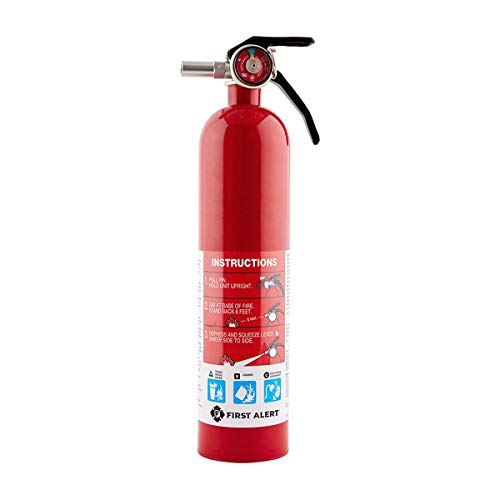
Who it suits: buyers who need a 1-A:10-B:C multipurpose unit — compact home unit, about 4.5 lb total weight — and want hardware that can be serviced rather than thrown away.
Key specs
- UL rating: 1-A:10-B:C for wood, paper, trash, plastics, flammable liquids and electrical equipment fires
- Agent: monoammonium phosphate ABC dry chemical
- All-metal construction with a commercial-grade metal valve and trigger
- Rechargeable by a certified professional after use
- Mounting bracket and strap included; U.S. Coast Guard approved for marine use
- Metal pull pin with safety seal and a corrosion-resistant pressure gauge
Strengths
- Light enough for almost any adult to lift, aim and hold steady through a full discharge
- Rechargeable metal-valve design instead of a throwaway plastic head
- Bracket in the box, so it can live on a wall instead of under a sink
Trade-offs
- The 1-A rating is the minimum sensible size for a home, not a garage or workshop rating
- Short discharge window compared with a 5 lb unit, so placement close to the likely fire matters
- Dry chemical residue is messy and corrosive to electronics after a discharge
The HOME1 is the extinguisher that ends up in more hallways and kitchen doorways than any other on this list, and the reason is simple ergonomics. At roughly four and a half pounds all-in, it is light enough that the person who grabs it in a panic is not also fighting the weight of the canister. The all-metal valve and trigger matter more than the headline rating here, because a metal valve is what makes the unit rechargeable by a professional after a discharge instead of landfill after a single use.
Read the rating honestly. A 1-A:10-B:C label means the unit passed the standard test for a small ordinary-combustible fire and a modest flammable-liquid fire. That is a wastebasket, a curtain edge, a small pan fire caught in the first seconds. It is not a garage full of paint thinner. Used inside its envelope, close to the room it guards and paired with a working smoke alarm and a clear exit path, it does the job it was certified to do.
The waterproof instruction label and the big colour-coded gauge are beginner-friendly details that sound minor until you imagine reading them at 2 a.m. with the alarm sounding. The pull pin carries a safety seal that discourages tampering and shows at a glance, during a monthly check, whether anyone has fiddled with the unit. The included bracket and strap finish the package: this is a unit designed to be mounted visibly, which is exactly where an extinguisher needs to be.
The honest limitation is capacity. The agent charge is small, the discharge is brief, and once the fire is bigger than a wastebasket the correct move is to leave, close the door and call the fire service — no rating on this label changes that.
Best for: households whose risk and rooms match a 1-A:10-B:C rating and who will keep up the monthly checks. / Not suited for: anyone whose space or fuel load clearly demands a different class or a higher rating.
Check on Amazon — check price on Amazon.
Kidde Pro 340 — Strong Alternative
Who it suits: buyers who need a 3-A:40-B:C multipurpose unit — 5.5 lb agent charge, about 9 to 9.5 lb total weight — and want hardware that can be serviced rather than thrown away.
Key specs
- UL rating: 3-A:40-B:C for ordinary combustibles, flammable liquids and electrical equipment
- Agent: 5.5 lb multipurpose monoammonium phosphate dry chemical
- Discharge time of 13 to 15 seconds with a range of 10 to 15 feet (maker figures)
- Operating pressure 195 psi with a pressure gauge
- Rechargeable by a certified professional after use
- Wall hanger included; U.S. Coast Guard approved when fitted with the optional strap bracket
Strengths
- The 40-B figure is four times the liquid-fire capacity of a basic home unit
- A 3-A rating covers a meaningfully larger ordinary-combustible fire
- Long discharge time gives a beginner more working seconds to sweep the base of a fire
Trade-offs
- At around nine pounds it is a two-handed lift for smaller adults
- Bigger footprint needs a proper mounting spot, not a cupboard corner
- Overkill, in size and budget, for a small studio flat
The Pro 340 is the pick for people who read the B number first. Most home fires that escalate involve flammable liquids — cooking oil, garage fuel, solvents, a grill — and the jump from 10-B to 40-B is the single biggest capability step on this page. In test terms that is the difference between a small pan-scale liquid fire and a spill fire covering a workbench area, and it comes in a canister that is still, just, a household size.
The supporting numbers hold up. A 5.5 lb agent charge discharging over roughly thirteen to fifteen seconds gives the operator time to work the PASS technique properly instead of emptying the can in one panicked blast, and the ten-to-fifteen-foot range lets you start from a safer distance and walk in as the fire shrinks. The unit is rechargeable, NFPA 10 compliant in design, and built around a pressure gauge that makes the monthly check a glance rather than a guess.
Weight is the trade you make. At about nine pounds total, this is a unit to mount at a proper grab height on a wall by the garage door or the kitchen exit, and every adult in the house should lift it once, calmly, before it is ever needed. If everyone can handle it, it is the most capable single extinguisher in this guide.
The honest limitation is heft. If the person most likely to use it cannot comfortably hold nine pounds at arm’s length for fifteen seconds, a smaller unit they can actually aim is the safer purchase.
Best for: households whose risk and rooms match a 3-A:40-B:C rating and who will keep up the monthly checks. / Not suited for: anyone whose space or fuel load clearly demands a different class or a higher rating.
Check on Amazon — check price on Amazon.
First Alert KITCHEN5 — Strong Alternative
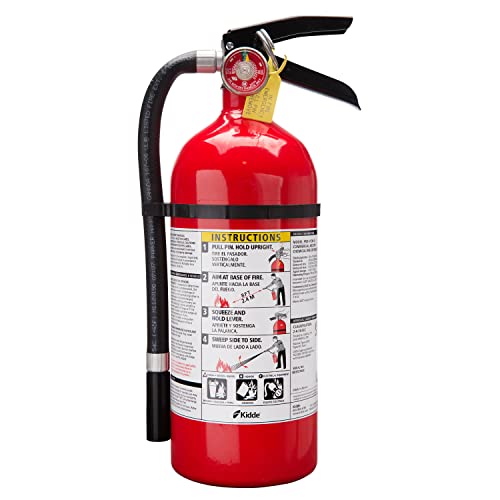
Who it suits: buyers who need a 5-B:C multipurpose unit — compact kitchen unit with cabinet or bracket mounting — and want hardware that can be serviced rather than thrown away.
Key specs
- UL rating: 5-B:C for flammable liquid and electrical fires
- Agent: sodium bicarbonate, chosen for kitchen use
- Durable metal head
- Push-button pressure check
- Compact size fits a cabinet or the included mounting bracket
- Metal pull pin with safety seal
Strengths
- Purpose-built for the stovetop fires that start most home fire incidents
- Sodium bicarbonate agent is the classic choice for grease fires
- Push-button pressure check is the easiest readiness test in this guide
Trade-offs
- No Class A rating, so it does not cover wood, paper or fabric fires
- Not rechargeable in the way the ABC metal-valve units are
- A supplement to a general-purpose extinguisher, not a replacement
The KITCHEN5 makes a deliberate trade: it gives up the Class A rating entirely to specialise in the fires kitchens actually produce. Its sodium bicarbonate agent is the traditional grease-fire chemistry, discharging in a way intended to knock down a pan fire without the violent splatter a badly aimed general-purpose blast can cause, and its 5-B:C rating covers flammable liquids and electrical equipment.
The design details suit the room. It is compact enough for the cabinet beside the stove — close, but never above the burners where you would have to reach through flames — the metal head is durable, and the push-button pressure check turns the monthly readiness test into a two-second press. For a household that cooks with oil daily, a dedicated kitchen unit within arm’s reach of the stove is a rational addition to a general ABC extinguisher in the hallway.
We list it prose-only in this wave because we could not tie a single Amazon ASIN to the standalone KITCHEN5 from an opened source; it also appears in bundles, which muddies the listing picture. Buy by exact model name from a reputable retailer.
The honest limitation is printed on the label: with no A rating, this unit is not certified for ordinary combustibles, so it must never be the household’s sole extinguisher.
Best for: households whose risk and rooms match a 5-B:C rating and who will keep up the monthly checks. / Not suited for: anyone whose space or fuel load clearly demands a different class or a higher rating.
Available from fire-safety retailers — check price on Amazon for the current listing.
Using and Looking After Any Extinguisher You Buy
The operating sequence is taught everywhere as PASS, and it is worth rehearsing mentally until it is automatic. Pull the pin, breaking the tamper seal. Aim the nozzle or hose at the base of the fire, not at the flames — the fuel is at the base, and agent sprayed into the flame plume is wasted. Squeeze the handles together to discharge. Sweep from side to side across the base, moving carefully closer as the fire shrinks, until the agent runs out or the fire is fully out. Keep your back to an exit the entire time, and if the fire does not shrink immediately, or the room fills with smoke, abandon the attempt, close the door behind you and call the fire service from outside.
Grease fires deserve their own paragraph because they punish improvisation. Never use water on burning cooking oil: the water flashes to steam and throws burning oil across the room. If a pan catches and it is safe to do so, the first move is a lid or a baking sheet slid across the pan and the heat turned off — smothering beats spraying for a contained pan fire. The extinguisher is for when that fails or the fire has spread to surrounding material, and a BC-rated kitchen unit or an ABC unit aimed carefully at the base, from the side, is the tool. If flames have reached the wall, cabinets or curtains, the decision is already made: get out.
After any discharge, even a short test squeeze that some owners regret every year, a rechargeable extinguisher goes to a service company for recharge and a disposable unit is replaced. A partially discharged can loses pressure over the following days and cannot be trusted, whatever the gauge seems to say in the first hour. Watch a fully extinguished fire for re-ignition for a good while afterwards — deep-seated material in upholstery, bins and wall cavities can smoulder unseen — and if there is any doubt at all, the fire service would rather check a cold room than attend a rekindled one at midnight. Ventilate before cleaning up ABC powder, wear gloves and a mask for the cleanup, and keep the powder away from electronics you hope to save until it can be vacuumed with a suitable machine and wiped down.
Storage conditions decide whether those intervals are a formality or a failure. Extinguishers dislike damp, salt air, direct heat and freezing garages in roughly that order: corrosion starts at the base ring and around the valve, gauges fog, and hoses crack. A unit mounted indoors on an exit path lives a gentler life than one on an outside wall, and a vehicle unit needs a proper bracket because a loose can rolling in a boot is a damaged can waiting for a date. If a cylinder is dented, deeply rusted, has a bent handle or a gauge that will not hold the green, retire it through a service company, which can depressurise it safely — a charged extinguisher is never a household-recycling item.
Ownership has a rhythm, and it is printed in the standards rather than invented by manufacturers. Monthly, the owner does the visual check: unit in its place, access clear, gauge in the green, pin and seal intact, no visible damage, and the check recorded — a dated initial on the tag is the usual habit. Annually, a trained technician performs a fuller maintenance examination. Stored-pressure dry chemical units are emptied and examined internally every six years, and the cylinder is hydrostatically pressure-tested every twelve years; carbon dioxide, water and wet chemical units run on a five-year hydrostatic cycle. Non-rechargeable units skip the servicing ladder and are simply removed from service twelve years from their manufacture date.
Keep the paperwork boring and complete. Note the purchase date, the service dates and the manufacture date where you keep household documents, and set a calendar reminder for the annual check rather than relying on noticing the tag. Landlords and hosts have the extra discipline that local rules may specify minimum ratings, mounting heights and inspection records for rented property, and those rules vary by jurisdiction — the safe pattern is a rechargeable unit at or above the 2-A:10-B:C line, mounted visibly, with a service tag current. When an inspector, insurer or guest asks, the tag and the gauge answer together.
Common Buying Mistakes
Mounting the extinguisher where the fire will be. Above the stove, beside the boiler, inside the cupboard over the hob — all classic, all unreachable at the moment of need. Mount on the exit side of the risk, close enough to grab, far enough to grab safely.
Reaching for water, or the wrong agent, on grease and electrics. Water on burning oil is an accelerant delivery system. The correct responses are a lid for a contained pan, a BC or ABC extinguisher for a spreading one, and nothing conductive anywhere near energised equipment.
Hiding the extinguisher for the sake of the decor. Inside a deep cupboard, behind coats, under the sink behind the cleaning bottles — every second of searching is fire growth. Visible, signed where necessary, and known to everyone in the home is the standard.
Buying the rating for the wrong room. A 1-A kitchen-door unit is a sensible purchase that becomes a mistake when it is also asked to cover a garage with fuel cans. Ratings are room-specific decisions; walk the property, list what burns in each space, and size each unit to its own space.
Putting a used extinguisher back on the bracket. A discharged or partially discharged unit is spent until a professional recharges it. Mark it, replace it the same week, and never let a half-empty can be the household’s plan.
We also maintain Fire Extinguisher Buying Guide for readers whose budget or living situation sits one step away from the case covered here.
Readers comparing options across budgets should also see our guide to How To Choose A Fire Extinguisher, which applies the same rating-first method to that situation.
For the matching deep-dive, Fire Extinguisher Review covers the same ground from a different angle and is worth reading alongside this page.
Final Recommendation
The Kidde Pro 210 remains the anchor recommendation for this topic: verified 2-A:10-B:C rating, serviceable construction, and a size class that fits real homes. Read the alternatives above honestly, match the rating to your rooms rather than to a headline, and then do the unglamorous part well — mount it visibly, check it monthly, service it on schedule. That routine, more than any single model choice, is what makes a household ready.
More Guidance Worth Reading
Battery and charging fires are the new entry in the home risk list. Lithium battery fires burn hot, can re-ignite, and produce heavy toxic smoke; guidance for small device fires emphasises distance, evacuation and the fire service, with an ABC extinguisher reasonable for a tiny, contained incident attacked from an exit. The preventive half matters more: charge on hard surfaces away from bedding, do not leave damaged or swollen batteries in service, and never let a charging fire be the reason someone re-enters a room. Size your expectations honestly — the extinguisher is the last layer, not the plan.
More Guidance Worth Reading
Think about the second fire, not just the first. A household that discharges its only extinguisher on a bin fire in March and means to replace it soon is, in practice, unprotected for the months that ‘soon’ stretches across. The two-pack pattern and the per-floor pattern in this guide are partly about geography and partly about redundancy: a second unit means a discharge, a failed gauge or a unit away for servicing never leaves the home at zero. Redundancy is unglamorous and it is how every other safety system in a building is designed.
More Guidance Worth Reading
Renovation and building work temporarily rewrite a home’s fire risk. Dust, solvents, temporary electrics, heaters drying plaster and blocked exits all raise the chance and the consequence of an incident at the same time. A second extinguisher staged at the work area, a rule that hot work stops well before the house empties for the night, and clear exit routes through the mess are cheap controls. When the work ends, the extra unit usually earns a permanent home in the garage, which is where this guide wanted one anyway.
More Guidance Worth Reading
Children change the mounting calculation in both directions. The unit must be reachable by the adults who would use it and not a toy for the children who would not: high enough to be out of toddler curiosity, low enough for a smaller adult to lift down under stress, with the pin seal intact as the tamper evidence it is designed to be. Curious older children get the explanation and the rule — this is a tool an adult uses while children leave by the planned route — and the family’s escape plan, practised, is the real child safety device in any fire.
More Guidance Worth Reading
The environmental footnote is worth a paragraph. Dry chemical agent is not a substance to wash into soil or drains in quantity, and a discharged unit’s residue should be collected as solid waste and disposed of under local rules rather than hosed into the garden. Carbon dioxide units avoid residue but bring their own handling rules. None of this changes which extinguisher a household should buy — the fire risk dominates the calculation — but cleanup and disposal done properly are part of owning the device responsibly, and the service company that recharges your unit will take the old agent problem off your hands.
More Guidance Worth Reading
Insurance paperwork rewards the boring details. Insurers and home inspectors look for a current service tag, a gauge in the green and a rating that matches the occupancy, and some policies for rentals and home businesses specify the 2-A:10-B:C minimum explicitly. Keep purchase receipts with the household documents, photograph the tag after each annual service, and note the hydrostatic dates. None of this changes how the extinguisher performs, but all of it changes how a claim, a sale or an inspection goes afterwards.
More Guidance Worth Reading
Finally, a word about confidence, because it cuts both ways. A good extinguisher, correctly mounted and recently checked, should make a household calmer, not bolder. The risk compensation trap — cooking less carefully, storing more fuel, delaying the alarm batteries because ‘there is an extinguisher now’ — is real and documented across safety equipment generally. Hold the line this guide keeps returning to: alarms detect, plans evacuate, extinguishers handle the small remainder, and the fire service handles everything else. Bought and kept in that spirit, the object on the wall is worth every bit of its modest cost.
More Guidance Worth Reading
Signage sounds like a commercial concern until a guest, a babysitter or a cleaner is the person nearest the fire. In a home the equivalent of a sign is a sentence in the house briefing: where the extinguishers are, that they exist for small fires only, and that the children’s job is the exit route. Short-term rental hosts have the formal version of the same duty, and many jurisdictions spell out extinguisher provision for rentals explicitly — one more reason the rechargeable, tag-carrying units in this guide suit that setting better than sealed disposables.
More Guidance Worth Reading
Workshop and garage fires justify the rating step-up this guide keeps recommending. The fuel load is different — petrol for the mower, solvents, paints, a vehicle, chargers, sometimes a heater — and the B number is the one that maps to a spill fire across a bench or floor. A 40-B unit by the door that leads outside, not the door blocked by the workbench, plus a strict rule about fuel storage in approved containers, covers the realistic incident. Welding, grinding and any hot work add a further rule: the extinguisher comes off the wall and stands within reach before the work starts.
More Guidance Worth Reading
Temperature is the quiet specification. Stored-pressure extinguishers carry a rated operating range on the label, and an unheated garage in a hard winter or a vehicle in summer sun can push a unit outside the conditions its pressure and seals were designed around. The gauge tells part of the story — pressure falls in the cold — and the label tells the rest. If a unit must live in an extreme space, choose a model whose stated range covers that space, check it more often, and accept a shorter service life as the cost of the location.
More Guidance Worth Reading
Electrical fires at home increasingly start inside the wall rather than at an appliance: a failing outlet, an overloaded strip, a charger under a pillow. The extinguisher’s role in that scenario is limited and specific — de-energise at the breaker if that can be done safely, treat a small visible fire with the C-rated unit from the doorway, and regard smoke from inside a wall or ceiling as an evacuation and emergency-call event regardless of what is mounted in the hallway. The rating system gives the tool; judgement about the scenario remains the operator’s.
More Guidance Worth Reading
Disposal is the last ownership task and the one most often improvised badly. A charged or partially charged extinguisher is a pressure vessel and hazardous waste in most collection systems: it never goes in household recycling and should never be punctured or thrown in a fire. Fire service companies will depressurise and dispose of retired units, many fire stations accept them, and household hazardous waste events list them explicitly. A fully discharged unit with the head removed is scrap in some areas and still refused in others, so the service company route is the one this guide recommends by default.
More Guidance Worth Reading
The second-hand and marketplace question comes up often enough to answer directly: do not buy a used extinguisher whose history you cannot verify. A pressure vessel with an unknown service record, an out-of-date hydrostatic test or a gauge that happens to read green is a gamble dressed as a saving, and the price difference against a new, tagged, warrantied unit is small in the context of what the device is for. Inherited units in a purchased home get the same treatment: read the manufacture date and the tag, and if either is missing or expired, have a service company assess the unit before it joins the household’s plan.
More Guidance Worth Reading
Finally, rehearse the decision, not just the device. The extinguisher decision tree has three branches: fight a genuinely small fire with an exit at your back; smother a contained pan fire with a lid; or leave, closing doors, and call the fire service. Deciding in advance which branch a scenario belongs to is what prevents the two fatal improvisations — fighting a fire that has already grown past the tool, and freezing while a fightable one grows. The hardware in this guide is well understood and widely serviced; the calm, pre-made decision is the part only the household can supply.
More Guidance Worth Reading
Travel and vehicles change the sizing maths. A car, boat or caravan unit must be small enough to mount securely — an unsecured extinguisher in a vehicle is a projectile in a crash and a dented cylinder afterwards — and rated for the fuel and electrical fires vehicles produce, which is why the 2.5 lb ABC class exists. Marine use adds corrosion and, in some jurisdictions, a Coast Guard approval requirement that the bracket is part of. The home picks in this guide include Coast Guard approved and vehicle-suitable options, but always match the unit and bracket to the rule that applies to your vessel or vehicle.
More Guidance Worth Reading
Commercial instincts help at home more than commercial hardware does. Shops and offices tag, log and schedule their extinguishers because an inspection regime forces them to, and the home version of that discipline is a dated initial on the tag each month and a phone reminder for the annual service. The hardware gap between a good home unit and a light commercial unit is small — several picks in this guide are sold into both worlds — and the maintenance gap is where homes actually fall behind. Buy the serviceable unit, then behave like a premises manager about it, in miniature.
More Guidance Worth Reading
Consider the fire you are actually likely to have. National fire statistics, year after year, put cooking at the top of home fire causes, followed by heating equipment, electrical faults and intentional or smoking-related fires depending on the dataset. That ordering is a shopping list: the kitchen exit and the route past the heating appliance are the priority mounts, the garage earns its higher rating from stored fuel and chargers, and the bedroom hallway unit exists for the night-time alarm scenario. Let your own home’s risk order, not a showroom display, decide where the second and third units go.
More Guidance Worth Reading
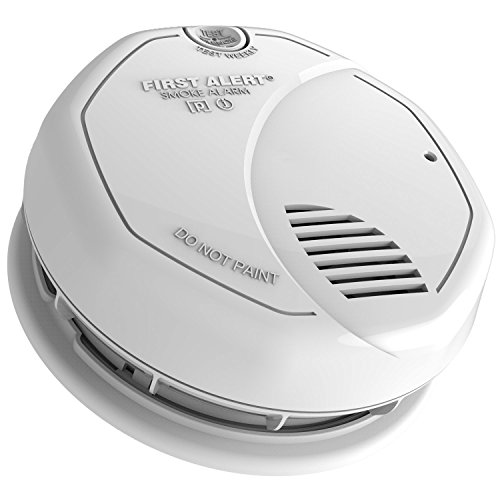
Smoke alarms and extinguishers do different jobs, and a home needs both. The alarm is the detection layer: it buys the minutes in which an extinguisher is useful at all, and it is what wakes the household for the fires nobody should try to fight. The extinguisher is a first-response tool for the small share of incidents that are caught at the wastebasket stage. Buying an extinguisher instead of replacing tired alarms inverts the priorities; the correct order is working alarms on every level and outside sleeping areas first, then extinguishers on the exit paths, then the habit of checking both on the same monthly round.
More Guidance Worth Reading
Mounting height is a small specification with real consequences. Guidance for extinguishers puts the carrying handle of a unit under forty pounds at no more than about five feet from the floor, and heavier units lower, so that the intended user lifts the can down rather than reaching up for it. In a home the practical translation is simpler: mount at the grab height of the shortest adult who might use it, on a bracket that releases with one pull, and never so high that retrieving it becomes a stretch and a wobble at the worst possible moment.
Frequently Asked Questions
Is dry chemical residue dangerous or damaging?
ABC powder is a mild irritant and is corrosive to electronics and bare metal, so ventilate the room, avoid breathing the dust during cleanup, wear gloves, and clean promptly and thoroughly. Food-contact surfaces and anything the powder settled on need washing. It is a mess worth making when the alternative is a fire, but it is a genuine cost of choosing dry chemical over a clean agent.
When should you stop fighting a fire and leave?
Immediately, if the fire is spreading faster than the extinguisher shrinks it, if smoke is banking down, if the extinguisher empties without putting the fire out, or if your exit is threatened. Close doors behind you to slow the fire, get everyone out, and call the fire service from outside. Extinguishers are for incipient fires only.
How often does a fire extinguisher need servicing?
The owner checks it visually every month — gauge in the green, pin and seal intact, access clear, no damage. A trained technician maintains it annually. Stored-pressure dry chemical units get an internal examination every six years and a hydrostatic pressure test every twelve; non-rechargeable units are removed from service twelve years after manufacture.
Where should a kitchen extinguisher be mounted?
Beside the kitchen exit or on the wall near the door — close enough to reach in seconds, never above the stove or in the cupboard over the hob, where a pan fire would block access. Keep your escape route behind you when you use it, and remember a lid slid over a contained pan fire is often the first and best move.
What does a rating like 2-A:10-B:C actually mean?
The letters list the fire classes the unit is certified for — A for ordinary combustibles, B for flammable liquids, C for energised electrical equipment. The A number compares with gallons of water in test effect, at roughly one and a quarter gallons per unit, and the B number approximates the square feet of liquid pan fire a trained operator put out in testing. Bigger numbers mean a bigger tested fire, handled by a trained user.
How many fire extinguishers should a home have?
At least one per floor is the working minimum most fire educators recommend, placed on exit paths, with extra units where risk concentrates — the kitchen exit, the garage and any workshop. Coverage beats size: two standard units in the right rooms protect a home better than one large unit stored far from where fires start.