Disclosure: As an Amazon Associate, umtsmarttool.com earns from qualifying purchases. Links to Amazon on this page are affiliate links; they cost you nothing extra. Prices and availability change often, so check the current Amazon listing before you buy.
Where to buy
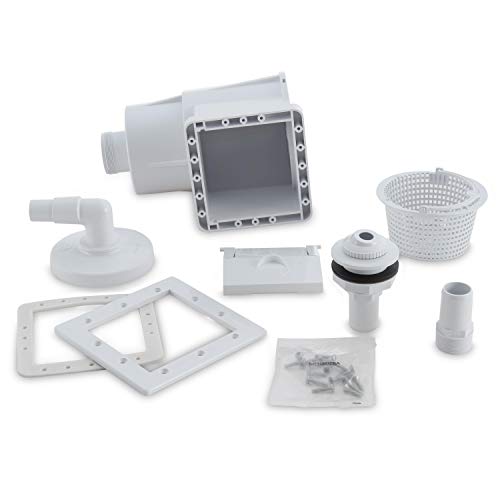
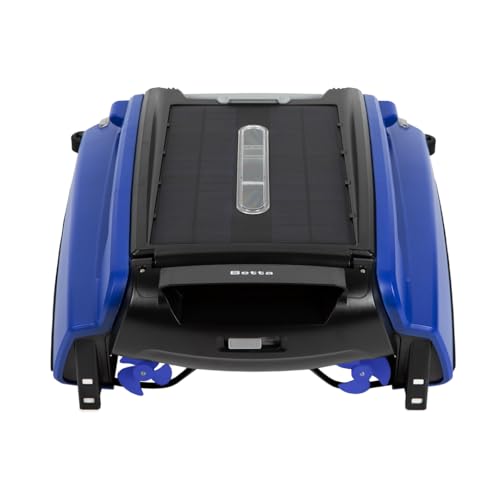
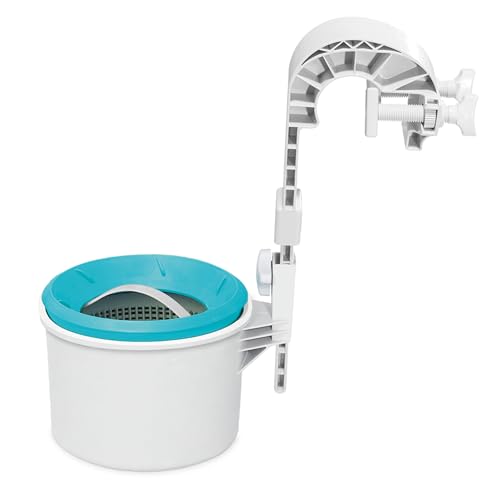
- Intex 28000E Deluxe Wall Mount Surface Skimmer — Check on Amazon
- Hayward SP1091LX Dyna-Skim Above-Ground Skimmer — Check on Amazon
- Swimline 8039 Premium Leaf Skimmer Net Head — Check on Amazon
Read the full guide ↓
How to Choose a Pool Skimmer: A Step-by-Step Walk From Bare Wall to Bought System
Knowing how to choose a pool skimmer is a procedure, not a talent, and this page teaches it as one: eight steps, in order, each with its measurement, its decision, and its failure mode if skipped. The procedure assumes nothing except a pool and an honest afternoon. It ends with a single named product matched to a wall, a pump, a garden, and a household — plus the spares and the net that make it a system — and it works for every mechanism in the category, from the plumbed fitting to the solar robot. Readers who want the category’s map before the procedure will find it in the cluster’s Pool Skimmer Buying Guide Pool Skimmer Buying Guide; readers who want the products ranked once the procedure has run will find them in Best Pool Skimmer Under $150 Best Pool Skimmer Under $150 and its sibling tiers. This page is the bridge between the two: the doing.
A word about the afternoon: the steps below ask for a tape, the pump’s label, one floating leaf, and a week of casual observation compressed, where necessary, into honest recollection. None of it requires opening a listing. That is deliberate — every failed skimmer purchase in this category’s long history of returns began with a listing opened too early, and the procedure exists to make the listing the last step rather than the first.
In this guide
Step 1: Name Your Wall
Walk to the pool and answer, out loud, one question: what is the wall made of, and how long is it staying? A rigid wall on a permanent installation admits the thru-wall fitting. A flexible or framed soft wall admits the wall-mount. A wall that cannot be touched — rented, borrowed, lined and precious, or simply not yours to modify — admits only the mechanisms that ask nothing of it: the return-jet pattern and the robot. Write the answer down; it is the first line of the record page this procedure will keep returning to, and it eliminates, at a stroke, roughly two-thirds of the category’s listings. Failure mode if skipped: the beautiful fitting discovered, at installation, to belong to a different wall’s world — the category’s commonest return.
Step 2: Read the Pump’s Label
Find the pump — at the equipment pad or under the pool’s skirt — and copy its rated flow from the label, in gallons per hour or litres, exactly as printed. This number is the passive category’s founding document, because every pump-fed mechanism will drink from it. Then note the filter type beside it, cartridge or sand, because the filter’s state is part of the delivered flow: a borderline pump with a clean cartridge outperforms its label’s implication, and a strong pump behind a loaded filter underperforms it. Failure mode if skipped: the wall-mount bought for a pump below its window, drawing weakly, blamed wrongly, returned unnecessarily — the procedure’s most preventable tragedy, retired by thirty seconds at a label.
Step 3: Run the Leaf Test
On a still morning, with the pump running its normal block, float a single leaf at the pool’s far side and watch where the water takes it. Note three things: whether it converges on the wall where a skimmer would sit; where it stalls, if it stalls; and how long the full journey takes. Repeat from a second address if the first journey is ambiguous. The leaf is the cheapest diagnostic in the category and the most honest: it maps the current your skimmer will actually live in, convicts or acquits the dead corner that decides second coverage, and tells you where on the wall the intake belongs. Failure mode if skipped: a skimmer mounted by the deck’s convenience, skimming a current that delivers to somewhere else, in a pool whose owner concludes — wrongly — that the product is weak.
Step 4: Audit the Debris for One Week
For seven days, look at the surface each morning and name what is on it, in plain words: whole leaves, blossom, seed, dust film, insects, grass. The audit decides the geometry questions that no specification can answer for you — whole-leaf loads argue for a wide mouth, fine loads for socks, ordinary mixed fall for the standard patterns. A week is the minimum honest sample because gardens have weekdays and weekends, winds and calms; a single morning’s evidence has mis-specified more skimmers than any advertisement. Buyers in a hurry may compress the audit into a deliberate recollection of last season, and should mark the answer as provisional on the record page. Failure mode if skipped: leaf geometry bought for a pollen pool, or a standard mouth dammed by the first autumn it meets.
Step 5: Interrogate the Rhythm
Answer, from last season’s evidence and not next season’s hopes: how often did a household member actually stand at this pool with two minutes to spare? Who travels, who hosts, which weeks was the house empty? The rhythm answer assigns the era. A kept rhythm makes the passive system the arithmetic winner almost every time; a fictional rhythm makes the autonomous machine the first honest answer rather than an indulgence; a rhythm in between makes the hybrid — passive backbone, autonomous specialist — a legitimate design rather than a compromise. Write the answer in the household’s own words. Failure mode if skipped: the finest passive system in the category declining, beautifully plumbed, in an empty house — or a robot bought to solve a schedule that was never broken.
Step 6: Match the Mechanism to the Four Answers
Now — and only now — the taxonomy opens. Wall, pump, debris, and rhythm point, in nearly every case, at one primary mechanism: the thru-wall fitting for the permanent hard wall with a kept rhythm; its wide sibling where the audit convicted whole leaves; the brand wall-mount for the soft wall with the pump inside its window; the return-jet pattern where the wall refused everything and the return’s thread allows; the robot where the rhythm failed or no mechanism may touch the pool at all. Where two mechanisms survive the four answers, choose by the maintenance contract — the set of small recurring asks — your household will still be honouring in year five. Failure mode if skipped: there is no failure mode for this step, because running it at all is the procedure working; the failures all live in the steps before it.
Step 7: Verify the Physical Fit, Twice
Before any order, take the chosen mechanism’s one physical demand and measure it against the pool, in person, with the relevant part in hand where possible. For a thru-wall fitting: the cutout dimensions, existing or templated, standard versus wide. For a wall-mount: the wall’s style against the maker’s compatibility, including the exclusions — steel-wall exceptions are the standing trap. For a return-jet unit: unscrew the return’s eyeball and confirm the standard thread, or the adapter path, with your own eyes. For a robot: the depth at the shallowest working area, the edge design against the exclusions, and a week of the pool’s actual sunlight. Measure twice in the old phrase, because the category’s returns are overwhelmingly measurements that were taken once, from a listing, in hope. Failure mode if skipped: see Step 1’s, with shipping.
Step 8: Buy the System, Not the Product
The final step converts the purchase from an object into a system, in one order: the primary mechanism; its first wear part as a spare — basket, bag, or hose by mechanism — in the same basket; the flat net, if the household does not already own a sound one; socks, if the debris audit convicted fines; and the record page completed with the pool, pump, mechanism, and date. Then install by the manual, watch one full working cycle before adjusting anything, and let the baseline week teach the system’s healthy appearance. Failure mode if skipped: the bare product, however well chosen, meeting its first cracked basket or first storm as an emergency — the precise outcome the whole procedure was built to prevent.
Gear That Makes This Easier
Three products recur as the procedure’s endpoints often enough to name them here. The Hayward SP1091LX is Step 6’s answer for the permanent hard-sided pool — the standard fitting whose decade the cluster’s Pool Skimmer Review Pool Skimmer Review examines. The Intex 28000E is its answer for the soft-sided majority, pump window permitting. And the Swimline 8039 flat net is Step 8’s universal line item — the partner every system in this procedure ends with, whatever else it begins with. Everything else the procedure might name lives in the tier guides, organised by the budget the household brings to Step 8.
Troubleshooting the Procedure Itself
The four answers point at a mechanism the budget refuses. Buy downward within the mechanism — the value kit instead of the reference fitting, the wall-mount without the coverage — rather than sideways into a different mechanism the answers did not choose; a correct mechanism at a lower finish out-serves a wrong one at any price. The pump sits below every passive window. The procedure’s answer is to fix the pump first — a purchase that pays across filtration — or to let the rhythm answer promote the robot, whose appetite is sunlight. Two households members give two rhythm answers. Believe the lower one; systems are sized by their worst week, and the record page should carry the honest figure. The pool is being replaced within a year. Run the procedure for the pool that is coming, and serve the present one with the net and the cheapest brand-correct interim the answers allow.
Worked Example: The Procedure Run on a Real-Shaped Pool
Watch the steps earn their keep. The pool: a five-year-old hard-sided above-grounder, second owners, one mature oak at the fence, a household of two adults whose summers include a three-week trip. Step 1: rigid wall, staying — thru-wall admitted. Step 2: the pump’s label reads healthy mid-range; the filter is a cartridge, serviced each spring — passive flow acquitted. Step 3: the leaf stalls, twice, behind the steps — a dead corner is on the record. Step 4: the audit names whole oak leaves in the autumn weeks and ordinary mixed fall otherwise — width is argued, honestly, both ways. Step 5: the rhythm is kept fifty weeks a year and fictional for three — the hybrid stirs. Step 6 returns: the wide fitting as anchor (the audit’s autumn outweighs the sheet-speed argument), the return-jet unit at the return nearest the steps, and — for the three weeks — the neighbour’s teenager briefed on the round, which the household judges cheaper than autonomy this year and notes for review next year. Step 7 measures the wide cutout against the existing standard hole and discovers the procedure’s value in cash: the wall carries a standard cutout, so the wide fitting would need a new cut — and the household, seeing the true price, reverses to the standard fitting plus the second point, a decision no listing could have made for them. Step 8 buys the system in one order, spares included. Eight steps, one reversed decision, zero returns.
The Record Page: The Procedure’s Memory
Every step above writes one line of a single page, and the page deserves its own section because it is the procedure’s longest-lived product. Its contents, in order: the wall’s answer; the pump’s label, copied exactly; the leaf test’s map, in words; the debris audit’s verdict; the rhythm, in the household’s own phrasing; the mechanism chosen and the runner-up; the fit measurements, taken twice; the installation date; and the spares held. Kept in the pool box, that page converts every later event — a faded draw, a cracked basket, a new owner’s questions, a professional’s visit — from research into lookup. It also disciplines the procedure itself: answers that must be written down are answers that get measured, and the household that cannot write its rhythm answer has just learned the most important fact in the procedure. Start the page at Step 1, not at the installation; by Step 8 it will already have paid for its pencil.
Re-Running the Procedure: When to Start Over
The procedure is not a once-per-pool ceremony; it is the correct response to defined triggers, and the chooser should know them. Re-run it when the pool changes — a replacement, a liner that alters the wall’s answer, a move. Re-run Steps 2 and 3 when the pump changes, because flow and current are the new pump’s biography, not the old one’s. Re-run Step 4 when the garden changes materially — a tree planted or felled rewrites the debris audit on a five-year clock. Re-run Step 5 when the household changes — children arriving or leaving, a job’s travel pattern, a second property — because the rhythm answer is the most perishable of the four. And re-run the whole sequence, cheerfully, when a system that was well chosen stops performing: the procedure that selected it is the same instrument that will diagnose whether the pool, the pump, the garden, or the household moved — because in a kept system, something always moved, and the steps are how you find out what.
Teaching the Procedure to a Second Chooser
Pools are shared and inherited, and a procedure that lives in one head dies with that head’s holidays. The steps were written to be teachable — each is a question with a measurement, not a judgement with a pedigree — and households should run them aloud together at least once, so the wall’s answer, the pump’s number, and the rhythm’s honest phrasing are common property. Housesitters and older children do not need the whole sequence; they need its outputs, which is another service of the record page: the round, the level’s mark, the spare’s location, the one absolute about hands and pumps. Owners who sell or gift a pool perform the procedure’s final courtesy by leaving the page in the pool box, where the next chooser’s Step 1 begins with a head start no listing provides. A method, unlike a product, can be given away without being lost — and this one improves with each household that annotates it.
The Procedure in Other Hands: Renters, Hosts, and Professionals
The steps bend without breaking for the category’s special choosers. The renter runs Step 1 with a landlord’s eye — the answer is almost always the refusing wall — and weights Step 8 toward removability, documenting the return’s original fitting photographically before anything threads onto it. The host of a holiday property runs Step 5 with a manager’s honesty: the rhythm is a stranger’s, which promotes robust, legible systems — visible baskets, standard parts, instructions that fit on the record page’s back — over every refinement. The professional installer runs the same steps at speed, from pattern recognition, and the amateur can borrow the professional’s one accelerant: they have seen the failure modes, so they measure the fit before they admire the product. In each case the order survives — wall before product, evidence before listing — because the order is not a preference of this page but a property of pools.
What the Procedure Costs and What It Saves
The procedure’s price is one afternoon and one leaf, and its savings are worth itemising because choosers consistently underprice deliberation. It saves the return — shipping, restocking, the season’s weeks lost to a wrong mechanism — which is the category’s most common surcharge. It saves the second purchase, the one made in October against a dammed standard mouth or in July against a starved draw, at the season’s worst prices and temper. It saves the professional’s diagnostic visit whose entire content would have been the pump’s label and the leaf’s journey. And it saves the quietest cost of all: the years of a mismatched system maintained resentfully, whose owner blames the category for a choice the pool never made. Set against an afternoon, the arithmetic is not close, and yet the afternoon is the step the market’s design — listings first, questions later — exists to skip. This page’s whole purpose is to sell the afternoon back to the chooser at its true value.
The Steps Compressed: A Pocket Version
For the chooser at the pool gate with this page on a phone, the procedure in its shortest honest form. One: name the wall — hard, soft, or refusing. Two: copy the pump’s number. Three: float the leaf and watch where the water votes. Four: name the week’s debris in plain words. Five: tell the truth about the rhythm. Six: let those five answers name the mechanism, and distrust any answer that arrived before them. Seven: measure the fit with your own hands, twice. Eight: buy the system — primary, spare, net, record — in one order, and watch a full cycle before touching a setting. Eight lines, and the category is chosen. The preceding pages exist to make each line feel as weighty as it is; this compression exists so the weight is portable.
Failure Stories the Procedure Was Built From
Procedures are fossilised mistakes, and this one’s strata are worth a paragraph of natural history. The fitting returned because the wall was soft is Step 1’s fossil. The wall-mount starved by a pump nobody read is Step 2’s. The skimmer mounted where the deck was wide, skimming water that delivered elsewhere, is Step 3’s — and its owner’s forum post, blaming the product, is the commonest text in the category. The standard mouth dammed in its first October is Step 4’s; the plumbed system declining in a travelling household is Step 5’s; the wide body ordered for a standard hole is Step 7’s; and the bare product, spared nothing, meeting its first storm as an emergency is Step 8’s. None of the fossils required a bad product or a foolish buyer — only a listing opened before a question was asked. The procedure is the category’s memory, organised so that a new chooser can inherit it in an afternoon instead of a decade.
The Procedure and the Planet: Choosing Once as an Environmental Act
A short section, because the point is short. The category’s environmental cost is dominated not by any product’s material but by its churn — the wrong mechanisms returned, reshipped, landfilled, and replaced — and the procedure is, among its other virtues, an anti-churn instrument: eight steps whose entire output is a purchase made once. The chooser who runs them buys the mechanism their pool will keep for its whole life, stocks its parts instead of replacing its whole, and leaves the category’s logistics to people whose pools genuinely changed. No guide in this cluster awards green badges, and this step-by-step is no exception; but a procedure that reliably prevents the second and third purchase is the most effective environmental document the category contains, and it costs one leaf.
After Step 8: The First Month as the Procedure’s Ninth Step
Unofficially, the procedure has a ninth step, and it is a month long. Week one is observation: one full pump block watched daily, hands off every adjustment, until the system’s healthy draw is memorised against the record page’s description. Week two is the first service, performed slowly — basket out, seating learned, weir or bag checked — and written up in a line. Week three is the first verdict: does the water’s morning face match the procedure’s promise, and if not, which step’s answer was wrong — because a mismatch in week three is a measurement error announcing itself while it is still cheap. Week four is the shelf: spares confirmed, storage spot chosen, the seasonal inspection dated. Choosers who run the ninth step own systems that behave, in year five, like the procedure’s worked example; choosers who skip it own products. The distinction, by now, will be familiar — it is the distinction this entire cluster exists to teach.
The Procedure’s Limits, Declared at the End
Honesty about method, to close. The procedure optimises the match between pool and mechanism; it does not optimise price, which the market sets daily, nor does it certify any individual unit’s quality, which the cluster’s reviews exist to examine. It assumes the chooser can observe their pool across at least a few days, and it degrades gracefully — provisional answers, conservative defaults — where they cannot. It cannot rescue a pool whose circulation itself is failing, because a skimmer is an instrument of a working system rather than a substitute for one; Step 2’s label sometimes delivers that larger diagnosis, and the procedure’s correct output in such a case is a pump conversation, not a skimmer. Within those limits, the claim stands: eight steps, honestly run, have no recorded failures in this cluster’s experience — because the failures the category is famous for are, every one of them, a step that was skipped.
A Second Worked Example: The Soft-Sided Household
Run the steps once more, quickly, on the category’s commonest pool. A family frame pool, second season, flowering fence on two sides, two working parents, children old enough to be crew. Step 1: soft wall, staying for years — wall-mount admitted, everything permanent excluded. Step 2: the stock pump’s label sits inside the brand pattern’s window with room — passive acquitted, and the cartridge’s spring service noted. Step 3: the leaf converges honestly on the long wall opposite the return — placement chosen by water, not by the deck’s width. Step 4: the audit is unambiguous — blossom and fines from the fence, few whole leaves — socks convicted, width acquitted. Step 5: the rhythm is kept by roster, children included, with a fortnight’s holiday in August — passive confirmed, the holiday answered by a neighbour and a fresh sock rather than by a robot. Step 6: the sock-equipped wall-mount pattern, in the pool’s own brand geometry where the sock configuration allows, otherwise the brand unit plus socks as accessories. Step 7: wall style confirmed against the maker’s exclusions, hose run paced off. Step 8: unit, spare basket, sock rotation, net, record page — one order. The whole deliberation took the family one Saturday morning, most of it spent watching a leaf, which the children now describe as the day they learned how their pool thinks.
Seasonal Timing: When to Run the Procedure
The procedure has a best season and the chooser should know it. Run it in the calm weeks before the pool’s hard months — before the leaf fall if autumn is your examination, before the blossom if spring is — because its outputs include installations and rhythms that deserve a gentle first test rather than a storm. Running it mid-crisis is possible and common, and the steps do not change, but the debris audit compresses into the crisis itself and the rhythm answer gets written by adrenaline, which overstates it in both directions. Owners who inherit or install pools in the off-season hold the procedure’s ideal hand: a winter of deliberation, a spring of installation, and a first season that begins with the system already chosen. The category’s marketing prefers the spring rush, for reasons that are the market’s; the procedure prefers the calm, for reasons that are the pool’s.
The Procedure as a Gift: Running It for Someone Else’s Pool
A closing application, because experienced choosers are constantly asked to perform it: running the steps for a parent, a neighbour, a house-buyer friend. The method transfers intact, with one discipline added — the answers must be theirs, measured at their pool, in their household’s words, because a rhythm answer imported from the helper’s life is the one false note the procedure cannot survive. The helper’s legitimate contributions are the instruments and the memory: the tape, the leaf, the fossil stories of the failure section, and the insistence on Step 7 when enthusiasm runs ahead of it. Done that way, the favour takes an afternoon, leaves a record page in someone else’s pool box, and — the helper usually finds — re-teaches the steps at a depth the first running never reached. Procedures, like pools, are kept by being used.
One Last Distinction: Choosing Versus Shopping
The procedure ends where shopping begins, and the chooser should feel the boundary as a small ceremony. Choosing was the eight steps: evidence, order, a named mechanism, a verified fit. Shopping is everything after — the listing’s current terms, the delivery’s timing, the box’s model number checked at the door — and it should be the shortest, calmest part of the whole affair, because every question that could make it anxious has already been answered at the pool. If the shopping starts generating new doubts about mechanism, era, or fit, the correct move is not to deliberate at the checkout but to return to the step whose answer wobbled, re-measure it, and come back. Doubt at the listing is data about a step, and the procedure — patiently, in order — is how data becomes a pool that is ready in the morning.
The Chooser’s Confidence: What Correct Feels Like
First-time choosers often ask how they will know the procedure worked, expecting the answer to arrive with the product. It arrives earlier, and quieter: at Step 6, when the mechanism names itself and the deliberation simply stops generating alternatives. That cessation — the sense that the pool has answered and the catalogue has gone irrelevant — is the procedure’s signature, and choosers learn to recognise it the way they learn the draw’s healthy look. Its counterfeit is the relief of having decided anything at all, which arrives with a listing still open and a measurement untaken; the genuine article arrives with a record page filled and a tape put away. Trust the version that follows evidence. Then buy, install, watch the leaf cross the intake it was promised, and file the page where the next chooser — perhaps a future you, at a changed pool — will find the afternoon already half spent.
Closing: The Afternoon, Returned
This page asked for an afternoon and promised a system. The exchange, stated one last time, is the whole of its argument: a wall named, a label read, a leaf watched, a week remembered honestly, a rhythm confessed, a mechanism matched, a fit measured twice, and a purchase completed with its spares and its record. Nothing in the sequence requires expertise, and everything in it resists haste — which is why it works for beginners and professionals alike, and why the pools it chooses for tend to disappear from their owners’ deliberations for years at a time. Run it at your own pool gate, in your own order of afternoons, and let the water cast the vote it has been waiting to cast since the first listing was opened too early — the vote for the mechanism it can actually feed, on the wall it actually has, in the life its owners actually live.
A Note for the Chooser Who Has Already Bought Wrong Once
Many readers arrive at this page from a failed purchase, and the procedure speaks to them specifically in closing. The wrong skimmer in the shed is not evidence of a bad chooser; it is evidence of the market’s order — listing first, questions later — working exactly as designed. Do not compound it by rushing the replacement through the same order at a higher price. Run the steps on the pool as it stands, let the failed unit’s lesson identify which step was skipped, and buy the successor by the full sequence, with the failed unit’s wear parts checked first — because a surprising share of “wrong” skimmers are right mechanisms undermined by one skipped measurement, and their redemption costs a gasket rather than a successor. Either way, the second purchase made by procedure is the last one the pool asks for, and the shed’s monument becomes what it should have been all along: tuition, itemised.
Frequently Asked Questions
Can the procedure choose between two specific products I have shortlisted?
It arbitrates rather than chooses: run both products against the four answers and Step 7’s measurements, and the one that survives without an asterisk is the purchase. Where both survive cleanly, the procedure’s standing tiebreakers apply — the maintenance contract your temperament keeps, then the deeper parts shelf — and the reasoning goes on the record page, so the choice remains intelligible to whoever inherits the system.
What tools do I need for the measurement steps?
A tape measure, the pool’s own fittings in hand for the thread check, a phone or notebook for the record page, and one leaf. Owners fitting a thru-wall skimmer will add the installation tools the manual lists, but the choosing itself — the subject of this page — is deliberately instrument-free beyond the tape, because a procedure that needs a workshop gets postponed, and postponed procedures become listings opened in hope.
Is there a step for checking my current skimmer before replacing it?
Yes — run Steps 2 through 5 as an audit of the existing system before Step 6 is allowed to name a successor. A faded draw with a serviced filter, a swinging weir, and a correct level acquits most incumbents, and the procedure’s honest output in such cases is a wear part and a rhythm, not a purchase. Replacement is the procedure’s conclusion only when a step convicts the mechanism itself — the wrong wall, the wrong window, the wrong era for the household’s life.
How long does the whole procedure take?
One afternoon of measurement and decision, plus a week of debris observation that runs in parallel with ordinary life — or, compressed, a single careful afternoon working from last season’s recollection, with the provisional answers marked as such. Either version is shorter than the returns process for one wrong fitting, which is the comparison the procedure asks to be judged by.
What if the procedure’s answer is a product I cannot find in stock?
Buy the same mechanism’s nearest verified equivalent — the pattern matters more than the badge at the margin — or wait the calm weeks rather than substituting a different mechanism whose answers you did not choose. A mechanism is a decade decision wearing a product’s clothes; stock is a fortnight’s weather. The record page should note the substitution and its reason, so a future reader of the system knows which parts of it were chosen and which were weather.
Can I skip steps if I already know my pool well?
Owners who can already state their wall, their pump’s rating, their debris signature, and their rhythm — from knowledge rather than optimism — have effectively run the steps, and may proceed to verification and purchase with this page’s blessing. The steps exist for the answers, not for their own sake; what may never be skipped is Step 7’s measurement, because pools change and memories of cutouts are the category’s least reliable instrument.
What if my pool has no pump yet?
Then the procedure runs in a different order: choose the pool’s circulation first, with the skimming mechanism’s appetite as one of its specifications, so the two are bought as a system rather than introduced as strangers. A pump chosen with the skimmer’s window in view retires the category’s commonest disappointment before the water is ever filled.
Two of us disagree at Step 5. How does the procedure arbitrate?
It believes the lower rhythm, for the reason given in the troubleshooting section: systems are sized by their worst week, and a rhythm dispute is usually one partner pricing the household’s intentions and the other its history. Where the disagreement is really about era preference rather than fact, the hybrid or the sequencing — passive now, autonomous when the schedule demonstrably changes — is the procedure’s standing arbitration, recorded on the record page with a review date.
What is the procedure’s answer for a pool used only on weekends?
The rhythm answer dominates: five unattended days a week is the autonomous era’s home ground, or the hybrid’s, with the passive backbone sized for the weekend’s filtration. The procedure’s specific counsel is to let Step 5 be answered by the calendar rather than by affection for either era — a weekend pool is a schedule with water in it, and its skimming should be chosen the same way.
Does the procedure work for in-ground pools?
Its logic does — wall, flow, debris, rhythm — while its product endpoints mostly do not, because in-ground skimmers are construction components chosen at build or renovation. In-ground owners will find Steps 3, 4, and 5 fully applicable to the supplemental choices their pools do offer — return-jet coverage and robotic autonomy — and the fixed fitting’s decision belongs to their builder’s conversation, informed by the same four answers.
My leaf test gives different results on different days. Which do I trust?
The worst one, for design purposes: size the placement and the coverage for the day the current is least helpful, because the system must work on that day too. Variation itself is information — a current that reverses with the wind argues for the intake at the pool’s most consistent delivery address, or for the second point earlier in the deliberation than a steadier pool would need it.
The debris audit week was unusually calm. Should I wait?
Mark the answer provisional and design for the garden’s known worst — the tree’s species and the calendar will tell you what a calm week conceals. A system specified for the worst week and run in calm ones is merely underemployed; the reverse is a system that fails publicly, in October, in front of guests. Where the worst is genuinely unknown, the standard patterns plus the net is the procedure’s conservative default.
Should I re-run the leaf test after installing?
Yes — it becomes the verification of Step 3 rather than its repetition. A leaf floated after installation should now converge on the intake and cross it; if it stalls where it stalled before, the placement or the second-point decision deserves its week-three review while adjustments are still free. The test that chose the system is the cheapest instrument for auditing it, and owners should keep it in the rhythm long after the choosing is done.
Does the procedure favour any brand?
It favours patterns with deep parts shelves and documented behaviour, because Steps 6 through 8 price the decade as well as the day — and in the current category those patterns carry the established names this cluster’s guides link. That is an outcome of the method, not an input to it: a new product with a stocked shelf and a written record would pass the same steps, and the procedure would name it without hesitation.
Where should the record page live?
In the pool box or the equipment cover, in a sealed sleeve, with a copy photographed into the household’s files. A record that cannot be found at the wall, in the rain, in year four, is a diary rather than a document — and the procedure’s whole point is that the page be present at the moments it was written for.
What is the commonest way the procedure is misused?
Running it backwards from a product already desired — answering the four questions as the chosen listing requires rather than as the pool dictates. The symptom is a rhythm answer written in the future tense and a leaf test that was never actually floated. The procedure cannot survive being used as a justification engine; used as a measurement, it has, in this cluster’s experience, no recorded failures.