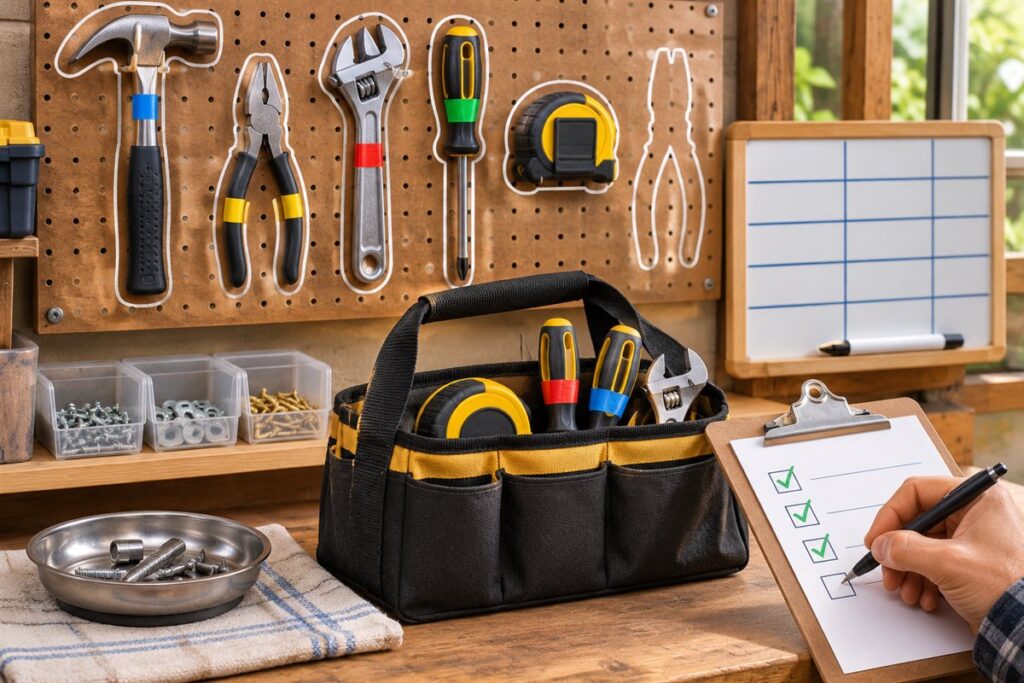
Tools go missing when they have no fixed place and no easy way to be identified. A home for each item, a visible mark of ownership and a quick end-of-job check will prevent most losses.
Why Tools Disappear
Most lost tools are not stolen. They are left on a ladder, buried in a drawer, carried to another room or lent and forgotten. Knowing the usual causes helps you choose the right habit.
- Tools set down mid-task and never collected again.
- Items loaned out without a note.
- Small items that fall in gaps, under benches or into debris.
- Shared spaces where several people use the same tools.
Habits That Work
- Give each tool a permanent spot. Outlines drawn or cut around hanging tools make a missing item obvious at a glance.
- Carry a small tote or belt for a job, and empty it back into its home at the end.
- Mark your tools. A permanent marker, engraving tool or colored tape band in a distinct pattern makes them easy to recognize.
- Keep a short check-out list or whiteboard for loaned tools, with a name and a date.
- Do a ten-count at the end of a session: count the main tools and compare to your list.
Choosing a Method
| Method | Best for | Note |
|---|---|---|
| Shadow outlines | Wall-hung hand tools | Shows gaps immediately |
| Tool tote | Jobs away from the bench | Keeps tools together while you move |
| Marking | Shared tools or borrowing | Use a mark that suits the material |
| Check-out list | Lending to friends | Helps with polite reminders |
| Small parts bins | Bits, screws and fittings | Label the front |
Small Items and Outdoor Jobs
Small bits and fasteners are the most likely to vanish. Work over a tray or a magnetic dish, and use a pouch with a closing flap when you are on a ladder or roof. For work at height, follow the maker’s directions for any ladder and ask a qualified professional about anything beyond basic tasks. Outdoors, lay a light-colored cloth beneath the work so dropped items are easy to see.
Lending is the biggest leak for many people. Be gentle but clear: say when you would like the tool back, and set a reminder for yourself. If a tool is lent often, consider keeping a spare for borrowers, or point friends toward a local tool library if one exists.
Teach everyone who uses the space the same system. A rule everyone follows beats a perfect system only one person knows.
FAQ
Should I mark all my tools?
Marking helps most with tools that look like everyone else’s. Choose a method that will not affect grip, moving parts or the maker’s instructions.
What if a tool is truly gone?
Retrace your last job and check vehicles, bags and neighbors’ spaces. Then add a note to your list so you do not buy a duplicate by accident.
The Short Version
Give tools homes, mark them, carry them in a tote and count them at the end of each job. Track loans in writing.