Disclosure: As an Amazon Associate, umtsmarttool.com earns from qualifying purchases. Links to Amazon on this page are affiliate links; they cost you nothing extra. Prices and availability change often, so check the current Amazon listing before you buy.
Where to buy
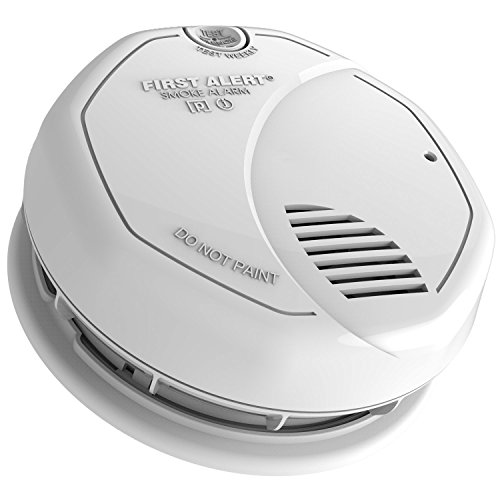
The three alarms this verdict is priced against — each verified to its manufacturer and model: the dual-sensor sealed anchor, the First Alert SA3210; the simplest sealed workhorse, the Kidde i9010; and the combination unit with a carbon monoxide display, the X-Sense SC07. Between them they mark the floor, the middle and the combination step of the value ladder this page climbs. Read the full guide ↓
Is a Smoke Detector Worth It? The Short Answer First
Yes — and the question only looks simple. “Is a smoke detector worth it” is really three questions wearing one coat: whether having alarms at all is worth it (it is, unconditionally, and in many places the law agrees), whether completing and renewing a tired ceiling is worth it (almost always, and cheaply relative to what it guards), and whether the premium end of the category is worth it (sometimes, for identifiable households, and this page will name them). A smoke detector is among the very few household purchases whose value case does not depend on taste: it converts the deadliest minutes of a house fire — the ones where smoke spreads while everyone sleeps — into a warning loud enough to act on, for less than the cost of a family takeaway per protected room per decade. The rest of this page is the honest arithmetic: what you actually get, who benefits most, who can honestly spend less, what ownership costs across ten years, and where the “worth it” line genuinely falls. It is written for the reader who is genuinely undecided — not the reader who needs frightening, since fear is a poor accountant, and not the reader who needs selling, since the numbers sell themselves once they are laid out in the right currencies.
In this guide
What You Actually Get for the Money
Strip the category to the verified essentials and a modern sealed alarm — the First Alert SA3210 is this page’s reference example — delivers: sensing across both fire scenarios (its dual photoelectric and ionisation chambers answer smouldering and flaming fires), a sealed battery warranted to the same ten-year horizon as the sensor, an 85-decibel alarm at ten feet (the standard loudness, designed to penetrate sleep and closed doors), certification to UL 217, and an end-of-life signal that announces its own retirement. A combination unit like the X-Sense SC07 adds electrochemical carbon monoxide sensing to UL 2034 with a display that shows levels. That is the whole purchase: no subscription, no consumables, no app required at the conventional tier — a decade of standing watch for a single modest outlay. Judged as insurance rather than as gadgetry, the cost per protected night rounds to nothing, which is the first and strongest form of the worth-it case. Notice what is not on the list: nothing that entertains, decorates or impresses. The purchase is pure function, which is precisely why its value case survives scrutiny that most household spending cannot — there is no fashion component to depreciate and no feature race to lose. It also cannot be enjoyed, shown off or upgraded for pleasure, which is the psychological reason it is under-bought: the worth-it case must be made in words, as here, because the product will never make it in the showroom.
Who Benefits Most — and Who Can Spend Less
Best for: every sleeping household, with the value rising steeply for specific situations — homes with children or elderly residents who wake slowly or move slowly; closed-door sleepers; multi-storey houses where a ground-floor fire must announce itself upstairs; fuel-burning homes (where the combination version covers the second, invisible hazard); renters filling gaps in a landlord’s provision; and anyone whose current ceiling is expired, incomplete or battery-robbed, for whom the purchase is not an upgrade but a restoration. Not suited for: honestly, no household is unsuited to detection itself — the “not suited” line in this category applies to overspending, not to the device: a household already covered by in-date, tested, interconnected alarms gains little from replacing them early, and a single-occupancy studio with new alarms gains nothing from the connected tier’s reporting layer. The worth-it question, properly asked, is never “alarm or no alarm” but “this alarm, at this tier, for this house”. Deep sleepers and anyone who sleeps with earplugs, medication or alcohol in the picture belong on the benefit side with emphasis: for them the alarm’s job is hardest, and interconnection plus the loudest correct placement is where their money should go. Households with pets occupy a middle line worth stating: the alarm cannot evacuate a pet, but it shortens every human response that can, and the connected tier’s alert to an absent owner’s phone is, for pet households, a benefit with a face on it.
The Cost of Ownership, Honestly Totalled
Across a decade, a sealed conventional alarm costs its purchase price and roughly fifteen minutes a year: a monthly test-button press, a seasonal vacuum of the chamber, a glance at its date. Replaceable-battery models add a small recurring battery cost and the discipline to pay it; hardwired models add nothing but the electrician if the system changes. Connected models add no subscription in this cluster’s picks, but add the household’s digital housekeeping — an account kept current, Wi-Fi maintained. Set against the other side of the ledger: fire services and insurers consistently treat working smoke alarms as the single largest factor in surviving a house fire, and the financial asymmetry is extreme — the device’s whole decade of cost is a rounding error against even a minor kitchen fire’s damage, let alone the losses that do not appear on invoices. There is also a negative cost worth naming: alarms that false-alarm constantly tax their households in sleep and trust until the tax is paid by disabling them — which is why the worth-it calculation should always buy calm sensing (photoelectric or dual near kitchens) rather than the cheapest ionisation unit that will cry wolf monthly. Totalled across the whole house, the honest ledger is almost embarrassing: the complete system — every bedroom, every level, combination cover included — typically costs less over its decade than a single year of the streaming, motoring and takeaway lines in the same household budget, none of which has ever woken anyone in time. The comparison is not an argument for austerity elsewhere; it is a calibration of what “expensive” means in a category where the entire correct answer costs less than most households’ rounding errors.
The Alternatives, and What “Instead” Really Means
The alternatives to a good alarm are not rival gadgets; they are lesser versions of the same promise, and the comparison is instructive. The cheapest certified sealed unit — the Kidde i9010, ionisation sensing, sealed decade, hush and alarm memory — delivers the core promise honourably and is the correct answer where budget is the binding constraint. The combination tier (the SC07 above) is worth its step up exactly where fuel burns. The connected tier is worth its premium to the households named in the review at Smoke Detector Review 2026 Smoke Detector Review 2026. And the true alternative — no alarm, or an expired one kept from sentiment — is the only option this page calls not worth it, at any price including free. The ranked fields by budget, for readers converting this verdict into a shortlist, are at Best Smoke Detector Under $50 Best Smoke Detector Under $50. One more alternative deserves its sentence because households genuinely consider it: relying on a monitored security system’s smoke sensors. Where such a system exists, is maintained and includes monitored detection, it is a legitimate layer — but it supplements rather than replaces standalone alarms in most guidance, because the ceiling sensor that sounds locally, instantly, without any network or subscription, remains the baseline every other layer builds on. Layers are welcome; substitutions should be interrogated, and the interrogation is simply whether the sleeper is woken when every service between the sensor and the siren is having its worst day. On that test the standalone sealed alarm — no network, no account, no subscription — remains the toughest device in the house, and its worth-it case is the one every fancier system must beat rather than assume.
The Objections, Taken Seriously
“My landlord handles that.” Often true, and verifiable in twenty minutes: check the dates, press the tests, count the rooms. Where the provision passes, the worth-it answer is that someone else’s money already bought it; where it fails, a tenant’s own sealed layer is among the cheapest safety purchases a renter can make, and removable at the door. “They just go off when I cook.” That is a placement and sensing objection, not a detection objection — the ten-foot rule, photoelectric calm and a hush button answer it, and the current standard’s nuisance testing has made compliant alarms measurably better housemates. “Nothing has ever happened.” The correct frame for every insurance-like purchase: the premium is tiny, the event is rare and catastrophic, and the absence of past events is not evidence about the next decade — it is merely the reason the purchase feels abstract. “The expensive ones are a racket.” Partly fair: beyond the criteria that matter — sensing, cover, power, placement — money buys convenience and information, not extra survival. This page’s verdict spends accordingly. “I’ll buy one when I get round to it.” The most dangerous objection, because it feels like agreement: the risk does not schedule itself around the intention, and the entire purchase — audit, order, fitting — takes less time than the average person spends deciding on a holiday. Get round to it this week; the phrase has no safer meaning. “The house has survived this long without one.” Survivorship in its purest form: every house that burned also survived, right up to the night it did not, and the years of luck are spent, not banked.
The Value, Priced Three Ways
Worth-it judgements sharpen when the same purchase is priced in three currencies. In money: a protected room costs, per year of its decade, less than a single takeaway coffee — and the whole-house system typically totals less than one month of the insurance premium it complements. In time: the decade asks for perhaps three hours of a household’s attention in total — fitting, testing, vacuuming, one replacement — which is less time than the same household spends choosing a sofa. In risk: the purchase retires the specific scenario that dominates fire fatalities — the night fire, the sleeping household, the late discovery — and no other purchase at any price retires it better; money spent beyond the criteria buys information and convenience, but the risk curve flattens at “certified, placed, in date”, which is reachable at the category’s floor. A product that is cheap in money, cheap in time, and steep in risk retired is the definition of worth it, and the smoke detector may be the purest example in the home. There is a fourth currency, rarely priced: regret asymmetry. Nobody has ever stood in a repaired kitchen wishing they had spent less on the alarm that woke them; the regrets in this category run in one direction only, and a rational buyer prices that asymmetry in advance.
Five Households, Five Versions of the Same Answer
The young family in a two-storey house. Worth it at the system level: bedrooms, hallway, interconnection — because the evacuation being protected involves carrying small people downstairs through the geometry the alarms must announce early. The solo renter in a studio. Worth it at the floor level: one or two sealed units, landlord’s provision audited — the smallest spend in this article, and still not close. The couple in the fuel-heated cottage. Worth it in the combination form: the CO half is the version of the purchase they will never be able to self-verify, which is exactly why it earns its premium. The adult child, buying for a parent. Worth it in the low-maintenance form — sealed, calm, possibly voice or reporting with consent — because the value includes the buyer’s own peace of mind, which is a legitimate line in the ledger. The landlord. Worth it as documentation as much as detection: in-date, logged, tested at tenancy start — the purchase that discharges a duty and evidences it in the same act. Five budgets, five tiers, one verdict — the variation is in the specification, never in the answer. A sixth household tests the frame hardest: the sceptic in the new-build, whose alarms came with the house and whose question is whether to spend anything at all. For them the worth-it purchase is not a product but the audit — dates read, tests pressed, count confirmed — after which the answer is usually that the value was bought by the builder and merely needs keeping.
The Decade View: What Owners Actually Experience
Worth-it verdicts are usually written at the checkout; this one should also be checked against the decade that follows, because the ownership experience is where cheap alarms go to be regretted. Year one is fitting and the first test — the household learns the sound with the doors in their night positions. Years two through nine are, in a well-chosen system, almost entirely silence: the monthly button, the seasonal vacuum, the date in the log quietly ageing. The alarms that fail the worth-it test in this long middle are the ones that interrupt it — the nuisance-prone unit by the kitchen that trains the household to flinch, the replaceable-battery model whose chirps always arrive at 3 a.m. and whose cells are always borrowed back by remotes. Year ten is the end-of-life signal and the replacement purchase, which the log makes a shopping list rather than an investigation. Totalled honestly, the decade of a good system is a handful of minutes and no drama at all — and that absence of drama, purchased once, is precisely what the money bought. Buyers should therefore weight calm and sealed exactly as this page does: not as luxuries, but as the difference between a decade of silence and a decade of small resentments that end, too often, with a disabled alarm. Judge your own current ceiling by this decade view before replacing anything: if the resentments are already accumulating — the flinch at the toaster, the battery-drawer ritual — the system is failing its worth-it test in the present tense, whatever its dates say.
What Each Step Up Actually Buys
The worth-it line moves with the tiers, and the honest way to find it is to price each step by what it adds. Step one — any certified alarm, correctly placed: this is where nearly all the value lives; the move from nothing (or expired) to something certified and in date is the steepest value jump in the category, and it happens at the floor price. Step two — sealed decade and calm sensing: a small step in price buys the removal of the two commonest failure modes (dead or borrowed batteries, nuisance-driven disabling); for most households this is the second-steepest jump and the one this page most recommends. If the whole article had to shrink to one purchasing sentence, it would be this step, applied at every position the count demands. Step three — combination cover: in fuel-burning homes, a second hazard retired for a modest increment; in all-electric homes, optional. Step four — interconnection: in multi-storey, closed-door houses, the conversion of announcement into waking; in a small flat, skippable. Step five — the connected layer: self-testing, voice, reporting — real value for absent, travelling or caring-at-a-distance households, and the first step whose value is honestly zero for a household that will not use it. Zero is not an insult; it is the ladder working as designed, telling a contented household exactly where its money stops needing to climb. Read top-down and stop where the additions stop matching your house: that stopping point, wherever it falls, is your worth-it line, and it is a more useful answer than any single product verdict. Note that the steps are cumulative, not alternative: each assumes the ones below it are in place, which is why a connected alarm in a house missing a bedroom unit is the category’s classic mis-spend — step five bought while step one stands open.
The One Case Where the Answer Gets Complicated
Honesty requires the exception-shaped discussion: the household that already owns the full, correct, in-date system and asks whether the newest generation is worth replacing it for. Here the answer is genuinely no, and the reasons are instructive. Standards grandfather working installations because the marginal gain of a newer edition over a functioning, tested, correctly placed predecessor is small against the waste of retiring good years; sensors do not read marketing calendars. The same logic disciplines the connected temptation: a self-testing layer is worth buying at a natural replacement point, not worth scrapping five good years to obtain early. Where the complicated case resolves differently is at the edges — a household whose “working system” contains one expired unit, one bedroom gap, or one ionisation unit crying wolf by the kitchen does not own the system it thinks it owns, and targeted completion of those edges is worth it immediately. The worth-it question, in other words, rewards an audit and punishes an assumption — which is why this page keeps prescribing the twenty-minute ceiling check as the first purchase, at a price of nothing. Households that run the audit usually discover the complicated case is not theirs: somewhere in the house there is almost always an expired unit, a missing bedroom or a battery borrowed long ago, and the honest answer snaps back to the simple one — yes, worth it, starting with that gap.
Empty Houses, Second Homes and the Worth-It Edge Cases
The verdict’s edges are worth testing. A second home stands empty for weeks: is detection worth it where nobody sleeps? Partly — the alarm cannot save an absent sleeper, but it protects the building, the neighbours and the insurance position, and the connected tier’s reporting converts it from a sound nobody hears into a notification somebody can act on; for empty properties the connected step is arguably worth more, not less. A home being renovated: worth it with placement discipline, since works dust argues for temporary repositioning per the manufacturer’s guidance rather than removal — a detector in a drawer during the riskiest month (hot works, stored solvents) is the category’s saddest irony. A house on the market: worth it as presentation and as conscience — buyers and surveyors read dates, and no vendor should hand over a ceiling they would not sleep under. A student house: worth it at the landlord’s level and the tenants’ alike, with the calm-sensing specification doing double duty against heroic cooking. A boatshed, a glamping pod, a garden office with a stove: each is a small sleeping or working space with a real fire load, and each deserves its own honest answer from the same ladder — count first, then the hazard, then the tier. Each edge case bends the specification; none bends the verdict, which is what makes the verdict sturdy. The caravan, the boat and the workshop each deserve their honest footnote — specialised spaces want specialised detection (heat alarms where dust and fumes live), and the worth-it answer there is “yes, and not this product”, which a trustworthy page should be able to say.
The Legal and Insurance Footnote
Two external ledgers reinforce the verdict without being its foundation. Legally, many jurisdictions require working smoke alarms in dwellings — at sale, at tenancy, or continuously — and landlords in particular carry defined duties; a purchase that discharges a legal obligation while protecting the sleeper has two returns on the same money, and the dates-and-log discipline this cluster recommends is what turns compliance into evidence. On insurance, the details vary by policy and place, and this page prints no specifics it cannot verify — but the direction is consistent: insurers ask about working alarms after incidents, some reward their presence, and none has ever penalised a household for detecting a fire early. Treat both ledgers as bonuses stacked on the primary case, which needs no help: the alarm is worth it in the bedroom at 3 a.m., and everything else is paperwork agreeing afterwards. One practical consequence follows for sellers and landlords alike: keep the purchase receipts and the fitting dates with the property documents, because in both ledgers the value lives in the evidence, and evidence is cheapest to keep at the moment it is created. Tenants benefit symmetrically: a dated log of the landlord’s provision — or of its gaps — is the document that turns a maintenance request into a compliance conversation.
At the Checkout: Turning the Verdict into a Basket
Verdicts are cheap; baskets are commitments, so here is the verdict operationalised for the commonest reader — a family house, fuel heating, two floors, three bedrooms. The basket: dual-sensor sealed units for the three bedrooms; a combination unit with a display for the landing; a combination or dual unit for the ground-floor hallway; one sealed unit for the basement level. Six positions, one brand family where interconnection is planned, dates photographed on arrival, the log started the same evening. Fit them on one weekend afternoon, test them with the whole household listening, and write the drill — out, and to the meeting point — on the log’s first page while the sound is still in everyone’s ears. The basket’s total sits in the modest band this page has described throughout — the price of a middling household appliance, amortised over ten years and six rooms — and every line of it maps to a step in the step-up ladder above, with nothing bought twice and nothing bought for show. Studios and flats scale the same logic down; larger and more complex houses scale it up with the count, not the tier. If the basket provokes a wince, cut from the top of the ladder (the connected layer) and never from the bottom (a position) — the worth-it structure survives trimming at the feature end and collapses if trimmed at the coverage end. Phase it if the budget demands: bedrooms and landing this month, hallway and basement next, with the dates written in the log as commitments rather than intentions — a phased system completed is worth more than a flagship system admired in a basket screenshot.
How to Tell Whether Your Current Alarms Are Still Worth Keeping
The verdict cuts both ways, and this page should hand the reader the keeping test as plainly as the buying one. An existing alarm is worth keeping when four checks pass: its manufacture date leaves it comfortably inside its decade; its test button produces the full alarm sound, promptly, heard from the furthest bedroom with doors closed; its sensing suits its room (dual or photoelectric in bedrooms, calm sensing near the kitchen); and its position still matches the house as it is now — renovations, converted rooms and new fuel appliances all quietly rewrite the map. A fifth, softer check completes the set: the household still trusts it — an alarm everyone has learned to ignore has failed socially whatever its electronics report, and replacement with a calmer model is the honest fix. Fail any one check and the unit moves from asset to liability in the ledger, because a kept-but-failed alarm is worse than an honest gap: the gap at least advertises itself. The test takes minutes per unit and needs no tools beyond a step ladder and a notebook; run it annually, on a date the household remembers — a birthday, a new year — and the worth-it question never has to be asked in the abstract again, because the ceiling answers it in specifics. Keep the results in the log beside the purchase dates; a ceiling with a written history is, at every future decision point, worth more than the same ceiling remembered.
A Word About Fear, Since This Category Runs on It
Smoke detectors are sold with more fear than any other household device, and a worth-it page should declare its own method: this verdict was reached without a single frightening statistic, because the arithmetic does not need any. The honest case is boring — a rare catastrophic event, a trivial premium, a large asymmetry — and boring cases are the ones that survive a decade of hindsight. Boring is also, not coincidentally, what the product itself should be: the best alarm in this cluster is the one its household forgets exists, right up to the night it justifies its entire decade in ninety seconds. Readers should apply the same suspicion to this page’s restraint as to others’ alarm: ask of every claim here whether it was a number, a criterion or a consequence, and discount anything that was merely a mood. The detector’s worth was never in the fear. It is in the quiet decade of nothing happening, punctuated — in the one house in thousands — by the loudest, most valuable sound a ceiling can make. Buy the decade, keep the log, and spend the attention this page has saved you on anything else in the house at all.
Renters: the Ten-Minute Version of This Whole Page
Renters ask the worth-it question with a twist — why buy protection for someone else’s building? — and the answer survives the twist intact. The building is the landlord’s; the sleep is yours, and the alarm protects the sleeper first and the structure second. Everything in a tenancy is temporary except the nights spent there, and those are exactly what the purchase covers. The ten-minute version: audit the fitted provision (dates, tests, count); report failures to the landlord in writing, since the duty is usually theirs; and where the provision still falls short, fit your own sealed battery units at the gaps — no wiring, no drilling beyond the bracket screws or adhesive options the manufacturer allows, fully removable at the end of the tenancy with their remaining years yours to take to the next home. The spend is the smallest in this article and the portability makes it, uniquely, an asset rather than a fixture: a sealed unit bought in your first rental can still be inside its decade in your third. Few purchases follow their owner so faithfully, and none protects them so cheaply on the way. Keep the landlord correspondence with the tenancy papers; if the fitted provision is ever disputed, the dated letter asking for working alarms is the renter’s strongest document, and it costs a stamp.
The Gift Test: Would You Buy It for Someone You Love?
A final calibration, because worth-it questions resolve fastest when the buyer and the beneficiary are different people. Nobody hesitates over a smoke detector for a child’s first flat, a parent’s cottage or a friend’s new house — the same basket that provokes deliberation at one’s own checkout is bought instantly, even eagerly, when the sleeper is someone else. That asymmetry is diagnostic: the hesitation at home is never really about the money, which is trivial, or the value, which the gift instinct concedes immediately; it is about the abstraction of one’s own risk, the mind’s discount on a catastrophe it cannot picture happening to itself. The gift test corrects the discount by changing the face in the bedroom. Run your own ceiling through it — if the basket is worth buying for them, it is worth buying for you, at the same specification, this week — and let the question this page opened with close in the way it closes for everyone who answers it honestly: yes, and here is the list. The gift framing has one more use: it is the fastest way to settle a household argument about tiers, because nobody argues that a parent deserves the nuisance-prone unit by the kitchen. Fit the gift together where you can — the demonstration of the test button is worth more than the wrapping, and it starts the recipient’s log with its first entry already written.
Frequently Asked Questions
Is a smoke detector worth it if my home already has some?
If they are in date, tested and correctly placed, the marginal purchase is not — your money is already working. If any are expired, missing from a bedroom, or running on borrowed batteries, then yes: completing a ceiling is the highest-value version of this purchase. The audit that tells you which situation you are in costs twenty minutes and a step ladder, and it should precede any spending decision on this page. Bring a notebook and a phone for date photographs; the audit’s output is the shopping list, and households that skip it reliably buy the wrong unit first.
Are expensive smoke detectors worth the extra?
Only when the extra buys a criterion your house needs: combination cover where fuel burns, interconnection across floors, a display where information matters, self-testing where nobody tests. Past those, the premium buys finish and features, and this page scores it optional. The discipline is to name the criterion before admiring the product — a feature in search of a problem is the definition of not worth it, in this category and most others. Write the criterion on the log’s first page, in the household’s own words, and the next decade of purchases argues with the note rather than with each other.
Is a combination smoke and CO detector worth it?
In any home that burns fuel or adjoins a garage, yes — it covers a second, undetectable-by-humans hazard in the same ceiling position for a modest step up. In a genuinely all-electric home with no garage, it is a judgement call weighted toward the hallway position. Consider also the future: a home that may gain a stove, a generator habit or a garage conversion within the decade is a fuel home in waiting, and the combination unit bought now is the cheaper path. The same forward glance applies to the nursery, the lodger and the annexe — buy for the house the decade will make, within reason, and the ceiling stays right while the family changes underneath it.
How long does the value last?
Ten years from the manufacture date — the decade is the product. A unit bought fresh delivers the full term; check the date on delivery so the worth-it arithmetic you did is the arithmetic you receive. An old-stock bargain at two years into its decade is not the same product at a lower price; it is four-fifths of the product, and the missing fifth is the part that cannot be bought back later. Price per remaining year is the only honest unit price in this category, and by that measure the freshest unit at full price routinely beats the stale one at a discount.
Is it worth replacing alarms that still work but are old?
At the decade, yes, without exception: sensors age whether or not the test button still chirps, and the end-of-life rule exists because a sounding horn is not proof of a sensing chamber. Before the decade, a working, tested unit earns its remaining years. Sentiment is the usual obstacle — the alarm that has “always been fine” — and the answer is that its fineness is exactly what can no longer be verified from the ground. Retire it with thanks, recycle it as the manufacturer directs, and let its replacement inherit the bracket and the goodwill both.
Is a smoke detector worth it for a home I am about to sell?
Yes, twice over: the buyers inherit real protection, and the survey photographs a ceiling whose dates argue the house was maintained. Fit fresh units, log them, and leave the log with the house documents — the smallest line in the sale that says the most about the seller. Do not, whatever the temptation, leave the old units and a verbal assurance; the dates are printed on the devices, and they will be read. A vendor who fits fresh alarms unprompted has also bought the smoothest possible survey conversation, at the category’s floor price.
Does a smoke detector lower insurance costs?
Policies vary and this page will not invent a figure; the defensible claim is directional — insurers value working alarms, ask about them after incidents, and occasionally reward them in premiums. Buy the alarm for the bedroom, and treat any premium effect as a bonus that arrives in writing or not at all. If a discount exists on your policy, the log and the receipts are what claim it — one more return on the same paperwork. Ask the insurer directly at renewal; the question costs a phone call and the answer, either way, is information the household owns forever.
Is upgrading to interconnected alarms worth it?
In a house of closed doors and more than one floor, yes — it is the step this page ranks just below completing the count, because it converts a distant announcement into a waking. In a compact flat, it is the step most honestly skipped. Judge by the furthest bedroom’s door at night, not by the feature list. If the house will gain a storey, a lodger or a nursery within the decade, buy the networkable family now and let the system grow into the house’s future shape. The upgrade, when it comes, then costs the added units alone — the family decision, made once, pays quietly for years.

What is the cheapest way to get most of the value?
Complete the count with certified sealed units, photoelectric or dual sensing in the bedrooms, one combination unit at the hallway if fuel burns. That basket captures the overwhelming majority of the protection this page describes, at the category’s floor prices. It is the basket this page would buy with its own money in a house it loved on a budget it respected — which is the only honest form a worth-it recommendation can take. Resist, in the basket and everywhere, the multipack in the wrong model: a discount on the wrong sensing is not a saving but a decade-long compromise at a slightly better price.
The Verdict, Restated for Skimmers
- Worth it? Yes — at the floor tier, for every sleeping household, without a close second in the home-safety budget.
- Worth upgrading? Yes where a criterion is missing: a bedroom gap, an expired unit, combination cover in a fuel home, interconnection across floors.
- Worth the connected premium? For absent, travelling and caring-at-a-distance households; optional for everyone home every night.
- Not worth it? Replacing a healthy in-date system early, and any version of “none” or “expired but familiar”.
- First move: the twenty-minute audit — dates, tests, count — before any money moves at all.
Final Verdict
Best for: every household that sleeps — which is the point. A smoke detector is worth it the way a seatbelt is worth it: the arithmetic is not close, the cost is trivial against the stake, and the only genuinely bad purchase in the category is the absent or expired one. Spend to the criteria — the First Alert SA3210 for dual-sensor bedrooms, the X-Sense SC07 where fuel burns — complete the count, check the dates, and let the question close for a decade. If this page has done its work, the question will not need asking again until the end-of-life chirps begin — at which point the answer, and the shopping list, will already be in the log. Worth it, then: not as a slogan, but as an audited, dated, tested fact about your ceiling — the rare verdict a household can verify for itself, on a ladder, in twenty minutes, any weekend it chooses, starting this one.