Disclosure: As an Amazon Associate, umtsmarttool.com earns from qualifying purchases. Links to Amazon on this page are affiliate links; they cost you nothing extra. Prices and availability change often, so check the current Amazon listing before you buy.
Where to buy
The product under review, plus the two alternatives readers ask about most. Check the current Amazon listing before you buy.
- She’s Birdie Original Personal Safety Alarm — Best Overall: Check on Amazon
- Hootie Personal Safety Alarm — Best for Beginners: Check on Amazon
- POM Personal Safety Alarm — Best Rechargeable: Check on Amazon
Read the full guide ↓
Personal safety alarm review 2026: What the Category Looks Like Now
A personal safety alarm review written for 2026 has to start by acknowledging how settled this category has become. The pull-pin keychain siren won. Around that settled core, the year’s meaningful changes are at the edges: USB-C charging replacing proprietary cables, low-battery warnings appearing on mainstream models, a 135 dB-rated entrant from the panic-button world, and the design leader’s own rechargeable successor adding a power switch. This review uses the She’s Birdie Original as its reference product — still the category’s benchmark — and measures the current field against it.
The short verdict for 2026: the benchmark holds. The Birdie’s combination of pull-top activation, push-together stopping, strobe and accessory styling remains the one most buyers should start from, while the POM and Vantamo now beat it on power management and the Silent Beacon beats it on headline loudness. What has not changed in 2026 is the category’s honest limit, and this review will repeat it: an alarm summons attention, nothing more. For the full ranked field, see Best Personal Safety Alarm Under $100 Best Personal Safety Alarm Under $100.
In this guide
Quick Verdict
Best for: everyday carriers who want the alarm most likely to still be on the bag in a year / Not suited for: buyers covering a whole household on a budget, or anyone who refuses coin-cell batteries on principle.
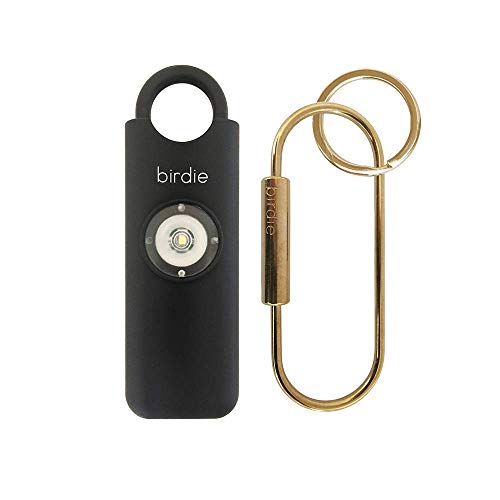
She’s Birdie Original Personal Safety Alarm — Best Overall
At a glance: 130 dB siren (maker-rated). Runs on 2 CR2032 batteries (included)
- 130 dB siren (maker-rated)
- Strobe light that flashes while the siren sounds
- Pull-top activation: pull the top ring to sound, push back to stop
- Runs on 2 CR2032 batteries (included)
- Keychain carry in a range of colors
Strengths
- Designed to look like an accessory rather than a security device, so it stays on the bag
- Stopping the alarm is just as fast as starting it, which limits accidental noise
- Battery door uses common CR2032 cells sold almost everywhere
Trade-offs
- Costs more per unit than the plain multipack alarms in this guide
- The strobe is a visibility aid, not a work light for dark paths
- Loud enough to startle the person carrying it the first time it is test-fired indoors
Where the Birdie earns its place is in the details of stopping and starting. Some alarms require you to hunt for a tiny pin and reinsert it precisely; the Birdie simply pushes back together, which matters when your hands are shaking. The strobe is not decoration — in a dark car park or a noisy street, a flashing light gives bystanders a direction to look while the siren gives them a reason. Battery life in standby is long because the circuit draws almost nothing until the top separates.
The trade-offs are the usual ones for a design-led product. You pay a premium over the plain multipacks, and the coin cells are a recurring errand. The shape, while charming, is a little thick for a front jeans pocket. None of that undermines the core proposition: this is the alarm people in our research most consistently reported still carrying a year after buying, and carry consistency beats a louder siren left at home.
Best for: anyone who wants the alarm they will actually carry every day, in a design that suits work and social bags / Not suited for: buyers who want the cheapest route to covering a whole household
Design and Build, in Detail
The Birdie’s body is a smooth, bird-shaped shell with a metal-look keychain ring through the top section — the part that pulls away. The two halves separate with a firm, deliberate pull: firm enough that bag chaos rarely triggers it, light enough that a stressed hand manages it first try. There are no buttons, no seams to align when stopping, and no orientation to learn. Colors do real work here; a device offered in colors people choose like an accessory gets treated like one, and accessories get carried.
Build quality is a step above the multipack class: the shell resists the flex and creak of budget ABS, and the strobe lens sits protected within the body’s curve. It is not a ruggedized device — no water-resistance rating is claimed — and the decorative ring is a styling piece rather than a load-bearing carabiner. Judge it as a well-made consumer accessory that happens to contain a siren, and expectations land correctly.
Performance in Real Use Cases
The use case that defines this product is the ordinary walk: car park, station platform, the last street before home. In those settings the Birdie’s job is to convert a bad moment into a public one, and the siren-plus-strobe combination does that as well as anything in the 130 dB class. The strobe earns its keep after dark and in noisy environments where sound alone can be masked. At home, the same alarm lives on the keys by the door — it is not, and does not pretend to be, a door or window device; households wanting opening coverage should pair it with the contact alarms in our Best Personal Safety Alarm For Home Use Under $50 Best Personal Safety Alarm For Home Use Under $50 guide.
The failure mode to plan around is silent battery decline. Coin cells fade gradually, and the only warning is a test pull. Owners who build a monthly test into an existing routine — the smoke-alarm check, the first-of-the-month tidy — report the device simply working for years. Owners who skip the test are carrying a hope, not an alarm. That single habit is the difference between the Birdie as equipment and the Birdie as jewelry.
Setup, Maintenance and Daily Life
Setup is a non-event: attach to keys or bag, pull once to hear it, push together to stop it. Maintenance is the coin-cell swap when the test pull sounds weak, plus keeping a spare pair of CR2032 cells in the house — they are among the most common batteries sold, which is itself a quiet advantage over proprietary rechargeables in a decade-long ownership view. There is no firmware, no pairing, no account, and nothing to update; in a house full of demanding gadgets, the Birdie’s dumbness is a feature.

Hootie Personal Safety Alarm — Best for Beginners
At a glance: 130 dB siren (maker-rated). Replaceable batteries (no charging required)
- 130 dB siren (maker-rated)
- Strobe light paired with the siren
- Pull-pin activation: pull the pin out to sound, reinsert to stop
- Replaceable batteries (no charging required)
- Clips to keys, bags or a pocket
Strengths
- Pin-out activation is unambiguous: if the pin is out, it is sounding
- No charging schedule; swap batteries and it is ready again
- Compact body rides on a keychain without dominating it
Trade-offs
- A loose pin in a crowded bag can work its way out and cause a false alarm
- Battery type varies by production run, so check the listing before buying spares
- The strobe adds visibility but there is no separate steady flashlight mode
Hootie takes the opposite design path from the fashion-led alarms: a plain, pebble-like body, a pin on a tether, and nothing else to learn. Pull the pin and a 130 dB siren sounds with a strobe; push the pin back and it stops. There is no app, no mode and no menu. For beginners, for older relatives and for kids old enough to carry one responsibly, that absence of options is the feature.
Battery power is replaceable rather than rechargeable, which divides opinion. The advantage is certainty: a fresh set of cells returns the alarm to full strength in a minute, and there is no week where it sits dead on a charger you forgot. The disadvantage is the familiar one — you must actually buy the cells and do the swap, and the exact cell type has varied across production runs, so check the current listing before stocking spares.
Best for: beginners, older relatives and kids who need one simple pull and no settings / Not suited for: people who want a rechargeable alarm or a door and window device

POM Personal Safety Alarm — Best Rechargeable
At a glance: 130 dB siren (maker-rated). Bright LED flashlight built in
- 130 dB siren (maker-rated)
- USB-C rechargeable lithium-ion battery
- Up to 60 minutes of continuous sounding on a full charge
- Bright LED flashlight built in
- Pull-pin activation with a pocket-clip style body
Strengths
- No disposable batteries to buy, store or dispose of
- Pocket-clip carry keeps it oriented the same way every time you reach for it
- A calm, gadget-like design that does not look like safety equipment
Trade-offs
- Charge level is not obvious at a glance on every unit
- Not the loudest headline figure here; several rivals claim more decibels
- One unit covers one person; there is no POM multipack in this guide
The trade-offs: a single unit at a mid-range price, no multipack, and a charge level you cannot read at a glance. The sleek body also offers less grip texture than rubberized rivals if your hands are wet. None of these is disqualifying; they define the buyer. If you are the person who charges a phone nightly and wants one alarm that lives on a bag or in a pocket without battery errands, this is your pick.
Beginners in particular do well with the POM because the maintenance story is one sentence long: when the light dims or the month turns, plug it into the phone charger for a while.
Best for: anyone with a USB-C charging routine who wants one polished alarm for daily carry / Not suited for: households needing several alarms at once on a budget
How It Compares
| Pick | Siren | Light | Power | Best role |
|---|---|---|---|---|
| She’s Birdie Original Personal Safety Alarm | 130 dB siren | Strobe | 2x CR2032 | Everyday carry |
| Hootie Personal Safety Alarm | 130 dB siren | Strobe | Replaceable cells | Simple carry |
| POM Personal Safety Alarm | 130 dB siren | LED flashlight | USB-C rechargeable | Rechargeable carry |
The Hootie matches the Birdie’s siren class with a simpler, cheaper, less styled body — the rationalist’s choice. The POM trades coin cells for USB-C charging and adds a real flashlight, suiting anyone whose life already runs on a charging routine. The Birdie’s remaining edge is the one that matters most in this category: people keep carrying it. The cluster’s Personal Safety Alarm Buying Guide Personal Safety Alarm Buying Guide lays out the full decision, and How To Choose A Personal Safety Alarm How To Choose A Personal Safety Alarm walks it step by step.
More Picks From the Same Research
The 2026 field beyond the benchmark deserves its own pass: the door specialist, the battery-warning model and the loudest rechargeable each say something about where this category is heading.

She’s Birdie Portable Door Alarm — Best for Doors and Windows
At a glance: Rechargeable battery with USB charging cord included. Mounts with included Command Strips (3 sets plus 2 extra sets)
- Rechargeable battery with USB charging cord included
- Loud siren plus flashing light alert when triggered
- Built-in flashlight that works while the alarm is off
- Mounts with included Command Strips (3 sets plus 2 extra sets)
- Portable format for doors and windows at home or in rentals
Strengths
- Adhesive-strip mounting means zero drilling, which suits rentals and dorms
- The flashlight works independently, so the unit earns its place on the door every day
- Rechargeable power removes the coin-cell replacement cycle entirely
Trade-offs
- Needs a charging routine; a flat unit on the door is only a decoration
- Adhesive strips can struggle on rough, dusty or freshly painted surfaces
- One unit watches one opening, so multi-window rooms need several
Setup is a five-minute job: clean the frame, apply the strip, press the unit on, and test by opening the door. Because it is rechargeable over USB, the running cost after purchase is effectively zero, and there are no coin cells to stock. In a studio or one-bed flat, a single unit on the main door covers the highest-risk opening; add a second for a ground-floor bedroom window and the flat is meaningfully harder to enter quietly.
It is not a monitored system and it cannot call anyone. What it does is remove the element of silence: an intruder, a sleepwalking child or a landlord entering unannounced all produce immediate noise and light. For the rental and travel lenses in this cluster, that is exactly the job description, and this is the most polished tool for it we found.
Best for: renters, dorm residents and travelers who need a door or window alarm with zero drilling / Not suited for: homeowners wanting permanent, wired-in protection for many rooms at once

Vantamo Personal Safety Alarm — Best with Low-Battery Warning
At a glance: 130 dB siren from double speakers (maker-rated). Keychain carry format
- 130 dB siren from double speakers (maker-rated)
- Strobe light for visual attention
- Rechargeable battery with a low-battery notice
- Keychain carry format
- Pull activation designed for one-handed use
Strengths
- The battery warning is the feature experienced owners ask for most
- Recharge-and-forget rhythm suits people who dislike buying button cells
- Compact enough for a child’s school bag as well as an adult’s keys
Trade-offs
- No multipack for whole-household equipping
- The strobe cannot be used as a standalone steady torch
- If you ignore the low-battery notice long enough, it will still go flat
Vantamo’s alarm attacks the two most common failure modes of the category. First, audibility: twin speakers earn it a 130 dB rating with sound pushed in two directions rather than muffled against a bag. Second, readiness: a low-battery notice warns you before the rechargeable cell is empty, fixing the silent failure that turns so many personal alarms into keychain ornaments.
A strobe light rounds out the alert, and the rechargeable design removes button cells from your life. The format is a standard keychain carry with pull activation, so the learning curve is the usual ten seconds. For parents equipping school bags and for anyone who has ever found a ‘safety’ device dead at the critical moment, the battery warning alone justifies attention.
Best for: owners whose past alarms died silently, thanks to the low-battery warning / Not suited for: multipack shoppers equipping a whole household

Silent Beacon Personal Safety Alarm — Best Premium Pick
- 135 dB siren (maker-rated)
- Flashing light paired with the siren
- Two activation styles: pull activation and vibration activation
- USB-C rechargeable lithium-polymer battery
- Model SBL-SRN10 keychain format
Strengths
- Built by a company focused on panic-button products rather than general gadgets
- The flashing light helps others locate you once the siren draws attention
- Keychain size keeps it in the everyday-carry category, not the drawer category
Best for: lone workers, students and travelers who want the loudest rechargeable rating and two trigger styles / Not suited for: buyers who prefer a long-established brand and the simplest possible mechanism
The 2026 Ownership Picture
Ownership data points in 2026 tell a consistent story across the category: the devices still carried after a year are disproportionately the ones with a power story that matched the owner’s existing habits — USB-C for the phone chargers, coin cells for the calendar keepers, warnings for the forgetful. The siren, notably, does not appear in the retention stories at all. Nobody keeps an alarm because it was loud; they keep it because it was there, charged, and unremarkable.
The year’s other ownership lesson concerns the second device. Households that added a door layer after starting with a carry alarm report the combination as the moment the category ‘clicked’ — person and boundary finally speaking the same language of chime and siren. If 2026 has a buying trend worth following, it is that one: not louder singles, but completed pairs.
A Note on Method, 2026 Edition
This review’s comparisons rest on maker specifications and listings verified during research, cross-checked where a maker’s own pages disagreed — as one maker’s did, on the record, in its decibel figures. Where the evidence conflicted, the review printed the conflict rather than the flattery. That policy costs a review some tidiness and buys it the only currency that matters in a category sold on fear.
The 2026 edition also inherits its predecessor’s exclusions: no invented testing, no deterrence statistics, no connected features scored on a sound-only device. Readers who want the category’s full argument, rather than its current state, will find it in the pros-and-cons ledger linked from this page.
Keep reading in this cluster: the Best Personal Safety Alarm Under $50 Best Personal Safety Alarm Under $50 continues this line of thinking, the Best Personal Safety Alarm For Home Use Under $100 Best Personal Safety Alarm For Home Use Under $100 applies it to a specific situation, the Personal Safety Alarm Pros And Cons Personal Safety Alarm Pros And Cons argues the neighbouring case, and the How To Choose A Personal Safety Alarm How To Choose A Personal Safety Alarm completes the set.
The edition’s last line is a standing invitation, printed in every version of this review and meant literally: if a product arrives that changes the verdict — a verified warning on the benchmark, a standardized loudness table, a budget line with premium construction — this page wants to be wrong in public, with the evidence shown. Until that product arrives, the 2026 recommendation stands, and the walk home remains, as ever, the reader’s to equip.
And the reader’s part of the bargain, in 2026 as in every year this category has existed, remains stubbornly analog: choose the position, keep the power honest, run the test, brief the household. The devices have finished evolving for now. The practice is still accepting new members, and its membership fee is a habit, payable monthly, in seconds.
The 2026 edition’s evidence file, for the record, is the same shape as its predecessor’s: listings opened, figures cross-checked, conflicts printed, one respected successor left unlinked for want of a verified ASIN. Readers comparing editions will find the verdicts aligned and the challengers sharpened — which is what a stable category looks like when it is reviewed honestly twice. The next edition’s questions are already visible: whether warnings become universal, whether loudness gets a standard, whether the floor rises to the benchmark. This review will be re-asked then, with the same rules, and its author hopes — as every reviewer secretly does — for a year interesting enough to change its mind.
The 2026 review closes with the discipline it opened with: separating what changed from what merely continued. The products continued. The prices, roughly, continued. The evidence standards — verified listings, printed conflicts, prose-only honesty where verification failed — continued, deliberately, because a category this prone to fear-based marketing needs its reviewers boring in exactly that way. What changed is marginal and real: charging is converging on the cable everyone owns, warnings are spreading from novelty to expectation, and the loudest seat at the table has a new occupant. A reader who buys on this review in 2026 and a reader who bought on its predecessor are, in the end, buying the same wisdom at a slightly better specification — and the wisdom, as both reviews insist, was never mainly about the specification at all.
One more 2026 observation belongs in the record, about price behavior rather than products. This category’s premium tier did not inflate the way surrounding gadget categories did; the flagship class still costs what it cost when it defined itself, and the pressure in the market is downward, from multipacks improving their construction faster than the premium tier improves its features. If that pressure continues, the 2027 version of this review may finally have a new verdict to write — not because the benchmark fell, but because the floor rose to meet it. Reviews should say what would change their minds, and this one just has: a budget multipack with verified construction, honest figures and a battery warning would take the value crown without a fight. Until then, the crown — and this review’s recommendation — stays where the evidence put it.
If this review has a single sentence to be remembered by, it is this: in 2026 the personal safety alarm is a finished device in an unfinished practice. The makers have converged on a design that works; the remaining frontier is entirely on the owner’s side of the keychain — the position, the charge, the test, the briefing. Readers who internalize that sentence will buy well from any honest list, including this one, and will still be carrying their purchase when the 2027 review asks the same questions again. Readers who skip it will own next year’s drawer ornament at this year’s prices. The category cannot make that choice for you; it can only, as this review has tried to do, make the choice visible.
Method deserves one more paragraph in an anniversary review, because 2026’s reader is right to ask what a ‘review’ means when the product barely changed. It means the questions were asked again, against this year’s field, with this year’s listings open: Is the benchmark still the balance point? Have the challengers closed the specific gaps — power management, loudness, warnings — that last year’s review named? The answers, documented above, are yes and partly. A review that re-asks honestly and reports continuity is doing its job exactly as much as one that announces a revolution; the reader’s money cannot tell the difference between a quiet year and a loud one, and neither, in the end, can the walk home. What the reader can do is hold the review to its evidence — which is printed, sourced and dated, here as everywhere in this cluster.
The year’s final question is what 2027 should watch. Three developments would genuinely change this review’s verdict: a mainstream model adding reliable phone notification without abandoning the sound-only price class; a standardized loudness measurement adopted across makers, ending the decibel fog this review had to navigate by class; and battery warnings becoming as universal as the strobe became in the last cycle. None arrived in 2026. All three are plausible, and the benchmark’s grip on the category — firm today — rests partly on their absence. Until one lands, the 2026 buyer’s task remains what this review described: choose the refinement that matches your routine, from a field whose center has stopped moving, and invest the saved deliberation in the habit that decides everything. That is a less exciting conclusion than a revolution, and a more useful one.
What should a buyer do with a 2026 review whose verdict is ‘the benchmark holds’? Treat it as permission to stop researching the center of this category and start researching your own routine instead. The remaining variance in outcomes lives almost entirely on the owner’s side of the purchase: the carry position chosen, the test date kept, the household briefed. The products have done their evolving for now; the practice is where the gains are. That, more than any single model, is the state of the personal safety alarm in 2026 — a solved device in service of an unsolved habit, waiting, as it waited last year, for owners to close the gap. Readers ready to act on that will find the year’s ranked allocations in this cluster’s budget lists, and the honest counterarguments in its pros-and-cons ledger, both linked throughout this review.
How This Review Was Researched
This list was built backwards from the situation in the title. We first fixed the constraints that situation imposes — budget ceiling, mounting rules, who carries the device and where — and only then went looking at products. Any alarm that could not be tied to a real listing we opened, with the brand, model and ASIN matching, was excluded from linking no matter how often it appears in other roundups. Specifications printed here come from makers and listings, not from aggregating other reviews.
Decibel figures got special handling. Because brands measure loudness under different conditions, we sorted alarms into classes and refused to rank within a class on numbers alone; activation, stopping, power and carry decided the order instead. Where a maker’s own listings disagreed about a figure, the review says so openly. One respected model could not be tied to a verified listing at all and appears as a prose-only pick — a deliberate hole in the list, kept visible rather than papered over with a guessed link.
This is a research-led guide, not a laboratory test, and it makes no hands-on claims. It also holds the category’s central honesty line throughout: a personal safety alarm attracts attention. It does not summon services, guarantee deterrence, or replace locks, lighting, awareness and other people. Within that limit, the six picks above are the ones whose design makes attention easiest to raise for the specific reader in this title.
The Criteria Behind the Verdict
How loud is loud enough?
Decibel ratings dominate personal alarm marketing, so start with what the numbers mean in practice. Each 10 dB step is a big jump in perceived loudness, which is why the market has settled into classes: around 120 dB for basic units, 130 dB for the mainstream, and 140 dB claims at the top. All of these are painfully loud at arm’s length. The differences show up at distance and against background noise — traffic, wind, a crowd — where the louder classes keep an edge.
Treat every figure as a maker rating, not a standardized test result; brands measure at different distances and conditions, and one maker in this guide quotes two different figures for the same model in different listings. The practical takeaway: buy within the 130 dB class or above for outdoor use, accept 120 dB for indoor and stairwell use, and never choose an alarm on decibels alone — a 130 dB alarm on your bag beats a 140 dB alarm in a drawer every single time.
Rechargeable or replaceable batteries?
This choice is really about which failure you prefer to manage. Coin cells fail by calendar — slowly, predictably, fixable in a minute with a spare. Rechargeables fail by neglect — silently, after one forgotten month too many.
USB-C is the rechargeable worth having because the cable is already in your life. A low-battery warning is worth more than either chemistry debate: it is the only feature that notices the problem before you do. Pick the system your household’s existing habits already support.
Carry alarms versus door and window alarms
This category hides two different product families under one name. Carry alarms — keychain sirens — protect a person wherever they go. Door and window alarms protect an opening: a magnetic sensor sounds when the two halves separate. They solve different problems, and most households in the lenses covered by this cluster eventually own both: contacts on the doors and windows, a siren on the keys.
For homes, apartments and rentals, prioritize openings first if the worry is intrusion while you sleep, and carry first if the worry is the walk, the commute or the campus. Door alarms divide further into simple magnetic contacts (cheapest, most flexible) and door-stop wedges (which also physically resist the door and travel brilliantly). None of these devices contacts the police or your phone; they alert people within earshot, which is why placement and loudness at the actual location matter.
Also Considered for This Review

GE Personal Security Window and Door Alarm 4-Pack (45174) — Best for Windows and Doors
- Four magnetic contact alarms in the pack
- Three modes on each unit: Off, Chime and Alarm
- Sounds when the magnet separates from the sensor body
- Battery powered and fully wireless, no hub or wiring
- Peel-and-stick or screw mounting for doors and windows
Strengths
- Chime mode announces visitors and wandering toddlers without a full siren
- Covers four openings in one purchase, which suits a small flat or one floor
- No app, account or subscription is involved at any point
Best for: apartments and houses that need four doors or windows covered without tools or wiring / Not suited for: anyone who needs alerts sent to a phone or a monitoring service

KOSIN Safe Sound Personal Alarm 12-Pack — Best Budget Multipack
- 140 dB siren (maker-rated), the loudest figure in this guide
- LED light on each unit
- 3 AG13/LR44 button batteries per alarm (included)
- Up to 50 minutes of continuous sounding per set of batteries
- Twelve units in one pack for bags, doors and family members
Strengths
- Ideal for equipping a whole household, class or team in one order
- The LED is genuinely handy for keyholes and dark stairwells
- Standby life is quoted at up to a year, so a yearly test-and-replace rhythm works
Best for: households equipping many people and bags on a tight budget / Not suited for: buyers who want premium build quality or rechargeable power

Original Defense Siren Personal Alarm — Best for Runners and Walkers
- 130 dB siren (maker-rated)
- High-intensity LED strobe light
- Carabiner clip included for bags, purses and belt loops
- Compact body: 1.25 x 0.5 x 3.75 inches, 1.41 ounces
- Water-resistant housing for everyday outdoor carry
Strengths
- The included carabiner clips outside a bag, where a stressed hand can find it fast
- Water resistance suits runners and dog walkers in changeable weather
- Feather-light; you will not feel it on a key set
Best for: runners, dog walkers and commuters who carry their alarm clipped outside the bag / Not suited for: people with limited grip who need a larger body to hold

SABRE Personal Alarm with Key Ring — Best Trusted-Brand Basic
- 120 dB siren (maker-rated)
- Pull-apart activation: separate the alarm from its key chain to sound
- Attaches to a bag, backpack, key chain or purse
- Compact key-ring format from an established safety brand
- Battery powered; no charging or pairing
Strengths
- A conservative, proven design that has been sold for many years
- Works identically for every age group with no setup at all
- Easy to find replacement units and matching accessories
Best for: anyone who values a proven brand and the simplest possible pull-apart design / Not suited for: buyers who prioritize maximum loudness or a locating light
SLFORCE Safe Personal Alarm Siren Song 5-Pack — Best Mid-Size Multipack
- 132 dB siren (maker-rated)
- Five alarms in assorted colors per pack
- Compact egg-shaped body under 2 inches long
- LED light on each unit
- Keychain ring on every alarm
Strengths
- Five color-coded units let each family member claim their own
- Assorted colors help you spot the right bag’s alarm at a glance
- Small rounded body is comfortable in a child’s or senior’s hand
Best for: families who want a color-coded alarm on every member’s bag / Not suited for: buyers who want strobe lights or rechargeable batteries
Check on Amazon
Using a Personal Alarm Day to Day
One home for the alarm
Choose the alarm’s permanent address — a specific clip point on a specific bag, or the key ring itself — and let nothing else compete for the spot. Under stress, hands go to habits, and a habit needs an address.
Rehearse both directions
Sound it once in a forgiving place, then silence it. Then do both again without looking. The stop is the skill owners skip, and the one that decides whether the alarm stays enabled after its first false alarm.
Make power a date, not a hope
Pick a monthly test day and a battery or charging rhythm now, and put both in the calendar you actually check. Alarms do not die dramatically; they fade quietly in drawers and bags, and only dates catch them.
Brief the people around you
Tell your household what the sound means and what hearing it should make them do. A signal nobody recognizes is just noise; a recognized one is the beginning of a response.
Common Buying Mistakes
Chasing the biggest decibel number. Maker ratings are not standardized, and a 10 dB headline gap can vanish between brands. Activation you can perform, a format you will carry and power you will maintain each protect you more than a louder number measured in someone else’s test.
Covering one door of five. Intruders and accidents alike use the unmonitored opening. Count doors and ground-floor windows first and buy pack sizes to the count; a budget unit on the back door beats a premium unit’s absence there.
Sticking contacts to dirty frames. Adhesive failure is the number one door-alarm complaint and it is almost always preparation failure. Alcohol, patience, alignment, a test — in that order, every time.
Anniversaries tempt reviewers to manufacture change. The honest 2026 finding is continuity with better edges: the core mechanism settled years ago, and the year’s progress lives in charging ports, battery warnings and one louder rating. A review that pretended otherwise would be marketing. What follows from continuity is a calmer buying posture — the benchmark is known, the challengers are specific, and the decision can finally be about the buyer’s routine rather than the category’s novelty.
Frequently Asked Questions
Are rechargeable alarms better than battery ones?
Neither is universally better. Rechargeable models (especially USB-C) suit people with a charging routine and remove consumable costs; replaceable-cell models suit people who want year-long standby and instant restoration with a fresh cell. The low-battery warning, where offered, is the feature that most improves real-world reliability.
How loud is a personal safety alarm in real life?
Indoors, even a 120 dB-class alarm dominates a house and is uncomfortable in the same room. Outdoors, a 130 dB-class unit is startling at conversational distance and clearly audible down a residential street in quiet conditions. Treat maker distance claims as best-case open-air figures; buildings, wind and traffic shorten real reach considerably.
Can children and elderly relatives use these?
Yes — the category is popular with both groups precisely because activation is a simple pull with no strength, aim or training required. Choose models with an easy pull and an easy stop, practice together once, and for older hands avoid the smallest battery doors when battery swaps will be self-service.
How long do the batteries last?
Standby life for coin-cell alarms is typically quoted at up to a year, because the circuit draws almost nothing until triggered; continuous sounding drains a set in roughly 30 to 60 minutes depending on the model. Rechargeable models trade that long standby for convenience and need periodic top-ups. Either way, test monthly.
Where should I carry or mount an alarm for fastest access?
On the outside of the bag you use daily, on the key ring you always take, or — for door units — on the opening itself with the magnet aligned. An alarm that takes ten seconds of digging to reach will not be reached at all. Consistency beats cleverness: same place, every day.
Will a personal alarm actually deter anyone?
An alarm cannot physically stop anyone, and no honest guide should promise that it will. What it reliably does is remove anonymity and buy attention: noise and flashing light draw eyes, and most opportunistic trouble depends on nobody noticing. It is an attention tool, one layer among locks, lighting, awareness and other people.
Final Recommendation
Buy the Birdie if you want the benchmark: the best-balanced personal alarm in the category, with a maintenance habit — the monthly test pull — as its only real demand. Choose the POM instead if battery swaps are the habit you know you will break, and the Hootie if budget or simplicity outranks style. None of them will summon help or guarantee an outcome; all of them make attention dramatically easier to get, which is the whole honest promise of this product category.