Disclosure: As an Amazon Associate, umtsmarttool.com earns from qualifying purchases. Links to Amazon on this page are affiliate links; they cost you nothing extra. Prices and availability change often, so check the current Amazon listing before you buy.
Where to buy
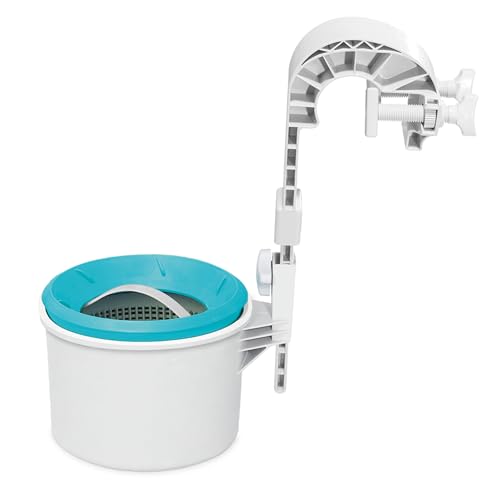
- Intex 28000E Deluxe Wall Mount Surface Skimmer — Check on Amazon
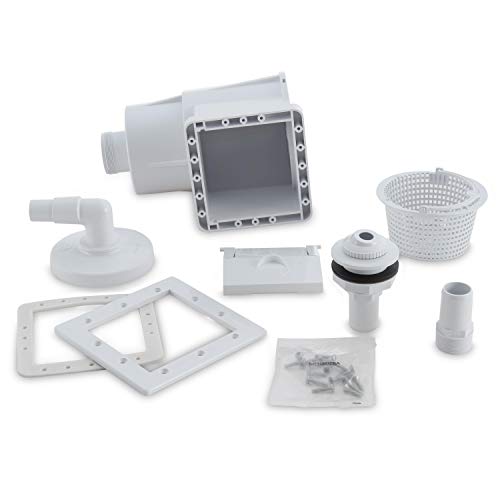
- Hayward SP1091LX Dyna-Skim Above-Ground Skimmer — Check on Amazon
- Swimline HydroTools 8939 Wide Mouth Skimmer Kit — Check on Amazon
- Bestway Flowclear Wall Mount Surface Skimmer 58233E — Check on Amazon
Read the full guide ↓
Pool Skimmer Buying Guide: The Whole Category, Mapped Before You Spend Anything
A pool skimmer buying guide earns its name only if a reader can finish it knowing which of the category’s five mechanisms their pool needs, what that mechanism will ask of them for as long as they own it, and which verifications stand between them and a correct order. That is this page’s contract. It maps the category without ranking a single budget — the cluster’s best lists do that work at Best Pool Skimmer Under $75 Best Pool Skimmer Under $75, Best Pool Skimmer Under $150 Best Pool Skimmer Under $150, and Best Pool Skimmer Under $300 Best Pool Skimmer Under $300 — and instead gives the buyer the taxonomy, the decision sequence, the specification literacy, and the ownership arithmetic that make any of those rankings usable. Read it first, and the best lists become short. Read it after, and they become explicable. Either way, this is the page the rest of the cluster is footnoting.
One discipline governs everything below: this guide prints no static prices and no fixed ratings, because both rot — prices move with the market and ratings with other people’s pools. What does not rot is mechanism, geometry, and arithmetic: the wall you have, the flow your pump makes, the debris your garden delivers, the rhythm your household keeps. A buying guide built on those four facts will still be correct when its links need refreshing, and correctness that survives the market is the only kind worth a buyer’s trust.
In this guide
The Five Mechanisms: A Taxonomy
Thru-wall skimmers are plumbed fittings bolted through a hard-sided pool’s wall: a body with a floating weir, a basket, and a threaded port to the pump’s suction. They are the category’s infrastructure — installed in a careful hour, serviced in minutes, supported for decades. The reference example is the Hayward SP1091LX, examined at length in Pool Skimmer Review Pool Skimmer Review. Wide-mouth variants trade sheet speed for leaf admission and suit canopy pools.
Wall-mount skimmers hang a pump-fed intake inside a soft-sided pool from a bracket over the wall: the Intex 28000E and Bestway 58233E patterns. They are appliances — minutes to install, seasons of life, parts on every shelf — and they are the only automatic answer designed for walls that cannot be cut.
Return-jet skimmers, the PoolSkim pattern, thread onto a standard return fitting and turn its flow into a venturi draw that fills a floating collector’s bag. They ask nothing of the wall at all, which makes them the category’s diplomats: second collection points for plumbed pools, primary answers for walls that refuse everything else. This cluster recommends the pattern in prose where it appears, because its Amazon listing could not be verified to the cluster’s standard — a sourcing fact, stated wherever the product is discussed.
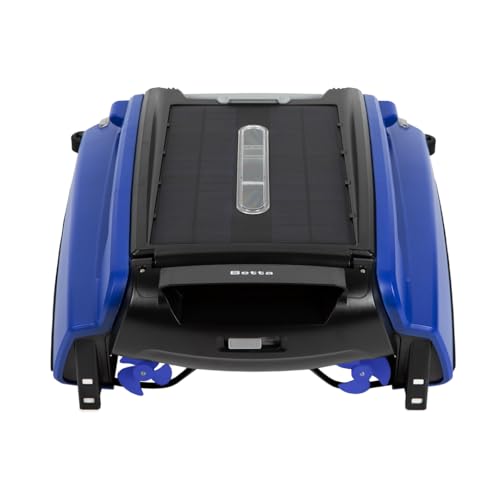
Robotic surface skimmers are self-propelled, solar-charged roamers — the Betta family — that work the surface on their own schedule, including the pump’s off-hours. They are the category’s second era: no plumbing, no installation, and an ownership ledger of batteries and storage in place of gaskets and baskets.
Manual nets are the fifth mechanism and the only universal one: a flat or deep-bag head on a standard pole, present in every well-run system in this cluster regardless of what else the pool owns, because events — storms, parties, the single damming leaf — are manual occasions. A buying guide that omits the net from the taxonomy has misunderstood the category: the net is not the absence of a skimmer but a component of every complete one.
The Decision Sequence: Four Questions in Order
Buyers fail in this category by answering the questions out of order — choosing a product before a mechanism, a mechanism before a wall. The sequence that works is the reverse. First, the wall: hard-sided and permanent admits the thru-wall; soft-sided admits the wall-mount; a wall that refuses both — or a pool with no wall to spare — admits the return-jet or the robot. The wall is not a preference, and no product quality argument survives it. Second, the pump: every passive mechanism drinks from it, so its label is the buyer’s second fact — flow rating against the mechanism’s stated appetite, with the filter’s state understood as part of the number. Third, the debris: whole leaves argue for width, fines for socks, ordinary mixed fall for the standard patterns — and the honest measurement is a week of watching what actually lands. Fourth, the rhythm: the household’s real visiting pattern decides between passive contentment and autonomous insurance, and it must be answered about last year’s behaviour, not next year’s intentions. Four questions, in that order, and the category collapses from hundreds of listings to a shortlist of two or three — which is where the cluster’s best lists, organised by budget, take over.
Specification Literacy: Reading a Listing Like an Owner
Listings in this category reward a literate reader, so the guide teaches the reading once. Flow requirements are stated as minimums or windows, and both are physics, not marketing: a wall-mount below its window draws weakly no matter how well it is made. Mouth width is a geometry for a debris type, not a quality grade — wide admits leaves, standard skims a faster sheet, and the match to the garden is the whole question. Compatibility lines should be read in the manual’s version, which carries the exclusions — steel-wall exceptions, brand geometries — that decide real fits. Minimum depth, on robots, is a hard specification that acquits or convicts shallow pools before money moves. Runtime and recharge figures on solar products are manufacturer statements under good sun, and should be discounted by the pool’s actual light, honestly observed. And any passive skimmer described in autonomy’s vocabulary — self-navigating, smart, independent — is misdescribed, because the passive mechanisms have no schedule of their own; the vocabulary is the tell that the listing, not the product, is the problem.
Recommended Products by Mechanism
| Mechanism | Reference product | Buy it if |
|---|---|---|
| Thru-wall | Hayward SP1091LX Dyna-Skim | Hard-sided, permanent, kept rhythm |
| Thru-wall wide | Swimline HydroTools 8939 | Hard-sided under real canopy |
| Wall-mount | Intex 28000E / Bestway 58233E | Soft-sided, by brand, pump in window |
| Return-jet | PoolSkim (prose — via pool retailers) | No-cutout pools; second points |
| Robotic | Betta SE / SE Plus (see cluster reviews) | Schedule-bound or unplumbed, sunny water |
| Manual | Swimline 8039 flat net head | Every pool, as the system’s partner |
Ownership Arithmetic: Pricing the Decade, Not the Box
The category’s prices are the least informative numbers in it, because the mechanisms’ costs live in different years. The thru-wall fitting concentrates its cost in one installation hour and then spends a decade asking for baskets and gaskets in small, calm instalments. The wall-mount spreads its cost across replacements, each cheap, each in minutes. The return-jet unit’s ledger is a bag and an adapter conversation. The robot concentrates its cost at the purchase and the battery’s horizon. The net costs almost nothing and is bought once a decade by the careless and once a generation by the careful. A literate buyer therefore compares shapes, not totals: which year’s money, which month’s attention, whose shelf the parts sit on. The cluster’s budget guides allocate within each shape; this guide’s contribution is the shapes themselves, because a buyer who has chosen the wrong shape has no budget at which the purchase becomes right.
The Verification Checklist: Before Any Order
- Wall type confirmed — hard, soft, or refusing — and the mechanism matched to it.
- Pump label read; flow compared against the mechanism’s stated window or minimum.
- For thru-wall: cutout dimensions measured, standard versus wide decided by the garden.
- For return-jet: the return’s thread inspected — standard 1.5-inch or an adapter path confirmed.
- For robots: depth at the shallow working area measured; sunlight observed for a week; edge design checked against the exclusions.
- Spares identified and, for the primary’s first wear part, added to the same order.
- The record page started: pool, pump, mechanism, date — the decade’s first entry.
Common Buying Mistakes
The category’s mistakes are taxonomic before they are financial. Buyers choose a product before a mechanism and discover the wall’s veto at installation. They read mouth width as quality and buy leaf geometry for a pollen pool. They compare box prices across mechanisms whose costs live in different decades. They treat the pump’s label as fine print when it is the passive category’s founding document. They skip the net because an automatic product is in the basket, and meet the first storm unarmed. And they buy the era their neighbour’s pool needed — the robot for a plumbed pool with a kept round, the fitting for a schedule that was never going to be kept — because the neighbour’s water is visible and their own rhythm, honestly examined, is work. This guide exists to make each of those mistakes slightly harder to commit, by putting the four questions in their order and refusing to rank anything until they are answered.
Final Recommendation
Answer the four questions — wall, pump, debris, rhythm — and the category will tell you its own answer: the Hayward SP1091LX for the permanent hard-sided pool, the wide kit where the canopy rules, the brand wall-mount — Intex 28000E or Bestway 58233E — for soft-sided water, the return-jet pattern where walls refuse, the robot where schedules do, and the flat net beside all of them. Then take the shortlist to the cluster’s budget guides and buy the finished version — spares, coverage, record — rather than the bare one. That is the whole of buying a pool skimmer well, and it fits on one page because the category, honestly mapped, was never as complicated as its listings pretend. The complication was always a sales strategy; the category itself is five mechanisms, four questions, and a sheet of water that wants, patiently and without opinion, to be skimmed by whichever of them your pool has honestly chosen.
Each Mechanism’s Maintenance Contract
A buying guide should state what each mechanism will ask of its owner across an ordinary year, because the asking — not the buying — is where ownerships succeed. The thru-wall fitting asks for the basket’s rhythm, a spring gasket inspection, and nothing else; its contract is the lightest per year and the heaviest per installation. The wall-mount asks for the same basket rhythm plus a seasonal removal and storage, and replaces the gasket conversation with a hose inspection. The return-jet unit asks for its bag on the round and a spare bag on the shelf. The robot asks for its basket, its panel kept clean, its battery stored kindly, and an annual retrieval ceremony in freezing climates — the lightest weekly contract and the only one with a component whose neglect is fatal rather than merely diminishing. The net asks to be hung where the hand expects it. Read the five contracts against your household’s actual temperament — not its aspirations — and the taxonomy stops being a catalogue and becomes a mirror, which is what a buying guide is for.
Pool Types the Taxonomy Serves, One by One
The permanent hard-sided above-ground pool is the thru-wall’s home and the category’s centre: its buyer’s only real sub-decision is mouth width, settled by the garden. The soft-sided pool is the wall-mount’s, with brand as the sub-decision and the pump label as the gate. The in-ground pool stands partly outside this guide — its skimmers are construction components, usually chosen at build or renovation — though its owners will find the return-jet and robotic mechanisms, which ask nothing of the wall, fully applicable as supplements. The stock-tank, plunge, and spa-pool world is the taxonomy’s frontier: small volumes, unusual geometries, and owners who should weight the return-jet and net heavily and the fixed mechanisms lightly. The temporary and rental pool excludes everything permanent by definition and is served, completely, by the wall-mount, the return-jet unit, and the net. Naming the pool before the product sounds too simple to be a guide’s core advice, until the reader counts how many listings they had open before reading it.
Accessories: The Short List That Is Actually a System
Four accessories recur across every mechanism in this guide, and the buyer should understand them as the system’s connective tissue rather than as upsells. Skimmer socks convert any basket into a fine filter at the price of a rinse rhythm; they are the fine-debris pool’s defining accessory and the leaf pool’s unnecessary chore. The spare basket — or bag, for the return-jet pattern — is the system’s insurance, priced in the guide’s recurring observation that wear parts fail in the season’s best weeks. The vacuum plate turns a thru-wall skimmer into the pool’s vacuum port and is the reason plumbed owners need no second suction point. The flat net is listed among mechanisms rather than accessories in this guide’s taxonomy, deliberately, because its role — events, storms, the damming leaf — is structural. Everything beyond these four should be bought against a diagnosed need, in the cluster’s standing phrase, rather than against a listing’s suggestion; the category’s accessory tail is long, glittering, and almost entirely optional.
How to Use the Rest of This Cluster
This guide is the map; the cluster’s other pages are the territories, and the buyer will get the most from them in a deliberate order. Begin here, with the four questions answered and the mechanism chosen. Move to the budget guide that matches the system’s honest tier — under $75 for the single-mechanism start, under $150 for the finished passive system, under $300 for coverage and the era decision — and buy the composition those pages recommend rather than a bare product. Consult the deep reviews when the shortlist narrows to a named product: the plumbed reference in the pool skimmer review, the robot in the reviews coverage, the soft-sided default in the 2026 review. Read the pros-and-cons page when the era question, rather than the product question, is the live one. And keep the how-to-choose walkthrough for the day of the order itself, as a checklist against the listing. Used in that order, the cluster is a funnel that ends in a single calm purchase; used at random, it is merely a library — accurate, but slower.
The Guide’s Own Limits, Declared
A buying guide that maps a category should also map itself. This one is written from the above-ground and portable pool world outward, because that is where skimmers are bought as products rather than built as construction; in-ground owners will find its mechanism logic sound and its product table partial. Its product references are the cluster’s verified set — linked only where a real listing was tied to an exact brand and model during research — which means some legitimate products are discussed as patterns rather than linked as products, the PoolSkim being the standing example. And its refusal of prices and ratings, while principled, means the final step of any purchase — the listing’s current terms — belongs to the reader at the moment of ordering, as the disclosure at the top of this page states. Within those limits, the guide’s claim is completeness of method: wall, pump, debris, rhythm, verification. A buyer who runs the method on a product this page never mentions will still buy well, which is the test a buying guide should set itself.
Worked Examples: The Method Applied Four Times
The new frame pool under a maple. Wall: soft-sided. Pump: mid-window sand system. Debris: whole leaves in autumn, seeds in spring. Rhythm: kept, family pool. The method returns the brand wall-mount with a spare basket and the flat net, the leaf weeks answered by rhythm — and it explicitly declines the wide plumbed fitting the maple seemed to argue for, because the wall vetoed it in question one. The inherited hard-sided pool, owners travelling. Wall: plumbed already. Pump: healthy. Debris: ordinary. Rhythm: absent for weeks. The method keeps the inherited fitting as backbone — audited, gasket renewed — and assigns the dawn and the absences to the robot, bought by the sunlight measurement. The rental’s seasonal pool. Wall: soft, temporary. Pump: entry cartridge, below the Intex window. Debris: light. Rhythm: weekly. The method returns the low-threshold Bestway pattern and the net, and spends the savings on nothing — the correct total for a pool with a season’s horizon. The plunge pool in a walled garden. Wall: refusing. Pump: small. Debris: fine, constant, at short range. Rhythm: daily eyes, no round. The method returns the return-jet unit for its zero wall and the sock logic applied at the filter, with the net as the visible daily tool. Four pools, four different answers, no product chosen before its questions — the method’s whole demonstration.
Safety and Standards: The Section Listings Skip
A buying guide should say plainly what the category’s marketing leaves in footnotes. Any skimming work at an intake happens with the pump off — suction is a hazard that does not negotiate, and the rule belongs in the household’s written rhythm, not in a manual’s warning box. Electricals and water keep their ancient distance: the passive mechanisms’ virtue is that they introduce no electricity to the pool at all, and the robot era’s corresponding virtue is that its machine is self-contained and low-voltage by design — in both cases, the manufacturer’s documentation governs, and damaged equipment of any era leaves the water until it is whole. Children are taught the system as a supervised curriculum rather than fenced out of knowledge they will need as the pool’s future owners. None of this is specific to a brand, which is exactly why a buying guide — the one document every buyer reads before choosing — is the right place to print it once, prominently, for the whole category.
The Category’s Direction: What the Next Edition Will Revisit
Buying guides date, and this one declares its pressure points in advance. The autonomous era’s prices and battery records are the category’s fastest-moving facts, and they will decide whether the robot graduates from second era to default for the unplumbed majority. The soft-sided pool’s continued growth pushes wall-mount flow windows and single-intake coverage toward their limits, and the return-jet pattern — today a diplomat and a second point — may become a primary citizen of large soft-sided water. The accessory layer keeps formalising, as the sock’s journey from improvisation to shipping configuration shows. None of these movements disturbs this edition’s method — wall, pump, debris, rhythm — because the method was built from the pool’s facts rather than the market’s, and pools change more slowly than catalogues. When the next edition appears, it will re-argue the products and keep the questions, and readers who learned the questions here will be able to grade it.
A Glossary for the Rest of the Cluster
Weir: the floating door at a skimmer’s intake that maintains the thin, fast surface sheet and traps the catch when the pump stops. Draw: the visible pull of surface water toward an intake; the passive system’s pulse. Turnover: the pool’s full volume passed through the filter; the honest unit of pump adequacy. Venturi: suction generated by moving water, the return-jet mechanism’s engine. Cutout: the wall opening a thru-wall fitting occupies. Dead corner: a surface region the circulation never sweeps, diagnosed by the leaf test. Split schedule: the pump’s day divided into a morning block and a late-afternoon block, matched to the debris fall’s two landings. Sock: a fine sleeve over a basket that trades a rinse rhythm for fine capture. Ten minutes with these eight terms and every other page in this cluster — and every listing in the category — becomes legible at sight.
Second-Hand and Bundled Skimmers: A Buyer’s Caution
Pools are sold with skimmers, skimmers are bundled with pools, and both transactions deserve this guide’s one cautionary section. A bundled skimmer is a mechanism chosen by a seller’s margin rather than by the four questions, and the buyer of a package should audit it exactly as an inheritor would: name the mechanism, read the pump, check the wear parts, and price the correction if the bundle’s answer is wrong for the wall or the window. A second-hand skimmer is a wear-parts question wearing a product’s clothes: the body’s remaining life is estimable by inspection, the basket and hose are replaceable certainties, and the purchase is sound precisely to the extent that the pattern is standard enough for its consumables to be on a shelf. In both cases the taxonomy is the protection — a buyer who can name what they are looking at cannot be sold a silhouette — and the verification checklist above, run on a bundled or used unit, takes ten minutes and is the best-returning ten in the category.
The Environmental View of the Whole Category
Read across the taxonomy, the category’s green arithmetic sorts by lifespan more than by material. The longest-lived mechanisms — the plumbed fitting, the net — carry the smallest lifetime footprints almost regardless of their composition, because manufacture amortised over a decade or a generation is manufacture nearly forgiven. The appliance mechanisms sit in the middle, their cycles matched to their pools’ own lives. The robot’s ledger is the most complex: solar energy and pump hours saved against a battery’s manufacture and horizon, a balance this guide has elsewhere declined to award as a badge to either era. The buyer’s executable policy is the same one this guide gives for money: match the mechanism to the pool’s real horizon, keep it for its whole life, and stock its parts rather than replacing its whole — because in this category, as in most, the sustainable purchase and the economical one are usually the same purchase described in two vocabularies.
When to Ignore This Guide
Every guide should name its own override conditions, and this one has three. When a pool professional who has seen your actual water advises a mechanism against this taxonomy’s grain, their site evidence outranks a general map — take the advice and note the reason on the record page. When the pool is a genuine experiment with a one-season horizon, the full method is overkill: buy the net and the cheapest brand-correct wall-mount, and let the season itself become the research. And when the choice is between two mechanisms the method has already certified as fitting — the standard and wide fitting on a borderline canopy, the two robot siblings on borderline sun — the guide’s remaining counsel is temperament, because at that margin the products differ less than the owners do. A map that knows where it ends is more trustworthy inside its borders, and this one ends, deliberately, at the water’s edge of your specific pool.
The One-Page Version, for the Reader in a Hurry
Everything above, compressed to its skeleton. Five mechanisms exist: plumbed fitting, wall-mount, return-jet, robot, net. Four questions choose among them, in order: the wall, the pump, the debris, the rhythm. Four accessories complete any system: socks where fines rule, the spare basket or bag, the vacuum plate where plumbing allows, the net always. Three verifications gate the order: the physical fit, the flow, and — for robots — the depth and sun. Two eras divide the category, and neither is the other’s superior. One record page, started on installation day, makes the decade cheaper than the year. A reader who keeps only this paragraph has the guide’s method entire; the preceding pages exist to make each clause of it obvious, and the cluster’s other pages exist to price and examine the choices it produces.
Retail Literacy: Where and How the Category Is Sold
The category sells through three channels, and the literate buyer uses each for what it is. Marketplaces offer the widest listings and the thinnest counsel; their reviews are a debris sample of other people’s pools, useful for failure patterns and useless for fit, which is why this guide’s method precedes them. Pool retailers — the channel through which this cluster sources the prose-only PoolSkim — offer shallower listings and deeper knowledge, and for fittings, threads, and gaskets their counter is a specification instrument no webpage replaces. Manufacturer documentation, finally, is the channel of record for exclusions and windows, and the buyer’s habit should be to read the manual before the listing wherever the two are both available, because the manual is written by the party that honours the warranty. None of the channels is dishonest by nature; each is partial, and the method in this guide is precisely the discipline of assembling their partial views into a whole before money moves.
A Closing Word on Method Over Merchandise
Guides like this one are sometimes accused of burying the products under the process, and the accusation deserves its answer as the page closes. The products in this category are, with few exceptions, honestly made and clearly specified; what fails, in return after return and forum thread after forum thread, is the matching — a good skimmer against the wrong wall, the wrong window, the wrong rhythm. Method is the part of the purchase that cannot be shipped, and it is therefore the part a guide can actually give. The reader who finishes this page with four answered questions owns something no listing sells: the knowledge of which two or three products in the entire category are theirs, and why. Everything after that — the tier guide, the deep review, the listing’s current terms — is confirmation. Buy the confirmation calmly, install by the book, write the record page, and let the water, as it does for every well-matched pool in this cluster’s coverage, go quiet — season after season, on nothing more exotic than the right mechanism in the right wall.
The Household Conversation: Deciding Together
Pools are shared, and skimmer decisions made alone have a way of being re-litigated at the water’s edge. The method in this guide is unusually well suited to a household conversation because its four questions are about facts the household jointly owns: anyone can look at the wall, read the pump’s label, watch a week’s debris, and testify about the rhythm. Run the questions aloud, in order, and the category’s marketing loses its power to divide the household into a gadget faction and a plumbing faction, because both are answering the same four facts. The rhythm question deserves the group’s particular honesty — it is the one whose aspirational answer costs the most money — and households that answer it with last summer’s evidence buy systems that fit the family they are, which is the only family the pool will ever serve.
After the Purchase: The Guide’s Last Page
A buying guide’s responsibility ends at the installation, but its method does not, and the closing note belongs to the first month. Watch the system before adjusting it — the baseline week is the diagnostic capital every later decision draws on. Write the record page while the measurements are in your hands. Stock the first spare before the season’s best fortnight, not during it. And when the first symptom appears, work the order this cluster repeats in every guide — level, basket, weir or bag, filter, then hardware — because a well-matched system’s failures are almost never its own, and the method that chose it is the same method that will keep it. The buyer who does these things has not merely purchased a skimmer; they have joined the category’s quiet majority, whose pools are ready in the morning and whose buying guides, thereafter, are read for pleasure.
The Guide in One Breath, Repeated for the Skimmers
It bears repeating at the close, because readers arrive at guides from search results in the middle and leave from wherever their question was answered: the wall decides the mechanism, the pump decides its strength, the garden decides its geometry, and the household decides its era — and a purchase made in that order, verified against fit and flow, completed with its spares and its net, and recorded on a single page, is the whole art this category contains. The products linked from this page are the cluster’s verified references for each mechanism, and the pages around this one exist to examine them. The method, however, is the guide’s real content, and it is free to take to any listing, any shop counter, and any pool — including the ones this cluster has never seen.
Frequently Asked Questions
How do I know if my pump is strong enough?
Read its label for the rated flow, then compare it with the mechanism’s stated minimum or window — and remember that the filter’s state is part of the delivered number, so a borderline pump with a freshly serviced cartridge may acquit itself where the same pump, loaded, fails. The empirical check is the draw itself: with the system running and the filter clean, surface fines should visibly converge on the intake across a still morning. Convergence is adequacy; orbiting is the pump’s confession.
What is the single most important factor in choosing a pool skimmer?
The wall. It decides which mechanisms are physically available, and every later refinement — width, fineness, era — operates inside its verdict. Buyers who start anywhere else spend their deliberation on questions the wall may veto, which is why this guide’s sequence puts it first and treats it as a fact rather than a preference.
What should I do if my four answers point at two mechanisms equally?
Buy the one whose maintenance contract your household will keep, because at a certified tie the products differ less than the owners do — and if the tie persists, buy the one with the deeper parts shelf, since time is the only referee left. Record the reasoning on the record page; a future owner, or a future you, will want to know whether the choice was evidence or weather.
Do I need more than one skimming mechanism?
Every complete system has two: an automatic primary and the manual net, because events are manual occasions. A second automatic point — the return-jet pattern — is justified by a diagnosed dead corner, established by the leaf test, and by nothing else. Coverage beyond that is anxiety in hardware form, and this guide declines to sell it.
What does ‘for above-ground pools’ actually exclude?
More than buyers assume. It excludes in-ground construction skimmers, whose fittings are built into the pool’s shell; it usually excludes steel-wall variants within a brand’s own range, as the Bestway pattern’s documentation states; and it says nothing about depth, which is a separate specification on the mechanisms that roam. Treat the phrase as the start of the compatibility reading, not its conclusion — the manual’s exclusions are where the fit is actually decided.
Are robotic skimmers better than traditional ones?
They are better at the hours and worse at the decades: better wherever the surface must be worked off-schedule or no plumbing exists, worse wherever parts depth, evidence, and calm instalments are the values. The eras answer different pools, and the cluster’s Pool Skimmer Pros And Cons Pool Skimmer Pros And Cons weighs them as philosophies for the reader who wants the argument in full.
Can a skimmer improve my water clarity, or only its surface?
Directly, the surface only — but the surface is where the clarity story starts, because debris intercepted while floating never waterlogs, sinks, and becomes the filter’s and the chemistry’s problem. Owners consistently find that a well-matched skimming system stretches filter intervals and steadies the water, not because the skimmer filters, but because it harvests the load at its cheapest moment. It is prevention arithmetic, and it is the strongest indirect claim this guide will make for any product in it.
Where can I see these mechanisms compared at specific budgets?
In this cluster’s tier guides, which apply this page’s taxonomy at each level: the under-$75 ranking for the single-mechanism start, the under-$150 ranking for the finished passive system, and the under-$300 ranking where coverage and the era decision enter. Each assumes the four questions have been answered — readers who arrive there first are gently but firmly sent back here, because a budget cannot rescue a mechanism the wall has vetoed.
How much should I budget in total?
Budget for a system, not a product: the primary mechanism, its first spare, the net, and any diagnosed coverage — then consult the cluster’s tier guides for the current shape of that total at your level. This guide prints no prices because the market moves; the system’s composition, which is the part buyers get wrong, does not.
I am buying a pool and a skimmer together. What order should I decide in?
Pool first, skimmer as its consequence — and let the skimmer’s taxonomy inform the pool choice where the household is genuinely torn, because a permanent hard-sided pool buys its owner the thru-wall’s decade while a soft-sided one buys flexibility at appliance prices. What must not happen is the reverse purchase: a skimmer bought first, however excellent, dictating a pool. The wall is the decision; the skimmer is its signature.
Does brand matter in this category?
Brand matters as ecosystem, not as emblem: the value of the established patterns is that their baskets, gaskets, and hoses are stocked everywhere and their behaviour is documented by years of owners. A lesser-known product is not automatically a worse skimmer — several in this cluster’s coverage earn their places — but its buyer should price the thinner shelf and the shorter record as part of the purchase, because across a decade they are.
My garden is changing — new trees, new beds. Should that delay the purchase?
It should inform the debris answer, not postpone the system. Buy the mechanism the wall and pump dictate, choose mouth width for the garden you are planting rather than the one you are removing, and let the accessories — socks, coverage — be the layer that adapts as the planting matures. Mechanisms are decade decisions; gardens are five-year ones; the system’s composition is where the two timescales are reconciled.
When is the right time of year to buy?
Structurally, the calm weeks beat the spring rush: stock is deeper, deliberation is cheaper, and the installation — where one is needed — can be done slowly before the season’s first debris arrives. This guide prints no prices and tracks no sales; its counsel is calendrical rather than commercial. Buy when you can measure, template, and install without hurry, because hurry is the most expensive line item in the category.
Is a more expensive skimmer always better made?
Within a mechanism, price buys ecosystem, materials, and margin more reliably than it buys skimming — the sheet physics are democratic, and a correctly matched standard pattern out-skims a premium novelty on the wrong wall every day of the season. Across mechanisms, price differences are mostly era differences, not quality ones. Spend on the match first, the spares second, and the badge last, and the category’s pricing becomes what it should have been all along: the least interesting part of the decision.
What if my pool came with a skimmer already?
Audit it against this guide’s taxonomy before replacing anything: name its mechanism, check its wear parts, read the pump’s label, and run it a month on a kept rhythm. Inherited systems are commonly one consumable and one habit away from adequacy, and the audit — an afternoon — is the cheapest purchase in the category.