Disclosure: As an Amazon Associate, umtsmarttool.com earns from qualifying purchases. Links to Amazon on this page are affiliate links; they cost you nothing extra. Prices and availability change often, so check the current Amazon listing before you buy.
Where to buy
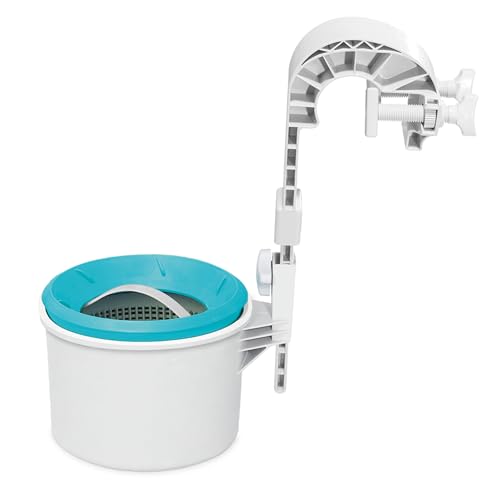
- Intex 28000E Deluxe Wall Mount Surface Skimmer — Check on Amazon
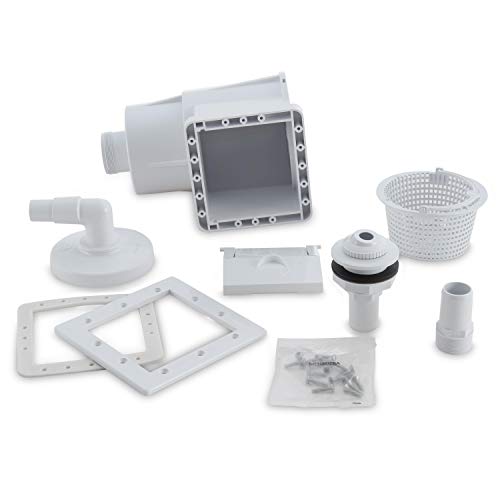
- Hayward SP1091LX Dyna-Skim Above-Ground Skimmer — Check on Amazon
Read the full guide ↓
Pool Skimmer Pros and Cons: The Honest Ledger of Every Way to Skim
Pool skimmer pros and cons are usually written as a shopping aid, and they usually fail at it, because the honest ledger of this category is not a list of features but a set of trades — each mechanism buying one thing with another, each era paying for its signature strength with a signature weakness. This page writes the ledger properly. It weighs the category’s five mechanisms and its two eras against each other on the axes owners actually live with — hours, evidence, coverage, cost shape, maintenance temperament — and it refuses the two corruptions of the genre: the pros list that reads like a brochure, and the cons list that reads like a warning label. Every pro below is real, and every con is priced. Readers who finish it will not know which skimmer to buy; they will know something more durable — what each choice costs, in the currency it actually charges — and the cluster’s Pool Skimmer Buying Guide Pool Skimmer Buying Guide and its budget rankings exist to finish the decision from there.
The page’s method deserves stating, because pros-and-cons writing lives or dies by it. A pro counts only if it survives the decade test — would an owner in year five still name it? A con counts only if it is structural — a property of the mechanism, not of a bad unit or a careless owner. Features that fail the decade test are marketing; flaws that fail the structural test are anecdotes. What remains, after both filters, is the ledger that follows.
In this guide
The Passive Era: Pros
Parts civilisation. The standard patterns’ baskets, gaskets, and hoses are stocked by an entire industry, in every region, without the maker’s permission or survival. No other pro in this ledger compounds like this one: it converts every future failure into a shelf errand.
Zero marginal energy. Passive skimmers borrow the pump’s hours, which filtration needed anyway. The surface is skimmed, in energy terms, for free — a pro the autonomous era, for all its solar elegance, matches only by spending capital instead.
Evidence. The plumbed fitting’s decade is documented by millions of owner-years. A buyer of the passive standard is not forecasting; they are joining a statistic.
Repairability by strangers. Any pool technician, any competent neighbour, any forum on earth can service the standard patterns from memory. The owner’s competence ceiling is therefore the industry’s, not their own.
Silence and invisibility. A fitting has no presence to resent, no behaviour to watch, no visibility to apologise for. For pools that are looked at more than they are swum in, this is a genuine aesthetic pro.
The Passive Era: Cons
The schedule is the pump’s. The structural con from which the others descend: passive skimming happens inside filtration hours, and the debris fall keeps its own calendar — heaviest overnight, exactly when the timer sleeps. Split schedules mitigate; they do not repeal.
Fixed geography. One intake, one address, and a shadow wherever the current never delivers. Coverage is the passive system’s permanent frontier, purchasable only by adding points, never by upgrading the fitting’s quality.
Installation is real. The flagship mechanism asks a hole in a wall and a careful hour; the category’s gentlest mechanisms ask a bracket and a hose. Either way, the passive era begins with work the autonomous era skips entirely.
The rhythm is the owner’s. Baskets, weirs, gaskets: light, honest, and non-optional. A passive system in an absent household is not a system on pause; it is a system declining, and its water says so.
The Autonomous Era: Pros
It works the unskimmed hours. The founding pro, and a large one: dawn after the overnight fall, evenings before the swim, the whole of the owner’s holiday. The robot does not mitigate the schedule problem; it deletes it.
It asks nothing of the wall. No cutout, no bracket, no brand geometry, no permission from a liner. Pools the passive era could not serve at all — and pools whose owners simply refuse surgery — get their first automatic answer.
Coverage roams. The fixed intake’s shadow is answered by a route: given hours, the roving machine intersects every stall address in the pool. Geography stops being a diagnosis and becomes a timetable.
Installation is a gesture. Set it on the water. In a category whose flagship asks for a saw, the significance of this pro — for renters, for the tool-shy, for the second property — should not be understated.
The Autonomous Era: Cons
The evidence is young. No robot in this category has a documented decade, because the category has not had one. Every long-horizon claim is a forecast, and the buyer is the forecaster.
The battery is a horizon. Capacity fades on chemistry’s schedule; replacement is a manufacturer’s transaction at a manufacturer’s price and pleasure. The passive ledger has no line item shaped like this.
Support is a company, not a civilisation. Parts, service, and continuity run through one maker. The hedge is the maker’s evident health and iteration — real, but a different species of assurance from an industry’s shelf.
The sun is a co-owner. Shaded pools, northern winters, and grey weeks tax the solar models in direct proportion, and the dual-charge sibling’s existence is the category’s own admission of the con.
It teaches nothing. The subtlest con: the passive owner’s round is an education in their pool’s water, and the robot’s owner can remain a stranger to theirs for years — until the week the machine is away, when the education is suddenly, expensively, due.
Mechanism by Mechanism: The Compressed Ledger
| Mechanism | Signature pro | Signature con |
|---|---|---|
| Thru-wall fitting | Decade of stocked, silent service | Permanent install; pump’s schedule |
| Wall-mount | Minutes on, minutes off; wall-safe | Appliance lifespan; pump-window bound |
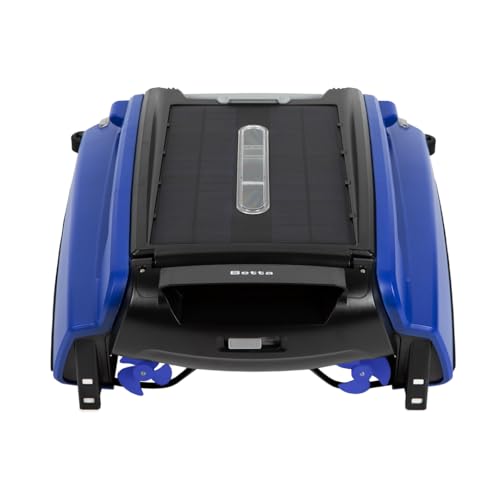
| Return-jet | Zero wall; movable coverage | Shares pump energy; bag is small |
| Robotic | Own schedule; roams the whole surface | Battery horizon; young evidence |
| Manual net | Works always, costs almost nothing | Skims only when its owner does |
The Two Reference Points, Weighed Directly
Abstract ledgers sharpen against named products, so the page weighs the cluster’s two most-chosen passive references head to head. The Intex 28000E wall-mount’s pros are immediacy and proportion — minutes to install, seasons of service matched to its pool’s own life, a support ecosystem that has matured around its pattern — and its cons are the appliance’s: a lifespan counted in seasons, a pump window that excludes the smallest stock pumps, and a dependence on placement that its bracket’s mobility both causes and cures. The Hayward SP1091LX thru-wall’s pros are the decade and the civilisation — one installation, stocked parts, service by strangers — and its cons are the commitment’s: a permanent hole, an hour of care, and no service at all to a pool that moves or a wall that is soft. Neither product’s cons are defects; they are the shadows of their pros, cast by the same design decisions — which is the deepest sentence in this ledger, and the one the genre usually omits: in this category, you do not choose between good and bad products. You choose which shadow your pool can live under.
How to Weigh a Ledger Like This
Three rules convert this page from reading into deciding. Weight by your pool’s facts, not by the list’s length: a single structural con that matches your situation — the absent rhythm, the shaded water, the temporary wall — outweighs five pros that match someone else’s. Distinguish the eras’ cons by reversibility: the passive cons are mostly priced in advance and payable in rhythm, while the autonomous cons arrive as events — a battery, a service absence — and households differ in which shape of cost they sleep better under. Let the hybrid be a legitimate conclusion: the ledger’s honest reading for many pools is both — a passive backbone for the plumbing’s hours and an autonomous specialist for the rest — and a pros-and-cons page that forces a single winner has served its format rather than its reader.
Final Recommendation
Read the ledger against your own four facts — wall, pump, debris, rhythm — as the buying guide orders them. Where the passive pros match your pool and its cons fall on other people’s situations, buy the passive system finished and stop deliberating; where the schedule con is your biography, buy the autonomous era with its cons priced and its sunlight measured. The category’s tragedy is not that buyers choose wrongly between good options; it is that they choose without the ledger, on a feature list, for a pool they did not examine. This page is the ledger. The examination, as ever, is yours — and it is shorter than the deliberation it replaces, because four facts, honestly gathered, weigh more than forty features, however honestly listed.
Pros and Cons by Owner, Not by Product
The same ledger reads differently in different biographies, and the page owes its readers the translation. For the settled homeowner with a permanent pool, the passive pros compound and the autonomous cons — battery, company, youth — are pure cost: the ledger’s verdict is the finished passive system, and it is not close. For the travelling owner, the schedule con is not one entry among many but the whole water’s story, and the autonomous pro of the unskimmed hours outweighs the passive civilisation entire. For the renter, permanence itself is the con that vetoes: every mechanism that leaves a mark is disqualified before its pros are heard, and the wall-mount, the return-jet unit, and the robot divide the pool among them by pump and sun. For the beginner, the ledger’s hidden axis is pedagogy — the passive round teaches, the robot exempts — and the cluster’s beginner guides argue for the teaching first, with autonomy as the graduation. Four owners, four verdicts, one ledger: the pros and cons did not change, because they are properties of the mechanisms. The weights changed, because weights are properties of lives.
The Cons That Are Actually Virtues in Disguise, and Vice Versa
Mature ledgers record the entries that change sign with context. The passive fitting’s permanence is a con to the renter and the whole pro to the settled owner — the same bolt, read by two biographies. The robot’s visibility is a con to the landscape purist and a pro to the household that enjoys watching a system work, and to the parent whose children learn the pool by following it. The wall-mount’s appliance lifespan is a con against the decade and a pro against the pool’s own seasons, since a skimmer that outlives its wall is capital stranded in plastic. The net’s manual nature is the genre’s favourite con and, in the event rhythm of real pools, a standing pro: it is the one mechanism whose performance improves with the owner’s knowledge. Even the battery — the autonomous ledger’s darkest entry — is the honest price of the category’s only schedule freedom, and owners who needed that freedom read the line as a subscription they chose. A pros-and-cons page that cannot change an entry’s sign was never weighing anything; it was sorting adjectives.
Cost Shape: The Ledger’s Quietest Column
Pros-and-cons pages rarely weigh when money is spent, and owners always feel it, so the column belongs in the open. The passive fitting spends once — installation day — and then whispers: a basket here, a gasket there, in amounts too small to budget and too regular to notice. The wall-mount spends in appliance instalments, each visible, each trivial. The robot spends in cliffs: the purchase, and someday the battery or the successor, with silence between. Households have financial temperaments as surely as they have maintenance ones — some sleep better under a whisper, others prefer the cliff they can plan — and the honest ledger records that neither shape is cheaper in expectation for every pool. What the shapes do decide is who holds the risk: the whisper’s risk is distributed across an industry’s shelves, while the cliff’s risk is concentrated in one company’s continuity. Price that difference, and several otherwise-tied decisions in this category make themselves.
Environmental Pros and Cons, Without Badges
The genre usually awards a green star and moves on; this ledger instead records the entries. Passive pros: no energy of their own, no batteries, lifespans that amortise manufacture into near-invisibility at the fitting’s end of the table. Passive cons: polymer bodies all the same, and an appliance tier whose cycles are honest but real. Autonomous pros: solar energy, pump hours unextended, and — in unplumbed pools — the avoided chemistry and water waste of an unskimmed surface. Autonomous cons: a battery’s manufacture and end-of-life, electronics where none were needed, and a product life measured in seasons against the fitting’s decades. The balance, as this cluster has found in every guide that touches it, is a property of the match: the robot is the greener answer where it is the only answer, the fitting where its decade is real. Buyers should distrust any page — including, on this point, any sentence of this one read too quickly — that awards the environment to an era rather than to a fit.
Failure Tolerance: How Each Era Misbehaves
A ledger entry the genre almost never prints: what happens when things go wrong mid-season. The passive system’s failures are legible and local — a cracked basket announces itself at the round, a lazy weir at a fingertip, a weeping gasket at the spring inspection — and each is repairable the same day from a shelf, by the owner, without the pool missing its week. Its failure tolerance is therefore high and its failures are boring, which in infrastructure is the highest available praise. The autonomous machine’s failures are fewer and larger: a tired battery degrades the whole capability rather than one function, a service absence idles the system entire, and the repair timeline runs through shipping rather than shelving. Its tolerance is lower and its failures are events. Neither profile disqualifies its era — pools differ in how much failure they can absorb in their best month — but the buyer choosing between eras is choosing, in part, between boring failures and rare ones, and should choose with the household’s calendar open.
The Social Ledger: Guests, Children, Neighbours
Pools are social objects, and their skimming systems have social entries that spec sheets omit. The passive fitting scores a quiet social pro: it is invisible to guests, silent at the fence, and legible to any neighbour who has ever owned a pool — a shared civilisation that makes borrowed help and housesitting trivially easy. The robot scores a divided entry: it is a conversation piece and a small delight to children, and it is also a visible machine on a designed landscape whose presence some households will defend and others will apologise for, at every gathering, for years. The wall-mount and the net sit between: present but unremarkable, the category’s social neutrals. None of this decides a purchase alone, and all of it decides satisfaction eventually, because a pool is looked at and talked about far more hours than it is swum in. The ledger that omits the social column has not finished weighing.
Resale and Transfer: The Ledger at the Property Line
Pools transfer — with houses, between families, across the second-hand market — and the eras’ entries diverge at the transfer line in ways buyers rarely price. The passive standard transfers as an asset with a paper trail: a named fitting, a stocked shelf, a rhythm explainable in one sentence, legible to any buyer’s surveyor as maintained infrastructure. The appliance mechanisms transfer as consumables, priced accordingly and without friction. The robot transfers as a question — its age, its battery’s unknown remaining life, its maker’s current health — and a sophisticated buyer discounts it the way they discount any young appliance with a consumable heart. None of this argues against buying the robot for one’s own years; it argues for pricing the transfer honestly when the horizon is short, because a system bought for a decade and sold in two has spent its pros and kept its cons. The ledger, once again, is a function of the biography.
The Ledger Applied: Four Pools, Four Verdicts
The canopy pool, settled owners. Passive pros all live; the schedule con is answered by the split block and the kept round; the wide fitting’s leaf pro is structural. Verdict: passive, wide, finished — the autonomous entries never acquire weight. The second property, visited monthly. The schedule con is the entire biography; the robot’s youth and battery are priced and accepted. Verdict: autonomous, dual-charge for the grey weeks, with the net as the visiting owner’s tool. The family frame pool, third summer. The wall-mount’s proportion rules; the robot’s pro is real but the round is kept and the children are the round’s workforce. Verdict: passive appliance, completed with socks and spares. The walled plunge pool, no cutout, daily eyes. The return-jet’s zero-wall pro is decisive and its cons are a bag and a rhythm the owners already keep. Verdict: the diplomat mechanism, with the robot held as the future’s option. Four applications, no new facts — the ledger did the work, which is what ledgers are for.
What This Ledger Deliberately Omits
Three omissions are principled and should be visible. Prices are omitted because they move, and a ledger entry that expires is worse than none — the cost-shape section carries the durable part of the money argument. Fixed ratings are omitted because they aggregate other people’s pools into a number that describes no one’s, and this category’s outcomes are too match-dependent for the arithmetic to be honest. Brand-versus-brand skirmishes below the reference level are omitted because their pros and cons are the mechanisms’ entries in miniature, and the reader who has absorbed the mechanisms owns the skirmishes already. What remains after the omissions is the part of the decision that does not rot — and a pros-and-cons page, of all genres, should be built from the part that does not rot, since its readers return to it across seasons.
The Time Horizon Test, Applied to Every Entry
Run the ledger at three horizons and watch the entries migrate. At one season, the autonomous pros blaze — no installation, no rhythm to learn, the surface simply handled — and the passive pros barely register, because a civilisation’s value is invisible until something breaks. At five years, the columns balance: the robot’s battery question has become a date rather than a theory, the fitting’s parts have been bought twice and forgotten twice, and the owner’s biography has usually declared which era it belongs to. At ten years, the passive pros dominate any pool still standing in the same ownership, because evidence and shelf-depth are the only currencies that compound that long — while the robot’s ten-year entry is, honestly, a second or third machine and a maker’s biography the buyer cannot yet read. None of the horizons is the correct one; the buyer’s own horizon is. But the migration itself is the lesson: pros and cons are not properties of products alone, they are properties of products at durations, and a page that fixed them at one duration would be lying at the other two.
The Hybrid, Weighed as Its Own Entry
Because so many honest readings of this ledger end in the hybrid, it deserves its own two columns rather than a footnote. Pros: the schedule con and the coverage con are both retired; the passive backbone keeps the civilisation’s benefits for the plumbing’s jobs; the robot’s youth is hedged by a system that skims adequately in its absence; the owner’s education proceeds on the passive round while the dawns are covered. Cons: two systems to stock, two rhythms to keep, a total commitment that exceeds either era alone, and the standing temptation to let each system’s presence excuse the other’s neglect. Weighed plainly, the hybrid is the ledger’s answer for the pool that genuinely has both problems — a kept rhythm and an impossible schedule, a plumbed wall and a travelling owner — and an indulgence for the pool that has only one. The diagnosis, as everywhere in this cluster, precedes the purchase.
A Note on Where These Entries Came From
The ledger’s authority, such as it is, rests on its sources being structural rather than testimonial. Each entry above traces to a mechanism’s design, a manufacturer’s documented specification or exclusion, or the consistent pattern of an era’s ownership as recorded across the cluster’s research for its reviews and guides — not to any single household’s season, however vivid. Entries that could not be grounded structurally were cut, including several beloved anecdotes in both directions: the fitting that failed in its first year (a unit, not a mechanism) and the robot that transformed a sceptic’s pool (a match, not a property). Readers weighing a specific product against this page should therefore use it as the genre intends — the mechanisms’ permanent entries, against which any individual product’s behaviour is evidence to be filed, not a verdict to be overturned by a single summer.
The Maintenance Temperament Column
One column remains, and for many households it is the deciding one: what kind of attention each era enjoys receiving. The passive system rewards the tinkerer-housekeeper — the owner who likes a round, a shelf, a seasonal inspection, and the small satisfactions of a mechanism understood. The autonomous system rewards the delegator — the owner whose pleasure is outcomes, whose maintenance ideal is a charged battery and an emptied basket, and whose temperament experiences a gasket as an imposition. Neither temperament is superior, and both are stable across a lifetime, which is why this column outweighs several louder ones: a system matched to its owner’s temperament gets maintained, and a maintained system of either era beats a neglected system of the other, every season, without exception. The ledger’s final counsel is therefore embarrassingly personal: buy the era whose chores you will still be doing, unresentfully, in year five — because year five is where pros and cons stop being a page and become a pool.
Closing the Ledger
Every pros-and-cons page secretly wants to be a verdict, and this one has resisted in print what it will now permit itself in a sentence: for the median pool in this cluster’s coverage — permanent or long-lived, attended by its owners, plumbed or plumbable — the passive ledger wins on evidence, civilisation, and cost shape, and the autonomous ledger wins the specific, growing minority whose schedules or walls the passive era cannot serve. That sentence is a prior, not a decision; the reader’s four facts outrank it wherever they point elsewhere, and the page’s rules — weight by biography, distinguish by reversibility, allow the hybrid — exist to overrule it honestly. What the page will not permit is the decision made without the ledger at all, on a feature list and a photograph, because the category’s returns and regrets are filled with exactly those purchases, and its quiet, satisfied majority is filled with the other kind.
The Weather Column: Climate as a Silent Entry
Climate writes entries in both columns that temperate marketing forgets. In the freeze belt, the passive fitting’s winter is a drained plug and silence — a strong pro — while the robot’s is a storage ceremony with a battery’s terms, a manageable but real con. In the long-sun south and southwest, the robot’s solar income is so reliable that its signature con nearly evaporates, while the passive plastics pay a faster ultraviolet tax on their hoses and baskets. In the leaf-heavy temperate autumn, both eras face their examination week and both pass it only with the net’s help — a rare tie. Buyers should locate their own climate in this column before the finer entries, because climate, like the wall, is a fact rather than a preference, and it silently re-weights a third of the ledger before the household’s biography is even consulted.
Noise, Light, and the Senses: A Minor but Real Column
Skimming systems are lived with sensorily, and the ledger’s last minor column records it. The passive fitting is silent and still — its only sensory signature is the water’s own movement at the mouth. The wall-mount adds the hose’s soft presence and nothing more. The robot is a moving object with a faint mechanical voice and a visible patrol; households divide, durably, into those who find the patrol pleasant — a sign the pool is tended — and those who find any motion on a still morning a small trespass. There is no arguing the column, which is precisely why it belongs in a complete ledger: sensory fit, like temperament, predicts maintenance, and maintenance predicts everything else. Visit a pool where each system runs, if the decision is close, and let your own senses file their entry before the purchase does it for them.
A Final Entry: The Pro and Con of Deciding at All
The ledger’s last entry concerns the reader. The pro of deciding now, with the method this cluster provides, is a season of skimmed water and a system whose rhythm is established before the debris calendar’s hard months. The con of deciding now, under a deadline or a sale’s pressure, is the category’s most expensive pattern: the undiagnosed purchase, whose cons are discovered in the order the seasons present them. Between the two stands the afternoon of measurement — wall, pump label, a leaf on still water, an honest account of the household’s weeks — that converts either decision into a good one. This page has weighed everything it can weigh on the reader’s behalf. The afternoon, as the buying guide also concludes, is the reader’s — and it is the cheapest item in the entire category.
The Upgrade and Downgrade Paths Between Eras
One practical asymmetry closes the weighing. Moving from passive to autonomous is frictionless: the robot arrives, the fitting stays as backbone or is retired, and no wall remembers the change. Moving from autonomous to passive is equally easy at the wall-mount level and genuinely costly at the plumbed level, where the fitting’s installation is the price of admission paid late. The asymmetry argues for a sequencing the cluster’s beginner guides also reach: begin with the era whose entry is reversible, learn the water, and let the permanent commitments follow the knowledge rather than precede it. A ledger that ignored reversibility would misprice both eras’ first purchases, because an option’s value includes the cost of changing one’s mind — and in this category, minds change exactly as often as households do.
The Ledger’s Shelf Life
Ledgers age at different rates by column, and the reader deserves the rates. The mechanisms’ structural entries — schedule, geography, permanence, civilisation — are as close to permanent as consumer writing gets; they will describe the category accurately for as long as the mechanisms exist. The autonomous column’s youth entries are the fast-moving ones: every season of the era’s survival converts a forecast into a smaller forecast, and a future edition of this page will soften several cons on evidence rather than on argument. The honest reader should therefore re-weigh the autonomous column annually and the passive column almost never — an asymmetry that is itself, for the decade-minded buyer, one of the passive era’s quieter pros, and for the freedom-minded buyer, simply the price of living in the era that is still being written.
Weighing With a Partner: The Two-Reader Problem
Households rarely weigh a ledger in one head, and the genre’s final practical entry concerns the weighing itself. Partners typically arrive with different columns pre-weighted — one has priced the installation, the other has priced the holidays — and the argument that follows is usually two accurate ledgers talking past each other rather than a disagreement about facts. The remedy is the discipline this page has used throughout: agree the pool’s four facts first, in the open, where they can be checked; then let each partner name the single entry that matters most to them; then notice, in most households, that the two named entries point at the hybrid or at a sequencing — passive now, autonomous when the schedule changes — rather than at a winner. Pros and cons, weighed jointly and structurally, have a way of dissolving the era war into a calendar. That dissolution is this page’s final finding, and its recommendation: weigh the ledger together, on the facts, and let the pool — not the catalogue, and not the argument — cast the deciding vote it was always going to cast anyway.
Frequently Asked Questions
Do pros and cons change as a pool ages?
Yes, and predictably. A young pool’s ledger weights installation and immediacy — the wall-mount’s and robot’s home ground. A mature pool’s ledger weights parts, evidence, and transfer — the fitting’s. Owners who expect to keep a pool into its maturity should buy toward the mature ledger even in the pool’s youth, because mechanisms, once installed, tend to be inherited by the pool’s later self rather than re-chosen.
Is the manual net really in the same ledger as the powered mechanisms?
It is the ledger’s control group: the mechanism against which every automation’s pros are measured, since its cons — labour, presence — are precisely what the others are bought to retire, and its pros — universality, price, failure-proofing — are precisely what they spend to do it. Any automatic system whose real-world performance does not clearly beat a kept net rhythm has failed the category’s founding comparison, which is why this cluster keeps the net inside every system it recommends.
Which era has more pros overall?
The question has no pool-free answer, and any page that gives one is selling. The passive era’s pros compound with time and ownership stability; the autonomous era’s pros compound with absence and schedule pressure. Count them against your own biography — years at the address, weeks away from it — and the arithmetic usually settles itself.
Should a pros-and-cons list ever end in a tie?
Yes — and the tie is information. When the ledger balances for your pool, the decision moves to the tiebreakers this page has seeded throughout: the maintenance contract your temperament keeps, the failure shape your calendar absorbs, the cost shape your household sleeps under. A forced winner at a genuine tie is a coin flip wearing an argument’s clothes; the honest page names the tie and hands over the tiebreakers.
What is the most underrated pro in the category?
The passive standard’s repairability by strangers. Buyers price parts and forget people: the technician who knows your fitting on sight, the neighbour who has serviced the same one for a decade, the forum thread that describes your exact symptom. Across an ownership, that civilisation is worth more than any single specification in this ledger.
How should I weigh a pro I will use daily against a con that strikes once?
By expected value across your horizon, honestly estimated: a small daily pro compounds into the ownership’s texture, while a rare con arrives as a single bad week whose cost is bounded and usually repairable. Most owners over-weight the vivid rare con and under-weight the quiet daily pro, which is why this ledger insists on the decade test — it forces both entries onto the same calendar, where their true proportions are visible.
What is the most underrated con?
The autonomous era’s pedagogical one — it teaches nothing. It sounds soft beside batteries and prices, but it decides real ownerships in the machine’s first absence, when an owner who never learned their water meets a pool they cannot read. Households that keep one passive habit — the net, the weekly look — insure against it cheaply.
If I can only remember one pro and one con, which should they be?
The passive civilisation and the autonomous dawn. The passive era’s deepest pro is that an entire industry stands behind its parts and knowledge; the autonomous era’s deepest pro is that it skims the hours nothing else reaches. Every other entry in this ledger is a corollary of one of those two, and a buyer who holds both clearly can reconstruct the page — and, more usefully, can interrogate any listing, salesperson, or neighbour’s certainty against them.
Do the cons of wide-mouth skimmers outweigh their pros?
Only where the garden acquits them. Under real canopy, the wide mouth’s pro — whole leaves admitted without damming — is structural and decisive; in a fine-debris garden, its con — a slower sheet across the weeks that are not autumn — is equally structural. The ledger entry is a measurement of your trees, not a ranking of the products.
How do skimmer socks change the ledger?
They add one pro and one con to whichever passive mechanism wears them: the pro is fine capture that protects the filter and polishes the surface’s film; the con is a rinse rhythm measured in days during the fine season. For garden-side pools the exchange is heavily favourable; for leaf pools it is a chore bought without a benefit. Like most entries in this ledger, the sock’s sign is decided by the debris, not by the accessory.
Are the pros and cons the same for in-ground pools?
The eras’ ledgers transfer — schedule, evidence, coverage, support — but the mechanism table does not, because the in-ground pool’s skimmer is a construction component rather than a product choice. In-ground owners should read this page for the return-jet and robotic entries, which apply to their water unchanged, and treat the fitting and wall-mount entries as the above-ground world’s business.
Does the ledger favour waiting for the technology to mature?
Only for buyers whose current answer already works. A pool skimmed passively and contentedly loses nothing by letting the autonomous evidence accumulate — the era will be more proven and likely less costly when its schedule problem, if one ever develops, actually arrives. A pool whose surface is unskimmed today pays for the wait in water and work every week, and for that pool the young era’s cons are already cheaper than the status quo’s.
Which con do owners most often discover too late?
Two tie. Passive buyers discover the rhythm — that the light round was structural, not decorative — in their first absent month. Autonomous buyers discover the storage ceremony in their first freezing one. Both are printed in this ledger in advance, which is the entire defence a pros-and-cons page can offer: the cons were never hidden, only unread.
What is the fairest single-sentence summary of each era?
The passive era trades the owner’s rhythm for the industry’s permanence; the autonomous era trades permanence for the owner’s freedom. Every entry in this ledger is a footnote to one of those exchanges, and a buyer who can say which trade their household prefers — in those words, at the kitchen table — has effectively finished the decision this page exists to inform.
Can a pool have too much skimming?
It can have too much skimming hardware — mechanisms dividing one pump, coverage bought against undiagnosed corners — and it cannot have too much skimming, which is a state of water rather than a count of devices. The distinction is this page in miniature: buy the state, by the cheapest honest route your pool’s facts allow, and let the device count fall where the diagnosis puts it. Owners who adopt that order of operations stop arguing about eras altogether, because the ledger has already answered the only question that was ever really theirs to ask.