Disclosure: As an Amazon Associate, umtsmarttool.com earns from qualifying purchases. Links to Amazon on this page are affiliate links; they cost you nothing extra. Prices and availability change often, so check the current Amazon listing before you buy.
Where to buy
This reverse osmosis system vs under sink water filter guide compares both sides head-to-head, using the worked examples listed here.
- iSpring RCC7AK Under Sink Reverse Osmosis System — check price on Amazon. RO-side worked example, 6-stage with alkaline stage.
- APEC ROES-50 — check price on Amazon. RO-side worked example, 5-stage 50 GPD.
- Frizzlife MK99 Under Sink Water Filter System — check price on Amazon. Filter-side worked example.
- APEC WFS-1000 3-Stage Under Sink Water Filter System — check price on Amazon. Filter-side worked example.
Read the full guide ↓
Reverse Osmosis System Vs Under Sink Water Filter: The Short Answer First
This comparison lives inside one cabinet: the reverse osmosis system vs under sink water filter choice is between the deepest point-of-use filtration available and the simpler cartridge filtration that shares the same under-sink real estate. An RO system pushes water through a membrane that rejects dissolved solids and a wide spectrum of contaminants. A non-RO under-sink filter passes water through carbon and sediment cartridges that improve taste and reduce specific listed contaminants, without the membrane’s depth or its reject water.
Your water report and your taste buds should make this call. If your concern is a named contaminant list and dissolved solids, RO is the heavy tool. If your municipal water is sound and only tastes of chlorine, the simpler filter is the proportionate one.
In this guide
Quick Verdict: Who Should Choose Which?
| Choose this | If this sounds like you |
|---|---|
| Reverse Osmosis System | Choose a reverse osmosis system if you want the broadest contaminant and dissolved-solids reduction at the tap, and you accept slower filling, a tank or tankless pump design and reject water. |
| Under Sink Water Filter | Choose an under sink water filter if your water is fundamentally sound, your complaint is taste and chlorine, and you want full flow, no reject water and the simplest cartridge changes. |
Resale and hand-me-down value follow the quick verdict too, since a well-kept RO system finds a second home easily when its category stays in demand, and a well-kept under-sink filter does the same, which quietly rewards buying the recognised names inside whichever camp you choose and keeping the manuals, chargers and accessories together in one labelled place.
Budget interacts with the quick verdict quietly: spending more inside the RO system camp usually buys refinement rather than a new category of ability, and the same holds inside the under-sink filter camp, which means the category decision deserves your thinking first and the model decision deserves it second, in that order and not the reverse, however the adverts arrange them.
How a Reverse Osmosis System Actually Works
A reverse osmosis system forces water under pressure through a semi-permeable membrane. Dissolved solids and many contaminants cannot pass and leave in a reject stream; the purified water collects in a small tank or, in tankless designs, is produced on demand with a pump. Pre-filters protect the membrane, and a post-filter polishes taste.
Households disagree about how the first option works in daily practice more than they disagree about specifications, because one person’s acceptable routine is another person’s daily irritation, and the honest way through is to picture your own busiest week — not your calmest — and ask which of RO system or under-sink filter survives that week with the least friction and the fewest small negotiations at the end of long days.
Experienced owners talk about how the first option works in daily practice in practical terms — minutes saved, trips avoided, refills skipped, sore arms prevented — and on those measures the gap between RO system and under-sink filter widens or narrows depending on habits that no specification table can capture for you in advance of living with either one through a full season of ordinary, unphotogenic days.
How a Under Sink Water Filter Actually Works
An under-sink filter without RO routes water through sediment and carbon cartridges in series. Carbon adsorbs chlorine and many chemicals, improving taste and odour, and certified cartridges reduce specific contaminants such as lead. All the water that enters leaves through the tap — there is no reject stream and no storage tank.
Resale and hand-me-down value follow how the second option behaves once it is home too, since a well-kept RO system finds a second home easily when its category stays in demand, and a well-kept under-sink filter does the same, which quietly rewards buying the recognised names inside whichever camp you choose and keeping the manuals, chargers and accessories together in one labelled place.
Experienced owners talk about how the second option behaves once it is home in practical terms — minutes saved, trips avoided, refills skipped, sore arms prevented — and on those measures the gap between RO system and under-sink filter widens or narrows depending on habits that no specification table can capture for you in advance of living with either one through a full season of ordinary, unphotogenic days.
Reverse Osmosis System vs Under Sink Water Filter: Specification and Design Comparison
| Factor | Reverse Osmosis System | Under Sink Water Filter |
|---|---|---|
| Filtration mechanism | Membrane separation plus cartridges | Cartridge adsorption and screening |
| Dissolved solids (TDS) | Reduced dramatically | Largely unchanged |
| Reject water | Yes — a drain stream is part of the process | None |
| Flow and storage | Tank or pumped tankless delivery | Full line flow at the tap |
| Installation extras | Drain connection and dedicated faucet typical | Often inline with existing faucet possible |
| Maintenance pattern | Several stages on staggered schedules | One to three cartridges, simple schedule |
| Mineral character of water | Stripped; remineralising stages optional | Minerals largely retained |
What the membrane actually adds: Reverse Osmosis System vs Under Sink Water Filter
On the RO system side: RO is the only common household stage that addresses dissolved solids — salts, and a broad range of dissolved contaminants — rather than the taste-and-odour layer.
On the under-sink filter side: Cartridge filtration leaves the dissolved profile of your water essentially as the utility delivered it, which is fine when that profile is good.
There is also a learning curve hiding inside what the membrane actually adds: the first week with a RO system feels different from the sixth month, and the same is true for a under-sink filter, so judge both by the routine you will settle into rather than the novelty of the first afternoon, when everything still feels like an event worth narrating to whoever will listen.
Experienced owners talk about what the membrane actually adds in practical terms — minutes saved, trips avoided, refills skipped, sore arms prevented — and on those measures the gap between RO system and under-sink filter widens or narrows depending on habits that no specification table can capture for you in advance of living with either one through a full season of ordinary, unphotogenic days.
Water efficiency: Reverse Osmosis System vs Under Sink Water Filter
On the RO system side: Every litre of RO water sends a multiple down the drain in classic designs, though modern tankless units improve the ratio considerably.
On the under-sink filter side: The cartridge filter wastes nothing, a real consideration on metered or scarce supplies.
Budget interacts with water efficiency quietly: spending more inside the RO system camp usually buys refinement rather than a new category of ability, and the same holds inside the under-sink filter camp, which means the category decision deserves your thinking first and the model decision deserves it second, in that order and not the reverse, however the adverts arrange them.
There is also a learning curve hiding inside water efficiency: the first week with a RO system feels different from the sixth month, and the same is true for a under-sink filter, so judge both by the routine you will settle into rather than the novelty of the first afternoon, when everything still feels like an event worth narrating to whoever will listen.
Taste and cooking: Reverse Osmosis System vs Under Sink Water Filter
On the RO system side: RO water is a blank canvas: coffee, tea and ice taste of themselves, and kettles stop scaling.
On the under-sink filter side: Carbon-filtered water tastes clean of chlorine while keeping mineral character some drinkers prefer.
Experienced owners talk about taste and cooking in practical terms — minutes saved, trips avoided, refills skipped, sore arms prevented — and on those measures the gap between RO system and under-sink filter widens or narrows depending on habits that no specification table can capture for you in advance of living with either one through a full season of ordinary, unphotogenic days.
Experienced owners talk about taste and cooking in practical terms — minutes saved, trips avoided, refills skipped, sore arms prevented — and on those measures the gap between RO system and under-sink filter widens or narrows depending on habits that no specification table can capture for you in advance of living with either one through a full season of ordinary, unphotogenic days.
Speed and convenience: Reverse Osmosis System vs Under Sink Water Filter
On the RO system side: Tank systems pour fast until the tank empties, then refill slowly; tankless systems pour at their production rate.
On the under-sink filter side: The cartridge filter simply keeps up with the tap, which suits filling big pots without planning.
There is also a learning curve hiding inside speed and convenience: the first week with a RO system feels different from the sixth month, and the same is true for a under-sink filter, so judge both by the routine you will settle into rather than the novelty of the first afternoon, when everything still feels like an event worth narrating to whoever will listen.
When a first-time buyer weighs RO system against under-sink filter, the speed and convenience question usually decides more than the headline specifications do, because daily life tests speed and convenience every single time the setup is used, in weather good and bad, with patience high or low, and with other household demands competing for the same hour and the same pair of hands.
Maintenance honesty: Reverse Osmosis System vs Under Sink Water Filter
On the RO system side: RO ownership is a small calendar: pre-filters, membrane on a multi-year rhythm, post-filter, and sanitising at changes.
On the under-sink filter side: Cartridge ownership is one rhythm and one wrench, which is why busy households forgive its shallower filtration.
Start the maintenance honesty comparison with the job in front of you rather than the showroom: a RO system behaves one way when the task is small and forgiving, while a under-sink filter shows its character when the task stretches longer, grows heavier, or has to be repeated for the tenth day running without anyone wanting to think about it or negotiate about whose turn it is.
There is also a learning curve hiding inside maintenance honesty: the first week with a RO system feels different from the sixth month, and the same is true for a under-sink filter, so judge both by the routine you will settle into rather than the novelty of the first afternoon, when everything still feels like an event worth narrating to whoever will listen.
Space in the cabinet: Reverse Osmosis System vs Under Sink Water Filter
On the RO system side: Tanks and multi-stage housings claim real cabinet territory.
On the under-sink filter side: Slim cartridge housings are the most space-forgiving upgrade in the category.
Start the space in the cabinet comparison with the job in front of you rather than the showroom: a RO system behaves one way when the task is small and forgiving, while a under-sink filter shows its character when the task stretches longer, grows heavier, or has to be repeated for the tenth day running without anyone wanting to think about it or negotiate about whose turn it is.
Households disagree about space in the cabinet more than they disagree about specifications, because one person’s acceptable routine is another person’s daily irritation, and the honest way through is to picture your own busiest week — not your calmest — and ask which of RO system or under-sink filter survives that week with the least friction and the fewest small negotiations at the end of long days.
Worked Examples Worth Studying

iSpring RCC7AK Under Sink Reverse Osmosis System — a RO system example
On the RO system side of this reverse osmosis system vs under sink water filter comparison, iSpring RCC7AK Under Sink Reverse Osmosis System shows what the category looks like when it is done properly. RO-side worked example, 6-stage with alkaline stage. Study its specification list against the criteria above: the figures a maker publishes proudly tell you where its design budget went, and the figures it whispers or omits tell you the rest of the story. Check price on Amazon before deciding, and compare it with the other examples here rather than treating any single model as the category itself.
Maintenance hides inside studying one concrete example as well: whatever the RO system asks of you on a schedule, and whatever the under-sink filter asks instead, those small recurring tasks are the real price of ownership, paid in minutes across years, and they are worth listing on paper before the purchase rather than discovering them one damp chore at a time.

APEC ROES-50 — a RO system example
On the RO system side of this reverse osmosis system vs under sink water filter comparison, APEC ROES-50 shows what the category looks like when it is done properly. RO-side worked example, 5-stage 50 GPD. Study its specification list against the criteria above: the figures a maker publishes proudly tell you where its design budget went, and the figures it whispers or omits tell you the rest of the story. Check price on Amazon before deciding, and compare it with the other examples here rather than treating any single model as the category itself.
Start the studying one concrete example comparison with the job in front of you rather than the showroom: a RO system behaves one way when the task is small and forgiving, while a under-sink filter shows its character when the task stretches longer, grows heavier, or has to be repeated for the tenth day running without anyone wanting to think about it or negotiate about whose turn it is.
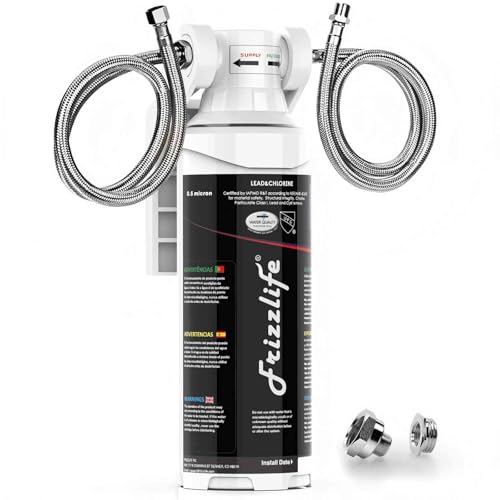
Frizzlife MK99 Under Sink Water Filter System — a under-sink filter example
On the under-sink filter side of this reverse osmosis system vs under sink water filter comparison, Frizzlife MK99 Under Sink Water Filter System shows what the category looks like when it is done properly. Filter-side worked example. Study its specification list against the criteria above: the figures a maker publishes proudly tell you where its design budget went, and the figures it whispers or omits tell you the rest of the story. Check price on Amazon before deciding, and compare it with the other examples here rather than treating any single model as the category itself.
Experienced owners talk about studying one concrete example in practical terms — minutes saved, trips avoided, refills skipped, sore arms prevented — and on those measures the gap between RO system and under-sink filter widens or narrows depending on habits that no specification table can capture for you in advance of living with either one through a full season of ordinary, unphotogenic days.

APEC WFS-1000 3-Stage Under Sink Water Filter System — a under-sink filter example
On the under-sink filter side of this reverse osmosis system vs under sink water filter comparison, APEC WFS-1000 3-Stage Under Sink Water Filter System shows what the category looks like when it is done properly. Filter-side worked example. Study its specification list against the criteria above: the figures a maker publishes proudly tell you where its design budget went, and the figures it whispers or omits tell you the rest of the story. Check price on Amazon before deciding, and compare it with the other examples here rather than treating any single model as the category itself.
Start the studying one concrete example comparison with the job in front of you rather than the showroom: a RO system behaves one way when the task is small and forgiving, while a under-sink filter shows its character when the task stretches longer, grows heavier, or has to be repeated for the tenth day running without anyone wanting to think about it or negotiate about whose turn it is.
Real-World Scenarios: Which One Wins Where?
A home on a private well with a mixed water report
Reverse Osmosis System: The membrane’s breadth is the point; wells argue for depth plus appropriate pre-treatment.
Under Sink Water Filter: A cartridge alone leaves too much of a well’s variability unaddressed.
There is also a learning curve hiding inside this particular scenario: the first week with a RO system feels different from the sixth month, and the same is true for a under-sink filter, so judge both by the routine you will settle into rather than the novelty of the first afternoon, when everything still feels like an event worth narrating to whoever will listen.
A city flat with good water that tastes of chlorine
Reverse Osmosis System: RO solves a problem this water does not have, at the cost of reject water and cabinet space.
Under Sink Water Filter: The cartridge filter is the textbook proportionate answer.
Budget interacts with this particular scenario quietly: spending more inside the RO system camp usually buys refinement rather than a new category of ability, and the same holds inside the under-sink filter camp, which means the category decision deserves your thinking first and the model decision deserves it second, in that order and not the reverse, however the adverts arrange them.
A serious home coffee setup
Reverse Osmosis System: RO plus remineralisation gives dialled-in brewing water and ends descaling.
Under Sink Water Filter: Carbon filtration improves taste but scale continues its slow work.
There is also a learning curve hiding inside this particular scenario: the first week with a RO system feels different from the sixth month, and the same is true for a under-sink filter, so judge both by the routine you will settle into rather than the novelty of the first afternoon, when everything still feels like an event worth narrating to whoever will listen.
A household watching its water bill
Reverse Osmosis System: Reject water is a visible, ongoing cost of the RO choice.
Under Sink Water Filter: Zero-waste cartridge filtration keeps the bill argument simple.
Experienced owners talk about this particular scenario in practical terms — minutes saved, trips avoided, refills skipped, sore arms prevented — and on those measures the gap between RO system and under-sink filter widens or narrows depending on habits that no specification table can capture for you in advance of living with either one through a full season of ordinary, unphotogenic days.
If You Already Own One of Them
If you already own a cartridge filter, its plumbing lessons transfer: you know your cabinet, your feed valve and your water’s behaviour, which makes an RO upgrade a confident project rather than a leap.
If you already own RO, a simple carbon filter still has roles — a bathroom tap, a fridge line pre-filter — anywhere the membrane’s depth is unnecessary.
Budget interacts with adding the second option later quietly: spending more inside the RO system camp usually buys refinement rather than a new category of ability, and the same holds inside the under-sink filter camp, which means the category decision deserves your thinking first and the model decision deserves it second, in that order and not the reverse, however the adverts arrange them.
Experienced owners talk about adding the second option later in practical terms — minutes saved, trips avoided, refills skipped, sore arms prevented — and on those measures the gap between RO system and under-sink filter widens or narrows depending on habits that no specification table can capture for you in advance of living with either one through a full season of ordinary, unphotogenic days.
Keep Researching: Related Guides
If this comparison narrowed the category but not the model, continue with the dedicated guides for each side, where individual products are ranked and specified in full: Best Reverse Osmosis System For Small Spaces Under $50 Best Reverse Osmosis System For Small Spaces Under $50; Best Under Sink Water Filter Under $75 Best Under Sink Water Filter Under $75; Best Countertop Water Filter For Small Spaces Under $50 Best Countertop Water Filter For Small Spaces Under $50; Best Whole House Water Filter Under $75 Best Whole House Water Filter Under $75. Those guides apply the same criteria used here, so the shortlists there and the verdicts here are designed to agree with each other.
Maintenance hides inside narrowing from category to model as well: whatever the RO system asks of you on a schedule, and whatever the under-sink filter asks instead, those small recurring tasks are the real price of ownership, paid in minutes across years, and they are worth listing on paper before the purchase rather than discovering them one damp chore at a time.
Common Buying Mistakes
- Judging RO by the word system while ignoring the drain ratio and stage schedule.
- Expecting a taste-and-odour cartridge to lower TDS, then declaring it broken when the meter disagrees.
- Skipping pre-filter changes and letting sediment and chlorine eat the membrane early.
Maintenance hides inside avoiding the classic mistakes as well: whatever the RO system asks of you on a schedule, and whatever the under-sink filter asks instead, those small recurring tasks are the real price of ownership, paid in minutes across years, and they are worth listing on paper before the purchase rather than discovering them one damp chore at a time.
Budget interacts with avoiding the classic mistakes quietly: spending more inside the RO system camp usually buys refinement rather than a new category of ability, and the same holds inside the under-sink filter camp, which means the category decision deserves your thinking first and the model decision deserves it second, in that order and not the reverse, however the adverts arrange them.
Which Should You Buy: Reverse Osmosis System Vs Under Sink Water Filter?
Best for: buyers who recognise themselves in the RO system scenarios above. / Not suited for: buyers whose real life matches the other column.
Choose a reverse osmosis system if you want the broadest contaminant and dissolved-solids reduction at the tap, and you accept slower filling, a tank or tankless pump design and reject water.
Best for: buyers who recognise themselves in the under-sink filter scenarios above. / Not suited for: buyers who would be paying for capability they never use.
Choose an under sink water filter if your water is fundamentally sound, your complaint is taste and chlorine, and you want full flow, no reject water and the simplest cartridge changes.
Maintenance hides inside making the final call as well: whatever the RO system asks of you on a schedule, and whatever the under-sink filter asks instead, those small recurring tasks are the real price of ownership, paid in minutes across years, and they are worth listing on paper before the purchase rather than discovering them one damp chore at a time.
Start the making the final call comparison with the job in front of you rather than the showroom: a RO system behaves one way when the task is small and forgiving, while a under-sink filter shows its character when the task stretches longer, grows heavier, or has to be repeated for the tenth day running without anyone wanting to think about it or negotiate about whose turn it is.
Frequently Asked Questions
Does RO remove beneficial minerals?
It removes minerals along with everything else dissolved. Whether that matters is debated; many systems offer remineralising stages that add back calcium and magnesium for taste, which is the practical compromise.
How much water does an RO system waste?
Older designs could send several litres to drain per litre produced; efficient modern tankless models do far better. Check the stated drain ratio for the specific model rather than judging the whole category.
Can an under-sink carbon filter remove lead?
Some cartridges are certified specifically for lead reduction; many are not. The certification list for the exact cartridge, not the category, decides — the same reading discipline applies to RO claims.
Does RO water taste flat?
Some drinkers find it so, because we are used to mineral taste. Remineralising stages and a short adjustment period resolve it for most households.
Which is easier to install?
The cartridge filter, clearly: inline or dedicated-tap fitting without a drain connection. RO adds the drain saddle and usually a dedicated faucet, still DIY-feasible but a longer afternoon.
Can I upgrade from a cartridge filter to RO later?
Yes — the cabinet, the cold-water feed and often the dedicated faucet carry over. The cartridge unit can retire to a bathroom tap or a second sink.
Final Recommendation
For the RO system side, start your shortlist with iSpring RCC7AK Under Sink Reverse Osmosis System; for the under-sink filter side, start with Frizzlife MK99 Under Sink Water Filter System. Then re-read the criteria rounds with your own scenarios in hand. The reverse osmosis system vs under sink water filter question has no universal winner — it has a correct answer per household, and by now you know which household yours is. Check price on Amazon for the examples that fit, confirm the specification figures on the current listings, and buy the side of this comparison that your busiest week would choose.
Resale and hand-me-down value follow the final recommendation too, since a well-kept RO system finds a second home easily when its category stays in demand, and a well-kept under-sink filter does the same, which quietly rewards buying the recognised names inside whichever camp you choose and keeping the manuals, chargers and accessories together in one labelled place.
One More Consideration Before You Decide (1)
Resale and hand-me-down value follow the long-term ownership picture, angle 1 too, since a well-kept RO system finds a second home easily when its category stays in demand, and a well-kept under-sink filter does the same, which quietly rewards buying the recognised names inside whichever camp you choose and keeping the manuals, chargers and accessories together in one labelled place.
Experienced owners talk about the long-term ownership picture, angle 1 in practical terms — minutes saved, trips avoided, refills skipped, sore arms prevented — and on those measures the gap between RO system and under-sink filter widens or narrows depending on habits that no specification table can capture for you in advance of living with either one through a full season of ordinary, unphotogenic days.
Maintenance hides inside the long-term ownership picture, angle 1 as well: whatever the RO system asks of you on a schedule, and whatever the under-sink filter asks instead, those small recurring tasks are the real price of ownership, paid in minutes across years, and they are worth listing on paper before the purchase rather than discovering them one damp chore at a time.
One More Consideration Before You Decide (2)
Maintenance hides inside the long-term ownership picture, angle 2 as well: whatever the RO system asks of you on a schedule, and whatever the under-sink filter asks instead, those small recurring tasks are the real price of ownership, paid in minutes across years, and they are worth listing on paper before the purchase rather than discovering them one damp chore at a time.
Budget interacts with the long-term ownership picture, angle 2 quietly: spending more inside the RO system camp usually buys refinement rather than a new category of ability, and the same holds inside the under-sink filter camp, which means the category decision deserves your thinking first and the model decision deserves it second, in that order and not the reverse, however the adverts arrange them.
Households disagree about the long-term ownership picture, angle 2 more than they disagree about specifications, because one person’s acceptable routine is another person’s daily irritation, and the honest way through is to picture your own busiest week — not your calmest — and ask which of RO system or under-sink filter survives that week with the least friction and the fewest small negotiations at the end of long days.
One More Consideration Before You Decide (3)
Resale and hand-me-down value follow the long-term ownership picture, angle 3 too, since a well-kept RO system finds a second home easily when its category stays in demand, and a well-kept under-sink filter does the same, which quietly rewards buying the recognised names inside whichever camp you choose and keeping the manuals, chargers and accessories together in one labelled place.
Start the the long-term ownership picture, angle 3 comparison with the job in front of you rather than the showroom: a RO system behaves one way when the task is small and forgiving, while a under-sink filter shows its character when the task stretches longer, grows heavier, or has to be repeated for the tenth day running without anyone wanting to think about it or negotiate about whose turn it is.
Budget interacts with the long-term ownership picture, angle 3 quietly: spending more inside the RO system camp usually buys refinement rather than a new category of ability, and the same holds inside the under-sink filter camp, which means the category decision deserves your thinking first and the model decision deserves it second, in that order and not the reverse, however the adverts arrange them.
One More Consideration Before You Decide (4)
Experienced owners talk about the long-term ownership picture, angle 4 in practical terms — minutes saved, trips avoided, refills skipped, sore arms prevented — and on those measures the gap between RO system and under-sink filter widens or narrows depending on habits that no specification table can capture for you in advance of living with either one through a full season of ordinary, unphotogenic days.
Households disagree about the long-term ownership picture, angle 4 more than they disagree about specifications, because one person’s acceptable routine is another person’s daily irritation, and the honest way through is to picture your own busiest week — not your calmest — and ask which of RO system or under-sink filter survives that week with the least friction and the fewest small negotiations at the end of long days.
There is also a learning curve hiding inside the long-term ownership picture, angle 4: the first week with a RO system feels different from the sixth month, and the same is true for a under-sink filter, so judge both by the routine you will settle into rather than the novelty of the first afternoon, when everything still feels like an event worth narrating to whoever will listen.
One More Consideration Before You Decide (5)
Experienced owners talk about the long-term ownership picture, angle 5 in practical terms — minutes saved, trips avoided, refills skipped, sore arms prevented — and on those measures the gap between RO system and under-sink filter widens or narrows depending on habits that no specification table can capture for you in advance of living with either one through a full season of ordinary, unphotogenic days.
Start the the long-term ownership picture, angle 5 comparison with the job in front of you rather than the showroom: a RO system behaves one way when the task is small and forgiving, while a under-sink filter shows its character when the task stretches longer, grows heavier, or has to be repeated for the tenth day running without anyone wanting to think about it or negotiate about whose turn it is.
Start the the long-term ownership picture, angle 5 comparison with the job in front of you rather than the showroom: a RO system behaves one way when the task is small and forgiving, while a under-sink filter shows its character when the task stretches longer, grows heavier, or has to be repeated for the tenth day running without anyone wanting to think about it or negotiate about whose turn it is.
One More Consideration Before You Decide (6)
Resale and hand-me-down value follow the long-term ownership picture, angle 6 too, since a well-kept RO system finds a second home easily when its category stays in demand, and a well-kept under-sink filter does the same, which quietly rewards buying the recognised names inside whichever camp you choose and keeping the manuals, chargers and accessories together in one labelled place.
Start the the long-term ownership picture, angle 6 comparison with the job in front of you rather than the showroom: a RO system behaves one way when the task is small and forgiving, while a under-sink filter shows its character when the task stretches longer, grows heavier, or has to be repeated for the tenth day running without anyone wanting to think about it or negotiate about whose turn it is.
Households disagree about the long-term ownership picture, angle 6 more than they disagree about specifications, because one person’s acceptable routine is another person’s daily irritation, and the honest way through is to picture your own busiest week — not your calmest — and ask which of RO system or under-sink filter survives that week with the least friction and the fewest small negotiations at the end of long days.
One More Consideration Before You Decide (7)
There is also a learning curve hiding inside the long-term ownership picture, angle 7: the first week with a RO system feels different from the sixth month, and the same is true for a under-sink filter, so judge both by the routine you will settle into rather than the novelty of the first afternoon, when everything still feels like an event worth narrating to whoever will listen.
Budget interacts with the long-term ownership picture, angle 7 quietly: spending more inside the RO system camp usually buys refinement rather than a new category of ability, and the same holds inside the under-sink filter camp, which means the category decision deserves your thinking first and the model decision deserves it second, in that order and not the reverse, however the adverts arrange them.
Resale and hand-me-down value follow the long-term ownership picture, angle 7 too, since a well-kept RO system finds a second home easily when its category stays in demand, and a well-kept under-sink filter does the same, which quietly rewards buying the recognised names inside whichever camp you choose and keeping the manuals, chargers and accessories together in one labelled place.
One More Consideration Before You Decide (8)
Start the the long-term ownership picture, angle 8 comparison with the job in front of you rather than the showroom: a RO system behaves one way when the task is small and forgiving, while a under-sink filter shows its character when the task stretches longer, grows heavier, or has to be repeated for the tenth day running without anyone wanting to think about it or negotiate about whose turn it is.
Budget interacts with the long-term ownership picture, angle 8 quietly: spending more inside the RO system camp usually buys refinement rather than a new category of ability, and the same holds inside the under-sink filter camp, which means the category decision deserves your thinking first and the model decision deserves it second, in that order and not the reverse, however the adverts arrange them.
Maintenance hides inside the long-term ownership picture, angle 8 as well: whatever the RO system asks of you on a schedule, and whatever the under-sink filter asks instead, those small recurring tasks are the real price of ownership, paid in minutes across years, and they are worth listing on paper before the purchase rather than discovering them one damp chore at a time.
One More Consideration Before You Decide (9)
Resale and hand-me-down value follow the long-term ownership picture, angle 9 too, since a well-kept RO system finds a second home easily when its category stays in demand, and a well-kept under-sink filter does the same, which quietly rewards buying the recognised names inside whichever camp you choose and keeping the manuals, chargers and accessories together in one labelled place.
Start the the long-term ownership picture, angle 9 comparison with the job in front of you rather than the showroom: a RO system behaves one way when the task is small and forgiving, while a under-sink filter shows its character when the task stretches longer, grows heavier, or has to be repeated for the tenth day running without anyone wanting to think about it or negotiate about whose turn it is.
Budget interacts with the long-term ownership picture, angle 9 quietly: spending more inside the RO system camp usually buys refinement rather than a new category of ability, and the same holds inside the under-sink filter camp, which means the category decision deserves your thinking first and the model decision deserves it second, in that order and not the reverse, however the adverts arrange them.