Disclosure: As an Amazon Associate, umtsmarttool.com earns from qualifying purchases. Links to Amazon on this page are affiliate links; they cost you nothing extra. Prices and availability change often, so check the current Amazon listing before you buy.
Where to buy
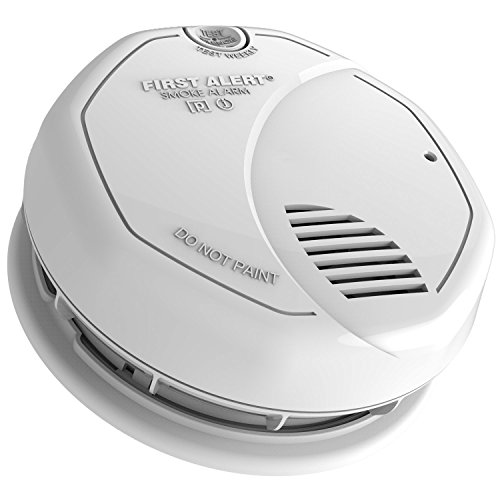
The four alarms this guide teaches you to choose between — each verified to its manufacturer and model: the all-round dual-sensor anchor, the First Alert SA3210; the combination unit with a carbon monoxide display, the X-Sense SC07; the slim photoelectric for living spaces, the First Alert PR710; and the voice-alert combination two-pack, the Kidde KN-COSM-BA. Each leads on different criteria — which is the guide’s whole argument. Read the full guide ↓
Smoke Detector Buying Guide: Every Criterion, in the Order It Matters
A smoke detector buying guide earns its name only if it leaves the reader able to judge alarms the guide never mentions — so this one is organised as the criteria themselves, in the order they should govern a purchase: what the alarm senses, whether it also senses carbon monoxide, how it is powered, whether it can call the other alarms, where and how many the house needs, how it behaves on a bad cooking night, and how its dates and standards read. Work through the seven criteria in order and the shortlist builds itself; the picks table at the end is then a worked example rather than an act of faith, and the budget-tier section translates the criteria into money without printing a single price. Readers who want the ranked outcome first can start from Best Smoke Detector Under $50 Best Smoke Detector Under $50 and return here for the reasoning. One promise about method: every criterion below is stated so that it can be applied to a listing this guide has never seen, in a shop or on a screen, in about ninety seconds — because a guide that only works for its own picks is a catalogue wearing a guide’s clothes.
In this guide
Criterion Zero: Certification Itself
Before the seven, a gate: the alarm must be listed by a recognised testing laboratory to the applicable standard — UL 217 for smoke, UL 2034 for carbon monoxide in North America. This is not the first criterion but the price of entry to all of them, and it is binary in a way nothing else in this guide is: a certified alarm from any tier outranks an uncertified one with any feature list, because certification is the only promise in the category verified by somebody other than the seller. Check for the listing mark on the product and its packaging, buy through channels that protect authenticity, and treat any alarm that cannot state its listing plainly as furniture shaped like an alarm. Everything that follows assumes the gate is passed; the seven criteria then choose among the certified, which is the only choosing worth a guide’s time — or a household’s decade. The gate also explains this guide’s linking discipline: every product named with a link on this page was verified to its manufacturer and model first, because a buying guide that links carelessly teaches carelessness.
Criterion One: What the Alarm Senses
What it means. Smoke alarms sense particles by one of two classic principles — ionisation, quickest on fast flaming fires with small particles, and photoelectric, quickest on smouldering fires with larger ones — or by combining principles (dual-sensor) or by watching particles across wavelengths (split-spectrum). The current edition of UL 217, the North American listing standard, tests response across a broader set of fires than its predecessor, which is why multi-criteria designs now dominate serious shortlists. What to look for. A sensing description in engineering nouns — dual sensor, photoelectric, split-spectrum — and a standards line naming the current edition. What to avoid. Sensing described only in adjectives (“advanced”, “intelligent”) with no principle named, and single-principle ionisation units proposed for bedrooms, where smouldering fires are the scenario that matters most. The deeper point. Sensing is the criterion where marketing and physics diverge widest: the physics is a two-scenario problem (smoulder and flame) plus a nuisance constraint, and any description of a sensor that does not map onto those three terms is decoration. A buyer who holds that map can read any future technology — including principles not yet on the market — by asking which scenario it answers and what it does about toast. Hold manufacturers to the map in their own questions sections; the ones who answer in scenarios are the ones engineering in them.
Criterion Two: Carbon Monoxide — Combined or Separate?
What it means. Carbon monoxide comes from fuel-burning appliances and attached garages; it is sensed electrochemically, listed under UL 2034, and its sensors age on roughly a decade’s clock like smoke sensors. A combination unit puts both hazards in one ceiling position; separate units let each be placed and replaced on its own logic. What to look for. Combination cover at least at the sleeping-area hallway of any home that burns fuel or adjoins a garage, with the CO sensor’s rated life matching the unit’s service life. What to avoid. Smoke-only ceilings in fuel-burning homes, and combination units whose CO half quietly expires years before the smoke half — a mismatch only the specification reveals. The deeper point. CO is the hazard with no human sensor: colourless, odourless, and symptomatic in ways easily mistaken for flu. That is why this criterion ranks second despite applying conditionally — where it applies, it is not a feature preference but the difference between detection and none, and a display-equipped unit earns extra credit for showing low levels before they become an alarm event. When a combination unit sounds for CO, the household’s job is air and exit, then the professionals — the detector’s display afterwards helps the engineer find the source, one more reason the information-rich unit earns its place.
Criterion Three: Power — Sealed Decade, Replaceable Cells, or Mains
What it means. Sealed ten-year batteries make the alarm and its power expire together and cannot be borrowed for a remote control; replaceable-cell units trade a small recurring chore for flexibility; hardwired units with battery backup suit homes wired for them and interconnect through the mains. What to look for. The power story stated in years, an end-of-life signal, and — for households honest about their habits — the sealed decade, which removes the most common failure mode (the removed or dead battery) by design. What to avoid. Any unit whose battery arrangement lets a well-meaning relative silence a chirp by removing the power, and hardwired replacements attempted without matching the existing interconnect system. The deeper point. Power is a behavioural criterion disguised as an electrical one: the question is never which chemistry is best but which arrangement survives your household’s real habits across ten years — the sealed unit is the honest answer for most, and choosing it is self-knowledge, not extravagance. Whatever the arrangement, the low-power warning is a instruction, not an ambience: replace the cells or the unit promptly, and never let a chirping alarm be silenced by removing its power.
Criterion Four: Interconnection — Should One Alarm Wake the Rest?
What it means. Interconnected alarms sound together: a basement event raises every bedroom. Wired systems interconnect through the mains where the wiring exists; wireless systems (radio-linked units, wire-free networks, connected platforms) retrofit the same behaviour without cables. What to look for. Interconnection in any multi-storey or closed-door household, from whichever system fits the property — with the discipline that interconnect families are brand ecosystems and do not mix. What to avoid. Assuming a loud hallway alarm substitutes for interconnection in a house of closed doors and stairs, and mixing brands on one wired loop. The deeper point. Interconnection converts volume into information: the whole house sounding says “somewhere, act now”, and voice-equipped networks add “and here is where”. In a closed-door house it is the closest thing to a criterion that outranks sensing — a dual-sensor alarm nobody hears protects less than a modest one that wakes the right bedroom. Test the network as a network after fitting: trigger one unit and walk the house, confirming every position sounds — the walk takes two minutes and is the only proof the ecosystem is one system rather than several neighbours.
Criterion Five: Placement and Count — the Criterion Money Cannot Fix Later
What it means. Guidance is consistent: inside every bedroom, outside the sleeping areas, on every level including the basement; ceiling-mounted at least four inches from any wall, or high on a wall per the instructions; at least ten feet from cooking appliances to cut nuisance alarms. What to look for. A count derived from your floor plan before any product is chosen, and budget allocated to the count first and the model second. What to avoid. The single premium unit bought instead of the three adequate ones the plan required — the most expensive mistake in the category, because it feels like quality. The deeper point. Placement is the only criterion that is pure geometry: smoke’s path, doors, distance and ceiling shape decide what any sensor can know and when. It is also the criterion sellers cannot help with, because they do not have your floor plan — which is precisely why this guide insists the buyer, armed with the rules above, is the authority here. Sketch the plan on paper before shopping; the sketch, with its doors drawn in their night positions, is the single most valuable document in the whole purchase.
Criterion Six: Nuisance Behaviour and the Hush
What it means. Most alarms spend their lives near kitchens and showers, and their nuisance behaviour decides whether they stay enabled: current-standard designs are tested for cooking-nuisance resistance, and a hush facility silences a known false alarm temporarily while the sensor keeps watching. What to look for. A hush control, placement discipline (the ten-foot rule above), and photoelectric or multi-criteria sensing near kitchens. What to avoid. Any household plan whose answer to false alarms is removing batteries — the hush exists precisely so that the correct response is also the easy one. The deeper point. Nuisance behaviour is a decade-long relationship, not a first impression: an alarm that cries wolf monthly trains its household to ignore or disable it, converting a certified device into ceiling decoration — the only failure mode in this guide that the household inflicts on itself, and the one good selection prevents most cheaply. When a false alarm does happen, treat it as data: log the cause, adjust the cooking or the placement, and let the hush — never a removed battery — carry the evening.
Criterion Seven: Dates, Standards and the Paper Trail
What it means. Alarms expire ten years from manufacture — not purchase, not fitting — and end-of-life signalling announces the fact. Standards editions distinguish current designs from old stock in identical housings. What to look for. The manufacture date checked on delivery, the standards line (UL 217; UL 2034 for CO) read on the listing, and a house log recording date, room and model for every unit. What to avoid. Deep-discount old stock whose decade is half spent, and any purchase whose date nobody wrote down. The deeper point. Dates are the criterion of stewardship: they convert an alarm from an object into a schedule, and the household that keeps the schedule never has to guess the state of its ceiling. Every other criterion is decided once, at purchase; this one is decided continuously, which is why it closes the list — the guide ends where ownership begins. Put the replacement years in a calendar the household actually uses, with the rooms named; a date that exists only on the unit’s back is a date that will be discovered by the end-of-life chirp instead.
The Budget Tiers, in Words
Entry tier buys certified single-hazard protection and, chosen well (photoelectric, sealed decade), covers bedrooms honourably. Mid tier is where this guide’s centre of gravity sits: dual sensing, combination cover, sealed power and hush — the full criteria set without connectivity. Upper tier adds the connected layer (self-testing, voice, phone reporting) and wire-free networking. The tier question is never “how good an alarm” — certified alarms at every tier meet the standard — but “which criteria beyond sensing does my household need”, and the criteria sections above are the honest way to answer it. Ranked lists by ceiling live at Best Smoke Detector Under $30 Best Smoke Detector For Home Use Under $30 and the under-$100 field. A useful discipline across all tiers: price the system, not the unit — multiply by the count from criterion five before comparing anything, because a tier that looks extravagant per alarm can be the economical one per protected room, and vice versa. Multipacks belong in this arithmetic honestly: a pack that matches the count and the model is the tier working as intended, while a pack bought because it was a pack, in the wrong model, is the count criterion spent on the wrong sensing.
The Picks, as a Worked Example
| Pick | Badge | Why it exemplifies the criteria |
|---|---|---|
| First Alert SA3210 | Best all-round anchor | Dual sensing (criterion one), sealed decade (three), end-of-life signal (seven) |
| X-Sense SC07 | Best information | Combination cover with a CO display (two), current-edition listings on both standards (seven) |
| First Alert PR710 | Best living-space fit | Photoelectric calm near kitchens (one, six), slim profile, sealed decade (three) |
| Kidde KN-COSM-BA 2-Pack | Best voice value | Combination cover that names the hazard aloud (two), pack format serving the count (five) |
The four disagree with each other on purpose: each leads on different criteria, which is the guide’s thesis made visible — the right alarm is the one whose leading criteria match your house’s leading needs. The cluster’s largest ranked field, with full per-model reviews, is Best Smoke Detector For Home Use Under $100 Best Smoke Detector For Home Use Under $100. Note what the table omits: no column for popularity, none for star ratings — deliberately, because neither detects smoke, and a buying guide’s table should contain only columns that do.
How to Choose: the Checklist Form
The seven criteria compressed into the order a purchase actually happens in — print it, take it to the listing, and let each line veto what it must. A product that survives all seven lines has earned its place on the ceiling; a product vetoed by any line has been saved from the only review that matters, the one written by a 3 a.m. event. Work the list on paper rather than in your head: the act of ticking forces the count, the fuel check and the ecosystem question into the open, where in-the-head shopping reliably skips at least one of them.
- Count first: bedrooms + hallways + levels, from the floor plan
- Fuel check: any gas, oil, wood or attached garage → combination cover at the hallway
- Sensing: dual, split-spectrum or photoelectric for bedrooms; photoelectric near kitchens
- Power: sealed decade unless your household genuinely enjoys battery chores
- Interconnection: multi-storey or closed-door house → plan a single-brand system
- Hush present; placement keeps ten feet from the cooker
- Dates and standards read on the listing; manufacture date checked on delivery; everything logged
Common Buying Mistakes
Buying the model before the count. Criterion five outranks every product decision; the floor plan is the first document, the shortlist the second. Reading “10-year” as starting at purchase. It starts at manufacture; the date check is the correction, and a two-year-old bargain is an eight-year alarm at a ten-year expectation. Mixing interconnect brands. Ecosystems do not interoperate; choose the family first, then the models within it. Smoke-only in a fuel-burning home. The invisible hazard is the one the ceiling must cover; if a flame exists in the house, a combination unit exists at its hallway. Judging by loudness. Certified alarms meet the same loudness standard; placement and interconnection decide what a sleeper actually hears. Trusting the hero photograph. A slim alarm photographed on a vast ceiling says nothing about sensing; the criteria sections are the antidote — read the specification’s nouns, not the picture’s mood.
Reading a Listing Like an Inspector
Listings reward a cold eye, and this guide’s criteria convert directly into a reading method. Find the standards line first — it should name UL 217 (and UL 2034 for a combination unit) without hedging; a listing that trumpets features and whispers standards has told you its priorities. Find the sensing principle in nouns, not adjectives. Find the power story in years. Find the manufacture-date policy nowhere — listings never state it, which is why the check happens on the delivered box, and why a purchase from a channel with easy returns is worth preferring during a standards transition. Treat pack photography with suspicion of a friendly kind: multipacks are excellent value for criterion five, but confirm the pack’s model is the model the criteria chose, not a near-namesake with different sensing. And read the questions-and-answers section for the two facts listings bury: whether the hush silences for minutes or until the air clears, and whether the end-of-life signal exists — owners answer both honestly because both annoyed or reassured them personally. Finally, distrust any listing whose model number drifts between the title, the specification table and the box photography; model discipline in a listing is a fair proxy for the manufacturer’s discipline everywhere else, and this category punishes approximations. Cross-check the model against the manufacturer’s own page when anything feels off — two minutes of verification is the cheapest criterion of all, and it is the one this entire cluster is built on.
Three Houses, Worked Through the Criteria
The all-electric flat. Count: bedroom, hallway, living level — three positions. Fuel check: none, no garage — smoke-only is defensible, combination optional. Sensing: photoelectric everywhere for calm. Power: sealed. Network: single level, doors open — interconnection optional. The criteria output a simple, inexpensive, entirely respectable ceiling. The gas-heated family house. Count: six positions across two floors and a basement. Fuel: boiler and hob, attached garage — combination at both hallways. Sensing: dual in bedrooms, photoelectric discipline near the kitchen. Power: sealed. Network: closed doors and stairs — interconnection earns its place, one brand family chosen first. The output is a system, and the picks table’s four models cover most of its positions between them. The rented terrace. Count from the plan; the landlord’s wired units audited for dates; the tenant’s own sealed battery layer added where the audit found gaps; nothing drilled, everything logged and removable. Three houses, three different ceilings, one method — which is the entire argument for learning criteria instead of memorising products. A fourth house deserves its outline: the multigenerational home, grandparents downstairs, children up — where criterion four (interconnection) and voice alerts carry unusual weight, criterion six (nuisance calm) protects the sleep of the lightest sleeper in the house, and the criteria output a networked ceiling with combination cover at both hallways and a log kept by whichever generation keeps the house’s paperwork. Work your own house through the same four-line format before shopping; if any line cannot be written, that line is the research the purchase still needs.
Special Cases the Criteria Handle Without New Rules
The hearing-impaired household. Criterion four (interconnection) extends naturally: what must reach the sleeper is not sound but signal, and households should look within interconnect families for the alerting accessories and strobe/bed-shaker options the ecosystem supports, chosen with the sleeper’s own testing. The holiday-let and rental property. Criteria three and seven dominate: sealed power that guests cannot borrow, dates logged by the owner, and a test ritual built into the changeover routine — the criteria produce a landlord’s ceiling without a separate landlord’s guide. The workshop and garage. Dust defeats optical chambers; criterion one reads differently here (heat detection is the professional answer for such spaces, outside this guide’s smoke scope), and the honest output of the criteria is sometimes “not a smoke alarm” — a guide that can say so is worth more than one that sells into every room. The new-build. Hardwired interconnection is cheapest before the plaster dries; criterion four’s wired branch is the new-build default, with battery units reserved for the positions the wiring plan missed. The student house. Criteria five and six rule: the count is usually short and the cooking is heroic, so photoelectric calm, hush discipline and a landlord conversation about dates — conducted with this guide open — protect a house whose occupants rotate yearly and whose institutional memory is a whiteboard. Each case bends the criteria; none breaks them, which is the test of a framework. When a genuinely novel case appears — a houseboat, a tiny home, a converted barn — run the seven in order and trust the outputs; the criteria were built from the physics and the guidance, and both travel to addresses no guide has pictured.
Replace, Add, or Leave Alone: Reading an Existing Ceiling
The criteria also judge alarms already fitted. Replace when the date says the decade is spent, when a test fails, when the unit’s sensing is single-principle ionisation in a bedroom and the budget allows the correction, or when a combination gap exists in a fuel-burning home. Add when the count falls short of the floor plan — the commonest finding — or when a new fuel appliance (a stove, a boiler replacement, an attached garage conversion) creates a hazard the old ceiling never covered. Leave alone the in-date, tested, correctly placed unit whose generation merely predates the current standard: standards grandfather the installed base, and churn for its own sake wastes the budget the count needs. A ceiling audit against the seven criteria takes twenty minutes with a step ladder and a notebook, and it is the correct first purchase of any household that has not made one — the audit is free, and everything bought afterwards is bought with knowledge. Photograph each date as you find it; the audit’s photographs become the house log’s first page, and the next audit — a decade or a house-move away — starts from evidence instead of archaeology. Finish the audit standing in the furthest bedroom at night, doors closed, imagining the sound arriving: if the imagination strains, the count or the network needs work, and the audit has just paid for itself.
Buying for Someone Else’s Ceiling
A surprising share of alarms are bought for houses the buyer does not live in — adult children for parents, landlords for tenants, friends for a first flat — and the criteria shift emphasis in ways worth stating. For a parent’s home, criteria three and six dominate: sealed power that asks nothing, nuisance behaviour that never trains an elderly sleeper to ignore the sound, and (where the ecosystem allows) voice or reporting that keeps the family informed with consent. For a tenant’s home, the landlord’s duties frame everything: in-date, tested, documented — criterion seven as a professional habit, with the fitting recorded at tenancy start. For the first flat, the gift that matters is the count, not the flagship: two or three sound units placed by the rules outperform one premium unit in a hallway, and a giver who includes the placement conversation gives the protection itself rather than its symbol. In every case the buyer’s distance from the ceiling argues for the low-maintenance branch of each criterion — the alarm that needs the least from its household is the one most likely to be working in the house you cannot check. The etiquette matters too: an alarm given with its date explained and its test demonstrated is received as care; the same alarm handed over with a lecture is received as criticism of the recipient’s housekeeping — fit it together, test it together, and let the device do the talking for the next decade. And leave the log started: the first entry, in the giver’s hand, is the part of the gift most likely to still be working in year nine.
The Guide in Seven Sentences
For the reader who will keep one screen from this page, keep this one — the whole framework at pocket size, in the order the decisions should be made:
- Sensing: buy the principle that answers both fire scenarios — dual, split-spectrum, or photoelectric where calm matters most.
- Carbon monoxide: if fuel burns in or beside the home, combination cover at the hallway is not optional.
- Power: choose the arrangement your household’s habits cannot defeat — for most, the sealed decade.
- Interconnection: in a house of doors and stairs, alarms that sound together protect; lone alarms merely announce.
- Placement: the floor plan writes the shopping list — every bedroom, every level, ten feet from the cooker.
- Nuisance behaviour: a hush and a calm sensor keep the alarm enabled, which is the whole game.
- Dates: the decade runs from manufacture — check it, log it, and let the log drive every future replacement.
Standards, Insurance and Resale: the Quiet Rewards
Three audiences beyond the household read a ceiling through this guide’s criteria, and a buyer does well to know it. Insurers ask, after any incident, whether working alarms were fitted — a logged, in-date, correctly counted ceiling is the strongest answer a household can file, and criterion seven is what makes the answer documentary rather than anecdotal. Surveyors and buyers read dates the same way during a sale: a house whose alarms are current-edition and mid-decade presents as maintained in a detail that signals the whole, while a ceiling of expired units invites questions no vendor enjoys. Landlords, as the tenancy section noted, carry duties that the criteria operationalise. None of these rewards is a reason to buy an alarm — the sleeper in the bedroom is the reason — but together they mean the criteria pay for their discipline three times over: in the night that matters, in the paperwork that follows it, and in the valuation of the house that never has the night. A buying guide is entitled to count all three. There is a fourth, quieter audience: the fire service, whose post-incident reports feed the statistics that write the next edition of the standard — a well-chosen ceiling is, in a small way, a vote for what protection means.
Where the Criteria Collide — and How to Judge the Collisions
Real purchases are collisions between criteria, and a guide should referee the common ones. Sensing versus nuisance near a kitchen: the dual sensor answers both fire scenarios but the photoelectric answers the kitchen’s peace — the referee’s call is placement first (ten feet buys more calm than any sensor), then photoelectric or multi-criteria at the kitchen-adjacent position, dual in the bedrooms where no steam rises. Combination cover versus matched horizons: a combination unit whose CO sensor dies young fails criterion two’s fine print — prefer the matched-decade specification even at a plainer feature list. Interconnection versus budget: when the count and the network compete for the same money, the count wins this year and the network joins later within the same brand family — positions cannot be retrofitted by a radio, but radios can be added to positions. Connected features versus simplicity: the self-testing premium is worth most to the household least likely to test manually; judge by the diary, not the demo. Slim design versus sensing: a low profile is a legitimate pleasure in a living space and an illegitimate reason to accept weaker sensing in a bedroom — assign each room its own priority and the collision dissolves. Each collision resolves the same way — by asking which criterion protects against the failure that cannot be corrected later — and that question, memorised, is the guide’s whole method in miniature. Positions can be added, networks can grow within a family, and features can be upgraded at the next replacement; the failures that cannot be corrected later are the missing sensor on the one night, the expired unit nobody logged, and the disabled alarm in the kitchen ceiling — the criteria are ordered, ultimately, by the irreversibility of what they guard.
A Word on Where You Buy
The criteria travel across channels, but channels are not equal for this category, and the guide should say why. What a smoke alarm purchase needs from its seller is three things: genuine stock (a certified category attracts imitations, and the standards line is only meaningful on the real manufacturer’s product), fresh stock (criterion seven — the manufacture date is set at the factory, but a high-turnover channel delivers younger units), and painless returns (because the date check happens at your kitchen table, and a unit that arrives old must be returnable without a quarrel). Judge any channel by those three, in that order, and prefer the one that passes all of them over the one that merely shaves the price — the saving on a decade-long safety device is the most expensive economy in the home when it costs a year of service life or a counterfeit sensor. The links on this page point to the listings this guide verified; wherever you buy, run the same verification on the delivered box. Keep the receipt with the house log: channel, date and order reference are part of criterion seven’s paper trail, and they make any date dispute with a seller a thirty-second conversation instead of an archaeology project.
The Ninety-Second Listing Drill
Everything above, rehearsed as a timed drill for the moment a listing is open and a decision is forming. Seconds 0–15: the standards line — UL 217 present, UL 2034 if combination; absent or vague, close the tab. Seconds 15–30: the sensing nouns — dual, photoelectric, split-spectrum; adjectives only, close the tab. Seconds 30–45: the power years — sealed decade or a stated arrangement your household will honestly maintain. Seconds 45–60: the ecosystem check — does this unit join the family your other positions use, or start the family deliberately? Seconds 60–75: the behaviour line — hush present, end-of-life signal present. Seconds 75–90: the count — does this purchase complete a position on the floor-plan sketch, and is the quantity in the basket the quantity the sketch demands? A listing that survives ninety seconds of criteria has earned the click; the drill’s real value is the tabs it closes, because every closed tab is a decade-long mistake declined at the cost of a minute and a half. Practise the drill on the four picks above — all four pass, each at a different line’s emphasis — and the method will be muscle memory by the time a stranger’s listing needs judging.
Frequently Asked Questions
What is the single most important criterion?
Placement and count, because no product quality compensates for a missing sensor in the room where a fire starts — then sensing type, then the rest in this guide’s order. If the budget forces a sequence rather than a single purchase, buy in that order too: positions first, sensing second, refinements as funds allow. It is the only ranking in this guide that is not close: every other criterion trades against another, but a missing position trades against nothing — it is simply absent on the night it is needed.
Photoelectric or ionisation for a bedroom?
Photoelectric or dual: bedrooms fear the smouldering fire, and photoelectric sensing answers it fastest, with calmer behaviour near en-suites as a bonus. Dual sensing adds the flaming scenario’s speed for little complexity, which is why this guide’s anchor pick is a dual unit. Whichever principle a bedroom unit uses, its test button should be pressed on the household’s rhythm — sensing chosen well and never verified is a hypothesis, not a protection.
Do I need carbon monoxide detection if I have no gas?
If any fuel burns anywhere — oil, wood, a solid-fuel stove — or a garage adjoins the house, yes; if the home is genuinely all-electric with no attached garage, the case weakens, though many households keep one combination unit at the hallway regardless. Visiting vehicles, a generator used in outages, or a neighbour’s shared wall can each reopen the question, which is why the hallway combination unit is such common insurance. When in doubt, cover the hallway: the cost of an unneeded CO sensor is a modest premium, and the cost of a needed one missing is not measured in money.
Sealed or replaceable batteries?
Sealed ten-year for most households: the power and the alarm retire together, and the borrowed-battery failure mode disappears. Replaceable cells suit households with a genuine maintenance rhythm. The test of which household yours is: whether anyone can name, right now, the month the current batteries were fitted — if not, sealed. The same test, applied honestly, settles several other criteria on this page, which is why the guide keeps returning to the household’s habits as the specification no listing can print.
How many alarms does a three-bedroom house need?
Typically five to six: three bedrooms, the hallway outside them, one per additional level including the basement — counted from your own plan, not from a pack size. Split-level and open-plan homes should walk the smoke’s path mentally at night, doors in their sleeping positions, and place for the house as it is at 3 a.m. rather than as the estate agent photographed it. When the count and the budget disagree, protect the bedrooms and the hallway first and schedule the remaining level with a date in the log — a dated plan is a protection decision, an undated intention is not.
My home has hardwired alarms. Should replacements match?
Yes — like-for-like within the wired system’s brand family, keeping the interconnect intact, and matching the harness where the manufacturer provides adapters. The wired ceiling is an ecosystem decision made by the original installer; criterion four says honour it or replace it whole, never half. If the original family is discontinued, that is a whole-system conversation — ideally with an electrician — not a one-unit improvisation. Photograph the existing units’ labels before shopping; the wired family’s identity is written on the devices themselves, and the photograph prevents the classic wrong-family purchase.
Is interconnection worth it in a small flat?
Usually optional: one level, doors mostly open, and short distances mean a single alarm’s sound reaches the sleeper honestly. The money interconnection would cost is better spent completing the count and choosing calm sensing near the kitchen — the criteria in their order make the call. The exception is the flat with a lodger or a closed-door sleeper at the far end from the kitchen; distance and doors, not floor count, are the real triggers. Measure the flat by its worst night, not its best afternoon, and the criterion answers itself.

Are expensive alarms safer than cheap ones?
Certified alarms at every tier meet the same standard. Money buys criteria beyond sensing — combination cover, networking, self-testing, displays — not a higher grade of the basic promise. Spend where a criterion answers a real feature of your house; a feature bought for a house you do not live in protects nothing. The reverse is the guide’s closing warning: a criterion your house genuinely needs — combination cover at a fuel-burning hallway, a sensor inside a closed bedroom — is not the place to economise, because those are the purchases whose absence is measured in outcomes, not in savings.
Final Recommendation
Choose in the guide’s order — count, hazards, sensing, power, network, behaviour, dates — and the product chooses itself. For a worked example that satisfies every criterion for a typical family home, start with the First Alert SA3210 in the bedrooms and the X-Sense SC07 at the hallway, then adjust by your own floor plan. The criteria, not the brands, are the guide; keep them and every future replacement buys itself. Bookmark the seven sentences, photograph the dates, and let the ceiling get on with its decade — a well-bought alarm system is the rare purchase whose success is measured by how completely it disappears. When the replacement decade arrives, this guide will still work: the products will have changed, and the criteria will not have.