Disclosure: As an Amazon Associate, umtsmarttool.com earns from qualifying purchases. Links to Amazon on this page are affiliate links; they cost you nothing extra. Prices and availability change often, so check the current Amazon listing before you buy.
Where to buy
Short on time? Start with the Seiko 5 Sports GMT SSK001, the standout pick in this guide to the best gmt watches. The full shortlist:
- Seiko 5 Sports GMT SSK001 — Check on Amazon
- Citizen Promaster Nighthawk BJ7000-52E — Check on Amazon
- Victorinox FieldForce Classic GMT — Check on Amazon
- Pagani Design GMT Automatic NH34 — Check on Amazon
- Citizen Promaster GMT BJ7128-08E — Check on Amazon
- Invicta Pro Diver GMT 6991 — Check on Amazon
Read the full guide ↓
The best gmt watches solve a problem every traveller, remote worker and internationally scattered family knows: it is 9 a.m. where you are, but what time is it where it matters? A GMT watch answers at a glance, with a fourth hand that circles the dial once every 24 hours and points at a second time zone on a 24-hour scale. No phone, no mental arithmetic, no waking a colleague in another hemisphere because you misjudged the offset by an hour.
The complication comes in two mechanical flavours, and the difference decides which of these six watches you should buy. A “traveler” (or true) GMT lets you jump the local hour hand forward or backward in one-hour steps when you land, while the GMT hand keeps showing home time untouched. An “office” (or caller) GMT instead moves the GMT hand independently, which suits someone who stays put and tracks another city. Below those sit dual-time watches, which show a second zone on a subdial or with a simpler hand arrangement. This guide includes all three types, labels each one honestly, and explains in the buying section how to tell them apart on any listing. If you mostly travel in your head — coordinating calls across zones from one desk — an office GMT or dual-time is genuinely all you need, and it usually costs less.
Every pick here was verified against manufacturer or retailer specification sources: movement type, case size, crystal and water resistance are stated per model, and the one specification we could not pin down for a given watch was simply left out rather than guessed. Readers who also want a stopwatch should cross-shop our best chronograph watches guide, and those drawn to the cockpit side of the GMT story will find its aviation cousins in the best pilot watches roundup.
In this guide
Quick Picks
| Watch | Badge | Key spec |
|---|---|---|
| Seiko 5 Sports GMT SSK001 | Best Overall | 4R34 automatic traveler GMT, 42.5 mm, 100 m |
| Citizen Promaster Nighthawk BJ7000-52E | Best Solar GMT | Eco-Drive dual time, 200 m, slide-rule bezel |
| Victorinox FieldForce Classic GMT | Best Swiss GMT | Swiss quartz GMT, sapphire crystal, 42 mm |
| Pagani Design GMT Automatic NH34 | Best Budget Traveler GMT | Seiko NH34 traveler GMT movement, sapphire, ceramic bezel |
| Citizen Promaster GMT BJ7128-08E | Best GMT for the Water | Eco-Drive B877 dual time, 200 m diver case |
| Invicta Pro Diver GMT 6991 | Best Bold Budget GMT | Swiss quartz GMT subdial, 48 mm, 100 m |
How These Picks Were Chosen
The first filter was functional honesty: a watch only qualifies here if it genuinely displays a second time zone. That sounds obvious, but the market is full of watches with a decorative 24-hour subdial that merely mirrors the main time, and those were excluded. Each pick below shows home time and local time simultaneously, through a 24-hour GMT hand, an independently settable dual-time display, or a GMT subdial, and each review states plainly which mechanism you are getting.
The second filter was movement credibility. The list deliberately spans the three sensible ways to buy a GMT today: a Japanese automatic traveler GMT (the Seiko, and the Seiko-movement Pagani), solar quartz (both Citizens, which never need batteries), and Swiss or Swiss-movement quartz (the Victorinox and the Invicta). Specifications — case diameter, crystal material, water resistance, movement calibre — were taken from the manufacturer’s data or established retailer listings and cross-checked where sources disagreed; the Pagani’s movement is described in its review with the sourcing caveat it deserves. Finally, badges were assigned by use case rather than by price order, because the best GMT for a consultant crossing the Atlantic monthly is a different watch from the best GMT for a desk worker tracking a team in Manila.
Two categories of watch were deliberately left out. Luxury Swiss traveler GMTs from the famous names are superb instruments, but they cost more than many cars’ annual running costs and would turn this into a guide for a different reader; the mechanisms they pioneered are now available in the Seiko and Pagani for a fraction of the money. And smartwatches, which change zones automatically and show as many cities as you like, solve the problem with software rather than watchmaking — a legitimate answer, covered in our connected-watch coverage, but a different product with a battery measured in days and a lifespan measured in software updates.
The 6 Best GMT Watches

Seiko 5 Sports GMT SSK001 — Best Overall
The SSK001 suits the frequent traveller who wants the real thing: a true traveler GMT, where the local hour hand jumps in one-hour steps as you cross zones while the red GMT hand holds home time on the two-tone 24-hour bezel. Seiko’s 4R34 movement brought this function — once the preserve of watches costing ten times more — into the affordable mainstream, and it did it inside the beloved SKX-style case, with a Hardlex crystal, an exhibition case back and 100 m of water resistance. It is the watch this guide recommends first because it makes no fundamental compromise: the GMT works the way pilots and flight crews actually use it.
- Movement: Seiko 4R34 automatic GMT, 24 jewels, approximately 41-hour power reserve
- Case: 42.5 mm stainless steel, 13.6 mm thick
- Crystal: Hardlex
- Water resistance: 100 m
- Bezel: Two-tone rotating 24-hour GMT bezel
Strengths
- True traveler GMT: local hour hand jumps independently without stopping the movement
- Day/night two-tone bezel makes the home-time reading instant
- Strong LumiBrite and a legible SKX-derived dial
Trade-offs
- Hardlex crystal scratches more readily than sapphire
- 13.6 mm thickness is noticeable under shirt cuffs
- Automatic movement needs wearing or winding to keep running
In use, the workflow is exactly what travel demands. Land, pull the crown, click the hour hand to local time, push the crown in — the GMT hand never moved, the seconds never stopped, and the date behaves correctly for the direction of travel. The five-row bracelet echoes the classic SKX jubilee style and keeps the 42.5 mm case comfortable, and the rotating bezel adds a third time zone if you need one: rotate the 24-hour scale to a third city’s offset and read the GMT hand against it. Seiko’s broader range, including the non-GMT 5 Sports models that share this case, is covered in our best seiko watches guide.
The honest limitation is the crystal. Hardlex is Seiko’s hardened mineral glass — tougher than ordinary mineral, short of sapphire. On a watch that will be dragged through airport security trays and overhead bins, expect hairline scratches over the years that the Victorinox’s sapphire below would resist. It is the single respect in which the SSK001’s price shows.
Best for: frequent flyers who want a genuine traveler GMT / Not suited for: buyers who demand sapphire or a slim dress profile

Citizen Promaster Nighthawk BJ7000-52E — Best Solar GMT
The Nighthawk suits the traveller who wants dual time with zero maintenance. Its Eco-Drive movement runs on light, so there is no battery to die in a hotel room in another hemisphere, and its B877 calibre drives a dual-time display: a 24-hour hand tracks home time while the main hands show local. Wrapped around the dial is a genuine pilot’s slide-rule bezel, worked by a second crown, which can still perform the fuel, speed and distance calculations it was designed for — and which gives the watch its unmistakable instrument-panel character.
- Movement: Citizen Eco-Drive B877, light-powered, dual time
- Case: 42 mm stainless steel
- Crystal: Mineral
- Water resistance: 200 m
- Features: Slide-rule inner bezel, dual-time 24-hour hand, date
Strengths
- Eco-Drive power: no battery changes, roughly six months of reserve in darkness
- 200 m water resistance, the joint-best in this guide
- Quartz accuracy far exceeds any automatic here — ideal for a reference watch
Trade-offs
- Busy instrument dial is the hardest here to read at a glance
- Dual-time layout is not a jumping-hour traveler GMT
- Mineral crystal rather than sapphire
The Nighthawk’s appeal is that it treats the GMT function as one instrument among several rather than the whole point of the watch. Pilots — real ones — have worn this family for years because it combines dual time, a slide rule and 200 m sealing in a case that shrugs off cockpit knocks. For the rest of us, the practical headline is the power system: set your home time once, and the watch will still be showing it correctly years later, having asked nothing of you but light. Citizen’s wider catalogue, including simpler Eco-Drive field models, appears in our best citizen watches roundup.
The honest limitation is legibility. Between the slide-rule scales, the 24-hour track and the sub-registers, the Nighthawk’s dial is dense, and reading local time quickly in poor light takes a beat longer than on the clean Victorinox below. If your eyes prefer minimalism, this is not your GMT.
Best for: pilots, gadget lovers and set-and-forget travellers / Not suited for: minimalists or jumping-hour purists

Victorinox FieldForce Classic GMT — Best Swiss GMT
The FieldForce Classic GMT suits the professional who needs a second time zone to disappear into a business wardrobe. It is Swiss Made, with a Swiss quartz GMT movement, an anti-reflective sapphire crystal and a slim 42 mm case only about 10 mm thick — the profile that slides under a cuff where the Seiko cannot. The 24-hour scale sits on an inner ring rather than a rotating bezel, keeping the dial clean and the silhouette closer to a field watch than a dive watch.
- Movement: Swiss quartz with independent 24-hour GMT hand
- Case: 42 mm stainless steel, approximately 10 mm thick
- Crystal: Anti-reflective sapphire
- Water resistance: 100 m
- Lume: Super-LumiNova hands and markers
Strengths
- Swiss Made with a sapphire crystal at an accessible price
- Slimmest case in this guide — genuinely cuff-friendly
- Clean dial reads both zones without visual clutter
Trade-offs
- Quartz office-style GMT: the GMT hand adjusts, not the local hour
- Battery replacement needed every few years
- No rotating bezel, so no quick third time zone
What the Victorinox gets right is restraint. The GMT hand is legible but not shouty, the field-watch dial keeps its military clarity, and the build quality — crown action, case finishing, bracelet feel — is what buyers expect from the maker of the Swiss Army knife. For the desk-based traveller who flies a few times a year and joins calls across zones weekly, an office GMT is arguably the more convenient mechanism anyway: you set the GMT hand to the city you monitor and never touch it again. Victorinox backs the watch with a five-year international warranty according to retailer listings, the longest coverage mentioned in this guide.
The honest limitation is the movement type. If your life is measured in time zones crossed per month, the jumping local hour of the Seiko or the Pagani will serve you better than adjusting the main hands and re-syncing the GMT. The FieldForce is the GMT for people whose travel is occasional and whose meetings are constant.
Best for: professionals who track another city from a desk, with occasional travel / Not suited for: very frequent flyers

Pagani Design GMT Automatic NH34 — Best Budget Traveler GMT
This Pagani Design suits the buyer who wants the traveler GMT mechanism and modern specifications — sapphire crystal, ceramic bezel insert, screw-down crown — at the lowest possible cost of entry. Its significance is the movement: the Seiko NH34 is the unbranded sibling of the calibre in the SSK001, which means this budget watch jumps its local hour hand in one-hour steps exactly like the Seiko does. A few years ago that sentence would have been impossible at this price; the NH34’s arrival in affordable watches is the biggest change in the GMT market in a decade.
- Movement: Seiko NH34 automatic, true traveler GMT
- Case: 40 mm stainless steel
- Crystal: Sapphire
- Bezel: Rotating ceramic 24-hour insert
- Water resistance: 100 m, screw-down crown
Strengths
- Genuine jumping-hour traveler GMT at a budget price
- Sapphire crystal and ceramic bezel out-spec the Seiko above
- 40 mm case suits a wider range of wrists
Trade-offs
- Design closely follows the famous Swiss GMT template — originality is not the point
- Brand has no heritage, dealer network or resale value
- Finishing and quality control vary more than the Japanese brands
A sourcing note, because this category demands one: Pagani sells several GMT variants, including an office-GMT model with a different movement, and listings are not always careful about which is which. The ASIN in this guide corresponds to the NH34 traveler version per the retail source used; before ordering, confirm the listing describes the NH34 movement and the jumping hour function, and treat any listing that will not name the movement as a different watch. Assuming you get the NH34 version, the daily experience mirrors the Seiko’s — same crown logic, same bezel trick for a third zone — in a slightly smaller case with a harder crystal.
The honest limitation is everything around the movement. The case design is an homage in the plain sense, the bracelet and clasp feel a step below Seiko’s, and if the watch ever needs service you are dealing with a brand without a local network. You are buying a movement and a spec sheet, and judged on exactly that basis it is remarkable value.
Best for: budget buyers who refuse to compromise on the traveler mechanism / Not suited for: brand-conscious buyers or those wanting dealer support

Citizen Promaster GMT BJ7128-08E — Best GMT for the Water
The Promaster GMT suits the traveller whose trips involve the sea. It takes Citizen’s Eco-Drive B877 dual-time movement — the same light-powered calibre family as the Nighthawk — and houses it in a Promaster diver case rated to 200 m, with a unidirectional dive bezel outside and the 24-hour GMT scale inside. On its polyurethane strap it is a dive watch that happens to track home time; on a boat, at a beach resort or on a dive liveaboard, that combination is precisely the point.
- Movement: Citizen Eco-Drive B877, light-powered, dual time
- Case: Stainless steel, Promaster diver styling
- Water resistance: 200 m
- Features: GMT dual-time display, unidirectional rotating bezel, date
Strengths
- 200 m rating with a proper dive bezel — the most water-capable GMT here
- Eco-Drive means no battery openings to compromise the seals
- Promaster build quality and lume are made for low light and water
Trade-offs
- Chunky diver case is overkill for office wear
- Dual-time system, not a jumping-hour traveler GMT
- Polyurethane strap look is functional rather than smart
The Promaster’s logic is cumulative. A dive watch lives or dies by its seals, and every battery change on a conventional quartz diver is a small risk to them; Eco-Drive removes that risk for the life of the watch. The GMT hand means the dive computer on your other wrist is not the only thing tracking the boat’s schedule against home time. And because it is a Promaster, the lume, bezel action and crown guards are engineered rather than styled. Divers and sailors comparing it against non-GMT dive watches will find the wider category in our best dive watches guide.
The honest limitation is versatility. This is a large, purposeful tool watch; it will not pass under a dress cuff or beside a suit, and its dual-time display, while perfectly functional, lacks the one-crown-click convenience of the traveler movements when you are changing zones weekly. Buy it for the water and it excels; buy it for the boardroom and it fights you.
Best for: divers, sailors and beach-bound travellers / Not suited for: formal wear or very frequent zone-hoppers

Invicta Pro Diver GMT 6991 — Best Bold Budget GMT
The Invicta 6991 suits the buyer who wants dual time at the lowest price and likes a watch with presence. At 48 mm in gold-tone steel it is unapologetically large, and its Swiss quartz 515.24H movement presents the second time zone on a dedicated subdial rather than a fourth hand — the simplest GMT implementation in this guide, and for tracking one home city, a perfectly clear one. The rotating bezel can be turned to give a rough third reference, and 100 m of water resistance means the size is backed by substance.
- Movement: Swiss quartz 515.24H with GMT subdial display
- Case: 48 mm gold-tone stainless steel
- Crystal: Mineral
- Water resistance: 100 m
- Bezel: Unidirectional rotating
Strengths
- Lowest-cost genuine dual-time display in this guide
- Swiss quartz movement and 100 m water resistance
- Subdial GMT display is unambiguous to read
Trade-offs
- 48 mm gold-tone case overwhelms wrists under about 7.5 inches
- GMT subdial is set-and-leave; no quick adjustment system
- Styling is a statement — it will not blend into formal settings
Invicta’s Pro Diver line is often a first automatic for new collectors — the 8926OB in our best watches for men under $300 guide is exactly that — and the 6991 plays the same role for GMTs: a low-risk way to discover whether a second time zone earns its place on your wrist. The subdial arrangement has one quiet advantage over a GMT hand: there is never any doubt which display you are reading, because home time has its own dial. For a cruise worker, a gamer coordinating with a clan overseas, or anyone whose second zone never changes, that simplicity is a feature.
The honest limitation is size and subtlety — it has neither. The 6991 is the biggest watch in this guide by a wide margin, and in gold tone it announces itself across a room. If that description sounds like a warning rather than an invitation, the Victorinox above is your watch.
Best for: large-wristed buyers wanting cheap, simple dual time / Not suited for: small wrists or understated tastes
Comparison Table
| Watch | Movement | GMT type | Case | Water resistance |
|---|---|---|---|---|
| Seiko 5 Sports GMT SSK001 | Seiko 4R34 automatic | Traveler (jumping hour) | 42.5 mm | 100 m |
| Citizen Nighthawk BJ7000-52E | Eco-Drive B877 solar | Dual time | 42 mm | 200 m |
| Victorinox FieldForce Classic GMT | Swiss quartz | Office GMT | 42 mm | 100 m |
| Pagani Design GMT NH34 | Seiko NH34 automatic | Traveler (jumping hour) | 40 mm | 100 m |
| Citizen Promaster GMT BJ7128-08E | Eco-Drive B877 solar | Dual time | Steel diver | 200 m |
| Invicta Pro Diver GMT 6991 | Swiss quartz 515.24H | Dual-time subdial | 48 mm | 100 m |
A Brief History of the GMT Watch
The GMT watch was born from the jet age. When commercial jets began crossing the Atlantic in the 1950s, pilots needed to track Greenwich Mean Time — the reference used for flight plans and radio schedules — alongside local time, and the first purpose-built GMT wristwatches answered with a fourth hand and a rotating 24-hour bezel divided into day and night halves. That two-tone bezel on the Seiko SSK001 is a direct descendant: dark for the night hours, light for the day, so a glance tells you not just the hour at home but whether home is awake or asleep.
For decades the complication stayed expensive, because making a jumping local hour hand that did not disturb the rest of the movement was genuinely difficult, and the brands that solved it priced accordingly. Two developments democratised it. Quartz dual-time movements, like the Citizen B877 in the Nighthawk and Promaster here, delivered the function electronically at modest cost and with far better accuracy. Then Seiko’s 4R34 — and its NH34 sibling now found in budget watches like the Pagani — put a mechanical traveler GMT within reach of ordinary buyers for the first time. The result is the market this guide reflects: the mechanism is no longer the luxury; the luxury now is finishing, materials and brand. That is worth remembering when a listing asks a large premium — ask what, exactly, the premium buys.
How to Choose a GMT Watch
Choose the mechanism first, because it decides your airport routine for years. If you cross time zones monthly or more, a traveler GMT — jumping local hour, fixed GMT hand — is worth paying for: the Seiko SSK001 and the Pagani NH34 are the two in this guide. If you travel occasionally but monitor another city daily, an office GMT like the Victorinox is actually more convenient, because the GMT hand becomes a permanent fixture you set once. If your second zone is simply “home” while you are away for weeks at a time, a dual-time display like the Citizens’ or the Invicta’s subdial does the job with the least to learn.
Second, decide how many zones you really track. Two zones need only the GMT hand. A third zone is available on any GMT with a rotating 24-hour bezel — turn the bezel so the GMT hand reads the third city — which is why bezel-equipped models like the Seiko and Pagani are more flexible than their dials suggest. Beware, though, of bezels that rotate without a 24-hour scale or GMT hands that are fixed to the main time: both appear on fashion watches and deliver the look without the function. Our strap guides linked in the buying section cover both directions in depth.
Third, match the power source to your habits. Automatic traveler GMTs need to be worn or wound; park one for a long weekend and you will be resetting both zones on Monday. Solar quartz is the traveller’s set-and-forget answer and the reason two Citizens appear here. Standard quartz sits between: years of battery, then a sudden stop. Finally, size: GMT watches carry extra dial furniture, so they read larger than their diameter suggests. The 40 mm Pagani and 42 mm Victorinox suit most wrists; the 48 mm Invicta is a deliberate exception for large wrists only.
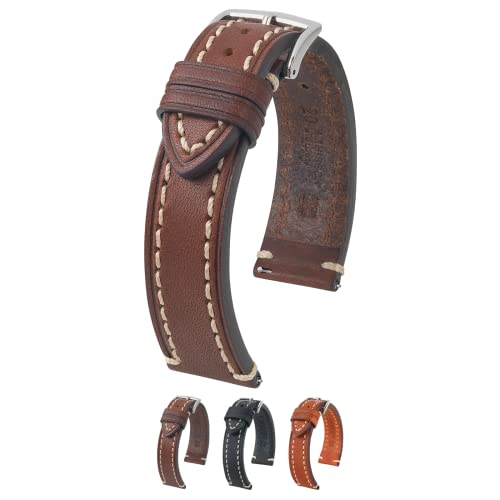
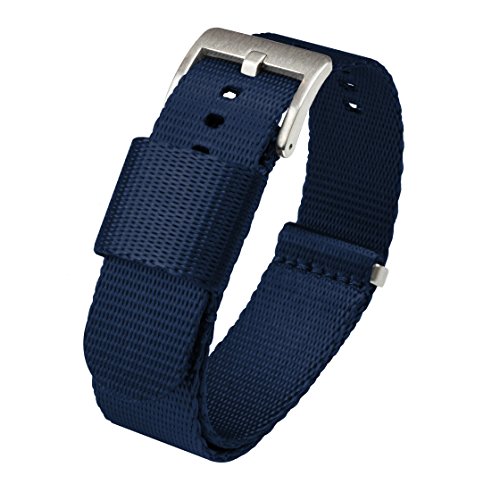
Straps and bracelets deserve a thought as well, because travel is hard on both. A steel bracelet — as on the Seiko and Nighthawk — survives sweat, sunscreen and security trays indefinitely and can be rinsed clean each evening, but it adds weight on long flights and needs its spring bars checked before a trip, since a failed spring bar at 35,000 feet is a lost watch. Rubber and polyurethane straps, like the Promaster’s, are the water-friendly choice and dry instantly, while leather is the boardroom choice and the first casualty of a humid climate. Many travellers compromise on a fabric NATO-style strap: it is light, washable, and — because it passes under both spring bars — the watch stays on your wrist even if one bar fails. Our guides to the best nato watch straps and best leather watch straps cover both directions in depth. Whatever you choose, confirm the lug width before ordering a spare; the strap-size explainer linked earlier walks through the measurement.
Key Takeaways
- Traveler GMTs jump the local hour hand; office GMTs move the GMT hand. Frequent flyers want the former.
- A rotating 24-hour bezel adds a third time zone to any GMT-hand watch.
- Solar Eco-Drive models never need battery changes — ideal reference watches.
- The Seiko NH34 movement put true traveler GMT function into budget watches; verify the movement name on budget listings.
- Match case size to your wrist: GMT dials wear larger than their numbers.
How to Set and Read a GMT Watch
Setting a GMT watch correctly the first time saves every future confusion:
- Set the GMT hand first. Using the crown position specified in your manual, advance the GMT hand to your home time on the 24-hour scale — remembering that 14 on the scale means 2 p.m.
- Set the local time with the main hour and minute hands to where you are now, and set the date, which on most GMTs is tied to the local hour hand.
- On a traveler GMT, when you land in a new zone, pull the crown to the hour-jump position and click the local hour hand forward or back to the new local time. The GMT hand and the running seconds do not move.
- On an office GMT, leave the GMT hand on your monitored city permanently and set the main hands to local time wherever you are.
- To read a third zone on a rotating-bezel model, turn the bezel by the offset between your GMT city and the third city, then read the GMT hand against the bezel.
Two troubleshooting patterns recur. Problem: the GMT hand and the main hands show the same time. Fix: the GMT hand was never offset — reset it to your home zone using the independent adjustment; it is not synchronised to the main hands by design. Problem: the date changes at noon instead of midnight. Fix: the watch is set twelve hours out; advance the local time by twelve hours so the AM/PM cycle aligns, then re-check the GMT hand against the 24-hour scale.
Care between trips is simple but specific. Automatic models like the Seiko and Pagani should be worn for a full day or hand-wound before a journey so the power reserve starts full; arriving with a stopped watch means setting two time zones and a date in a departure lounge. Solar models want the opposite treatment — light, regularly — so store them on a shelf rather than in a closed drawer between trips. After any swim, rinse the watch in fresh water and check the crown is fully closed; on screw-down models like the Pagani, a crown left a half-turn open is the usual cause of fogged crystals. And once a year, whatever the movement, verify your GMT hand against a known reference: a one-hour error that creeps in after a daylight-saving change is the most common real-world GMT mistake, because home and destination do not always change clocks on the same weekend.
A worked example fixes the reading method in memory. You are in New York at 3 p.m.; your GMT hand is set to London. New York is five hours behind London in this example, so the GMT hand points at 20 on the 24-hour scale — 8 p.m. in London. The two-tone bezel confirms it before you read the number: the hand sits in the dark half of the bezel, so London is in its evening. Now rotate the bezel five clicks so the scale shifts by the offset to Tokyo, and the same GMT hand reads Tokyo time against the bezel — early morning there. Three cities, one hand, no arithmetic. After a week of this the reading becomes reflexive, which is the entire argument for the complication over checking a phone: the phone gives you a number, while the watch gives you a picture of your day laid against someone else’s.
GMT, Dual-Time and World Timer: What Is the Difference?
Listings blur three distinct complications, and knowing the vocabulary protects your wallet. A GMT watch, strictly defined, has a 24-hour hand that can be set independently of the main time — every pick in this guide qualifies under that definition or its dual-time equivalent. A dual-time watch shows the second zone on its own subdial or through a second set of hands, as the Invicta does; it is functionally a GMT with a different display, usually simpler and cheaper, and entirely adequate when the second zone is fixed. A world timer goes further, displaying all 24 time zones at once via a rotating city ring — magnificent, mechanically complex, and priced accordingly; nothing in this guide is a world timer, and any budget listing claiming the name is describing a printed city bezel on a dual-time watch.
There is also a fourth impostor to recognise: the 24-hour subdial that simply mirrors the main time in AM/PM form. It cannot be set independently, so it tells you nothing you did not already know. It appears on fashion watches styled to look like GMTs, and the test is always the same — find the instructions for setting the second zone independently. If they do not exist, neither does the function. Every watch recommended here passed that test against its manufacturer’s or retailer’s documentation before it was shortlisted.
Three Routines, Three Different Right Answers
Consider how the picks map onto real weeks. The management consultant who flies between two hubs twice a month lives by the traveler mechanism: her Seiko’s hour hand clicks forward on the descent, home time never moves, and the two-tone bezel tells her before she even reads it whether the office back home is in daylight. For her, an office GMT would mean resetting the main time and re-deriving the second zone at every landing — a small friction multiplied by a hundred flights.
The software team lead in Austin with a team in Bangalore never leaves Texas, but his calendar does. His GMT hand sits permanently on India time; a glance before scheduling tells him whether a proposed slot lands in their morning or their midnight. He never adjusts anything, which is why the Victorinox’s office GMT — set once, read forever, slim enough for every meeting — serves him better than a traveler movement at twice the price. The dive instructor working a season in the Caribbean has the simplest need of all: local time for the boat schedule, home time for calling family, and a watch that lives in salt water. The Promaster’s dual-time Eco-Drive, sealed to 200 m and never opened for batteries, is built for exactly her season. The lesson generalises: name your routine first, and the right mechanism — and usually the right watch — selects itself.
Common Buying Mistakes
The commonest mistake in this category is buying a “GMT-style” watch that cannot actually show a second zone — a fixed 24-hour subdial that mirrors the main time is decoration, and it is everywhere at fashion prices. Always confirm the GMT hand or subdial can be set independently. The second mistake is buying the wrong mechanism for your life: desk workers overpay for traveler GMTs they will adjust twice a year, while frequent flyers buy office GMTs and resent them at every airport. Be honest about which traveller you are.
The third mistake is ignoring the bezel’s direction and scale. A GMT bezel should be bidirectional with a 24-hour scale; a unidirectional dive bezel on a GMT-hand watch (a combination that exists) cannot do the third-zone trick properly. The fourth mistake is assuming “Swiss” on the dial settles quality questions: the Victorinox here is genuinely Swiss Made, but plenty of listings use “Swiss movement” or “Swiss design” to describe watches cased elsewhere with very different standards. Read for the exact claim, and prefer named movements — 4R34, NH34, B877 — over adjectives.
Final Recommendation
The Seiko 5 Sports GMT SSK001 is the GMT most readers should buy: a true traveler mechanism, a proven case, real water resistance and a price that undercuts the Swiss establishment by an order of magnitude. It is also the easiest of the six to live with as an only watch — the SKX-derived case dresses up or down, the bracelet suits daily wear, and the movement’s Seiko service network exists in most countries if it ever needs attention. Buy it first, and the only GMT question left is whether you want a second one in a different style. The runner-up depends on your life: pick the Citizen Nighthawk if you want solar-powered, never-touch-it reliability with pilot character. And if the GMT idea appeals but the budget does not stretch to either, the Pagani NH34 delivers the same jumping-hour trick for the least money — the mechanism, after all, is the point. Travellers who split their time between cockpit style and second zones should also browse the best smartwatches for men guide for the connected alternative.
Frequently Asked Questions
What does GMT mean on a watch?
GMT stands for Greenwich Mean Time, the reference time zone from which all others are measured. On a watch it denotes a complication that displays a second time zone, usually with an extra hand that rotates once every 24 hours against a 24-hour scale. Modern GMT watches can be set to any reference city, not just Greenwich.
What is the difference between a traveler GMT and an office GMT?
A traveler GMT adjusts the local hour hand in one-hour jumps while the GMT hand stays on home time — ideal when you are the one moving. An office GMT adjusts the GMT hand while the local time stays fixed — ideal when you stay in one place and track another city. Neither is better in absolute terms; they serve different routines.
Can a GMT watch show three time zones?
Yes, if it has a rotating 24-hour bezel. Keep the GMT hand on your home zone, read local time from the main hands, and rotate the bezel to a third city’s offset to read that zone from the GMT hand against the bezel scale. Models without a rotating bezel, like the Victorinox here, show two zones.
Do GMT watches change time zones automatically?
No. A mechanical or quartz GMT always shows what you set it to. The traveler GMT’s advantage is speed: one crown position and a few clicks update local time on landing. Only connected smartwatches update automatically from a phone, which is a different product category entirely.
Are automatic GMT watches accurate enough for travel?
Yes. An automatic like the Seiko 4R34 may drift seconds per day, which is irrelevant for reading a second time zone to the hour — the GMT’s job. If second-level accuracy matters to you, the quartz and solar picks here, especially the Citizens, are the more precise instruments.
Why are some GMT watches so much more expensive than others?
Historically, the traveler GMT mechanism was complex and patented, and Swiss brands priced it as a flagship complication. The arrival of Seiko’s 4R34 and NH34 movements commoditised the mechanism itself; what extra money buys now is brand, finishing, materials and heritage rather than additional function.
How do I handle daylight saving time on a GMT watch?
Daylight saving is where GMT watches earn their keep and where owners make their one recurring error. When your home city springs forward or falls back, the offset between home and your destination changes — so adjust whichever display represents the city that changed. On a traveler GMT, a trip taken across a change weekend means your landing adjustment is the time-zone difference plus or minus the daylight-saving hour. The discipline that prevents mistakes is to re-verify the GMT hand against a phone once after each change weekend, then trust the watch again.
Can I use a GMT watch if I never travel?
Absolutely — a large share of GMT owners rarely fly. Anyone with family abroad, clients in another hemisphere, a remote team, or even a favourite sports league playing overseas gets daily value from a second time zone at a glance. In that stay-at-home pattern an office GMT or dual-time model is usually the better buy, since you set the second zone once and simply read it thereafter. There is a quieter benefit too: a GMT complication makes any watch feel more considered, and because the 24-hour hand moves at half speed, it gives the dial a slow, calm rhythm that owners consistently say they miss when they switch back to a plain three-hander for a day. The complication earns its keep at the desk as surely as at the departure gate.