Disclosure: As an Amazon Associate, umtsmarttool.com earns from qualifying purchases. Links to Amazon on this page are affiliate links; they cost you nothing extra. Prices and availability change often, so check the current Amazon listing before you buy.
Key Takeaways: how to choose a fireproof safe
- Decide the endurance tier from your building and archive before looking at any product.
- Measure the archive as a physical stack and buy the interior shape that takes it flat.
- Read classifications for the testing body, duration, temperature and interior limit — all four.
- Treat the water figure as a first-class criterion, matched to your floor and plumbing.
- Choose the lock last, for your access rhythm, and plan placement before ordering.
Learning how to choose a fireproof safe is mostly learning to ignore the loud parts of the listings. The word fireproof, the dramatic material temperatures on soft bags, the photograph of a safe surviving a furnace that no house fire resembles — none of that is information. The information is a classification line, an interior measurement, a water figure and a lock description, and this guide walks through finding and weighing each one in order, with the steps written so they can be followed with a tape measure and a notebook. The products that survive the process in this cluster are ranked in the companion lists Best Fireproof Safe For Renters Under $30, Best Fireproof Safe Under $50 and Best Fireproof Safe For Apartments Under $50.
In this guide
Step One: Audit What You Own
Start away from the shops. Lay the household’s documents out and sort them into originals that are slow or impossible to replace, paper that can be reissued, and sentimental originals. Measure the first and third piles as a stack: length, width, height. Note whether anything is rigid, whether folders are hanging or flat, and whether drives or media join the pile. That stack is your specification. Every later step is a comparison against it, and shoppers who skip this step buy the wrong shape with great confidence.
Step Two: Set the Endurance Tier
Choose the fire classification before choosing products. The strong household tier is one hour at up to 1,700°F with the interior held below paper’s char point, verified by a named testing body; the entry tier is half an hour at up to 1,550°F. Favour the strong tier for a primary safe in a detached house, for archives that cannot be reconstructed, and for any safe that will be bolted down and left to its rating. Accept the entry tier for a portable layer in a flat, a second location, or a budget that would otherwise buy nothing classified at all. Reject, for primary protection, anything whose fire claim names no body, no duration or no interior limit.
Step Three: Match the Interior Shape
With the stack measured and the tier set, shop by interior dimensions. Flat archives want wide, low chests. Folder archives want the file-safe shape that takes hangers as they are. Mixed archives with valuables want a safe with a shelf. Check the door or lid opening as carefully as the box: an interior that technically fits the stack but cannot be loaded through its own opening is a return waiting to happen. Allow headroom for a document bag as an inner liner and for the archive’s next few years of growth.
Step Four: Weigh the Water Figure
Ask where your water comes from: the flat above, the pipes behind the wall, the ground outside, the hoses of the fire service. Then read water claims for a depth and a duration under a named verification, and match them to that answer. Ground-floor and basement storage should weight days-long flood verification heavily. Upper floors should still insist on a stated figure, because the neighbour’s washing machine does not respect storeys. A product with adjectives instead of figures goes to the bottom of the list.
Step Five: Choose the Lock for Your Rhythm
Count honestly how often the safe will open. Weekly or daily access argues for a keypad’s speed, with the battery routine accepted as part of the deal. Monthly access suits a dial’s decades-long reliability or a key’s simplicity. Households sharing access should decide how sharing works — a code can be changed; a key must be copied and controlled. Remember throughout that none of these locks is a burglary rating, and let weight, bolting and placement carry the theft side of the plan.
Step Six: Plan Placement Before Purchase
Walk the route from the delivery door to the intended spot with the product’s weight and dimensions in mind. Confirm the floor, the shelf and the tenancy can all take it. Choose low over high, interior over exterior walls, boring over obvious, and dry-but-raised over any spot where water pools. For a portable chest, walk the evacuation route with the loaded weight imagined in your hands, and decide then — not during an alarm — whether the household plan is to carry it or to trust its rating in place.
Troubleshooting Your Shortlist
Problem: every product you like fails one criterion. Fix: rank your criteria by your building’s actual risks rather than by listing order; a flood-prone ground floor should trade fire minutes for water days, while a top-floor flat should do the reverse.
Problem: the archive fits no standard shape. Fix: split it. Originals in the classified product that fits them best, overflow in a document bag stored beside it, scans covering both. A split archive honestly protected beats a single box silently overfilled.
Problem: two finalists differ mainly in lock type. Fix: that is a lifestyle question, not a specification question. Choose by access rhythm and by who else needs entry, and stop re-reading the fire figures, which by then have already done their work.
Gear That Makes This Easier
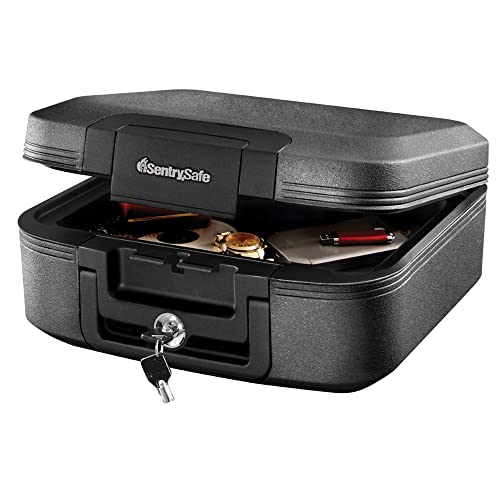
SentrySafe CFW20201 Fire and Water Chest — owners who want certified one-hour fire endurance in a portable chest. Key verified specification: UL Classified for one hour at up to 1,700°F.
Honeywell 1114 Lightweight Fire and Waterproof Chest — document-heavy households that want one-hour endurance without a full-size safe. Key verified specification: Water protection: 24 hours under a 39-inch water depth.
SentrySafe HD4100 Fire and Water File Safe — home offices and families whose documents already live in hanging folders. Key verified specification: UL Classified for half an hour at up to 1,550°F.
ROLOWAY Fireproof Document Bag (15 x 11 inch) — renters and travellers who need cheap, portable fire and water resistance for flat papers. Key verified specification: Weight: 9.2 ounces, light enough for a grab-and-go bag.
Each of these survived the steps above for a recognisable household shape, and each is reviewed in depth in the cluster’s ranked guides Best Fireproof Safe For Beginners Under $50 and Fireproof Safe Review.
Common Buying Mistakes
Believing the biggest temperature on the listing. A bag that quotes a four-digit material temperature with no duration and no testing body is not outperforming a chest classified for one hour at up to 1,700°F. The classified figure describes what the contents experienced in a witnessed test; the bag figure describes what a fabric sample survived. Comparing them directly is the category’s most reliable way to waste money and feel safe doing it.
Buying capacity by cubic feet alone. Shape decides usefulness. A tall safe wastes its volume on a flat document archive, and a flat chest cannot take the rigid valuables people add later. Measure the stack you own, compare interior dimensions, and let the archive choose the shape.
Forgetting the water half of the disaster. Fires are fought with water, and pipes burst in homes that never burn. A safe with no stated water protection, stored on a floor that floods, can deliver perfectly unburned, completely ruined documents. Match the water figure to your floor, your plumbing and your postcode’s history.
Treating a privacy lock like a security lock. The key locks on chests are there to keep curious hands and honest people out, and makers say so. If theft is your fear, spend on weight, bolting and placement, and be honest that a portable chest is a fire product, not a burglary product.
Hiding the safe in the obvious place, or the unreachable one. The primary bedroom wardrobe is the first place a burglar looks and, in a fire, possibly the last place you can reach. Choose a spot that is boring, dry, low and reachable, and tell exactly the people who need to know — no more, no fewer.
Storing the only copy of anything. A fire safe raises the odds for the items inside it; it does not make them immortal. Scan the irreplaceable documents, keep a copy of the scans somewhere that is not your house, and let the safe protect originals rather than carry the whole weight of your family’s memory alone.
Insurance, inventories and the paperwork after the disaster
The week after a fire is an administrative marathon run by exhausted people, and a fire safe quietly wins much of it in advance. The insurance summary, the policy numbers, the inventory of valuables with photographs, the deeds that prove ownership and the certificates that prove identity are exactly the documents every claim and replacement process asks for first. Keep an inventory list inside the safe and a copy of it with your scans, note the safe’s own model and serial numbers in the same place, and photograph the contents once a year when you refresh the desiccant. None of this is dramatic, and all of it is the difference between a claim that settles in weeks and one that argues for months.
Frequently Asked Questions
Where should I keep a fireproof safe at home?
Low, dry, reachable and unremarkable. Low because heat rises and floors in a fire are cooler than ceilings, and because a falling safe survives better from a low shelf. Dry because water pools in the same low places, so raise the safe on a shelf or pallet rather than sitting it in the flood line. Reachable because an evacuation grab only works if the route avoids the kitchen and garage, where fires start most often. Unremarkable because the first places a burglar searches are the primary bedroom and home office, and a boring interior closet beats both.
What should I store in a fireproof safe?
The originals that are slow, expensive or impossible to replace: property deeds, birth and marriage certificates, passports, insurance policies and the summary page of everything else, vehicle titles, a small amount of emergency cash, backup drives in cases, and the negatives or originals of photographs that exist nowhere else. Scan everything as a second layer. Keep out the things you need daily, the things that are insured and easily replaced, and anything damp, leaking or battery-powered that could damage the archive from inside.
Are fireproof document bags worth buying?
Yes, for the jobs they actually do. A silicone-coated fiberglass bag resists water, keeps a document set together and portable, adds a second layer inside a rated chest, and gives brief protection in a small incident. What it does not do is carry an independent classification for its contents, whatever temperature the listing prints. Bought cheaply and understood clearly, a bag is a sensible first layer. Bought instead of a classified chest for a serious archive, it is a false economy.
Can a fireproof safe be bolted down, and should it be?
Many full-size fire safes ship with bolt-down hardware, and bolting is the single most effective anti-theft step available, because a safe that cannot be carried away must be attacked in place, noisily and slowly. Portable chests generally cannot and should not be bolted, since their value is evacuation. Renters should check their tenancy before drilling, and everyone should weigh the fire reality that a bolted safe stays in the building: its classification, not your arms, does the protecting. That is an argument for buying the one-hour tier when you bolt down, and the portable tier when you plan to carry.
Do fireproof safes need maintenance?
Light but real maintenance. Keypad models need battery changes on the maker’s schedule and a code you have practised. All models need their door or lid seals kept clean and undamaged, because the seal does the water work and helps the fire work. Desiccant needs refreshing. Dial locks benefit from being opened periodically so the mechanism is exercised and your hand remembers the sequence. Five minutes twice a year is the whole cost, and it is cheapest insurance the safe will ever ask for.
Is a fireproof safe really fireproof?
No household product is proof against every fire, which is why the honest products in this guide carry classifications instead: a stated duration at a stated temperature with a stated interior limit, awarded by a testing body. A safe classified for one hour at up to 1,700°F will protect paper through most house fires, which burn hot but are usually fought well inside that window. A safe with a shorter classification protects through shorter fires. The right question is never whether a safe is fireproof in the abstract, but whether its classified endurance covers the fires your home is realistically likely to face.
Wrap-Up: how to choose a fireproof safe
Choosing a fireproof safe well is a morning’s work: an audit, a measurement, a tier decision, a shape match, a water check, a lock choice and a placement plan. Do it in that order and the product almost chooses itself — and, more importantly, keeps being the right product in the years when nobody is thinking about it. Readers applying these steps at a specific budget will find the worked examples in the budget guides Fireproof Safe Reviews and Fireproof Safe Review 2026.
Evacuation planning: the chest you can actually carry
A portable chest earns its keep in the minutes of an evacuation only if the plan around it is real. That means the chest lives somewhere reachable without passing the kitchen or garage, the route out is walked at least once with the chest in hand, and everyone in the household knows whether the plan is to carry it or to leave it — because a classified chest left in place is also a plan, and often the safer one. Carrying a heavy chest down stairs in smoke is its own hazard, which is why the honest advice splits by product: light chests and bags are carry items; heavy chests and all fixed safes are leave items whose ratings do the work. Decide in calm, write it into the household’s fire plan, and never improvise the decision at 3 a.m.
How house fires actually behave, and why ratings are written the way they are
A house fire is not a furnace with a thermostat. Temperatures vary enormously by room, by height and by minute: the air near a ceiling can be lethally hot while the floor a metre below is far cooler, and a fire that flashes over one room may never seriously heat the next. Testing bodies therefore rate safes in a standardised furnace, ramping to a stated temperature and holding it for a stated duration, because that is the only way two products can be compared honestly. When you read a one-hour classification, read it as a promise about a standard ordeal, not a simulation of your street. The practical conclusions still hold: longer classified endurance covers more real fires, low placement in the home helps, and a safe’s rating is a margin you buy in advance against a fire whose size nobody gets to choose on the day.
Layered protection: scans, copies and the off-site rule
A fire safe is one layer, and the mature document plan has three. Layer one is the original in the safe. Layer two is a good scan of everything in the safe, stored in cloud storage or on a drive kept somewhere else, so that even a total loss leaves you with legible copies for insurers, registries and replacement applications. Layer three is the small set of things held entirely off-site: the backup drive at a relative’s house, the copy of the will with the solicitor, the safe-deposit arrangement for the truly exceptional items. Each layer covers the failure of the others. The safe’s job inside that system is specific and achievable — protect originals through a plausible fire and flood — and judging it by that job, rather than by the fantasy of surviving anything, leads to better purchases.
The document audit: deciding what actually deserves the safe
Before any purchase, spread the household’s paper on a table and sort it into three piles. The first pile is originals that are slow or impossible to replace: deeds, certificates, titles, signed agreements, the passport. The second pile is paper that matters but can be reissued or reprinted: statements, manuals, most correspondence. The third pile is sentimental originals — photographs, letters, children’s artwork — that no office can reissue at any price. The safe is for piles one and three, and its required size is the size of those two piles, not of your filing cabinet. The second pile needs a scan and a folder, not fire endurance. Households that do this audit buy smaller, better safes and use them properly; households that skip it buy volume and fill it with paper that never needed protecting.
Beginners: the first safe is a teacher
A first fire safe teaches its owner what the household actually stores, how often the door really opens, and whether the feared disaster is fire, water or theft. That is why the beginner advice in this cluster favours simple locks, honest entry-tier classifications and sizes matched to a document audit rather than to ambition. Live with the first safe for a year and the second purchase — if there is one — becomes obvious: more endurance, more room, a different lock, or confirmation that the first choice was right. The expensive beginner mistake is buying the biggest, most complex safe first, misconfiguring or neglecting it, and concluding that safes are a nuisance. Start legible, learn your own habits, and upgrade with evidence.
Small spaces: protection that fits the home you have
A small home punishes bulky security. The useful question is not which safe is best in the abstract but which protective shape your rooms can absorb: a flat chest under a bed, a wide chest on a wardrobe shelf, a document bag in a drawer, a file safe that doubles as a side table’s footprint. Measure the intended spot before ordering, including the swing of a door or the lift of a lid, and remember that a safe exiled to a damp garage or an unreachable loft shelf protects nothing because nothing gets put in it. In small homes the winning products are usually the flat and the portable, and the winning habit is a small archive, ruthlessly audited, that fits them.
Renters, landlords and the rules of other people’s floors
Renting changes the safe equation in three practical ways. First, bolting down usually needs written permission, and many tenancies forbid the drilling outright, which pushes the choice toward portable chests and heavier-is-better placement instead. Second, moves are frequent, so a safe that needs two people and a trolley costs money at every change of address, while a chest moves in a car boot. Third, the deposit matters: a heavy safe dragged across a floor can do more certain damage than the fire it guards against. None of this makes renters’ documents less worth protecting — a passport and a tenancy file are exactly as flammable in a flat as in a house — it just means the right products are the portable, lidded, carry-handled ones, bought without apology.
Fire safes and home insurance conversations
Insurers care about fire safes in a specific way: not as a discount machine, but as evidence in a claim. A classified safe that protected the policy summary, the inventory and the deeds turns a claim’s first fortnight from archaeology into administration. Some insurers ask about safes when valuables pass certain thresholds, and a bolted, classified safe is a better answer than a portable chest for that conversation, while a chest is a better answer for the documents themselves in a rental. Either way, photograph the safe’s model plate, keep the purchase record with your scans, and tell your insurer the truth about what you own; the safe’s contribution to a claim is mostly the paperwork it preserves, and that contribution is real.
What a drop test is imagining
The fall verification that appears on the stronger safes in this cluster imagines a specific, common moment: a floor weakened by fire gives way and the safe falls a storey into the wreckage below, landing on rubble. A safe that bursts open in that fall has failed at the exact moment its contents were most at risk, scattering papers into a burning, waterlogged scene. The test exists because real fires are not tidy furnace ordeals; buildings move, collapse and are pulled apart by firefighters. When you see a drop figure on a specification, read it as structural honesty — the maker tested the bad day in three dimensions, not just the temperature dial.
Reading a fire rating like an engineer
A classification line contains four facts: the body that tested, the duration, the furnace temperature and the interior limit. UL Classified and ETL or Intertek Verified are the marks that mean an independent laboratory ran the ordeal and measured the inside, not the marketing department. The interior limit is the fact that decides outcomes for paper, because paper does not need to catch fire to be lost; it chars, embrittles and becomes unreadable well below ignition. When a listing gives you fewer than four facts, the missing ones are the story. A temperature with no duration describes a moment, not an ordeal. A duration with no interior limit describes the outside of the box. Train your eye to ask for the full line and the category becomes dramatically easier to shop, because the honest products announce themselves and the rest fall quiet.
Locks in the real world: codes, keys and human beings
Lock failures in homes are almost never cryptographic; they are human. Codes written on the safe itself, keys stored in the drawer beneath it, factory combinations never changed, dial sequences practised by nobody. The most secure lock in this category is the one whose routine the household actually performs: a keypad code that two adults know and no paper records, a dial sequence in the muscle memory of the person who opens it monthly, a key whose spare lives somewhere thought-through rather than somewhere obvious. When you read the lock sections of these guides, judge every option against your household’s habits rather than against an imaginary burglar with unlimited time, because the realistic opponent of a home safe’s lock is forgetfulness, not a safe-cracker.
Moving house with a fire safe
A heavy safe is a moving-day project with its own line in the plan: measure the route out of the old home and into the new one, book the trolley or the movers with the weight declared honestly, empty the safe completely and move the contents separately in a document bag, and never let a loaded safe be tilted, dropped or carried by its door. Dial and keypad locks should be checked again after the move, because mechanisms that survived a journey usually announce problems immediately rather than later. Renters who move often should count this cost before buying weight: it is the strongest practical argument for the portable chest class, and the guides in this cluster make it on the renter pages without apology.
The steam problem nobody mentions
Fire insulation works partly by releasing moisture as it heats, which slows the temperature rise inside the safe. That is good engineering and it has a side effect owners should know: the interior of a safe that has been through a fire can be hot and humid even when the contents survive, and photographs, stamps and some media are sensitive to exactly that combination. Makers address media with separate, stricter protection figures for the models that carry them. For the household, the practical steps are simple: keep photographs in sleeves, keep media in rigid cases, and after any fire event have the safe opened and the contents aired promptly rather than leaving the box sealed in a damaged house while the paperwork of the claim grinds on.
Teaching the household the plan
A fire safe only works inside a household that knows the plan around it: who can open it, where the access details live, what leaves the house in an evacuation and what is trusted to its rating in place. That knowledge should be written into the same household document that covers the alarm, the stopcock and the meter, and it should be revisited when the household changes — a partner moving in, a teenager becoming an adult who might need the passports, an elderly parent arriving with their own documents. The safe itself will sit unchanged for decades, which is its virtue; the plan around it is a living document, and treating it that way is the difference between owning protection and owning a heavy box.
The second safe: splitting an archive across locations
Households with serious archives often end up splitting them: the primary safe at home for originals in daily reach, and a chest or even a document bag at a second location — a relative’s house, a workplace, a storage unit — holding the second copies and the overflow. The logic is the logic of all backups: a single location is a single point of failure, and no classification survives every scenario a building can produce. The split does not need to be equal. The home safe holds the working archive; the second location holds the irreplaceable core and the scans drive. Reviewed once a year, a two-location plan quietly outperforms any single product upgrade the same money could buy.
How to Set Up Your Fireproof Safe or Chest
Key Takeaways
- Choose the spot before the safe arrives: dry, low, reachable and boring to a burglar’s eye.
- Register the model and serial numbers and store the combination or key details outside the safe.
- Load documents flat, in labelled folders or a document bag, with a desiccant pack inside.
- Test opening the lock in the dark and under time pressure before you ever need to.
- Pick the location. Walk the home with the disaster in mind: a ground-floor interior closet away from the kitchen and garage, off the floor on a shelf or pallet where a leak pools, and reachable from the bedrooms without passing the likeliest fire rooms.
- Prepare the surface. Level, dry and strong enough for the loaded weight. For a bolt-down safe, confirm the floor construction suits the hardware supplied and that your tenure — especially a tenancy — permits it.
- Record the identity of the safe. Photograph the model plate and serial number, note the factory combination or key number, and store that record in your phone and with a trusted person. Makers can help locked-out owners who can prove model and serial; they cannot help much without them.
- Set or confirm the lock. For a keypad, change any factory code immediately and practise the new one until it is muscle memory. For a dial, practise the sequence slowly. For keys, decide where the spare lives — never inside the safe, never on a labelled hook by the door.
- Load in layers. Documents flat in folders, a document bag as an inner liner if you use one, drives in their own cases, and a rechargeable desiccant pack on top to manage the humidity that sealed boxes trap.
- Close, test, and test again. Shut the door or lid, confirm the bolts or latch engage fully, reopen, and repeat in low light. A safe you fumble with on a calm evening will not improve at 3 a.m. in smoke.
- Schedule the boring maintenance. A twice-yearly reminder to check keypad batteries, refresh the desiccant, confirm the water seal is clean and flexible, and review whether the contents list still matches what is inside.
Problem: the keypad accepts the code but the handle will not turn. Fix: replace the batteries first, even if the pad lights up, because a weakening battery often powers the lights but not the bolt motor; then check the manual for the model’s override key procedure rather than forcing the handle.
Problem: the interior smells musty when opened. Fix: the seal that keeps fire and water out also keeps humidity in. Air the safe open for a few hours on a dry day, replace the desiccant, and never store anything inside that went in damp.
Problem: a key chest will not latch fully. Fix: check the lid seal and the document stack height. Overfilling a chest so the lid rides high silently destroys both its fire and water performance, so move the overflow to a document bag stored alongside rather than forcing the lid.
Buying Criteria, In Depth
Water protection: the disaster that actually visits
Ask any insurer what ruins household documents and the answer is water, arriving through burst pipes, failed washing-machine hoses, roof leaks and the fire hoses that follow a blaze. Good water protection is stated as a depth and a duration under a named verification: a chest verified for a day under a stated depth of water, or a file safe verified for days of flood exposure, gives you something to plan around. A seal described with adjectives gives you nothing. Match the rating to your home: a ground-floor flat, a basement office or a house in a flood-prone street should weight water as heavily as fire, while an upper-floor flat mainly needs protection from the plumbing above and below.
Media and valuables: paper rules do not cover everything
Paper tolerates heat that destroys other things. Photographs curl and stick, USB drives and external hard drives fail at temperatures well below paper’s char point, and jewellery suffers from both heat and the steam that fire insulation can release as it works. If your archive includes drives, look for a stated digital-media protection figure for the exact model rather than assuming the paper rating covers it, and consider keeping the truly irreplaceable drive copy off-site or in cloud storage as a second layer. A fire safe is one layer of a document plan, not the whole plan, and the households that come through disasters best are the ones who treated it that way.
Weight and placement: protection lives somewhere specific
A safe protects what is inside it, where it sits. Heavy safes resist being carried away and should be planned like furniture: measure the route in, check the floor, and bolt down where the maker provides hardware and your tenure allows it. Portable chests trade that rootedness for evacuation value, and they belong somewhere you can reach in the dark, in smoke, in a hurry — not at the back of a loft. Keep any safe away from the likeliest ignition sources, off a damp floor on a shelf or pallet where water pools, and out of the obvious first room a burglar searches. The best-rated safe in the worst place loses to a modest chest in the right place surprisingly often.
Lock type: the daily decision hiding inside the purchase
A key lock is simple, battery-free and slow to defeat casually, but the key itself becomes the secret you must protect, and privacy key locks on chests are not built to resist tools. A dial combination lock is equally battery-free and survives decades, at the cost of slow, careful entry. A digital keypad is the fastest and easiest to share selectively with a partner, and it depends on batteries and on your discipline about codes. None of these is a burglary rating. If theft is a serious part of your risk, the answers are weight, bolt-down mounting and placement, layered on top of whichever lock you prefer for daily use.
Fire endurance: read the classification, not the adjective
The word fireproof on a listing tells you nothing by itself. What protects your documents is a classification that names a testing body, a duration and a temperature, and states the interior limit the contents experienced. For paper, the interior must stay below the point where paper chars and becomes unreadable, which is why serious ratings quote the inside temperature as well as the furnace temperature outside. One hour at up to 1,700°F is the rating to aim for in a primary home safe; half an hour at up to 1,550°F is a reasonable entry tier for a chest that guards against smaller, faster fires. Anything that quotes a temperature with no duration, or a duration with no testing body, belongs in the marketing pile, and soft bags live in that pile however useful they are for other jobs.
Interior fit: measure your archive, not the brochure
Safes are sold by exterior drama and used by interior millimetres. Before choosing, stack the documents you actually own: the deed packet, certificates, insurance files, passports, the backup drive, the small valuables. Note whether the paper must lie flat, whether it already lives in hanging folders, and whether anything rigid sets a minimum height. Then compare that stack with interior dimensions, not capacity in cubic feet alone, because two safes with the same capacity can have completely different shapes. A wide flat chest suits documents; a tall narrow safe suits mixed valuables; a file safe suits folders. Buying the wrong shape is the commonest reason safes get returned or, worse, left empty in a corner.
A note on older safes and inherited safes
Many households acquire a fire safe second-hand or inherit one with a house, and the guidance differs from a new purchase in three ways. First, verify the classification from the model plate rather than from family memory, because models that look identical across decades can carry very different ratings. Second, treat the lock as unknown until you have changed the code or confirmed the combination through the maker’s owner process; a safe whose access is known to previous owners is a storage box, not a safe. Third, inspect the seal and the interior for moisture damage before trusting it with originals, and run it empty with a desiccant pack for a week to confirm it stays dry. An inherited classified safe in sound condition is excellent value; an unverified one is a promise nobody made.
Seasonal checks that take five minutes
Twice a year, ideally when the clocks change, give the safe the same five minutes you give the smoke alarms. Open it and confirm the lock works the way your hands remember. Check keypad batteries against the maker’s schedule rather than waiting for the low warning. Wipe the door or lid seal with a dry cloth and look for nicks, grit or flattening. Refresh or recharge the desiccant pack. Confirm the contents still match the list you keep with your scans, and remove anything that has been replaced or no longer needs original protection. Photograph the interior once a year for the insurance file. That is the entire maintenance burden of the category, and households that pay it almost never meet the failure modes — the dead keypad, the musty archive, the missing document — that fill the cautionary tales.
Another Question Worth Asking
What is the difference between a fire chest and a fire safe?
Size, weight, lock and intent. A fire chest is a portable, key-locked box sized for documents, designed to be carried out or to protect a small archive in place, with fire classifications from half an hour upward. A fire safe is a heavier, fixed piece of security furniture with a combination or keypad lock, live bolts, often bolt-down hardware, and room for valuables as well as paper. Neither is a burglary safe unless it also carries a security rating, and confusing fire protection with theft protection is the category’s most persistent misunderstanding.
Another Question Worth Asking
Will a fireproof safe protect digital media and hard drives?
Not automatically. Drives, discs and photo media are damaged at temperatures far below the point where paper chars, so a safe classified for paper can still cook a hard drive. Look for a stated digital-media protection figure for the exact model, keep drives in their own cases inside the safe, and treat any drive holding the only copy of something as a copying problem first: back it up to a second location, and let the safe protect one copy rather than the only copy.