Disclosure: As an Amazon Associate, umtsmarttool.com earns from qualifying purchases. Links to Amazon on this page are affiliate links; they cost you nothing extra. Prices and availability change often, so check the current Amazon listing before you buy.
Where to buy
The four alarms reviewed head-to-head on this page:
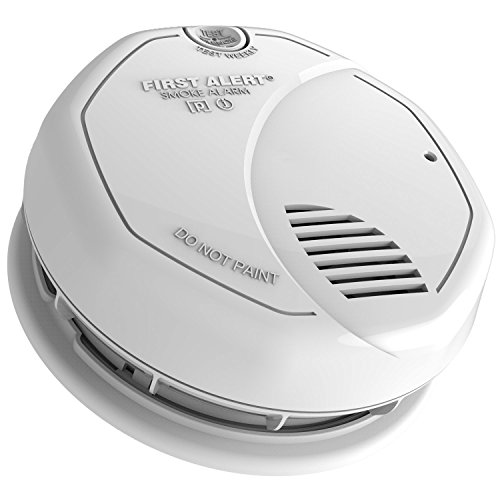
- First Alert SA3210 — dual-sensor benchmark
- X-Sense SC07 — combination with a CO display
- Kidde KN-COSM-BA (2-Pack) — voice-alert combination pair
- Kidde i9010 — sealed ionization with alarm memory
Read the full guide ↓ — four philosophies, four verdicts, one table, no borrowed stars.
Smoke Detector Reviews: Four Alarms, Reviewed Side by Side
Single-product reviews tell you whether an alarm is good; smoke detector reviews in the plural tell you which good alarm belongs in which room — and that is the comparison this page exists to make. Four verified models, four genuinely different design philosophies: the First Alert SA3210 bets on sensing breadth and a sealed decade; the X-Sense SC07 adds carbon monoxide cover and shows its level on a screen; the Kidde KN-COSM-BA pair speaks its warnings in words; and the Kidde i9010 strips everything back to a sealed ionization unit that switches itself on and remembers its alarms. Each is reviewed on its own terms first — design, sensing, ownership — and then they are set against each other on the questions households actually ask. Readers who want the full field with budget badges should continue to the cluster’s main list, Best Smoke Detector Under $50 Best Smoke Detector Under $50; readers deciding between these four, stay here. A promise about method before the verdicts begin: where these reviews disagree with the rankings elsewhere in the cluster, the disagreement is flagged and argued rather than smoothed over, because a review page that merely repeats the list page would have no reason to exist.
In this guide
How These Reviews Were Assessed
Every model below was verified against a real listing tying its ASIN to the exact brand and model before earning a link; unverifiable products were excluded rather than guessed at. The assessment is research-led and honest about it: manufacturer specifications and listing data, the sensing technologies’ established behaviour, and the ownership logic of each power design — no invented bench tests, no borrowed star ratings, no prices, because prices move and ratings aggregate strangers’ kitchens. Each review follows the same order — what it is, what it detects, how it is powered, where it wins, where it concedes — so the four can be compared line by line. The four were chosen to span the conventional category’s design space rather than to crowd its centre: a fifth model that merely repeated one of these philosophies would have added a listing, not information, and this page prefers information.
Review 1: First Alert SA3210 — the Dual-Sensor Benchmark
- Sensors: photoelectric + ionization (dual)
- Power: sealed 10-year lithium battery
- Alarm: 85 dB at 10 ft; UL 217 listed
- End-of-life signal at the decade
Strengths
- Broadest sensing of the four — both fire tempos in one chamber
- Sealed power: no battery chore, no borrowing, no chirp-neglect spiral
- Calm, photoelectric-led behaviour in kitchen-adjacent hallways
Trade-offs
- Smoke only — no carbon monoxide sensing
- No voice, screen or interconnect
- Whole-unit replacement at ten years
The SA3210 is the alarm this page’s other three are implicitly compared against, because its formula — dual sensing, sealed decade, no interface — is the conventional category’s settled answer. In bedrooms it has no weakness that matters: the fires bedrooms fear announce themselves in both particle sizes, and this is the only one of the four listening natively for both. Its decade of ownership is the quietest here alongside the i9010’s, and quieter in one respect: there is not even an activation step to remember. The deep single-product treatment is at Smoke Detector Review Smoke Detector Review. Where a household standardises — landlords, parents equipping a student house, anyone buying five of something — this is the model whose compromises are easiest to defend in every room it enters, which is a different and underrated kind of excellence.
Best for: bedrooms and living rooms, whole-house standardisation, and any buyer who wants the decision to stay made / Not suited for: fuel-burning homes as the only alarm
Review 2: X-Sense SC07 — the Combination With a Screen
- Sensors: photoelectric smoke + electrochemical carbon monoxide
- Power: sealed 10-year lithium battery
- LCD display shows the carbon monoxide level
- Listings: UL 217 (current edition) and UL 2034 per its listing
Strengths
- Two hazards, one unit — and the invisible one made visible
- The display turns boiler health into a trend a householder can act on
- Sealed decade; standalone, no network or account
Trade-offs
- Photoelectric only for smoke — no ionization chamber
- The screen informs only someone who walks past
- No voice or interconnect
The SC07 is the analyst of the four. Where the others treat carbon monoxide as a threshold (the KN-COSM-BA) or omit it (SA3210, i9010), the SC07 treats it as information: a number, visible in the hallway, that lets a household watch a boiler age and call the engineer while the conversation is still about maintenance. That single design decision reframes what an alarm is for — not only the worst night, but the ordinary years before it — and it is why this model keeps winning the hallway position in the cluster’s system guides despite its single smoke sensor. Its current-edition listings matter here too: a combination unit bought today should be built to the standard’s present requirements, and the SC07’s paperwork, per its listing, is the most current of the four.
Best for: hallways serving boilers, garages and utility rooms, and households that read their homes’ data / Not suited for: buyers who want dual smoke sensing above all
Review 3: Kidde KN-COSM-BA (2-Pack) — the Voice Pair
- Sensors: ionization smoke + electrochemical carbon monoxide, each unit
- Power: replaceable batteries
- Voice alarm announces the hazard by name
- Two units in the pack
Strengths
- The clearest 3 a.m. communication of the four — words, not tones
- Combination cover at two positions in one purchase
- No account, app or pairing for guests and grandparents to survive
Trade-offs
- The only recurring chore here: yearly battery changes, times two
- Ionization-led smoke sensing is the kitchen-sensitive kind
- The two units do not trigger each other
The KN-COSM-BA pair is the human-factors entry. Its insight is that an alarm’s hardest job is not sensing but instructing — telling a frightened child, a visiting parent or a new flatmate what is happening and, by naming it, what to do. “Fire” and “Carbon Monoxide” are different instructions, and this is the only one of the four that can give both. The price is the battery calendar, and the review’s honest position is that the price is worth paying exactly where occupants rotate or understanding is scarce — and not worth paying in the master bedroom of a settled household that would let the calendar slip. As a two-pack it is also the only entry here sold as a small system rather than a unit, which suits its brief: voices earn their keep in pairs of positions — the landing and the guest room, the hall and the annexe — not as a lone talker among silent ceilings.
Best for: guest rooms, grandparents, shares, children’s hallways, and any room whose sleeper is a stranger to the house / Not suited for: households that will not keep a yearly battery date
Review 4: Kidde i9010 — the Sealed Minimalist
- Sensor: ionization
- Power: sealed 10-year lithium battery; auto-activates when mounted
- Smart Hush control; alarm memory; tamper resistant
- Sealed against battery removal
Strengths
- The simplest ownership of the four — it switches itself on
- Alarm memory tells you it sounded while you were out
- Tamper resistance suits rentals and shared housing
Trade-offs
- Ionization only — the kitchen-sensitive sensor family
- Smoke only; no CO, voice or display
- Fast-flame specialisation is a narrower brief than the SA3210’s
The i9010 is the reductionist’s alarm: it looked at the ways owners fail alarms — never activating them, removing batteries, ignoring past events — and engineered each one away. Auto-activation on the bracket is a genuinely thoughtful touch (an unmounted i9010 is off; a mounted one is on, and there is no third state to get wrong), and alarm memory is the one informational feature a sealed minimalist can offer without a screen. Its narrower sensing is the honest cost: place it away from kitchen air paths, in bedrooms and studies, and its specialisation stops mattering. In the rental market its tamper resistance deserves emphasis: a landlord or tenant fitting alarms in a property other people inhabit is buying, in part, the assurance that the unit on the ceiling in month thirty is the unit that was fitted in month one, still powered — and that assurance is this model’s quiet headline.
Best for: rentals, spare rooms, set-and-forget bedrooms, and properties the owner cannot watch / Not suited for: kitchen-adjacent hallways or combination duty
The Sensor Families, in Plain Terms
Three of the disagreements between these four reviews reduce to sensor physics, so here it is without the jargon. Photoelectric sensors watch for the larger smoke particles that smouldering materials — foam, fabric, timber, overheating insulation — produce early and in quantity; they are also comparatively indifferent to the fine aerosols of cooking, which is why photoelectric-led alarms behave better near kitchens. Ionization sensors react fastest to the very small particles of hot, fast, flaming combustion; their weakness is the mirror image — cooking aerosols look enough like their target to trigger them, which is why ionization-led units demand distance from the hob. Dual units carry both chambers and let the alarm respond to whichever signature arrives first. Carbon monoxide sensing is a separate, electrochemical discipline that shares a housing with smoke sensing in combination units but nothing of its mechanism; its ten-year sensor life is what sets the replacement horizon for every combination model here. Read the four reviews again with that map in hand and their disagreements stop looking like brand preferences: the SA3210 bought breadth, the SC07 bought information, the KN-COSM-BA bought communication, the i9010 bought simplicity — and each paid for its purchase with a different coin. None of the four bought everything, because everything is not on sale at any single price or size; the reviews’ job is to make the exchange rates visible so the buyer spends their own coin deliberately.
A Year of Ownership, Model by Model
Reviews end at the purchase; households live afterwards, so here is the first year each model writes. The SA3210’s year contains twelve test presses, one or two hushed cooking events if the hallway is brave, a vacuum pass, and nothing else — the emptiest diary here, shared with the i9010, whose year adds one distinctive entry: the day its alarm memory tells you it sounded while the house was empty, converting a mystery into a maintenance conversation. The SC07’s year is the most informative: a baseline CO reading noted in month one, watched in passing thereafter, quoted to the boiler engineer in the autumn — the only diary that makes the household smarter about its home. The KN-COSM-BA’s year is the most social: flatmates and grandparents briefed by its voice during a burnt-toast rehearsal, one battery appointment kept (or, in the households this review warns about, not kept — the model’s single point of failure is a calendar, and it fails socially, not technically). None of the four diaries contains a subscription, an app update or a firmware surprise; that shared emptiness is the conventional category’s collective pitch, and it is why these four, rather than smarter rivals, fill a page aimed at buyers who want the decision finished. Read the four diaries as personalities and the casting decision often makes itself: households know, honestly, whether they are diary-keepers, calendar-keepers or neither — and there is a model here for each answer.
Head-to-Head: The Four Compared
| Model | Detects | Power | Signature strength | Watch out for |
|---|---|---|---|---|
| First Alert SA3210 | Smoke, both types | Sealed 10-year | Sensing breadth | No CO sensing |
| X-Sense SC07 | Smoke + CO | Sealed 10-year | CO display | Single smoke sensor |
| Kidde KN-COSM-BA 2-Pack | Smoke + CO | Replaceable battery | Voice instructions | Yearly battery chore |
| Kidde i9010 | Smoke (ionization) | Sealed 10-year | Auto-activation + memory | Kitchen-sensitive sensor |
Which of the Four Belongs in Which Room?
Bedrooms: SA3210 first — breadth plus silence. The i9010 is the credible understudy where its price or availability wins on the day. The hallway of a fuel-burning home: SC07, because the position’s job is two hazards and a boiler story. Guest rooms, grandparents’ rooms, children’s landings: KN-COSM-BA, because the occupant’s understanding is the variable. The living room: SA3210 again, or the SC07 if the room shares air with a garage or boiler cupboard. The rental you are equipping: i9010s in the bedrooms (tamper resistance is a landlord-grade virtue) and an SC07 in the hall. The study and the home office: i9010, whose alarm memory suits a room whose events happen behind a closed door while the house is at work elsewhere. The nursery: SA3210 on the ceiling and the household’s response plan naming the adult who goes to that room — the model matters less there than the plan, and the broadest sensor is the right partner for it. Notice that a real house usually ends with two or three of the four — these reviews compete at the level of the position, not the household, and the cluster’s pros-and-cons analysis, Smoke Detector Pros And Cons Smoke Detector Pros And Cons, explores the trade-offs in the abstract.
What None of the Four Does
Honesty about the set matters as much as the reviews within it. None of the four interconnects — a house that needs whole-house waking must look to the networked designs in the cluster’s under-$100 lists. None reports to a phone — the empty-house problem belongs to the smart category. None is hardwired — homes with existing wired systems and a preference for mains power are a different shortlist altogether, and two of the four (SA3210, i9010) do not sense carbon monoxide at all. A reader whose brief includes any of those requirements should treat this page as the conventional-alarm chapter of a larger decision, starting at How To Choose A Smoke Detector How To Choose A Smoke Detector, rather than as the whole book. The conventional chapter is nonetheless where most houses should start: its four design philosophies — breadth, information, communication, simplicity — recur inside the smarter categories at higher prices, and a buyer who understands them here will read every premium listing afterwards with better questions.
Two Households, Two Verdicts: The Reviews Applied
The family semi with a gas boiler and two children. The casting writes itself from the reviews: SC07 in the hall (boiler story plus combination cover where the children pass), SA3210s in both bedrooms and the living room (breadth where they sleep and play), and — because grandparents stay monthly in the spare room — one half of the KN-COSM-BA pair there, its voice doing the briefing no one remembers to give. The i9010 is the only model left out, and it is left out by geometry, not by quality: this house’s rooms are all claimed by broader or more communicative briefs. Its maintenance diary is the lightest of the two households’: three sealed units asking for a monthly press, one voice unit asking for a yearly battery on the boiler-service day, and a screen quietly keeping the appliance honest in between. The rented two-bed flat, all-electric, one tenant who travels. The verdict inverts: i9010s in the bedrooms (sealed, tamper resistant, nothing to maintain between trips), an SA3210 in the living space, and no combination unit at all — with no fuel burning and no attached garage, the SC07’s second sensor has nothing to watch, and the voice pair’s chore has no reliable owner in an often-empty flat. Same four reviews, opposite casts — which is the entire argument for reviewing alarms by design philosophy rather than by a single league table: the best model is a function of the house, and these two households, reading the same page honestly, should buy differently. The flat’s diary is lighter still — three sealed units and a log that travels to the next tenancy — and that lightness is itself the verdict the travelling tenant was shopping for.
Nuisance Behaviour, Reviewed Honestly
False alarms decide whether alarms stay fitted, so the four deserve a nuisance audit. The SA3210’s photoelectric-led sensing gives it the calmest everyday temperament of the group in kitchen-adjacent positions — it will still sound for a smoking grill pan left under it, as it should, but steam and ordinary cooking aerosols trouble it least. The SC07 shares the photoelectric advantage and adds a subtle one: its display lets a household distinguish a genuine CO story from a smoke nuisance at a glance, which shortens the annoyed interval in which alarms get removed. The two ionization-led models — KN-COSM-BA and i9010 — are the group’s kitchen-sensitive members, and their reviews’ placement advice (distance from the hob, out of the steam path) is not boilerplate but the condition of their good behaviour; fitted at the guidance distance, both settle into ordinary quiet, and fitted carelessly, both will teach a household to hate them by spring. The general law the four illustrate: nuisance is a placement-and-sensor interaction, not a model defect, and a review that blames the alarm for a position the guidance forbids has reviewed the installer instead. Households with a nuisance history should read that law as permission to fix the position rather than to churn the hardware — the same four models, re-sited by the rules, usually end the story.
The Decade Test: Which of the Four Ages Best?
Project each model to year nine. The sealed three arrive with their sensing and power stories intact — that is the sealed proposition — differentiated by what time does to their extras: the SC07’s display remains its argument, the i9010’s memory remains its party trick, the SA3210 remains, simply, correct. The KN-COSM-BA arrives at year nine only if its household kept eight or nine battery appointments, which is why its review keeps returning to the calendar: its ageing is social, and households should forecast their own reliability as honestly as they forecast the hardware’s. One more ageing variable applies to all four equally and favours none: the house changes — boilers are replaced, rooms convert, children arrive and leave — and the model whose brief matches the room’s permanent function (bedrooms are forever) ages better than the model bought for a household configuration that lasted two years. On that measure the SA3210’s bedroom brief is the most durable of the four, and the voice pair’s guest-room brief the most perishable — not because guests vanish, but because the specific guests change, and each new cohort re-tests whether the voice was worth its chore. The decade test’s practical output is a buying order: fit the durable briefs first with sealed units, and let the perishable briefs be the ones you are willing to re-decide at the next replacement cycle.
Buying the Four: Singles, Packs and Standardising
A practical coda the reviews imply but should state. The SA3210 and i9010 are bought as singles and multiplied — standardising on one of them for a whole house’s bedrooms is the common pattern, and its virtue is a single routine, a single date cohort and a single replacement afternoon in year ten. The SC07 is bought as a singleton by design: most houses have one fuel story to watch, and a second SC07 enters only when a second watched approach (a stove flue, a second boiler) genuinely exists. The KN-COSM-BA arrives as a pair because its brief comes in pairs of positions. Buyers assembling a mixed cast should sequence the order the way the system guides do — hallway combination first, bedroom anchors second, voices and specialists last — because that sequence leaves the house correctly covered at every intermediate stage if the project pauses, as projects do. And a note on dates when multiplying: units bought together retire together, which is a feature for planning and a reason to buy the set in one order rather than across a year of separate purchases. Keep the receipts with the log; a decade is long enough for a household to forget what it paid and where, and the paperwork is part of the replacement plan whether it is consulted or not.
Reading the Four as a Spectrum: From Sensing to Speaking
Arrange the four on a line and a pattern emerges that no single review shows. At one end sits the i9010, which invests everything in being present and powered and almost nothing in communicating beyond a tone and a memory light. Next, the SA3210 invests in sensing — the richest detection of the four — while keeping communication at the same single tone. The SC07 moves the investment toward information: one hazard fewer in sensing breadth than the SA3210’s dual chamber, but a continuous data feed about the hazard it does watch. At the far end, the KN-COSM-BA invests in the message itself, spending its budget on being understood. The spectrum is the category’s real map: every alarm allocates a finite design budget across sensing, informing and speaking, and the four reviewed here mark four defensible allocations. Buyers who feel a pull toward one end should interrogate it — the pull toward speaking usually means occupants who need instructing; toward informing, an appliance whose health is uncertain; toward sensing, bedrooms and uncertainty about fire type; toward presence, a property nobody watches. Named that way, the preference stops being taste and becomes diagnosis, and diagnosis is what a good review page is for. Houses, like buyers, sit somewhere on the spectrum too — a watched, occupied, boiler-heated family home lives toward the informing end; an empty, all-electric flat toward presence — and the cast that fits is the one whose centre of gravity matches the house’s.
Fitting the Four: Installation Notes Compared
All four fit the same way — bracket, two screws, ceiling — and the differences are in the small print, which is where installations succeed or stall. The i9010’s auto-activation removes the classic failure of the fitted-but-never-switched-on alarm; its fitting is complete the moment it seats, and the first test merely confirms it. The SA3210 and SC07 ask for the date check before the ladder (their decades run from manufacture, and the log entry is part of the fitting, not an afterthought). The KN-COSM-BA adds the battery fitting and, with it, the one administrative act in the group: writing the yearly swap into a calendar that will still exist in twelve months, ideally the tenancy’s or the boiler service’s. Placement sensitivities differ by sensor, as the nuisance audit described: the ionization-led pair want the full guidance distance from cooking and steam; the photoelectric-led pair forgive a closer hallway. And all four share the cluster’s universal fitting rules — ceiling over wall, centre over corner, four inches from the wall junction, never inside the kitchen itself — which the step-by-step guide, How To Install A Smoke Detector How To Install A Smoke Detector, sets out with measurements. A mixed cast fitted in one session should be tested as a session, too: one walk, every button, the household listening to four slightly different voices of alarm, so that the family learns the whole ceiling’s vocabulary on the same afternoon.
Where These Reviews Push Back Against the Best Lists
Review pages earn their keep by disagreeing well, so here is this page’s honest friction with the cluster’s own rankings. The best lists put the SA3210 first almost everywhere, and these reviews concur for bedrooms — but they resist the implication that first place generalises: in the hallway of a fuel-burning home the SA3210 is not the best of these four at all, and a reader who bought it for that position on the strength of its ranking would own the wrong alarm confidently. Conversely, the lists tend to treat the i9010 as a budget understudy; these reviews rate its ownership design — auto-activation, memory, tamper resistance — as a first-rank idea that happens to sit in an inexpensive unit, and in rental bedrooms it is arguably the correct first choice rather than the fallback. The KN-COSM-BA is the model rankings most undervalue, because its virtue (being understood by strangers) does not appear in specification tables; measured in evacuated guests rather than decibels, it may be the most effective alarm on this page. And the SC07’s screen, a footnote in most lists, is in these reviews a headline — because the hazard it displays is the one that gives no other warning. Rankings compress; reviews should decompress, and a reader who uses both gets the compression for shopping and the decompression for deciding. Neither page is wrong; they answer different questions at different moments of the same purchase, and the friction between them is where the reader’s own judgement is supposed to form.
A Note on the Two Brands Behind the Four
Two makers account for the four models, and their house styles are legible in the designs. First Alert’s entries (SA3210, and the PR710 elsewhere in the cluster) pursue the sealed, standardised, nothing-to-learn formula with an almost stubborn consistency — the brand’s bet is that reliability is a property of simplicity maintained over a decade. Kidde’s entries split their bets: the i9010 pursues the same simplicity with extra anti-neglect engineering, while the KN-COSM-BA spends its complexity on the human interface instead. X-Sense, the newer name, differentiates on information and current-edition paperwork. None of these house styles is a proxy for quality — every model here is listed, verified and defensible — but recognising the styles helps a standardising buyer: a house that mixes brands room by room (as this page recommends) should expect two slightly different test-button feels and two date-label formats, and should write the log to absorb that trivial diversity rather than being surprised by it in year six. Brand, in this category, is best treated as a tiebreaker between verified equals — a preference for a house style you find sympathetic — and never as a substitute for the per-model evidence the reviews above are built from.
The Fifth Question: Why No Smart Alarm in These Reviews?
Readers comparing across the cluster will notice the absence: no Nest Protect, no app-bearing model, in a page of reviews. The omission is a scope decision, and it deserves its reasoning. These four represent the conventional category — alarms whose entire contract is sensing and sounding, with no account, network or platform between the household and the warning — and they were reviewed together because they compete for the same buyers on the same terms. The smart category changes the terms: self-testing, phone reporting and platform dependence enter the assessment, and a fair review of a smart alarm is a review of an ecosystem as much as of a sensor. That review exists in this cluster, at Smoke Detector Review 2026 Smoke Detector Review 2026, where the current-edition standard and the connected feature set get their own examination. The practical guidance for readers torn between the pages: if your house’s problem is distance, absence or information, read the smart review next; if your problem is bedrooms, boilers, guests and neglect — the four problems these four models were built against — this page’s verdicts stand, and the smart premium is better spent on a second and third conventional unit in the rooms that lack one.
Key Takeaways From the Four Reviews
- SA3210 = breadth: the default for bedrooms and standardising a house.
- SC07 = information: the hallway analyst for fuel-burning homes.
- KN-COSM-BA = communication: the voice for rooms whose occupants rotate.
- i9010 = presence: the anti-neglect minimalist for rentals and spare rooms.
- Every disagreement between the four is a sensor-or-budget allocation, not a quality gap.
- Cast by room and by household honesty — the same four reviews yield opposite, correct casts.
- Nuisance is a placement-and-sensor interaction; fix the position before churning the hardware.
- Buy in system order — hallway combination, bedroom anchors, specialists — so a paused project still covers the house.
- Brand is a tiebreaker between verified equals, never a substitute for per-model evidence.
- The conventional four remain the right starting chapter even for buyers who end up smart.
- Judge every review — this one included — by sourced specs, drawn consequences and specific trade-offs.
- A fitted set tested in one session teaches the household the whole ceiling’s vocabulary in an afternoon.
- Fit the durable briefs first; let perishable briefs be re-decided at the next replacement cycle.
- Keep receipts with the log — the paperwork is part of the replacement plan, consulted or not.
- Households know whether they are diary-keepers or calendar-keepers; there is a model for each answer.
- A house’s position on the sensing-to-speaking spectrum decides its cast more honestly than any ranking.
- Rankings compress and reviews decompress; use both, at different moments of the same purchase.
- Evidence first, verdicts second — the hardware’s decade is the final review that actually counts.
- Standardising bedrooms on one sealed model buys one routine, one cohort, one replacement afternoon.
- The SC07 is a singleton by design; a second enters only when a second fuel story genuinely exists.
- Where occupants rotate, the voice pair’s chore is the price of being understood — pay it deliberately.
- An unmounted i9010 is off and a mounted one is on; the third state, fitted-but-dead, is designed out.
- Date-check before the ladder: every decade in this group runs from manufacture, not from purchase.
- Preference named is diagnosis: speaking, informing, sensing or presence — know which pull is yours.
- The study’s sleeper behind a closed door is the i9010’s memory feature’s natural home ground.
- In the nursery the plan matters more than the model — and the broadest sensor partners it best.
- A review whose subject has no real weaknesses is an advertisement wearing review clothing.
- Disagreements with the rankings are printed and argued here, never smoothed over for tidiness.
- Four philosophies span the conventional space; a fifth repeating one would add a listing, not information.
- Standalone is not a euphemism for deficient — across distance and doors is where networks earn.
- The hallway combination guards the gas that travels; bedroom duals guard the fires that start.
- Maintenance omissions mislead more reviews than any specification ever printed on a box.
How to Read Any Smoke Detector Review, Including This One
A closing piece of consumer craft, because these four models will be reviewed elsewhere in louder voices. Discount any review that leads with a star rating it cannot source, quotes a price as though it were a specification, or claims hands-on authority it does not describe. Weight instead the things that cannot be faked cheaply: whether the review names the sensor family and says what it means for your rooms; whether the power design’s decade-long consequences are drawn, not just its first-year convenience; whether the trade-offs are specific enough to lose the product a sale with the wrong reader (a review whose subject has no real weaknesses is an advertisement in review clothing); and whether the verdict survives being applied to a house unlike the reviewer’s own. This page has tried to be readable by those tests — its disagreements with the cluster’s rankings are printed, its method is stated, its prices and ratings are absent on principle — and it invites the same scepticism toward itself that it recommends toward everyone else. The four alarms, for their part, will be on ceilings being correct or incorrect in the ways described long after every review of them is forgotten, which is the proper hierarchy: evidence first, verdicts second, and the hardware’s decade as the final review that counts.
Frequently Asked Questions
Which of these four is the best smoke detector overall?
The SA3210, for the most rooms in the most homes: dual sensing and a sealed decade is the formula with the fewest conditions attached. The SC07 beats it wherever carbon monoxide shares the position; the others win their niches outright. If a single sentence must carry the page: the SA3210 is the best default, and defaults matter because most rooms in most houses are ordinary bedrooms that need exactly its virtues.
Which is best for a home with a gas boiler?
The SC07 in the hallway — combination sensing plus the CO display that lets you watch the appliance — with SA3210s in the bedrooms. The KN-COSM-BA pair is the alternative where a voice matters more than a screen. Do not let the bedrooms’ smoke-only units worry you in this arrangement: the hallway combination unit guards the gas that travels, and the bedrooms’ dual sensors guard the fires that start where people sleep.
Which needs the least maintenance?
The three sealed units tie at near-zero: a monthly test press and an occasional vacuum. The i9010 edges the group on simplicity (it activates itself); the KN-COSM-BA is the only one with a recurring battery chore. Maintenance is the criterion on which reviews most often mislead by omission — a model that wins on features and loses its battery in year two protects less than a plainer model that never asks for anything.
Which is best for renters?
The i9010 for bedrooms (sealed, tamper resistant, portable) and the SC07 for the hall. All four are battery powered and two-screw fitted, so all four can move with a tenant; none replaces the landlord’s own provision. Renters should weight the sealed three heavily: a tenancy is the ownership context where other people’s access to your ceilings is a design input, not a hypothetical.
Do any of these connect to each other or to a phone?
No. All four are standalone alarms. Interconnection lives in the wire-free Kidde network and the smart category (Nest Protect) in the cluster’s under-$100 guides; phone reporting is the smart category alone. Standalone is not a euphemism for deficient — in small and medium homes with a unit in each key room, standalone alarms wake their sleepers directly, and the network’s advantage only becomes decisive across distance and closed doors.
How long do these alarms last?
Ten years from manufacture for the sealed three; the KN-COSM-BA’s sensors share the same decade horizon with batteries replaced along the way. Check the date label on any unit before fitting — shelf time counts. A house that fits several models in one weekend should log each one’s date separately; a mixed cast retires on a mixed schedule, and the log is what keeps that from becoming guesswork.

Can I mix these models in one house?
Yes — standalone units coexist freely, and this page’s room-by-room casting assumes a mixed ceiling. Keep a one-line log of which model is in which room with its date, and the mixture stays manageable for the whole decade. The one mixture to avoid is accidental: two models bought at different times for the same room’s job, leaving one position doubled and another bare — the casting table above exists to prevent exactly that.
Final Recommendation
If the cart holds one model, make it the First Alert SA3210 for bedrooms and add the X-Sense SC07 where fuel burns; that pairing covers the majority of real homes with the least maintenance and the fewest conditions. Add the voice pair where people need instructing and the i9010 where simplicity is the whole brief, and the four reviewed here stop being alternatives and become a cast — which is what they were designed, between them, to be. The reviews’ collective lesson is worth stating plainly as the page closes: there is no best smoke detector in the abstract, there are four honest answers to four different questions, and the skill this page has tried to teach is matching the question your house is actually asking to the model that was built to answer it.