Disclosure: As an Amazon Associate, umtsmarttool.com earns from qualifying purchases. Links on this page are affiliate links; they cost you nothing extra. Prices and availability change often, so check the current Amazon listing before you buy.
The honest answer to do i need an air purifier is: it depends on your air, your body, and your building — and this guide will help you find out, with tests you can run this week, which side of the line you live on, including the answer nobody selling purifiers likes to print, which is that a great many households genuinely do not need one at all. A purifier is not a vitamin, and it is not insurance. It does one thing — it removes particles, and with the right filter some gases, from the air of one room at a time — and it earns its money only where that one thing addresses a problem you actually have: dust that returns by Thursday, pollen that owns your spring, a pet whose dander owns your guests, smoke that drifts in from fires, roads, or neighbours, a bedroom whose air leaves you congested by morning. Where none of those is true — a clean, well-ventilated home, healthy occupants, no pets, no smoke, no nearby traffic — a purifier is a quiet box solving an absent problem, and your money is better spent almost anywhere else. This article is a diagnostic, not a sales pitch: work through its tests, count your honest answers, and let the verdict fall where it falls.
The method matters more than any single conclusion it produces, so here it is in advance, in full, before a single product is named. First, the article separates symptoms from causes with some ruthlessness, because a purifier treats airborne particles and nothing else — not humidity, not carbon dioxide, not a badly ventilated room’s stuffiness, not a medical condition awaiting its doctor. Second, it gives you observable tests rather than vibes: dust behaviour on a cleaned shelf, morning symptoms in a two-week diary, seasonal patterns across the year, and the testimony of your own surfaces, guests, and geography. Third, it prices the decision honestly — a purifier is a machine plus years of filters plus a trickle of power, and a claim of “need” should be required to survive contact with that arithmetic before it is believed. And finally, where the answer is yes, it points to two restrained, verified machines — no more — sized for the rooms where need is usually proven, rather than unfurling a catalogue. Diagnosis first, shopping last, and the shopping deliberately small: the order is the integrity of the piece, and this article would rather lose a sale than its argument.
Where none of those is true, the sentence deserves finishing without flinching: keep your money, open your windows, and revisit the question when your life, your address, or your body changes the evidence.
Readers who have arrived from a product page, mid-funnel and half-sold, are especially welcome here: take the week the tests require. A genuine need will still be genuine in seven days, the machines will still be in stock, and the purchase, when it comes, will be one of the few in the category made the way purchases should be made — after the problem, proven, in writing, in your own home’s hand.
Key Takeaways
- You probably need a purifier if you have a named, airborne problem: significant allergies with a seasonal or morning pattern, a shedding pet in a small home, visible dust accumulation within days of cleaning, smoke exposure from fires, traffic, or neighbours, or a bedroom that reliably leaves you congested by morning.
- You probably do not need one if your home is clean and ventilated, nobody in it has respiratory sensitivities, and your “air problem” is actually stuffiness, humidity, or cooking smells at the source — problems with different, cheaper, and more effective solutions than filtration.
- A purifier treats particles in one room at a time. It is not a treatment for any medical condition, and persistent symptoms deserve a doctor or an allergist before they deserve an appliance.
- The dust test is the household’s best instrument: how fast dust returns to a cleaned surface tells you more about your particle load than any advertisement.
- If the verdict is yes, start with one verified machine in the bedroom, run it for a month, and let the evidence — not the marketing — argue for a second.
In this guide
Step One: Name Your Problem, in the Air’s Own Categories
Air problems divide into a short list — shorter than the industry’s brochures suggest — and a purifier addresses some of them completely, some of them partly, and some of them not at all. Work down it honestly, and notice where your own problem files itself before you read another word. Particles — dust, pollen, pet dander, mould spores, fine road dust, the solid fraction of smoke: this is the purifier’s home ground, the brief it was born for, where HEPA filtration is close to a complete answer for a single, closable room. Gases and odors — cooking smells, pet odor, traffic fumes in their gas phase, volatile compounds from new furniture and paint: partly addressed, only by activated carbon, and strictly in proportion to the carbon’s depth and freshness, as the do air purifiers help with bad smells guide grades in detail. Stuffiness and stale air — the heavy, slept-in feeling of a closed room on a still morning: not a filtration problem at all, but a ventilation one; the air is not dirty, it is merely old and breathed, and the cure is exchange with outside air, which is free of charge and faster than any machine. Humidity and dryness: a purifier changes neither, in either direction, whatever a combination appliance’s brochure implies; those belong to dehumidifiers, humidifiers, heating habits, and the building’s own fabric. Carbon monoxide and other dangerous gases: never, under any circumstances, a purifier’s brief — those demand detectors on the wall, ventilation in the moment, and professionals on the phone, and confusing the categories is the one genuinely unsafe idea in this entire subject. If your problem sits in the first category, read on with confidence — you are the reader the rest of the article serves best. If it sits in the second, read on with the carbon caveat firmly in mind. If it sits in the rest, this article’s honest service is to redirect you toward the tool that actually fits, and it will do so without a single hard feeling.
It is also worth naming the problems that arrive disguised as air problems, because the disguise is common and the redirect is a kindness: the headache that is actually eyestrain, the congestion that is actually a deviated septum, the fatigue that is actually sleep apnoea, the musty smell that is actually a leaking pipe inside a wall. A purifier purchased for a disguised problem will fail politely and completely, and the failure will be recorded against the technology rather than against the diagnosis. Rule the disguises out — with a doctor, a plumber, or a night’s honest observation — before the filtration question is even asked, and the question, when it comes, will be the clean one this article knows how to answer.
Step Two: The Home Tests
The dust test. Clean one horizontal surface thoroughly — a shelf, a windowsill, the top of a wardrobe, somewhere undisturbed by daily wiping — in the room you sleep in, and note the date. Check it in three days, and again in a week, in raking light from a low lamp, which shows a film that overhead light forgives. A visible film inside three days means your home carries a heavy particle load, and a purifier in that room will have real, measurable work to do from its first night; a surface still clean at a week means your load is light, your ventilation and housekeeping are winning, and a purifier’s marginal benefit shrinks toward the cosmetic. The morning test. For a fortnight — a full fortnight, because three days is anecdote — note how you wake: clear, or congested, sneezy, dry-eyed, thick-headed. Morning-weighted symptoms that ease within an hour of leaving the bedroom point squarely at the bedroom’s air — dust mite debris in bedding is the classic culprit, with settled dust and dander as its accomplices — and that pattern, repeated across the fortnight, is the purifier’s single most satisfied customer profile in the entire category. Symptoms constant through the day, the week, and every building you enter point elsewhere entirely: to a doctor’s differential diagnosis, not to a filter’s specification sheet. The seasonal test. Misery that arrives with a pollen season and leaves with it — the calendar itself sneezing — is the clearest, least arguable yes in this entire article; the best air purifiers for allergies strategy exists for exactly that signature. The guest test. If visitors with pet allergies react in your home within the hour — the eyes, the sneezing, the polite early departure — your dander load is objectively high, whatever your own adapted and loyal body reports to the contrary. The geography test. A home beside a busy road, near a construction corridor, in a wildfire-prone region, or sharing walls and vents with smokers imports particles through every crack, seal, and opened door; geography is destiny for indoor air, and filtration is the standard, proven countermeasure.
It is worth pausing, midway through a diagnostic article, on why the question is so hard to answer from the internet’s ordinary traffic — because the reader who understands the noise can discount it correctly. Purifiers are sold in an information environment where every incentive leans yes: sellers sell, affiliates link, review sites rank what can be bought, and even honest owners report from the far side of a purchase they would prefer to feel good about. Against that tide, the counter-evidence is structurally quiet — the households that never needed one never bought one, never reviewed one, and never appear in the data. This article’s tests are an attempt to give that silent majority an instrument. Your shelf, your mornings, and your guests do not have a commission structure; trust them over everyone, including, where they disagree, over this page.
Step Three: The People Tests
Households are not averages, and need is personal — it has a face, a medical history, and a sleeping pattern, and the tests change character completely when they are run on a specific person rather than on a demographic. The strongest yes in this guide belongs to anyone with diagnosed pollen or dust allergies whose symptoms follow the patterns above — for them a bedroom purifier is not really an appliance at all, but a nightly environmental intervention in the room where they spend a full third of their life. Asthma households should have the purifier conversation with their clinician, as one element of a management plan — filtration is a recognised environmental measure within such plans, and it is emphatically not a substitute for medication, for an action plan, or for medical advice, a boundary this article keeps bright and will not blur for any product. Parents of newborns divide opinion sharply and deserve the nuanced version set out in the air purifiers for a baby’s nursery guide: a quiet HEPA machine is a reasonable comfort measure in a home that fails its dust test, and it is not a medical necessity, or anything like one, in a home that passes. Pet owners without allergies occupy the honest middle of this article, and should be told so plainly: your need is your guests’, your furnishings’, and your odor load’s — it is real, it is measurable, and it is very rarely urgent. And the healthy, symptom-free occupant of a clean, airy, well-ventilated home should hear the article say it as plainly as it says anything: your need is the weakest on this page, and a purifier for you is a preference — to be bought, if it is bought at all, as one buys any preference: knowingly, and without dressing it in a diagnosis.
The Alternatives to Try First (the Free Tier)
Before any purchase is contemplated, the honest guide prescribes the free and cheap measures first, because they resolve a surprising share of “purifier problems” outright, on their own, and they multiply, several times over, the value of any machine bought afterwards with what is left of the problem. Ventilate deliberately and daily: ten minutes of wide-open windows exchanges a room’s air more completely than hours of filtration can, weather and pollen permitting. Vacuum with a sealed HEPA vacuum on a real schedule, and damp-dust rather than dry-dusting, which merely relocates particles into the very air you were about to filter. Wash bedding hot and often — the bedroom’s particle capital lives, overwhelmingly, in the bed itself. Groom the pet, launder its bedding, and keep the litter system on the hygiene rhythm the pet guides prescribe. Fix the moisture: a damp home grows the mould whose spores fill the air, and no filter outruns a leak. Move the smoking and the vaping outside, or accept that the machine is being asked to lose gracefully. A household that has done these things and still fails the home tests has not a tidiness problem but an air problem — and that household is this article’s true reader, for whom the verdict is yes and the next sections are the shopping.
A word, too, about the household that scores a yes and feels a flicker of resentment at the verdict — as though needing a machine were an admission about the home’s cleanliness. It is not, and the physics is impersonal: particle load is a product of geography, building age, occupancy, animals, and weather far more than of housekeeping virtue, and some of the most fastidious homes in this article’s experience sit beside roads whose dust no amount of diligence can refuse entry to. The purifier is not a judgment on the housekeeper. It is a countermeasure against the address, the season, and the species composition of the household — variables nobody chose with air quality in mind, and nobody should apologise for answering with a fan and a filter.
And a corresponding word for the household that scores a no and feels, obscurely, that it is under-equipped — as though a modern home were incomplete without a humming cabinet in the corner. The appliance industry is skilled at manufacturing that incompleteness, and the correct response to it is the evidence on your shelf: a clean surface at a week, clear mornings, unbothered guests. A home that passes its tests is not missing a purifier; it is enjoying the condition purifiers exist to approximate. Spend the money on the house’s actual weakest point — which the same diagnostic habit, applied room by room, will find soon enough — and let the purifier question rest until a test, rather than a trend, reopens it.
One more diagnostic instrument deserves promotion from footnote to method, because it costs nothing and integrates a whole household’s evidence: the conversation. Ask the people who share your air — and, pointedly, the people who visit it — what they notice. The partner who wakes clear in hotels and congested at home has run the morning test across two buildings and holds the comparison in their body. The friend who loves your dog and dreads your sofa is a dander instrument of professional sensitivity. The teenager who retreats to their room with the door shut may be voting on the living room’s air with their feet. Households are sensor networks that rarely get polled; poll yours before you shop, and you may find the verdict was common knowledge waiting for a question. Need, like most household truths, is usually something everybody knew and nobody had said.
One more consideration belongs in the record before the verdict framework, because it decides real purchases in real kitchens every evening: other people’s needs outrank your own acquittal. Your tests may clear your air completely — and the guest room may still deserve a machine for the allergic grandparent who visits at Christmas, the asthmatic friend who stays over, the grandchild whose parents are cautious. Hospitality is a legitimate brief, scored on the visitor’s body rather than the host’s, and a single machine that migrates to the guest room for visits and the bedroom for pollen season can serve two verdicts with one purchase. Need, in a sociable household, is a property of the calendar as much as of the census.
The Verdict Framework: Scoring Your Own Answer
Assemble the evidence crudely but honestly. Give yourself a clear point for each of: diagnosed or strongly patterned allergies; morning bedroom symptoms; dust returning within three days; a shedding pet in a small or carpeted home; regular smoke exposure from any direction; a home beside heavy traffic or in wildfire country; allergic guests who react in your rooms. Zero to one point: you do not need a purifier, and the free tier above is your programme. Two to three: a single bedroom machine is a rational, evidence-backed purchase — the restrained kind profiled below. Four or more: your air is a genuine household problem, and a purifier — possibly eventually two, bedroom first — is closer to infrastructure than to gadget. The scoring is deliberately rough, because the underlying reality is continuous; but rough honesty beats the alternative, which is a quiz engineered to sell everyone a flagship. This one is engineered to talk a third of its readers out of buying anything, and it is proud of the fact.
Special Cases: When Life Changes the Answer
The renovation. Building work manufactures particles at industrial rates, and a home under renovation — or recently finished — has a temporary, emphatic yes: run filtration in the sleeping rooms throughout the dusty months, protect the machine’s own filter with diligent pre-filter cleaning, and re-score your need a season after the builders leave, because the permanent answer is usually smaller than the temporary one. The new home. New furniture, carpets, and paint off-gas volatile compounds while they are young; ventilation is the primary remedy and carbon the secondary one, and the need is real but self-limiting — months, not years. The new pet. A first animal changes a home’s particle census overnight, and the honest sequence is to live with the new reality for a month, run the tests, and buy against the measured load rather than the anticipated one — many pet homes pass comfortably, and some discover their guests’ allergies were the real purchase all along. The new diagnosis. A household member’s new allergy or respiratory diagnosis re-opens the whole question with higher stakes; that scoring belongs in a clinician’s company, with this article’s tests as homework rather than verdict. The move. A new building, a new street, a new climate zone — each resets the geography test, and the purifier that was furniture in the old home may be infrastructure in the new one, or the reverse. Need is an address as much as a body, and both halves of the equation deserve re-testing when either changes.
The Cost of Need, Counted Honestly
A purifier is not its price tag; it is the price tag plus a filter every year or so, plus a trickle of electricity, for as long as the need lasts — and “need” should be required to look that arithmetic in the eye. The restrained machines profiled below were chosen partly on this test: their filters are stocked, competitively supplied, and changed on schedules an ordinary home can sustain. Run the three-year version of the sum from the air purifier comparison tool worksheet before any purchase, and ask the only question that separates need from appetite: knowing the full cost, does the problem the tests identified still ask to be solved? For the allergy bedroom, the answer survives easily. For the vague sense that air ought to be purer, it usually does not — and a household that saves the money has not failed to buy a purifier; it has succeeded in diagnosing that it never needed one, which is the outcome this entire article exists to make respectable.
The scoring also has a time dimension that a single afternoon’s honesty can miss: need fluctuates across the year, and the household that tests itself in a mild, open-window month may acquit its air on evidence the closed season would convict. Where the decision is genuinely marginal, run the dust and morning tests twice — once in your home’s easiest season and once in its hardest, which for most households means the depths of the pollen spring or the sealed weeks of winter. Buy, if you buy, against the hard season’s evidence; a machine justified in January will not embarrass you in June, whereas a machine acquitted in June may be desperately, belatedly purchased in January at whatever the season’s prices demand. Diagnosis, like the air it measures, should be taken at the worst the year offers.
If the Answer Is Yes: Two Restrained Starting Points
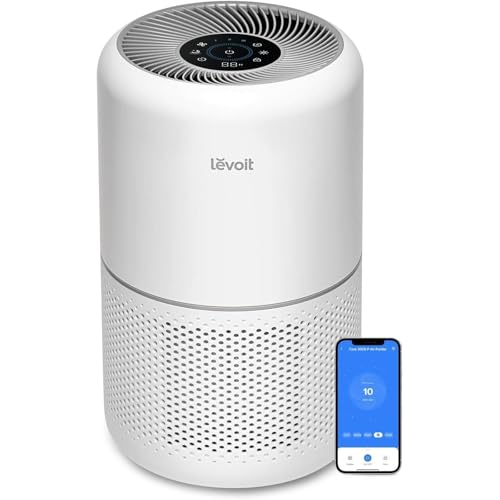
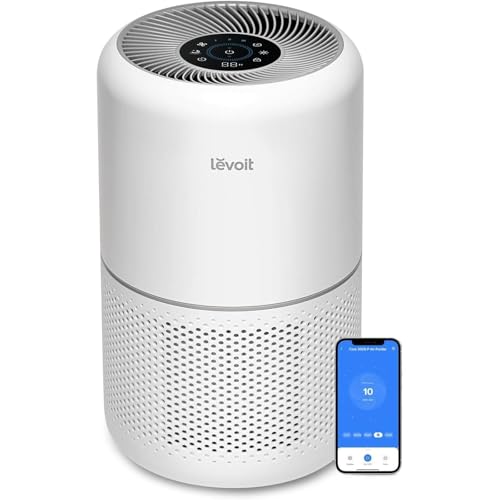
Levoit Core 300S-P — The Bedroom Starter
Badge: Best first machine for a proven bedroom need
- Filtration: 3-in-1 cartridge with HEPA stage, filtration only
- Verification: AHAM Verifide rating on the listing
- Sleep mode: listed at 24 dB
- Controls: app, auto mode, air-quality sensing
If the tests convicted your bedroom, this is the proportionate response: a verified, quiet, sensor-equipped machine from the deepest filter ecosystem in the business, sized for the room where need concentrates. Its auto mode answers the morning test directly, working against the night’s load while you sleep, and its filter variants let pet and allergy households tune the same cabinet. It is deliberately not the largest or deepest-carbon machine in this series, because a first purchase should be an experiment with excellent instruments: one month of mornings will tell you more about your need than any guide, this one included.
Strengths
- Verified performance with a sleep mode light sleepers accept
- Sensor and auto mode suit the bedroom brief precisely
- Filter supply and variants are the industry’s widest
Trade-offs
- Light carbon — odor-led needs belong to deeper machines
- Bedroom scale only
- Cartridge replaced as one unit
Best for: allergy and dust-pattern bedrooms, first-time buyers testing need. Not suited for: large rooms or smoke/odor-led problems. The best air purifiers roundup covers the step-up field.

Coway Airmega 150 — The Design-Conscious All-Rounder
Badge: Best for living rooms that passed the tests
- Filtration: HEPA and carbon filter set
- Coverage: rooms up to about 1,035 sq ft on the listing
- Controls: auto mode, air-quality display, timer
- Design: furniture-grade cabinet in colour options
Where the convicted room is a living space rather than a bedroom — the guest test failed in the sitting room, the geography test written across its windowsills — the Airmega 150 is the measured answer: Coway’s proven filtration and auto management in a cabinet that does not apologise for existing in a furnished room. Its air-quality display doubles as the household’s ongoing diagnostic, showing the load the home tests estimated. It will not fight a smoker or a highway single-handed, and this guide will not pretend otherwise; against the ordinary particle burden of an ordinary living room, it is exactly sufficient, which is the highest praise a diagnostic article can give.
Strengths
- Balanced filtration with honest auto management
- Design that survives being looked at daily
- Established brand filter supply
Trade-offs
- Premium for its class
- Carbon is a standard layer, not a deep bed
- Larger rooms still want larger machines
Best for: living rooms and bedroom-offices with a proven particle load. Not suited for: heavy odor duty or the strictest budgets — see the budget air purifiers guide for that tier.
What a Purifier Will Not Do: The Expectation Audit
Some no-verdicts in this guide are really expectation corrections, and they deserve their own section because disappointed expectations — not bad machines — generate most of this category’s returned boxes. A purifier will not cool a room, scent a room, or silence a street. It will not remove carbon dioxide, so a sealed bedroom will still feel stuffy by morning however clean its particles are; crack the window or the door, and let ventilation do ventilation’s work. It will not protect anyone from an actively smoking roommate, a mouldy wall, or an unvented gas appliance — sources and hazards that outrank filtration entirely. It will not sterilise anything, whatever the garnish of lamps and trademarked stages suggests, and its honest effect on airborne microbes is the modest, physical one of capturing some of the particles they ride on. And it will not work while switched off, in a cupboard, or at a whisper speed chosen for silence against a load that needed force. Households whose expectations survive this audit are the ones still satisfied in year three; the machine does a short list of things, and within that list, it does them very well.
The Rental, the Dorm, and the Shared House
Need has a housing dimension the scoring understates. Renters cannot modify ductwork or install whole-house systems, which makes the portable purifier not a compromise but the only filtration available — a renter with a proven particle problem needs the box precisely because the building is not theirs to fix. Dorm rooms compress the question: one small room, one occupant, dust from an old building and a corridor’s worth of other people’s air — the home tests run fast in a dorm, and a compact machine answers a yes there as completely as anywhere in this article. Shared houses add diplomacy: your need may be proven while your housemates’ indifference is total, which argues for the bedroom-first strategy on social as well as physical grounds — your door closes, your air cleans, nobody else’s habits are indicted. In every tenure, the principle is the same: filtration is personal infrastructure, sized to a room and a body, and it asks nobody’s permission but the evidence’s.
The One-Month Trial: Letting Evidence Finish the Argument
However the scoring fell, treat the first machine as a trial with instruments rather than a marriage. Run it in the bedroom, continuously, at the highest tolerable speed, door closed at night. Keep the morning diary for the first fortnight and compare it against the fortnight before. Watch the pre-filter at month’s end: its captured load is your home’s particle census, more truthful than any guess — a grey felt of evidence, or a nearly clean screen that tells you your load was light and your need was smaller than feared. Dust the test shelf again and compare its three-day film against the pre-purifier baseline. If the evidence converges — better mornings, slower dust, a filter visibly working — the need was real and the second room’s case can be argued from data. If nothing measurable changes, believe the instruments: your air was already fine, the free tier is your programme, and the machine can be retired to the guest room with no shame on either side of the transaction. Need, in the end, is not a feeling a listing can sell you. It is a measurement your own home makes, and this article has simply taught it to speak.
There is a final, quieter reason some households buy, and this guide will honour it rather than pretend it away: peace of mind is a real good, and a machine that lets a new parent, a recent diagnosis, or a smoke-season veteran sleep without wondering about the air has delivered something the tests do not measure. The guide’s only condition is honesty about which purchase is being made. Bought as peace of mind, knowingly, at a price the household can sustain, the purifier is a legitimate comfort. Bought as a medical necessity the evidence never established, it is a small fraud the household commits against itself — and the difference between the two is nothing but the truth told at the moment of purchase, which is all this article has ever asked for.
Let the guide also confess the limits of its own framework, since an article that preaches evidence should model the confession. The scoring is a heuristic built from the category’s accumulated experience; it is not an epidemiological instrument, and it will misjudge the edges — the household whose true problem is a gas no filter here addresses, the sleeper whose morning symptoms are anatomical rather than airborne, the home whose dust is theatrical but harmless. Where the stakes are medical, the framework yields to clinicians without argument. Where the stakes are comfort and money, it yields to the one-month trial, which is the framework’s own built-in correction: every verdict in this article is provisional until your home’s filter has testified. A guide that hands you the means to overrule it has done the most honest thing a guide can do.
The complete method, compressed for the reader who will tape it to the fridge: name the problem in the air’s own categories; run the shelf, the mornings, and the seasons as tests; poll the household and its guests; do the free things first; score honestly; and buy, if the score convicts, one verified machine for the worst room, on a month’s evidentiary trial. Six steps, no purchase required to begin, and a verdict at the end that belongs to your home rather than to anyone’s marketing department — including, it must be said, this website’s.
And so the article ends where a diagnostic should: with the reader holding an instrument rather than an opinion. The purifier industry will continue to answer this question with a product page; your home will answer it with a shelf, a diary, and a filter’s grey testimony, and those answers — slower, duller, and entirely free of commission — are the ones worth building a purchase on. Whether the verdict is the Levoit humming beside the bed by next month, or the money staying in the bank beside a clean bill of air, it will have been earned the same way: by evidence, in the right order, in your own rooms. That is all “need” has ever meant, and it is enough.
One population the scoring can underserve is the household on the cusp of a known change — the baby arriving in spring, the puppy arriving at Christmas, the move to the flat above the restaurant already booked. For them the tests describe a home that is about to stop existing, and the rational move is to run the diagnosis against the future household: score the pet you are actually getting, the nursery you are actually furnishing, the street you are actually moving to. Buying a month early, against a certain future, is not impatience; it is the same evidence discipline with the calendar read correctly. The reverse also holds — the household about to rehome the cat, finish the renovation, or move away from the highway should let its need expire with its circumstances, and resist renewing filters for a problem that has already moved out.
Finally, notice the shape of every yes this article has endorsed: it is always specific. Not “the home needs purifying” but “the bedroom’s mornings are congested from April to June.” Not “the air is bad” but “the shelf films over in three days since the dog arrived.” Specificity is the fingerprint of a real need, because real problems have addresses, seasons, and witnesses — and it is the surest protection against the vague, ambient anxiety that the marketplace monetises best. If your case for a purifier can be stated in one sentence with a room, a season, and a symptom in it, buy with confidence. If it cannot, run the tests until it can — or until it dissolves, which is the same instrument reaching the other verdict, and equally a success.
There is one more piece of evidence available to the undecided, and it is sitting in the homes of everyone they know: other people’s filters. Ask a friend with a purifier to show you a used filter at change time and to describe, honestly, what changed in their home. A grey, loaded filter from a house like yours is a census you can hold; a clean one from a house like yours is an acquittal. Owners are generally delighted to testify, and their testimony has the one virtue no review platform can manufacture — they have already spent the money, so their account of whether it was worth it is the closest thing to disinterested evidence this market produces. Borrow a verdict before you buy one.
And let the guide’s last diagnostic gift be a calendar note: re-ask this article’s question once a year, in the hard season, in the way one re-asks any household question whose answer expires. Bodies change, animals arrive and depart, streets get busier, buildings get older, and a verdict honestly reached in one year is a hypothesis in the next. The households that keep their air right are not the ones that bought correctly once; they are the ones that kept measuring after the purchase — or after the acquittal — with the same shelf, the same diary, and the same refusal to let anyone’s marketing, this site’s included, do their noticing for them.
Print the six-step method, if you print anything, and stick it where the cleaning supplies live — because that is where it will be consulted, in the middle of ordinary housekeeping, which is exactly where air quality is actually decided. The shelf gets cleaned, the diary gets its fortnight, the windows get their ten minutes, and the question this article’s title asks stops being a shopping question at all. It becomes what it always should have been: a housekeeping question, answered by the house.
And the truly final word — because every diagnostic article should end by returning its reader to their own authority — is that the verdict, whichever way it falls, is yours in a way no purchase can be. The tests are run in your rooms, on your body, against your calendar; the scoring is your handwriting; the trial’s filter will testify in your home’s own dust. An industry that prefers its customers certain and hurried will not love this article’s pace. Your air, which has waited this long, can wait the week the evidence requires — and will reward the patience with the only satisfaction worth buying: knowing, rather than hoping, that the machine in the corner is there because it is needed.
Final Recommendation
Run the tests before you run the checkout. If your problem is stuffiness, humidity, or a medical mystery, spend nothing here and spend your effort where the problem lives. If the dust, the mornings, the seasons, and the guests convict your air — two points and upward on an honest count — then yes, you need an air purifier, and you need exactly one to start: the Levoit Core 300S-P for the bedroom where need concentrates, or the Coway Airmega 150 for a living room that failed its tests in public. Run the month’s trial, read the filter like a report, and let your own home’s evidence — not this page, and certainly not an advertisement — have the final word.
Frequently Asked Questions
I feel fine. Could I still need one?
Feeling fine is strong evidence, and this guide respects it: adaptation means a body can stop reporting a load it still carries, which is why the tests include instruments beyond feeling — the dust shelf, the guests’ reactions, the geography. If those are clean too, then no, you do not need one, and your good fortune is a fact rather than a gap in your defences. Re-run the tests when life changes — a pet, a move, a diagnosis, a smoky season — because need is a measurement with a date on it.
What if I can only afford a small or budget machine?
Then buy the honest small machine for the one room that failed worst, and run the trial there: a verified budget unit in a bedroom outperforms, in lived benefit, a flagship perpetually postponed. The budget tier’s real machines — verified, stocked, correctly sized — are catalogued in the budget guide linked earlier in this article. What you should not do is let a small budget talk you into an unverified box; in this category, a delayed purchase beats a fictional one.
Do healthy people need an air purifier?
Usually not as a need, whatever the marketing implies. A healthy person in a clean, ventilated home with a light dust load gains little measurable benefit, and this guide’s tests will say so. The exceptions are environmental rather than personal: heavy traffic, wildfire smoke, a shedding pet, or a dusty building can make a purifier rational for anyone. Buy against evidence — dust speed, symptoms, geography — not against the general proposition that air could always be cleaner.
Will an air purifier help my allergies?
For pollen, dust, and dander allergies, a bedroom purifier is one of the most consistently helpful environmental measures available: it reduces the airborne load in the room where you spend the longest continuous hours, and the morning-symptom pattern it targets is the classic signature. It works alongside — never instead of — your clinician’s plan and medication, and bedding hygiene remains the senior partner, since the bed itself is the largest particle reservoir in the room.
Do I need an air purifier if I have a pet but no allergies?
You have a preference, not a need — and it may still be worth buying, honestly labelled. A purifier will reduce the dander your guests breathe, the dust your furnishings collect, and, with carbon, some of the background odor; the best air purifiers for pets guide exists for exactly your case. What you do not have is urgency, which means you can buy on the three-year cost test and the sales calendar rather than on a sneeze.
Can an air purifier replace opening windows?
No, and the two do different work. Ventilation exchanges the room’s air wholesale — removing carbon dioxide, moisture, and accumulated gases along with particles — while filtration recirculates and cleans what is already there. The healthy home uses both: windows when weather and pollen allow, filtration continuously and especially when the windows must stay shut. A purifier bought to compensate for never ventilating is a machine assigned the wrong job.
How do I know if my air purifier is actually needed — after buying it?
Read the evidence the trial section describes: the morning diary against its baseline, the test shelf’s dust film before and after, and above all the pre-filter and filter at their first inspection, which display your home’s captured load in physical form. A machine catching a visible burden in a room whose occupant sleeps better is needed by any reasonable definition. A machine whose filter stays pristine in a symptom-free home has answered the question the other way — and believing it is the mark of a household that buys by evidence.
Is one air purifier enough for a whole home?
Almost never, and the expectation is the category’s most persistent misunderstanding. A purifier cleans the room it is in, with the door’s position deciding how much of the neighbouring air it borrows. Whole-home coverage means a machine per key room — bedroom first, by this guide’s logic — or acceptance that one room is protected and the rest are not. Score your need room by room, buy for the room that failed worst, and expand only on evidence.
Could keeping a two-week diary settle whether you need one?
For households still undecided, a simple diary often answers the question more honestly than any specification sheet. For two ordinary weeks, note each morning how your nose, throat and sleep felt, whether windows were open, and anything unusual such as nearby roadworks, a visiting pet or heavy cooking. Alongside it, wipe a dark shelf with a white tissue every few days and note how much dust has settled. If the diary shows a clear pattern tied to indoor days, dust or a particular room, a purifier sized for that room is a reasoned purchase. If it shows nothing consistent, your money is probably better spent on ventilation, cleaning or checking your heating system’s filter first.