Disclosure: As an Amazon Associate, UMT Smart Tool earns from qualifying purchases. This guide is built from product listings and maker specifications, not from our own hands-on testing. Prices are approximate and can change, so check the current price before you buy. Last updated: November 10, 2026.
Living with pets means living with what they shed. Hair is the visible part, but the harder problem is dander — the tiny skin flakes that stay airborne for hours — plus the odor that settles around litter boxes, beds and favorite sleeping spots. A purifier built for pet homes needs three things at once: a pre-filter that catches hair before it clogs the main filter, a true HEPA element for dander-sized particles, and enough activated carbon to matter for smell. This guide is organized around those three jobs.
In this guide
Quick Picks
The short version: six purifiers we would look at first for a home with cats or dogs, one per use case.
| Pick | Type | Best for |
|---|---|---|
| Winix HR900 Ultimate Pet | 5-stage pet tower | Dedicated pet filtration with a double pre-filter |
| Blueair Blue Pure 211i Max | Smart large-room tower | Big rooms and multi-pet homes |
| Austin Air Bedroom Machine | Deep-carbon steel unit | Litter-box and strong pet odor |
| BISSELL air320 | Fabric pre-filter tower | Visible pet hair in living rooms |
| Levoit Core P350-P | Compact pet cylinder | Budget pet-specific cleaning |
| Shark Clean Sense HP102PET | Smart compact tower | Auto mode and odor cartridge |
Our Picks
1. Winix HR900 Ultimate Pet — Best Overall for Pet Homes
The HR900 is one of the few purifiers designed from the filter stack outward for animals. Its five stages start with two hair defenses: a disposable Ultimate Pet filter that takes the first hit of fur and dander, then a washable fine-mesh pre-filter behind it. After those come the washable AOC (Advanced Odor Control) carbon filter and a true HEPA filter, finished with PlasmaWave, which you can switch off if you prefer no ionization. It is AHAM Verifide for rooms up to 300 sq ft, with CADR ratings of 200 (dust), 194 (smoke) and 220 (pollen) CFM, and it adds auto mode with smart sensors plus a quiet sleep mode.
The trade-off is upkeep. Winix’s manual calls for swapping the pet filter roughly monthly — a 12-pack is included, but it is a recurring chore and cost the other picks here do not have — and the main Filter T and Filter U set is replaced about once a year. There is no app control, and 300 sq ft caps it at one medium room rather than an open-plan floor. For a single room where a dog or cat spends most of the day, though, nothing else here layers this much pet-specific filtration into one box.
2. Blueair Blue Pure 211i Max — Best for Large Rooms and Multi-Pet Homes
When several animals share a big living space, airflow matters more than anything, and the 211i Max is the strongest mover here. Blueair rates it to clean a 635 sq ft room at the full AHAM pace of about 4.8 air changes per hour, and up to 3,048 sq ft at one change per hour. Its HEPASilent design pairs a fan with electrostatic charging to move a lot of air at lower noise than a conventional fan-and-filter tower. For pet hair, its washable fabric pre-filter wraps the lower body, so shed hair lands on a sleeve you can vacuum or rinse, not on the main filter.
It is also the smartest pick here, with a particle sensor, auto mode, app and voice control, and a real-time air-quality readout. The compromise is odor: the carbon lives in a combination filter sheet, so while it handles everyday smells, it cannot match the Austin Air’s deep carbon bed on litter-box odor. Replacement filters are a premium-tier cost, and the unit is large. Choose it when hair and dander across a big room are the main problem and odor is secondary.
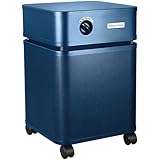
3. Austin Air Bedroom Machine (B402, Midnight Blue) — Best for Heavy Pet Odor
If the complaint in your home is smell rather than hair, this is the pick. The Bedroom Machine is Austin Air’s five-stage flagship: two pre-filters, 15 pounds of anthracite activated carbon and zeolite, 60 sq ft of true medical-grade HEPA, and a final layer of military-grade HEGA carbon cloth. That carbon depth — over 780 cubic inches, where most purifiers use a sheet you could bend between two fingers — is what actually adsorbs litter-box ammonia and stubborn multi-pet odors. The first-stage pre-filter removes visible dust, hair and pet dander so the deep stages can work, the intake draws from all sides, and Austin rates the steel unit for spaces up to 1,500 sq ft.
The running-cost math is its quiet strength: the sealed five-stage filter is designed to last up to five years, so the premium price is partly offset by not buying filters every few months. What you give up is every modern convenience — no sensor, no auto mode, no app, just a three-speed control — and at the maker-rated coverage you get gentle, whole-space odor control rather than fast AHAM-pace cleaning of a large room. For a cat room or any house where odor is the top issue, it is the most serious tool here.
4. BISSELL air320 (2768A) — Best for Visible Pet Hair
BISSELL builds pet products for a living, and the air320 shows it in one detail: the front of the machine is a washable fabric pre-filter. Floating hair sticks to that fabric panel first, where you can see the load building up and wash it clean. Behind it, a three-stage system pairs an H13 HEPA filter for dander-sized particles with an activated carbon filter for pet and household odors. It is AHAM Verified with CADR ratings of 211 (smoke), 221 (dust) and 245 (pollen) CFM — enough for about 4.8 air changes per hour in a 327 sq ft room — and its CirQulate system senses particle levels and adjusts the fan automatically around a simple soft-touch dial.
The furniture-style design blends into a living room better than most towers, which matters for a machine meant to live where the pets do. The compromises: the carbon stage is a separate, relatively thin filter, so odor control is good rather than great, and the HEPA and carbon filters are individual parts to track and replace on schedule. Pick it for a living room where visible hair is the daily battle.
5. Levoit Core P350-P (Grey) — Best Budget Pet-Specific Pick
The Core P350-P is Levoit’s pet-tuned take on its compact cylinder format, and it is the least expensive way in this guide to get filtration actually specified for animals. Its 3-in-1 filter starts with a fine non-woven pre-filter made to trap fur, hair and lint before they reach the H13 true HEPA layer, and the activated carbon uses Levoit’s ARC Formula, which the maker formulates for pet odor rather than general household smells. A Pet Lock freezes the controls against paws and small hands, and the sleep mode keeps it quiet enough for a bedroom. It is AHAM Verifide, and Levoit rates it to clean a 217 sq ft room in about 12.5 minutes on its highest setting.
Know its limits before you buy: there is no sensor, no auto mode and no app, so you set the fan speed yourself, and that coverage suits a bedroom, office or cat corner rather than a family room. The pet filter (Core P350-RF) is replaced roughly every 6–8 months. As a second purifier for the room your pet sleeps in, or a first purifier on a budget, it covers the pet basics honestly at a budget-friendly tier.
6. Shark Clean Sense HP102PET — Best Smart Pick for Pet Odor
Shark’s pet model attacks odor two ways at once. Its Clean Sense IQ sensor tracks air quality continuously, displays it as a percentage, and ramps the fan up and down on its own, while the NanoSeal filter — which Shark rates to capture 99.98% of particles in the 0.1–0.2 micron range, beyond standard HEPA grades — handles dander. For smell, the HP102PET adds a Pet Odor Lock cartridge using Shark’s Odor Neutralizer Technology, aimed at breaking down pet odors rather than masking them. Shark rates the unit for spaces up to 500 sq ft, in a smaller footprint than the other large-coverage picks here.
The trade-offs are about consumables and ratings. The odor cartridge is one more part to replace on schedule, and Shark publishes its own coverage testing rather than AHAM CADR figures, so compare its 500 sq ft claim against the AHAM-rated room sizes elsewhere in this guide with that in mind. If you want a set-and-forget machine for a bedroom or living area where a cat or dog sleeps, it is the most automated option here.
Best Picks by Category
- Best Overall: Winix HR900 Ultimate Pet — a dedicated pet filter stack with two pre-filters ahead of true HEPA.
- Best for Large Rooms: Blueair Blue Pure 211i Max — AHAM-pace cleaning for 635 sq ft plus a washable hair-catching sleeve.
- Best for Pet Odor: Austin Air Bedroom Machine — 15 lb of carbon and zeolite plus a HEGA carbon cloth stage, with a filter built to last up to five years.
- Best for Visible Hair: BISSELL air320 — the washable fabric pre-filter faces the room and grabs hair first.
- Best Budget: Levoit Core P350-P — pet-specific filter and ARC carbon in a compact, budget-friendly cylinder.
- Best Smart Pick: Shark Clean Sense HP102PET — auto-adjusting Clean Sense IQ plus a dedicated pet odor cartridge.
Most pet homes are fighting two different problems — particles (hair and dander) and gases (odor) — and no single filter stage wins both. Match the pick to the problem that bothers you most.
How to Choose
Size it by CADR, not headline coverage
Maker headlines like “up to 3,000 sq ft” usually assume one air change per hour, which is too slow for dander control. For a room where someone is sensitive to pets, aim for the AHAM pace of roughly 4.8 air changes per hour: the AHAM-rated room size (300 sq ft for the Winix HR900, 327 sq ft for the BISSELL air320, 635 sq ft for the Blueair 211i Max) is the number to compare against your actual room.
Insist on true HEPA for dander
Pet dander particles are small and stay suspended for hours, so the filter grade matters. “True HEPA” and H13 ratings mean at least 99.97% capture at 0.3 microns under the standard test. “HEPA-type” filters carry no such guaranteed rating. Every pick in this guide uses a true HEPA or better element.
Weigh the carbon — literally
Odor molecules pass straight through HEPA; only activated carbon adsorbs them, and capacity scales with the weight of carbon. A thin carbon sheet freshens a room mildly and saturates in months. A deep bed like the Austin Air’s roughly 15 lb blend keeps working for years and is the right call for litter boxes and multiple dogs. Match carbon weight to how strong your odor problem honestly is.
Get a pre-filter you can wash
Hair is the filter killer in pet homes: a matted pre-filter chokes airflow and forces the expensive HEPA to load up early. Washable or vacuumable pre-filters — the Blueair’s fabric sleeve, the BISSELL’s fabric front, the Winix’s mesh — turn a two-minute rinse into months of extra HEPA life. In a heavy-shedding home, vacuum the pre-filter weekly and wash it monthly.
Place it where the pet actually lives
A purifier cleans the room it is in, not the house. Put the main unit in the room where the animal sleeps and spends its hours, with a few inches of clearance on all sides, and run it continuously on auto or a medium speed — intermittent use on turbo cleans far less air over a week.
Budget for filters, not just the machine
Running costs vary more than purchase prices. Pet homes load filters faster than maker schedules assume: expect HEPA replacements every 6–12 months on compact units, annual filter sets on the Winix, and a cartridge here and there on the Shark. The Austin Air flips the math with a filter designed to last up to five years. Add two years of filter costs to any price before comparing.
Which pet air purifier should you buy?
The best air purifier for pets is the one that matches your biggest problem: hair, dander across a big room, or odor. Use these matches to narrow the six picks quickly.
- One room where a dog or cat spends most of the day: go for the Winix HR900 Ultimate Pet, because it layers the most pet-specific filtration and accepts a recurring filter chore in return.
- A large living space or several animals: choose the Blueair Blue Pure 211i Max for airflow, a hair-catching sleeve and smart controls.
- Litter-box or strong multi-pet smell: the Austin Air Bedroom Machine has the deepest carbon here, and it gives up modern conveniences to get it.
- Visible hair on furniture and floors: the BISSELL air320 shows its washable fabric front panel loading up, so you know when to clean it.
- A bedroom or a first purifier on a tight budget: the Levoit Core P350-P covers the pet basics in a compact body.
- A set-and-forget machine with automatic fan control: the Shark Clean Sense HP102PET adjusts itself and adds an odor cartridge.
If you cannot decide, ask which complaint you notice first when you walk in the door. Hair points to a washable pre-filter, a stuffy smell points to deep carbon, and a sneezy family points to true HEPA and enough airflow for the room.
What to check before you buy, and who should skip a pet air purifier
Before you buy a pet air purifier, confirm that its room rating matches the space you will actually run it in, and that you can live with its filter routine. These checks catch most disappointments.
- Measure the room and compare it with the coverage on the current listing, noting whether the maker uses an independent rating or its own testing.
- Find out which filters are washable and which are replaced, and how often the maker says to replace them.
- Check whether the carbon is a thin sheet or a thicker bed, since that decides how well it handles litter-box smell.
- Look for a switch-off option on any ionization feature if anyone in the home is sensitive to it.
- See what is in the box, including spare pre-filters, and whether replacement filters are easy to find.
- Confirm the size and cord length so the unit can sit a little away from walls and furniture.
- Read the warranty and return terms on the listing.
Be honest about the trade-offs. A purifier reduces airborne dander and odor, but it does not replace vacuuming, washing pet bedding or cleaning the litter box often. Washable pre-filters mean regular chores, and the most capable units are large and cost more to keep supplied with filters.
You might skip a purifier if your main issue is a single smelly spot that a thorough clean would fix, or if you rent a small space and a compact unit would already be enough. Anyone with serious allergies should talk to a doctor too, because a purifier is only one part of managing symptoms.
When you are ready, compare the picks above, check the current listing for room size and what is included, then choose the one that fits how your pets use your home.
Frequently Asked Questions
Do air purifiers really help with pet allergies?
They reduce the airborne load of dander and the dust that carries pet allergens, and many owners find the room noticeably easier to be in. They do not remove allergens settled in carpets, bedding and upholstery, and they are not a medical treatment. If someone in the home has diagnosed allergies or asthma, treat a purifier as one part of a plan — alongside HEPA vacuuming and washing bedding — and follow your doctor’s advice.
Can an air purifier get rid of pet smell completely?
No purifier fully erases odor at the source. Carbon filtration cuts airborne smell a great deal — deep carbon beds like the Austin Air’s do it best — but a litter box that needs changing will keep producing odor faster than any machine removes it. Pair the purifier with source hygiene and it can keep a pet home smelling neutral; skip the hygiene and it will only blunt the smell.
Should the purifier run all the time?
Yes, ideally. Pets shed and stir up dander around the clock, and a purifier only cleans air that passes through it. Continuous running on auto or a low-to-medium speed moves far more air over a day than short bursts on turbo, and sleep modes on picks like the Levoit and Winix keep nighttime noise low. Energy use on low speeds is modest.
Where is the best place to put an air purifier in a pet home?
In the room the pet occupies most, on the floor with clear space around the intake — not wedged behind a sofa or curtain. For litter odor, keep the unit in the same room as the box but not directly beside it, so it draws the room’s air rather than a concentrated stream of litter dust. One correctly sized unit in the right room beats a larger unit in the wrong one.
How often do filters need changing in a home with pets?
Faster than the box suggests. Vacuum washable pre-filters weekly and wash them monthly; expect the main HEPA in compact purifiers to last about 6–8 months in a shedding home rather than a year. Carbon saturates invisibly, so if pet odor starts creeping back, the carbon stage is the first suspect.
Is one big purifier or two smaller ones better for pets?
Two smaller ones, placed where the animals actually are, usually win. Pets concentrate dander and odor in their sleeping and litter areas, and air does not move well between rooms with closed doors. A large-room unit like the Blueair 211i Max makes sense for an open-plan space the household shares; otherwise, a main-room pick plus a compact Levoit in the pet’s sleeping room covers more real pet air.
What size air purifier do I need for a dog?
Pick a purifier rated for at least the size of the room where the dog spends time. A larger rating gives you a margin for heavy shedding and lets you run the fan lower and quieter. Check how the maker arrived at its coverage figure on the listing.
Is HEPA or activated carbon more important for pet owners?
You need both because they do different jobs. HEPA captures dander and fine particles, while activated carbon handles odor gases that HEPA cannot catch. If smell is your main complaint, look for a thicker carbon filter.
Do air purifiers remove pet hair from the air?
They catch much of the hair that is floating, but hair that has settled on floors and furniture stays there. A washable pre-filter takes the first load of hair so the main filter lasts longer. Vacuuming is still necessary.
Can I wash a HEPA filter?
Generally no, unless the maker clearly says a specific filter is washable. Washing a standard HEPA filter can damage it and reduce how well it traps particles. Wash only the parts the manual names, such as a fabric or mesh pre-filter.
Are ionizers safe to run around pets?
Check the manual, because makers differ on this and some sensitive people dislike ionization. Many units let you switch the feature off, which is the safer choice if you are unsure. Choose a model with that option if you have a bird or a small animal.
How close should a purifier be to the litter box?
Place it in the same room, but a little away from the box so litter dust and cat hair are not pulled straight into the intake. Leave space around the unit for airflow. Keep the box itself scooped, since a purifier cannot make up for a dirty litter tray.
Bottom Line
For most pet homes, start with the Winix HR900 Ultimate Pet: its double pre-filter, washable carbon and true HEPA stack is built for exactly the hair-dander-odor mix animals produce, at an honest 300 sq ft rating. If odor dominates, step up to the Austin Air Bedroom Machine and its 15 lb carbon bed; if the room is large and open, the Blueair Blue Pure 211i Max moves the most air and its washable sleeve is the easiest hair trap here. Whichever you choose, check the current price and the AHAM room size against your room before ordering.