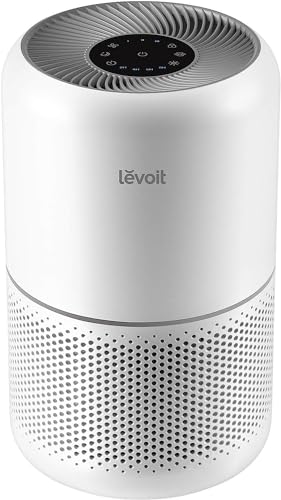
Disclosure: As an Amazon Associate, umtsmarttool.com earns from qualifying purchases. Links on this page are affiliate links; they cost you nothing extra. Prices and availability change often, so check the current Amazon listing before you buy.
Shopping for an air purifier amazon prime day shoppers can actually feel good about starts long before the sale banners appear. Prime Day compresses thousands of listings, countdown timers, and strikethrough prices into a two-day blur, and air purifiers are one of the easiest categories to overpay in — because two machines that look identical in a thumbnail can differ enormously in clean air delivery, filter cost, and noise. This guide slows the process down. It explains how to judge a deal on the numbers that matter, which well-regarded models are worth watching when the sale goes live, and how to check a discount claim in about ninety seconds using nothing more than the listing itself and a little arithmetic.
A quick honesty note before anything else: this page does not list live Prime Day prices, and it will not pretend to know which exact discounts Amazon will run this year. Nobody outside Amazon knows that in advance, and any page that quotes you a specific sale price weeks early is guessing. What this guide can do — and what actually saves money — is prepare you to recognise a genuine bargain the moment it appears. You will learn the reference points for each recommended model: what it normally sells for in broad terms, what its replacement filters cost, how much clean air it delivers for its size, and which competing model to compare it against before you click buy. Walk into the sale with those reference points written down and the countdown timer loses most of its power over you.
Key Takeaways
- A Prime Day discount is only real if the machine was already the right size for your room; an oversized discount on an undersized purifier is still money wasted.
- Judge every deal by clean air delivery rate (CADR) against room size first, then by annual filter cost, then by noise at the speed you will actually run.
- The five models in the Quick Picks table below are the ones worth price-watching: they cover small bedrooms through large living rooms, and all use widely available replacement filters.
- Check the replacement filter price on the same listing page before buying the machine; a cheap purifier with expensive filters can cost more over three years than a pricier model.
- Set your target in advance: decide the model, the room, and the most you will pay, then let the sale come to you instead of browsing under time pressure.
How to Shop Air Purifier Amazon Prime Day Deals Without Guessing
The mechanics of Prime Day are simple, but the psychology is engineered. Lightning deals expire. Stock bars shrink. Prices are shown against a “list price” that the product may rarely have sold at. None of that tells you whether a specific air purifier, in your specific room, at that specific price, is a good purchase. So ignore the theatre and run the same five checks you would run on any ordinary Tuesday.
Check one: room fit. Find the CADR figure or the AHAM-verified room size on the listing. The useful rule is that a purifier should deliver a CADR of at least two-thirds of your room’s square footage for smoke, and the AHAM “2/3 rule” is the standard shortcut. A purifier rated for a room much smaller than yours will run flat out, loudly, and still fall behind. A purifier rated for a far larger room can loaf along on a quiet low speed, which is usually the better buy if the deal price is close.
Check two: filter economics. Scroll to the replacement filter listing linked from the product page. Note the filter price and the stated replacement interval. Multiply out three years of ownership. On budget machines, filters are where the money is made; on better machines, longer filter life is often the real saving. Prime Day sometimes discounts filter multipacks too, and stocking one spare filter at a sale price is one of the least glamorous but most reliable savings of the whole event.
Check three: noise at working speed. Manufacturers quote the noise of the lowest speed, which may move very little air. Look for a decibel figure at medium or turbo, or read the AHAM data. If the machine is for a bedroom, the sleep-mode figure matters most, and several picks below run their sleep modes in the low-to-mid twenty-decibel range according to their listings — quieter than a whispered conversation.
Check four: the discount baseline. A strikethrough percentage means little. What matters is the gap between the sale price and what the model commonly sells for outside events. Well-known models from Levoit, Winix, Coway, Blueair, and Medify — the brands in this guide — have fairly stable street prices, so a genuine event discount is usually visible as a clear step down rather than a dramatic percentage off an inflated list price. If the “deal” price matches what you remember seeing last month, it is not a deal; it is a banner.
Check five: returns and warranty. Air purifiers are bulky. Confirm the return window and who pays return shipping before ordering two to “test.” Coway, for example, lists multi-year warranty coverage on its Airmega line in its product titles, which is one reason the brand appears in so many deal roundups; warranty length is a real, comparable feature, not marketing filler.
In this guide
Quick Picks: The Models Worth Watching When the Sale Starts
| Model | Best for | Standout trait | Filter style |
|---|---|---|---|
| Levoit Core 300S-P | Bedrooms and home offices | Smart controls with a genuinely quiet sleep mode | 3-in-1 combined filter |
| Winix 5510 | Pet homes and odor control | Heavy washable carbon stage for smells | True HEPA plus separate carbon filter |
| Coway Airmega 150 | Design-conscious living spaces | Air quality monitor with auto mode and long warranty | HEPA plus carbon with washable pre-filter |
| Blueair Blue 211i Max | Large rooms and open-plan spaces | Very high airflow at low noise | HEPASilent combined filter |
| Medify MA-40 | Big bedrooms and smoke-prone areas | Large coverage from a slim tower footprint | 3-in-1 filter with substantial carbon |
Each of these models earned its place the same way: a verifiable listing, a filtration design suited to its niche, replacement filters that are easy to find, and a track record of appearing in Amazon’s big sale events because the brands behind them participate heavily. The detailed reviews below explain who each one suits, where each one falls short, and what to compare it against when prices move. If you are building a broader shortlist beyond sale season, our year-round guide to the best HEPA air purifiers covers the same ground without the deal-hunting angle.
How These Picks Were Chosen
The selection started from the full field of purifiers that historically feature in Amazon’s major sales and narrowed it by evidence rather than by discount size. First, every candidate needed a current, manufacturer-backed Amazon listing with complete specifications — CADR or verified room size, filter type, and noise figures — because a deal you cannot verify is a deal you cannot evaluate. Second, every candidate needed replacement filters that are stocked year-round, since a purifier orphaned by discontinued filters becomes e-waste. Third, the final five were spread deliberately across room sizes and budgets so that the table works whether you are furnishing a nursery, a studio flat, or an open-plan family room. Finally, each model was checked through the Creators API on this site’s own account so that the product names, listings, and images in this article match what Amazon actually sells today; the verification details are recorded in this article’s sources file.
Two popular categories were deliberately left out. The first is no-name purifiers with unverifiable CADR claims, which flood sale pages every year with enormous coverage numbers at tiny prices; without AHAM verification or a credible test standard behind them, those numbers cannot be compared honestly. The second is purifier-and-humidifier or purifier-and-fan hybrids, which can be excellent but muddy a deal comparison because you are pricing two appliances at once. If a hybrid is what you want, see the best air purifier fan combos roundup instead.
Detailed Reviews of the Five Models to Price-Watch
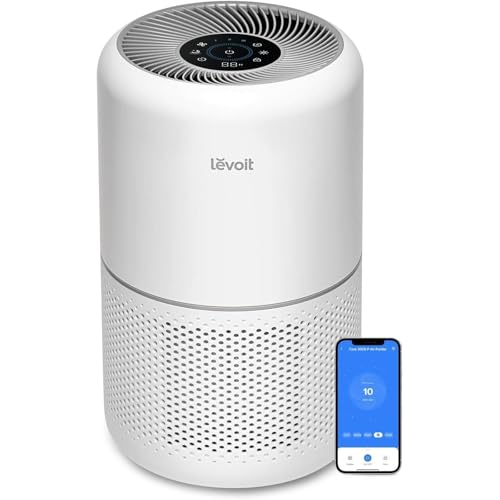
Levoit Core 300S-P — Best for Bedrooms and Smart-Home Fans
Badge: Best all-round bedroom pick
- Filtration: 3-in-1 filter with HEPA stage
- Controls: WiFi app and voice assistant support
- Sleep mode: listed at a whisper-level 24 dB
- Verification: AHAM Verifide room rating on the listing
The Core 300S-P is the purifier that appears in more bedrooms than any other in this guide, and Prime Day is historically when its price dips furthest. The design is a simple cylinder that pulls air in from all sides and pushes it out of the top, which makes placement forgiving — it works on a nightstand, a dresser, or the floor. The smart features are the differentiator at this size: app scheduling, voice control, and an auto mode that responds to a built-in air quality reading. For a bedroom, the practical win is scheduling the machine to run a higher speed in the hour before bed and drop to its quiet sleep mode overnight, so you get the cleaning burst without the noise.
On filtration, the combined 3-in-1 filter wraps a pre-filter, HEPA stage, and activated carbon layer into one cartridge. That keeps replacement simple — one part, a few minutes, no tools — but it also means you replace the carbon at the same time as the HEPA media even if only one is exhausted. In a low-odor bedroom that is a fair trade; in a smoky or pet-heavy room, the Winix below separates the stages for a reason. Levoit sells several filter variants for this chassis, including pet-focused and toxin-focused versions, which is worth knowing at checkout: the machine is the same, the cartridge tune differs.
Strengths
- Sleep mode quiet enough for light sleepers, per the listing’s decibel figure
- App scheduling and voice control at a small-machine price tier
- Huge filter ecosystem, including pet and toxin variants
Trade-offs
- Combined cartridge means carbon and HEPA are replaced together
- Carbon quantity is modest, so strong cooking or smoke odors overwhelm it
- Too small for open-plan living areas despite generous coverage claims
Best for: bedrooms, nurseries with a night-light-free requirement, and anyone who wants app control. Not suited for: large living rooms or serious odor problems.

Winix 5510 — Best for Pet Odors and Stubborn Smells
Badge: Best odor fighter
- Filtration: True HEPA plus a high-deodorization carbon filter
- Coverage: large rooms up to roughly 1,881 sq ft in one hour per the listing
- Extras: PlasmaWave technology (can be switched off), auto mode
- Lineage: new generation of the long-running 5500-2, now with app support
The Winix 5510 is the current generation of a design that has anchored odor-control recommendations for years, and the reason is sitting inside the cabinet: a genuinely substantial activated carbon filter, separate from the True HEPA filter, aimed squarely at gases and smells rather than just particles. Most slim purifiers treat carbon as a scented afterthought — a thin sheet that saturates in weeks. The Winix gives carbon its own deep stage, and the pre-filter ahead of it can be rinsed, which stretches the life of everything downstream. If your Prime Day mission is a litter box corner, a dog-heavy family room, or a kitchen-adjacent living space, this is the model whose discount is worth the most to you.
The 5510 adds app support to the formula, which the older 5500-2 lacked, and keeps the auto mode that reads air quality and adjusts fan speed on its own. PlasmaWave, Winix’s ion-based stage, divides opinion; it can be turned off entirely, and this guide’s position is simple — if you prefer filtration-only cleaning, switch it off and the machine loses nothing essential, because the HEPA and carbon stages do the heavy lifting. During a sale, also price the replacement Filter H set: buying the machine and a spare filter set in the same event is often where the biggest total saving hides.
Strengths
- Deep, separate carbon stage that outperforms combined cartridges on odors
- Washable pre-filter lowers running costs and protects the main filters
- Auto mode and app control make it set-and-forget in family rooms
Trade-offs
- Larger and heavier than the Levoit or Coway picks
- Replacement filter sets are a real annual cost to budget for
- PlasmaWave needs a deliberate decision; some buyers prefer it off
Best for: pet owners, smokers’ households working on lingering smells, and open living areas. Not suited for: tiny bedrooms where its footprint and airflow are more than needed. Readers focused on animal households will also want the best air purifiers for pets guide.

Coway Airmega 150 — Best Design-Forward Mid-Size Pick
Badge: Best looking purifier in the sale
- Filtration: HEPA and carbon filters with a washable pre-filter
- Coverage: rooms up to roughly 1,035 sq ft per the listing
- Extras: real-time air quality monitor, auto mode, timer
- Warranty: 3-year warranty stated in the listing title
Coway’s Airmega 150 is the purifier for people who have rejected three uglier machines already. It looks like a piece of audio equipment rather than a medical appliance, comes in muted colours, and hides its controls in a clean top panel. Underneath the styling it is a properly specified machine: a washable pre-filter for hair and lint, a carbon stage for everyday odors, and a HEPA filter for fine particles, all supervised by an air quality monitor that changes colour as conditions shift and drives the auto mode. In a living room or a design-led bedroom, that light ring becomes the household’s glanceable air report.
The deal angle on the Airmega 150 is the warranty and the filter interval. Coway states a three-year warranty in the listing itself, longer than the one-year norm in this category, and the filter set is rated for about a year of typical use. When you compare a Prime Day price against a cheaper rival, add the rival’s likely second filter purchase inside that same period; the gap narrows quickly. The Airmega 150 also holds its value in a way no-name machines do not, because Coway supports its filters for years. Watch both colour variants during the sale — discounts frequently land on one colour first.
Strengths
- Three-year warranty stated on the listing, above the category norm
- Air quality display and auto mode that people actually use
- Furniture-grade looks in more than one colour
Trade-offs
- Everyday street price sits above the Levoit tier, so the discount needs to be real
- No app control on this model; adjustments are on-device or by timer
- Carbon stage is mid-weight, not a heavy odor solution like the Winix
Best for: living rooms, design-conscious bedrooms, and buyers who keep appliances for years. Not suited for: anyone who needs app control or heavy-duty odor removal.

Blueair Blue 211i Max — Best for Large Rooms
Badge: Best big-room airflow
- Filtration: HEPASilent combined particle and carbon filter
- Coverage: large rooms up to roughly 3,235 sq ft in one hour per the listing
- Noise: listed from 23 dB on low
- Extras: WiFi, auto mode, washable fabric pre-filter
Open-plan spaces break small purifiers. The air volume is simply too large, and a machine sized for a bedroom will run at full speed all day and still only clean the corner it sits in. The Blue 211i Max is built for that volume: Blueair’s HEPASilent approach pairs an electrostatic stage with mechanical filtration so the machine can move a great deal of air without the roar that a pure fan-and-filter design of the same output would make. The listing’s coverage figure — over three thousand square feet in an hour — translates, under the AHAM two-thirds rule, to comfortable authority in the big living rooms and combined kitchen-dining spaces where most households actually spend their evenings.
The fabric pre-filter is the ownership detail people end up loving: it catches the hair and dust bunnies, comes in colours that work like a design accent, and can be vacuumed or washed instead of replaced. During Prime Day, Blueair’s larger Max models are among the most consistently discounted premium purifiers, because the brand uses the event to move its flagship sizes. If the 211i Max’s sale price lands near the street price of the smaller 311i Max, take the bigger machine — headroom you do not use today becomes quiet operation every day, since a large purifier on low is calmer than a small one straining.
Strengths
- Very high clean-air output with unusually low noise for its class
- Washable fabric pre-filter cuts consumable costs and looks good
- WiFi and auto mode suit large, busy family spaces
Trade-offs
- Big footprint; measure your corner before the deal timer tempts you
- Replacement main filters are priced at the premium tier
- Overkill for a single small bedroom
Best for: open-plan living, large family rooms, and pet-heavy homes needing volume. Not suited for: small bedrooms or tight budgets. For brand depth, see the best Blueair air purifiers roundup.

Medify MA-40 — Best Slim Tower for Big Bedrooms and Smoke
Badge: Best tower format
- Filtration: 3-in-1 filter with HEPA stage and activated carbon
- Coverage: up to roughly 1,793 sq ft in one hour per the listing
- Format: slim tower with touch controls and timer
- Positioning: frequently sold in multi-packs for whole-home coverage
The MA-40 is Medify’s answer to a common layout problem: rooms that need real cleaning power but have no spare floor area for a wide console purifier. Its tower shape tucks against a wall or beside a wardrobe while still covering, per its listing, a generous area in an hour — enough for a large primary bedroom or a modest living room. The 3-in-1 filter includes a meaningful carbon component, which is why the MA-40 shows up in wildfire-smoke and odor discussions more often than other towers its size. Medify also leans into multi-packs, and during sale events the two-pack pricing is worth a direct comparison if you need a pair of rooms covered; per-unit, it is often the cheapest route in this guide to legitimate mid-size coverage.
Ownership is straightforward: touch panel on top, a timer for run-and-stop routines, a child lock, and a filter indicator so you are not guessing. The honest limitation is the same as every combined-cartridge machine — when the carbon saturates in a genuinely smoky environment, you replace the whole cartridge even if the HEPA stage has life left. In wildfire country, budget for that; the rest of the year, in ordinary dust-and-pollen duty, the cartridge life is unremarkable in the good sense.
Strengths
- Space-saving tower shape with real mid-size coverage
- Carbon content above the slim-tower average, helpful for smoke episodes
- Multi-pack listings can make whole-home coverage economical
Trade-offs
- Combined cartridge replacement, like the Levoit
- No smart app features; control is on-device
- Tower format wobbles more easily than low consoles if knocked by pets or toddlers
Best for: large bedrooms, smoke-prone regions, and multi-room buyers eyeing a two-pack. Not suited for: buyers who want app control or separate carbon replacement. Smoke-focused readers should also check the best air purifiers for smoke guide.
Head-to-Head Comparison
| Criterion | Levoit Core 300S-P | Winix 5510 | Coway Airmega 150 | Blueair 211i Max | Medify MA-40 |
|---|---|---|---|---|---|
| Ideal room | Bedroom, office | Family room, pet areas | Living room, large bedroom | Open-plan, large living | Large bedroom, living room |
| Odor strength | Light | Strongest here | Moderate | Moderate | Moderate to good |
| Smart features | App + voice | App + auto | Auto, no app | App + auto | On-device only |
| Filter approach | Single cartridge | Separate HEPA + carbon | Set with washable pre-filter | Combined + fabric pre-filter | Single cartridge |
| Deal-hunting tip | Watch filter variants too | Bundle a spare Filter H set | Check both colours | Compare against 311i Max price | Price the 2-pack per unit |
Read the table by your room, not by the discount column on Amazon. If two machines both fit, the tiebreakers are filter cost over three years and noise at the speed that delivers your room’s required air changes. The Winix wins any odor argument. The Blueair wins any volume argument. The Levoit wins any small-bedroom argument. The Coway wins the keep-it-for-years argument. The Medify wins the awkward-floor-plan argument. A Prime Day price should only decide between machines that already tie on those questions.
How to Buy on the Day: A Step-by-Step Routine
Step 1 — Prepare the shortlist now. Pick your primary target and one fallback from the table above, matched to your room measurements. Write down each model’s normal street price from its listing today, its replacement filter price, and the most you are willing to pay. Decisions made calmly in advance survive countdown timers; decisions made during them usually do not.
Step 2 — Set alerts instead of refreshing. Add both models to your Amazon watchlist or cart and enable deal notifications in the app. Prime Day pricing rolls out in waves, and the headline purifier deals often appear in the early hours. Let the app do the watching.
Step 3 — Verify the deal in ninety seconds. When a price drops, open the listing and check three things: the model number in the title matches your target exactly (brands sell near-identical variants), the replacement filter price has not quietly risen, and the seller is Amazon or the brand’s own storefront. Then compare the sale price against your written baseline, not against the strikethrough list price.
Step 4 — Price the whole purchase. Add the machine, one spare filter if it is also discounted, and nothing else. Accessory bundles — extra pre-filters, scent pods, extended plans — are where event margins hide. A spare genuine filter is a legitimate saving; everything else can be bought later at leisure.
Step 5 — Check delivery and returns before paying. Purifiers are large boxes. Confirm the delivery window suits you and skim the returns terms. If you are buying for a specific need — a new baby, a move, wildfire season — a cheap machine that arrives late is worse than a fairly priced one that arrives on time.
Step 6 — After it arrives, run it properly. Unbox, remove the filter from its plastic bag (the single most common setup mistake in this entire category), place the machine with clearance around its intakes, and run it on a medium or high speed for the first day before judging it. Then set auto mode or your schedule and let it work. Register the warranty while the receipt is handy.
Common Prime Day Mistakes to Avoid
Buying the percentage, not the purifier. A huge percentage off an unknown brand with unverifiable claims is the classic event trap. If the listing cannot state a CADR or an AHAM room size, the discount is decoration.
Undersizing to hit a price point. A small purifier at a wonderful price still cleans a small room. Measure first; the two-thirds rule takes ten seconds and prevents the most common regret in this category.
Ignoring filter costs. The machine is the subscription’s down payment. Three years of filters can exceed the purchase price on budget models, and sale week is exactly when to check, because filter listings are one click from the machine’s page.
Falling for variant confusion. Brands sell families of near-identical models — a Core 300 and a Core 300S differ by the smart features; a 211i Max and a 311i Max differ by size. Sellers know shoppers misread under time pressure. Read the full title slowly.
Forgetting the room it is actually for. A nursery needs quiet and no bright lights; a workshop needs pre-filter capacity for coarse dust; a bedroom needs a sleep mode you can live with nightly. The best deal is the one matched to the room’s real conditions, which is why this guide organises picks by room first. For a nursery-specific shortlist, see the best air purifiers for bedroom coverage as a starting point for quiet models.
Waiting for the last hour. The best purifier deals historically sell through or end early in the event. If your target hits your written price, buy it; holding out for a further drop risks losing the model entirely and panic-buying a worse one at the deadline.
Before the Sale: Measure and Prepare Your Room
Every good Prime Day purchase in this category starts with a tape measure, not a wishlist. Measure the room’s length and width, multiply for square footage, and note the ceiling height if it is unusually tall, because air volume — not floor area alone — is what the purifier must cycle. Then identify the room’s dominant problem. Pollen and dust are particle problems, solved by HEPA capacity and air changes per hour. Pet odor, cooking smells, and smoke are gas problems, solved by carbon weight. A household with both needs a machine that does both credibly, which is why the Winix 5510’s separate carbon stage keeps appearing in this guide’s recommendations for mixed-problem homes.
Next, walk the room and choose the placement before you choose the model. A purifier needs clearance around its intakes — a few inches at minimum, more for side-intake designs — and it should sit where air actually circulates rather than behind a sofa or inside a cabinet niche. Tower formats like the Medify MA-40 forgive tight corners; cylindrical designs like the Levoit Core 300S-P forgive almost any placement because they inhale from every direction; console designs like the Coway and Winix want a wall-adjacent spot with their fronts unobstructed. Knowing your spot tells you which format to watch, and format mistakes are the ones no discount can fix.
Finally, decide your ownership budget, not just your purchase budget. As a category framing — not a price quote for any product — purifiers fall into rough tiers: entry machines for small rooms, mid-range machines that cover most bedrooms and living rooms properly, and premium large-room machines with smart features and long warranties. Filters add a predictable annual layer on top, cheapest for small cartridges and highest for large premium filter sets. Writing both numbers down, purchase ceiling and acceptable annual filter cost, converts Prime Day from a browsing session into an execution task: you are no longer shopping, you are checking whether the market meets your terms.
Understanding CADR, Air Changes, and the Numbers on the Listing
Sale pages throw numbers at you, and three of them matter. CADR — clean air delivery rate — measures how much filtered air a machine delivers, in cubic feet per minute, usually reported separately for dust, pollen, and smoke. Smoke CADR is the conservative figure to shop by, because smoke particles are the smallest and hardest to capture. The AHAM two-thirds rule converts CADR to room size: a smoke CADR of 200 suits a room of about 300 square feet. Listings that quote a room size “per hour” are describing one air change in that hour at top speed; for allergy-grade cleaning you want the machine to cycle the room’s air roughly four to five times per hour, which is why the honest working size of most purifiers is well below their headline coverage number.
That gap between headline coverage and working coverage is exactly where Prime Day comparisons go wrong. Two machines can both claim a similar large coverage while differing twofold in CADR, because one brand quotes one air change per hour and another quotes two. When you compare deals, compare CADR to CADR, or AHAM room size to AHAM room size — never a CADR against a marketing coverage figure. The picks in this guide were chosen partly because their listings carry verifiable ratings: Levoit and Blueair cite AHAM verification on the listings used here, and Coway and Winix publish coverage figures consistent with their CADR class.
Noise figures need the same care. Decibels are logarithmic, so a machine listed at 24 dB on sleep mode and one at 32 dB are not “a bit” different — the second is plainly audible in a quiet bedroom while the first sits near the threshold of hearing. But sleep-mode airflow is small; the question that matters for daytime rooms is the noise at the speed that delivers your required air changes. A large machine loafing at low speed — the Blueair 211i Max strategy — usually beats a small machine at full speed on both noise and cleaning, which is why upsizing during a sale, when the price gap compresses, is often the smartest move of the event.
Energy use, by contrast, is a number you can mostly ignore: purifiers draw roughly the power of a light bulb or two, and even continuous running costs little next to filter replacements. Sensors and auto modes matter more than wattage, because a machine that ramps up only when the air worsens will out-clean a dumb machine left on low by a forgetful household. Every pick in this guide except the Medify offers either auto mode, app scheduling, or both.
What Each Budget Tier Should Buy You During the Sale
Framing tiers help you spot the two failure modes of sale pricing: a machine priced above its tier’s honest content, and a machine in a low tier pretending to a higher one. At the entry tier, expect competent single-room HEPA cleaning for bedrooms and offices, a combined cartridge filter, basic controls, and no meaningful odor capacity. The Levoit Core Mini and Core 200S class lives here, and during events this tier is where first-time buyers should start — for a spare room or a dorm, it is genuinely sufficient.
The mid tier is where most households should land. Expect verified CADR figures for real living spaces, washable pre-filters, auto modes with air quality sensing, and either app control or a proper display. The Levoit Core 300S-P sits at this tier’s friendly end; the Coway Airmega 150 and Medify MA-40 occupy its upper reaches; the Winix 5510 straddles mid and premium on the strength of its carbon stage. A genuine Prime Day event usually pulls upper-mid machines down toward mid-tier money, which is the single best value motion available in this category.
The premium tier buys volume, quiet, and time: high CADR at low noise, long warranties, better materials, and filters that last longer between changes. The Blueair 211i Max is this guide’s premium representative. Premium pricing is justified only if you use the headroom — a large room, a noise-sensitive open-plan home, a household that will run the machine for years. Premium power in a small bedroom is wasted money at any discount, which is the mirror image of the undersizing mistake: both are failures of room fit, and room fit is the one variable the sale cannot change for you.
After the Deal: Filters, Spares, and the Second-Room Question
The purchase is the beginning of ownership, and sale week is a good time to think like an owner. Every purifier in this guide consumes filters on a cycle — roughly six to twelve months for combined cartridges in average homes, longer for large premium filters, shorter in smoky or pet-dense air. Put your first replacement date in your calendar the day the machine arrives, because a purifier running on an exhausted filter is furniture, not filtration: airflow drops, noise rises as the fan strains, and the carbon stage, once saturated, can release odors back into the room. If your chosen model’s genuine filter is discounted during the event, one spare set bought alongside the machine is the most rational add-on in the entire category.
Resist, however, the third-party filter temptation that sale pages push aggressively. Compatible cartridges cost less and sometimes fit perfectly, but filtration media is invisible — you cannot see whether a substitute HEPA layer actually meets the standard, and neither can your nose. A purifier is a trust appliance: its entire output is air that looks identical whether filtered or not. Genuine filters from Levoit, Winix, Coway, Blueair, and Medify are the ones whose performance the machine’s ratings were measured with. If budget forces a choice, buy a smaller genuine-filter machine rather than a larger one you plan to feed with unverifiable cartridges.
The second-room question arrives in most households within a year: the bedroom machine proves itself, and suddenly the living room or the home office wants one too. Prime Day’s multi-pack and multi-unit deals — Medify’s two-packs are the standing example in this guide — exist for exactly this moment, and per-unit pricing on a pair can undercut buying singles months apart. The discipline is to only double up on a model you have matched to both rooms. Two identical machines also simplify ownership: one filter type, one spare on the shelf, one set of controls to learn. If the second room is much smaller, though, a mixed pair — a mid-size machine for the big room and an entry model for the small one — usually costs less than two of the larger unit and cleans both rooms appropriately.
One more ownership habit pays off during sales: photograph your filter’s part number today, so a future discount on the exact cartridge takes seconds to verify.
Finally, keep the paperwork. Save the order confirmation and register the warranty, especially on the Coway with its three-year coverage stated on the listing. If a fan bearing fails in year two, the household that registered in week one gets a replacement; the household that meant to register gets a repair bill. Ownership habits, like deal habits, are set in the first days.
Who Should Skip the Sale Altogether
Honesty requires a section most deal guides omit. Skip Prime Day if your current purifier is correctly sized, under a few years old, and running on a fresh filter — a newer machine will not clean noticeably better, and the money is better spent on the filter your existing machine actually needs. Skip it if your air problem is a source problem: a mould patch, a smoking habit indoors, a litter box that needs more frequent cleaning. Purifiers treat symptoms in the air; sources keep producing. Fix the source first, then let a purifier maintain the result. And skip it if the only machines discounted in your size class are ones you cannot verify — waiting for a fair price on a known model beats an exciting price on an unknown one, every single time. The year-round guides linked throughout this article exist precisely so that skipping the sale never means going without a plan.
Timing the Purchase Around Real Life
The best reason to buy during the event is a deadline the calendar, not Amazon, set for you. A baby arriving in autumn makes a quiet bedroom machine a genuine need, and buying it during a summer sale — with time to run it, learn its sounds, and confirm it suits the room before the newborn arrives — is simply good planning. A household move works the same way: new paint, new carpets, and unfamiliar dust loads argue for having the purifier in the first week, not the first month. Wildfire-prone regions have their own calendar; buying in a spring or early-summer event, before smoke season makes every purifier on the continent scarce and full-priced, is the closest thing this category has to a guaranteed saving. Allergy households think in pollen seasons for the same reason.
Conversely, a purchase with no deadline can wait for the right model at the right price, and this guide’s shortlist is deliberately stable — these are established models with long support horizons, not this year’s experiments. Whether you buy during this event, the autumn event, or an ordinary week when a price happens to dip, the checks remain identical: room fit, verified output, filter economics, noise at working speed, and a discount measured against a baseline you recorded yourself. The event is an opportunity, never an obligation.
Final Recommendation
If you read nothing else: measure your room, pick the model from the Quick Picks table that matches it, write down today’s price and the filter price, and buy only when the sale beats your number on the exact model you chose. For most households that model will be the Levoit Core 300S-P for a bedroom, the Winix 5510 for a pet-heavy or smell-prone home, or the Blueair 211i Max for a big open space — with the Coway Airmega 150 as the long-warranty, good-looking all-rounder and the Medify MA-40 as the slim tower that solves awkward rooms. Prime Day rewards prepared buyers generously and impulsive buyers barely at all. Arrive prepared.
Related guides
Frequently Asked Questions
When do air purifier deals usually appear during Prime Day?
Purifier deals typically roll out across the whole event rather than in a single drop, with headline brands featured in the opening hours and lightning deals appearing and expiring through both days. Because schedules change every year, the reliable strategy is the watchlist-and-alert routine in the step-by-step section rather than camping on a rumoured start time.
Is a Prime Day discount on an air purifier actually worth it?
It is worth it when the discounted model is the one you would have bought anyway, sized correctly for your room, and the saving is measured against the model’s normal street price rather than its list price. Major brands in this guide do run genuine event reductions. It is not worth it when the discount lures you into an undersized machine, an unknown brand with unverifiable claims, or a model whose filters will cost more than the saving within a year.
Should I buy replacement filters during the sale too?
Yes, if the genuine filter for your chosen model is itself discounted — it is a purchase you will certainly make within the first year or so, so a real reduction on it is pure saving. Limit yourself to one spare set; filters have shelf lives measured in years but storage space and model changes argue against hoarding more.
What if the model I want is not discounted?
Check the sibling models first: a different colour of the Coway Airmega 150, the Winix 5520 beside the 5510, or the Blueair 311i Max beside the 211i Max may carry the deal instead. If nothing in the family is reduced, the honest answer is that a fair-priced correct machine beats a discounted wrong one, and the year-round roundup of the best affordable air purifiers tracks the strongest value models outside sale season.
How can I tell whether a discount percentage is honest?
Compare the sale price with the price you recorded before the event — which is why this guide insists on writing it down — and be sceptical of percentages calculated against a list price the product seldom sells at. A modest percentage off a stable street price is usually a better deal than a dramatic percentage off an inflated anchor.
Should I buy one large purifier or two smaller ones if both are on sale?
Match the machines to the rooms rather than to the deal structure. One large purifier cleans one large room superbly and does almost nothing for a bedroom behind a closed door, because purifiers clean the air volume they share, not the whole home. Two right-sized machines, one per closed room, almost always deliver cleaner air where people actually sleep and sit. Buy the single large unit only when your living space is genuinely open-plan.
Are renewed or refurbished purifiers a good Prime Day buy?
They can be, particularly for premium models, provided the listing states the condition clearly, the filter is new or replaced, and the return terms are solid. Purifiers are simple machines — a fan and filters — so a manufacturer-renewed unit with a fresh filter is functionally close to new. Avoid third-party “refurbished” listings that do not state what was replaced.
Should I keep the packaging after a Prime Day purchase?
Yes, at least until the machine has run through a full week in the room it was bought for. Deal-week deliveries are easy to mix up, and a surprising number of returns turn out to be a sibling model with a smaller filter or a different plug and voltage specification, which is simplest to prove with the box label still to hand. Keep the inner filter bags, the manual and the order confirmation together until you have checked that the unit runs quietly on its lowest speed, that the replacement filter code printed inside matches the cartridge you will reorder, and that no auto-replenishment subscription was added at checkout that you did not intend to start.