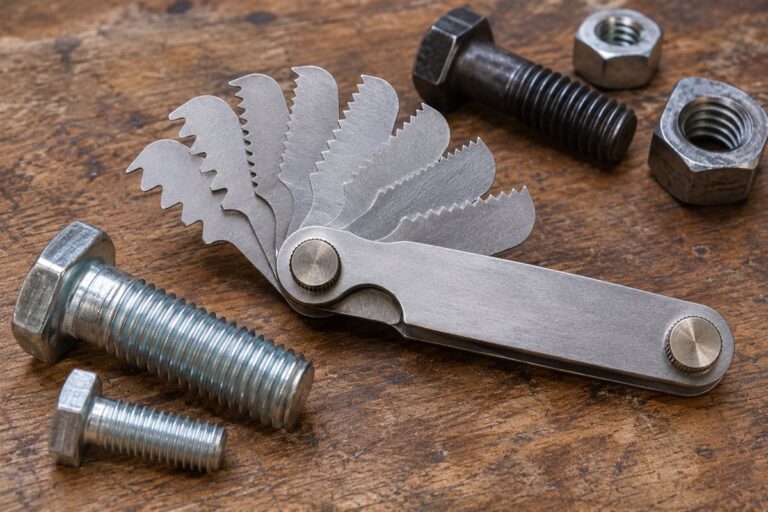
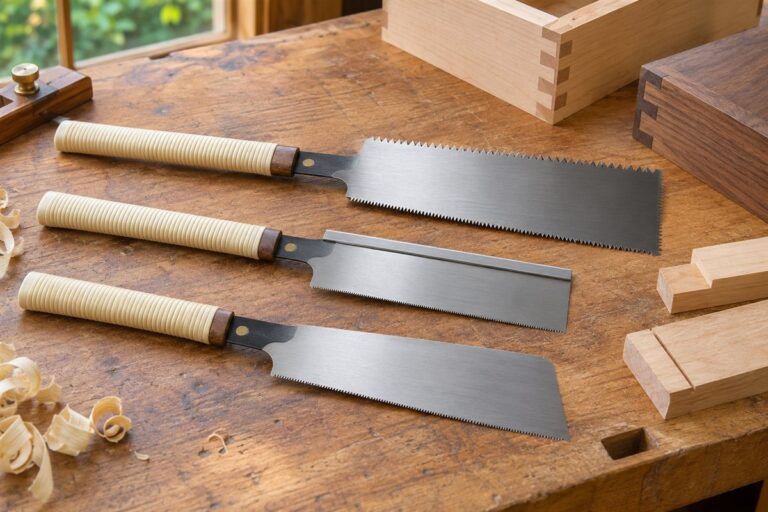
A block plane is a small hand plane used one-handed for trimming end grain, easing edges and fitting parts. Most have a low blade angle and an adjustable mouth. Some listings in this group are not block planes in the strict sense, so the shape and the pull or push stroke are worth reading.
The six planes below run from a 5 inch Japanese plane to a 9-1/2 inch cast iron block plane. Sizes, angles and materials come from each listing page, and several listings disagree with themselves, which we note. We have not used these planes ourselves.
As an Amazon Associate we earn from qualifying purchases. Links below are affiliate links, and they do not change the product information we give.
What to Look For
| Feature | Why it matters |
|---|---|
| Blade angle | Low angles suit end grain |
| Adjustable mouth | A narrow mouth gives finer shavings |
| Body material | Cast iron holds a flat sole; wood bodies need a different set-up |
| Blade steel and width | Wider blades take wider shavings |
In this guide
Specs at a Glance
| Plane | Size | Blade | Notes |
|---|---|---|---|
| Stanley No. 9 | 7.87 x 2.76 x 5.31 in | 21 degree cutter angle | Cast iron; manual adjustment |
| Big Horn 19317 | 6 in sole | 1-3/8 in A2 steel; 13.5 degree bed | Bevel-up; adjustable mouth; 0.81 kg |
| Rockler Bench Dog | 6.25 in | Hardened carbon steel | Adjustable mouth; parallel guide |
| Spear and Jackson CBP95 | 9-1/2 in style | 1-5/8 in low angle | Adjustable mouth; brass adjuster; spare blade sold |
| WORKPRO W052002 | Not listed | 1-5/8 in hardened steel | Front wooden knob; 0.7 kg |
| SUIZAN Kanna | 5.9 x 2.2 x 1.6 in | 1.7 in (42 mm) | Beech body; used with a pull stroke |
The 6 Best Block Planes

Top pickBest for light trimming
1. Stanley 1-12-020 Block Plane No. 9
A cast iron block plane about 7.87 inches long with manual blade adjustment. The listing says the cutter rests at 21 degrees, suited to cross-grain planing, and calls it a general-purpose tool for light duty jobs.
Suits: light trimming. Strengths: a known name and cast iron. Weaknesses: the model number shows as 12-920 and 1-12-020 on one page. Skip it if you need a low-angle plane.


Best for end grain and fitting
2. Big Horn 19317 No. 60-1/2 Style Block Plane
A 60-1/2 style low-angle plane with a 13.5 degree bed, a bevel-up setup, a 1-3/8 inch A2 steel blade and an adjustable mouth. The body is ductile cast iron with a 6 inch sole, and the effective cutting angle is stated as about 38.5 degrees.
Suits: end grain and fitting. Strengths: detailed blade and angle data. Weaknesses: no wooden knob. Skip it if you want a larger plane.


Best for edge and end grain trimming
3. Rockler Bench Dog No. 60-1/2 Block Plane
A low-angle block plane for end grain and edge grain with an adjustable mouth and a parallel guide. The listing gives cast iron, brass and hardened carbon steel, and 6.25 inches in length.
Suits: edge and end grain trimming. Strengths: mouth adjustment and a guide. Weaknesses: the weight shows as 0.27 g, which cannot be right. Skip it if you want a known weight.
Best for one-handed end grain work
4. Spear and Jackson CBP95 Block Plane
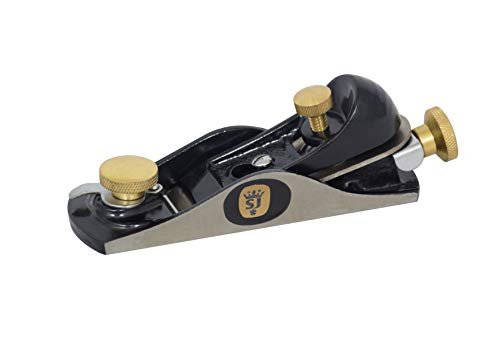
A 9-1/2 style block plane with a cast iron body, a precision-milled base, a brass adjusting screw, an adjustable mouth and a 1-5/8 inch (42 mm) low-angle cutter. A replacement blade, CBP95BLADE, is listed.
Suits: one-handed end grain work. Strengths: a spare blade is available. Weaknesses: the material field says Wood while the text says cast iron. Skip it if the contradicting field bothers you.


Best for cleaning up ends and edges
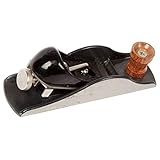
5. WORKPRO W052002 Block Plane
A block plane with a 1-5/8 inch blade, a cast iron body, adjustable cutting depth and a front wooden knob. The listing describes a single hardened and tempered steel blade set at a shallow angle, and the weight is 0.7 kg.
Suits: cleaning up ends and edges. Strengths: a front knob. Weaknesses: the material field says Wood, and no length is given. Skip it if you need exact dimensions.
Best for a pull-stroke plane
6. SUIZAN Kanna Japanese Hand Plane
A Japanese plane with a 1.7 inch (42 mm) blade in a beech body, used on the pull stroke. The listing gives 5.9 by 2.2 by 1.6 inches and a user manual in the box.
Suits: a pull-stroke plane. Strengths: a compact body. Weaknesses: the weight shows as 0.17 kg in one place and 0.40 lb in another. Skip it if you want a Western-style block plane.
View SUIZAN Kanna Japanese Hand Plane SK-001 on Amazon
Care and Setup
- Follow the maker’s manual for blade set-up.
- Check the blade projection before each pass.
- Wipe the sole and blade dry after use.
- Store the plane where the edge is protected.
Mistakes to Avoid
- Overlooking the blade width in the listing.
- Planing against the grain on edges.
- Ignoring contradicting listing fields.
- Expecting a Japanese plane to work like a push plane.
What a Block Plane Does Best
A block plane is a compact plane designed for one-handed use. Its blade sits at a lower angle than the blade of a bench plane and is usually bedded with the bevel facing up. That geometry suits the tough job of slicing across end grain, where the fibers stand up like a bundle of straws and resist a steeper cutter. You can hold the plane in the palm of your hand and push it along an edge with minimal setup.
Typical jobs include trimming the end of a board for a tight fit, easing sharp edges, chamfering corners, fitting a drawer or door, flush-trimming a small overhang and taking a thin shaving off a joint that is slightly proud. Because the body is small, you can use it where a larger plane would be awkward, such as inside a cabinet or on a narrow part.
It is not the right tool for flattening a wide board or jointing a long edge. Those jobs need the longer sole of a bench plane, which bridges high spots and gives a straighter surface. A block plane is a finishing and fitting tool, and it works best when used for small, precise cuts rather than heavy stock removal.
Think about what you will do with it before comparing listings. If most of your work is trimming end grain on small parts, a low-angle model with a fine mouth adjustment is a better match than a plane built for general light duty. If you rarely plane and simply want a tool for occasional edge easing around the house, a simpler plane may be enough.
Low-Angle Versus Standard Angle Planes
Block planes are commonly sold in two broad styles. A low-angle plane beds the blade at a shallow angle with the bevel up, which lowers the effective cutting angle and slices end grain with less effort. A standard-angle plane beds the blade more steeply, often with the bevel down, which tends to handle cross-grain and difficult grain with less tear-out in some woods.
The listings here show this difference in practice. One is described with a cutter resting at a moderate angle suited to cross-grain planing, while others are described as low-angle designs with bevel-up blades. The details in each listing may differ, so check the product page for the actual bed angle and how the blade is set up.
The effective cutting angle combines the bed angle and the blade’s sharpening bevel. A steeper sharpening angle raises the effective angle, which can help with figured or curly grain. Many woodworkers keep a spare blade honed at a different angle for tricky material. You can only do that if the blade is easy to remove, so read how the blade is secured and whether replacements are sold.
If you can only own one, a low-angle model is a versatile choice for end grain and general trimming. If you work with difficult, interlocked grain, consider whether the plane lets you adjust the cutting angle by regrinding or by swapping blades. In either case, the sharpness of the blade has a larger effect on the result than a small difference in the angle.
Body Material, Sole Flatness and the Adjustable Mouth
The body of a block plane supplies weight and a flat reference surface. Cast iron is the common material because it is rigid, adds heft that helps the cut and can be machined flat. Wooden bodies are lighter and traditional, and they are often used with a pull stroke in some designs, but they need different care and set up and may change shape with humidity.
Sole flatness matters more than most features. A sole that rocks or has a hollow near the mouth will leave a poor surface. You can check flatness by placing a straightedge across the sole, or by planing a test piece and watching the shavings. Many budget planes need a bit of tuning on a flat abrasive surface to reach a good result, so factor in that time if you buy a lower-priced tool.
The adjustable mouth is the opening in front of the blade. A narrow mouth supports the wood fibers right in front of the edge and helps prevent tear-out on fine work, while a wider mouth passes thicker shavings without clogging. Look for a clear, smooth mechanism that locks in place, and keep in mind that a mouth set too tight will clog, which is a frequent source of frustration.
Check the way the blade adjusts. A screw-type depth adjuster allows tiny changes with a fine feel, while a simple lever or manual adjustment is quicker but less precise. A lateral adjuster or a visible blade alignment helps you set the edge parallel to the sole. Listings often leave these details out, so look at the photos and the manual.
Tuning and Sharpening a New Plane
Almost any plane benefits from a little attention before its first real use. Begin by cleaning off any protective oil or coating from the sole and blade. Check that the sole is flat, and if it is not, flatten it on a flat abrasive surface with even strokes until the sole shows a uniform scratch pattern. Do this slowly, since it is easy to remove more metal than you need.
The blade is the next job. Many planes arrive with a blade that is reasonably flat but not truly sharp. Flatten the back for a short distance behind the edge, then hone the bevel on a stone or abrasive of your choice until you raise a small burr and then remove it. Keep the bevel angle consistent, since a rocking motion will round the edge and make the plane dull sooner.
Set the blade so that it protrudes by only a hair beyond the sole. The easiest way is to look down the sole toward a light and advance the blade until you see a thin line of edge. Take a test cut on scrap and adjust. A good shaving should be thin and curl cleanly. If the plane chatters, the blade may be loose, the mouth too wide or the cap iron not seated. If it digs in, retract the blade slightly.
Follow the maker’s manual for specifics, since the adjustment method differs between designs. For a Japanese-style plane used on the pull stroke, setting the blade in the body involves tapping it with a small hammer, and the technique is different from a metal-bodied plane. Take care and consult the instructions that come with it.
Budget Tiers and Pre-Purchase Checks
Block planes range from basic models to refined tools made to tight tolerances. Lower-priced planes often need tuning, and their blade steel may not hold an edge as long, but they can be a fine starting point if you are willing to flatten the sole and hone the blade. Mid-range planes usually have better machining, smoother adjusters and better blade steel. Premium planes offer fine fit, excellent finish and often a long service life.
As the listings in this guide show, product pages may contain contradictory information, such as conflicting weight or material fields. When that happens, trust the photos and the descriptive text over a single data field, and ask the seller for clarification if a detail matters to your decision. Be wary of any listing that gives very little information about the blade or the sole.
- Is the bed angle stated, and does it match the work you plan to do?
- Can you adjust the mouth, and is the mechanism smooth?
- Are replacement blades sold, and is the blade width given?
- Is the body material clear, and does the sole look flat?
- What is the return policy if the sole is not flat?
Signs it is time to replace a plane include a cracked body, a sole that cannot be flattened, a mouth that no longer locks and a blade that cannot be held square. Most other problems can be fixed with cleaning, sharpening or a new blade.
Low-Angle or Standard Angle: A Decision Guide by Task
A block plane is a compact hand tool that shaves end grain, trims edges and eases corners. The angle of the blade bed changes how it behaves, so the choice depends on what you plan to cut most.
| Task | Often suited to | Why |
|---|---|---|
| Trimming end grain | Low-angle planes | A shallow cutting angle slices fibers cleanly |
| Smoothing face grain | Standard angle planes | A steeper angle can reduce tear-out on figured wood |
| Chamfering edges | Either type | Depends on the species of wood |
| Fitting small parts | Either type | Choose the one with a precise adjuster |
| Working in a bag or apron | Compact bodies | Small, light tools are easy to carry |
Many woodworkers keep one low-angle plane as their everyday tool and add a second later. If you are just beginning, a low-angle model with an adjustable mouth tends to be the most flexible first pick.
Setup and Sharpening Notes
Even a well-made plane needs tuning. Lay the sole on a flat reference, check for rocking, and read the maker’s guidance on flattening. The blade must be sharp, and the cap iron or lever cap should be tightened evenly.
- Hone the blade on a sharpening stone or plate until it shaves a clean burr-free edge.
- Set the blade so only a thin sliver of the edge projects from the mouth.
- Adjust the lateral lever so the shaving comes out evenly across the width.
- Take a light pass on scrap to confirm the cut.
- Tighten the lever cap just enough to hold the blade steady.
Dull blades are the most common reason beginners struggle with hand planes, so invest time in learning sharpening basics from a trusted source.
Mistakes to Avoid and When to Seek Help
- Setting the blade too deep. A coarse cut tears wood and wears you out.
- Planing against the grain. Read the direction of the fibers and reverse the board if needed.
- Dropping the plane on a hard floor. Casting can crack, so set it on its side when resting.
- Leaving it unprotected. A light wipe of oil on the sole and a dry storage spot slow rust.
- Using it on materials the maker does not recommend. Nails and abrasive composites can damage the edge.
If a plane arrives with a badly out-of-flat sole or a cracked casting, contact the seller or maker rather than trying to repair it yourself. A local woodworking club or class is another good place to learn tuning in person.
Reading a Block Plane Listing
Look for the body length, the blade width, the blade material and the weight. Check whether the sole is machined flat, whether an adjustable mouth is included and whether the blade is supplied ready to use or needs honing first. Photos of the adjuster and lever cap help you judge build quality, and a clear return policy matters for hand tools, since flatness and fit are easiest to judge once you hold the plane.
How Each Plane Behaves at the Bench
A block plane is judged in the hand, not in the listing. Balance, how the blade adjusts, how the sole feels crossing end grain, and whether you reach for it without thinking are the real measures. This section walks the six picks above through the jobs block planes actually do: trimming end grain, easing edges, fitting small parts, and cleaning up where larger planes cannot go.
The Stanley 1-12-020 No. 9 for Buyers Who Want the Familiar Name
The Stanley entry suits the woodworker who values a long-established name and a conventional design that feels immediately understandable. A traditional block plane rewards a user willing to tune it: flatten what needs flattening, sharpen the blade properly, and learn its adjustment by feel. In return it becomes a predictable tool that behaves the same way every time you pick it up. Its honest limitation is that traditional designs ask more of the user than modern precision-machined planes; the quality of the result tracks the quality of your setup and sharpening. Choose it if you enjoy tuning tools and trust the classic pattern. Skip it if you want the best possible performance straight from the box with minimal fettling.
The Big Horn 19317 No. 60-1/2 Style for Low-Angle Work
The Big Horn follows the well-known low-angle pattern, and low angle is the point. A low-angle block plane excels at end grain, where a standard-angle plane tends to struggle and tear. It suits the woodworker whose projects involve lots of trimming: fitting tenons, cleaning mitres, and bringing end grain to a finished surface. Adjustable mouth designs in this pattern also let you close things down for difficult grain. The limitation is that low-angle planes ask you to understand blade angle choices, since the blade itself carries the bevel that sets the effective cutting angle; a user who never changes or maintains that bevel is not getting the design’s full benefit. Choose it for end-grain-heavy work. Skip it if your block plane mostly eases edges on long grain, where simpler planes do fine.
The Rockler Bench Dog No. 60-1/2 for the Tuned Workshop
The Rockler Bench Dog entry in the same low-angle pattern suits buyers who shop within a woodworking-focused retail world and value a plane aimed squarely at hobbyist and small-shop users. In practice it competes on the same ground as the Big Horn: end grain, trimming, and fine fitting, with the ownership experience shaped by how well you set it up and keep the blade sharp. Its limitation is the shared one for the pattern: it is a specialist that shines on end grain and small work, not a substitute for a bench plane on long boards. Choose it if you prefer its feel and sourcing. Skip it if you are really looking for a general smoothing tool, because that is a different plane’s job.
The Spear and Jackson CBP95 for Traditional Simplicity
The Spear and Jackson CBP95 represents the straightforward, traditional block plane approach: a simple tool for chamfers, edge work, and general trimming, from a maker with a long history in hand tools. It suits the user who wants a block plane for the hundred small jobs around a project rather than for showcase end-grain work: breaking edges, trimming a proud dowel, adjusting a fit. Its limitation is refinement; simple planes have simpler adjustment and finish, and they reward modest expectations matched with a sharp blade. Choose it for honest general duty. Skip it if fine end-grain surfaces are your main goal, where a low-angle design serves you better.
The WORKPRO W052002 for Budget Utility
The WORKPRO suits the buyer who needs a block plane occasionally and would rather spend on timber than tools: site work, rough fitting, trimming where the surface will be hidden or further finished. A budget plane used within its limits is a perfectly rational tool. The limitation is that budget planes vary in how much tuning they need, and their sweet spot is utility rather than finesse; expecting a flawless end-grain surface from one without setup work is setting it up to disappoint. Choose it for occasional, practical trimming. Skip it as your one fine woodworking plane if you can stretch to a better-tuned option.
The SUIZAN Kanna for a Different Tradition
The SUIZAN kanna is not simply another block plane; it is a Japanese pull plane, used with a pulling stroke and adjusted by tapping rather than by knobs and levers. It suits the woodworker curious about Japanese tools, or already converted, who enjoys the direct connection between hand, blade, and wood that the style gives. In skilled hands it produces beautiful surfaces on small work. Its honest limitation is the learning curve: setup is a skill of its own, the blade and body are adjusted by feel and by tap, and a user expecting Western-style adjustment will be frustrated for the first sessions. Choose it if the tradition appeals to you and you will invest the practice time. Skip it if you need a plane that a beginner can adjust confidently in the first five minutes.
Head-to-Head Comparisons
Low-Angle Versus Standard-Angle Block Planes
This is the central choice in this list. Low-angle planes, with the blade bevel facing up at a shallow bed angle, shear end grain cleanly and can be tuned for difficult woods by changing the blade’s bevel. Standard-angle planes are simpler, rugged, and perfectly capable on long grain and edge work. If your projects are furniture with lots of exposed end grain and fine fitting, low angle earns its complexity. If your block plane mainly chamfers, trims, and cleans up, standard angle is not a lesser choice, just a matched one.
Western Push Planes Versus the Japanese Pull Plane
The kanna comparison is about workflow, not quality. Western planes adjust mechanically and are easy to share, teach, and pick up after months away. The kanna adjusts by touch and rewards regular use, because the skill lives in your hands. Neither is objectively better; they suit different relationships with the work. A workshop that hosts beginners and occasional users will get more from the Western pattern. A solo woodworker who planes often may find the pull stroke becomes second nature and deeply satisfying.
Established Names Versus Budget Options
Between the Stanley and Spear and Jackson at one end and the WORKPRO at the other, the practical difference is consistency and how much tuning stands between you and a good shaving. Any of them can be made to work well by a user who sharpens properly. The budget plane simply asks for more of that work and offers less refinement in adjustment. If your time is worth more than the price difference, buy the better-finished tool. If your budget is firm, buy the budget plane and a good sharpening setup, in that order of importance.
Setup and Sharpening: Where Block Planes Are Really Decided
More block plane disappointment comes from setup than from the casting. Start with the blade: a genuinely sharp edge, honed evenly and free of nicks, transforms every plane on this list. Check that the blade sits flat and seats without rocking, that the mouth is set appropriately for the work, with a tighter mouth for difficult grain and a more open one for heavier trimming, and that depth adjustment moves the blade in small, predictable steps. Take test cuts on scrap of the same wood before touching the project. A plane that takes a thin, even shaving from end grain scrap is ready; one that chatters, tears, or cuts on one side only is telling you exactly what to adjust.
The First Hour With a New Plane
Spend the first hour learning, not building. Practise easing an edge, then trimming end grain, then fitting a small part, all on scrap. Learn how little blade projection you actually need; most beginners extend the blade far too far and then blame the plane for tear-out that a lighter cut would have avoided. By the end of the hour you will know your plane’s adjustment feel, which is worth more than any review.
Troubleshooting Block Plane Problems
The Plane Tears End Grain Instead of Slicing It
Tear-out on end grain usually means a blade that is not sharp enough, too heavy a cut, or the wrong plane geometry for the task. Sharpen first, lighten the cut second, and support the far edge of the cut so fibres are not pushed out at the exit. If tear-out persists on a standard-angle plane, that is the low-angle designs’ home ground, and the honest answer may be technique plus the right pattern rather than more force.
The Plane Chatters or Skips
Chatter points to a blade that is not seated firmly, too much blade extended, or a workpiece that is not held securely. Retract the blade, reseat everything, clamp the work properly, and advance the blade in tiny steps until it just cuts. A block plane used one-handed on an unsecured small part will always feel worse than the same plane on a properly held piece.
Shavings Are Uneven or the Plane Cuts to One Side
Uneven cutting usually means the blade is slightly skewed or its edge is uneven. Correct the lateral setting in small movements, test on scrap, and repeat. If the problem returns constantly, check the edge itself under good light; a blade honed with more pressure on one side will keep steering the cut until it is honed true.
Care, Storage, and Decision Scenarios
Store a block plane on its side or on wood, never resting on its sole with the blade down, and retract the blade for storage so the edge is protected. Keep the sole clean, give metal surfaces the light protection against rust that your workshop’s humidity demands, and keep the blade sharp rather than letting it dull into a state that needs rescue work. For decisions: choose a low-angle pattern, the Big Horn or the Rockler, if end grain and fine fitting dominate; choose the Stanley or Spear and Jackson for traditional general duty; choose the WORKPRO for utility trimming on a budget; and choose the SUIZAN if you want to learn the Japanese approach properly. Whichever you pick, the sharpening setup you pair with it will decide more of your results than the badge on the plane.
Buying Criteria, Expanded: Reading Past the Badge
Block planes are simple tools, which makes their differences easy to overlook and easy to feel. Start with the sole: it should be flat enough for the work you do, because the sole is the reference the cut is judged against. Check how the blade is held and adjusted. Depth adjustment that moves in small, predictable steps lets you creep up on a cut; coarse adjustment makes you overshoot and retreat. Lateral adjustment, or the lack of it, decides how easily you correct a cut that favours one side. Consider the mouth: an adjustable mouth is a genuine feature for difficult grain and fine work, and an unnecessary complication for rough trimming. Weight and shape are personal and important; a block plane is often used one-handed, sometimes for long stretches of edge work, and the plane that fits your hand gets used while the one that does not gets left in the drawer. Finally, consider the blade itself and how easily replacements or upgrades are found for that pattern, because the blade is a wear part and the heart of the tool.
Matching the Plane to Your Timber
The wood you work should vote in this decision. Soft, straight-grained timber forgives almost any setup and rewards a simple plane kept sharp. Hardwoods with reversing grain, figured panels, and end-grain-heavy joinery reward low-angle geometry, a tight mouth, and a blade honed for the task. If your projects are mostly construction lumber and utility work, the honest best plane is the one you will keep sharp without fuss. If your projects are fine furniture in difficult timber, the low-angle options here are not indulgences; they are the appropriate tools, and the standard-angle planes will feel like hard work by comparison.
A Worked Example: Fitting a Small Drawer Front
Consider the classic block plane job: a small drawer front that is a fraction too wide and needs its end grain trimmed to fit an opening precisely. You mark the target with a knife line rather than a pencil, because the knife gives the plane a definite place to stop and your eye a definite line to judge. The work is held securely, with the far edge supported so the last fibres do not break out as the plane exits. You set the plane for a light cut, far lighter than instinct suggests, and take a few strokes, checking the fit in the opening after each pair of passes rather than planing to the line blind. The shavings tell the story: thin and even means the setup is right; thick on one side means a lateral correction before continuing. As the fit approaches, the cuts get lighter still, and the final passes leave a surface that needs no sanding where it meets the opening. Every plane in this guide can do this job in the hands of a user who works this way. They differ in how naturally they support it: the low-angle planes on the end grain itself, the traditional planes in their simplicity, the kanna for the user whose hands have learned its language.
Edge Work: The Job Block Planes Do Most
For all the talk of end grain, most block plane minutes are spent easing edges: a few strokes to soften an arris, a chamfer where a design calls for one, a round-over softened by hand and eye. Consistency here is a matter of counting strokes and keeping the plane’s angle steady, checking with your fingertips, which detect unevenness your eyes miss. Practise on scrap until a four-stroke chamfer comes out even along a board’s length, and you have learned the core block plane skill that transfers to every other task in this guide.
Extra Questions Owners Ask After the First Projects
How fine should I hone a block plane blade?
Fine enough that the edge takes a clean shaving from end grain without tearing, which in practice means a properly prepared edge, polished at the bevel and flat on the back near the edge, rather than a blade merely sharpened until it feels keen on a thumb. The test is always the wood, not the sharpener’s opinion: set the plane light, try end grain scrap, and let the shaving judge. Most users discover that five extra minutes of honing saves twenty minutes of frustrated planing, and that discovery, once made, permanently changes how they maintain every plane they own.
Why does my plane work beautifully on one board and badly on the next?
Because boards differ more than planes do. Grain direction reverses, density changes, and a board with difficult figure asks for a lighter cut, a tighter mouth, and sometimes planing from the opposite direction or in smaller localised strokes. The skill is reading the surface as you work: tear-out beginning at one spot is information, and responding early, by lightening the cut or changing approach, keeps a small problem from becoming a surface that needs heavy sanding. This responsiveness, more than any particular model, is what experienced users mean by a plane feeling right.
Is a block plane enough for small projects on its own?
For genuinely small work, boxes, small frames, toys, and fitting tasks, a block plane plus good marking and measuring can carry a surprising amount of a project, which is why it is often the first quality plane a woodworker buys. Its limits appear with longer surfaces, where it cannot keep a board flat or true the way a longer plane’s sole does. Treat the block plane as the specialist it is, and let your project list tell you when a bench plane has earned its place beside it.
What should I check on a plane that has sat unused for months?
Check for rust on the sole and blade, confirm the blade still sits flat and the adjustments move freely, and re-hone the edge rather than assuming it survived storage. Wood dust and a humid workshop quietly dull and mark tools at rest. A few minutes of inspection and honing returns the plane to service; skipping them produces a frustrating first session that gets blamed on the tool. Store planes clean, dry, and with blades retracted, and the return-to-service check becomes a formality.
How do I stop the plane leaving tracks at the edge of a cut?
Edge tracks usually come from the corners of the blade, which dig when the plane tilts slightly or the cut is heavy. Lighten the cut, keep the plane level through the whole stroke, and consider easing the blade’s extreme corners very slightly during honing, a common workshop practice that reduces corner digging without affecting the cut’s centre. Practise on scrap with deliberate tilts so you can feel the moment a corner starts to bite; recognising that feeling is the long-term fix.
Final Advice: Your First Month With a New Block Plane
Give a new block plane a month of small, honest work before judging it. Use it daily if you can, on edges, ends, and fittings, and keep a piece of scrap from your usual timber beside the bench purely for test cuts, so every session can start with a thirty-second check of how the plane is set before it touches real work. Hone little and often rather than letting the blade dull into a state that needs a long rescue; a blade maintained in small moments stays in the narrow band where planing feels effortless, and you will learn more about your plane in that band than anywhere else.
Pay attention, during that month, to which jobs you instinctively hand it and which you avoid. That pattern is your plane’s real review, written by your hands. A plane you reach for constantly is the right plane for you even if another model wins comparisons, and a plane you avoid is telling you something specific: the adjustment fights you, the grip tires your hand, or the geometry does not suit your timber. Name the specific complaint before shopping again, because the next purchase should answer a named problem, not a vague dissatisfaction.
Finally, keep the plane visible and ready rather than boxed away. A block plane earns its keep in the dozens of two-minute jobs that never justify a trip to a storage cupboard: the edge that needs easing, the end that needs a whisper removed, the fit that needs one more pass. Ready at the bench, sharp, and familiar, it becomes the tool your projects quietly depend on. That, more than any pattern or badge discussed in this guide, is what owning a good block plane actually means.
One More Consideration: The Sharpening Setup Is Part of the Purchase
Every verdict in this guide quietly assumes a sharpening setup behind it, and a buyer choosing between these planes should budget for that setup with the same seriousness as the plane itself. A modest, reliable way to hone, used consistently, lifts the budget options into honest usefulness and lets the finer planes show what their machining is for. Conversely, the best plane in this list, honed badly or rarely, will be outperformed within a month by the humblest one kept sharp. If your sharpening arrangement is currently improvised, treat improving it as part of this purchase rather than a later project, because the plane and the stones arrive at the bench as a single system whether you planned them that way or not.
That system view also settles the common worry about choosing wrong. Within this list, there is no purchase that good sharpening and honest technique cannot make satisfying for its intended work, and no purchase that survives neglect of either. Choose by pattern and by hand feel, sharpen as if it matters, because it does, and your block plane will repay you in the currency woodworkers actually spend: clean cuts, calm fittings, and surfaces that come off the tool ready for finish.
Block Plane FAQ
Which of these are low-angle planes?
The Big Horn lists a 13.5 degree bed, and the Rockler and Spear and Jackson list low-angle designs.
Why are some listing fields marked as flagged?
Several pages list a material or weight that conflicts with their own text, so we state the conflict instead of picking one.
Can a block plane replace a bench plane?
No. A block plane is made for small trimming and end grain. Flattening wide boards and jointing long edges are better done with a longer bench plane.
What does bevel-up mean?
It means the sharpened bevel of the blade faces upward, with the flat back against the bed. This arrangement gives a low cutting angle that is well suited to end grain.
How do I stop tear-out on end grain?
Use a sharp blade, set the mouth fairly narrow, take thin shavings and plane from the edge inward, or support the far edge with a scrap block to prevent splintering.
Why does my plane keep clogging?
The mouth may be too tight or the blade set too deep for the wood. Open the mouth slightly, retract the blade and clear any shavings caught under the cap.
Do I need to flatten the sole of a new plane?
It depends on the plane. Check with a straightedge, and if it rocks or shows gaps, flatten it carefully on a flat abrasive surface.
How often should I sharpen the blade?
Whenever shavings get thicker, ragged or require more effort. Light, frequent honing keeps the edge sharp longer than waiting until it is very dull.
How should I store a block plane?
Keep it dry, with the blade retracted so the edge does not touch a hard surface, and rest it on its side. A light coat of oil on the sole helps against rust.
The Short Version
For a plain cast iron plane, the Stanley. For detailed angle data, the Big Horn. For a parallel guide, the Rockler. For a spare blade, the Spear and Jackson. For a front knob, the WORKPRO. For a pull-stroke plane, the SUIZAN Kanna.