A holdfast is an L shaped bar that drops into a round hole in a workbench. A tap with a mallet wedges the shank in the hole and the arm presses the work down. A tap on the back releases it. The main choices are the hole size, the reach, the working height and whether the shank is forged, cast or fitted with a plastic plate.
The six below come from Narex, Big Horn, POWERTEC, an unbranded ductile iron model and two Sjobergs designs. Sizes and materials come from each listing page and are the makers’ own words. We have not used these holdfasts ourselves. Where a page disagrees with itself, we say so.
As an Amazon Associate we earn from qualifying purchases. Links below are affiliate links, and they do not change the product information we give.
What to Look For
| Feature | Why it matters |
|---|---|
| Hole size | Most here fit 3/4 inch holes; check yours |
| Reach | Reach is how far the arm gets from the hole |
| Bench thickness | A thin top may not grip the shank |
| Pad | Leather, cork or plastic keeps the work from denting |
In this guide
Specs at a Glance
| Holdfast | Size and reach | Material | Notes |
|---|---|---|---|
| Narex | 3/4 in holes; benches 2 to 4 in thick | Hot forged | Grips boards to 6 in thick; use in pairs |
| Big Horn 19351 | 8 in; 11/16 in shank | Ductile iron | 14.56 oz; flat foot; one piece |
| POWERTEC 71528-P2 | 8 in; 3-1/2 in reach | Metal, powder coated | Title says 4 pack |
| WBHF cast iron | 8 in tall; 4.25 in reach; 11/16 in shank | Ductile cast iron | For benches at least 2 in thick |
| Sjoberg ST-03 | Up to 6 in high; 4-3/4 in throat | Steel and plastic | 2 pack; 2.4 lb |
| Sjobergs SJO-33636 | Up to 5 in clamping height | Steel with plastic plate | Rotates 360 degrees; bench insert included |
The 6 Best Holdfasts

Top pickBest for a traditional heavy bench
1. Narex Hot Forged Workbench Holdfast, 3/4 inch
A hot forged holdfast inspired by older hand forged designs but made with modern equipment. The shafts are sandblasted and left slightly rough for grip, and the maker says not to protect them against rust. It is made for benches 2 to 4 inches thick and can grip boards up to 6 inches thick. The maker suggests leather or cork on the pad and using two as a pair.
Suits: a traditional heavy bench. Strengths: a stated bench thickness range. Weaknesses: pads are something you add. Skip it if your bench top is under 2 inches.

View Narex Hot Forged Workbench Holdfast for 3/4″ Dog Holes on Amazon

Best for planing, carving and sanding
2. Big Horn 19351 8 inch Workbench Holdfast
A single ductile iron holdfast, 8 inches long, weighing 14.56 ounces, with an 11/16 inch round shank for 3/4 inch dog holes. The listing describes a tap to lock and tap to release action with no screws or knobs, and a flat foot for direct downward pressure.
Suits: planing, carving and sanding. Strengths: a simple one piece tool. Weaknesses: sold singly. Skip it if you want a pair in the box.

View Big Horn 19351 8″ Workbench Holdfast Woodworking Clamp on Amazon
Best for a shop with several holes
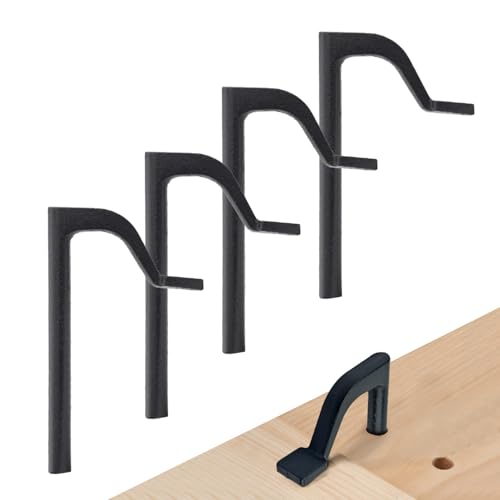
3. POWERTEC 71528-P2 8 inch Workbench Holdfast, 4 Pack
Holdfasts 8 inches long with a 3-1/2 inch reach for 3/4 inch bench dog holes, listed in black. The maker describes a powder coated grey finish with a rough as cast look. The listing title says 4 pack while the model code ends in P2, so confirm the count on the page. Tap to set and tap the back of the head to release.
Suits: a shop with several holes. Strengths: a multi piece pack. Weaknesses: the count and the color are described two ways. Skip it if you need more than 3-1/2 inches of reach.


Best for reaching in from the bench edge
4. Workbench Holdfast, Ductile Cast Iron, 8 inch, 4.25 inch Reach
A ductile cast iron holdfast 8 inches tall with a 4.25 inch reach and an 11/16 inch shaft. The listing says to use it in 3/4 inch holes in benches at least 2 inches thick, strike the middle of the head to set and tap the back to release. It has more reach than the other 8 inch models.
Suits: reaching in from the bench edge. Strengths: 4.25 inches of reach. Weaknesses: an unbranded listing. Skip it if your bench is thinner than 2 inches.


Best for a taller workpiece
5. Sjoberg ST-03 Holdfasts, 2-Pack
A pair of steel and plastic holdfasts made for the Sjobergs Nordic Plus and Duo benches that also fit standard 3/4 inch dog holes. The maker lists a maximum working height of 6 inches and a throat depth of 4-3/4 inches. The pair weighs 2.4 pounds. The bullet says Swedish steel while the table says steel and plastic.
Suits: a taller workpiece. Strengths: 6 inches of working height. Weaknesses: the materials line is vague. Skip it if you want a single forged tool.

View Sjoberg ST-03 Holdfasts for Nordic Plus/Duo Workbenches, 2-Pack on Amazon

Best for a bench with an insert fitted
6. Sjobergs SJO-33636 Steel Holdfast with Plastic Tension Plate
A steel holdfast with an adjustable plastic tension plate that the maker says protects the work. It rotates 360 degrees, fits 3/4 inch dog holes, the bench top or trestle holes, and clamps up to 5 inches high. A bench insert for the underside of the top comes with it. The page does not list a shank diameter.
Suits: a bench with an insert fitted. Strengths: a plate that cushions the work. Weaknesses: no shank size on the page. Skip it if you prefer the classic tap only design.

Care and Setup
- Drill dog holes at the diameter the maker lists.
- Set with a mallet and release by tapping the back of the head.
- Put a scrap of leather or cork under the foot on soft wood.
- Keep the shank clean and free of oil so it still grips.
Mistakes to Avoid
- Drilling holes in a top thinner than the maker advises.
- Ignoring the gap between a 3/4 inch hole and an 11/16 inch shank.
- Expecting a single holdfast to hold a long board alone.
- Hitting the arm instead of the head.
How the Wedge Grip Works and Why Hole Fit Matters
A holdfast is a bent iron bar with a curved head and a straight shank that drops into a hole in the bench top. When you strike the head with a mallet, the shank jams diagonally in the hole, and the curved head presses down on the workpiece. The holding force comes from friction between the shank and the sides of the hole, so the relationship between the shank and the hole is the most important factor in how well the tool works.
The hole must be the right diameter. If it is too large, the shank rattles and does not wedge, and the holdfast simply falls out or fails to hold. If it is too tight, the shank will not enter or becomes stuck. Most holdfasts in this category are sized for a particular hole diameter, which is stated in the listing and in the title of this guide as three-quarters of an inch. Drill the hole carefully and accurately, using a sharp bit, and check it with the shank before you commit to many holes. A hole that is slightly crooked or ragged can compromise the grip.
The thickness of the bench top also matters. The shank needs enough length below the surface to jam firmly, so a top that is too thin will not give enough bite. Check the maximum and minimum thickness recommended by the maker, and make sure the shank length suits your bench. Thick laminated tops generally work well. Beware of tops with a hollow core or thin veneers.
A small chamfer at the top of the hole helps the shank enter and prevents the edge from splintering. Avoid oversized chamfers, which reduce the area that grips.
Forged or Cast Construction and What It Means for Strength
Holdfasts are made either by forging, where heated iron or steel is shaped by hammering, or by casting, where molten metal is poured into a mold. Forged holdfasts have a grain structure that follows the shape of the bar, and they tend to resist bending and breaking under repeated blows. Cast iron holdfasts are made with less labor and can be lower in price, but cast iron is more brittle, and a bad strike or a drop on a hard floor could crack the head or shank.
That does not mean cast holdfasts are unusable. Many work well for light and medium work, but you should treat them with more care. Avoid hitting the shank sideways, do not over-tighten by hammering excessively, and inspect them for cracks. A forged holdfast is generally preferred for heavy chopping, planing hardwoods, or repeated use. The listing may or may not state the construction clearly, so look for information from the maker and be wary of vague descriptions.
Look at the surface finish. A rough forging scale or casting seam is normal, but sharp edges should be dressed so they do not cut your hand. The head should be shaped to press on the work, not just touch it at a point. A flat or slightly curved pad spreads the force and marks the work less.
The shape of the bend also matters. A deeper curve gives you more reach over the work but changes the leverage. A longer neck allows clamping thicker stock, while a short one is stiffer. Check that the reach of the holdfast matches the size of the pieces you plan to hold.
Reach, Throat Depth and Work Thickness
When you compare holdfasts, reach and throat depth should be on your list. Reach is how far the head extends from the center of the shank, which determines how far from the hole you can hold the work. Throat depth, or the gap between the head and the bench top, determines how thick a piece you can clamp. A holdfast with a tall throat can hold thick stock, while a low one can only hold thin boards. If you work mostly with thin panels, a lower head provides a better angle and less deflection.
The angle of the head to the work influences how well the holdfast works. The pad should meet the surface close to flat when the shank is jammed, because a head that touches only at the tip concentrates pressure and can dent the wood. If the head is at the wrong angle, add a thin pad of leather or scrap wood between the head and the work, which also protects the surface.
Consider where the holes are in the bench. A holdfast reaches only a limited distance from its hole, so a grid of holes lets you place the tool near the work. Many woodworkers drill holes along the front edge and on the top surface, and some add a few in the legs or on the end. Think about the tasks you do most often, such as planing, sawing, chiseling and carving, and place holes where you will use them. Avoid placing holes too close to the edge of the bench or to each other, which could weaken the top.
Setting, Releasing and Protecting the Bench and Work
Using a holdfast is quick once you know the feel. Place the work on the bench, drop the shank into the hole, and bring the head down onto the work. A firm tap with a mallet on the top of the head sets the grip. You do not need to hit hard; a few moderate strikes are usually enough. To release, tap the back of the neck, or strike the side of the head toward the rear, and the holdfast loosens. Always strike in the manner recommended by the maker, and keep your hands clear.
Use a wooden or rubber mallet if possible, because a steel hammer can mushroom the head over time. Wear eye protection, since metal chips can fly off a damaged head. Do not use a holdfast with a bent or cracked shank, as the tool can fail suddenly.
Protect your work and your bench. Wood fibers can be dented by the pad, so use scrap leather or wood as a buffer. Wipe off dirt and moisture from the shank, because surface rust can change the grip. A light film of oil or wax on the shank can reduce rust, but too much will make the tool slip, so wipe it dry before use.
Occasional cleaning of the hole helps too. Dust and wood shavings in the hole can reduce friction, so blow them out. If the hole wears and becomes loose, you can fill it and redrill, or use a slightly larger holdfast designed for it. Check the grip regularly while you work, since vibration can shift the tool.
When a Holdfast Is Not Enough and What to Add
A holdfast is great for broad, flat work, but it is not a universal clamp. Round or tapered stock may slip, and very thin pieces can bend under the pad. For planing thin boards, a planing stop or a bench hook gives a safer reference. For sawing and chiseling, a vise holds the work firmly and offers better access. For gluing or assembly, traditional clamps are more suitable, because a holdfast does not apply sustained pressure.
If you do not have a bench with holes, you cannot use a holdfast without drilling it, so consider whether you are willing to alter the top. Plan the holes carefully, and test the layout with chalk marks before drilling. Some people add a sacrificial board on top of the bench to preserve the main surface. Others choose a portable bench with pre-drilled holes.
Think about how many holdfasts you need. One is enough for light tasks, while two let you secure long boards and give better stability. Check whether the set you consider comes as a pair, and check that all pieces match in size and quality.
Signs that a holdfast needs replacing include a bent or cracked shank, a head that no longer sits flat, excess rust that has pitted the shank, and a grip that is inconsistent even in a good hole. For a safety-critical tool, do not keep using a damaged item. Follow the maker’s guidance and check the return terms when you buy.
What to check before you buy a holdfast, and who should skip it
Before you buy a holdfast, confirm that your bench holes, bench thickness and work height match the listing. Most holdfasts in this guide are made for 3/4 inch holes, but the shank sizes and reach differ, so a quick check can save a return.
- Hole diameter: measure an existing hole, then compare it with the shank size on the listing.
- Bench thickness: the Narex and the cast WBHF listings both state a minimum top thickness, so measure your top first.
- Reach and height: match the reach to how far your holes sit from the work, and the clamping height to your thickest stock.
- Pack count: the POWERTEC title and model code disagree, so read the count on the listing before you order.
- Returns: check the return window and what the seller says about damaged or missing parts.
Now the honest objections. A holdfast is not a screw clamp, so it is a poor fit for glue-ups that need steady pressure. It also needs a mallet, and it can mark soft wood unless you add a pad of leather or cork.
Who should skip it: anyone with a thin or hollow bench top, or anyone who does not want to drill accurate holes. A vise, bench hook or planing stop may serve you better. Is forged iron worth paying more for? It makes sense if you strike hard and often. For occasional light work, a simpler cast model can be enough if you handle it with care.
Which holdfast should you buy?
The best holdfast depends on your bench and the work you do, and the six in this guide suit different needs. Start with hole size and bench thickness, then match the rest to your tasks.
- If you want a traditional hot forged tool for a heavy bench, go for the Narex, and buy two to use as a pair.
- If you want one plain, one piece 8 inch holdfast, choose the Big Horn 19351.
- If you have many holes and want several holdfasts at once, look at the POWERTEC 71528-P2, after confirming the count on the listing.
- If you need to reach in from the bench edge in iron, the WBHF cast model lists the most reach among the 8 inch tools.
- If you clamp taller work, the Sjoberg ST-03 pair lists the greatest working height here.
- If you want a plate that cushions the work and a head that rotates, choose the Sjobergs SJO-33636, and confirm the fit first since the page gives no shank size.
If you plan to hold long boards, lean toward a pair rather than a single tool. If you mostly plane soft wood, favor a padded head or plan to add leather. New users often do well starting with two of the same model, because matching tools share the same hole fit and behave the same way.
Compare the picks above, check the current listing for hole size, reach and what is included, then choose the holdfast that fits your bench and how you will use it.
Reading the Six Holdfasts Side by Side
All six holdfasts here work on the same wedging principle, so the comparison hinges on construction, reach and how many you get. A holdfast is one of the fastest clamping actions in the workshop — set with a mallet tap, released with a tap on the back — and the differences below decide whether that speed comes with the grip strength and reach your work needs.
Narex forged versus the cast options
The Narex is the traditional forged pattern: forged steel flexes slightly under load, and that spring is part of how the wedging action bites and holds. The ductile cast iron option in the list trades some of that spring character for a lower cost per piece and a shape that suits general bench work well. In practice, forged holdfasts are the choice for heavy, daily use and thick benchtops; cast versions serve perfectly well for moderate clamping where the loads are ordinary and the bench is used a few times a week.
Big Horn and POWERTEC versus the field
The Big Horn single and the POWERTEC four-pack sit at two ends of the value question. A single well-made holdfast covers a surprising amount of work, because one point of pressure near the cut is often all a task needs. A four-pack changes how you work: you stop moving one holdfast around the bench and instead leave pairs positioned for carving, planing stops and assembly, which speeds up every session. If your bench has the holes to support them and your work varies, quantity is a genuine feature, not just a bulk discount.
Sjoberg ST-03 versus Sjobergs steel with tension plate
Both Sjoberg options are designed with that maker’s benches in mind. The ST-03 pair is the straightforward choice for owners of compatible benches who want a matched set. The steel holdfast with the plastic tension plate takes a slightly different approach to how pressure is applied and released, and suits users who find traditional all-steel holdfasts either too aggressive on the workpiece or awkward to release. If you own the matching bench system, staying within it removes all doubt about hole fit — the single most important variable in holdfast performance.
Your First Session: Setting Up in the Right Order
Begin with the hole, not the holdfast. Confirm your bench’s hole diameter matches the holdfast’s shaft, and check the top’s thickness: holdfasts need enough depth of hole for the shaft to cant and wedge, so very thin tops grip weakly no matter how hard you strike. Insert the holdfast, place a piece of scrap under the pad, and set it with one firm mallet tap on the top of the shaft. Test the grip by pushing the scrap hard in every direction. Then practise the release — a tap on the back of the shaft — until it is automatic, because a holdfast you cannot release quickly is one you will stop using.
Work through a few thicknesses of scrap, from thin board to a thick offcut, and note how pad position and strike force change. That ten minutes of calibration teaches you more about your bench-and-holdfast combination than any specification can.
Technique: Placement, Pressure and Protection
Position the pad close to where the work happens: pressure applied far from the cut lets the workpiece pivot around the pad. For planing and chopping, one holdfast near the working area plus a bench stop to resist lateral force is a classic, fast setup. Always slip a pad of scrap or leather under the foot on finished surfaces — the holdfast’s job is force, and it will happily emboss its opinion into soft wood. Strike squarely and moderately; the wedging action multiplies a sensible tap, and repeated heavy blows mostly succeed in damaging the bench hole over time. When clamping irregular shapes, angle the shaft so the pad lands flat on the work rather than balancing on an edge.
Troubleshooting in Diagnostic Order
A slipping holdfast is the most common complaint, and it has an order of causes. First, hole fit: a shaft in an oversize hole cannot cant enough to wedge, and no striking technique fixes geometry — test the holdfast in a different hole to confirm. Second, hole condition: polished, glue-smeared or dust-packed holes grip poorly, so clean the hole walls. Third, top thickness: a thin top gives the shaft too little engagement, which shows up as slipping under loads that a thicker bench would hold easily. Fourth, technique: a glancing or timid set leaves the wedge half-engaged. Only after these checks should you blame the tool — a shaft that has become polished mirror-smooth from years of use can be lightly roughened to restore bite, following the maker’s guidance.
Care, Storage and Bench Manners
Holdfasts need almost no maintenance, which is part of their charm. Keep the shaft clean and dry, wipe off glue the day it lands, and resist the urge to oil the shaft — oil reduces exactly the friction the wedging action depends on. Store them in spare bench holes or in a rack rather than loose in a drawer where the pads get knocked. Check pads occasionally for embedded grit before clamping finished work, and glance at your most-used holes every few months: a hole that is slowly going oversize announces itself through gradually weaker grip, long before it fails outright.
Choosing by the Work You Actually Do
Carvers and hand-tool woodworkers who reposition work constantly benefit most from a pair of quality forged holdfasts. Furniture makers doing assembly and planing on a thick traditional bench can start with one and add a second once the workflow proves itself. Owners of system benches should match the maker’s own holdfasts for guaranteed fit. And if your bench top is thin, solve that first — a holdfast is only ever as good as the hole it wedges in.
Why does my holdfast hold at first, then let go under vibration?
That pattern usually means the wedge is only lightly engaged: planing and chopping vibration walks a marginal set loose. Give the set one firmer, square strike, confirm the pad sits flat, and check the hole for dust or polish. If it still creeps, test in another hole — creep that follows the hole is a fit problem, while creep that follows the holdfast points to a shaft that needs cleaning or light roughening.
Can I use two holdfasts on one workpiece?
Yes, and for long or flexible work you should. Two holdfasts stop the pivot that a single pad allows, and they share the load so each needs a lighter set. Place them so the line between them crosses the area you will work on, and set the farther one first, then the nearer, checking that the first did not lift as you set the second.
Workholding Scenarios, Walked Through
Carving is the holdfast’s showcase. A workpiece that must be rotated, attacked from several angles and repositioned every few minutes would exhaust any clamp-based workflow; with a holdfast, each repositioning is one tap to release, a shift of the work, and one tap to set. Carvers keep the pad close to the active area and move the work rather than themselves, and a pair of holdfasts lets long work be held at both ends while the middle is worked freely.
Planing and thicknessing by hand is the second classic scenario. A holdfast near the far end of a board, working with a bench stop, resists both lift and thrust while leaving the entire top surface open to the plane — no clamp jaws intrude, nothing needs dodging at the end of each stroke. For wide panels, two holdfasts share the duty and stop the board slewing as the plane’s direction changes across the grain.
Assembly and repair work is the third. Holding a chair leg for re-gluing, pinning a frame member while a joint is adjusted, or securing an awkward shape that no clamp jaw fits — the holdfast’s pad lands wherever the shaft’s reach allows, at whatever angle the work demands. That indifference to shape is why holdfasts survive in shops full of modern clamps: they solve the irregular jobs the tidy tools cannot.
Holdfasts Among Their Neighbours
Understanding what a holdfast is not prevents both overbuying and misuse. It is not a substitute for a vise when work needs to be gripped on edge or held for heavy sawing — the vise’s jaws and screw give a different kind of security. It is not a glue clamp: its pressure is local and downward, excellent for holding, wrong for closing joints evenly. It complements bench dogs, which resist horizontal thrust while the holdfast resists lift, and the pair together secure most hand-tool operations. And it outperforms toggle-style bench clamps on speed of repositioning while conceding to them on thin benchtops, where its wedging action has too little material to bite into. Map each tool to the direction of force it controls, and the bench’s whole workholding system becomes a set of deliberate choices rather than a pile of near-duplicates.
A Pre-Purchase Fit Checklist
Holdfast success is decided before purchase, by your bench. Check one: hole diameter — measure several holes, because wear makes them inconsistent, and compare against the shaft specification. Check two: top thickness — holdfasts need a substantial top to wedge in; if yours is thin, plan a reinforcement block under the main working holes or choose a different clamping system. Check three: reach — measure from your most-used holes to where pads must land on your typical work, and compare with each pick’s reach, because a holdfast that cannot reach the work is furniture. Check four: quantity — one holdfast teaches you the system, two transform it, and four only make sense if your bench has the holes and your work the variety. Run those checks and the forged-versus-cast and single-versus-pack questions answer themselves in the right order: fit first, then construction, then count.
Building Holdfasts Into Your Everyday Workflow
Holdfasts change a bench’s tempo. Operations that used to begin with a clamp hunt and a winding screw begin with a tap, and that difference compounds across a day of carving, fitting and assembly into a workshop that simply moves faster. To capture the benefit, keep at least one holdfast parked in a bench hole permanently, ready before the need arises; a holdfast stored across the room will lose to a nearer, worse solution half the time, and the habit will never form.
The second habit is positional honesty: after each job, notice where the pad actually landed and whether the hole you used was the right one. Benches accumulate a personal map of favourite holes, and holdfast work improves as that map sharpens. Add the second holdfast when you catch yourself wishing for it mid-job for the third time — that wish, repeated, is the most reliable purchasing signal in the workshop.
Can a holdfast damage my bench over time?
The wedging action does stress the hole it sits in, and holes in constant use slowly wear — that is the honest cost of the system, and it is measured in years, not sessions. You minimise it by striking squarely and moderately rather than with maximum force, by spreading work across several holes instead of living in one, and by keeping grit out of the holes, since grit turns every set into a small abrasion event. A bench that works for a living accepts this wear as service, exactly as it accepts saw marks on a bench hook.
What should I do if a holdfast will not release?
Strike the back of the shaft squarely — the release tap works on the same wedging geometry as the set, in reverse. If a holdfast is genuinely stuck, resist levering it with tools, which bends shafts and scars holes; instead, work a series of firm taps around the back of the shaft while supporting the bench, and the wedge will walk free. Afterwards, clean both shaft and hole before the next use, because stuck holdfasts are usually dirty or polished ones.
How do I hold round or irregular stock with a holdfast?
Give the pad something honest to land on: a small V-block, a shaped caul, or a scrap pad that bridges the curve and presents a flat to the holdfast’s foot. The holdfast supplies force; the caul translates that force into the shape’s language. For turned or carved pieces, a leather-faced caul protects the surface while spreading the load. Never balance a pad directly on a narrow ridge of the work — it will slip under load, mark the piece, or both, and the failure will arrive mid-cut when it is least welcome.
Should I dedicate specific holes to holdfasts?
Many woodworkers do, and the reasoning is wear management: holdfast holes take more stress than dog holes, so concentrating that wear in a few reinforced, well-chosen positions keeps the rest of the bench’s grid in good condition for dogs and stops. Choose positions that serve your common work — near the vise, at the bench’s working centre — and if a dedicated hole eventually wears oversize, it can be plugged and re-drilled or bushed while the rest of the bench carries on unaffected.
Can holdfasts be used for metalworking tasks on a wood bench?
Light holding for filing, sawing small metal parts or assembly work is fine and common, with a protective pad under the work to keep metal filings and edges off the bench surface. Keep grinding and heavy hammering off the wood bench entirely — not for the holdfast’s sake but for the bench’s, since embedded metal grit in a benchtop later scratches every wooden surface that slides across it.
How do I protect a finished surface from the holdfast pad?
Interpose something sacrificial and slightly forgiving: a leather pad, a cork-faced block or a clean scrap of the same species all spread the pressure and take the mark themselves. Check the protector’s underside for grit before every use on finished work, because a pad that protects beautifully while clean becomes a stamp of embedded grit once dirty. On the most delicate surfaces, position the holdfast on an unfinished area — an underside, an inside face, a glue surface — whenever the geometry allows, and let joinery order work in your favour: hold first, finish last, whenever the project sequence permits it.
Why does one of my bench holes grip noticeably better than the others?
Because holes are individuals: slight differences in diameter, wall texture and depth from drilling and years of varied use make some holes natural wedging partners for a given shaft. This is normal and even useful — learn which holes are your strong ones and reserve them for the heaviest holding, using the weaker holes for dogs, stops and light duty. A bench is a population of holes, not a uniform grid, and working with its personalities is faster than fighting for a uniformity it never had.
A last word on your first holdfast
Buy the first holdfast for your bench’s holes, not for the tool’s reputation: a perfectly forged holdfast in the wrong hole is a paperweight, and a modest cast one in a perfect hole is a revelation. Test the fit the day it arrives, learn the set and the release on scrap until both are reflexes, and then simply use it on everything the bench offers for a month. By the end of that month you will know whether your work wants a second, a pair, or a different pattern — and you will know it from evidence rather than from anyone’s list, including this one. That is the right order for every workholding purchase: fit, fluency, then expansion.
Holdfast FAQ
How does a holdfast hold the work?
The shank wedges in the hole when you tap the head with a mallet. The arm then presses down on the work.
Which holdfast here has the longest reach?
The Sjoberg ST-03 lists a 4-3/4 inch throat. The cast iron WBHF lists 4.25 inches and the POWERTEC lists 3-1/2 inches.
What size hole does a holdfast need?
Use the hole diameter stated in the listing for that model, such as the three-quarter inch size in this guide. Drill it accurately, since a hole that is too large will not grip and one that is too small will jam.
How thick should my bench top be?
It must be thick enough for the shank to wedge firmly. Check the maker's recommended range, and avoid thin or hollow tops. Thick laminated tops generally work well.
Is a forged holdfast better than a cast one?
Forged ones are usually considered tougher and less likely to crack. Cast ones can be fine for lighter work if handled with care. Check the listing for the construction.
How do I release a holdfast?
Tap the back of the neck or strike the side of the head as the maker advises, and the grip loosens. Keep your hands clear and use a mallet that will not damage the head.
Will a holdfast mark my workpiece?
It can dent soft woods. Place a scrap of leather or wood under the head to spread the pressure and protect the surface.
Can I use a holdfast on any bench?
Only on a bench with holes drilled for it, and with a top thick and solid enough to hold the shank. You must drill accurate holes, so plan them before you start.
Why does my holdfast slip?
Common causes are a hole that is too large, a worn hole, oil or dust on the shank, a thin bench top, or a head that does not sit flat on the work. Clean the shank and hole, and check the fit.
How many holdfasts do I need for a workbench?
Two is a good starting point, because a pair holds a long board steadily. One is enough for small pieces and light tasks. Add more once you know where your work tends to need support.
Should I put oil on a holdfast shank?
No, keep the shank clean and dry so it grips. A very light film can slow rust, but wipe it off before use because oil makes the shank slip. Follow the maker's care advice, since the Narex maker says not to protect its shafts against rust.
What mallet is best for setting a holdfast?
A wooden or rubber mallet is usually the safer choice, since a steel hammer can mushroom the head over time. A few moderate taps are normally enough. Strike the head, not the arm.
Can I use a holdfast in a hole that is slightly too big?
It will probably not grip well, because the shank needs to jam against the sides of the hole. Some listings pair an 11/16 inch shank with a 3/4 inch hole, which is intended. A hole that is worn or oversized beyond that gap may need to be filled and redrilled.
Do holdfasts work on a thin workbench top?
Usually not well, because the shank needs enough length in the wood to wedge. Check the minimum top thickness on the listing, such as the 2 inch figure stated for some models here. If your top is thinner, consider a different workholding method.
Is a holdfast better than a bench dog?
They do different jobs. A holdfast presses the work down onto the bench, while a bench dog acts as a stop or clamping point against a vise. Many benches use both in the same set of holes.
The Short Version
For a hot forged classic, the Narex. For a plain 8 inch single, the Big Horn. For several at once, the POWERTEC. For long reach in iron, the WBHF. For a pair with tall working height, the Sjoberg ST-03. For a rotating head with a plate, the SJO-33636.