A hand drill turns the bit with a crank, so it needs no cord or battery and the speed is set by how fast you turn. It suits small pilot holes, thin stock and quiet work where a power drill would be too much. The main choices are the chuck size, single or double pinion gearing, and whether you want a geared crank drill or a bit brace.
The six drills below include four geared crank drills, a classic single pinion Stanley and a 12 inch wooden brace. Sizes, materials and accessories come from each listing page and are the makers’ own claims. We have not used these drills ourselves. Several listings carry power figures that make no sense for a manual tool, and we point those out.
As an Amazon Associate we earn from qualifying purchases. Links below are affiliate links, and they do not change the product information we give.
What to Look For
| Feature | Why it matters |
|---|---|
| Chuck size | 1/4 inch chucks take small bits; 3/8 inch chucks take larger shanks |
| Gearing | Double pinion designs spread the load across two gears |
| Handle | A hollow handle can store bits; a wooden knob suits long sessions |
| Style | A geared drill is quick; a brace gives leverage for larger holes |
In this guide
Specs at a Glance
| Drill | Chuck | Gearing | Notes |
|---|---|---|---|
| Swpeet 1/4 in | 6.35 mm, keyed | Double pinion | 13 bits and key; power figures conflict |
| Wencheng 3/8 in | 1.5 to 10 mm | Double pinion | Hollow handle; 8 bits in the title, bare tool in the table |
| CheeMuii 3/8 in | 1.5 to 10 mm, keyed | Double pinion | 9 bits and key; 2 A figure is not meaningful |
| Stanley 03-105 | 1/4 in, three jaws | Single pinion | Steel frame; chuck key and case |
| WEICHUAN 3/8 in | 9.53 mm, three jaws | Double pinion | ABS and cast steel; 16 oz |
| Truper BC-12M | Brace chuck | Reversible ratchet | 12 in length; wood barrel and crank |
The 6 Best Hand Drills

Top pickBest for small holes in wood and plastic
1. Swpeet Hand Drill, 1/4 in with 13 Pcs Bit Set
A small cast steel hand drill with double pinion gears, a keyed chuck and an ABS handle, sold with a chuck key and 13 titanium coated high speed steel bits. The text says it takes bits from 0.6 to 6 mm. The details table also lists 600 watts, variable speed and a torque figure, which cannot apply to a hand cranked tool, and the bit size list reads like lengths in millimeters.
Suits: small holes in wood and plastic. Strengths: a keyed chuck and a full bit set. Weaknesses: confusing electrical figures on the page. Skip it if you need a 3/8 inch chuck.


Best for general small drilling at home
2. Wencheng 3/8 in Hand Crank Drill with 8 Pcs Bits
A steel cast hand drill with a double pinion drive and a hollow ABS handle that stores bits. The chuck is listed from 1.5 to 10 mm, and the maker names wood, bamboo, brass, aluminum, plastic and circuit board as suitable. The title and package text mention eight bits from 3 to 10 mm, but the details table says bare tool, so check what arrives.
Suits: general small drilling at home. Strengths: a 3/8 inch chuck and bit storage in the handle. Weaknesses: unclear on whether bits are included. Skip it if you want a brace.


Best for wood, plastic and thin soft metal
3. CheeMuii Hand Drill, 3/8 in with 9 Pcs Bit Set
A cast steel hand drill with a double pinion design, a keyed chuck and a hollow plastic handle for bit storage. The listing includes nine bits from 1.5 to 10 mm and a chuck key. Wood capacity is listed at 0.39 inch and metal at 0.25 inch, and the maker says it is not meant for hard metal, tile or masonry. The 2 A amperage on the table is not a meaningful figure for a manual tool.
Suits: wood, plastic and thin soft metal. Strengths: nine bits and a key. Weaknesses: odd electrical data on the page. Skip it if you plan to drill hard metal.

View CheeMuii Powerful Speedy Hand Drill 3/8″ Manual Drill and 9 Pcs Drill Bit Set on Amazon

Best for light pilot holes and a classic feel
4. Stanley 03-105 Hand Drill
A traditional all steel frame hand drill with a nickel plated finish, a single pinion, and a three jaw sintered iron steel chuck with 1/4 inch capacity. It comes with a chuck key and a storage case and weighs 15.1 ounces. The maker describes smooth running gears.
Suits: light pilot holes and a classic feel. Strengths: a metal frame and a case. Weaknesses: single pinion and a 1/4 inch limit. Skip it if you want a larger chuck.


Best for a spare drill for the toolbox
5. WEICHUAN Manual Hand Crank Drill, 3/8 in
A hand push style drill with a three jaw chuck that the maker lists for bits from 1.5 to 10 mm, a double pinion drive and a handle of ABS plastic over a cast steel body. It weighs 16 ounces and is listed with a single speed. The maker lists soft wood, bamboo, tin, copper, aluminum, PVC and fiberglass as suitable materials. No bits are listed in the box.
Suits: a spare drill for the toolbox. Strengths: a 3/8 inch chuck and cast steel build. Weaknesses: no bits listed. Skip it if you want a ready bit set.

View WEICHUAN Manual Hand Crank Drill Mini Hand Drill Tool for Wood on Amazon

Best for larger holes and leverage
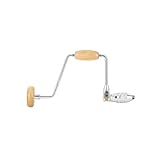
6. Truper Professional Brace Drill, 12 in (BC-12M)
A traditional bit brace with a wood barrel and crank, a wood knob and a reversible ratchet for drilling and driving screws in wood. It is 12 inches long, weighs 2.09 pounds and carries a two year manufacturer warranty. The listing adds that it can be used with a manual drain snake. Bits are sold separately.
Suits: larger holes and leverage. Strengths: a ratchet and a wooden grip. Weaknesses: heavier and bulkier than the geared drills. Skip it if you only need tiny holes.
Care and Setup
- Clamp the work so both hands are free to turn the crank.
- Tighten the chuck with the key and check the bit runs true.
- Punch a small dimple to keep the bit from wandering.
- Wipe the gears and add a drop of light oil now and then.
Mistakes to Avoid
- Trusting the wattage or amperage printed on a manual drill listing.
- Pushing hard on a small bit instead of letting it cut.
- Using a 1/4 inch drill for bits with a larger shank.
- Assuming bits are included without reading the box contents.
Chuck Capacity and Bit Shank Compatibility
The chuck is the part that grips the bit, and its capacity limits what you can drill. Hand drills in this group list 1/4 inch or 3/8 inch chucks, which correspond to roughly 6.35 mm and 9.5 to 10 mm. A 1/4 inch chuck accepts bits with shanks up to that size, which suits small pilot holes and thin stock. A 3/8 inch chuck accepts larger shanks and so a wider range of bit sizes.
Capacity ratings relate to the shank, not necessarily the diameter of hole you can cut. Many larger drill bits have a reduced shank so they fit smaller chucks. Check the bit packaging rather than assuming. Also confirm the shank shape. Round shanks suit the keyed chucks on geared hand drills, while hex shanks and square tangs are made for other holders. A bit brace uses jaws designed for square-tapered or similar tangs, so check which bit styles the brace on the listing accepts.
Keyed chucks use a key to tighten the jaws, and the post notes that some drills come with one. Keep the key where you can find it, since losing it renders the drill useless. Three-jaw chucks centre the bit more reliably than two-jaw ones. After tightening, spin the chuck by hand and watch the bit tip; a visible wobble means it is not seated, and you should loosen and re-tighten. Do not use bent bits, because they can break and cause the drill to wander. If your usual work involves bits larger than the chuck, a brace is the better tool.
Gearing, Speed and Effort
A geared hand drill turns the chuck faster than you turn the crank, which is why a hand crank can drive small bits at useful speeds. A single pinion drill uses one small gear driven by the main wheel. A double pinion design uses two pinion gears, which spreads the load and may help keep the chuck steadier, as makers claim. The difference in actual feel depends on the build quality, so check the description and look for details about gears being cast, machined or plastic.
Because a hand drill has no motor, ignore any wattage, amperage or torque figures in the listing. They do not apply to a manual tool, and the post points out where they appear. What counts is the crank handle size, how smoothly the wheel turns and how stable the body feels.
Effort depends on the material and bit size. Small bits in softwood spin easily, while larger holes or dense hardwood take steady pressure and more turns. A brace turns at crank speed rather than geared up, so it needs fewer, stronger turns and works with larger bits. Choose a handle shape that suits your hand: a side handle for steadying the tool and a rear knob or palm rest for pressing. Consider the weight, since a heavy drill may tire your arm during long jobs, while a light one may feel less stable under pressure.
Drilling Technique by Material
Wood is the most common use. Mark the spot with a pencil or small dimple so the bit does not wander, and start with a light touch. Keep the drill square to the surface and turn the crank at a steady pace. Pull the bit out periodically to clear shavings, particularly in deep holes. Place a scrap board behind the workpiece to prevent tear-out as the bit exits.
Plastic needs care. Use light pressure and a sharp bit, since heat and force can crack or melt it. Thin soft metals such as aluminum or copper, which some listings mention, can be drilled slowly with a suitable bit, a punch mark to guide it and a little cutting oil if the maker allows. The post notes that one maker says its drill is not meant for hard metal, tile or masonry, so heed such limits.
- Clamp the work so it cannot spin or slide.
- Start with a pilot hole for larger bits.
- Use eye protection, because chips can fly.
- Let the bit cut instead of leaning hard on the drill.
- Back the bit out if it binds, rather than forcing it.
For straight holes, check alignment from two directions as you start, or use a square placed beside the bit. A hand drill gives good control for delicate holes, and the slower pace lets you correct course.
Using a Brace and Larger Bits
A bit brace is built for leverage. The sweep, which is the diameter of the circle the crank handle makes, determines the torque you can apply. A longer sweep gives more leverage, but needs more room to turn. The Truper listing notes a ratchet, which lets you work in confined spaces by moving the handle back and forth over a partial arc, and reversing for driving screws.
Braces are traditionally used with auger bits and similar styles designed for hand use, which pull themselves into the wood and clear shavings upward. Use bits that fit the brace chuck, as the listing describes, and do not force a bit into jaws that do not match its tang. Check bits for sharpness, and keep their edges clean.
Technique is a matter of pressure and rhythm. Press on the head of the brace with one hand and turn the crank with the other, keeping the brace aligned with the intended hole. Watch for the feed screw on an auger bit to bite, after which it draws itself in. Stop before the bit breaks through, then flip the work to finish from the other side, or use a backing board to avoid splintering. Keep your body balanced and avoid leaning heavily on the head. Because braces are heavier than geared drills, take breaks, and store them where their sharp bits will not hurt anyone. For tiny holes, a brace is more than you need, and a geared drill is easier to handle.
Maintenance, Limits and When to Replace
Hand drills need little maintenance, but a few steps keep them running. Wipe dust from the gears and chuck after use, and add a drop of light machine oil to the gear teeth and bearings occasionally, following the maker’s instructions. Avoid over-oiling, which attracts sawdust. Store the drill dry, because rust on the gears and chuck is the main enemy. A case or a dry shelf is better than a damp garage floor.
Check the chuck for wear. If the jaws no longer centre the bit, or if the bit slips under load, the chuck may be worn or dirty. Cleaning the jaws may help, but a worn chuck usually cannot be repaired. A loose crank handle or a wheel that wobbles suggests the screws need tightening or the parts are worn. Gears with chipped or missing teeth will skip and should be replaced.
Know the limits. A hand drill is for light and moderate work, not for repeated large holes or hard material. Pushing it beyond its design can strip gears or bend the shaft. If you need to drill many holes, a corded or cordless drill saves time and effort, and a hand drill remains valuable for quiet jobs, small repairs and places without power. Replace a drill when it can no longer hold a bit centered, the gears slip, or the frame is cracked. Read the warranty terms on the listing and confirm which bits and accessories are included before you buy.
Which hand drill should you buy?
The best hand drill is the one whose chuck size, bit supply and style match the holes you plan to make. Here is how the six picks map to common needs.
- Small pilot holes with a bit set included: the Swpeet Hand Drill with its 13 piece bit set has a 1/4 inch chuck and a key, though you should ignore the electrical figures on its page.
- A 3/8 inch chuck with bits stored in the handle: the Wencheng 3/8 in Hand Crank Drill has a hollow handle. Check whether bits are included, because the listing is unclear.
- The most bits for a general starter kit: the CheeMuii Hand Drill comes with nine bits and a key, and suits wood, plastic and thin soft metal.
- A traditional metal frame and a case: the Stanley 03-105 Hand Drill is a single pinion tool with a 1/4 inch chuck, suited to light pilot holes.
- A plain 3/8 inch spare for the toolbox: the WEICHUAN Manual Hand Crank Drill lists no bits, so plan to use your own.
- Larger holes by leverage: the Truper Professional Brace Drill, 12 in (BC-12M) has a ratchet for tight spots, but bits are sold separately.
If you only drill small holes in wood now and then, any of the geared drills will do. If you work with larger bits, the brace is the better fit.
What to check before you buy, and who should skip it
Before buying a hand drill, check the chuck size, whether bits and a key are included, and what material the maker says it can drill. These points cause most disappointment.
- Chuck capacity, compared with the shank size of the bits you already own.
- Whether the chuck key is in the box, and a place to keep it.
- Whether bits are included, since some listings contradict themselves.
- Materials the maker lists, and any stated limits for hard metal, tile or masonry.
- Handle shape and weight, which matter during longer jobs.
- Warranty and return wording on the listing.
Be realistic about the trade-offs. A hand drill is quiet and needs no power, but it is slower than a power drill and takes effort in dense material. Geared drills limit you to small bits, while a brace is bulkier and not suited to tiny holes. Several listings in this guide show electrical figures that do not apply to a manual tool, so rely on the described features instead.
You should skip a hand drill if you need to drill many holes, work mostly in hard metal or masonry, or need precise speed control. A corded or cordless drill suits those jobs better. If a hand drill fits your work, compare the picks above, check the current listing for size and what is included, then choose the one that fits how you will use it.
Putting the Picks to Work: Drilling Scenarios by Task
A hand drill trades speed for control, quiet and feel. You sense the bit cutting, you stop exactly at depth, and you work anywhere without a cord or a battery. The six picks divide into geared hand drills and one brace, and the scenarios below show where each design earns its place.
Pilot holes, flat-pack assembly and household work
Most household drilling is small pilot holes, hinge holes and careful work in finished furniture where a power drill’s torque is a liability. The geared drills with included bit sets, the Swpeet 1/4 in drill, the Wencheng 3/8 in crank drill and the CheeMuii 3/8 in drill, are built for this: open the box, chuck a small bit, and drill with one hand cranking while the other steadies the pommel. Mark the spot with an awl first so the bit starts in a dimple instead of skating across a finished surface, keep the drill perpendicular by sighting from two angles, and ease off pressure as the bit is about to break through to avoid splintering the exit side.
Fine woodworking and controlled joinery holes
In joinery, the hand drill’s feel is the feature. You can sense a bit wandering with the grain and correct before the hole is ruined, and you can drill to a stopped depth by counting turns once the bit’s full diameter is engaged. The Stanley 03-105 represents the traditional single-purpose tool for this work: a known name, a straightforward mechanism, and no accessory clutter. The WEICHUAN manual crank drill occupies similar ground. For both, sharp bits matter more than the drill itself; a dull bit in a hand drill wanders and tears, while a sharp brad-point bit tracks straight with modest effort.
Larger holes and boring with a brace
The Truper Professional Brace (BC-12M) is a different animal. Its sweep gives it torque that no geared hand drill can match, which is what larger auger bits need in timber. Braces suit chair making, rustic joinery and any hole where diameter and depth outgrow small twist bits. The technique differs too: both hands work, body weight leans into the pad, and turns are slow and continuous. Trying to do brace work with a small geared drill is the classic mismatch; the tool strains, the hole wanders, and the user’s wrist pays for it.
Head-to-Head: The Designs Compared
Kit drills versus established single tools
The Swpeet, Wencheng and CheeMuii picks bundle bits with the drill, which suits a first purchase and light varied work. The value is convenience: everything fits, everything is present. The Stanley and WEICHUAN picks sell the tool alone to buyers who already own bits and want a mechanism they can maintain for years. Judge kits by the drill first and treat the bits as starters you will gradually replace with better ones in the sizes you actually use; judge single tools by chuck smoothness, gear mesh and handle comfort, because those decide a decade of use.
1/4 in versus 3/8 in chucks
Chuck capacity decides your bit ceiling. A 1/4 in chuck covers the small pilot and clearance holes that make up most hand drilling, in a lighter, handier tool. A 3/8 in chuck adds headroom for larger bits and light boring, at a little more bulk. If your work includes dowel holes and larger hardware, the bigger chuck is not optional. If it is all pilot holes and model work, the smaller drill’s agility wins.
Geared drill versus brace
Geared drills spin a small bit fast with modest torque; braces turn a big bit slowly with great torque. They complement rather than replace each other, and a traditional hand-tool kit contains both. Buy the geared drill first for general work, and add the brace when hole sizes, not enthusiasm, demand it.
First Use: Setup and Checks in Order
Open and close the chuck several times to feel for grit or stiffness, then chuck a bit and spin the drill empty, watching the bit tip for wobble. A tip that orbits instead of spinning true means the bit is bent, the jaws are dirty, or the bit is not seated deep enough. Mark your first holes on scrap, drill one in softwood and one in hardwood offcut, and practise stopping at a marked depth using tape on the bit as a flag. Check the exit side of the scrap: clean exits mean your pressure control at breakthrough is right, and torn exits mean ease off earlier and support the back face with a scrap block.
Troubleshooting in Diagnostic Order
The bit wanders at the start
First, make a starting dimple with an awl or punch; most wandering is a starting problem, not a drilling problem. Second, start the hole with a few slow reverse-light turns to seat the point. Third, check the bit itself: a dull or damaged point skates no matter how good the drill is.
The hole drifts off square
Drift mid-hole usually follows the grain, especially with twist bits in softwood. Use brad-point bits for joinery accuracy, sight the drill from two directions as you start, and correct early with light side pressure while the hole is still shallow. A deep drifted hole cannot be argued back; prevention in the first few turns is everything.
Cranking feels rough or the gears grind
Stop and inspect before forcing anything. Clear debris from the gear teeth, check that the chuck is not cross-threaded on its spindle, and add a drop of light oil to the gear mesh and handle bearings. Roughness that survives cleaning suggests wear or a bent component; forcing it converts a repairable roughness into a ruined drill.
Bits slip in the chuck
Slipping means the jaws are not gripping: the bit shank is oily, the jaws are worn, or the chuck was tightened on only one of its key positions where fitted. Clean the shank, seat the bit deeply, and tighten evenly. A bit that spins under load also polishes its own shank, making the next slip more likely, so fix the first slip properly.
Maintenance, Storage and Who Should Buy What
Keep gears clean and lightly oiled, wipe bits before storage so they do not rust in the chuck, and store the drill where the crank handle cannot be bent by heavier tools landing on it. A hand drill needs almost nothing else; its maintenance burden is the lowest of any drilling tool, which is part of its appeal.
Decide by hole size and setting. The household user and flat-pack veteran should take a 3/8 in kit drill and be done. The fine woodworker should take the established single tool and pair it with quality brad-point bits. The timber and chair maker should take the brace, with the geared drill as its partner for small holes. The apartment dweller who drills at odd hours should take any of the geared picks and enjoy the silence. In every case, sharp bits and an awl for starting holes will improve results more than upgrading the drill itself.
Drilling Well by Hand: A Repeatable Method
Mark, dimple, start slow
Every accurate hand-drilled hole follows the same three beats. Mark the position precisely, dimple it with an awl so the bit has a home, and start with several slow turns while sighting the drill’s body from two directions. Most inaccuracy is born in the first three turns and merely revealed later, so invest attention there and the rest of the hole largely drills itself. Once the bit’s full diameter is cutting, settle into a steady cranking rhythm and clear chips by backing the bit out partway every so often on deeper holes.
Depth control without electronics
A strip of tape on the bit is the simplest depth flag, and counting turns is the most precise: once the bit is fully engaged, each turn advances it by a consistent amount in a given material, so a test hole in scrap calibrates your count for the whole batch. For repeated identical holes, a simple wooden stop block slipped over the bit outperforms both. Choose the method by batch size: tape for one hole, counting for a few, a stop for a run.
Backing, breakthrough and clean exits
Clamp a scrap block tight against the exit face whenever the back of the work matters. The block supports the fibres at the moment the bit breaks through, which is when unsupported exits splinter. Ease cranking pressure as you feel the bit’s resistance change near breakthrough; the drill talks to you through the handle, and that change in feel is the signal power drills hide from their users.
More Questions Buyers Ask After the First Month
Why do my holes end up oval?
Oval holes come from the drill rocking as it turns, usually because the starting angle was off and each correction wobbled the bit wider. Start square, keep the pommel hand steady as a pivot rather than pushing the drill around, and let the crank hand do only the turning. A short, sharp brad-point bit started in a good dimple resists ovaling far better than a long twist bit started on bare wood.
Can I drill tiles, plastic or thin metal with a hand drill?
Thin sheet metal and many plastics drill well by hand, and the control prevents the grabbing that makes power drills dangerous in thin stock. Use sharp bits, light pressure and a backing block. Tile and masonry are poor fits for these drills and bits; the materials need percussion or abrasive action that a hand drill cannot provide, and forcing the attempt dulls bits and risks cracking the tile.
How do I drill a hole larger than my chuck allows?
That is the brace’s invitation. Larger bits with brace-style shanks belong in the Truper brace, whose sweep supplies the torque. Stepping up through several twist-bit sizes in a small geared drill is slow, inaccurate work that overheats bits and strains gears; matching the hole to the right tool is faster and kinder to both.
What maintenance does the chuck itself need?
Open the jaws fully now and then, brush out the dust and chips that collect inside, and work a trace of light oil into the mechanism. Gritty jaws grip unevenly, which shows up as bit wobble and slipping. A clean chuck on a modest drill outperforms a dirty chuck on a fine one.
Decision Scenarios and a Simple Buying Checklist
Run through this checklist before choosing. First, list the three holes you drill most often and their sizes; that list, not a catalogue, decides chuck capacity. Second, decide whether bits should arrive in the box: the Swpeet, Wencheng and CheeMuii kits answer yes for new tool owners, while the Stanley 03-105 and WEICHUAN answer no for owners with bit collections already. Third, decide whether any of your work involves large auger holes in timber; a single yes brings the Truper brace into the kit, not as an alternative to the geared drill but as its partner. Fourth, consider where you drill: a shared apartment, a quiet workshop and a site with no power each reward hand drilling differently, but all reward its control. The flat-pack assembler should take a 3/8 in kit and finish the job today. The apprentice woodworker should take the Stanley and invest the difference in brad-point bits and a marking awl, the two accessories that most improve hand-drilled accuracy. The chair maker and timber framer should take the brace and a geared drill together. The teacher equipping a classroom should take several identical kit drills, because interchangeable tools and bits simplify instruction and spares. Whichever you choose, your first accessory purchase should be sharp, appropriate bits: in hand drilling, the bit is the cutting tool and the drill is its handle, and results follow that priority every time.
The Quiet Workshop: Where Hand Drills Win Outright
There are settings where a hand drill is not a compromise but the correct professional choice. Early-morning and late-evening work in a flat, where a power drill’s whine travels through walls, is the obvious one. Work around sleeping children, nervous pets and recorded audio belongs to the same list. So does work inside finished interiors, where a slipped power drill scars in a fraction of a second while a hand drill’s slip is a gentle, stoppable event. Restoration and antique work adds another case: the feel through a hand drill warns you about hidden voids, old repairs and changing material in a way that protects irreplaceable pieces. Even in a fully equipped workshop, many woodworkers keep a hand drill loaded with a small brad-point bit at the bench for the constant small holes of layout and fitting, because reaching for it is faster than fetching, chucking and cord-managing a power tool. Judge these drills by that standard, the standard of the work they are genuinely best at, and their value stops looking nostalgic and starts looking obvious.
Bits for Hand Drills: A Short Field Guide
Bit choice shapes hand-drilling results more than drill choice does. Brad-point bits are the woodworker’s default: the centre point registers in your awl dimple and the spurs slice a clean rim, so holes start where marked and exit with less tear-out. Standard twist bits serve metal and general work and are the usual contents of kit bundles; in wood they can wander with the grain at the start, which a good dimple largely prevents. For the brace, auger bits with the correct shank are the match, cutting slowly and powerfully with a self-feeding lead screw that must be respected: once an auger commits, it pulls itself forward, so alignment in the first turns matters even more. Keep bits sharp, stored so their edges cannot knock together, and matched to the material rather than to habit. A modest drill turning a sharp, appropriate bit will out-drill a fine drill turning a dull, wrong one, in accuracy, in effort and in the quality of the hole left behind, every single time.
Drilling on Location: No Bench, No Problem
A hand drill’s portability is a working feature, not a curiosity. It drills on a ladder, inside a cabinet, on a boat, in a rented flat where power tools are impractical, and it does so without trailing a cord across the work. Pack it with a small roll of the bits your tasks actually use, an awl for starting, and a scrap block for backing exits, and you have a complete drilling kit that fits in a tote. When drilling overhead or in awkward positions, shorten your ambitions: mark carefully, start the hole at a comfortable angle of approach even if it means repositioning yourself, and let sharp bits compensate for the leverage you cannot bring. The drills in this roundup were ordinary workshop equipment for generations before power became universal, and on location their virtues, silence, control and independence from sockets, remain entirely modern.
Keeping Skills Honest: A Monthly Ten-Hole Drill
Once in a while, drill ten holes in scrap with no purpose beyond the drilling: five marked and dimpled, five at measured depths, all checked for squareness and clean exits. The exercise takes minutes and tells you whether your starting accuracy, your depth counting and your breakthrough control are still calibrated, or whether habits have drifted while real projects forgave them. Hand drilling is a perishable skill precisely because it feels effortless; a short, deliberate practice keeps the effortlessness genuine.
Teaching a Child or a Beginner With a Hand Drill
A hand drill is among the safest honest tools for teaching drilling: its speed is the learner’s speed, its mistakes develop slowly enough to stop, and its feedback teaches what drilling actually feels like. Start a learner on soft scrap, with the work clamped, the spot dimpled, and both hands assigned their roles before the first turn. Let them drill to a tape flag, check their own hole for squareness, and diagnose their own exit tear-out with the backing block as the fix. Those lessons, feel, patience and diagnosis, transfer directly to every powered drill they will ever pick up, which is why a modest hand drill in a teaching kit earns a place that its specifications alone would never explain.
Storing the Drill So It Is Ready in Ten Seconds
Hang the drill by its frame or lay it in a shallow drawer tray with its commonest bits beside it, chuck key where fitted, and the awl that starts its holes. A hand drill stored assembled and reachable gets used for the small jobs that justify it; a hand drill buried under heavier tools becomes a rumour. Ready storage is not tidiness for its own sake. It is what turns a good tool into the tool that actually drills your holes, day after day, while fancier equipment waits for occasions that rarely come.
Hand Drill FAQ
What is the difference between a hand drill and a brace?
A geared hand drill turns the chuck faster than you turn the crank. A brace turns at crank speed and gives more leverage for larger bits.
Which drill has the largest chuck?
The Wencheng, CheeMuii and WEICHUAN list 3/8 inch capacity, or 10 mm. The Swpeet and Stanley list 1/4 inch.
What size chuck do I need?
A 1/4 inch chuck suits small holes and pilot work, while a 3/8 inch chuck accepts larger shanks. Choose according to the bits you plan to use.
Can a hand drill go through metal?
Some can drill thin soft metals with suitable bits and care. Check the maker's stated limits, since hard metal is generally outside what these tools are meant for.
Why does my bit wobble?
The bit may be bent or not seated in the chuck. Loosen the chuck, reseat the bit and tighten it evenly with the key.
What does double pinion mean?
It means the drill uses two pinion gears to turn the chuck, which spreads the load. The practical benefit depends on build quality.
Should I oil a hand drill?
A drop of light machine oil on the gears and bearings now and then helps, as long as you follow the maker's guidance and wipe off excess.
Is a brace better than a geared hand drill?
It depends on the job. A brace gives leverage for larger holes, while a geared drill is faster for small ones.
Do I need a pilot hole?
For larger bits and for screws in hardwood, a smaller pilot hole helps guide the bit and reduces splitting.
Can a hand drill be used for woodworking?
Yes, it works well for pilot holes, small holes and quiet work in softwood and hardwood. For larger holes, a brace gives more leverage than a small geared drill.
How do I tighten a keyed chuck on a hand drill?
Insert the bit, close the jaws by hand, then use the key in each of the key holes in turn so the grip is even. Spin the chuck and check that the bit runs true before you start.
Why is my hand drill hard to turn?
Dust in the gears, lack of oil or a bit that is too large for the material are common causes. Clean the gears, add a drop of light oil if the maker allows, and use a smaller pilot hole first.
What bits work with a hand crank drill?
Round-shank twist bits that fit within the chuck capacity are the usual choice. Check the shank size on the bit packaging against the chuck size on your drill.
How do I keep a hand drill bit from slipping on the surface?
Make a small dimple with a punch or nail where the hole should start, then begin with light pressure. Clamping the work also stops it from moving.
Is a hand drill safer than a power drill?
It has no motor, so it is easier to control at low speed, but sharp bits and flying chips are still a risk. Wear eye protection and clamp the work.
The Short Version
For a bit set with a small chuck, the Swpeet. For a 3/8 inch drill with storage, the Wencheng. For nine bits and a key, the CheeMuii. For a classic frame, the Stanley. For a plain 3/8 inch tool, the WEICHUAN. For big holes by leverage, the Truper brace.