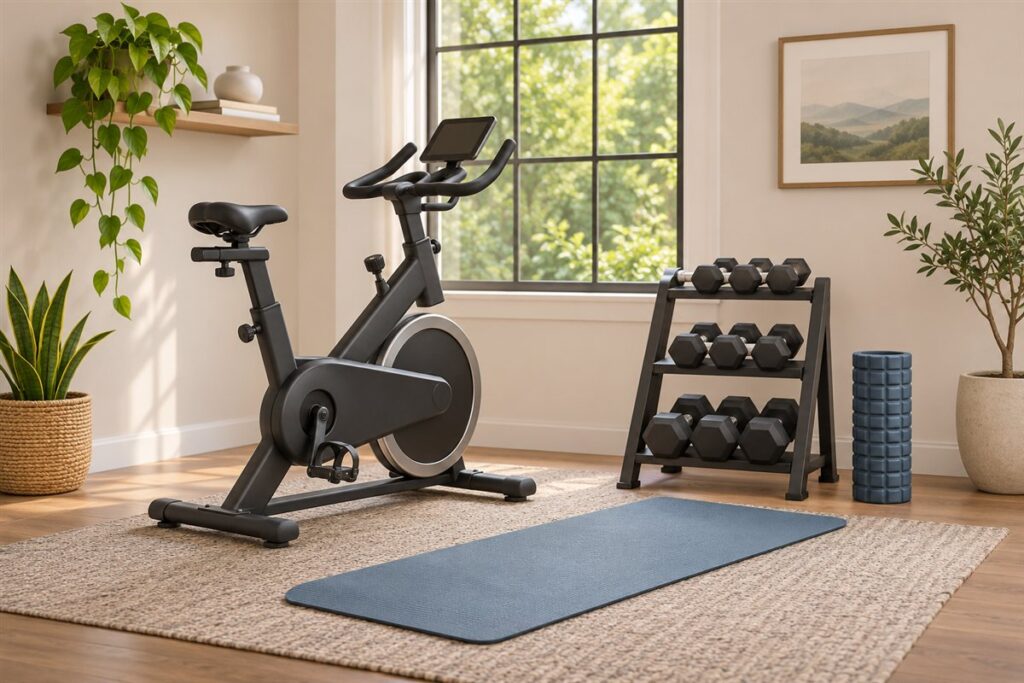
An exercise bike gives you an indoor way to pedal at home in any weather. We have not used the products in this guide ourselves, so this is not a ranking and we make no promises about any model. The aim here is to describe features so you can read listings with confidence.
Bikes differ in resistance type, adjustability, console features, size and noise. A shared household needs different features than a single user in a small flat. Use the table below to compare what each maker states, then match those points to your space and routine. It also helps to read what the maker says about assembly and delivery size, because a large box can be hard to move through narrow halls.
As an Amazon Associate we earn from qualifying purchases. Links on this site are affiliate links, and they do not change the information we give.
What to Look For
| Factor | Why it matters | What to check |
|---|---|---|
| Resistance type | Magnetic, friction and other systems feel and sound different. | Read how the maker describes the resistance and how it is adjusted. |
| Seat and handlebar fit | Adjustable parts help different heights share one bike. | Check adjustment directions and the stated user height range. |
| Console features | Screens range from basic readouts to app-linked displays. | See which readouts are listed and whether an app is needed. |
| Weight limit | The frame is built for a stated maximum user weight. | Compare the maker’s stated limit against the people using the bike. |
| Footprint and storage | Bikes need floor space and some can be moved on wheels. | Measure the space and look for transport wheels and folding notes. |
| Noise level | Shared rooms and apartments call for a quieter drive. | Look at the drive type and any maker statements on noise. |
| Pedals and comfort | Straps, cages and seat shape affect long sessions. | Check pedal type, seat padding and whether parts can be swapped. |
Setup and Care Tips
- Place the bike on a level mat to protect the floor and reduce movement.
- Set the seat height following the manual’s fit guidance.
- Wipe the frame and console with a dry cloth after use.
- Tighten bolts and pedals at the intervals the manual lists.
- Check the maker’s manual for lubrication and storage advice.
Mistakes to Avoid
- Choosing a bike without measuring the room.
- Ignoring the stated user height and weight ranges.
- Paying for console features you will never use.
- Skipping assembly steps in the manual.
- Forgetting that some consoles need a subscription or app.
FAQ
Do I need a bike with a screen?
Not necessarily. A basic readout covers time and distance, while larger screens add programs. Choose by how you like to follow your sessions. Many listings also describe whether the console runs on batteries or mains power.
How much space does a bike need?
Check the maker’s length and width, then leave extra room to get on and off. A mat underneath helps protect the floor. Fold-up and transport-wheel designs can help in tight rooms.
Questions to Ask Before You Buy
- Who will ride it, and do their heights differ a lot?
- Is the floor in the planned spot level, and can it carry the machine’s weight?
- Do you want to sit upright, lean forward, or recline with back support?
- Does the bike need a wall outlet, or does it run without mains power?
- How loud can it be if others are sleeping or working nearby?
- Does it take standard pedals and a standard seat, so parts can be swapped later?
Feature Trade-offs
Bikes lean in different directions. The table below shows common choices and what each one asks of you.
| Choice | Good for | Cost of the choice |
|---|---|---|
| Upright frame | Small footprint | Less back support |
| Recumbent frame | Seated comfort | Longer body and more floor space |
| Magnetic resistance | Quiet use | Often needs a power source for the console |
| Heavy flywheel | Smooth pedal feel | More weight to move |
| Foldable body | Tight storage | More joints to check |
Who Should Skip It
A stationary bike may not suit someone who dislikes repetitive indoor activity, since boredom is the most common reason machines go unused. If you enjoy outdoor rides, a trainer stand for your existing bicycle could be a better match. Anyone short on space might also prefer an under desk pedal unit.
People who have joint concerns, injuries or a medical condition should not rely on a web guide. Talk with a qualified professional before choosing equipment or an exercise plan. The same goes for children, who should only use equipment with adult supervision and according to the maker’s manual.
Whatever you choose, check the weight limit, tighten fasteners as directed, and keep the bike clear of pets and toys. Follow the maker’s manual and local rules, and place a mat beneath it to protect the floor. Adjust the seat before each new rider uses it, and stop if anything feels loose or unusual.
It may help to try a bike in person if you can, or to read the maker adjustment range carefully. Seat height, handlebar reach and pedal position all affect how natural the ride feels. Note the inseam range the maker lists and compare it with yours. A machine that cannot adjust to your frame will be hard to enjoy, no matter how many features it has.
The Short Version
Choose the bike that fits your height, your room and your routine. Compare resistance, adjustment, console features and footprint before choosing. Always read the maker’s own description before you order.