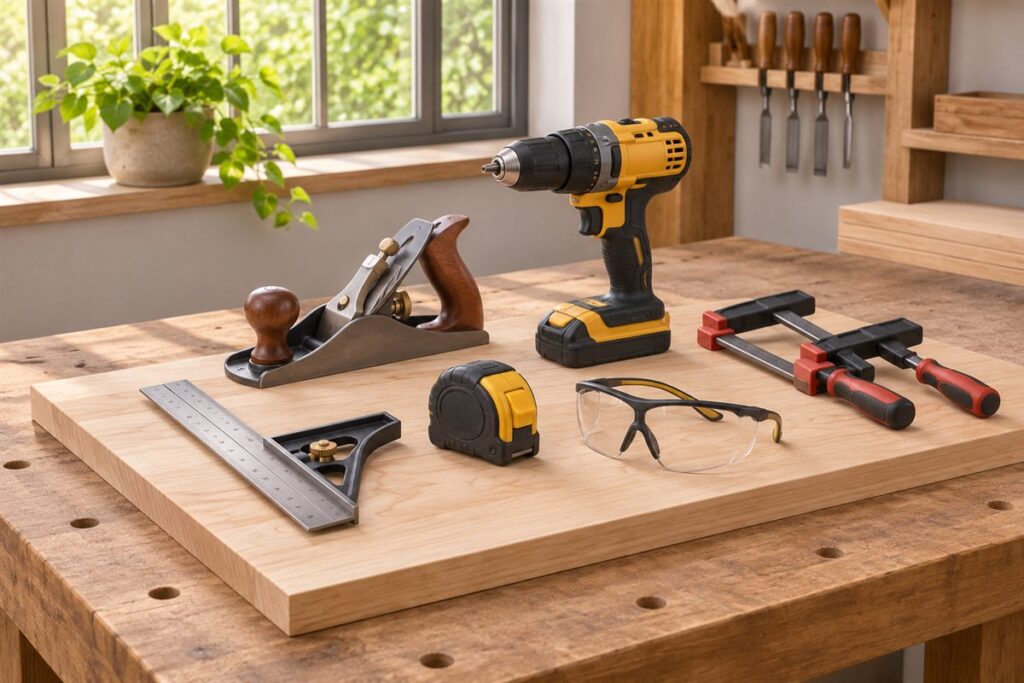
Rust forms when bare steel meets moisture and oxygen, so prevention means keeping tools dry and coated. The main habits are wiping tools after use, applying a thin protective film and controlling humidity where you store them. Small steps taken regularly are much easier than removing rust later.
Why tools rust
Steel left damp for hours can begin to show orange spots. Salt air, garden soil, sweat from your hands and temperature swings that cause condensation all speed it up. Unfinished cast iron surfaces on bench tools are especially exposed. Knowing the cause helps you target the fix.
Daily habits
- Wipe tools clean and dry after each use, including the handles.
- Do not leave tools outside overnight or on bare ground.
- Put wet or muddy tools aside to dry before putting them in the box.
- Wipe a thin film of oil or protective wax on bare steel surfaces.
- Keep the lid or drawer closed so dust does not hold moisture.
Storage that helps
- Silica gel or moisture absorber packs: tuck them into closed boxes and replace or dry them as the maker advises.
- Rust-inhibiting liners: special paper or foam for drawers that slowly protect nearby metal.
- Off the floor: raise cabinets and boxes so damp concrete does not touch them.
- Air movement: a vent or small fan can help in closed spaces, as long as it is safe for the room.
- Dehumidifier: useful in a basement or a very damp garage. Follow its instructions.
Coatings compared
| Protection | Good for | Notes |
|---|---|---|
| Light machine oil | Hand tools, blades, bench surfaces | Reapply often, wipe off extra |
| Paste wax | Cast iron tables and planes | Lasts longer, adds a smooth finish |
| Spray protectant | Hard-to-reach tools and hardware | Follow ventilation advice on the label |
| Rust-inhibiting paper | Drawers and stored sets | Replace when it is worn out |
If rust appears
Act early. Rub light rust with fine steel wool or a nylon pad and a few drops of oil, wipe clean and recoat. Heavier rust may need a chemical remover or a wire brush, used with gloves and eye protection and according to the product label. After cleaning, dry fully and apply a protective coat straight away. Do not rely on oil to stop a patch that is still wet underneath.
Seasonal checks help. Before damp months, go through every drawer, wipe each tool and refresh the coating. A quick routine twice a year keeps problems small.
Which Tools Rust First and Why
Not every tool in a damp garage or shed is equally at risk, and knowing the weak spots lets you spend your effort where it counts. Bare, uncoated steel is the most vulnerable. That includes the cutting edges of chisels and plane irons, the blades of hand saws, the jaws of pliers, the faces of hammers and the teeth of files. These parts are left unpainted on purpose because they need to be hard and sharp, so they have no barrier against moisture.
Fine surfaces rust visibly sooner than rough ones. A polished measuring square or a ground cast iron table shows even light spotting, while a painted handle or plated socket can look fine for much longer. Tools with many joints, such as folding rules, adjustable wrenches and locking pliers, can trap moisture inside the pivot where you cannot see or wipe it.
Plated and painted finishes are not a guarantee. A chip or scratch in the coating exposes the steel beneath, and rust can then creep under the surrounding finish. Check chipped areas first when you inspect a toolbox.
Items that spend time in contact with soil or water, such as spades, shears and hoes, often get the most exposure, yet they are also the ones people forget to wipe. Treat anything that touches the ground as a priority for drying and a light coating before it goes back on the wall.
Reading Your Space for Damp Risks
Before buying any protection, take a short walk through your garage or shed and look at how the space behaves across a day. Condensation is the big hidden cause. When warm, humid air meets a cold metal surface, water forms on the metal even if the room feels dry. This often happens in the morning after a cool night or when you bring a cold tool into a warmer, damp room.
Look for clues that moisture is present: a musty smell, damp patches on the floor, peeling paint, water stains near the base of walls or fogging on windows. Check for leaks around the roof, door seals and where walls meet the slab, because a small drip over a bench can undo a lot of careful oiling.
A basic hygrometer, which reads relative humidity, is an inexpensive way to track the space. Place it near where tools are stored rather than in the middle of the room, and glance at it across different weather. If the readings stay high for long stretches, that is a signal to add airflow or a dehumidifier rather than only coating tools.
Also notice where tools are placed. A wall that faces the weather, a spot near an open door or a cabinet pushed against a cold outer wall all hold more moisture than an inside corner. Moving a toolbox a short distance can help more than you expect.
Choosing a Protective Product Wisely
Protective products fall into a few broad types, and the right one depends on what the tool does. Oils leave a thin wet film that is easy to apply and remove. Waxes dry to a harder, slicker layer that lasts longer on flat surfaces. Sprays are convenient for awkward shapes, and some leave a dry film while others stay oily. Always read the label to see how the product behaves after it dries.
Think about where the tool touches your work. An oily film on a hand plane sole or saw plate can transfer to wood and interfere with glue or finish later. If the tool meets raw timber, a thin wax coat that you buff off is often tidier than a heavy oil. For tools that touch food or garden produce, check the label for suitability before applying anything.
A product that displaces water and a product that protects for the long term are not always the same thing. Some are meant to push moisture off a surface for a short time, while others are made to sit as a barrier. The label or manual should say which job it is made for.
- Check whether it is safe on plastic, rubber and painted parts before spraying a whole tool.
- Use ventilation and keep it away from heat or flame, following the warnings on the container.
- Apply sparingly and wipe off the excess, since extra film attracts dust.
Protecting Cast Iron and Power Tool Surfaces
Bench tools such as table saws, band saws, jointers and drill presses have large, bare cast iron or steel tables that are among the most rust-prone surfaces in a workshop. Because you slide wood over them, the coating you choose matters. A paste wax buffed to a thin, even layer gives protection and a smooth surface. Apply it to the table, fence faces and any exposed handwheel threads, following the product directions.
Be careful with any product that contains silicone if you plan to apply finishes to your projects. Traces can spread onto wood and cause finishes to bead or reject. Check labels, and keep a dedicated cloth for each product so you do not carry residue from one surface to another.
Cover large machines when they are not in use. A breathable cover, such as a cotton sheet or fitted cloth cover, keeps dust off and slows moisture contact. Avoid plastic sheeting that sits directly on the metal, because it can trap damp air against the surface and make condensation worse.
Check the parts you cannot easily see: the underside of the table, adjustment threads, trunnions and the inside of the dust port. Wipe what you can reach, and consult the manual for lubrication points, since some moving parts need lubricant rather than a protective wax.
An Inspection Routine and When to Replace
A short, regular inspection catches problems while they are still cosmetic. Pick a pattern that you will actually follow, such as a quick look at the end of each season and a closer check whenever the weather has been unusually wet. Open every drawer, lift trays and look at the bottom of the box, where water collects.
- Look for light orange spotting, which can usually be wiped off with a cloth and re-coated.
- Look for pitting, where the surface feels rough or has small craters, which signals rust has been present for some time.
- Check moving parts for stiffness, since rust inside a joint makes tools hard to operate.
- Check the protective packs or liners and refresh them as the maker advises.
Deep pitting on a cutting edge, measuring face or gripping jaw can affect performance. A measuring tool with a rusted scale may no longer read cleanly, and a chisel with a pitted back will be hard to sharpen well. Cosmetic spotting on a handle or the outside of a body is usually harmless.
Consider replacement when rust has weakened a part, such as a thin shaft, a spring, a cutting tooth or a socket wall, or when a fastener or tool jaw will no longer grip properly. For tools with a safety function, such as ladders, clamps under load and lifting equipment, follow the maker’s guidance and do not keep using damaged items.
FAQ
Does stainless steel rust?
It resists rust well but can still stain in harsh conditions. Wipe and dry it as you would other steel.
Can I keep tools in a plastic box to stop rust?
A closed box helps against splashes but can trap moisture inside, so add absorber packs and dry tools first.
Is a spray lubricant the same as a rust protectant?
Not always. Some products are made to free stuck parts or displace water, while others are meant to leave a lasting barrier. Read the label to see which job the product is designed for, and use the right one for the tool.
Should I oil the handles of my tools too?
Wooden handles can be wiped with a suitable handle oil, but that is separate from protecting the steel. Avoid leaving slippery residue on grips, and keep oils away from plastic and rubber unless the label says it is safe.
Can a hygrometer really help in a shed?
It gives you a way to see humidity trends rather than guessing. If the readings stay high for long periods, you know to add airflow, a dehumidifier or better sealing instead of relying on coatings alone.
Why do tools rust even when the shed feels dry?
Condensation can form on cold metal when warmer, humid air touches it, even if the room feels fine to you. Temperature swings between day and night are a common cause.
Is a little surface rust dangerous to use?
Light spotting on a non-critical surface is usually cosmetic, but you should clean and coat it before it spreads. Rust that has weakened a part, or that sits on a cutting or gripping surface, deserves closer attention or replacement.
Do painted tools need rust protection?
Painted or plated surfaces last longer, but chips expose the steel underneath. Touch up or coat damaged spots, and still check the bare working surfaces of the tool.
Does covering a machine with plastic help?
A plastic sheet pressed against metal can trap moist air and encourage condensation. A breathable cloth cover is usually a safer choice, and you should still keep the table coated.
The Short Version
Keep tools dry, coat them thinly and control humidity in storage. Clean off light rust early, and recoat after any cleaning.