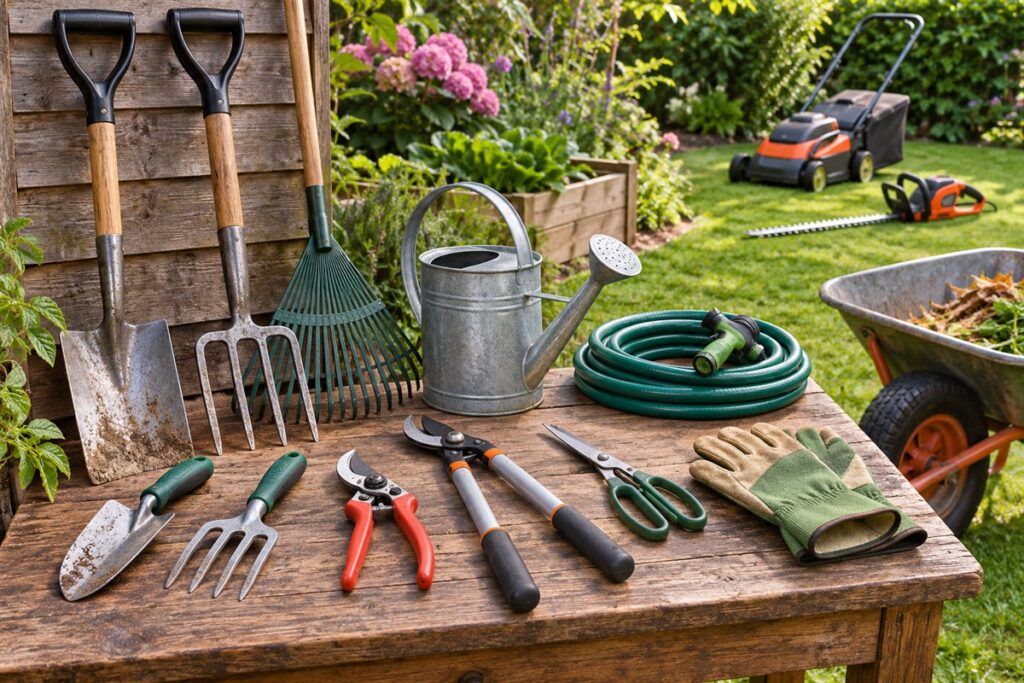
A beginner gardener can do most jobs with six or seven hand tools: a spade, a fork, a trowel, pruning shears, a rake, gloves and a watering can or hose. Choose tools that feel comfortable in your hands, and add power tools only if your garden is large enough to justify them.
Digging and Planting
- A spade for edging beds and turning soil.
- A garden fork for loosening compacted ground.
- A hand trowel for planting small plants and bulbs.
- A hand fork for weeding between plants.
Look at handle length and grip. A tool that is too long or heavy for you will tire your back and wrists quickly. Try holding a few if you can before you commit.
Cutting and Tidying
- Pruning shears (secateurs) for stems and small branches.
- Long-handled loppers for thicker growth.
- Garden scissors or shears for soft growth and edges.
- A leaf rake and a stiff rake for soil and gravel.
- A wheelbarrow or sturdy bag for carrying waste.
Keep cutting tools clean and sharp, and wipe them after use to reduce the spread of plant disease. Follow the maker’s care instructions.
Power Tools in the Garden
Hedge trimmers, string trimmers and mowers can save effort, but they have moving parts and sharp blades. Read the maker’s manual, wear eye protection, ear protection and sturdy footwear, and keep children and pets away. For tree work, working at height or anything near overhead power lines, call a qualified professional. Follow local rules about noise hours and garden waste.
Match Tool to Task
| Task | Hand tool | Power option |
|---|---|---|
| Cutting grass | Shears | Mower or trimmer |
| Trimming hedges | Hand shears | Hedge trimmer |
| Clearing leaves | Rake | Blower |
Looking After Your Tools
Garden tools last longer with a little care. After use, knock off soil with a brush, rinse if needed and dry them before storage. A light wipe with an oily rag on metal parts can reduce rust, and wooden handles benefit from an occasional rub with a suitable oil, following the maker guidance. Sharpen cutting edges with a file or stone, always moving away from your body and wearing gloves.
At the end of the season, check handles for cracks and replace any that look weak. Store tools off the floor, in a dry shed or garage, with blades covered. Keep chemicals, fuel and cleaning products in their original containers and well away from children, and follow local rules for disposing of old fuel, oil and batteries.
FAQ
How should I store garden tools?
Clean off soil, dry them, and hang or stand them in a dry place. Store blades with guards if they come with them.
Do I need gloves?
They are a good idea for digging and pruning. Choose a snug pair that still lets you feel what you are holding.
The Short Version
Begin with a spade, fork, trowel, shears and a rake. Keep them clean, add power tools only when needed, and use professionals for tree and height work.