A good pocket knife is one you reach for without thinking. It should slide in and out of a pocket easily, open smoothly and stay sharp through a week of boxes, packages and food prep, so comfort and a clean design matter most.
The six pocket knives below cover a range of styles, from a premium folder to a Swiss Army classic. Models are offered in different steels and handle colors, so confirm the details on each listing. Look at the pocket clip first, since a clip that holds firmly and sits low keeps the knife secure and discreet. Then check the lock, the opening method and the handle texture. Many people carry a small knife and a larger one for different days, so you do not have to find a single perfect option. Local laws on blade length and opening styles differ, so check them before carrying a new knife in public. Take a moment to try the opening action a few times at home, because a knife that feels stiff in the first week may loosen with use, while one that feels sloppy will not improve. Keep it clean, lightly oiled and sharp, and it will serve for years of small daily chores. We have not used these products ourselves, so confirm sizes, materials and details on the current listing before buying.
As an Amazon Associate we earn from qualifying purchases. Links below are affiliate links, and they do not change the product information we give.
What to Look For
| Feature | Why it matters |
|---|---|
| Clip | A firm, low-profile clip keeps the knife in place |
| Lock | Reliable locks make hard cuts safer |
| Opening | Thumb studs, holes and flippers feel different in use |
| Handle | Texture and shape decide comfort over a long task |
| Blade shape | A drop point or similar shape is versatile |
In this guide
Specs at a Glance
| Knife | Opening | Handle | Notes |
|---|---|---|---|
| Benchmade Griptilian 551 | Thumb hole | Nylon-style | AXIS lock; modular parts |
| Spyderco Tenacious | Thumb hole | G-10 | Liner lock |
| Kershaw Cryo | Flipper | Stainless | Slim; budget-friendly |
| CRKT Drifter | Thumb stud or flipper | Nylon or G-10 | Compact carry |
| SOG Terminus XR | Thumb stud | Nylon | Pocket-sized; lock |
| Victorinox Pioneer X | Nail nick | Alox | Swiss Army classic |
The 6 Best EDC Pocket Knives
Top pickBest for all-day use
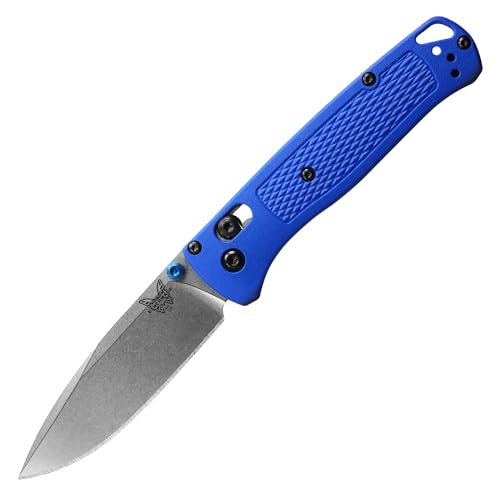
1. Benchmade Griptilian 551
A modern classic with an ambidextrous AXIS lock and a comfortable, textured handle. The company is known for solid manufacturing and service.
Suits: all-day use. Strengths: great ergonomics and a smooth lock. Weaknesses: a higher cost than many folders. Skip it if you are shopping on a tight budget.

Best for users who want size and value
2. Spyderco Tenacious
A mid-sized folder with a roomy handle and a liner lock that you can close with one hand. It balances value and performance.
Suits: users who want size and value. Strengths: comfortable grip and strong lock. Weaknesses: some find it bulkier than slim knives. Skip it if you want a thin carry.

Best for casual carry
3. Kershaw Cryo
A budget-friendly flipper with a slim profile and an assisted-style deployment that many find fun. It is easy to pocket and easy to use.
Suits: casual carry. Strengths: low cost and thin shape. Weaknesses: basic materials. Skip it if you want premium steels.

Best for small-handed users
4. CRKT Drifter
A small, light folder with a clean design from a company known for creative ideas. It is a good fit for office or light outdoor tasks.
Suits: small-handed users. Strengths: compact size and light weight. Weaknesses: limited blade length. Skip it if you want a larger knife.

Best for simple everyday tasks
5. SOG Terminus XR
A pocket-sized folding knife with a locking blade and a simple opener. It aims at practical, no-frills carry.
Suits: simple everyday tasks. Strengths: easy price and straightforward use. Weaknesses: fit and finish are basic. Skip it if you want refined feel.

Best for all-purpose carry
6. Victorinox Pioneer X
A Swiss Army knife with a blade and several tools in a slim aluminum handle. It is built for versatility rather than a single task.
Suits: all-purpose carry. Strengths: multiple tools in one small body. Weaknesses: the blade is small. Skip it if you want a locking folder.

Care and Setup
- Wipe and dry after exposure to moisture.
- Apply a drop of oil to the pivot.
- Tighten clip and handle screws when loose.
- Sharpen on a fine stone or guided kit.
- Remove lint from inside the handle.
Mistakes to Avoid
- Choosing the largest knife by default.
- Skipping a check of the lock.
- Using the blade as a screwdriver.
- Ignoring local blade length laws.
- Never practicing safe closing.
Blade Steel and Edge Retention Trade-Offs
Steel is a balance between hardness, toughness, corrosion resistance and ease of sharpening. Harder steels tend to hold an edge longer but can be harder to sharpen and more prone to chipping. Softer steels are easier to sharpen and often tougher, but need touching up more often. Stainless steels resist rust, which matters for a knife carried in a pocket, handled with sweaty hands and used around food and moisture.
For everyday tasks like opening boxes, cutting cord and preparing a snack, a mid-range stainless steel is usually plenty. You do not need the most exotic alloy to get good service. A steel that sharpens easily with a basic stone or a compact sharpener may suit you better than one that holds an edge a little longer but requires specialist tools.
Listings often name the steel, and makers sometimes describe its qualities. Treat such descriptions as general information. Ask yourself how you will use the knife. If you cut cardboard daily, a steel that resists dulling is helpful. If you mostly cut food and light materials, ease of sharpening may matter more. Remember that heat treatment and blade geometry also affect performance, not only the steel name. Also consider the finish: a coated or matte blade hides scratches and reduces glare, but coatings can wear off with use.
Locks and Opening Mechanisms Compared
The lock keeps the blade open during use, and it matters for safety. Common types include liner locks, frame locks and back locks, along with proprietary designs such as the AXIS lock mentioned in the listing for one knife. Each has its own feel and strengths. A reliable lock should engage firmly, with no play or wobble, and should be easy to disengage with the fingers kept away from the blade path.
Opening methods differ in feel. Thumb studs and thumb holes are simple and quiet, and many people can open them one-handed after practice. Flippers use a tab on the spine that you press with the index finger, which can feel fast and smooth. Nail nicks are common on traditional folders and Swiss Army tools. Some knives use assisted opening, which uses a spring to help, and that can be legally restricted in some places.
- Open and close the knife several times to see whether the action feels smooth.
- Check that the blade does not wobble sideways when open.
- Be sure you can close it safely with one hand if you need to.
If you are not comfortable with a particular mechanism, choose another. A knife you trust is better than one with a fancy feature you rarely use.
Pocket Carry: Clips, Size and Weight
An EDC knife must be easy to carry or it ends up at home. A pocket clip keeps the knife in a predictable spot and prevents it from sinking to the bottom of the pocket. Check where the clip sits, whether it can be moved to the other side for left-handed carry, and whether it holds firmly without damaging fabric. A deep-carry clip hides more of the knife, while a standard clip leaves part of the handle visible.
Size and weight matter because you carry the knife all day. A thin, light knife disappears in a pocket, while a thick, heavy one can be uncomfortable and pull at your trousers. Compare handle thickness and weight where the listing provides them. A handle should be long enough to fill your hand, since a very short handle makes tasks harder and may slip. If you wear dress trousers, a slim knife is preferable. For work clothes or outdoor trousers, you may tolerate a bigger one.
Think about other things you carry. If you also have keys, a phone or a multitool, a knife may feel bulky in the same pocket. Try a few carrying positions to find one that works. Many people carry a smaller knife on workdays and a larger one on weekends. Remember to check local rules before carrying in public places.
Maintenance, Sharpening and Safe Use
A pocket knife collects lint, dirt and moisture, so keep it clean. Wipe the blade after use, and every so often open the knife fully and clean around the pivot with warm water and a brush if the maker allows it. Dry it completely. Add a small drop of light oil to the pivot if the manual recommends it, working the blade open and closed to spread it. Wipe off excess so lint does not stick.
Sharpen the knife when it starts to tear instead of slice. A compact sharpener, a small stone or a guided system can work. Keep a steady angle and take light strokes. Test the edge on paper or a soft material. Over-sharpening can remove more steel than needed, so sharpen only when needed and strop or hone lightly in between.
Safe use is simple but important. Cut away from your body, keep fingers clear of the blade path and use a stable surface. Do not use the knife as a pry bar, since that can chip the blade or damage the lock. Close the knife when you are not using it. If the lock feels loose, the blade wobbles or the pivot is gritty even after cleaning, stop using the knife and have it checked or replaced. Store it out of reach of children.
Laws, Etiquette and Choosing for Your Routine
Knife laws vary widely. Some places regulate blade length, locking mechanisms, assisted openers or carrying in certain locations such as schools, government buildings and airports. Check the laws that apply where you live and where you travel. Do not assume that a knife that is legal in one place is legal in another. When in doubt, choose a smaller, simpler knife and check with local authorities.
Etiquette matters as well. Many people find open carrying or flashing a knife unsettling. Use your knife quietly for practical tasks, and be considerate in workplaces and public spaces. If someone is uncomfortable, put it away. Ask about workplace rules before bringing a knife to work.
When choosing a knife, think about your routine. If you work in an office, a small, discreet knife for packages may be enough. If you work with your hands, you may want a sturdier blade and handle. If you spend time outdoors, think about corrosion resistance and gloves. Many people find that two knives, one small and one larger, cover their needs. Before buying, check the listing details such as steel, lock type and clip, and look at the return policy. The best everyday knife is one that fits your pocket, your tasks and the laws where you live.
EDC Pocket Knives FAQ
What makes a good EDC pocket knife?
A comfortable handle, a secure lock, a clip and a blade shape that suits your chores.
Should I buy a flipper or thumb hole?
Both work. A thumb hole is simple, while a flipper feels quick.
What blade length is best?
A mid-size blade covers most chores. Check legal limits where you live.
Do I need an expensive steel?
No. A good mid-range steel is plenty for most users.
What lock type is best for an everyday knife?
Liner locks, frame locks and back locks can all work well. Choose one that engages firmly and that you can operate comfortably.
How often should I clean my pocket knife?
Wipe it after use and do a deeper clean when it feels gritty. Check the maker's guidance for the pivot.
Can I carry a pocket knife in my bag on a plane?
Usually not in carry-on baggage. Pack it in checked luggage and check the airline's rules.
How do I know if my knife is dull?
It slips on a tomato skin or tears paper instead of slicing. Sharpen it when that happens.
Is assisted opening legal everywhere?
No. Some places restrict assisted or automatic openers, so check local laws.
Should I carry a knife on the left or right?
Choose the side that suits your drawing hand. Many clips can be moved, so check the listing.
What should I do if the lock feels loose?
Stop using the knife, clean it and check the screws, then contact the maker or replace it if the problem remains.
The Short Version
For overall quality, the Benchmade Griptilian. For value and size, the Spyderco Tenacious. For a slim flipper, the Kershaw Cryo. For small hands, the CRKT Drifter. For simplicity, the SOG Terminus XR. For multi-tool use, the Victorinox Pioneer X.
Related Guides
- 6 Best Swiss Army Knives for EDC: Slim to Full-Size (2026)
- 6 Best Gentleman's Knives: Slim Pocket Folders
- 6 Best Cheap EDC Knives: Budget Folders That Perform (2026)
- 6 Best EDC Knives: Folders and Fixed Blades (2026)
- 6 Best Vosteed Knives for EDC: Folders Worth a Look (2026)
Blade Shapes and Grinds Explained
Two knives with the same steel can behave very differently because of blade shape and grind. The shape decides what the tip can do, and the grind decides how the edge moves through material.
Common blade shapes
- Drop point. The spine curves gently down to a strong tip. It is versatile and forgiving, which is why it shows up on so many everyday folders.
- Clip point. The spine is cut away near the tip, giving a finer point that is good for detail work and piercing, but a thinner tip that can break more easily if pried.
- Sheepsfoot or straight-back. A flat spine with a rounded tip. It offers control and a lower risk of accidental puncture, which suits cutting tasks on a surface.
- Wharncliffe. A straight edge with a spine that slopes to the tip. It slices cleanly, much like a utility blade.
- Tanto. A strong, angular tip that tolerates hard use but is less handy for slicing and food.
Grinds and edge geometry
A flat grind tapers evenly from the spine to the edge and tends to cut well while staying easy to sharpen. A hollow grind is thinner behind the edge and can feel very sharp but may be more delicate. A thick blade with a steep edge angle is tough but pushes through cardboard and food with more resistance. When a listing gives blade thickness, compare it: a slim blade under about an eighth of an inch usually slices better, while a much thicker one favors strength. Plain edges are easier to sharpen and cleaner for everyday tasks, whereas serrations help with rope and fibrous material but are harder to maintain at home.
Handle Materials and Hand Fit
You hold the handle far longer than you look at the blade, so material and shape deserve as much attention as the steel. The table summarizes the trade-offs of common handle materials.
| Material | Typical feel | Trade-off |
|---|---|---|
| Glass-filled nylon | Light, slightly warm, textured | Less rigid than other materials but tough and inexpensive |
| G-10 | Hard, grippy when textured | Can be rough on a pocket and feel cold |
| Carbon fiber | Very light, stiff | Higher cost, can be slick if polished |
| Stainless steel | Thin, durable, slim in the pocket | Slippery when wet unless textured |
| Aluminum or Alox | Smooth, light, often colorful | Can dent and may offer less grip |
Texture matters more than material in wet or greasy conditions. Deep jimping, finger grooves and a flared guard keep a hand from sliding forward onto the blade. If you wear gloves, make sure the handle is big enough for them. For small hands, a tall handle with sharp edges can create hot spots after a long task, so rounded edges and a slim profile help.
Look at handle length in relation to your palm width. Four fingers should sit on the handle without the pinky hanging off, and your index finger should rest safely behind the blade when the knife is open.
Budget Versus Premium: Where the Money Goes
The six folders here range from simple budget carry knives to an American-made premium folder, and the price gap shows up in specific places rather than in every task.
- Fit and finish. More expensive knives tend to have tighter tolerances, centered blades and smoother pivots. Budget knives can have small gaps or slight blade play.
- Steel and heat treatment. Higher-priced models often use steels that hold an edge longer, and a better heat treatment makes the same steel perform more consistently.
- Parts and repair. Some makers sell replacement scales, clips and screws, and offer service. A modular knife can be taken apart and cleaned thoroughly.
- Warranty and support. A clear warranty can matter more than a premium steel if the knife will see daily use.
For plain chores, a modest knife that you carry beats an expensive one left in a drawer. Spend more if you value the feel of the action, you plan to carry daily for years, or you want a knife you can maintain and repair yourself.
Inspecting a New Knife When It Arrives
Take ten minutes to check a new knife before you rely on it. Open the box and look for shipping damage, then run through this checklist.
- Open and close the blade slowly several times. The motion should be smooth, not gritty or sticky.
- With the blade open, press lightly on the spine and then give a gentle sideways push to check for lock rock and blade play. Do not spine-whack or abuse the lock.
- Look from above to see whether the blade sits centered when closed, without rubbing the handle.
- Check that every screw is snug, especially the pivot and clip.
- Test the edge on a piece of paper. A clean slice means it arrived sharp enough to use.
- Clip the knife to a pocket and check that it stays put when you sit and stand.
If anything feels wrong, contact the seller during the return window instead of trying to fix a defect yourself. A knife that fails these basic checks may only get worse with use.
Frequently Asked Questions
What is the best blade shape for an everyday carry knife?
A drop point is the usual answer because it combines a strong tip with a useful curved edge for slicing. A sheepsfoot or Wharncliffe suits people who mostly cut on surfaces and want more control. Pick the shape that matches your daily chores.
Is a plain edge or a serrated edge better for EDC?
A plain edge is better for most people. It slices cleanly, handles food and packaging well, and is much easier to sharpen at home. Serrations help on rope and fibrous materials but are harder to maintain, so partial serration is a niche choice.
Is a Swiss Army knife enough for everyday carry?
For many people, yes. It handles opening packages, trimming cord and small repairs, and its tools add flexibility. The trade-off is a smaller blade and often no lock, so choose a locking folder if you do heavier cutting.
How tight should a folding knife pivot be?
The blade should move freely without grit or side-to-side wobble, and it should not flop open or closed under its own weight when the knife is held loosely. Overtightening can bind the action, so adjust in small steps if the maker allows it.