Victorinox knives, including the popular Fibrox Pro line, use stamped stainless steel that sharpens easily and holds a good working edge. They respond well to a honing steel for upkeep and a stone or sharpener when the edge finally fades. Many home cooks own a Fibrox chef knife, a paring knife and a bread knife, so a single sharpener that handles straight edges is often enough, with a separate approach for the serrated blade.
The six tools below include a honing steel, electric, pull-through and stone options. We have not used them ourselves, so confirm the compatible knife types and angles on the current listing before buying. Edge claims are the makers’ own, and check Victorinox guidance for your specific model. Because the steel is relatively soft and forgiving, even a gentle tool restores it quickly, which means you rarely need an aggressive abrasive or heavy machine.
As an Amazon Associate we earn from qualifying purchases. Links below are affiliate links, and they do not change the product information we give.
What to Look For
| Feature | Why it matters |
|---|---|
| Steel type | A honing steel keeps the edge aligned between sharpenings |
| Angle | Pick a sharpener that matches the angle of your Victorinox knives |
| Stage count | A coarse stage fixes a dull edge; a fine stage polishes it |
| Ease of use | Guided designs are easier for new users |
In this guide
Specs at a Glance
| Tool | Type | Use | Notes |
|---|---|---|---|
| Victorinox Honing Steel | Steel rod | Upkeep | Matches the brand |
| Chef’sChoice ProntoPro 4643 | Manual pull-through | Quick sharpening | Angle guides |
| Work Sharp Culinary E2 | Electric | Kitchen knives | Guided slots |
| Sharp Pebble 1000/6000 Whetstone | Whetstone | Hand sharpening | Includes base |
| Lansky BladeMedic | Pocket tool | Quick repair | Compact |
| Mercer Culinary Honing Steel | Steel rod | Upkeep | Hand guard included |
The 6 Best Sharpeners for Victorinox Knives

Top pickBest for upkeep between sharpenings
1. Victorinox Honing Steel
A honing steel from the same maker as the knives, used to realign the edge after use. Honing is not true sharpening, but it keeps a Fibrox blade sharp for longer between sessions.
Suits: upkeep between sharpenings. Strengths: a matching brand and a simple routine. Weaknesses: it does not remove metal. Skip it if your knives are badly dull.

Best for easy tune-ups
2. Chef’sChoice ProntoPro 4643 Manual Knife Sharpener
A manual pull-through sharpener with angle guides and multiple stages. It gives a sharp edge with minimal practice, and it fits many kitchen knives.
Suits: easy tune-ups. Strengths: a simple pull-through with angle control. Weaknesses: it is not for serrated blades. Skip it if you want a fully hand-controlled edge.
View Chef’sChoice ProntoPro 4643 Manual Knife Sharpener on Amazon
Best for cooks who sharpen often
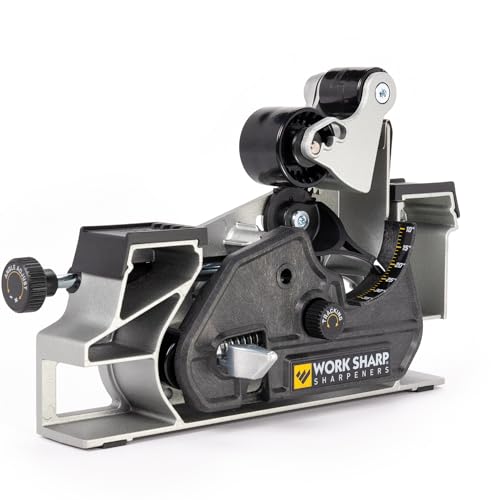
3. Work Sharp Culinary E2 Kitchen Knife Sharpener
An electric kitchen sharpener with guided slots and a few stages. It speeds up sharpening for busy cooks, although it is a bigger purchase than a manual tool.
Suits: cooks who sharpen often. Strengths: a fast, guided edge. Weaknesses: it takes up counter space. Skip it if you only sharpen once in a while.
View Work Sharp Culinary E2 Kitchen Knife Sharpener on Amazon

Best for learning hand sharpening
4. Sharp Pebble 1000/6000 Whetstone Kit
A two-sided whetstone with a stand and a few accessories. It is a good fit for stainless knives like Victorinox and teaches angle control with time.
Suits: learning hand sharpening. Strengths: a gentle edge and a base for steadiness. Weaknesses: it takes practice. Skip it if you want a one-minute fix.


Best for quick repairs
5. Lansky BladeMedic Knife Sharpener
A compact tool with several sharpening elements for quick repair and touch-ups. It suits pocket knives and light kitchen use, but it is not a precision tool.
Suits: quick repairs. Strengths: a small, handy tool. Weaknesses: a rough edge compared with stones. Skip it if you want a refined finish.


Best for daily kitchen upkeep
6. Mercer Culinary Honing Steel
A honing steel from a commercial kitchenware brand, with a guard at the handle. It is a sturdy, simple way to realign edges on any stainless knife.
Suits: daily kitchen upkeep. Strengths: a safe handle and a trusted brand. Weaknesses: it does not sharpen a dull blade. Skip it if you want an abrasive tool.

Care and Setup
- Hone briefly before cooking.
- Use light pressure on stones and rods.
- Wipe blades dry after sharpening.
- Check Victorinox’s guidance for your model. Keep a small cloth nearby to wipe the blade after each pass and to catch metal dust from the sharpener.
Mistakes to Avoid
- Pressing too hard when honing.
- Using an aggressive sharpener on a lightly dull knife.
- Sharpening at an inconsistent angle.
- Putting knives in the dishwasher.
What Victorinox Edges Ask of a Sharpener
Victorinox kitchen knives are widely used in home and professional kitchens, and they are generally known as practical, easy-to-maintain tools. Check your knife’s packaging or the maker’s website for its recommended edge angle and care instructions. Matching the sharpener to the factory edge is the simplest way to keep the knife performing as intended.
The key idea is to separate maintenance from repair. For a knife that is only slightly dull, a few passes on a fine abrasive or a honing steel brings back the cutting feel. For a knife with a rolled, chipped or badly worn edge, you need an abrasive that removes metal, such as a stone or a sharpener with coarse stages. Using a fine tool on a damaged edge wastes time, and using a coarse tool on a nearly sharp edge removes more steel than necessary.
Think about your habits as well. If you cook daily, small, regular touch-ups beat occasional heavy sharpenings. If you only cook now and then, a simple sharpener you will actually use is better than a complex one that stays in a drawer. Either way, a consistent angle is more important than a premium abrasive.
Honing Steels Versus Sharpening Tools
A honing steel realigns the microscopic edge that bends sideways with use. It does not remove much metal, so it extends the time between sharpenings but cannot restore a truly dull edge. Steels come in smooth and finely ridged varieties, and some use ceramic or diamond coatings that remove a small amount of metal and so blur the line with sharpening.
Sharpeners, in contrast, grind away steel to create a fresh edge. These include whetstones, pull-through tools, electric units and guided systems. Each suits a different level of skill and patience, and each removes metal at its own rate. A pull-through sharpener is quick and simple, an electric one is fast and consistent, and a stone is slow but gives you control.
A practical routine for many cooks is to hone lightly before or after use and sharpen only when honing stops working. Learn the feel of a good edge by slicing a tomato or a sheet of paper. If the knife skids or crushes, it is time to sharpen. Use gentle pressure and a steady angle with any tool.
Technique and Angle for Everyday Kitchen Knives
Whichever tool you use, angle consistency decides the result. With a stone or steel, hold the knife so the edge meets the abrasive at the angle the maker recommends, and keep that angle through the stroke. Many people find it helpful to practice with the knife resting flat and then lift the spine slightly to find the bevel. A permanent marker on the edge shows where the abrasive removes ink and helps you check your angle.
Use light pressure and long strokes that cover the whole edge from heel to tip, alternating sides in equal measure. Rushing and pressing hard produce uneven results. After sharpening, you may feel a burr on the opposite side of the edge. Remove it with a few gentle passes on a fine surface or a strop.
Wipe the blade clean, rinse and dry it, then test on paper or a soft vegetable. If the knife catches or tears, repeat a finer step. For guided or pull-through tools, follow the instructions about the number of passes. Overdoing it removes more metal than you need and shortens the knife’s life.
Handle and Blade Care Between Sharpenings
Good habits protect the edge. Cut on wood or plastic boards instead of glass, stone or ceramic, which dull edges quickly. Avoid twisting the blade in hard foods and avoid cutting through bones or frozen items unless the knife is designed for it. Do not scrape the board with the edge; flip the knife and use the spine.
Washing by hand protects the blade and handle. Dishwashers expose knives to heat, detergents and bumping, which can dull edges and damage handles. Wash soon after use, dry the knife thoroughly and store it safely, for example in a block, on a magnetic strip or in a guard, so the edge is not knocked against other utensils.
Check the knife occasionally for signs of wear, including a rounded edge, a chip or a loose handle. If the knife has a plastic handle, look for cracks near the bolster. Keep any sharpening tool clean, since metal particles can clog abrasives and reduce their effect. These small habits keep a knife in good shape between formal sharpenings.
Choosing a Sharpener by Experience and Budget
Start with how comfortable you are with manual skills. Beginners often prefer pull-through or guided tools because they set the angle for you. Intermediate users may enjoy a whetstone for its control and fine finish. Experienced sharpeners can use stones or systems to tailor the edge precisely. Consider whether you are willing to learn a new skill or just want a quick tune-up.
Budget tiers are easy to compare qualitatively. Basic tools offer a simple edge refresh and suit occasional use. Mid-range tools add more stages, better abrasives or more consistent guides. Higher-end options give finer control or faster work, which is useful for people with many knives. Spending more is worthwhile if you will actually use the extra features.
Before buying, check the angle range, the knife types supported and whether replacement parts are available. Consider counter space and storage, and look at the maker’s care instructions. Replace a sharpener when the abrasive is worn, the guide is loose or the results become uneven. A good tool, cleaned and used properly, will last a long time, and it will keep a Victorinox knife cutting well.
Sharpeners for Victorinox Knives FAQ
Do Victorinox knives need a special sharpener?
No. Most sharpeners that match the edge angle will work.
Is honing the same as sharpening?
No. Honing realigns the edge, while sharpening removes metal.
How often should I hone?
Light honing before cooking is a good habit.
Are Fibrox knives easy to sharpen?
They are stainless and generally respond well, but follow the maker’s care notes.
How do I know whether to hone or sharpen?
Hone when the knife feels slightly dull but still cuts. Sharpen when it crushes or slips on soft foods even after honing, since the edge has worn away.
Can I use a pull-through sharpener on Victorinox knives?
Many people do for convenience. Check that the angle suits the knife, use light pressure and do not overuse it, since pull-throughs remove metal quickly.
Should I wet a honing steel?
No, honing steels are normally used dry. Wipe the steel clean afterward to remove metal residue.
Is a ceramic rod suitable for kitchen knives?
Yes, a fine ceramic rod can refresh an edge gently. Avoid dropping it, since ceramic can chip or break.
What cutting board is best for keeping an edge?
Wood and softer plastic boards are gentler on edges than glass, stone or ceramic. Avoid hard surfaces and avoid scraping with the edge.
How long does a sharpened edge last?
It depends on use, board surface and technique. Regular honing and good cutting habits extend it, and you will notice when slicing becomes less clean.
Each Pick in Depth: Who It Suits, Where It Shines and Where It Falls Short
The short reviews above tell you what each sharpener for Victorinox knives is. This section slows down and looks at how each one behaves in real kitchens over weeks of use — who will be happiest with it, the strength that actually matters day to day, the limitation you should accept with open eyes, and a plain choose-or-skip verdict to help you decide quickly.
1. Victorinox Honing Steel — in daily use
Who it suits: Fibrox and Swiss Classic owners who want the matching, no-guess tool for weekly edge upkeep. Standout strength: it is made for these knives, keeps the factory edge aligned with a few light strokes, and costs little in time or money per use. Honest limitation: honing realigns an edge but does not remove metal, so it cannot rescue a truly dull or chipped blade. Verdict: choose it as your first and most-used tool; skip it as your only tool if your knives are already dull. Whichever way you lean, judge this pick against the knives you actually own and the routine you will actually keep, rather than against an idealised kitchen — that is where satisfaction with any sharpener for Victorinox knives is decided.
2. Chef’sChoice ProntoPro 4643 Manual Knife Sharpener — in daily use
Who it suits: users who want guided, repeatable sharpening without power, including an angle suited to thinner edges. Standout strength: the staged slots take the angle guesswork away and it can refresh both straight and serrated sections with care. Honest limitation: pull-through sharpening removes metal faster than honing, so using it weekly would shorten blade life. Verdict: choose it for periodic sharpening days; skip it for daily upkeep, which belongs to the steel. Whichever way you lean, judge this pick against the knives you actually own and the routine you will actually keep, rather than against an idealised kitchen — that is where satisfaction with any sharpener for Victorinox knives is decided.
3. Work Sharp Culinary E2 Kitchen Knife Sharpener — in daily use
Who it suits: busy cooks who want an electric assist with a guided angle and a built-in honing stage. Standout strength: it is quick and consistent across a whole block of knives, and the honing stage suits regular Victorinox maintenance. Honest limitation: it needs counter space and power, and very thin or damaged tips still deserve hand attention. Verdict: choose it if you maintain many knives at once; skip it if you own two knives and a steel already keeps them keen. Whichever way you lean, judge this pick against the knives you actually own and the routine you will actually keep, rather than against an idealised kitchen — that is where satisfaction with any sharpener for Victorinox knives is decided.
4. Sharp Pebble 1000/6000 Whetstone Kit — in daily use
Who it suits: learners who want the most control and the finest finish, and who enjoy a short sharpening ritual. Standout strength: the two grits repair dullness and then refine, the kit format includes the basics to start, and the skill transfers to every knife you will ever own. Honest limitation: it demands practice, soaking and stone flattening, and results vary until your angle steadies. Verdict: choose it for best possible edges and skill-building; skip it if you want a two-minute fix before dinner. Whichever way you lean, judge this pick against the knives you actually own and the routine you will actually keep, rather than against an idealised kitchen — that is where satisfaction with any sharpener for Victorinox knives is decided.
5. Lansky BladeMedic Knife Sharpener — in daily use
Who it suits: pocket and field users who want a tiny, versatile sharpener for bags, drawers and trips. Standout strength: it packs carbide, ceramic and a serrated-friendly element into something pocketable, so a working edge is always within reach. Honest limitation: the aggressive carbide is for rescue, not routine, and small tools give less control on long kitchen blades. Verdict: choose it as a backup and travel tool; skip it as the main sharpener for your chef’s knife. Whichever way you lean, judge this pick against the knives you actually own and the routine you will actually keep, rather than against an idealised kitchen — that is where satisfaction with any sharpener for Victorinox knives is decided.
6. Mercer Culinary Honing Steel — in daily use
Who it suits: value seekers and high-volume kitchens that want a workhorse steel without brand premium. Standout strength: it does the same realigning job as pricier steels, stands up to daily professional-style use, and pairs naturally with Fibrox knives in busy kitchens. Honest limitation: like every steel it only maintains, and its utilitarian finish is about function rather than looks. Verdict: choose it if you hone often and want durability per pound spent; skip it if you also need actual sharpening in the same tool. Whichever way you lean, judge this pick against the knives you actually own and the routine you will actually keep, rather than against an idealised kitchen — that is where satisfaction with any sharpener for Victorinox knives is decided.
Comparing the Picks Against Each Other
Sort these six by the job, not by price. The two honing steels — Victorinox’s own and the Mercer Culinary — are maintenance tools for edges that are still basically sharp, and for most Fibrox owners one of them will do ninety percent of the work. The ProntoPro and the Work Sharp E2 are sharpeners for edges that have gone dull, one manual and guided, the other electric and faster across many knives. The Sharp Pebble whetstone is the full workshop in miniature: slowest to learn, most capable, and the only option here that both repairs and polishes. The BladeMedic is the insurance policy you keep in a drawer or bag. A sensible Victorinox kit is one steel plus one true sharpener matched to your patience — guided if you want certainty, stone if you want mastery — and nothing more until your habits prove you need it.
Choosing by Situation, Not by Spec Sheet
Most people do not need the theoretically best sharpener for Victorinox knives; they need the one that fits the kitchen, the knives and the ten minutes they will actually give it. Work through the situations below and notice which picks keep reappearing for your circumstances — that pattern is a more reliable guide than any single headline feature.
You are setting up for the first time
Start with the option that removes the most guesswork and forgives the most mistakes, even if it is not the most capable tool in the list. Early success matters more than ultimate performance, because a tool that produces a good result on the first attempt becomes a habit, while a demanding tool that frustrates you becomes drawer clutter. Learn what a properly maintained edge feels like in daily cooking, keep notes on what you did, and only add a second, more specialised tool when a specific limitation — not curiosity — asks for it.
Your knives are already dull or neglected
Be honest about the difference between maintenance and restoration. Tools described above as honing, realigning or maintaining assume an edge that still exists; a blade that slides across tomato skin and crushes bread crust needs genuine sharpening first, and a chipped or bent blade may need professional help before any home tool makes sense. Starting with a maintenance tool on a dead edge leads people to press harder and work longer, which rarely ends well. Restore once, properly, then maintain little and often.
You cook every day and maintain a working block
Frequency changes the maths. A tool that saves three minutes per session, or that several household members can use safely without instruction, earns its place quickly in a busy kitchen. Look for consistency across many blades, easy cleaning, and a process you can repeat half-asleep on a weeknight. Keep the maintenance tool where the knives live, not in a distant cupboard, because proximity is what turns good intentions into a routine that actually protects your edges.
You have limited space, budget or patience
Constraints are useful information, not a compromise to apologise for. A compact tool you store happily and use weekly beats a bulky system you resent. Spend first on the single item that covers your most common task, use it for a month, and let real experience — not marketing categories — tell you whether anything is missing. Many households discover that one well-chosen pick plus good cutting boards and sensible storage covers everything they need for years.
Care, Safety and Troubleshooting in Depth
Victorinox kitchen blades are tough and forgiving, but they still reward gentle handling. Hone with light pressure at a consistent shallow angle, a few strokes per side, and stop the moment the edge feels keen again — more strokes add nothing. When you do sharpen, work on a stable surface, keep fingers behind the edge’s path, and test on paper or a tomato rather than a thumb. Wash and dry blades by hand, store them on a magnetic strip or in a block rather than loose in a drawer, and cut on wood or plastic. Serrated Victorinox blades need a rod worked in each scallop or professional help, not a pull-through slot, and a bent tip or deep chip is a job for a stone or a pro, not for extra force.
Troubleshooting: if results disappoint, work through the causes in order before blaming the tool. First, check the edge itself — is it dull, damaged, or merely misaligned? Second, check your pressure and consistency, since most poor results trace back to a heavy or wandering hand. Third, check the abrasive: a clogged, worn or wrong-grit surface cannot cut cleanly no matter how good your technique is. Fourth, check the environment the knife lives in between sessions, because boards, storage and washing habits undo sharpening faster than cooking does. Changing one variable at a time turns frustration into a quick diagnosis.
Safety, plainly: treat every sharpening session as a small workshop task, not a kitchen afterthought. Work dry-handed on a stable surface in good light, keep children and pets out of the immediate area, never test an edge on skin, and wash and dry blades before they return to food. Carry a knife by its handle with the edge facing down and away, announce yourself when moving around others with a blade in hand, and store everything guarded the moment the session ends. Most sharpening injuries happen in the untidy minutes before and after the work, not during it.
What Good Results Look Like After a Month
A month of sensible use teaches you more than any first impression. The edge should meet food with a quiet bite rather than a skid, slices should separate cleanly without wedging, and your prep should feel calmer because the knife goes where you point it instead of wandering. You should also notice what is not happening: no torn herbs, no crushed tomatoes, no sawing at crusts, and no dread when a recipe asks for fine slicing. If results fade within days, the cause is usually outside the sharpener — a glass or stone board, dishwasher cycles, loose drawer storage, or using the edge as a scraper. Fix the environment first; it is remarkable how much longer every sharpening lasts once the blade’s daily life improves.
Keep a simple rhythm rather than a complicated system. Maintain lightly whenever the edge starts to feel reluctant, sharpen properly only when maintenance stops working, and clean and dry everything before it is put away. That rhythm, repeated, is the entire secret behind kitchens whose knives always seem sharp: not exotic equipment, but small, regular attention with a tool that suits the blades and the cook. The picks in this guide differ in how they deliver that attention — guided or freehand, powered or manual, specialist or generalist — and the right choice is simply the one whose method you will still be happily using next year.
When to stop and get help
Stop and seek a professional when you see damage rather than dullness: chips you can feel with a fingernail, a tip that has bent or snapped, an edge that wobbles after sharpening, or a handle or bolster problem. Professionals have the coarse abrasives, jigs and experience to remove the minimum metal needed to make the blade true again. Trying to force such repairs through a maintenance tool wastes blade steel and can make the eventual repair bigger. Think of professional sharpening as an occasional reset that your home routine then preserves, not as an admission of defeat.
More Frequently Asked Questions
How do I know whether I need maintenance or full sharpening?
Test the edge on a sheet of paper or the skin of a ripe tomato. If the blade bites and slices with light pressure but feels less eager than it did, maintenance — honing or a light touch-up with the appropriate tool above — is usually enough. If it skids, tears or needs force, the edge itself is worn and needs genuine sharpening that removes a little metal and rebuilds the bevel. Choosing correctly matters, because maintaining a dead edge achieves nothing and sharpening a healthy edge every week wastes the blade.
How long should a sharpening session take?
For routine work, a few calm minutes per knife is normal, and rushing is the most common cause of poor results. Restoration of a very dull blade takes longer, and serrated or damaged blades take longer still, because the work proceeds section by section. Set up properly, work in good light, and check your progress with a paper test after a few passes instead of committing to a fixed number of strokes. When the edge cuts cleanly along its whole length, stop — extra passes beyond that point remove steel without adding sharpness.
What is the most common mistake people make with this kind of tool?
Using too much pressure. Beginners understandably assume that pressing harder sharpens faster, but heavy pressure flexes thin edges, rounds bevels, tears at abrasives and tires the hand that is supposed to be guiding the work. Light, even pressure with more patient strokes produces a keener, more even edge and is safer, because a tool that slips under force travels a long way. The second most common mistake is inconsistency — changing angle or speed mid-stroke — which is why guided options exist and why practising on an inexpensive knife first is such good advice.
Can I use one of these picks on every knife I own?
Probably not, and that is normal rather than a failing of the product. Straight kitchen blades, serrated blades, very hard thin blades, ceramic blades and heavy outdoor tools each ask for different abrasives, angles and levels of aggression, and no single modest tool covers all of them well. Use each pick within the role described in its review, keep a separate plan for serrated and specialist blades, and never force a blade through a slot or across a stone that was not meant for it. A small, honest toolkit beats one overclaimed gadget.
How should I store and clean the tool itself?
Clean abrasives cut; clogged abrasives skate. Brush or wash stones, rods and wheels as their makers direct, let them dry fully, and store them where they cannot be chipped, warped or knocked onto a hard floor. Keep powered units dry and unplugged, cords untangled, and small parts together in one place so the next session starts without a search. Store the tool near the knives it serves, but never loose in the same drawer as unguarded blades, where edges and abrasives damage each other.
Is it worth paying more within this list?
Pay more when the extra money buys something you will feel every session: better guidance, a finer finish, broader blade compatibility, easier cleaning or build quality that survives daily use. Do not pay more for piece counts you will not use, exotic features aimed at knives you do not own, or speed you do not need. The most expensive pick here suits committed cooks with matching blades; the least expensive suits light use honestly well. Value lives in the match between tool, knives and habits, not in the price tag itself.
A Note on Building the Habit Around Victorinox Knives
Victorinox kitchen knives earn their reputation by being easy to live with, and your sharpening routine should be equally easy to live with. Keep the steel within arm’s reach of where you prep, because a steel stored in another room effectively does not exist on a busy weeknight. Give the blade a few light strokes while the pan heats up, and the edge will rarely reach the point of needing a long sharpening session at all. When a session is needed, schedule it for a quiet moment rather than the middle of cooking, set the stone or guided sharpener on a damp cloth so nothing slides, and work through your most-used knives in one sitting so the setup effort is shared. Afterwards, note which knife needed the most work — that is usually the one living on the hardest board or going through the dishwasher — and change that one habit. Small, observant adjustments like this are why some owners keep a Fibrox chef’s knife keen for years with nothing more exotic than a steel and an occasional proper sharpening, while others with far more equipment still struggle with dull blades.
One last encouragement: these knives were designed to be maintained by ordinary cooks, not specialists, so trust the simple routine and let consistency do the heavy lifting for you over time.
The Short Version
For matching upkeep, the Victorinox steel. For a manual pull-through, the Chef’sChoice ProntoPro. For electric speed, the Work Sharp E2. For hand sharpening, the Sharp Pebble. For quick repairs, the Lansky BladeMedic. For daily honing, the Mercer steel. Whichever you pick, keep strokes light and let the tool do the work, and test the edge on paper or a tomato skin before you start cooking.
Related Guides
- 6 Best Knife Sharpeners for Wusthof Knives (2026)
- 6 Best Knife Sharpeners for Japanese Knives (2026)
- 6 Best Electric Knife Sharpeners for German Knives (2026)
- 6 Best Electric Knife Sharpeners for Kitchen Knives (2026)
- 6 Best Knife Sharpeners for Kitchen Knives (Electric, Manual)
Why Victorinox Steel Behaves the Way It Does
Victorinox kitchen knives are generally made from a stainless steel that is on the softer side compared with many premium Japanese blades. That has practical consequences. A softer steel rolls or dulls its edge more readily with use, but it also responds quickly to a honing steel and takes a new edge without a long session. In other words, the knife asks for frequent light maintenance more than rare heavy work.
This is why the two Victorinox-friendly categories in this guide matter. Honing steels, including the Victorinox and Mercer Culinary models, realign a rolled edge between uses. Sharpening tools, such as the Chef’sChoice ProntoPro, the Work Sharp Culinary E2, the Sharp Pebble whetstone kit and the Lansky BladeMedic, remove a small amount of metal when honing no longer restores bite. A knife that needs sharpening every week is usually being honed too rarely or being used on a hard surface.
Softer steel also means you should avoid aggressive grinding. A coarse or high-power tool can remove far more metal than necessary, shortening the life of an inexpensive, well-liked knife. Choose gentle, controlled methods and stop as soon as the edge feels keen.
Straight Edges, Serrated Blades and Paring Knives
Many Victorinox households own more than a chef’s knife. Bread knives and tomato knives have serrated edges, and paring knives have short, thin blades. Each needs different handling, and a sharpener that works on one may be wrong for another.
- Straight-edge chef’s, utility and boning knives suit most pull-through sharpeners, honing steels and stones.
- Serrated knives need a tapered rod or a sharpener that lists serrated support. A flat stone ruins the pattern, so check the product description before using it on a bread knife.
- Paring knives are small and can be awkward on larger sharpener slots. A whetstone or a small guided tool gives better control.
Serrated edges keep their cutting ability longer because the points do the work, so they may go years between sharpenings. If a bread knife is only mildly dull, a gentle rod may be enough. If you are unsure, it is reasonable to leave serrated blades alone until they truly struggle.
Victorinox also makes folding Swiss Army pocket knives with small blades. These can be sharpened on a fine stone or a compact guided tool, but their geometry and size differ from kitchen knives, so keep that in mind when picking a sharpener for both.
A Maintenance Routine You Can Actually Keep
The most useful sharpening plan is the one you follow. A simple schedule for a home cook might look like this: hone a few strokes before or after using the knife, check sharpness at the start of each week, and do a real sharpening only when honing no longer helps. For many households that works out to a few times a year, though it depends heavily on use.
Keep a sharpening tool where you can reach it. If the steel lives in a block next to the knives, you will use it. If the whetstone is in a basement cupboard, it will become a twice-a-year project. Store a small sharpener beside the knife block and a cloth to wipe the blade afterward.
- Wipe metal dust off the blade after sharpening so it does not end up in food.
- Rinse and dry the knife by hand, since dishwasher heat and detergents can dull edges and damage handles.
- Dry stones and rods thoroughly and follow the maker’s storage notes.
Spending Plan: What to Buy First and What to Skip
For a new Victorinox owner, a honing steel is the lowest-cost first purchase and delivers the most day-to-day benefit. Add a pull-through sharpener if you want a quick way to restore an edge without learning technique, or a whetstone kit if you enjoy the craft and want better control over the final edge. An electric unit such as the Work Sharp Culinary E2 fits people who want speed and consistency and have counter space for it.
You do not need everything in this guide. Many cooks do well with one honing steel and one sharpener. Skip duplicates, and skip any tool whose angle or slot does not match the type of knife you own. Spending a little more on one well-matched sharpener usually beats buying two cheap ones that you rarely use.
Checking Your Work After Sharpening
After any session, test the edge on something safe instead of assuming it worked. Slice a sheet of printer paper held at the top, or cut a ripe tomato and see whether the blade bites into the skin without pressure. A knife that skates on the tomato needs more work. Look at the edge under bright light, too. A dull spot shows as a thin line of reflected light, and a clean edge reflects almost nothing. Finish with a few light passes on a honing steel and wipe the blade clean. If a knife feels sharp for a day and fades fast, the burr may not have been fully removed, so repeat the fine stage gently.
Frequently Asked Questions
Can I sharpen a serrated Victorinox bread knife?
Yes, but not on a flat stone or standard pull-through slot. Use a tapered rod or a sharpener that lists serrated blades, and sharpen only the beveled side. Serrated edges stay useful for a long time, so sharpen only when slicing clearly gets harder.
Will an electric sharpener remove too much metal from my Victorinox knife?
It can if used too often or for too many passes. Because Victorinox steel is relatively soft, a few controlled passes usually restores the edge. Follow the maker’s stage instructions, and rely on honing between sharpenings to keep metal removal low.
Can I use the same sharpener for my Victorinox pocket knife?
Possibly, but check the sharpener’s size limits first. Pocket knife blades are small and often thicker at the spine than kitchen knives. A small guided tool or fine whetstone is generally easier to control than a pull-through slot designed for chef’s knives.
Why does my Victorinox knife get a burr after sharpening?
A burr is a thin ridge of metal that forms on the opposite side of the edge during sharpening. Remove it with a few light alternating strokes on a fine surface or a honing steel, then wipe the blade clean. Leaving it can make the edge feel rough and fold quickly.