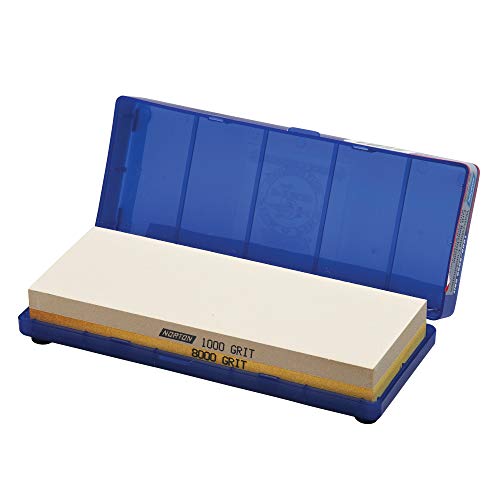
A dull kitchen knife slips off tomato skin, crushes herbs and makes every prep job slower and riskier. A good sharpener restores the edge in a few minutes, so a knife you already own cuts cleanly again instead of being replaced.
The six sharpeners below cover the main routes: motorized machines, a compact electric model, a maker-matched unit and two manual systems. Choosing between them mostly comes down to how much control you want and how much counter space you can spare. We have not used these products ourselves, so confirm the details on the current listing before you buy.
As an Amazon Associate we earn from qualifying purchases. Links below are affiliate links, and they do not change the product information we give.
What to Look For
| Feature | Why it matters |
|---|---|
| Type | Electric units are fast and forgiving; guided stone kits give more control but take longer |
| Edge angle | European and Japanese knives are often ground at different angles, so check what each machine supports |
| Stages | Coarse, fine and polishing stages remove metal first and then refine the edge |
| Footprint | Machines need counter or cupboard space; hand tools tuck into a drawer |
In this guide
Specs at a Glance
| Sharpener | Type | Stages | Notes |
|---|---|---|---|
| Chef’sChoice Trizor XV | Electric | Three stages | Reshapes edges to a finer angle |
| Work Sharp Culinary E2 Kitchen Knife Sharpener | Electric | Two guided stages | Built-in angle guides |
| Presto EverSharp Electric Knife Sharpener | Electric | Two stages | Compact and light |
| Wusthof Easy Edge Electric Knife Sharpener | Electric | Guided stages | Suits Wusthof angles |
| Lansky Deluxe 5-Stone Controlled-Angle Sharpening System | Manual guided kit | Five stones | Clamp holds the blade |
| Spyderco Tri-Angle Sharpmaker | Manual rod system | Two ceramic rod grits | Preset angles |
The 6 Best Knife Sharpeners for Kitchen Knives
Top pickBest for home cooks with European-style knives
1. Chef’sChoice Trizor XV
A long-running electric sharpener from Chef’sChoice that uses diamond abrasives and is designed to convert straight edges to a sharper, more acute angle. It has spring guides that hold the blade steady as you pull it through.
Suits: home cooks with European-style knives. Strengths: fast results and a well-known brand. Weaknesses: it removes more metal than a steel or stone. Skip it if you own very thin Japanese knives.
View Chef’sChoice Trizor XV on Amazon
Best for busy cooks who want a simple routine
2. Work Sharp Culinary E2 Kitchen Knife Sharpener
A compact electric sharpener that uses guides to set the angle for you and abrasive belts to refine the edge. It is aimed at cooks who want a repeatable result without learning stone technique.
Suits: busy cooks who want a simple routine. Strengths: easy angle control and a small body. Weaknesses: belts are consumables you will eventually replace. Skip it if you prefer a purely manual tool.
View Work Sharp Culinary E2 on Amazon
Best for first-time buyers with everyday knives
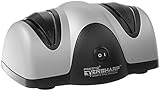
3. Presto EverSharp Electric Knife Sharpener
A budget-friendly electric model from Presto that uses abrasive wheels and blade guides. It is a common starter machine for people who only sharpen a few times a year.
Suits: first-time buyers with everyday knives. Strengths: simple operation and an established maker. Weaknesses: less refined finish than premium machines. Skip it if you own high-end Japanese steel.
Best for owners of Wusthof or similar German knives
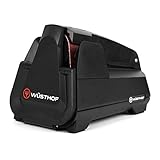
4. Wusthof Easy Edge Electric Knife Sharpener
An electric sharpener from the German knife maker that is meant to match the edge angle of its own forged knives. The guides make it hard to hold the blade at the wrong pitch.
Suits: owners of Wusthof or similar German knives. Strengths: angle guides tuned to the maker’s blades. Weaknesses: best fit is limited to certain angles. Skip it if your knives use a very different edge geometry.
Best for tinkerers who want full control
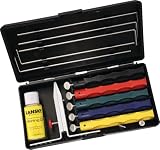
5. Lansky Deluxe 5-Stone Controlled-Angle Sharpening System
A classic clamp-and-guide kit that holds the knife still while you stroke fixed-angle stones along it. It takes patience, but you pick the exact angle and can work through several grits.
Suits: tinkerers who want full control. Strengths: adjustable angle and a wide range of grits. Weaknesses: slow compared with a machine. Skip it if you want a quick pull-through.
Best for regular maintenance of already decent edges
6. Spyderco Tri-Angle Sharpmaker
A benchtop system with ceramic rods set at fixed angles, so you stroke the knife straight down and the hardware controls the pitch. It is better for upkeep and touch-ups than for badly damaged edges.
Suits: regular maintenance of already decent edges. Strengths: low learning curve and a long track record. Weaknesses: not ideal for chips or heavy repair. Skip it if your knives need serious reprofiling.
View Spyderco Sharpmaker on Amazon
Care and Setup
- Wipe the blade clean after sharpening to remove metal dust.
- Keep electric sharpeners dry and away from water.
- Replace worn belts or wheels as the maker advises.
- Store guided kits in their case so stones stay clean.
Mistakes to Avoid
- Pressing too hard, which can overheat or scratch the blade.
- Using one sharpener for every knife without checking angles.
- Skipping the finer stage and leaving a rough edge.
- Sharpening serrated knives on a flat-stage machine.
European and Japanese Knives on a Machine
The knife block in your kitchen decides which sharpener you should buy more than any feature list does. Two broad families of knives behave differently on the same machine, and many of the cautions in the picks above come from that difference.
European-style knives, such as the forged German types, tend to have a softer steel and a thicker blade behind the edge. They tolerate rough treatment, can take a fairly aggressive sharpener and roll their edges instead of chipping. A sharpener that grinds the edge to a particular angle usually works well on these knives, provided the angle matches what the maker recommends. Japanese-style knives, including slicing and chef’s knives with thin blades, often use harder steel, which holds an edge for longer and can be ground to a finer angle. They cut beautifully, but the steel is more brittle and can chip if it is pushed against an abrasive that is too coarse or if the angle is wrong.
That is why a note such as “skip it if you own very thin Japanese knives” appears next to machine-based sharpeners. It is not a ruling against those machines, only a reminder to check compatibility. If you own a mix, consider using the machine for your sturdy workhorse knives and a guided stone or rod system for the delicate ones.
- Look up the steel type and recommended angle of your knives.
- Check the sharpener’s stated angle, and whether it handles double-bevel and single-bevel blades.
- If your knives have a very thin profile, favor a fine, gentle method.
- Keep an inexpensive utility knife for tough jobs, and protect your best knife for slicing.
If the sharpener’s listing does not mention Japanese knives, assume the maker has not tested them, and check with support before you try.
How Guided Clamp Systems Work
Clamp-and-rod systems like the Lansky kit in this guide reward patience with very repeatable results. Understanding the process shows whether it is for you.
The knife is held in a clamp that stays still. A guide rod, attached to a stone or abrasive holder, slides through a hole in the clamp so the stone travels at a fixed angle every stroke. You choose the angle by selecting a hole position, and you work through stones in order, from coarse to fine. Because the hardware fixes the angle, you do not need steady hands, which is the primary reason people choose these systems over free-hand stones. The cost is time: setup takes a few minutes, each stone needs a number of strokes per side and the whole process for one knife can take much longer than a machine.
A few practical points help you get good results:
- Clamp the blade close to the edge you are working so the clamp does not interfere with the guide rod.
- Use consistent strokes, with the same number on each side, and keep the stone flat against the edge.
- Mark the edge with a permanent marker to see where the stone is removing metal.
- Work along the whole length of the blade in sections, including the tip and heel.
- Use a light touch with fine stones, and wash away debris between grits.
Large, curved kitchen knives take longer to clamp and sharpen than small pocket knives, and long blades may require repositioning in the clamp. If you plan to sharpen only a few knives a year, the extra effort may be worth the control. If you want a quick fix in the middle of a busy week, a machine or pull-through is more convenient.
Ceramic Rod Systems and Upkeep
A benchtop rod system, in which two ceramic rods sit in a base at preset angles, offers something between a honing steel and a full sharpening kit. It is worth knowing how to use and look after one.
The rods are fixed at set angles in the base, so you stand the knife upright and draw it down the rod, using the corner of the rod. The base sets the angle, and you only need to keep the blade vertical and apply light pressure. This works well for maintaining an edge that is already in decent shape. Ceramic rods are hard and fine, so they restore an edge without taking much metal, which makes them kind to good knives. They are less useful for chips, flat spots or a badly neglected edge, which need more metal removed.
Over time, ceramic rods can become clogged with metal particles, which makes them feel slick and slow to cut. Clean them with a gentle abrasive cleanser and a non-metal scrubber, following the maker’s directions, and they will recover their bite. Handle them carefully, as ceramic is brittle and can crack if dropped. Store them in the base or a case so they do not roll off a bench.
- Use gentle pressure; the rod does the work.
- Keep the knife vertical and avoid rocking it.
- Use the same number of strokes on each side.
- Clean the rods when they appear dark or glazed.
- Replace a chipped or cracked rod.
Rod systems are a good complement to a machine, since you can use the machine rarely for reshaping and the rods for regular touch-ups. A knife that is touched up regularly seldom needs heavy work.
Consumables, Wear and Running Costs
Price on the listing is only part of what a sharpener costs. Some tools have parts that wear out, and their replacements should be factored into your choice.
Electric sharpeners use abrasive wheels, belts or discs that wear down with use. How quickly depends on how many knives you sharpen, how dull they are and how much pressure you apply. Replacements are usually available for well-known models, but availability varies, so check the maker’s site before you buy. Belts are easy to swap, while wheels may require more steps. Some machines let you buy extra stages or finer grits to extend what they can do.
Manual tools wear more slowly but still wear. Pull-through slots lose their cutting power over time, and some are replaceable while others are not. Stones become dished and need to be flattened or eventually replaced. Ceramic rods can be cleaned to extend their life but may eventually need replacing.
- Ask whether replacement belts, wheels or stones are available and how they are sold.
- Check whether the sharpener has a warranty and what it covers.
- Clean and maintain the tool as instructed to extend its life.
- Use the right number of passes; excess grinding wears out parts faster.
- Keep the manual so you know how to replace parts safely.
When comparing a cheap tool with a more expensive one, think about how long you expect each to last and what you need to buy over that time. A low-cost sharpener that must be replaced often may cost more in the long run than a durable one with replaceable parts. If you rarely sharpen, a simple and cheap tool may be all you need.
When a Professional Service Makes Sense
Home sharpening works for most kitchens, but there are times when sending a knife to a professional is the better choice. Recognizing them avoids frustration and damage.
Consider professional service if a knife has a chipped edge, a broken tip, a bent blade or a very uneven bevel. Those problems need metal to be removed in a controlled way, and a machine or pull-through can make them worse. A valuable or sentimental knife, especially one made from hard steel or with a special edge, may deserve expert care. If a knife has been abused, has a heavy rust problem or has never been sharpened properly, a professional can restore the geometry before you take over regular maintenance at home.
Look for a service with a good reputation, clear pricing and a method that suits your knives. Ask what method they use and whether they work on your type of knife, whether it is a double-bevel Western blade or a single-bevel Japanese one. Ask about turnaround time and how they handle shipping, if you are sending it by mail. Be wary of services that use aggressive methods on thin blades without discussing the options.
- Describe the problem and the knife type when you ask for a quote.
- Keep the knife in a protective sleeve when you deliver or ship it.
- Ask whether the edge angle can be kept as it is or changed.
- Check the finish you want, as polish levels vary.
After a professional sharpening, maintain the edge with regular honing and gentle touch-ups to extend the time before the next service.
Which kitchen knife sharpener should you buy?
The best kitchen knife sharpener is the one that suits your knives and your patience, not the one with the longest feature list. Here is how the six picks map to common needs.
- You want fast results on sturdy knives: the Chef’sChoice Trizor XV is an electric machine with three stages that reshapes edges to a finer angle. It removes more metal, so it suits European-style knives better than thin Japanese ones.
- You want an easy, repeatable routine: the Work Sharp Culinary E2 uses built-in angle guides and belts, so you do not need stone technique.
- You are buying your first sharpener: the Presto EverSharp is a compact, simple electric model for everyday knives that are sharpened a few times a year.
- You own Wusthof or similar German knives: the Wusthof Easy Edge has guides suited to that maker’s angles.
- You want full control and do not mind the time: the Lansky Deluxe 5-Stone system clamps the blade and lets you pick the angle and grit.
- You mostly want to keep decent edges sharp: the Spyderco Tri-Angle Sharpmaker uses preset ceramic rods for upkeep, but it is not made for chips or heavy repair.
If your block holds a mix of sturdy and delicate knives, a machine plus a gentler rod system can cover both.
What to check before you buy, and who should skip it
Before you pick a knife sharpener, run through this short checklist on the current listing.
- The edge angles it supports, compared with the angle your knives were made with.
- Whether it states support for Japanese or single-bevel blades, if you own any.
- Whether replacement belts, wheels or stones are sold, and how.
- Counter or drawer space, since machines need room.
- What is included in the box, and the warranty or return terms shown.
- Whether the listing says anything about serrated edges, which many flat-stage tools cannot handle.
The honest trade-offs are real. Electric sharpeners are quick but remove more metal than manual tools, so repeated use shortens a knife’s life. Guided kits give control but take much longer. Rod systems are gentle but will not repair a chip. A cheap machine may leave a less refined finish than a premium one.
Who should skip a sharpener altogether? If your knives are chipped, bent or valuable, a professional service is often the safer route. If you only sharpen once a year, a simple, low-cost tool may be enough, and a large kit may sit unused.
One more practical point is noise and storage. Electric machines are louder and bulkier than a rod set, so think about where you will keep and use one. A tool that is awkward to fetch tends to be used less often, and knives then stay dull for longer than they should.
Also think about how many knives you own. A household with two or three working knives gains little from a large multi-stage system, while a collection of good knives justifies a more careful method.
Compare the picks above, check the current listing for the angles it supports and what is included, then choose the one that fits how you will use it.
Kitchen Knife Sharpener FAQ
How often should I sharpen kitchen knives?
It depends on use. Many home cooks sharpen a couple of times a year and hone in between.
Are electric sharpeners safe for good knives?
They remove more metal than manual tools, so use them sparingly on fine blades and follow the maker’s directions.
Do I need a honing steel as well?
A steel realigns an edge between sharpenings but does not replace a sharpener.
Can I use an electric sharpener on Japanese knives?
Only if the maker says it supports them. Thin, hard blades can chip on aggressive abrasives, so a fine, gentle method or a guided stone is usually safer.
What is the advantage of a guided clamp system?
The clamp and guide rod fix the angle, so you do not need steady hands. The trade-off is that the process takes longer than using a machine.
How do I know where the stone is cutting?
Color the edge with a permanent marker and make a few strokes. The marker is removed where the stone is making contact, showing whether the angle is right.
Are replacement belts and wheels easy to find?
It depends on the model. Check the maker's site for replacement parts before you buy, and ask how they are sold.
Do ceramic rods need cleaning?
Yes. Metal particles clog the surface and make it feel slick. Clean it with a gentle abrasive cleanser and a non-metal scrubber as the maker directs.
Should I get a professional to sharpen a chipped knife?
Chips and broken tips need controlled metal removal, which a pull-through or simple machine may not handle well. A professional service is often the safer choice.
Can one sharpener cover both German and Japanese knives?
Some can, but check the angle and the maker's guidance. Many people use a machine for sturdy knives and a gentler method for fine ones.
What is the best type of knife sharpener for a beginner?
A guided electric sharpener or a preset-angle rod system is usually the easiest start, because the hardware controls the angle. Follow the maker's directions and use light pressure.
Is an electric or manual knife sharpener better?
Electric models are faster and more forgiving but remove more metal. Manual systems give more control and are gentler on fine blades but take longer. The better choice depends on your knives and how much time you have.
What angle should I sharpen a kitchen knife at?
It depends on the knife. Many European-style knives use a wider angle than Japanese-style knives, so check the maker's recommendation for your blades and the angles your sharpener supports.
How many passes should I make through an electric sharpener?
Follow the manual, since the number varies by model. More passes remove more metal, so use only as many as it takes to restore the edge.
Can a sharpener fix a chipped knife?
Pull-through tools and simple machines may not handle chips well. A chipped edge often needs controlled metal removal, so a professional service can be the safer choice.
How do I know when my knife needs sharpening and not just honing?
If honing no longer helps and the knife still slips off tomato skin or crushes herbs, the edge likely needs sharpening. Honing realigns an edge but does not remove metal.
The Short Version
For a fast machine, the Chef’sChoice Trizor XV. For simple guided belts, the Work Sharp Culinary E2. For a starter option, the Presto EverSharp. For German knives, the Wusthof Easy Edge. For full control, the Lansky Deluxe system. For quick upkeep, the Spyderco Sharpmaker.